
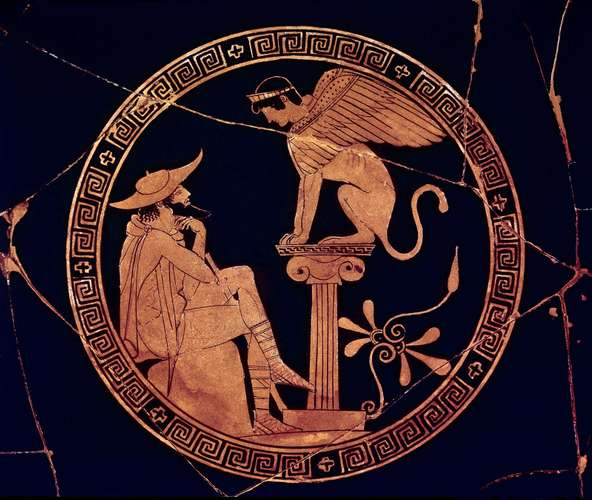
What Can Oedipus Teach Us About The COVID Crisis?

Share

From the trendy, tony website 3quarksdaily (we’ve written about this bold venture here):

What is worse – coronavirus itself, or the social and economic catastrophe that comes with it?

René Girard, one of the leading thinkers of our era, argued that the biological and social aspects of a plague are interwoven: he points out that historians still debate whether the Black Death was a cause or a consequence of the social upheavals in the 14th century.

The Stanford professor, who died in 2015 at age 91, has been called “the new Darwin of the human sciences,” but he began as a literary theorist. His work, beginning in the 1960s, offered a new concept of human desire: our desires are not our own, he said, but are “mimetic.” As social creatures, we learn what to want from each other.

Imitation leads to competition, which leads to conflict, which then spreads contagiously throughout a community. Eventually, the community targets one person or group to blame for the disorder, someone like Oedipus. The targeted scapegoats are punished, expelled, or in the past, often killed. Girard began in literature, but quickly took on anthropology, sociology, religions, and more. And while he initially wrote mostly about myths in archaic societies, he eventually became an observer of contemporary culture, focusing on rivalry, violence, and warfare today.Towards the end of his life, he wrote about the social ramifications of natural disasters, and plagues are no exception. Certainly our desires and hostilities have proven as contagious as COVID-19, which has in many ways fueled and exacerbated them, and variously targeting presidents, governments, protestors, and the Chinese for blame.

In 2005, Girard met with Robert Pogue Harrison, author of Juvenescence: A Cultural History of Our Age; Forests: The Shadow of Civilization, and The Dominion of the Dead, for a two-part interview on Harrison’s celebrated “Entitled Opinions” radio and podcast series, available on iTunes.

The full transcript is among the interviews included in the Conversations with René Girard: Prophet of Envy, edited by Cynthia L. Haven, published this month by Bloomsbury.

Read the rest here.

Psssst! I have a new book out today! Conversations with René Girard: Prophet of Envy – check it out!

Share

What is the sound of one hand clapping? It is the sound of having a book published during a worldwide pandemic! But here we are, and here it is!

Today, May 14, is the official publication date of Conversations with René Girard: Prophet of Envy

You can order from Amazon here or directly from the publisher Bloomsbury here.

French theorist René Girard was one of the major thinkers of the twentieth century. Read by international leaders, quoted by the French media, Girard influenced such writers as J.M. Coetzee and Milan Kundera. Dubbed “the new Darwin of the human sciences” and one of the most compelling thinkers of the age, Girard spent nearly four decades at Stanford exploring what it means to be human and making major contributions to philosophy, literary criticism, psychology and theology with his mimetic theory.

This is the first collection of interviews with Girard, one that brings together discussions on Cervantes, Dostoevsky, and Proust alongside the causes of conflict and violence and the role of imitation in human behavior. Granting important insights into Girard’s life and thought, these provocative and lively conversations underline Girard’s place as leading public intellectual and profound theorist.

That all sounds very official, but trust me: they are interviews you will want to read again and again.

No reviews yet, but here are some of the early reactions:

“A vital book. It gave me René Girard as I’ve never before encountered him in a text: like looking at a diamond from eighteen different sides. Each interview reveals the fecundity of his thought and the brilliance of a mind that was able to probe the human condition in a singular way. It’s full of fire.” –  Luke Burgis, Entrepreneur-in-Residence, Ciocca Center for Principled Entrepreneurship, The Catholic University of America, USA and Author of Wanting: Our Secret Economy of Desire

“René Girard was one of the most influential and important thinkers of the 20th century, much of his wisdom was dialogic in nature, and this volume brings together an excellent collection of conversations with him.” –  Tyler Cowen, Professor of Economics, George Mason University, USA and Author of the “Marginal Revolution” Blog

Conversations with René Girard is sure to become an indispensable reference for readers interested in Girard’s views on a wide range of topics, including such hot button issues as abortion, eugenics, same-sex marriage, anorexia, Islam, and Europe’s demographic crisis. Cynthia Haven deserves tremendous credit for bringing these interviews, some of them hard to find, together in one volume.” –  George A. Dunn, Centre for Globalizing Civilization, Hangzhou, China

“This collection of interviews with the great French theorist René Girard offers an excellent presentation of his theories on mimetic desire, scapegoating and sacrificial violence, and the power of Biblical revelation. It covers Girard’s remarkable explorations of everything from archaic cultures, to the great works of Western literature, to the crises of the contemporary world. An important book for scholars and the general public alike.” –  Richard J. Golsan, University Distinguished Professor and Senior Scowcroft Fellow, Texas A&M University, USA

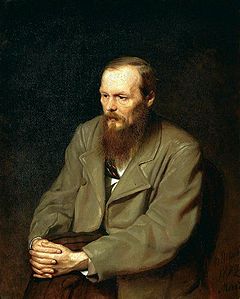
Dostoevsky’s dream of a worldwide plague

Share

The great poet Anna Akhmatova wrote of Fyodor Dostoevsky, “The prisoner of Omsk understood everything and gave up on everything.” But did he see our future, too? In Crime and Punishment, René Girard notes: “Raskolnikov has a dream during a grave illness that occurs just before his final change of heart, at the end of the novel. He dreams of a worldwide plague that affects people’s relationship with each other. No specifically medical symptoms are mentioned. It is human interaction that breaks down, and the entire society gradually collapses.” 

From Crime and Punishment (trans. Constance Garnett):

He dreamt that the whole world was condemned to a terrible new strange plague that had come to Europe from the depths of Asia. All were to be destroyed except a very few chosen. Some new sorts of microbes were attacking the bodies of men, but these microbes were endowed with intelligence and will. Men attacked by them became at once mad and furious. But never had men considered themselves so intellectual and so completely in possession of the truth as these sufferers, never had they considered their decisions, their scientific conclusions, their moral convictions so infallible. Whole villages, whole towns and peoples went mad from the infection. All were excited and did not understand one another. Each thought that he alone had the truth and was wretched looking at the others, beat himself on the breast, wept, and wrung his hands. They did not know how to judge and could not agree what to consider evil and what good; they did not know whom to blame, whom to justify. Men killed each other in a sort of senseless spite. They gathered together in armies against one another, but even on the march the armies would begin attacking each other, the ranks would be broken and the soldiers would fall on each other, stabbing and cutting, biting and devouring each other. The alarm bell was ringing all day long in the towns; men rushed together, but why they were summoned and who was summoning them no one knew. The most ordinary trades were abandoned, because everyone proposed his own ideas, his own improvements, and they could not agree. The land too was abandoned. Men met in groups, agreed on something, swore to keep together, but at once began on something quite different from what they had proposed. They accused one another, fought and killed each other. There were conflagrations and famine. All men and all things were involved in destruction. The plague spread and moved further and further. Only a few men could be saved in the whole world. They were a pure chosen people, destined to found a new race and a new life, to renew and purify the earth, but no one had seen these men, no one had heard their words and their voices.

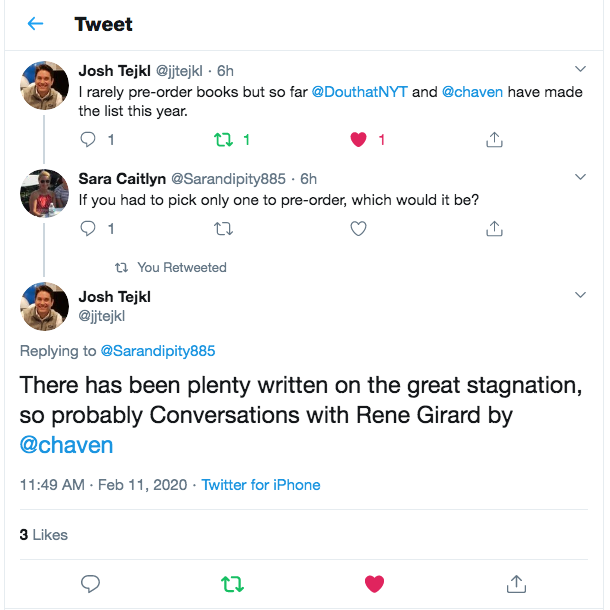
My new book (briefly) tops Ross Douthat’s latest – if you blinked, you missed it.

Share


My moment in the sun was brief, but at least one voter gave me a thumbs up over the New York Times‘s Ross Douthat, whose book The Decadent Society: How We Became the Victims of Our Own Success (Simon & Schuster), is currently making waves. (See tweets below.)

The triumph couldn’t be smaller, nevertheless … not bad, considering my book, Conversations with René Girard: Prophet of Envy (Bloomsbury) won’t be out till May 14. You can preorder at discount via the Bloomsbury website here.

From the flap:

French theorist René Girard was one of the major thinkers of the twentieth century. Read by international leaders, quoted by the French media, Girard influenced such writers as J.M. Coetzee and Milan Kundera. Dubbed “the new Darwin of the human sciences” and one of the most compelling thinkers of the age, Girard spent nearly four decades at Stanford exploring what it means to be human and making major contributions to philosophy, literary criticism, psychology and theology with his mimetic theory.

This is the first collection of interviews with Girard, one that brings together discussions on Cervantes, Dostoevsky, and Proust alongside the causes of conflict and violence and the role of imitation in human behavior. Granting important insights into Girard’s life and thought, these provocative and lively conversations underline Girard’s place as leading public intellectual and profound theorist.

And the blurbs:

“’A vital book. It gave me René Girard as I’ve never before encountered him in a text: like looking at a diamond from eighteen different sides. Each interview reveals the fecundity of his thought and the brilliance of a mind that was able to probe the human condition in a singular way. It’s full of fire.’” – Luke Burgis, author of Wanting: Our Secret Economy of Desire (St. Martin’s Press)

“Rene Girard was one of the most influential and important thinkers of the 20th century, much of his wisdom was dialogic in nature, and this volume brings together an excellent collection of conversations with him.” – Tyler Cowen, economist, blogs at Marginal Revolution.

““Covering the full scope of his thinking, from his reflections on desire and rivalry, right through to his final thoughts about modern warfare this really is a singularly valuable collection.”” – Chris Fleming, essayist and author of On Drugs 

“Conversations with René Girard is sure to become an indispensable reference for readers interested in Girard’s views on a wide range of topics, including such hot button issues as abortion, eugenics, same-sex marriage, anorexia, Islam, and Europe’s demographic crisis. Cynthia Haven deserves tremendous credit for bringing these interviews, some of them hard to find, together in one volume.” – George A. Dunn, Centre for Globalizing Civilization, Hangzhou, China


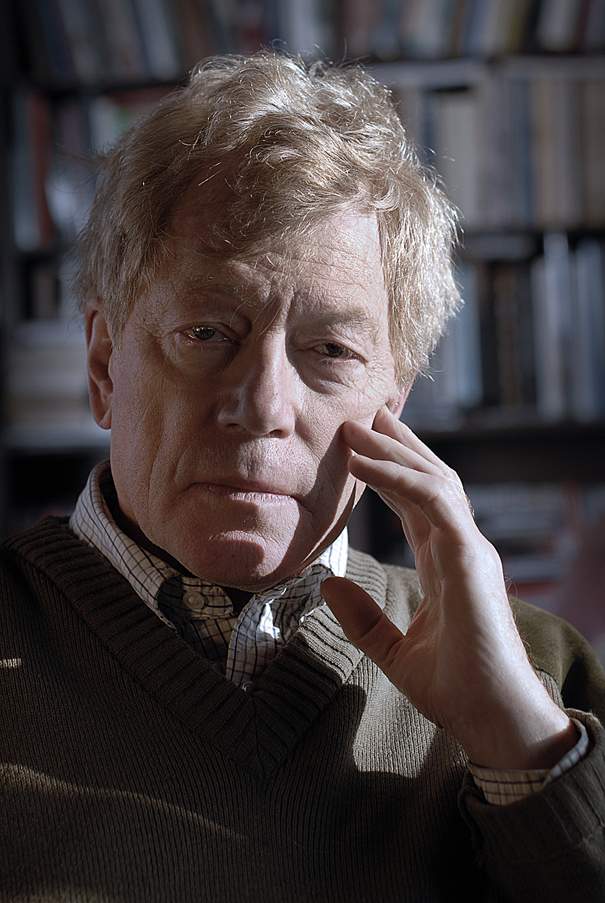
Roger Scruton: “You are accused by the mob, examined by the mob, and condemned by the mob.”

Share

“By joining the mob, you make yourself safe.” (Photo: Pete Helme)

Sir Roger Vernon Scruton died on Sunday. I knew nothing, really, about the British philosopher of politics and culture, but on his death, his name began appearing in my Facebook newsfeed.

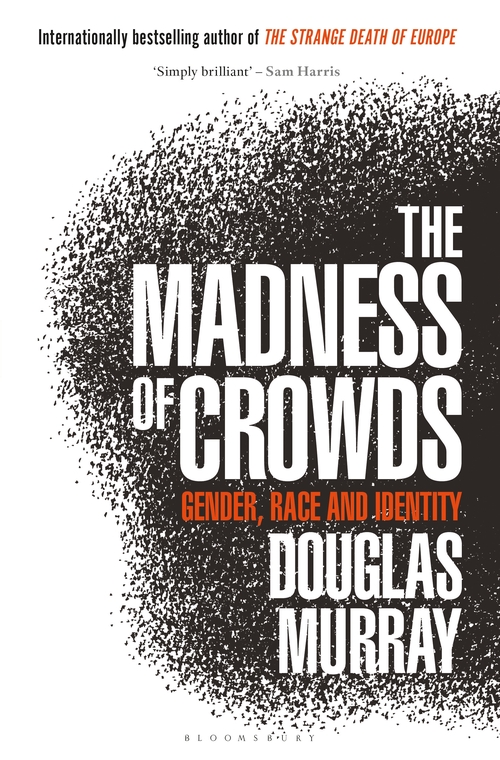
The most intriguing reference was from my friend George Dunn, who posted Scruton’s review of Douglas Murray’s recent book  called The Madness of Crowds, “which addresses scapegoating and crowd derangement within our current political environment. As one might expect, Murray invokes René Girard along the way. Scruton summarizes the unseemly state of affairs to which Murray’s book is a response in language redolent of Girardian insights.”

He cites this passage from Scruton’s essay: “You are accused by the mob, examined by the mob and condemned by the mob, and if you have brought this on yourself, then you have only yourself to blame. For the mob is by nature innocent: it washes its own conscience in a flow of collective indignation, and by joining it you make yourself safe.”

George continues: “Murray’s proposed antidote to this madness is also quite Girardian—a rediscovery of the power of forgiveness. But Scruton wonders whether we are still capable of this gesture in an era when religious faith has receded into the cultural twilight: ‘Can we adopt the posture of forgiveness that Murray is so keen to advocate, without turning to the supreme example that was once given to us?'”

“We might be reminded of what Girard has said about political correctness as a faux super-Christianity, which mimics the Christian concern for victims, while turning it into an instrument for gaining political, social, or spiritual power. When the concern for victims becomes an ideology of ‘victimism’ divorced from such traditional virtues as charity, forgiveness, and humility, Girard believes it becomes something diabolical.”

René Girard on “victimism” divorced from charity

In the article, Scruton writes, “The archive of your crimes is stored in cyberspace, and however much you may have confessed to them and sworn to change, they will pursue you for the rest of your life, just as long as someone has an interest in drawing attention to them. And when the mob turns on you, it is with a pitiless intensity that bears no relation to the objective seriousness of your fault. A word out of place, a hasty judgment, a slip of the tongue — whatever the fault might be, it is sufficient, once picked upon, to put you beyond the pale of human sympathy.”

Another passage:

The crimes for which we are judged are existential crimes: through speaking in the wrong way you display one of the phobias or isms that show you to be beyond acceptable humanity. You are a homophobe, an Islamophobe, a white supremacist or a racist, and no argument can refute these accusations once they have been made.

Book under review

You might, in your private life, have worked for the integration and acceptance of your local Muslim community, or for a wider understanding of the roots of Islamic philosophy. This will be irrelevant when it comes to rebutting a charge of Islamophobia, just as your record in promoting minorities in the workplace will do nothing to clear you of the charge of racism, once the crucial words are out.

For your accusers are not interested in your deeds; they are interested in you, and in the crucial fact about you, which is whether or not you are “one of us”. Your faults cannot be overcome by voluntary action, since they adhere to the kind of thing that you are. And you reveal what you are in the words that define you.

Read the entire article here. Scruton concludes: “My own solution — which is to ignore social media and to address, in my writings, only the interest in the true and the false, rather than in the permitted and the offensive — confines me within a circle that is considerably narrower than the Twittersphere. But here and there in this circle, there are people who do not merely see the point of truthful discourse, but who are also eager to engage with it. And I cling to the view that that is enough, as it was for the Irish monks who kept the lamp of learning alight during the Dark Ages. They may have thought they were losing, but they won in the end.”

The first case of real forgiveness ever? Maybe so. My talk on René Girard at Notre Dame.

Share

Giovanni Maria Bottala’s “Joseph Sold by His Brothers,” circa 1636-42

On September 23, I was honored to be invited to Notre Dame to deliver the inaugural Church Life Journal lecture on “René Girard and the Present Moment.” The talk is now up here

An excerpt:

Roughly 200 billion tweets appear every year. And 100 million hours of videos are watched on Facebook daily, and more than 250 billion photos have been uploaded to Facebook. Reaction time gets faster and faster, and we are free to vent our worst side, our unconsidered selves, on more and more platforms. We excuse our daily defamation as harmless, but it is not. It changes us.

In this environment, how difficult to hold to Girard’s injunction of total non-retaliation! …

We have some good precedents: Girard often described the story of the Old Testament Joseph, son of Jacob, bound and sold into slavery by his mob of ten envious and resentful half-brothers. He called it a counter-mythical story, because in myth, the lynchers are always satisfied with their lynching. But here, the story takes a different twist. Initially, the brothers plan to kill Joseph, but one of them, Judah, has the idea to sell him into slavery instead. However, Joseph reestablishes himself as one of the leaders of Egypt and then tearfully forgives his brothers in a dramatic reconciliation. Its full description of forgiveness is, Girard claimed, the first in all of history, in its sophistication and nuance. I haven’t been able to disprove him yet.

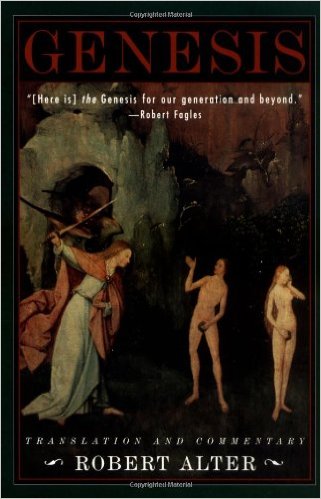
I recommend Robert Alter‘s magnificent retelling, with annotation, of the story in his Genesis. The read is absolutely gripping, a page-turner, with very careful breakdown of the dialogue. Before his self-revelation, Joseph tries his half-brothers with several ordeals, and demands that they bring him their youngest brother, Benjamin. He is cautiously testing his half-brothers with Benjamin, the only other child of Jacob’s beloved Rachel, born of the rivalry that poisoned the family. After all, he does not know whether they have killed Benjamin, too. Why would they not?

But the figure who is at least as riveting, to me, is Judah—the very brother who had the idea to monetize the elimination of his brother. During the dialogue, he is transformed. He says his father’s heart would break with the loss of Benjamin—he who had maliciously, recklessly shredded his father’s heart before, accepts the bitter pill of his father’s outrageous favoritism, and begs to offer himself as a slave instead.

The wailing of Joseph in the recognition scene is so loud and unrestrained that, as it is written, “the Egyptians heard and the house of Pharoah heard.” We all admire Joseph, we imagine we would like to be like him – but who wants to be Judah in his culpability, in his callousness, in his repentance, and his anguish? Yet the Jewish people are named for him.


Read the rest here.