
What my father gave me by forgetting: A Father’s Day post by Luke Burgis.

Featured

Share

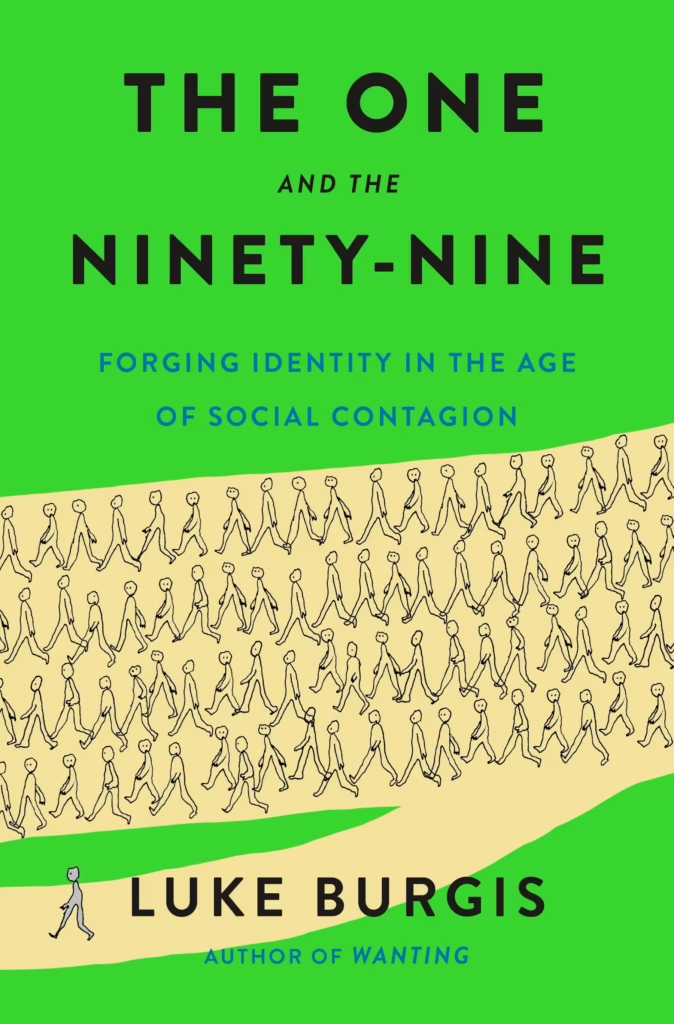
The Book Haven just published a post (below) on Luke Burgis’s newly launched book, The One and the Ninety-Nine. We were going to take the day off. But the entrepreneur author’s Father’s Day post today was something that needed more attention – today, most of all.

When I was thirty-nine, I was traveling out of state and grew concerned when my mother stopped responding to texts and calls. My aunt and uncle went to the house and discovered a nightmare that would change my life forever. They found my mother catatonic in bed, and my father puttering around as if nothing was wrong.

He thought she was taking a nap. In reality, my mother had suffered a sudden, catastrophic health decline—and my father was disappearing into the fog of undiagnosed Alzheimer’s disease.

I returned home in shock to peel back the layers of a miserable onion. My mother had been my father’s sole caregiver for more than five years, since the disease had become debilitating—but there had been signs going back more than a decade.

"He is losing his memory. In losing it, he reminded me that the mind was never a solitary thing."
“He is losing his memory. In losing it, he reminded me that the mind was never a solitary thing.”

Her fear of confronting Alzheimer’s was too great, so she ignored it as his faculties slipped away. Then, when she needed him most, when urgent medical attention could have saved her life, he didn’t have the presence of mind to respond. By the time I arrived, it was too late. She was dead in a week.

The extent of his disease became clear only in increments. When the ambulance took my mother to the hospital, the paramedics didn’t realize that my father couldn’t be left alone for more than five minutes without risk—that he might put a metal bowl in the microwave, which by then my mother had taped shut. He would need constant care.

In The One and the Ninety-Nine, I recount the story of my arriving home on the day my mother was hospitalized to find him chain-smoking the cigarettes he had found in my mom’s purse. My dad doesn’t smoke, and neither do I. But on that day, it was so absurd—and in the moment, so oddly funny—that I asked him for a couple, since I’d heard that my mom was stable. We sat there smoking together for ten minutes, in the brief moment before we left for the hospital.

That is the particular vertigo of the only child: there is no sibling to call, no one to run things by, no one to ask whether you are seeing what you think you’re seeing. I often felt as though I were going crazy—alone, watching a very slow car crash. My parents had been so afraid of losing the life they’d built, the memories they shared, the person he had been, that they would sooner barrel blindly into catastrophe than ask for help. The few times I pleaded with them, I was met with promises to deal with it—later.

I learned everything I could about Alzheimer’s: what causes it, what it does to the people who have it, what I might do to help. I came away with more questions than answers. It is a complex, mysterious disease of the mind—the dissolution of memory and meaning even as the soul burns bright. There are treatments that, given early, can slow it and in rare cases even restore some function. But the doctors confirmed what I feared: for my father, that window had closed.

And here, in the throes of it, I found something I can only call a gift. It was too late to save my father’s mind. But there was still time to save my own.

Through his illness, and through caring for him, I felt called back to something almost primordial in myself—a deeper conscience. I needed to take better care of my health, yes. But more than that, my attention. I began to see the feeds I scrolled as their own disease of the mind: an endless timeline on which every moment blurs into every other, indistinct, nothing quite distinguishable from anything else—not so far, I realized, from what my father must experience. And I became painfully aware of how thoroughly we abandon the old, and especially the demented. We forget them. We forget them, in part, because they forget. We begin to mirror their forgetting.

But the deepest reckoning was with community. As an entrepreneur, I like the feeling of controlling my own destiny, and I had to come to grips with the fact that, with aging parents, I controlled nothing. They were adults, in fact and in law; I could not make them do what they would not do for themselves. Coercion was not the answer. But neither was abnegating my responsibility as a son. So what, practically, could I do?

The answer arrived, as these things sometimes do, on Sunday. The Mass reading was from Sirach: My child, help your father in his old age, and do not grieve him as long as he lives; even if his mind fails, be patient with him; because you have all your faculties, do not despise him. I prayed for the grace to live those words. And then I noticed something about how the trouble had surfaced in the first place.
The only reason I had known anything was wrong was that I’d run into my parents’ parish priest, who told me he hadn’t seen them at Mass in some time and wondered how they were. That is what a thick community does. The parish is grounded in something that transcends politics, hobbies, consumption, content—and so it notices an absence. It comes looking.

Too many of the communities I’d belonged to over my life had been thin. They didn’t tolerate difference. They didn’t summon anyone to grow in integrity. They would not have been there in my hour of need, much less my hour of dying. They rewarded the thinnest possible forms of belonging—having the right enemy, learning the right words to humiliate him.

Such communities, which thrive online and across our increasingly artificial world, reward whatever strengthens the status and the power of the group. They turn everything into totalizing politics. Inside them, we become shape-shifters. We never learn the art of belonging well; we learn only how to belong at any cost.

It turns out my father had been schooling me on the difference all along, simply by what he refused to forget. As his mind failed, the memories that held on longest were the ones most deeply embedded in him—and every one of them was a small circle of people. His brothers from the 101st Airborne, the men he’d jumped out of planes beside. His fellow parachutists. His Teamsters. His golfing buddies. The regulars at the store he bought and worked the last fifteen years of his life. The thick associations were the last to go. Many of them he carries still. The mind discards a great deal under siege; it clings hardest to the people who knew it.

And he has kept his humor. One thing I learned quickly is that my father now engages in zero social calculus, because he is entirely unaware of what anyone thinks of him. If someone were angry with him, he wouldn’t hold it for more than a few seconds. “It’s not all bad being me,” he told me once, with a glint that suggested he knew exactly what he was saying, “…because there are a lot of things that are not worth remembering.”

There is more wisdom in that than he knows. It is so easy to fall into entanglements that warp our priorities away from what matters most and toward what matters only in the vanishing moment. Some people help us remember who we are. Others help us forget.

My father has lost the ability to tell them apart—and in losing it, he has reminded me to attend to the difference while I still can.

Because our memories, and our very sense of who we are, do not live inside our skulls alone. They live in the space between people. The first time someone said of my father that he was “no longer there,” I understood that he is very much there—because I am there. His memory is not what it was. But his existence, and his dignity, were never his to hold onto by himself.

We are more than one another’s keepers. We are one another’s seekers.

There is an old story about a shepherd who leaves ninety-nine sheep to go after the one that wandered off, and who, finding it, comes home rejoicing. I used to think the parable was about the sheep. I’ve come to think it’s about the shepherd—about what it does to a person to refuse to let someone be lost. We must go and seek what is lost. And if we look hard enough, and long enough, we will find it, and carry it home, rejoicing.

In my case, what was lost—what I keep going back for—is my father. I do it for him. I do it, now, for the daughter who arrived shortly after that catastrophic day, and for her younger sister now, so that they will grow up knowing what it looks like to be sought.

And I do it for myself, while I still have the faculties to choose.

This Father’s Day, my father will not remember that it is Father’s Day. It doesn’t matter. I will remember for both of us.

That, in the end, is the whole of it: a mind, unlike a brain, is not a solitary thing. It is something we engage in with one another, and with the world. A mind, unlike a brain, is made to dance. And we can dance even with those who no longer remember the steps.


Luke Burgis’s new book, The One and the Ninety-Nine, is out now. This Father’s Day essay is drawn from the theme of the book.


And then this happened…more on the inaugural NOVITĀTE conference

Featured

Share

I’m late telling Book Haven readers about my most recent honor: From Luke Burgis’s remarks at the inaugural NOVITĀTE conference earlier this month, in presenting me with the inaugural Novitāte Award:

This first ever NOVITĀTE award goes to someone whose work embodies “New Models of Thought and Desire”, which this gathering is all about. She has carved her own (anti-mimetic) path inside and outside the world of academia, oftentimes while standing at the periphery—which is where the misunderstood, and sometimes even the scapegoats, lie. 

Cynthia’s work has been not only intellectually illuminating for me personally—I couldn’t have written my own book, Wanting, without it—but also edifying. 

This award may not be prestigious—yet!—and it comes with a relatively paltry cash prize of $1,000 (we’ll work on that, too!)—but you are the first recipient, and the most worthy that I could think of. I’d like to invite you to the stage to accept this First Annual NOVITĀTE Award for making an outstanding contribution to this year’s theme. Please join me honoring the 2023 award winner: Cynthia Haven.

Cynthia, you are a special person who I’m proud to call a friend. This event would not have been the same without you. You’ve done so much good work for so many years. Nearly every time we talk you remind me of what it’s all truly about. Our time on this earth is very short. As René Girard reminded us ( and as you often remind me), we don’t know how much time we have left. None of us do. You’ve inspired me with a sense of urgency—with a quickening of heart and spirit. And for that I want to thank you. 

Postscript: I almost forgot to include my own brief comments on acceptance of the award: “When Luke first told me about his idea for a conference, I didn’t connect its title, Novitāte, to Paul’s Letter to the Romans: “And be not conformed to this world: but be transformed by the renewing of your mind.” These words have been a touchstone for me over the years. What I came to understand is this: We can’t change the past, we can’t change our height or our parentage. We can’t change our emotions, at least not directly, because they happen at lightning speed and shapeshift as they move. We certainly can’t change other people – we’ve all tried that. But the one thing we can change the way we think about things – that is in our power. We can rewire our brains a little, and interrupt cycles of envy or resentment or retaliation by shifting our perspective, unsettling our mind a bit. It’s something that can begin now, tonight, and continue for the rest of our days. This week has given us a toolkit for doing so – we can begin renewing our minds now. That may be the best way to commemorate René’s centenary year. I’m deeply honored by this award. Thank you, Luke. Thank you everyone. And most of all, thank you René, and happy birthday.”

My conscience is not your talking point.

Featured

Share

None of your beeswax (Wikimedia)

Of late, Twitter has become even more of a cesspool than usual. This morning, I noted that J.K. Rowlings, a children’s author, is obligated to explain herself and make announcements about her p.o.v. on Twitter. Twitter pundits say she “owes” that to us. In short, she “owes” us her opinion on any daily subject the mob chooses. She is not entitled to the privacy of her own thoughts.

We see it all the time, of course: famous people are asked to comment about matters far beyond their ken or even interest. Someone whose job is to imitate fictitious people onscreen is somehow expected to be a sagacious expert on the war in Ukraine, inflation, Constitutional law, or electoral politics.

Hence, Luke Burgis’s column, “Don’t Feed Your Conscience to the Dogs,” over at his website Anti-Mimetic, is vital reading: “We live in a society where people are forced to manifest their conscience on issues ranging from sexuality to geo-politics to abortion—even on whether or not they agree with someone else’s tweet—in real-time, and practically at gunpoint. The threat of ostracization, job loss, or public ridicule lurks behind the slightest deviation from the mimetic moral norm of the day.”

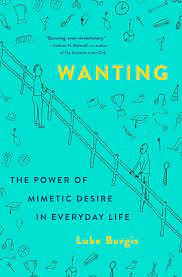
Luke is the author of Wanting: The Power of Mimetic Desire in Everyday Life, recently out with St. Martin’s Press. We wrote about it here.

His first job was an eye-opener

Luke learned the hard way, at his first job after college “when I dipped my toe into the investment banking waters (for what turned out to be less than a year, before moving to California and launching a company.) In our little investment banking ‘group’, the politics were particularly nasty. The junior people realized very quickly that senior bankers were trying to sniff out our degree of orthodoxy about everything from the president to clean energy (and this was 2004-5), and that there were professional consequences for saying the wrong thing.”

“As young and overly ambitious junior people, none of us wanted to be penalized for coming down on the wrong side of an issue just as we were starting our careers; we simply wanted to be evaluated based on our glorified-secretarial-duty merits.”

His time spent in a monastery formed much of his thinking, and he talks about that, too, in his column. However, he raises important questions, whatever your religious, political, or social persuasion.

He continues: “Learning to say ‘no’ can be difficult; learning to not reveal one’s conscience on every single issue that hits the news can be even harder, especially in a society where it is seen as good and noble to have a ‘take’ or a strong moral stance on practically everything…

“I developed responses ranging from ‘I don’t have anything to say about that’ to ‘no comment’ to much more ‘strongly’ worded statements that would help make boundaries clear. Why? Because in these situations, there was nothing to be gained by sharing my moral convictions about things that had absolutely nothing to do with my job. There was an asymmetry of outcome that would have made it idiotic to do so, and I realized right then that learning the skill of maintaining my silence at the appropriate times was a mark of maturity, not timidity or moral agnosticism. It simply means: ‘I choose not to share my conscience with you’ — period. Usually, that’s because I don’t trust the person to honor it and engage with me respectfully.

“I think back to those days because today I see a similar situation playing out in our culture. People are baited and coaxed into revealing things to people who have no goodwill toward them at all, and who may even seek to harm them. Yet most people will have never heard anything resembling the norms developed around ‘manifesting one’s conscience’ that I found buried in those monastic rules, and I think that is a tragedy.”

In conclusion:

“We should not let our monoculture to become a monoconscience; we should fight to erect healthy boundaries around our conscience while also respecting the boundaries of others. And we must understand that nobody should be forced, or ever expected, to manifest their innermost thoughts. These moral convictions are often the fruit of hours, if not years, of careful consideration and grappling—so why throw them to the proverbial dogs who will make our innermost beliefs into memes and soundbites that scarcely represent them at all, and may even deliberately misrepresent them?”

Read the whole thing here. Please.

What do you do when a hitman comes to your home? Ask Luke Burgis. It happened.

Share

One of the more astonishing stories in entrepreneur Luke Burgis‘s new book, Wanting: The Power of Mimetic Desire in Everyday Life – and there are many – is his unexpectedly moving tale about his interlude with a hitman. “My e-commerce company was flailing after a buyout deal fell through thanks to the Great Recession. I’d already maxed out my credit to keep the company afloat while I figured out next steps.” He concocted a “debt triage” plan. Fyre pharmaceutical wasn’t on it the shortlist.

An excerpt about what followed:

Even his dog was scared.

My decision to exclude Fyre Pharmaceutical from my list of priority payments would have been different had I known that the company’s founders were rumored to have connections with organized crime, that they were said to be involved in gun trafficking, and that one of my competitors mysteriously vanished after crossing them. 

I had interacted with Dave three times before. The first was an unpleasant phone call during which he informed me that my payment was late; offended, I snapped back with a full-throated defense of my excellent payment history. The second was an unannounced visit to my office, where he confronted me and told me that he wasn’t a patient man; he threw a pair of dice on my desk and left. The third was when he showed up at a local bar during Sunday football—no idea how he’d known I was there—and told me that he “means what he says” while beating one of his fists against his palm like he was tenderizing meat; the bouncers escorted Dave out. As he left, he made the figure of a pistol with his thumb and forefinger, and pointed it at me. 

This was now the fourth visit from Dave, and I didn’t know what it meant. 

He seemed different this time. He began with small talk. He asked me how I was doing. He commented on the weather. Is this how it goes? I wondered. Was it the happy-go-lucky backslapping before a guy gets whacked on The Sopranos?

I bumbled nervous replies. I stood taking up as much space in the front door as I could to prevent my dog Axel, who was standing behind me, hair on end, from slipping out. Dave was standing too close, seeming like he wanted to slip in. 

He drew even closer and lowered his voice. “Can you please, um, quick handle this bill by Monday morning so I don’t have to … come back?” He spoke quietly, calmly, and courteously while he twisted one of the gaudy rings on his left hand. 

There was no way that I could pay him that soon. 

Before I had a chance to respond, he continued: “I hear you’re having a big company barbecue here tomorrow night.” 

It was true. I hosted a monthly party at my house with rolling invitations to people at my company. This time, though, I had invited everyone. I worried that it might be our last rendezvous if things didn’t turn around. 

But how did Dave Romero know about it? 

“Mind if I come?” he asked. 

It didn’t seem like a question. I was growing increasingly confused and nervous. I just wanted Dave off my porch. “No, I mean yeah, sure, people start showing up at seven, you can stop by.” The words came out of my mouth. I’d never refused a request to come to one of my parties—certainly not to anyone’s face. I didn’t know how. 

And now I had invited a hitman into my home.

Read the rest of the story over at Arc Digital here.

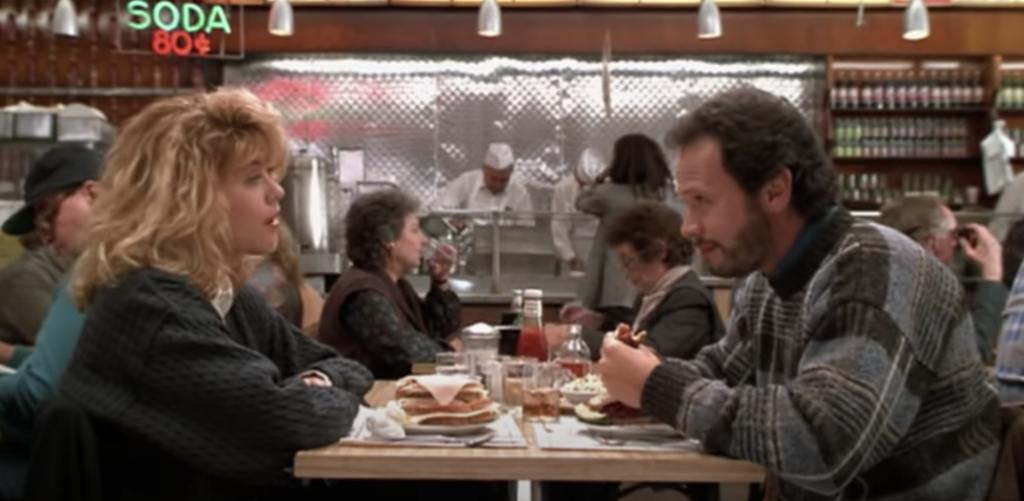
“I want what she’s having.” London lauds a new book on the nature of our wanting.

Share
The movie that inspired the meme: “When Harry Met Sally”

We want what others want. It’s a law as old as mankind, going all the way back to Eden. It was the subject of René Girard‘s corpus, and the French theorist’s work inspired Luke Burgis’s new book Wanting. “Movements of desire are what define our world. Economists measure them, politicians poll them, businesses feed them,” he writes.

René Girard began with literature, and moved to anthropology, religions, history, and more. Burgis brings his lens to a new domain: the world of entrepreneurship, of business, of technology, of international finance. Christina Patterson writes about it her review, “I Want What She’s Having” in the Times of London review yesterday.

From The Times review:

The key issue, he says, is “What do you want?” and “What have you helped others want?” The answer shapes our lives and our life satisfaction, but we are, he argues, fighting some strong tides. Powerful figures have always changed our desires. Now we don’t just have PR Svengalis and the influence of peers and celebrities such as, say, the Kardashians. We have the tech giants stoking our desires every time we glance at our phone. And the cycles of “thin desires” they are generating are creating division and stress.

Burgis is open about his key ideas coming from Girard, but he fleshes them out witty stories, personal anecdotes and research that bring them alive. His prose is punchy. His anecdotes are entertaining. There are even witty cartoons.

Writing from an entrepreneur’s perspective

It concludes:

It isn’t “Celebristan”, the world of celebrities and influencers, we have to worry about, he says. It’s “Freshmanistan”, the world of models from inside our lives who can drive us to destructive cycles of envy, exhaustion and distress. We should learn, he says, to pursue our “thick desires”, like Sébastien Bras, the chef who asked to be removed from the Michelin guide because he wanted to see more of his family and do things his way.

“Part philosophical tract, part self-help guide, Wanting is a thought-provoking book. It’s also a deeply moral one. Like many Silicon Valley entrepreneurs, Burgis wants to create a better world. The ideas he presents, and his suggestions for action, seem to offer a more realistic hope than most.

Read the whole thing (warning: paywall) here. And you can read an excerpt from the book, “The Joy of Hate Watching” here.

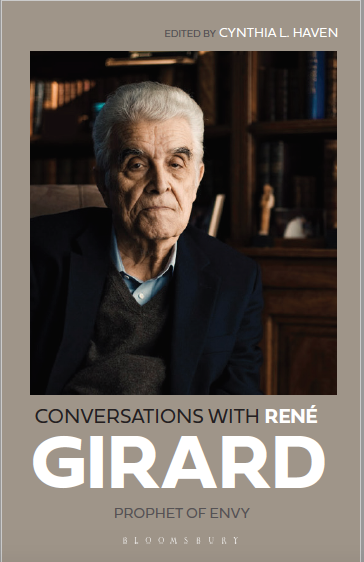
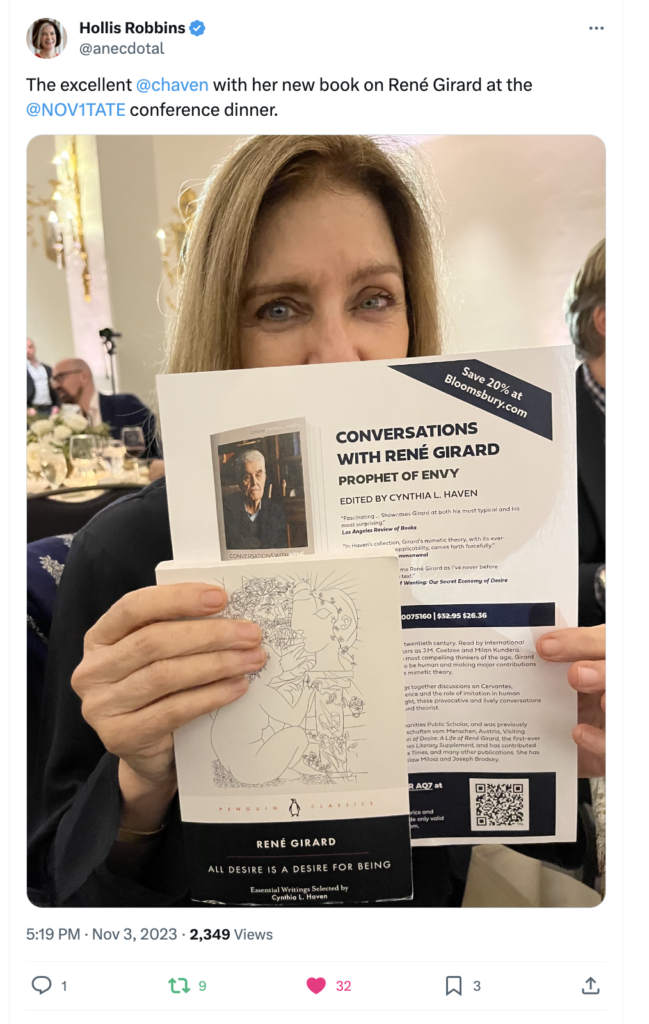
Psssst! I have a new book out today! Conversations with René Girard: Prophet of Envy – check it out!

Share

What is the sound of one hand clapping? It is the sound of having a book published during a worldwide pandemic! But here we are, and here it is!

Today, May 14, is the official publication date of Conversations with René Girard: Prophet of Envy

You can order from Amazon here or directly from the publisher Bloomsbury here.

French theorist René Girard was one of the major thinkers of the twentieth century. Read by international leaders, quoted by the French media, Girard influenced such writers as J.M. Coetzee and Milan Kundera. Dubbed “the new Darwin of the human sciences” and one of the most compelling thinkers of the age, Girard spent nearly four decades at Stanford exploring what it means to be human and making major contributions to philosophy, literary criticism, psychology and theology with his mimetic theory.

This is the first collection of interviews with Girard, one that brings together discussions on Cervantes, Dostoevsky, and Proust alongside the causes of conflict and violence and the role of imitation in human behavior. Granting important insights into Girard’s life and thought, these provocative and lively conversations underline Girard’s place as leading public intellectual and profound theorist.

That all sounds very official, but trust me: they are interviews you will want to read again and again.

No reviews yet, but here are some of the early reactions:

“A vital book. It gave me René Girard as I’ve never before encountered him in a text: like looking at a diamond from eighteen different sides. Each interview reveals the fecundity of his thought and the brilliance of a mind that was able to probe the human condition in a singular way. It’s full of fire.” –  Luke Burgis, Entrepreneur-in-Residence, Ciocca Center for Principled Entrepreneurship, The Catholic University of America, USA and Author of Wanting: Our Secret Economy of Desire

“René Girard was one of the most influential and important thinkers of the 20th century, much of his wisdom was dialogic in nature, and this volume brings together an excellent collection of conversations with him.” –  Tyler Cowen, Professor of Economics, George Mason University, USA and Author of the “Marginal Revolution” Blog

Conversations with René Girard is sure to become an indispensable reference for readers interested in Girard’s views on a wide range of topics, including such hot button issues as abortion, eugenics, same-sex marriage, anorexia, Islam, and Europe’s demographic crisis. Cynthia Haven deserves tremendous credit for bringing these interviews, some of them hard to find, together in one volume.” –  George A. Dunn, Centre for Globalizing Civilization, Hangzhou, China

“This collection of interviews with the great French theorist René Girard offers an excellent presentation of his theories on mimetic desire, scapegoating and sacrificial violence, and the power of Biblical revelation. It covers Girard’s remarkable explorations of everything from archaic cultures, to the great works of Western literature, to the crises of the contemporary world. An important book for scholars and the general public alike.” –  Richard J. Golsan, University Distinguished Professor and Senior Scowcroft Fellow, Texas A&M University, USA