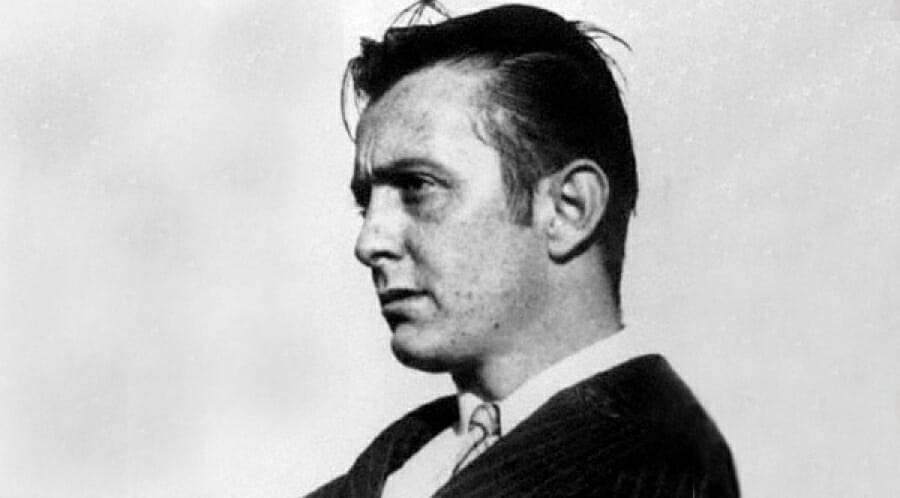

The spirit of L.A.:”What happens to a civilization that grows up alongside the constant vision of dust?”

Featured

Share

Our Tuesday, Sept. 19, hybrid event on John Fante‘s 1939 novel Ask the Dust  is coming up fast. Join us at 7 p.m. (PST) in Levinthal Hall in the Stanford Humanities Center, 424 Santa Teresa Street on the Stanford campus. REGISTER FOR THE EVENT ON THE LINK HEREThe event is free and open to the public. Walk-ins are welcome, but registration is encouraged whether you plan to attend virtually or in personRead more about the event here.

This event is co-sponsored by the Continuing Studies Program and the Division of Literatures, Cultures, and Languages at Stanford, and also the Italian Cultural Institute of San Francisco.

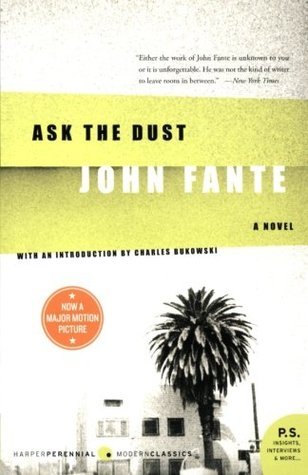
Two weeks ago, we published a story how Joel Williams’s life as a convict turned around when he read Fante’s 1939 novel. “There were no creative writing classes in prison,” he wrote, but with the help of Fante scholar Stephen Cooper, he became a writer. Read about it here. But meanwhile, here’s an excerpt from another successful author, Alan Rifkin. According to NPR: “One of the true L.A. originals, Alan Rifkin is easy to catch in the act of being brilliant.” Here’s another chance to do so, as he discusses Ask the Dust.
Rifkin: “terminal desert from the depths of the paradise dream…”

Every Los Angeles writer at the outskirts of vision feels a connection to Ask the Dust, the 1939 novel that, more than any other, seems to weep over this city’s corpse in the ecstasy of possessing it. (“Los Angeles, give me some of you! Los Angeles come to me the way I came to you, my feet over your streets, you pretty town I loved you so much, you sad flower in the sand, you pretty town.”i We all are sufferers. We’re not sure, exactly, if the intimacy of our suffering will survive the novel’s journey to the big screen, to the masses, to the world. But on the page, it’s strictly ours.

Stephen Cooper’s history with Ask the Dust is even more personal. “I was seeking to fill that absence that I didn’t even consciously know defined me,” he says. “And that was the loss of my father. So I would spend my days just mooning around, moving about, like most young writers, haunted by characters, trying to compose them and failing, failing, failing, failing, failing. . . . And then when I came upon Ask the Dust, it was a time in my life when I was living with every pore open to possibility.” (Citations are from Rikfin’s interviews with Cooper.)

Living, in other words, like Bandini himself, who finally writes his look-at-me novel, only to hurl it to the sands where his goddess went mad. “He’s gotten what he wanted, in terms of having written the book … to be on the shelf next to the big guys. But desire is such that it outlives its fulfillment. And so he must desire something else. … It turns to dust, doesn’t it, the fulfillment of desire. So getting what you want is, if you will, just a beginning of the eternal and unattainable story of desire.”
***
Stephen Cooper was my graduate professor at Cal State Long Beach, and as I was writing this essay, he coined a name for this school of writing: Southern California Dream Realism. Maybe Southern California Dream Realism is just the ultimate extension of anybody else’s literary mode—a way of seeing life stripped of time’s pretense. It’s a manner of always seeing the terminal desert from the depths of the paradise dream, or paradise from the stretches of life’s dry march.

I do know that in our past, in the dark of that pantry, I see the East Coast. Some remnant of ancestry, a quaint hope of continuity, a proper burial gone wrong—Waugh’s mortuary. I see how fooled my childhood was by every architectural simulation of history.

But I don’t know what happens to a civilization, and a literature, that grows up alongside the constant vision of dust. Does the rest of the country even make sense to us here? Was all this aftermath built in from the start? Even the apocalypse, in Los Angeles, feels like history now, the erasures of paradise barely detectable, the age of visions five minutes from over.

That is one scenario for where L.A. literature is heading. Then there is Francesca Lia Block’s view, which she offers in an unpunctuated e-mail: “life/death magic/reality young/old spirit/body masculine/feminine the walls seem to be dissolving and the worlds blending” (from correspondence to Block). In other words, “Paradise Next.”

*Claremont McKenna professor Jay Martin has pointed out that what W. H. Auden called “West’s Disease” — an L.A. collision of foolishness, desire, and illusion named after Nathanael West — could just as well have been named after Fante.
REGISTER FOR THE EVENT ON THE LINK HERE

René Girard @100: the Girard Quartet comes to San Francisco on Sept. 13 for a free concert! Be there!

Featured

Share

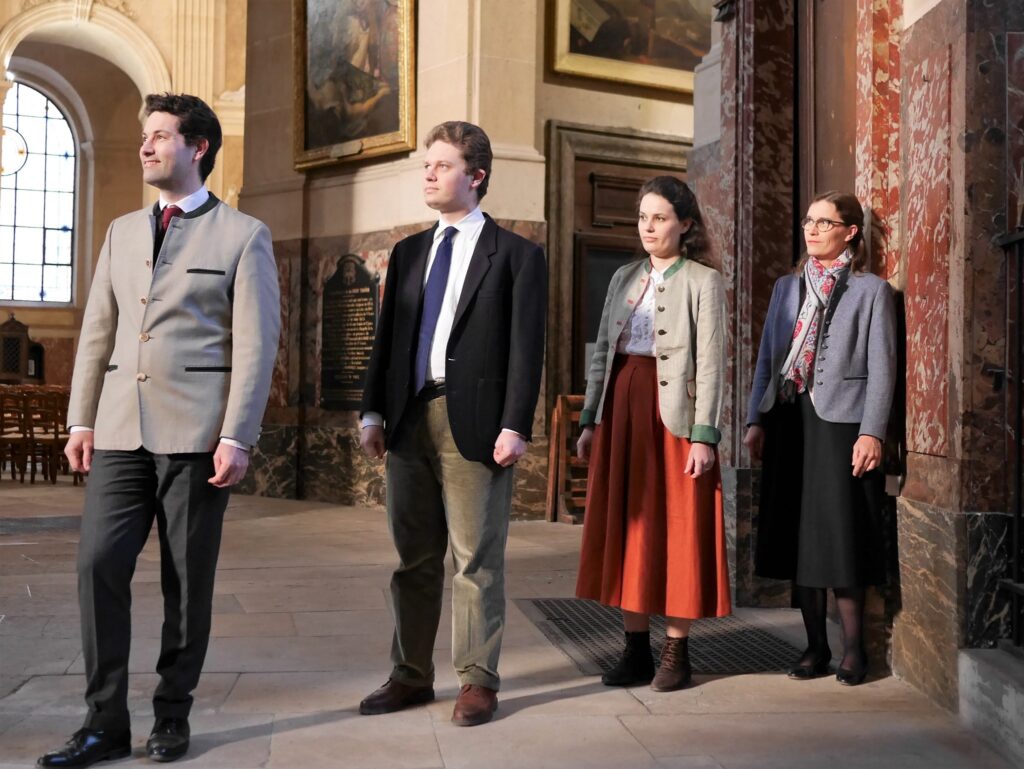
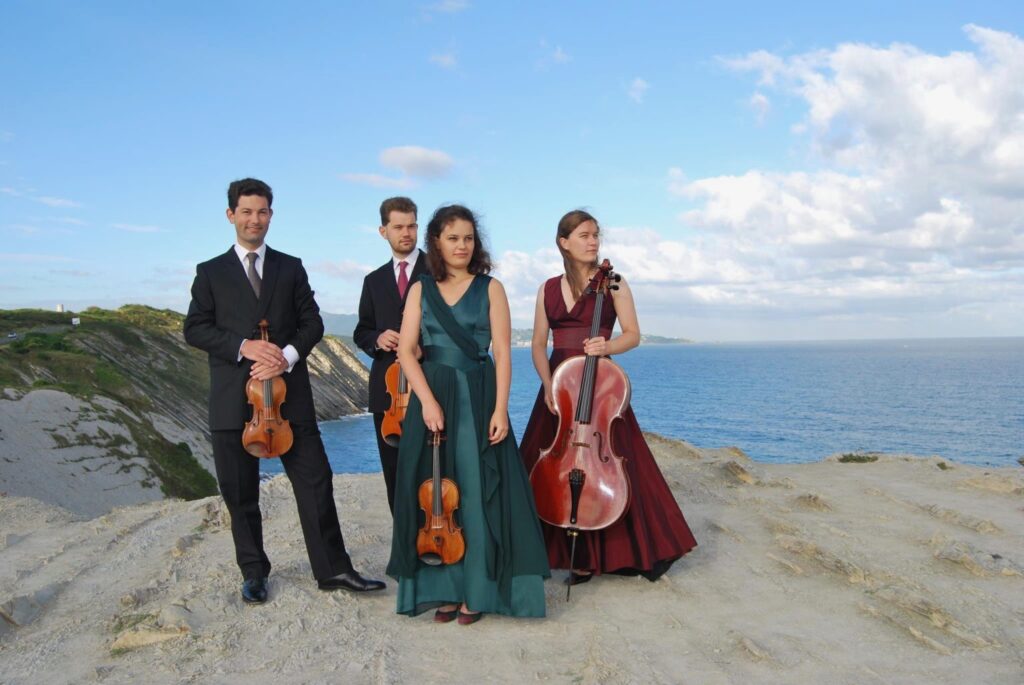
Grégoire Girard and Agathe Girard-Vitani (violins), Hugues Girard (viola) and Lucie Girard (cello)

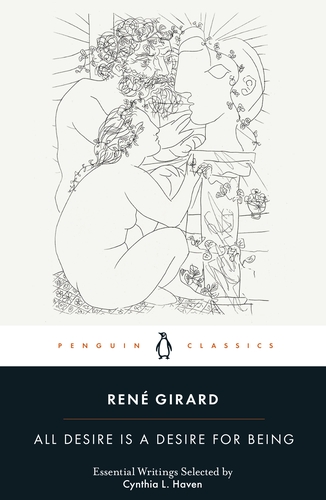
The Book Haven has written much about French theorist René Girard – and this year is the centenary of his birth. I’ve celebrated the occasion with a new Penguin Classic anthology of his “essential writings.” (And I’ve also written about the centenary at Zócalo Public Square “Are We Ready to Listen to René Girard?” – read that article here.) Now the extended Girard family, in America and in France, would like to invite you to a memorial concert, sponsored by the Consulat Général de France à San Francisco. (You can listen to the quartet perform Schubert’s String Quartet #14, in D Minor here, or Beethoven’s 16 opus 135 “Vivace” here.)

Here’s the announcement from the French consulate, in English and French:

His hundredth birthday this Christmas Day

This year is the centenary of the birth of French theorist René Girard (Avignon, December 25, 1923 – Stanford, California, November 4, 2015). The Girard family and the Society of Friends of Joseph René Girard are honoring him with a public concert. The event is free, but you must register here.

On September 13, 2023 at 7 p.m., the Quator Girard will perform at a memorial concert for René Girard, at the Théâtre du Lycée Français de San Francisco (1201 Ortega street, San Francisco). The Girard Quartet includes the grandchildren of the Stanford professor’s older brother, Dr. Henri Girard of Avignon. Including on the program are Bach, Lekeu, and Mendelssohn.

His fellow immortel at the Académie Française, Stanford Prof. Michel Serres, called Girard the “new Darwin of the human sciences.” Girard, a prolific author, began as a literary theorist but eventually ventured into and history, anthropology, sociology, philosophy, religion, psychology and theology. All were woven into his work.

Although René Girard was very humble about his attachment to music, it nourished him greatly and forged a very strong link between him and the Quartet. The quartet includes: Grégoire Girard and Agathe Girard-Vitani (violins), Hugues Girard (viola) and Lucie Girard (cello). The quartet was awarded at the Geneva Competition in 2011, and has been invited to prestigious halls and festivals in France, such as the Auditorium of the Musée d’Orsay. The quartet is also in demand abroad – particularly in Switzerland, Morocco, and Japan.

This event is possible thanks to the support of the Lycée Français de San Francisco, the Consulate General of France in San Francisco, and the Villa Albertine. It is also sponsored by the Académie Française.

***

À l’occasion du centenaire de la naissance de René Girard (Avignon 25 décembre 1923 – Stanford (Californie) 4 novembre 2015), la famille Girard et la Société des amis de Joseph René Girard ont souhaité lui rendre hommage publiquement.

Le 13 septembre 2023 à 19h, le Quator Girard se produira lors d’un concert hommage à René Girard, au Théâtre du Lycée Français de San Francisco (1201 Ortega street, San Francisco).

Son immortel collègue et professeur à Stanford, Michel Serres, l’appelait le nouveau Darwin des sciences humaines. L’auteur, d’abord théoricien de la littérature, se passionnait pour tout. L’histoire, l’anthropologie, la sociologie, la philosophie, la religion, la psychologie et la théologie se retrouvent
dans son œuvre.

Si René Girard exprime très humblement son attachement à la musique, il n’en reste pas moins que celle-ci l’a intensément nourri et qu’elle a été un lien très fort entre lui et le Quatuor. Composé de Grégoire Girard & Agathe Girard-Vitani (violons), Hugues Girard (alto) et Lucie Girard (violoncelle). Il est lauréat du Concours de Genève en 2011. Invité de salles et de festivals prestigieux en France tel que l’Auditorium du Musée d’Orsay, le quatuor est également demandé à l’étranger notamment en Suisse, au Maroc ou au Japon.

Cet évènement est possible grâce au concours du Lycée Français de San Francisco, du Consulat Général de France à San Francisco et de la Villa Albertine. Il est de plus parrainé par Académie Française.

L’événement est gratuit, mais vous devez vous inscrire ici.

The Girard Quartet.

What were Joseph Brodsky’s words on Yevgeny Prigozhin’s grave today?

Featured

Share

The funeral of Wagner head Yevgeny Prigozhin was held today at a private cemetery on the outskirts of St Petersburg, his home town. He died when his business jet crashed last week. It’s been two months since he staged an aborted mutiny against Russian military commanders. At that time, his troops briefly took control of the southern city of Rostov and advanced towards Moscow. Vladimir Putin did not attend the services today.

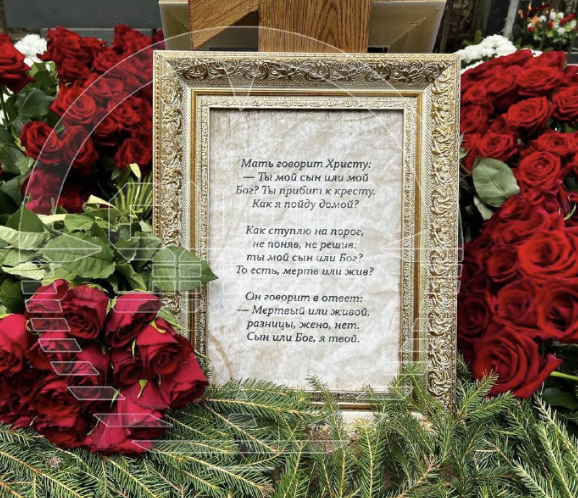
He was buried without military honors, according to Meduza, noting that instead, a few “cryptic” lines from Joseph Brodsky were placed beside his grave.

From The Guardian:

“The farewell to Yevgeny Viktorovich took place in a closed format. Those who wish to say goodbye may visit Porokhovskoye cemetery,” the press service said in its first post on Telegram in two months, ending days of speculation over how the warlord would be laid to rest.

“Pro-Russian media also published images of Prigozhin’s headstone at the Porokhovskoye cemetery. Prigozhin’s name is written on the headstone, alongside a poem by the St Petersburg-born Nobel laureate Joseph Brodsky.”

I wondered which poem was it was, and was not surprised to learn it is “Nature Morte.” As I guessed, it’s the last three stanzas. In George L. Kline‘s translation:

Mary now speaks to Christ:
‘Are you my son? – or God?
You are nailed to the cross.
Where lies my homeward road?

‘Can I pass through my gate
not having understood:
Are you dead? – or alive?
Are you my son? – or God?’

Christ speaks to her in turn:
‘Whether dead or alive,
woman, it’s all the same – 
son or God, I am thine.’

“A window opening when doors were slamming shut all around me”: how John Fante changed a convict’s life

Featured

Share

Please join us at Stanford on for a discussion of John Fante‘s 1939 novel Ask the Dust at 7 p.m. (PST) on Tuesday, Sept. 19, at Levinthal Hall in the Stanford Humanities Center, 424 Santa Teresa Street on the Stanford campus. It’s a hybrid event, so come virtually or in person. REGISTER FOR THE EVENT ON THE LINK HERE! The event is free and open to the public. Walk-ins are welcome, but registration is encouraged, whether you plan to attend virtually or in person. Read more about the event here.

Another Look takes on authors and books that we think deserve more attention.  Fante’s Ask the Dust was forgotten for decades after first appearing in 1939. Since being rediscovered in the 1980s, the novel has gained an enthusiastic international audience and influenced many writers. How much of an influence did Fante’s Ask the Dust have? Read the story below, from a Shoshone-Paiute American Indian prisoner whose life was changed by an encounter with Fante’s remarkable novel. Author Joel Williams’s story, republished from Fordham University Press’s John Fante’s ASK THE DUST: A Joining of Voices and Views (2020) with his permission, comes to us courtesy Stephen Cooper, English Professor at California State University, Long Beach. He is perhaps the world’s leading expert on John Fante.

In addition to the Italian Cultural Institute of San Francisco, this event is co-sponsored by the Continuing Studies Program and the Division of Literatures, Cultures, and Languages at Stanford.

I remember exactly where I was and what I was doing when I first heard about the Los Angeles writer, John Fante. The year was 2008 and the place was Mule Creek State Prison, a maximum-security California penitentiary where I was dragging in my twenty-second year on a twenty-seven-to-life sentence.

I was on the yard, hanging out with a couple of other skins near the pull-up bars, when we heard the gunshot. Men everywhere dropped. It was the guard tower’s mini-14, a totally different sound from the usual 40mm “Big Bertha” riot-control block gun. I had suspected something was about to go down ever since another skin — the term we Natives used for each other — had warned me to keep on my toes. Somebody was going to get moved on.

Stretched out prone in the dirt I lifted my head an inch to eyeball the yard. Guards with batons out and keys jangling on their utility belts ran past with medical staff trailing behind. Cordite filled the air as one man was hoisted onto a gurney and another was led off in handcuffs. Beside me Bear, a skin nicknamed for his size, rested his chin on a paperback.

“What book you got?” I asked.

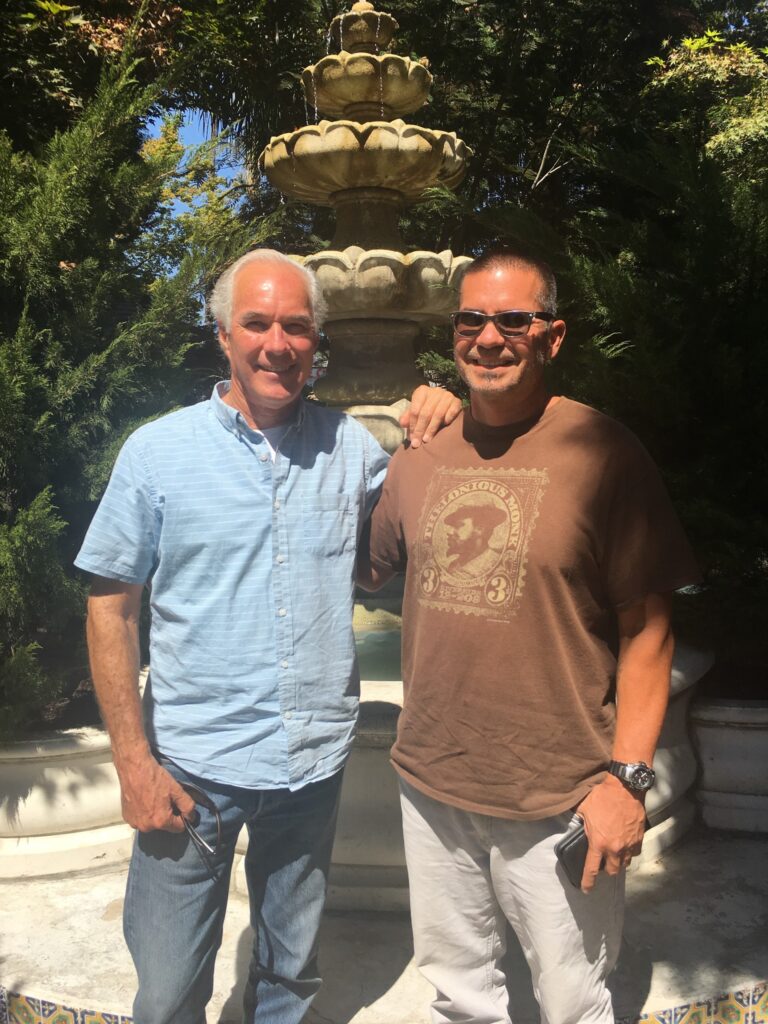
Fante expert Stephen Cooper with Joel Williams.

“You don’t wanna read this.”

“Why’s that?”

“Cause you won’t give it back!”

I smiled and he tossed it over, something to while away the next several days when the whole prison would be on lockdown. Hours later, when we were told to get up and go back to our cells, I stuffed the book in my back pocket.

My neighbor, Norm, later told me through the vent that the guy who got stabbed on the yard was my cellmate, a Maidu Indian named Lance. I was stunned. Sure, Lance had a gambling jones and was always in debt. Sure, he smoked too much herb. But hell, he was a nice enough guy and for me that counted, what with most everyone else out to pick your pocket and cut your throat. So sure, the news hit me hard.

To get my mind off things I picked up Bear’s book. It didn’t look like much — no flashy cover, no promise of action or sleaze. The title was an odd one, Ask the Dust, by a guy from my stomping grounds in Los Angeles. His name was John Fante and I’d never heard of him but as I flipped through the first few pages I saw Bukowski’s name. I knew who he was so I read his introduction. And Bukowski revered John Fante. My literary hero, Bukowski, had a hero himself. I stirred up a cup of instant coffee, climbed into my bunk, and set off on a long night of reading.

And what a night it turned out to be. Fante’s character Arturo Bandini pulled me into a Los Angeles I’d never experienced, an earlier world colored with subtle shades of poetry and streaks of vivid emotion. Bandini was exuberant, alive, searching. I reread sentences, whole passages, soaking in the beauty of Fante’s words, wringing every nuance of meaning from his prose. And as always happened when I savored another writer’s work, I felt the tug of jealousy. I too wanted to create beautiful works and move people, and once again I’d been beaten to the punch.

Continue reading

“Los Angeles come to me the way I came to you … you sad flower in the sand.” Come join us Sept. 19 for John Fante’s “Ask the Dust”!

Featured

Share
“All at once I was full of plans. Laguna Beach!” John Fante (1909-1983)

Please join us at Stanford on for a discussion of John Fante‘s 1939 novel Ask the Dust at 7 p.m. (PST) on Tuesday, Sept. 19, at Levinthal Hall in the Stanford Humanities Center, 424 Santa Teresa Street on the Stanford campus. It’s a hybrid event, so come virtually or in person. Registration here or below.

Something you may not have known about Fante. He was the son of Italian immigrants, born in 1909 (he died in 1983). Hence, Italy considers him one of its own. So we’re partnering with the Italian Cultural Institute of San Francisco for the event!

Poet Charles Bukowski (not Italian) said the book had a lifetime influence on his own writing, and that the works of Fante, a novelist, short story writer, and screenwriter, were “written of and from the gut and the heart.”

“One day I pulled Ask the Dust down from the library book shelf and stood for a moment, reading.  Then like a man who had found gold in a city dump, I carried the book to a table.  The beginning of that book was a wild and enormous miracle for me….Fante became my god.” 

The book was adapted into a 2006 film starring Colin Farrell and Salma Hayek.

Panelists will include Stanford Prof. Robert Pogue Harrison, author, director of Another Look, host of the radio talk show and podcast series Entitled Opinions, and a regular contributor to the New York Review of Books, and Stanford Prof. Tobias Wolff, one of America’s leading writers and the founding director of Another Look, as well as a recipient of the National Medal of Arts. Novelist Terry Gamble will round out the panel. Many will remember her from the Another Look discussion of Alfred Hayes‘s My Face for the World to See in 2019.

Copies are available as in Kindle and paperback. (In a pinch, the book is even available in a less user-friendly pdf format online.)

In addition to the Italian Cultural Institute of San Francisco, this event is co-sponsored by the Continuing Studies Program and the Division of Literatures, Cultures, and Languages at Stanford.

REGISTER ON THE LINK HERE

Postscript: There’s more! Read about how Fante’s Ask the Dust turned around the life of a convict: here. What happens to a civilization that grows up alongside the constant vision of dust? Read novelist Alan Rifkin’s take on that here.

“Ecstatic Pessimist”: Peter Dale Scott’s new book on poet, friend Czesław Miłosz is out!

Featured

Share
Peter remembers a long collaboration

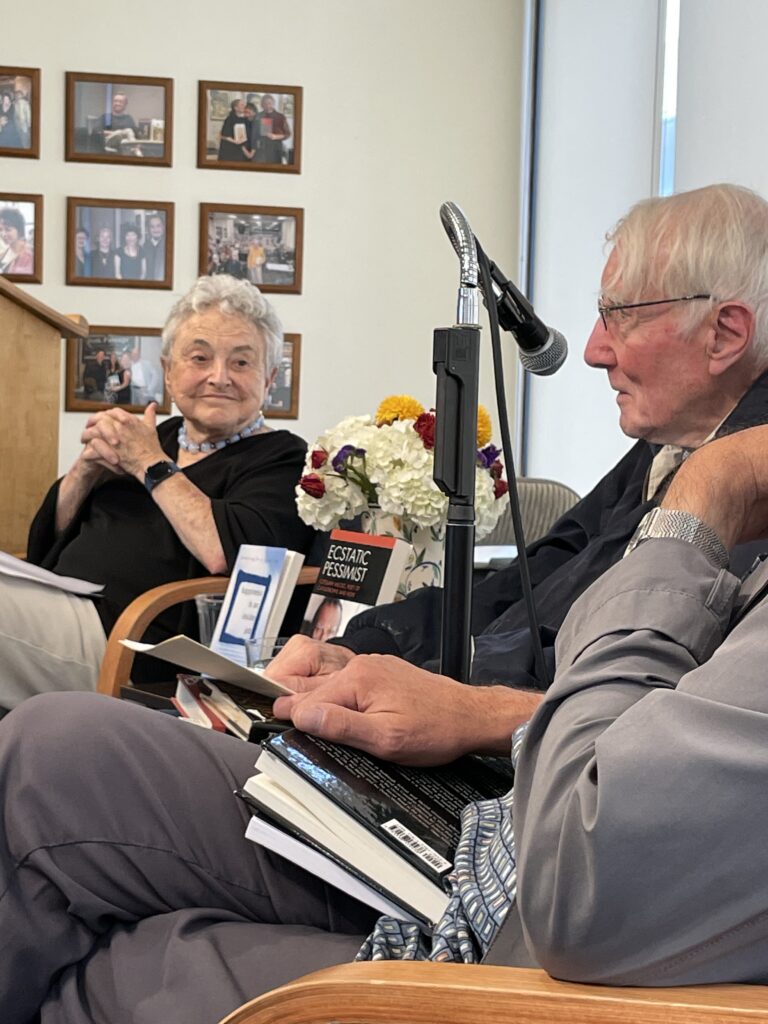
Author Peter Dale Scott‘s newest book has been a long time in the making. Peter has been sharing his drafts of Ecstatic Pessimist: Czeslaw Milosz, Poet of Catastrophe and Hope with me for at least a decade, and the road to publication has been long and arduous. The volume was finally published by Rowman & Littlefield in July. So a celebration is in order.

“Book Passage,” a vast and legendary bookstore in Corte Madera, fêted the occasion with a reading and onstage conversation on the hot afternoon of Sunday, July 16.

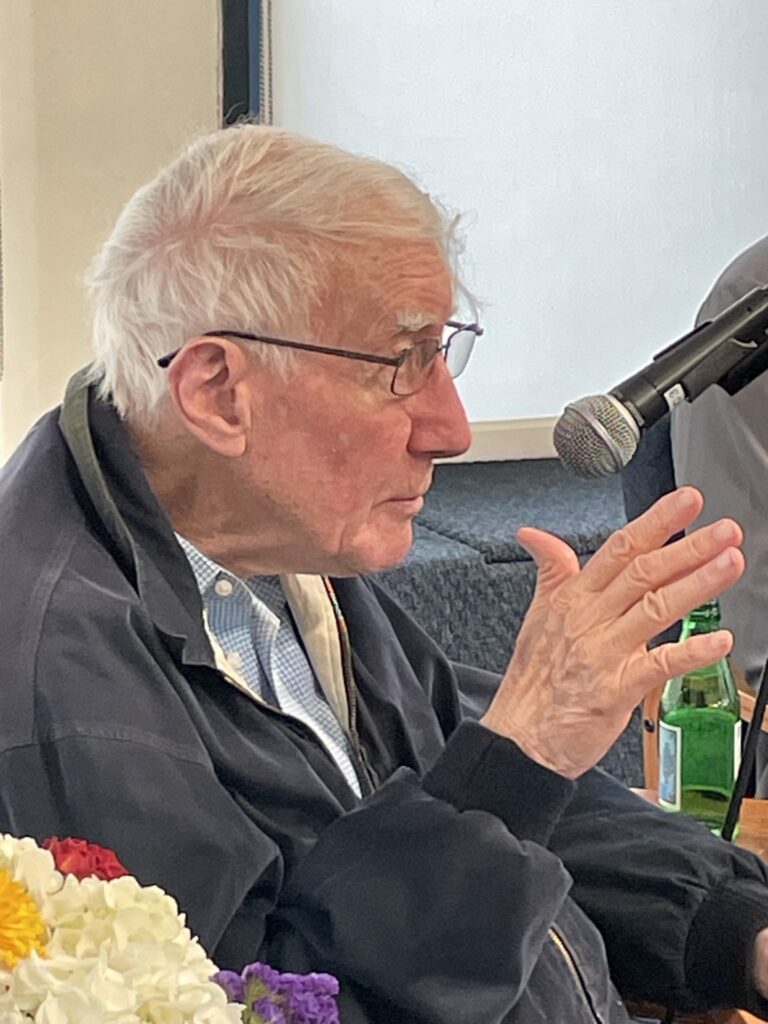
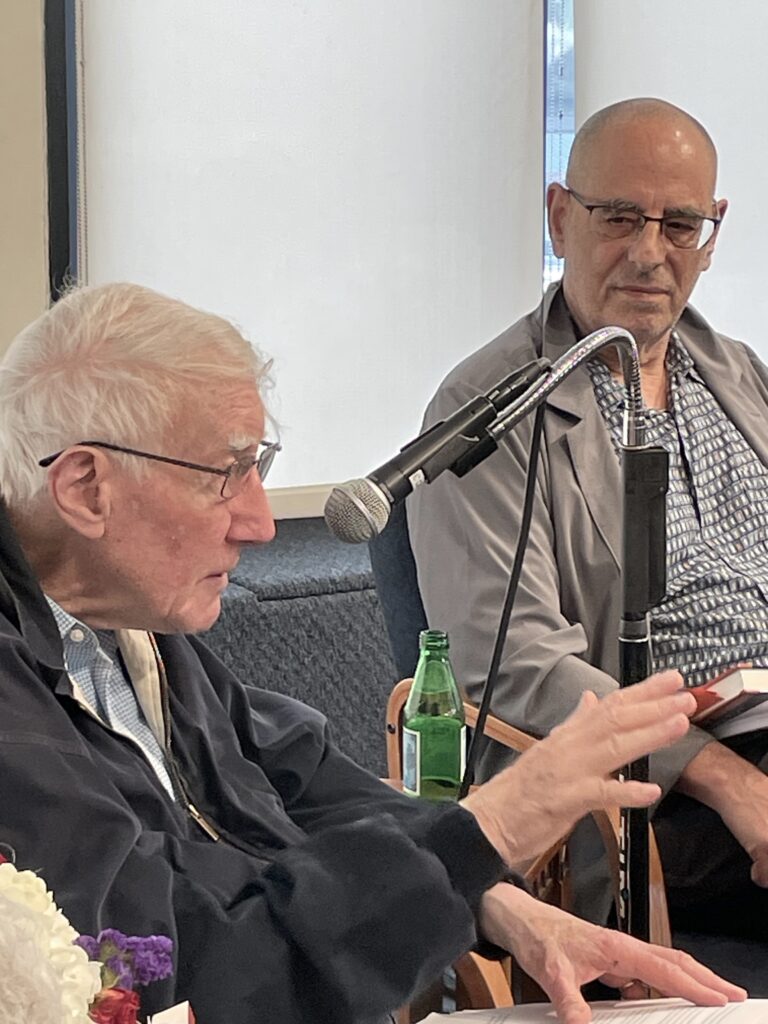
I made the long trip from Palo Alto to Marin to hear the nonagenarian poet, translator, author, Berkeley professor, and former Canadian diplomat – spending time with Peter is always a good idea. His wisdom is formidable and his anecdotes insightful. Many of the people gathered that afternoon thought so, too: it was a gratifyingly full house, and a very friendly one, as well. (Photos by the Book Passage’s Jonathan Spencer.)

Peter was the first translator of Milosz into English, collaborating with the poet in the early 1960s. He is also the first translator for Zbigniew Herbert. For that, the Anglophone world owes him a double debt of gratitude. And so does the Polish world. The work of Milosz’s translators then and since have brought Polish literature to the fore as one of the world’s great literary treasures. (Early in his exile, Milosz referred to Polish despairingly as an “unheard-of tongue.” How times have changed!)

My two cents are included on a back cover blurb: “We are fortunate to have Scott as a guide to one of the greatest poets of our times, offering us a wise, insightful, and deeply learned journey through Milosz’s poems and life in these pages.” And so he does.

Clarifyiing a point with Norman Fischer

Peter discussed his book and read several poems and passages before he shared the onstage conversation with Norman Fischer, a poet and Buddhist priest, and psychologist Sylvia Boorstein.

The excerpt he read from his book touched on his long, sometimes conflicted, but unforgettable relationship with the poet:

“I can only say that I have tried to be true to the Milosz I knew and loved in the early 1960s, the man who cared enough about literature to devote his life to it, and yet rejected the offer of a farm where he would not have had to do anything else,” he said. [Friend Thornton Wilder offered him that pastoral possibility when the Polish poet defected.]

Here’s what he read:

A question from Sylvia Boorstein

“‘What is poetry, that does not change/Nations or people?’ That question, not yet translated into English, electrified me in Milosz’s home in 1961, when I first read it. It was my hope, then, that Milosz’s poetry might help change not just American ‘poetry of the “well-wrought urn”’ but America itself, indeed the world.”

“I believed, in short, in the efficacy and potential of Milosz’s strategy for cultural evolution (ethogeny) or what Milosz called his ‘unpolitical politics.’ When I began this book … I was thinking of the power of poetry to enhance and advance politics, as I noted in the influence of Paradise Lost, described by historians, on the American Revolution.

book photo

“Thus the doorway to my thinking … on the acknowledged contribution of Milosz’s writings, both in poetry and prose, to the success of the Polish Solidarity Movement.

“That is still my hope today. But writing this book has changed me, just as Milosz himself evolved. I now consider his role in Solidarity to be incidental, almost a footnote, to his global role in renewing shared values twoard ‘an open space ahead,’ a revitalized mindset beyond conservatism, modernism, and postmodernism.”

Copies of the book were snapped up and purchased afterward and Peter signed them – a gratifying reception for the 94-year-old poet who still has more projects to finish. Thanks and congratulations to Peter, long may he live and write!