Words of wisdom:Think you’re past it at 70, 80, or 90? Here’s a cheering thought. I recently found this sentence somewhere on the internet: “In case you’re worried that you’re too old to pursue your dreams … Frank Lloyd Wright completed a third of his life’s work between the ages of 80 and 92.” Was it his best work? I don’t know. Does it really matter?
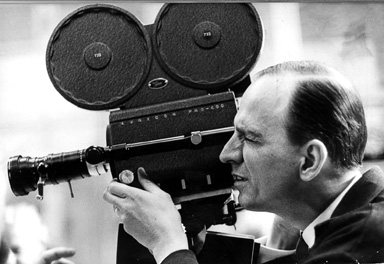
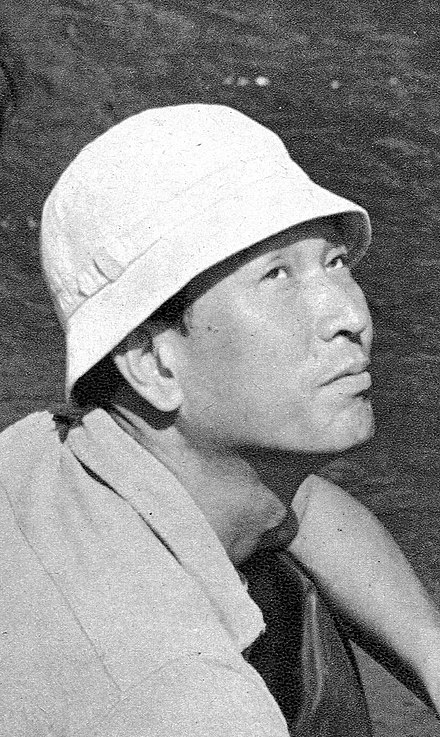
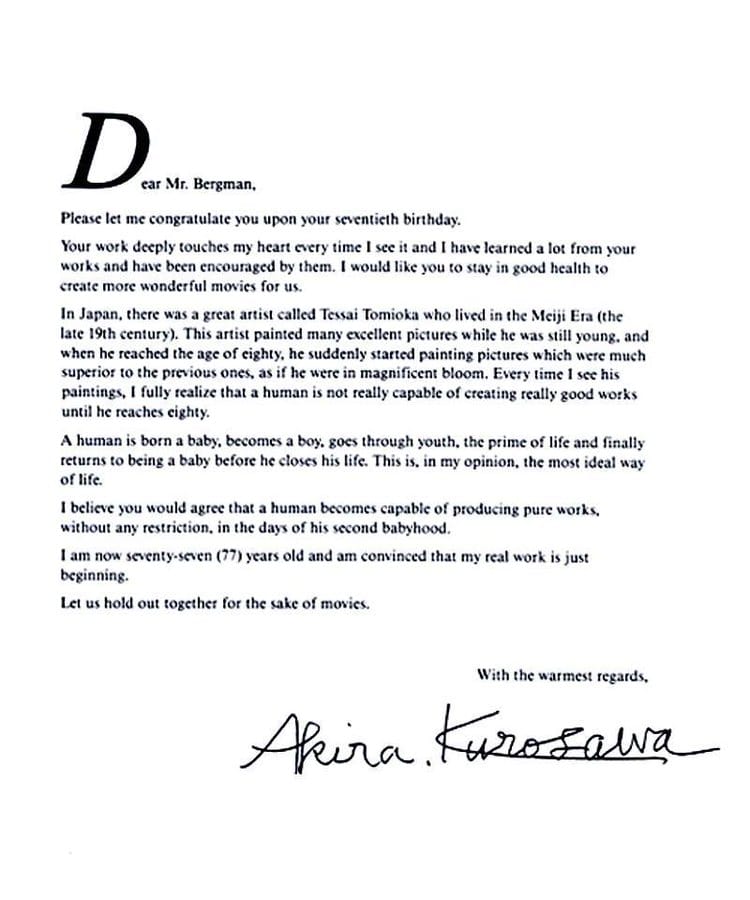
Another story in a similar vein, from a different part of the world: Swedish film director and theater Ingmar Bergman turned 70 on July 14, 1988. On that occasion, he received a letter of advice from the Japanese filmmaker and painter Akira Kurosawa. Here is the letter he sent, posted on Facebook … and, inevitably, elsewhere on the internet. Kurosawa contends: “A Human Is Not Really Capable of Creating Really Good Works Until He Reaches 80.”
He concludes: “Let us hold together for the sake of movies.”
Poet David Mason writes about friend and fellow poet Anthony Hecht in The Wall Street Journal. Two books mark Hecht’s 100th birthday this year – a biography and a new collected. Mason writes:
“The poet and critic David Yezzi’s Late Romance (St. Martin’s) is a first-rate literary biography, graceful, thorough and moving, without the bloat commonly found in such endeavors. And the English publisher and editor Philip Hoy has given us a superb Collected Poems: Including Late and Uncollected Work (Knopf), including not only work from Hecht’s previous collections but also seven beautiful ‘Late Poems From Liguria’ and a worthwhile selection of uncollected work. Since Hecht is among the most erudite of modern poets, steeped in the Bible as well as Shakespeare, readers may be pleased to find nearly 50 pages of textual notes, plus a brief chronology.”
Mason writes: “Born to a family of nonobservant Jews in New York City, Hecht grew up with privilege but also a sense of life’s precariousness. His father frequently failed in business and thrice attempted suicide. His mother’s social pretensions eventually got on Hecht’s nerves. At the age of 6 he saw one result of the 1929 market crash—the blanket-covered bodies of suicides lying on the sidewalks.”
Hecht served in the U.S. Army during World War II, and served as a translator from French and German at ‘the liberation of Flossenbürg Concentration Camp . . . an hour’s drive from his Jewish great-grandfather’s hometown of Buttenheim,’ Yezzi writes. “What he saw in that camp and in combat ruined his sleep.”
His marriage was unhappy. Patricia Harris, a fashion model whom Sylvia Plath called as “pleasant as razor blades,” eventually moved to Brussels. His second marriage iin 1971, to Helen D’Alessandro, celebrated in his marvelous book Millions of Strange Shadows (1977).
Mason’s review concludes: “Readers will differ in their own responses to individual works, but no other recent poet in English has left us such an abundant display of what a certain kind of talent—ironic, formal, elegant—can do. He was my teacher and friend, which leaves me echoing what he said of his friend Joseph Brodsky: ‘Reader, dwell with his poems.’”
Read the whole thing over at the Wall Street Journalhere.
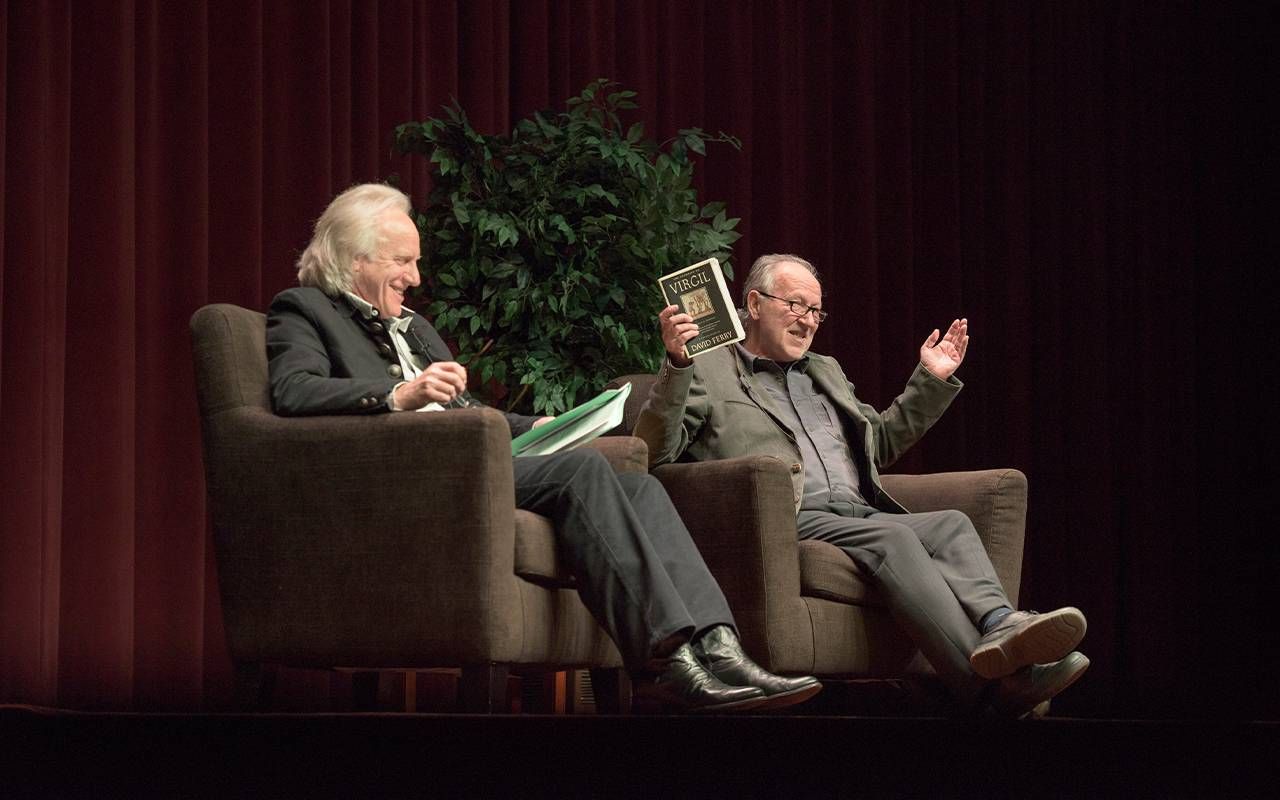
Werner Herzog, on right, with Robert Harrison | Credit: L.A. Cicero/Stanford News Service
Stanford’s “Another Look” club has gotten a lot of praise in the years since it was founded in 2012 by novelist Tobias Wolff (and now under the directorship of Robert Pogue Harrison) – among other surprises, we werefeatured in The Guardian. We’ve bragged about Another Look’s triumphs here and here and here.
Someone else has taken up the banner. Journalist Sharon McDonnell wrote an article in Next Avenue about books clubs generally, but with special attention to Stanford’s Another Look. Next Avenue, a digital journalism publication produced by Twin Cities PBS. The PBS site has served over 80 million people, and millions more through its platforms and partnerships.
Her article begins:
The Continuing Studies Program of Stanford University was stunned when 961 people attended its book club’s free talk about A Room of One’s Own, Virginia Woolf‘s 1929 classic, in April 2023, in person or via Zoom.
But then, it’s not just any book club. German filmmaker Werner Herzog has been a speaker. Philip Roth agreed to an interview. The club always features panelists who are scholars or writers, who discuss a book before opening to audience questions. Ostensibly for the Stanford community, the club is in reality for anyone who wants to listen, since its talks are posted on the Another Look Book Club website and on YouTube.
Woolf on Zoom
This club shines a spotlight on books that are forgotten or merit more attention, some plucked from obscurity, others read decades ago, that are short (200 pages or so) and in print. Almost entirely fiction, book choices span almost 400 years and three continents, from The Queen’s Gambit, which became a Netflix series, to The Princesse de Clèves, a 1678 book most people are unfamiliar with. (Unless you’re a public sector worker in France, whose entrance exams include questions on it. After Nicolas Sarkozy, then President of France, denounced the book in 2009, sales doubled in a year.)
Ask the Dust, a 1939 novel set in Depression-era Los Angeles, The Lover, a novel about Vietnam in French Colonial days and The Strange Case of Dr. Jekyll and Mr. Hyde show the club’s range.
Why so much fiction?
Read the rest of the story here. And join our mailing list here.
Oedipus was one of René Girard‘s ongoing interests, and his interpretation of the Greek myth was controversial and groundbreaking. Hence, one of the liveliest presentations during last summer’s Paris conference for the French theorist’s centenary was anthropologist Mark Anspach‘s short talk on the subject. Anspach is the editor of 2020’s The Oedipus Casebook: Reading Sophocles’ Oedipus the King. (You can read previous posts by and about him here and here and here and here, among other places.) He began this way:
Last year, French television broadcasted a noteworthy debate between two eminent figures. On one side, a 1960s student activist who later served in the European parliament. On the other, a philosophy professor and former minister of education known for his critiques of French theorists of the ‘60s. I will quote highlights from their debate in the original French to avoid losing any nuances, and then I will attempt an English translation.
And then there will be a quiz.
First in French:
––Tu dis que des conneries. ––Ta gueule! ––La tienne, pauvre crétin.
Now in English:
––You’re spouting pure BS. ––Shut your face! ––You shut yours, you pathetic dumbhead.
When I saw media accounts of this dialogue, I immediately thought of… Sophocles! That is because my view of the Greek playwright was shaped by the late, great Stanford thinker René Girard. As we will see, the quoted lines illustrate the same dynamic of conflict that Girard uncovers in the dialogues of Sophocles’ Oedipus the King.
So now the quiz. The first question is: what was the debate between the former student activist and the philosophy professor about?
Well, based only on the above excerpts, there is no way to know. I quoted from the most heated moment of the dispute, when passions ran highest. But in that moment, the original theme of the debate was forgotten. As Girard tells us, when a conflict escalates, the rivalry itself comes to the fore and the original object of the dispute is lost from view.
That doesn’t mean that the dispute is not originally motivated by real differences in political ideology or conceptual outlook. This brings us to my second question: which of the lines quoted were spoken by the activist and which expressed the Weltanschaung of the philosopher?
Once again, there is no way to know. Even if you studied for this quiz by reading every book either of them ever wrote, it would still be impossible to guess who said “Shut your face” and who replied “You shut yours.” No matter how far apart the antagonists were at the outset, their differences dissolve at the height of their rivalry. As Girard holds, the more a rivalry intensifies, the more the antagonists resemble each other.
Yet the more they resemble each other, the more each is convinced he is right and the other is wrong. As it happens, it was the philosophy professor who said “You shut yours.” At the moment he spoke, he had good reason to believe he was right. Was not his rival wrong to insult him by saying “Shut your face”? He should have kept his big mouth shut!
What the philosopher may not see in the heat of the moment is that, by opening his own mouth and saying “You shut yours,” he is behaving exactly like his antagonist. In fact, he is imitating him. Rivalry fueled by imitation is what Girard dubs mimetic rivalry. As Girard shows, conflicts intensify through mutual imitation, moving toward ever greater reciprocity and symmetry.
The more symmetrical a conflict is, the harder it is to say who’s right and who’s wrong. Indeed, if you look at the reasons invoked by each side, you will often find that both parties are right. The philosopher was right in that his antagonist should not have said “Shut your face.” But his rival was equally right in that the philosopher should not have said he was spouting BS.
Each party sees half the truth: the half that applies to the other. To speak the truth about the other’s role in a dispute without recognizing that the same truth applies to ourselves amounts to scapegoating the other. It amounts to scapegoating even if the other is guilty as charged.
This is a key point. A scapegoat does not have to be innocent. To single out one of the rivals as uniquely responsible for the rivalry is itself a form of scapegoating. If each of two antagonists is guilty, if each speaks only half the truth – the half that applies to the other – then the scapegoating is mutual or reciprocal. This kind of reciprocal scapegoating is typical of mimetic rivalry. It is part of the symmetry that characterizes the rivalry.
Tit-for-tatescalation
But symmetry is not the whole story. There is also a tendency to escalation. Each party tries to get the better of the other by launching a bigger insult, a bolder accusation, a stronger blow. This can be understood as an attempt to break free of the symmetry by establishing what Girard in Oedipus Unbound calls a “dissymmetry” capable of re-differentiating the antagonists.
The philosopher does not merely respond in kind to the phrase “Shut your face” by replying “Shut yours.” Responding in kind would leave both parties on the same footing. He also adds a new observation designed to transcend the tit-for-tat exchange. It is as if he were saying: “You tell me to shut my face. I tell you to shut your face. It may look like we are the same. But there is a difference between us. And that difference is that you are a pathetic dumbhead.”
The precise term used was “cretin.” Strictly speaking, cretinism is a form of mental disability caused by thyroid insufficiency. Now, our philosopher is a lucid and intelligent man. Do we take him at his word when he asserts that his adversary is suffering from cretinism? Of course not. We assume that he is speaking out of anger. We react as the chorus in Oedipus the King reacts amidst the debate between Oedipus and Tiresias. “It is anger, I think, that inspires Tiresias’s words,” says the chorus, “and yours too, Oedipus.”
The sage of Stanford: René Girard
The debate between Oedipus and Tiresias is at the heart of Girard’s analysis. Oedipus hopes Tiresias will shed light on the murder of the previous ruler, Laius. According to Creon, the oracle blames the plague in Thebes on the fact that this crime was left unpunished, and Oedipus has vowed to hunt down whoever is responsible. But when Oedipus questions Tiresias, the renowned prophet stubbornly refuses to answer.
Oedipus grows increasingly exasperated. Finally, he declares that Tiresias must be guilty himself. Tiresias retorts that it is Oedipus who is guilty. In Violence and the Sacred, Girard interprets Tiresias’s words as “an act of reprisal arising from the hostile exchange.” By accusing Tiresias of being behind the murder of Laius, Oedipus prods him into “hurling the accusation back at him.”
Oedipus dares Tiresias to repeat the accusation. Not only does Tiresias repeat it, he tops it with a new, more terrible charge, insinuating that Oedipus is the son of the man he killed and of the widow he married. It is as if Tiresias were saying: “You accuse me of killing Laius. I accuse you of killing Laius. It may look like we are the same. But there is a difference between us. The difference is that you, Oedipus, are a patricidal motherlover!”
Is Tiresias right? Is Oedipus guilty?
From hunter to hunted
Violence and the Sacred suggests that Oedipus is not guilty. In that book, Girard uses Sophocles’ tragedy to introduce the concept of the surrogate victim or scapegoat. Oedipus, an outsider with a lame foot, is a scapegoat made to bear sole blame for the plague in Thebes. The accusations of patricide and incest leveled against him are typical mythic accusations. As crimes that abolish the most fundamental kinship distinctions, patricide and incest are signifiers of raging undifferentiation.
The plague itself, an illness that strikes everyone without distinction, has the same meaning. The real plague, the gravest crisis afflicting Thebes, is the breakdown of distinctions, the plague of undifferentiation to which the protagonists contribute by hurling back and forth the same accusations. Each accuses the other of being responsible for the crisis.
The question is who will succeed in making the accusation stick. When Oedipus ultimately accepts the charge of patricide and incest, he becomes the monstrous embodiment of undifferentiation. The loss of difference is laid at the door “not of society at large, but of a single individual.” The social crisis is resolved at the expense of a lone victim. The mythic nature of the accusations of patricide and incest suggests that Oedipus is innocent. In his later works, Girard emphasizes the scapegoat’s innocence.
But in Violence and the Sacred, Girard also highlights the role played by Oedipus himself in the scapegoating process. In Sophocles’ play, Girard writes, the “entire investigation is a feverish hunt for a scapegoat, which finally turns against the very man who first loosed the hounds.” Oedipus is the man who loosed the hounds. He tried to pin the blame for the crisis on Tiresias and Creon. He took part in the game of reciprocal accusations that was one with the crisis afflicting Thebes.
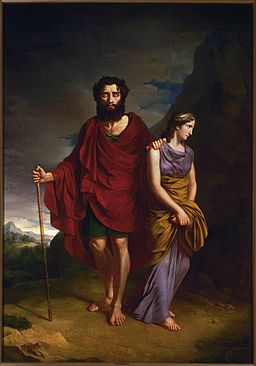
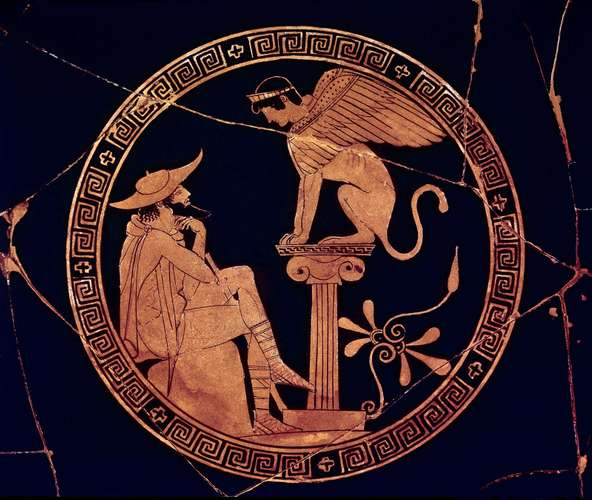
Oedipus and the Sphinx
If Girard is right, Oedipus may well be an innocent man wrongly accused of patricide and incest. As shown in The Oedipus Casebook, the evidence against him is not as solid as one might think. But Oedipus is not wholly innocent. He accuses others of responsibility for a crisis in which he himself shares the blame.
What is important for Girard in his early writings is not the substance of the accusations of incest or patricide or murdering Laius. It is the fact that Oedipus accuses others of guilt only to discover that he himself is guilty. That is the feature of Sophocles’ tragedy that first drew Girard’s attention and ultimately led him to his famous scapegoat theory.
In an early essay in Oedipus Unbound, Girard compares Sophocles’ hero to the Proustian snob: “The snob has no other model than the snob. He therefore has no other rival.” That is why the snob trumpets “his hatred of snobbery.” Seen in this light, “Oedipus’s excessive indignation, his zeal to track down the culprit, are revealing.” They call to mind the passion with which the Proustian snob denounces snobs. So it is that Oedipus “accuses Creon and Tiresias of the crime he himself committed.”
To use the language of Girard’s later writings, Oedipus scapegoats his rivals. To single out one’s rival as uniquely responsible for the rivalry is itself a form of scapegoating. This type of scapegoating is taking place all around us today. The degeneration of public debate into exchanges of insults is a clear sign of crisis. In this sense, the situation we are living through now is not unlike the one portrayed in Oedipus the King. If we see Oedipus purely as an innocent man accused of patricide and incest, then his experience will seem distant from our own. But if we see him as a person who accuses others before realizing that they are not free of blame themselves, then perhaps Sophocles’ play can help us navigate the present crisis.
It’s hard to pick a favorite essay from my new anthology, All Desire Is a Desire for Being: Essential Writings – all of the pieces by French theorist René Girard are exceptional, otherwise I wouldn’t have picked them – but the essay on Peter’s Denial is certainly high on the list. So I was very pleased when the University of Notre Dame decided to publish the piece in its eminent Church-Life Journal, under the editor and friend Artur Sebastian Rosman, who is also a Czesław Miłosz scholar.
An excerpt from “The Question of Mimesis and Peter’s Denial“:
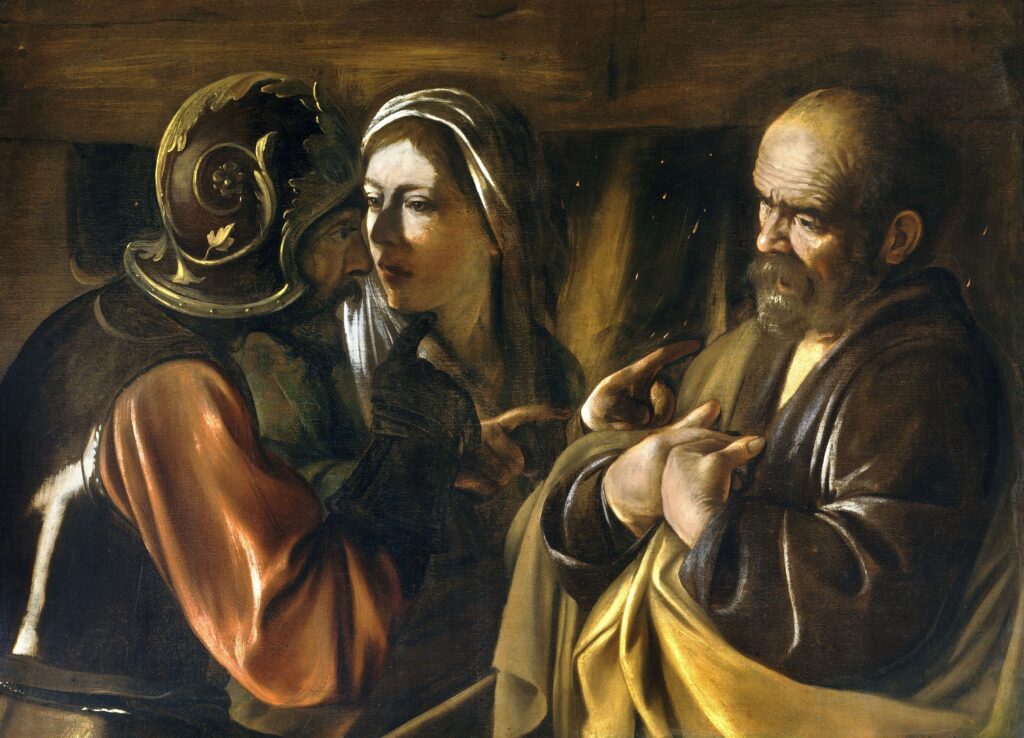
After Jesus had been arrested, the disciples fled in all directions, but Peter alone or, according to John, Peter and another disciple, followed at a distance right into the courtyard of the High Priest’s palace, and, I quote: “there he remained, sitting among the attendants, warming himself at a fire.” John says that “the servants and the police had made a charcoal fire, because it was cold, and were standing round it warming themselves.” And Peter too “was standing with them, sharing the warmth.”
The text shifts to inside the palace, where a hostile and brutal interrogation of Jesus was taking place. Then we shift back to Peter and, again I quote:
Meanwhile Peter was still in the courtyard downstairs. One of the High Priest’s servant girls came by and saw him there warming himself. She looked into his face and said, “You were there too, with this man from Nazareth, this Jesus.” But he denied it: “I do not know him,” he said. “I do not understand what you mean.” Then he went outside into the porch; and the girl saw him there again and began to say to the bystanders, “He is one of them,” and again he denied it.
Again, a little later, the bystanders said to Peter, “Surely you are one of them. You must be; you are Galilean.” At this he broke out in curses, and with an oath he said: “I do not know this man you speak of.” Then the cock crowed a second time; and Peter remembered how Jesus had said to him, “Before the cock crows twice you will disown me three times.” And he burst into tears.
Auerbach makes some shrewd comments on that text: “I do not believe,” he writes, “that there is a single passage in an antique historian where direct discourse is employed in this fashion in a brief, direct dialogue.” He also observes that “the dramatic tension of the moment when the actors stand face to face has been given a salience and immediacy compared with which the dialogue of antique tragedy appears highly stylized.” It is quite true, and I am not averse to using such words as “mimesis” and “mimetic realism” to describe the feeling of true-to-life description which is created here, but I do not think that Auerbach really succeeds in justifying his use of the term “mimesis.”
Careful and sensitive as he is as a reader, Auerbach did not perceive something that is highly visible and which should immediately strike every observer: it is the role of mimesis in the text itself, the presence of mimesis as content. Imitation is not a separate theme but it permeates the relationship between all the characters; they all imitate each other. This mimetic dimension of behavior dominates both verbal and non-verbal behavior. Peter’s behavior is imitative from the beginning, before a single word is uttered by anyone.
In Mark and John, when Peter entered, the fire was already burning. People were “standing round warming themselves.” Peter too went to that fire; he followed the general example. This is natural enough on a cold night. Peter was cold, like everybody else, and there was nothing to do but to wait for something to happen. This is true enough, but the Gospels give us very little concrete background, very few visual details, and three out of four mention the fire in the courtyard as well as Peter’s presence next to it. They mention this not once but twice. The second mention occurs when the servant girl intervenes. She sees Peter warming himself by the fire with the other people. It is dark and she can recognize him because he has moved close to the fire and his face is lighted by it. But the fire is more than a dramatic prop. The servant seems eager to embarrass Peter, not because he entered the courtyard, but because of his presence close to that fire. In John it is the courtyard, upon the recommendation of another disciple acquainted with the High Priest.
A fire in the night is more than a source of heat and of light. A fire provides a center of attraction; people arrange themselves in a circle around it and they are no longer a mere crowd; they become a community. All the faces and hands are jointly turned toward the fire as in a prayer. An order appears which is a communal order. The identical postures and the identical gestures seem to evoke some kind of deity, some sacred being that would dwell in the fire and for which all hands seem to be reaching, all faces seem to be watching.
There is nothing specifically Christian, there is nothing specifically Jewish about that role of fire; it is more like primitive fire-worship, but nevertheless it is deeply rooted in our psyches; most human beings are sensitive to this and the servant girl must be; that is why she is scandalized to see Peter warm himself by that fire. The only people who really belong there are the people who gravitate to the High Priest and the Temple, those who belong to the inner core of the Jewish religious and national community. The servant maid probably knows little about Jesus except that he has been arrested and is suspected of something like high treason. To have one of his disciples around the fire is like having an unwelcome stranger at a family gathering.
The fire turns a chance encounter into a quasi-ritualistic affair and Peter violates the communal feeling of the group, or perhaps what Heidegger would call its Being-together, its Mitsein, which is an important modality of being. In English, togetherness would be a good word for this if the media had not given it a bad name, emptying it entirely of what it is supposed to designate.
This Mitsein is the servant girl’s own Mitsein. She rightfully belongs with these people; but when she gets there, she finds her place occupied by someone who does not belong. She acts like Heidegger’s “shepherd of being,” a role which may not be as meek as the expression suggests. It would be excessive in this case to compare the shepherd of being with the Nazi stormtrooper, but the servant maid reminds us a little of the platonic watchdog, or of the Parisian concierge. In John she is described as precisely that, the guardian of the door, the keeper of the gate.
This Mitsein is her Mitsein, and she wants to keep it to herself and to the people entitled to it. When she says: “You are one of them, you belong with Jesus,’ she really means, ‘You do not belong here, you are not one of us.”
We always hear that Peter acts impulsively, but this really means mimetically. He always moves too fast and too far; but still, why move so close to the center, why did the fire exert such an attraction on him?
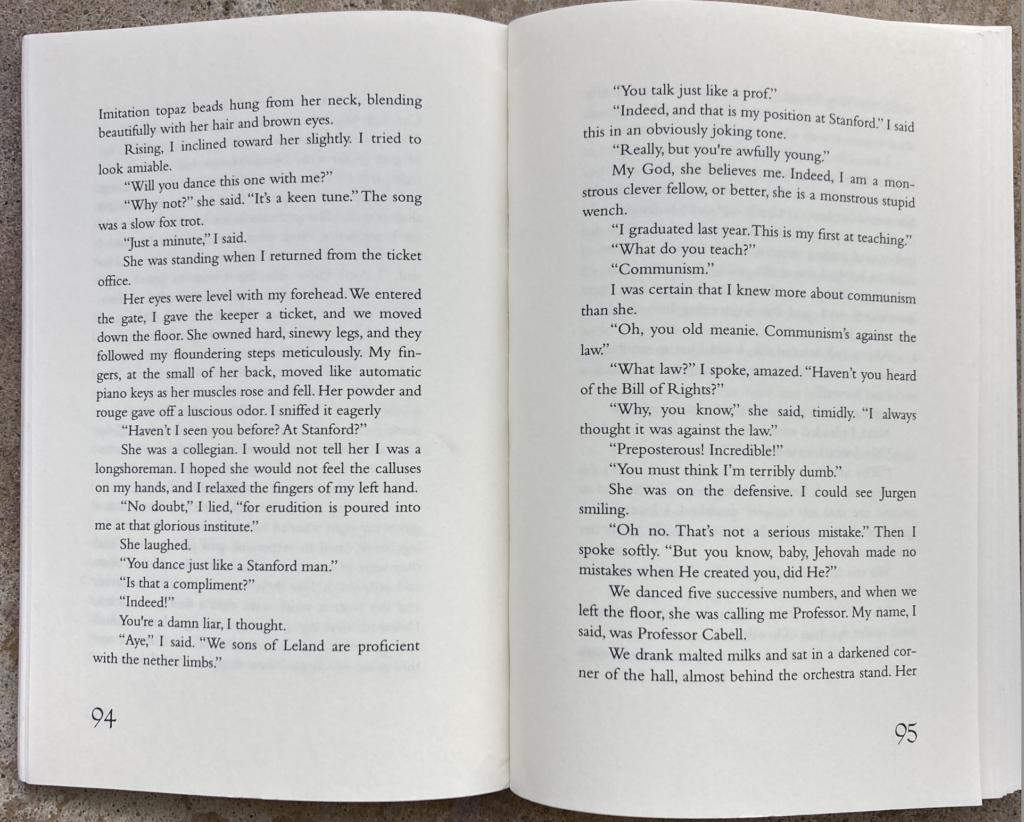
But who knew Fante wrote a short story with Stanford on his mind? Says Cooper about the wistful Stanford references included in the pages above from his short story, ‘To Be a Monstrous Clever Fellow’: “Fante may have helped usher in The Book Haven’s first prison stabbing but something tells me his delirious ‘To Be a Monstrous Clever Fellow’ won’t fly. It’s awfully good for a laugh though …”
Stanford was more than on his mind, and more significant than a laugh. He was the son of lower-class Italian immigrants, and fell for Joyce Smart of Placer County, “the Stanford-bred daughter of one of Roseville’s first families,” Cooper wrote in his biography, Full of Life: A Biography of John Fante (North Point Press, 2000). Her mother’s reaction? “He looks so Italian,” she complained. “I can’t even pretend that he isn’t.”
“To Joyce, still fresh from Stanford, where ‘the winds of freedom blow,’ the whole dilemma smacked of another another century.” On July 31, 1937, they crossed the state line to Nevada and secretly married.
Rob Spillman, writing in The Boston Review on the occasion of the publication of The Big Hunger: Stories 1932-1959, edited by Steve Cooper and published in 2000: “With ‘To Be a Monstrous Clever Fellow’ we enter Bandini territory, the place where Fante’s legacy does and should rest. The clever narrator works on the docks, has rough, calloused hands, yet also quotes Nietzsche and tells himself that he is going home to write his ‘thousand words’ – but can’t help getting caught up in the chase for women at the local dance hall. It is classic Fante that the narrator lusts after the well-bred yet idiotic girl, passing himself off as a professor until she notices his horrible hands.”
“These smooth, neat stories are mainly interesting for the information they contain, like the episode in ‘Mama’s Dream’ when the aging, hard-drinking father tears apart the Fante character’s novel, which portrayed the writer’s father as a philandering drunkard. But mostly these later stories work to illuminate how good the early Bandini material is, how singular, how Romantically passionate his writing was, why John Fante so deserves to be read and placed among the great American voices of the twentieth century.” In short, he deserves “Another Look.” Come by on Tuesday, or in person or by zoom.
“Then give me lunacy, give me those days again.”
Spillman writes: “If only we could go back to the late-1930s and force Fante to turn his back on Hollywood, to keep going with Bandini, to keep pushing, one can only imagine the brilliant novels that the hard-working Fante would have produced. Or not. As Fante writes in “Prologue to Ask the Dust: ‘Do I speak like a lunatic? Then give me lunacy, give me those days again.'”
Back to Stanford. According to Steve Cooper: “Nearly a hundred years after writing that long-unpublished story—and ‘Washed in the Rain,’ likewise Stanford-inflected, whereby Stanford stands in for everything his alter-ego narrator wants but can’t have: talk about desire—Fante is finally being admitted!”
Come join us in welcoming Fante to Stanford, forty years after his death.