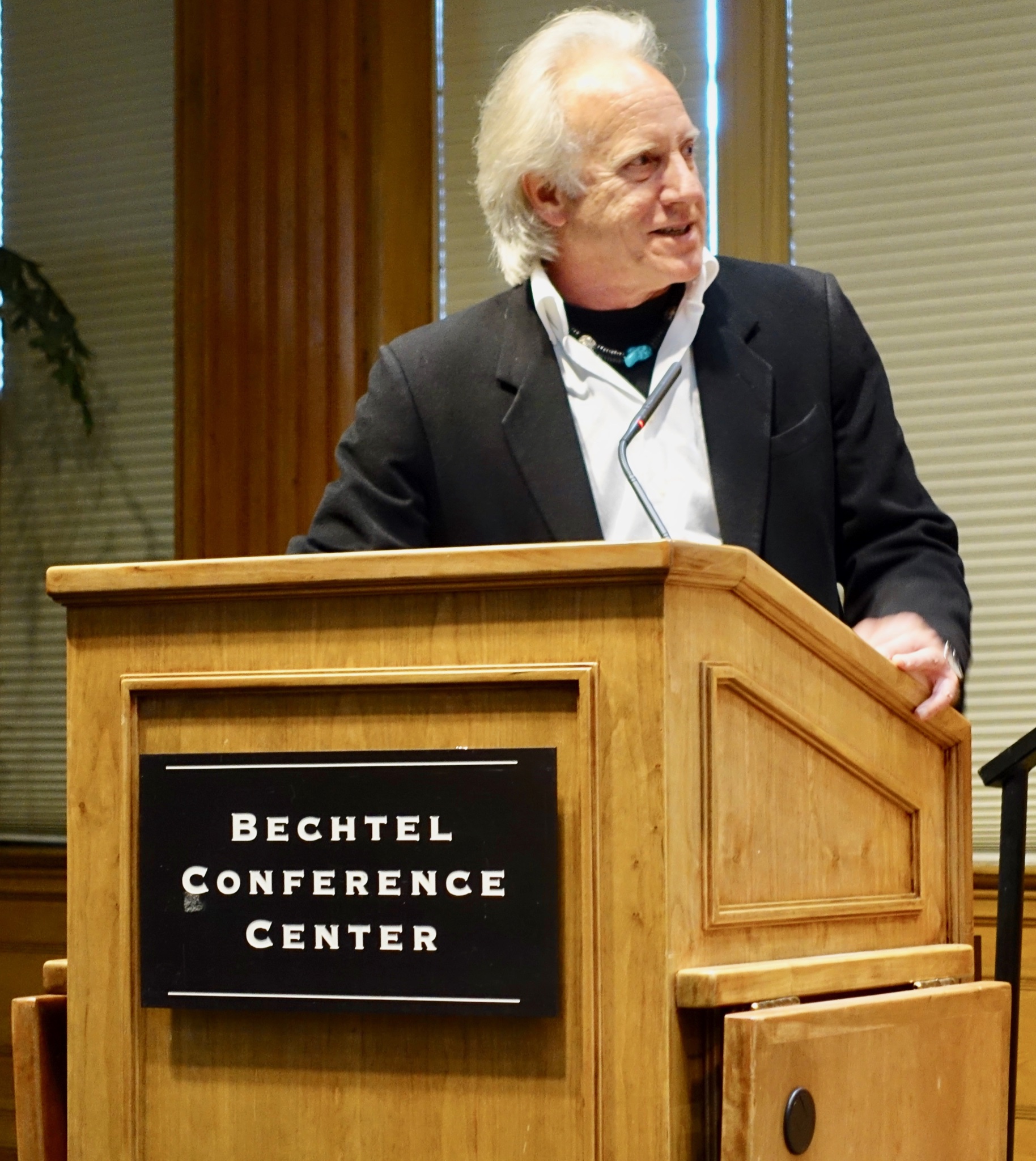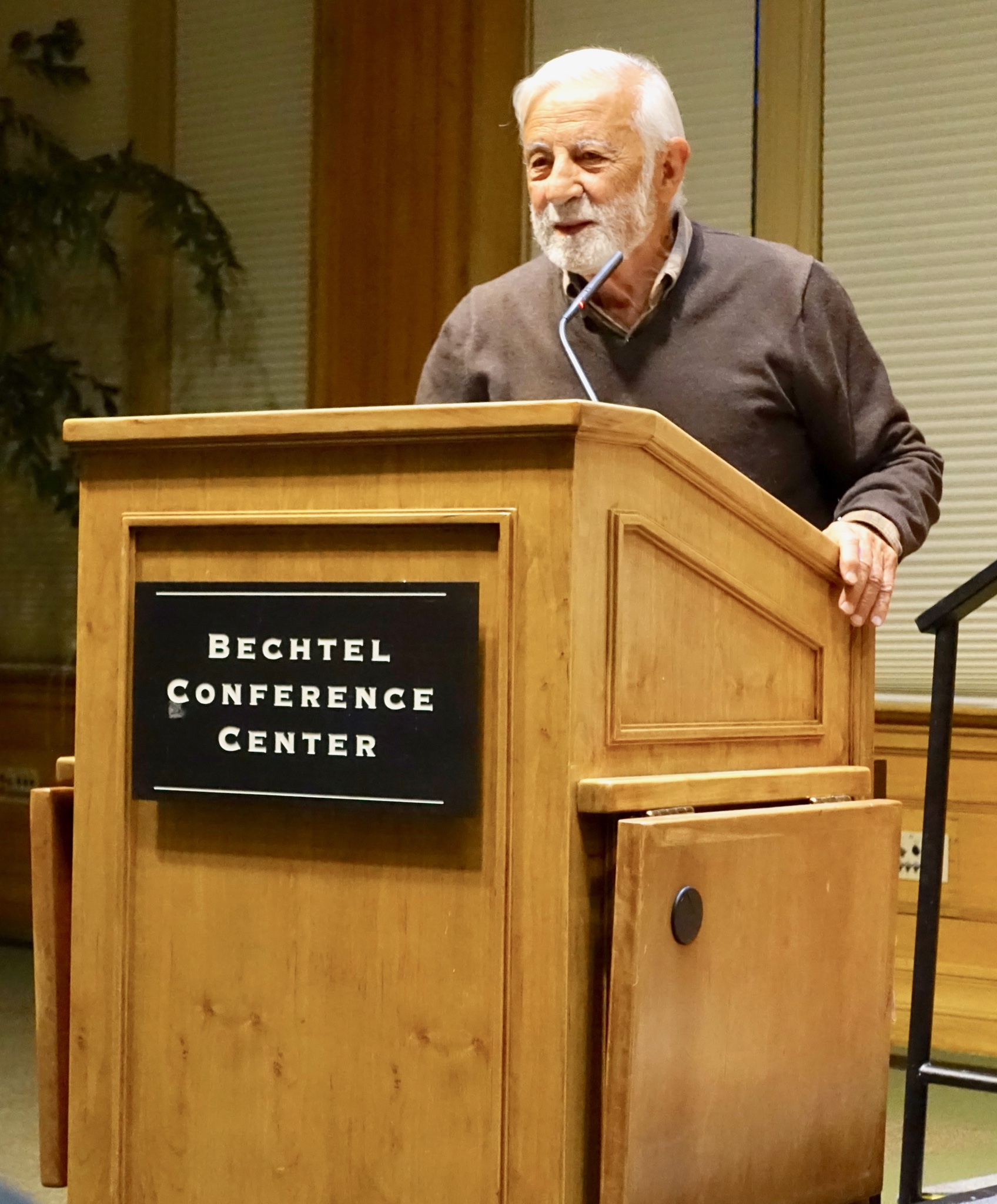

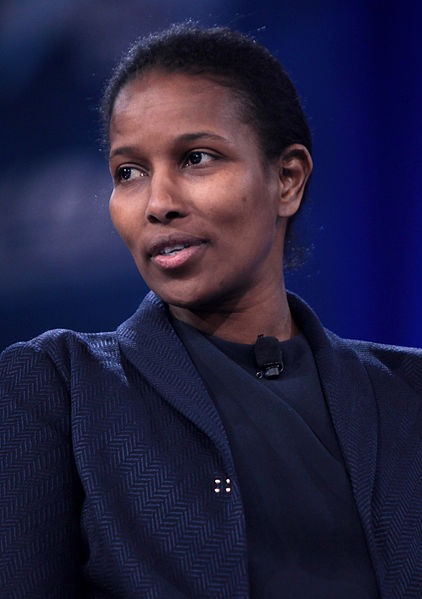
Ayaan Hirsi Ali: she’s changed her tune.

Share

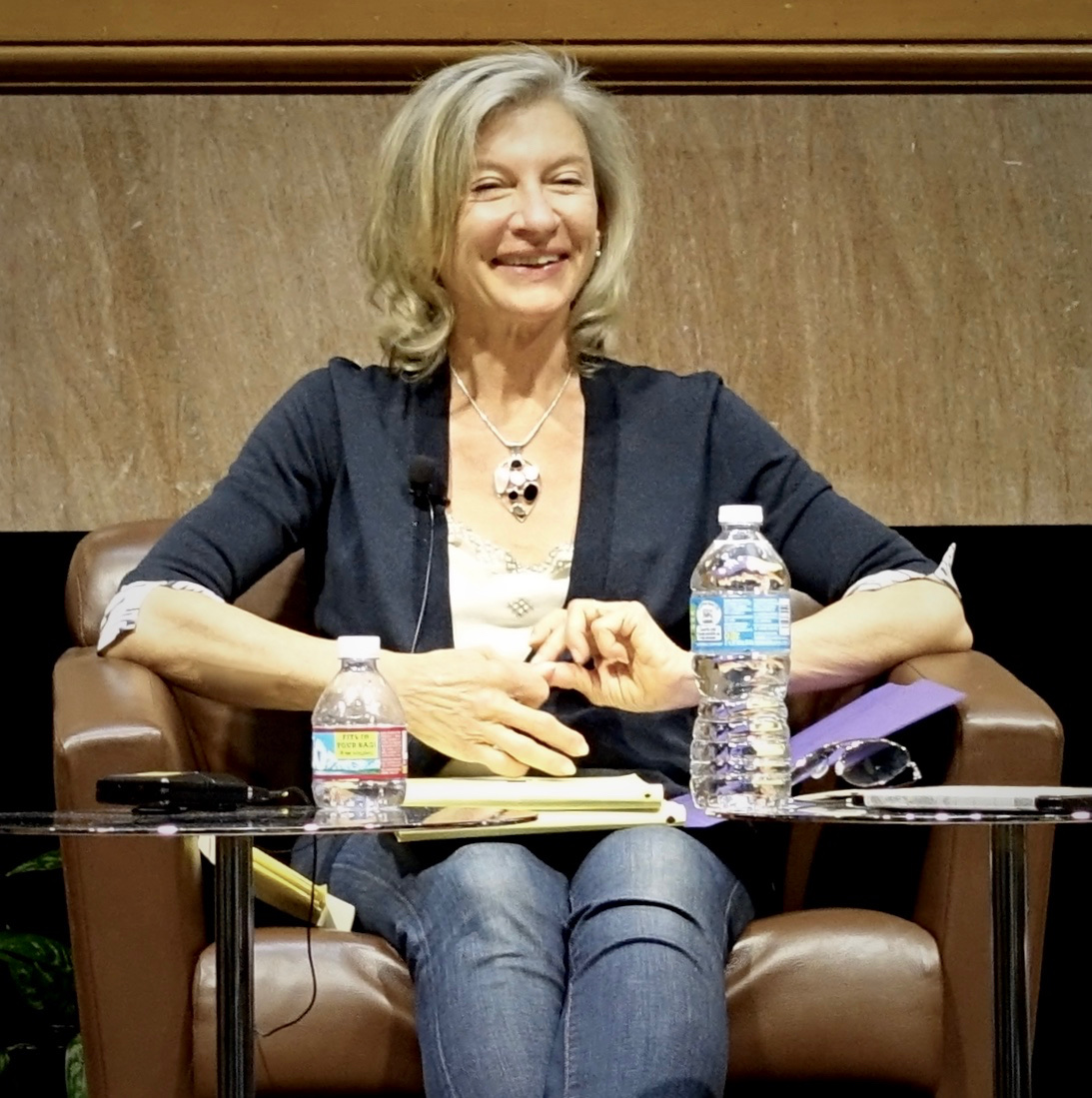
“Not entirely free.” (Photo: Gage Skidmore)

I met Ayaan Hirsi Ali at an undisclosed time and place a few months ago. My first question to her:

In 2004, the Dutch filmmaker Theo van Gogh was murdered. A death threat targeting you was pinned to his chest with a knife. What is life like under a fatwa?

I’m surrounded by men who carry guns and who tell me where I may and may not go, and what I may and may not do. So I’m not entirely free. That’s all I can say, for security reasons.

I’d written about her before, here and here . She is an edgy and provocative thinker. Not everyone will agree with everything she says, but she’s one of the few original, out-of-the-box thinkers we have on a range of subjects. Moreover, she is perhaps the best-known feminist intellectual ever to come out of Africa. She fiercely denounces forced marriage, genital mutilation, and honor killings – one of the strongest voices on these subjects anywhere. In the West, however, the controversial Somalian activist has often been attacked for her powerful criticisms of radical Islam and Sharia law.

As a girl, she survived genital mutilation. As a woman, she fled Africa and became a member of the Dutch Parliament. She collaborated with Theo van Gogh on his film Submission, which slammed the treatment of women in Islam and led to the filmmaker’s assassination and a fatwa against her. In 2014, after a campaign denouncing her, Brandeis University revoked its honorary degree and invitation to speak. Undeterred, she wrote the bestsellers Nomad, Infidel, Heretic and The Caged Virgin, and this year’s monograph The Challenge of Dawa: Political Islam as Ideology and Movement and How to Counter It (Hoover Institution Press).

When I first heard her speak in Palo Alto seven years ago, she was militantly atheistic, and said Islamic violence was inextricable from Islam itself. She’s changed her tune. Or perhaps changed key. She is now calling for religious reform and has joined forces with like-minded Muslims. Her goal? “To change people’s minds.”

My interview with her is now up at Stanford Magazine here. An excerpt:

Are we in any sense winning “the war on terrorism”?
No, because we’re not fighting it. We don’t even recognize we’re fighting an ideological war. Partly it is the arrogance. We think of radical Islam more as a nuisance. “Oh, it’s Al-Qaeda. OK, we’ll send some guys, then, and some drones. Whatever.”
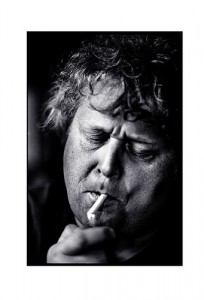
Remember him…Theo van Gogh

One chapter in Heretic suggests addressing jihadi terrorism with an information campaign such as the West deployed during the Cold War. Eminent intellectuals, including Bertrand Russell, Karl Jaspers and Jacques Maritain, supported the dissemination in Eastern Europe of more than 10 million books and magazines.
And we never said our system was a moral equivalent with the Soviet system. Nor did we pretend that capitalism was a sort of salvation, a counter-Utopia. It wasn’t. By the way, Bertrand Russell had been attracted to the idea of communism until he saw it in practice.

As you pointed out, that effort operated at a fraction of the trillions we’ve spent on foreign wars.
One MOAB — the mother of all bombs — what did it cost? If they would give that to those of us who want to fight this war of the minds, it would be way more effective. And it’s more humane. It’s moral. You’re not killing people. The goal is to change people’s minds.

To take the Cold War analogy all the way, you have to discuss the philosophical legacy of Mohammed. Like Marxism, it includes a political theory. When Marxism was applied in the Soviet Union, Cambodia, China, parts of Africa, it was manifest for all to see. However eloquent Mr. Marx was in his idea of justice and equality on the ground, it led to gulags.

When Islamic law is applied as a blueprint for society, what is the outcome? You couldn’t wish for a better demonstration of that blueprint than ISIS. It applied the very letter of the law. When you use the state as a tool to make this from top down, to create this ideal Utopia, it’s anything but Utopic.
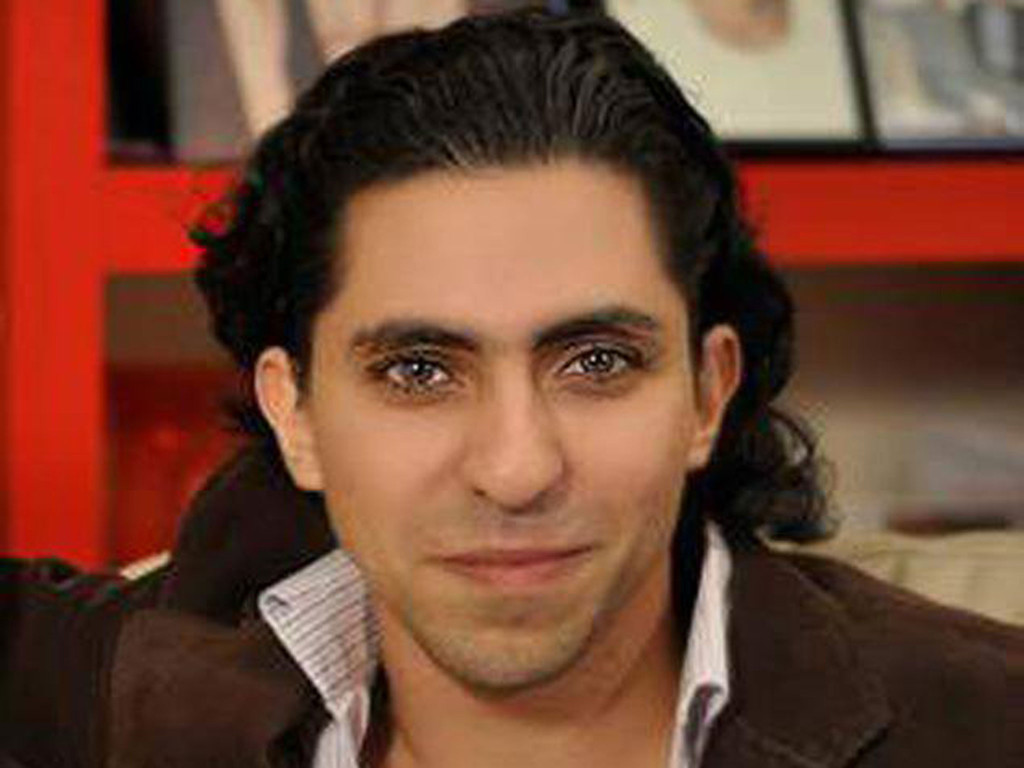
Remember him, too. A thousand lashes for a blogger.

You say that we celebrated Aleksandr Solzhenitsyn, Andrei Sakharov and Václav Havel — and so we should celebrate Islamic reformers. Can you tell us about one or two of them? Who are the Voltaires of Islam?
There’s one here in the United States. His name is Faisal Al Mutar, and he’s from Iraq. I’ve listened to him on American campuses. He’s compelling, logically consistent, persuasive, and very funny.

His organization, Ideas Beyond Borders, reaches out to change minds. I don’t know what the future holds for him, but hey, if you’re looking for compelling people who reach thousands, maybe millions, he’s determined to do that. I pick him because he speaks Arabic and he’s working from the United States of America.

There’s another name we shouldn’t forget: Raif Badawi, [we wrote about him here] a young Saudi national. He blogged about the injustices in Saudi Arabia: the abuse of power, the concentration of power in the hands of the clergy. He argued for more secularization. He was sentenced to a thousand lashes. Fifty have been administered. He is being tortured, and he is diabetic and in frail health. Publicity is keeping him alive. If there’s one thing I could ask Donald Trump, it would be to free that young man.

Read the whole thing here.
An overlooked classic? Stanford makes the case for Dostoevsky’s The Double

Share

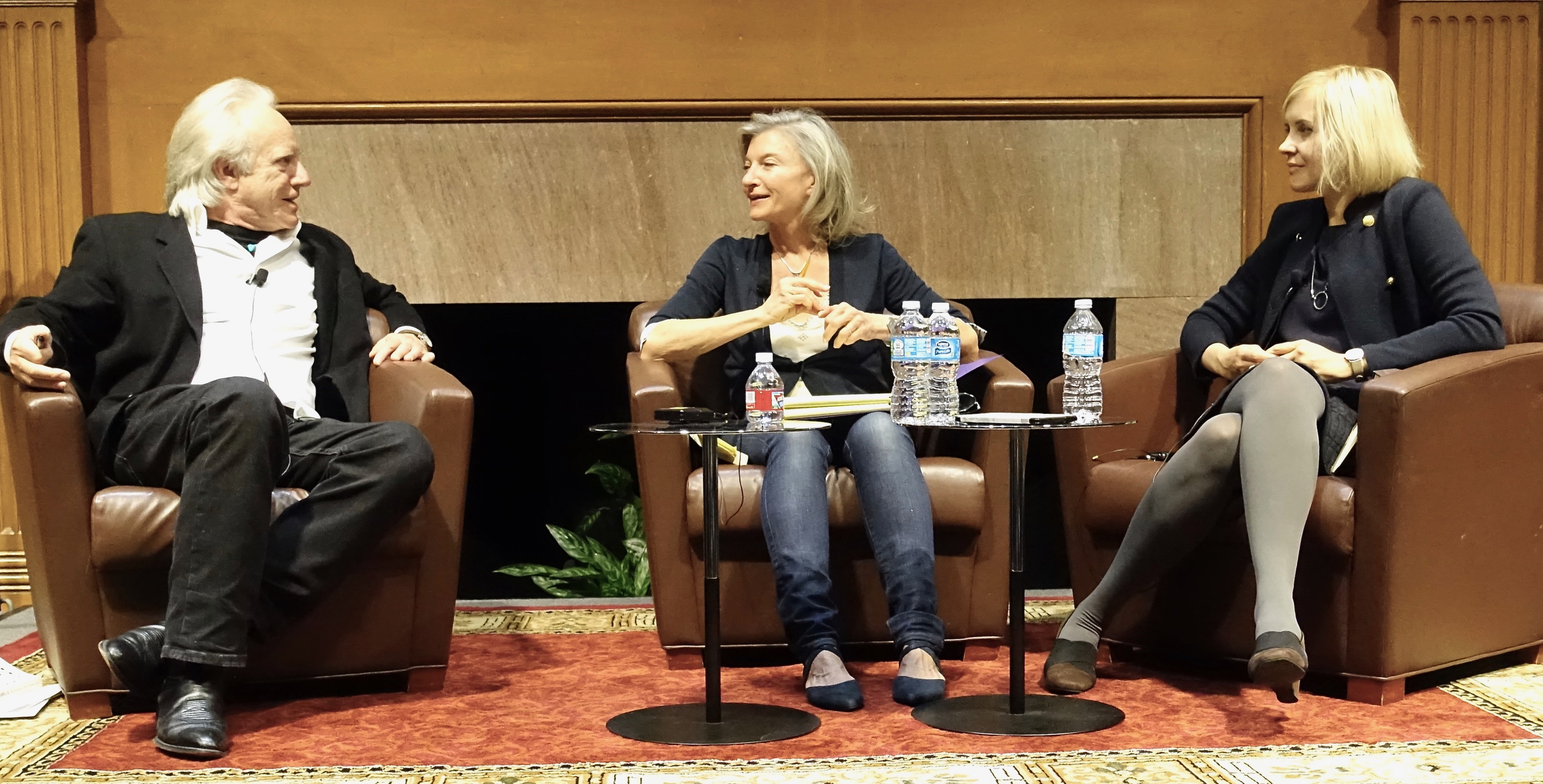
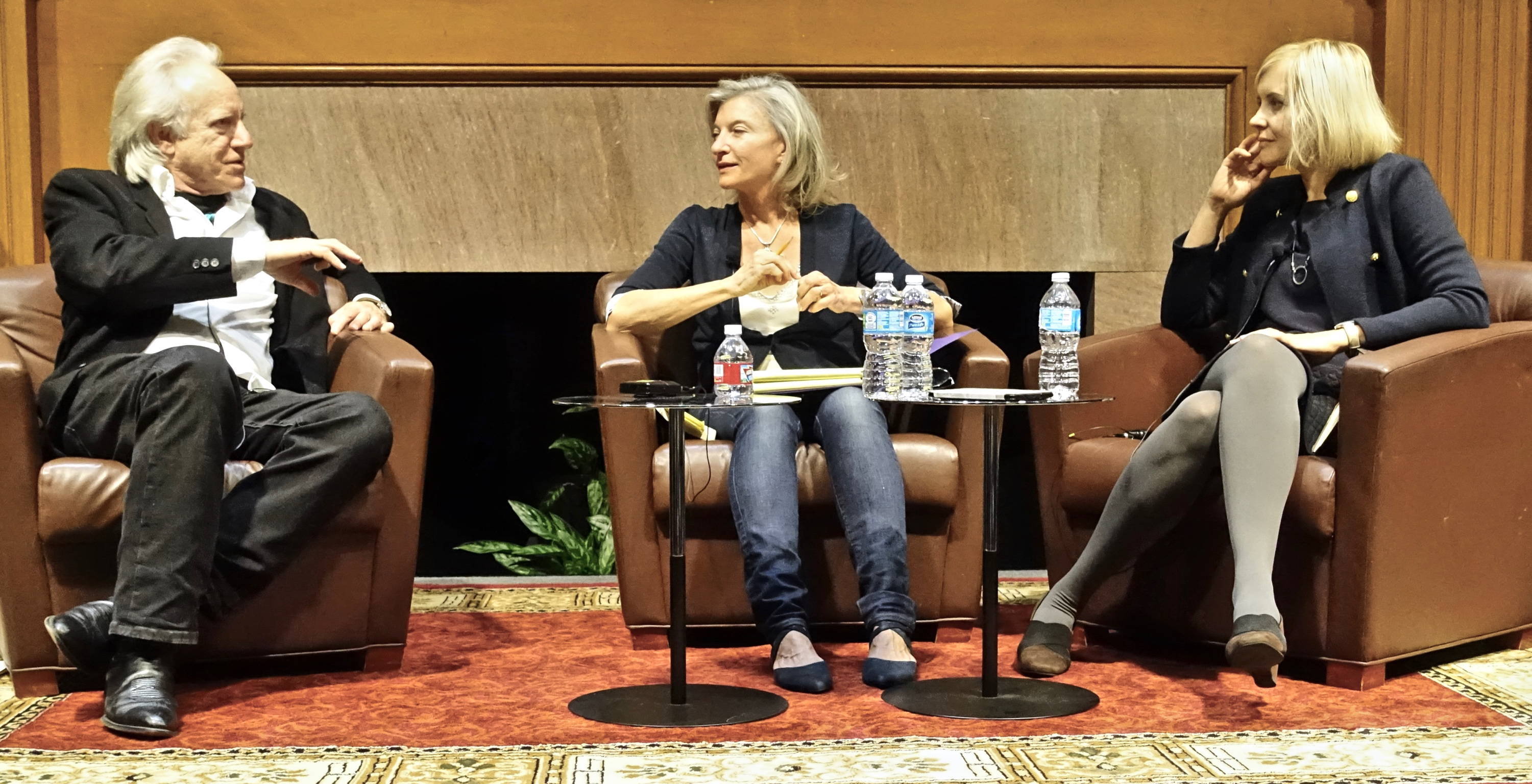
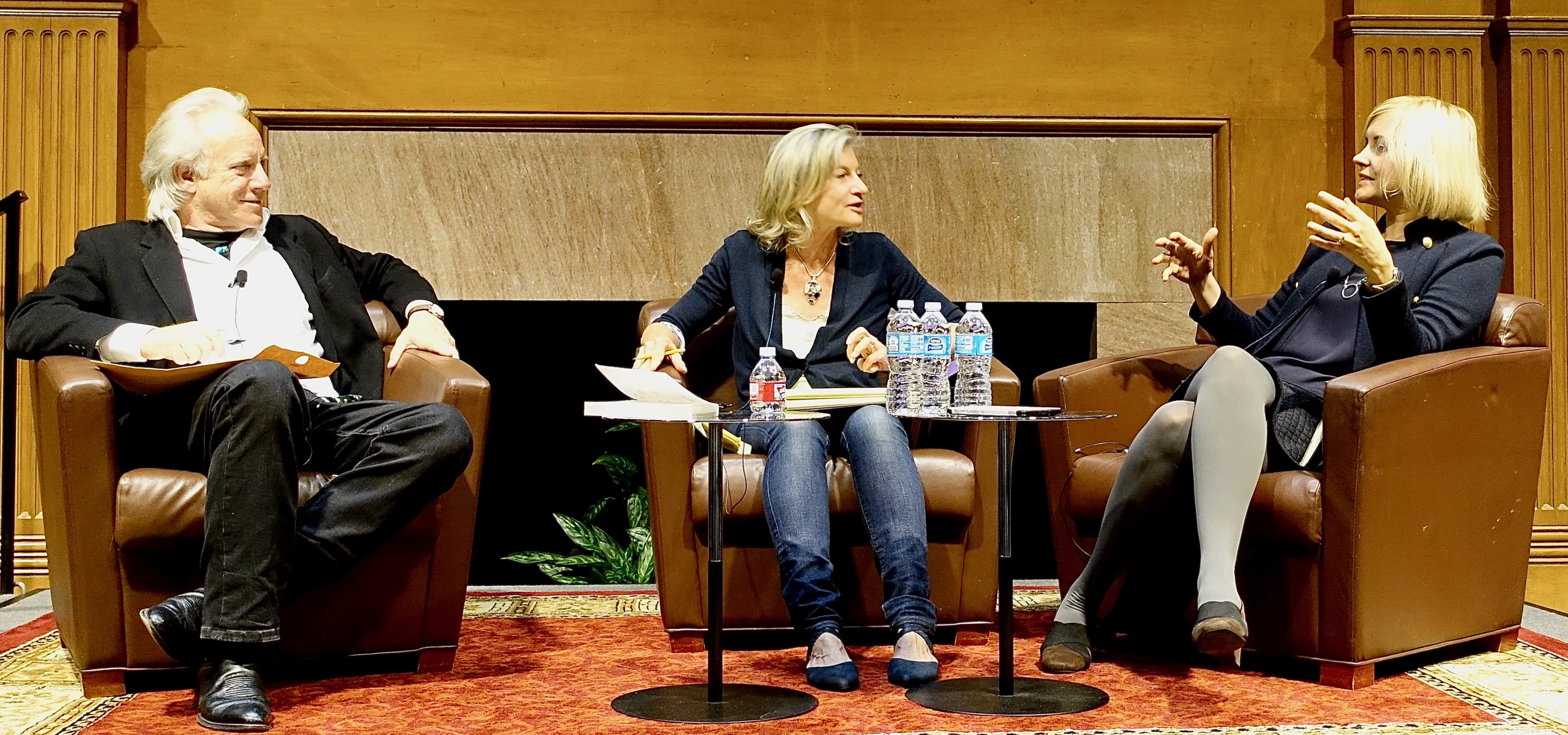
An overlooked classic? Robert Harrison, Monika Greenleaf, and Lena Herzog debate.

On a bright spring day in May, a surprising number of people skipped the pleasant weather to discuss Fyodor Dostoevsky‘s dark and comic novella, The Double. It was all part of Stanford’s Another Look book club. An eloquent panel made the case that the 1846 novella is one of the renowned Russian author’s forgotten classics.

The Double portrays the disintegration of a neurotic government clerk into two distinct entities – one toadying and nervous; the other self-assured, exploitative, and aggressive. Vladimir Nabokov, not usually a fan of Dostoevsky, called The Double “the best thing he ever wrote” and “a perfect work of art.”

Another Look Director Robert Harrison

Russian photographer Lena Herzog joined us from Los Angeles. (Her husband Werner Herzog was an interlocutor for the Another Look event on J.A. Baker’s The Peregrine. I interviewed her at that time for Music & Literature here.)

Acclaimed author Robert Pogue Harrison moderated the discussion. The Stanford professor writes regularly for The New York Review of Books and hosts the popular talk show, Entitled Opinions. He and Lena were joined by Monika Greenleaf, associate professor of Slavic languages and literatures. Monika was a panelist from our event on Joseph Conrad’s Shadow-Line, and some of you met Lena at our mega-event for The Peregrine.

David Schwartz was our photographer for the occasion, and captured Lena in elegant black-and-white, and the others in color. A surprise for the evening was the eminent author and psychiatrist Herant Katchadourian, author of Guilt: The Bite of Conscience (he’s Emeritus Professor of Psychiatry and Human Biology at Stanford University), spoke for a few minutes to give a psychiatric evaluation of the novella’s protagonist, Yakov Petrovich Golyadkin.

The preeminent Dostoevsky scholar of our times, Stanford’s Joseph Frank, said of the novella: “the internal split between self-image and truth, between what a person wishes to believe about himself and what he really is – constitutes Dostoevsky’s first grasp of a character type that became his hallmark as a writer.” The Double marks a turning point in the life of the author. While the book owes a debt to Nikolai Gogol, the younger author moves beyond social critique to the psychological drama that would become his trademark in the great novels that followed.

It’s sad that Joe Frank, who died in 2013, couldn’t join us for the discussion. Fortunately, his widow, the mathematician Marguerite Frank, did.

You can listen to the podcast that includes all the voices here, including some very lively questions from our audience. All photos by Another Look fan David Schwartz (the top one is the good Doctor Katchadourian). We are always grateful for David’s presence at our events, and his camera!


A Schindler’s list for medieval manuscripts in Timbuktu

Share

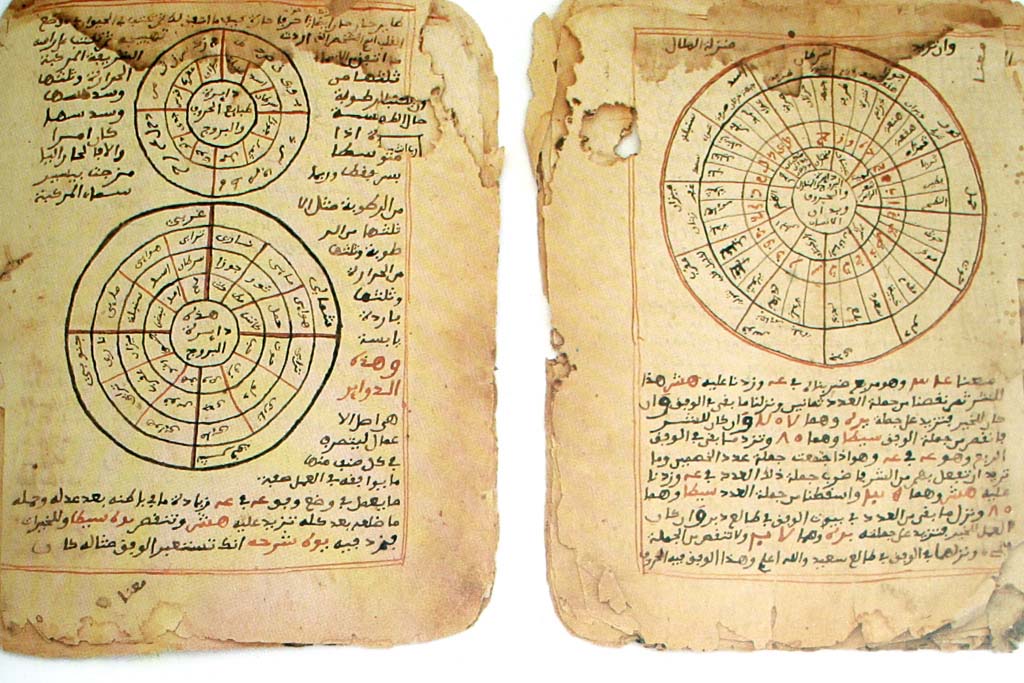
The “Timbuktu Manuscripts” show the legacy of astronomy and mathematics in medieval Islam.

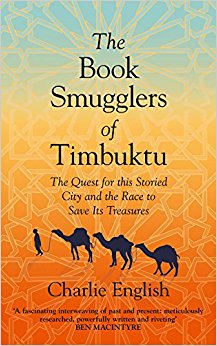
The fascinating story of the courageous rescue of thousands of Timbuktu’s medieval manuscripts, in the face of the Saharan branch of al-Qaida, and its jihadist reign of terror and destruction in Mali’s ancient city.

From William Dalyrmple‘s review of Charlie English’s The Book Smuggler’s of Timbuktu  in The Guardian this week:

The realisation that Timbuktu’s fragile heritage was in danger set off alarm bells across the world. The city was once one of Africa’s most revered centres of learning and the arts. From the 13th century onwards, but particularly during the great days of the Songhai empire, which reached its peak during the 15th and 16th centuries, Timbuktu became the West African equivalent of Oxbridge or the Ivy League, pullulating with scholars busy copying out old Arabic manuscripts and composing new works of theology, history and science.

He burst into tears.

In 2012 the literary remains of this golden age still lay stacked in libraries around the city. Only in recent decades had scholars come to appreciate the extraordinary intellectual wealth that lay hidden in private homes in this now remote but once cosmopolitan centre of learning. Searches had recently revealed the city to be groaning with medieval manuscripts “so numerous”, English writes, “that no one really knows quite how many there are, though they are reckoned [to be] in the tens or even hundreds of thousands”.

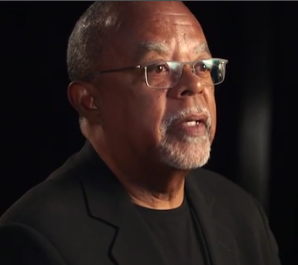
For African historians, the realisation during the late 1990s of the full scale of Timbuktu’s intellectual heritage was the equivalent of the discovery of the Dead Sea Scrolls for scholars of Judaism in the 1950s. When the African American academic Henry Louis Gates Jr. visited Timbuktu in 1997 he actually burst into tears at the discovery of the extraordinary literary riches.

He had always taught his Harvard students that “there was no written history in Africa, that it was all oral. Now that he had seen these manuscripts, “everything had changed.”

Yet with the coming of al-Qaida, there was now a widespread fear that this huge treasure trove, the study of which had only just begun, could go the way of the Baghdad, Kabul or Palmyra museums, or the Bamiyan Buddhas. Before long, efforts began to smuggle the most important of the manuscripts out of Timbuktu and to somehow get them to safety in Bamako, the capital of Mali. The story of how this was done forms the narrative backbone of The Book Smugglers of Timbuktu, which consequently reads like a sort of Schindler’s list for medieval African manuscripts, “a modern day folk tale that proved irresistible, with such resonant, universal themes of good versus evil, books versus guns, fanatics versus moderates”. …
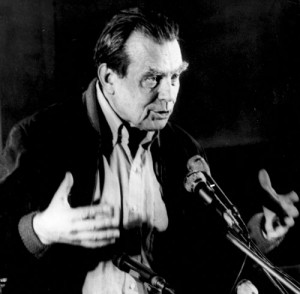
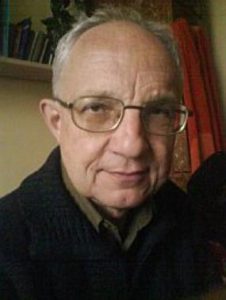
There is no doubt that al-Qaida did represent a threat to the Timbuktu libraries, and indeed around 4,200 manuscripts were burned by the jihadists as they were leaving town – just as Isis last month destroyed the great mosque of Mosul during its retreat. Equally, there is no doubt that the librarians went to heroic lengths to protect the treasures under their guardianship, burying some and smuggling out others. But as his research progressed, he became increasingly suspicious that the scale of the rescue operation had been exaggerated by the heroes of his tale, as they began to understand the extent of the willingness of western donors to wire vast quantities of money to Mali in order to get the precious manuscripts out to safety.

Read the whole thing here.

Happy birthday, Czesław Miłosz! He answers a few embarrassing questions on the occasion.

Share

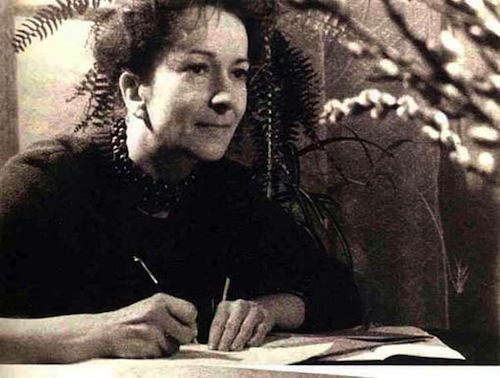
It started in childhood.

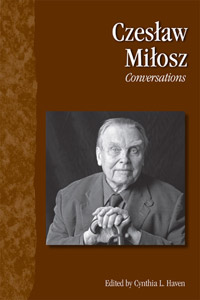
Tomorrow, June 30, is Czesław Miłosz‘s 106th birthday. And the late Nobel poet himself offered me a kind of present.

As I was thinning the ranks of my bookshelves – a very rare and reluctant activity – I stumbled across a 1982 issue of Ironwood, a once esteemed by now defunct journal. It was one of many random journal issues around the house, and before tossing it in the discard pile, I thumbed through to see what treasures it might disclose. Surprise! I found a 1979 Q&A interview with Miłosz I swear I’d never seen before. I’m sure I hadn’t seen it when I compiled my Czesław Miłosz: Conversations. How did I miss it? On consideration, however, no surprise: I’d barely heard of the poet’s name back in 1982, and I think the volume had been sitting on my shelves undisturbed for all the years since. I was even more pleased to see that the interviewer is a Polish friend, Aleksander Fiut, of the Jagiellonian University in Kraków.

What better way to celebrate his birthday than to share a few excerpts from the interview? You won’t find this easily anywhere else.

The eminent writer is often considered a philosophical poet, which he denied in the interview: “Because the philosopher thinks first before he formulates his thoughts into sentences. Whereas for me, the meaning is incorporated into the sentence, already present in the rhythm,” he said.

“One develops one’s ear for language in childhood. I did not, after all, grow up in an environment where Polish was spoken daily. It’s true, we spoke Polish at home, but the language we heard around us was not Polish. It was either Russian, at the time of my childhood in Russia, or Lithuanian, or Byelorussian, or that strange mixture spoken by the people in Wilno … But it may be that it is a sensibility developed through contacts with West European languages. The incantation may also be the result of the influence of church Latin, I don’t know.”

Interlocutor

Much of the interview concerns questions of Polish prosody, which he was, however, reluctant to discuss: “These are, how shall I say, embarrassing questions. These are intimate questions, questions of private craftsmanship.”

From the interview:

Fiut: What makes you choose traditional poetic forms? When you write a poem, how does it happen? Maybe I’m entering here into the intimate sphere of craftsmanship, but this is really interesting to me. Why do you sometimes choose a simple form, say for example, from the Middle Ages, and at other times a very refined and complex form?

Miłosz: It’s difficult to answer. That is to say, some questions are easy to answer, but not necessarily truthfully. I’m used to always having an answer ready when students ask me. But that does not mean that the answer is the most truthful one. Here it seems to me that several factors come into play. Who knows? Maybe the fact that I found myself isolated from Poland, that I”ve had to establish myself inside Polish literature, make it my home, maybe that is one of the reasons. That is to say, the entire past of the language feels like a palace of mine, a palace that I visit. I go into this room, open that door…

Fiut: You seem to have, as it were, two heroes in Antiquity, Heraclitus and Herodotus.

Miłosz: I’ve read Heraclitus. As much of Heraclitus as there is to read that is, what has been preserved. The little, the few fragments which have been preserved.

Fiut: You seem to return often to these authors.

Miłosz: Because Heraclitus interests me.
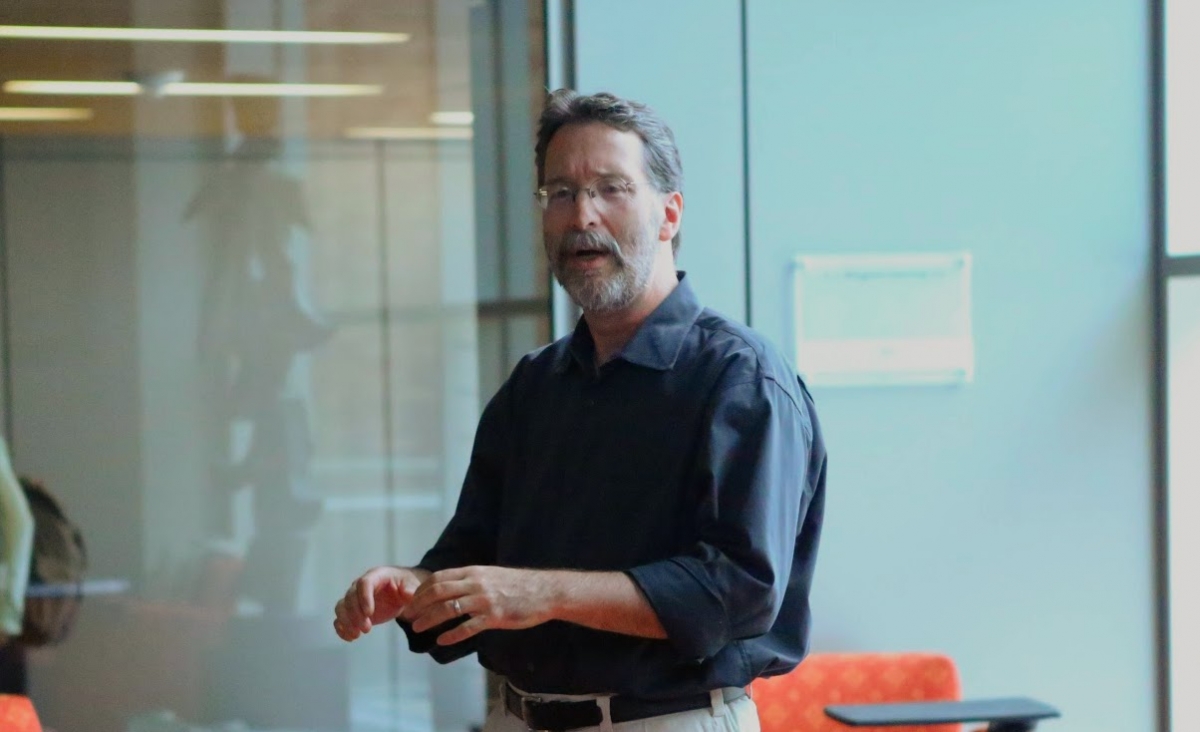
Fiut: Why Heraclitus in particular?

Miłosz: Because when I was a student, I was fascinated by what is usually called the river of time. And I remember, I wrote an essay on this particular subject at the examination that took place at the end of secondary school. Well, as far as Heraclitus goes, it was his preoccupation with flux and change, with the river of time that interested me. That’s one thing. The other thing was that he wept so much over human fate.

Fiut: In “From the Rising of the Sun” you write: “And if they say that all I heard was the rushing of the Heraclitean river/That will be enough, for the mere listening to it wore me down.” Yet the poem “Heraclitus” does not deal with change, but with the dialectical relation between the particular and general existence that is the Cosmos.

Miłosz: The conflict between the universal and the particular: But that is, I imagine, the fundamental conflict that underlies everything I have written. That is a fundamentally unsolvable, awful problem. When you start thinking about it, you realize everything is there. The entire riddle of human existence. Also the conflict between free will and determinism. It’s the same. Or between grace and will, to use theological terminology, but there are no answers.

Award-winning essayist, editor Brian Doyle, 1956-2017: “Something is opening in me, some new eye.”

Share

I heard recently of the death of writer Brian Doyle. I didn’t know him. I didn’t think I knew him. But someone later mentioned that he had been editor of the estimable Portland Magazine, and a memory came back. Someone had suggested years ago that I contact him. I think it was to propose some sort of article about Nobel poet Czesław Miłosz. Earlier this month, I retrieved the exchange of emails from my oldest email account and reread them. We corresponded in 2005, and had a phone conversation. Nothing came of it, and I can’t remember why. I wish something had. He died in May at the age of 60, from complications related to brain cancer.

Under his leadership. the magazine was consistently been ranked among the best university magazines in the country and in 2005 received Newsweek’s Sibley Award as the top university magazine in America. He was nominated for the Oregon Book Award nine times, and finally won last October for his novel, Martin Marten.

“Naked as a baby…”

He learned last November that he had a brain tumor. When people asked how they could “help,” he replied, “”Be tender to each other. Be more tender than you were yesterday.” Then he underwent surgery for what he referred to as “a big honkin’ brain tumor”.

In an email sent to faculty and staff announcing his death,  University President Mark Poorman wrote: “He was a man filled with a sense of humanity and wonder, who was interested in everyone’s story and who saw everyone’s potential. His warmth, humor, and passion of life will be deeply missed and his loss will be acutely felt here and beyond The Bluff.”

From a writer at The Beacon, this time a student, Rachel Rippetoe:

Sometimes I think we all relate to each other like characters in a TV show with no stakes, wandering around a living room set with no fear that the floor might fall through. Every once in awhile, you meet someone who shakes you by the shoulders and reminds you that we’re all standing on a precipice, bits of rock slowly eroding underneath the sneakers we bought at Macy’s for half price.

He had these eyes that curved around his cheeks, issuing an earnest and acute plea for humanity upon anyone who meets them. His voice cracked and crooned and he swayed on the balls of his feet, all the while those hands stayed in his pockets, only unleashed when his most abundant and resounding message was hurled at an audience that couldn’t have been anything but enthralled by him.

The essayist Dinty Moore posted this quote from him on Facebook: “You can brick up your heart as stout and tight and hard and cold and impregnable as you possibly can and down it comes in an instant, felled by a woman’s second glance, a child’s apple breath, the shatter of glass in the road, the words I have something to tell you, a cat with a broken spine dragging itself into the forest to die, the brush of your mother’s papery ancient hand in the thicket of your hair, the memory of your father’s voice early in the morning echoing from the kitchen where he is making pancakes for his children.”

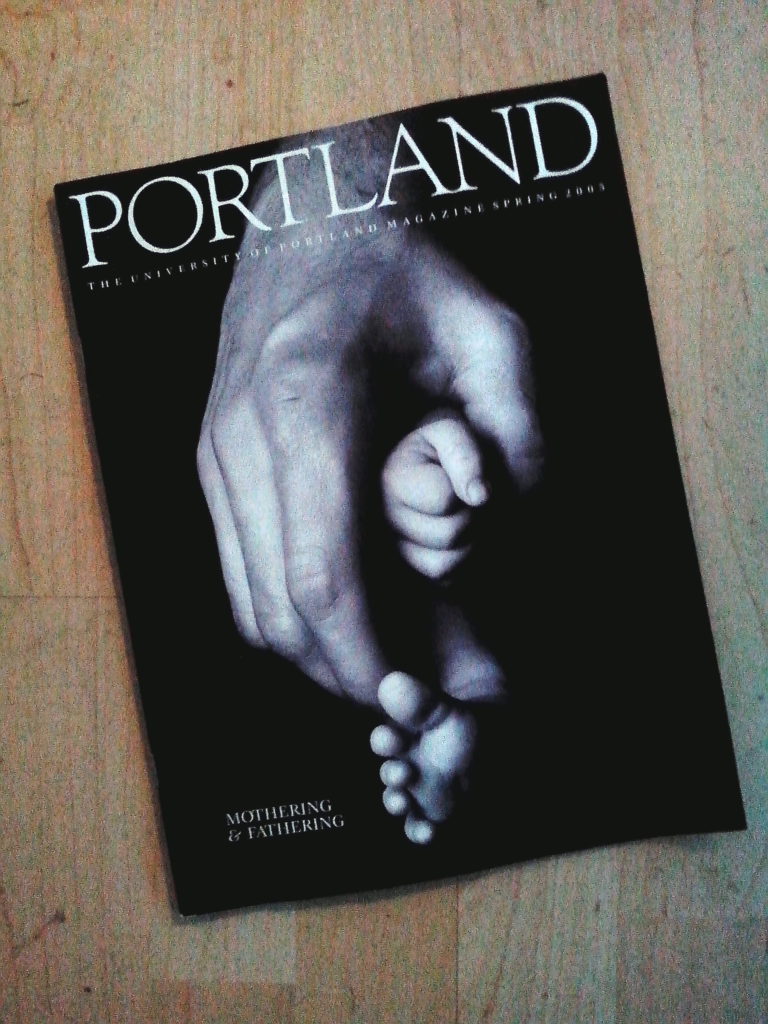
Now here’s the thing. I was cleaning out the garage today, always a major undertaking, and throwing out boxes and boxes of papers and magazine, and then the magazine pictured at right fell out of a pile in a box that had been untouched for over a decade. Brian had sent it to me in 2005, during those discussions for an article that never happened. And inside the front cover was his short editor’s essay called “Word Less,” on silence. It concludes:

“I rise earlier and earlier in these years. I don’t know why. Age, sadness, a willingness to epiphany. Something is opening in me, some new eye. I talk less and listen more. Stories wash over me all day like tides. I walk through the bright wet streets and every moment a story comes to me, people hold them out to me like sweet children, and I hold them squirming and holy in my arms, and they enter my heart for a while, and season and salt and sweeten that old engine, and teach me humility and mercy, the only lessons that matter, the language I most wish to learn; a tongue best spoken wordlessly, with your hands clasped in prayer and your heart as naked as a baby.”

Oddly, I hadn’t read the mini-essay or the article he wrote for that particular issue. The moment of our connection passed, and I went on to other things. But I will, now.