So you want to be a professional writer? Hunter Thompson’s helpful hints.

Share

Not into public relations...

James Scott Bell over at “The Kill Zone,” a blog run by mystery and thriller writers, has some pretty good tips for those who want to break into the writing biz, but Bill Peschel at “Planet Peschel” takes some reasonable exception to a few of the suggestions.  For example, this one: “Successful writers-in-waiting look professional. They do not come off as slobs or slackers. They dress sharply though unpretentiously.”

Peschel, author of Writers Gone Wild, replies:

… I’ve been reading advice like this for a long time, and sometimes, it gets to be too much.

* Be careful how you appear.
* Be careful what you say.
* Don’t piss anyone off.

At the same time, you’re supposed to sell your book, sell your writing, sell yourself. Learn how to promote, to market, to tweet, or bleep, blog, blurg and boast, all without annoying people, turning them off, driving them away or giving in your desire to brag, boast, flaunt, get angry, get petulant or act like a human being in any way.

As for courtesy and savoir faire, Peschel  cites this application for a newspaper position:

As far as I’m concerned, it’s a damned shame that a field as potentially dynamic and vital as journalism should be overrun with dullards, bums, and hacks, hag-ridden with myopia, apathy, and complacence, and generally stuck in a bog of stagnant mediocrity. If this is what you’re trying to get The Sun away from, then I think I’d like to work for you.

Most of my experience has been in sports writing, but I can write everything from warmongering propaganda to learned book reviews.

I can work 25 hours a day if necessary, live on any reasonable salary, and don’t give a black damn for job security, office politics, or adverse public relations.

That’s Hunter S. Thompson.  And you should see what the rude letters say…

Happy birthday, Bell’s Books!

Share

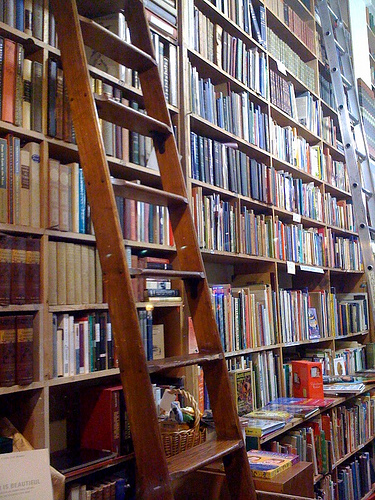
I knew that downtown Bell Books on Emerson Avenue predated my own arrival in Palo Alto by at least a few years — but who would have guessed the family-owned bookstore is 75 this month? Bell’s still gives the younger generation a taste of an old-fashioned bookstore, pre-Kindle, pre-Amazon — back in the days when the proprietor knew the entire inventory without resort to the computer or shelves (none of this “Dante?  How are you spelling that?” stuff).  Back in the days when a bookstore was a dimly lit chamber of mysteries, with the musty smell of old paper and leatherbound volumes.

Bell’s Books is featured this week in Palo Alto Online News.  Store manager Faith Bell, daughter of owner Valeria Bell, recalls her childhood this way:

“For us, reading was like breathing — there was a nonstop flow of books through our lives. Even when we [Faith Bell and her husband and children] were up in Canada, my mother would send me enormous boxes on a regular basis. We had a tiny library in the town, and we read through it in no time.”

I remember when Chimaera Books was the big green house on Lytton Avenue, and you could browse, even read for hours in hidden rooms, among its exhausted couches with creaky springs.  When rent hikes threatened to oust it, Denise Levertov came to the rescue with a fundraising reading and a show of support that roused the city.  When the rents went up persistently, the store eventually moved to Redwood City. And now it’s gone.  I remember the California Avenue Printer’s Inc, where you could sip coffee on well-worn wooden chairs while perusing a new purchase.  Printer’s Inc boasted of a legendary bookstore cat (a skinny brown tabby — can’t recall its name).  Few other bookstores in the world have had several sonnets written in their praise.   From Vikram Seth‘s Golden Gate:

The enchanted bookstore, vast, rectangular,
Fluorescent-lit, with Bach piped through
The glamorous alleys of its angular
Warren of bookshelves,the dark brew
Of French roast or Sumatra rousing
One’s weak papillae as one’s browsing
Lead to the famed cups, soon or late,
That cheer but don’t inebriate.
Magical shoe box! Skilled extractor
Of my last dime on print or drink,
Mini-Montmartre, Printers Inc!
Haven of book freaks, benefactor
Of haggard hacks like me, who’ve been
Quivering for years to your caffeine.


But Printer’s Inc is gone, too, subsumed by a clattery, trendy, not-so-hot cafe that has commandeered its name but not its memory.

Only Bell’s has survived.  Faith Bell apparently enjoys her clientele:

“I think Palo Alto has more multiple advanced degrees than anywhere in the nation — you never know who you’re talking to,” Bell said.

“I’ve had a very eclectic education. I’ve been to multiple colleges and universities and never got a degree in anything. This store was my education — and is every day.”

Saul Bellow on Hannah Arendt: The upshot? He didn’t like her much

Share

Letters out this month

Viking is publishing Saul Bellow: Letters this month.  It’s excerpted in Salmagundis 45th anniversary issue (Fall 2010/Winter 2011), which arrived in my mailbox a few days ago. Here’s an excerpt of Nobel laureate Saul Bellow’s March 12, 1982, letter to Leon Wieseltier. Clearly not a fan of political philosopher Hannah Arendt:

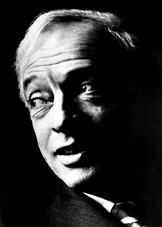
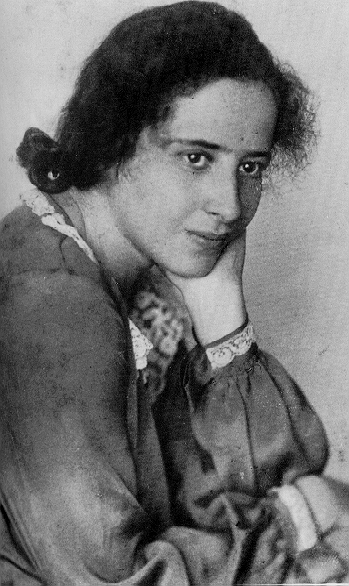
“The trouble is that her errors were far more extensive than her judgment.  That can be said of us all, but she was monumentally vain, and a rigid akshente [Yiddish: impossible woman, ballbuster] Much of her strength went into obstinacy, and she was the compleat intellectual – i.e. she went always and as rapidly as possible for the great synthesis and her human understanding, painfully limited, could not support the might of historical analysis, unacknowledged prejudices, frustrations of her German and European aspirations, etc. She could often think clearly, but to think simply was altogether beyond her, and her imaginative faculty was stunted.

German to the end?

“I once asked Alexander Donat, author of The Holocaust Kingdom, how it was that the Jews went down so quickly in Poland. He said something like this: ‘After three days in the ghetto, unable to wash and shave, without clean clothing, deprived of food, all utilities and municipal services cut off, your toilet habits humiliatingly disrupted, you are demoralized, confused, subject to panic. A life of austere discipline would have made it possible for me to keep my head, but how many civilized people lead such a life?’  Such simple facts – had Hannah had the imagination to see them – would have lowered the intellectual fever that vitiates her theories. Her standards were those of a ‘noble’ German intelligentsia trained in the classics and in European philosophy – what you call the ‘tradition of sweet thinking.’  Hannah not only loved it, she actively disliked those who didn’t share it, and she couldn’t acknowledge this dislike – which happened to be the dislike of those (so inconveniently) martyred by the Nazis.  The Eros of these cultures is irresistible.  At the same time assimilation is simply impossible – out of the question to reject one’s history. And insofar as the Israelis are secular, they are in it with the rest of us, fascinated and also eaten up by Greece, France, Russia, England.  It is impossible for advanced minds not to be so affected. …

“Anyway, your Arendt pieces are wonderful, even though the concluding sentence … but what else can one conclude but ‘on course; and ‘in the dark’? We mustn’t surrender the demonic to the demagogic academics.  Intellectual sobriety itself may have to take the powers of darkness into account.”

Casper discusses Arendt (Photo: L.A. Cicero)

In his book, Donat recounts the entrenched pro-German mindset of most Jews, who were looking backward to the heritage of the German Enlightenment: “For generations, East European Jews had looked to Berlin as the symbol of law, order, and culture. We could not now believe that the Third Reich was a government of gangsters embarked on a program of genocide ‘to solve the Jewish problem in Europe.’”

But I rather wonder at his characterization of “Jewish passivity,” remembering the doomed heroism of the Warsaw Ghetto.  Only since the Fall of the Wall are some stories of Polish (Jewish and Christian) resistance coming to light.  History changes.

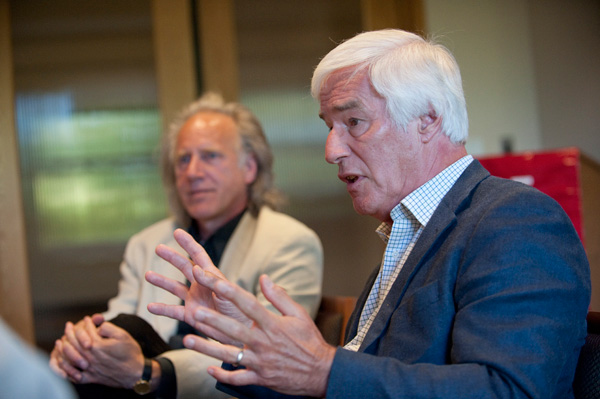
I attended a conference on Arendt last spring and was moved by Gerhard Casper’s tenacious loyalty to the friend he characterized as “a very private person”:   “She was forceful, opinionated, never had any doubts about her views,” he said. “In certain circumstances she was willing to listen carefully and be convinced she was wrong. Those were rare.”

Piotr Nowak recommended I read her pages on ineradicable evil in The Origins of Totalitarianism when we were at Vienna’s Institut für die Wissenschaften vom Menschen two years ago, while taking the “powers of darkness into account.”

Pakistani poetry truck, making the rounds…

Share


Created with Admarket’s flickrSLiDR.

In America, we have National Poetry Month and a few scattered lines on subways and the buses. But we’re not a patch on Pakistan.

One of the lesser known sides of Pakistani life: the chaotic public transport blossoms in color with buses, trucks, rickshaws and taxi cabs that are decked out in bright paint and elaborate designs — and the best part for many is the poetry.

PRI’s Fahad Desmukh reports:

“This is in a very real sense a public conversation which is not in books, which is not in the type of middle class milieus – it’s on the street,” said Manan Ahmed, professor of Islam at the Free University of Berlin.

“The reason these things exist on public transportation is because these conversations are existing in places where the folks driving these vehicles hang out.”

Of course, the drivers aren’t writing these verses in a vacuum. Poetry plays a very prominent role in popular culture here – not just as a form of art, but also as a part of everyday conversation. People use couplets to explain a situation, something like the way proverbs are used. But for the owners of public transport vehicles, it’s also about defining your public identity.

Photos: Fahad Desmukh

Like the snippets that appear on U.S. billboards in April, the Pakistani poems are short — usually just a couplet, two lines with the same meter.

The PRI site translates a couple examples. Here’s one:

“Oh nightingale, why do you cry? Are you without a flower?
I should be the one to cry, for I have no peace in my life.”

Well, as they say, poetry is what gets lost in translation…

The non-award of the Wendy Wasserstein Prize … and the non-award of the Nobel to Liu Xiaobo

Share

What would Wendy do?

The non-award this year of the Theatre Development Fund’s Wendy Wasserstein Prize for young women playwrights — the TDF considered no one up to snuff — has caused a great kerfuffle.  See New York’s Time Out here. She Writes reproduces the strident dialogue between Kamy Wicoff and TDF honcho David LeShay hereFeministing posts its reprise of the conflict here.  A Facebook petition is here.

The upshot:  The TDF is reconsidering.

The $25,000 award is named for Wendy Wasserstein, a popular playwright who died at age 55 from cancer — that’s a lot of money, and I yield to no one in understanding how hard a writer’s life is. I made my living as a free-lance journalist for a decade, and that when I was no longer young and also had a kid to support alone.  The award and recognition could make a big difference in a young playwright’s life.

Nonetheless, doesn’t an award have a right to determine its own criteria, however distressing that may be to the applicants? It’s always a punch in the face for a writer when a jury decides that no award was better than awarding you — especially if the criteria for judgment is bureaucratic, subjective, political, wrong-headed.  Still …

I have no doubt of the enormous gender bias in the theater world, and pretty much everywhere else. (Look at politics.  I’ll never forget the landmark misogyny of the 2008 elections, when the most accomplished woman ever to grace American politics was treated with truly ugly slurs, culminating in a major broadcast journalist called for her to be snuffed while the major feminist organizations were … silent.)

The Facebook page makes the strongest argument: “Your claim that ‘none of the plays were truly outstanding in their current incarnation’ sends a discouraging message to early career theatre artists at a time when these artists need more support than ever. The prize is not to support a production of the play, but the promise of the writer.” [italics mine]

Feministing‘s resorts to retro language, accusing the TDF of reproducing “hierarchies of privilege”  they meant to redress, though heaven knows its too true that “it’s often those who are already have many accolades who are likely to receive more of them.”  Wicoff resorts to a demanding tone and capital letters (“If you can’t figure out a way to give a prize to ONE WOMAN PLAYWRIGHT in the UNITED STATES OF AMERICA, YOU are the problem, not the applicants or the by-laws or whatever.”)

At the end of the Wicoff’s exchanges, she asks, “Anybody else feel a She Writes Prize coming on?”

Now there‘s an idea.

I understand that Wasserstein was a fabulous woman and a beloved friend to many.  But her plays always struck me as formulaic, built on TV models of short scenes and clincher lines, which were often blandly Gail Sheehy-esque:  “The real reason for comedy is to hide the pain.”  And sometimes not even true: “You’re the unfortunate contradiction in terms — a serious good person.”

In any case, the Time Out article hints that the award itself is having financial troubles, and may be discontinued:

But this apparent victory may be Pyrrhic. [Patrick] Healy’s article raised a detail that had not been a subject of general discussion earlier: that the Wasserstein Prize is a four-year project whose future funding is not assured. Toward the end of the piece is an ominous statement from Heidi Ettinger, a key figure in the establishment and funding of the prize: “This is the final year of the grant for the prize, and it will be up for reconsideration next year. All along, we have been changing and refining criteria to insure that the objectives of the prize honoring Wendy and her high standards were met. We have also managed to increase the amount of the award. As a funder, we must be able to insure the integrity of the prize and provide selection panels the freedom they need free of outside pressures.”

Would any of the 19 young playwright applicants wish to accept the award now, under such a cloud?  In a minute.

***

No prize after all

Non-prizes have a long history.  In 2006, the Pulitzer board gave no prize in the drama category in spite of having three nominees from the drama jury. As recently as 2008, it gave no prize for editorial writing.  In 1953, 1964, 1965 and 1981 it gave no prize for music.  In 1920, 1941, 1946, 1954, 1957, 1964, 1971, and 1977, it gave no award for fiction.  The Pulitzer board does not explain its sometime mysterious decisionmaking.

And it appears, in an unhappy development largely overlooked by the media, that there will be no Nobel peace prize this year for Chinese writer Liu Xiaobo.  The Associated Press notes: “Even Cold War dissidents Andrei Sakharov and Lech Walesa were able to have their wives collect the prizes for them. Myanmar democracy activist Aung San Suu Kyi‘s award was accepted by her 18-year-old son in 1991.”

The only precedent for the non-award is 1935, when the Nazi government forbade German journalist and pacifist Carl von Ossietzky to accept the award.  Imprisoned in a succession of concentration camps, Ossietzky had been hospitalized hospital for severe tuberculosis, but the Nazi government prevented him from leaving the country to accept the prize. Someone representing Ossietzky was allowed to receive the Nobel Prize money only.  On the books, it’s “no award” for 1935.
“World within reach”? We think not. Stanford replies to Albany

Share

Safran knocks "disturbing" decision

Yesterday, we excerpted Gregory Petsko‘s  rather scalding letter to George Philip,  the president of the SUNY Albany, who recently announced that the university was cutting its French, Italian, Classics, Russian and Theater Arts departments.  Then we discovered Stanford’s own letter. Not as much fun, alas; nothing beats sarcasm — but still worth a look.

At a school whose motto is “The world within reach,” the elimination of modern languages other than Spanish indicates a confusion of purpose.  The study of modern languages at a high level offers a gateway to international business, diplomacy, and research in all fields.  The study of literature in foreign languages challenges students to cross cultural boundaries and teaches them how to do so effectively.  By rejecting these programs, SUNY Albany is reducing its students’ intellectual breadth and their competitiveness for a range of professions.  It is moving the world out of reach.

This decision is especially disturbing at a school that trains so many of New York State’s teachers.  Three of the programs cut – French, Italian, and Russian – are significant New York heritage languages, and a large French-speaking population lives right over the border in Quebec.  These are languages that New York K-12 students have motivation to study, and even to master.  By making it impossible for future Albany graduates to teach them, SUNY is reducing not only the education and competitiveness of its own students, but those of the state’s high school students as well.  In the case of Russian, where Albany houses the only major program in the SUNY system, this danger is especially real.

Edelstein signed, too

The elimination of modern language programs at Albany appears to be part of a larger reallocation of state funding.  Even while the university saves some $12 million by cutting these departments, $435 million in state funding is going toward a new Institute for Nanoelectronics Discovery and Exploration, which has the stated goal of transforming the Albany region into a high-tech hub like California’s Silicon Valley.  Here at Stanford, located in the real Silicon Valley, it appears especially short-sighted to imagine that the way to foster innovation, investment, and job growth in our increasingly global economy is by rejecting the study of modern languages and cultures.  Rather than firing faculty who are experts in foreign languages, the university should turn to them for help in training students who are able to understand international consumers and investors.  Stanford has engaged its foreign language and literature faculty in creating new administrative structures that can respond effectively to the needs of students at all levels.  We challenge you at SUNY Albany to follow the example of Silicon Valley in deed, not just in words.

Signed by:  Gabriella Safran, Director, Department of Slavic Languages and Literatures, and Chair, Division of Literatures, Cultures, and Languages; David Palumbo-Liu, Director, Department of Comparative Literature; Carolyn Springer, Director, Department of French and Italian Literatures; Russell Berman, Director, German Studies Department; Jorge Ruffinelli, Director, Iberian and Latin American Cultures Department; Elizabeth Bernhardt, Director, Language Center; Amir Eshel, Graduate Chair, Division of Literatures, Cultures, and Languages; Dan Edelstein, Undergraduate Chair, Division of Literatures, Cultures, and Languages.

By the by, if you missed Stanley Fish’s column on this subject in the New York Times, it’s here.