
Ouch! A scientist’s sharp letter about the Albany massacre

Share

Science nerd on the attack

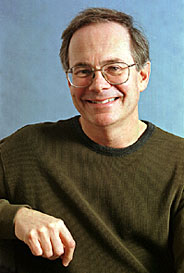
Dan Edelstein brought this letter to my attention — a rather scalding letter to George Philip,  the president of the SUNY Albany, who recently announced that the university was cutting its French, Italian, Classics, Russian and Theater Arts departments.

The author, Gregory Petsko, a professor of biochemistry and chemistry at Brandeis, started out as a classics major.  Yet he writes, “Of all the courses I took in college and graduate school, the ones that have benefited me the most in my career as a scientist are the courses in classics, art history, sociology, and English literature. These courses didn’t just give me a much better appreciation for my own culture; they taught me how to think, to analyze, and to write clearly. None of my sciences courses did any of that.”

An excerpt:

“I’m sure that relatively few students take classes in these subjects nowadays, just as you say. There wouldn’t have been many in my day, either, if universities hadn’t required students to take a distribution of courses in many different parts of the academy … You see, the reason that humanities classes have low enrollment is not because students these days are clamoring for more relevant courses; it’s because administrators like you, and spineless faculty, have stopped setting distribution requirements and started allowing students to choose their own academic programs – something I feel is a complete abrogation of the duty of university faculty as teachers and mentors. You could fix the enrollment problem tomorrow by instituting a mandatory core curriculum that included a wide range of courses.

University prez on the defense

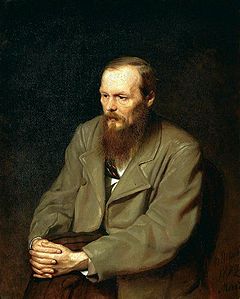
“Young people haven’t, for the most part, yet attained the wisdom to have that kind of freedom without making poor decisions. In fact, without wisdom, it’s hard for most people. That idea is thrashed out better than anywhere else, I think, in Dostoyevsky‘s parable of the Grand Inquisitor, which is told in Chapter Five of his great novel, The Brothers Karamazov. In the parable, Christ comes back to earth in Seville at the time of the Spanish Inquisition. He performs several miracles but is arrested by Inquisition leaders and sentenced to be burned at the stake. The Grand Inquisitor visits Him in his cell to tell Him that the Church no longer needs Him. The main portion of the text is the Inquisitor explaining why. The Inquisitor says that Jesus rejected the three temptations of Satan in the desert in favor of freedom, but he believes that Jesus has misjudged human nature. The Inquisitor says that the vast majority of humanity cannot handle freedom. In giving humans the freedom to choose, Christ has doomed humanity to a life of suffering.

“That single chapter in a much longer book is one of the great works of modern literature. You would find a lot in it to think about. I’m sure your Russian faculty would love to talk with you about it – if only you had a Russian department, which now, of course, you don’t.

Bye bye, Fyodor

“Then there’s the question of whether the state legislature’s inaction gave you no other choice. I’m sure the budgetary problems you have to deal with are serious. They certainly are at Brandeis University, where I work. And we, too, faced critical strategic decisions because our income was no longer enough to meet our expenses. But we eschewed your draconian – and authoritarian – solution, and a team of faculty, with input from all parts of the university, came up with a plan to do more with fewer resources. I’m not saying that all the specifics of our solution would fit your institution, but the process sure would have. You did call a town meeting, but it was to discuss your plan, not let the university craft its own. And you called that meeting for Friday afternoon on October 1st, when few of your students or faculty would be around to attend. In your defense, you called the timing ‘unfortunate’, but pleaded that there was a ‘limited availability of appropriate large venue options.’ I find that rather surprising. If the President of Brandeis needed a lecture hall on short notice, he would get one. I guess you don’t have much clout at your university.

Ciao

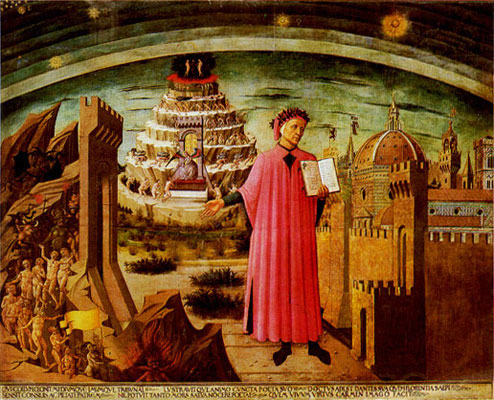
“It seems to me that the way you went about it couldn’t have been more likely to alienate just about everybody on campus. In your position, I would have done everything possible to avoid that. I wouldn’t want to end up in the 9th Bolgia (ditch of stone) of the 8th Circle of the Inferno, where the great 14th century Italian poet Dante Alighieri put the sowers of discord. There, as they struggle in that pit for all eternity, a demon continually hacks their limbs apart, just as in life they divided others.

“The Inferno is the first book of Dante’s Divine Comedy, one of the great works of the human imagination. There’s so much to learn from it about human weakness and folly. The faculty in your Italian department would be delighted to introduce you to its many wonders – if only you had an Italian department, which now, of course, you don’t.  …” read more here.
Patrick Hunt: Virgil’s Aeneid – the Harry Potter of Pompeii

Share

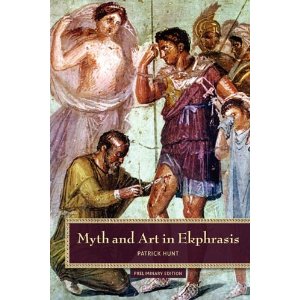
A colleague saw Patrick Hunts new book,  Myth and Art in Ekphrasis, and asked curiously, “Ekphrasis?  Where’s that?”

What do you say after such a question?  A small city in Hellenic Turkey?  The latest flashpoint in Iraq?  Patrick gave an answer to an intimate, early evening gathering at the Stanford Bookstore on Tuesday: “It’s not a place, but a kind of a place.”  Or rather a long conversation between poets, painters, composers, lasting over the centuries.

“Ekphrasis,” of course, is the translation of one work of art into another medium – traditionally literature, but in others as well.  Think of Virgil’s Dido and Aeneas becoming a Henry Purcell opera more than 1,500 years later.  The moral of the story:  “Great art inspires great art.”

The archaeologist made some interesting connections from ekphrastic remnants.

For instance, he read the passage from Virgil‘s Aeneid (XII 391ff) “[They] brought Aeneas, gashed and bleeding, whose long lance sustained his limping step”  (I’m using A.S. Kline’s translation below):

.

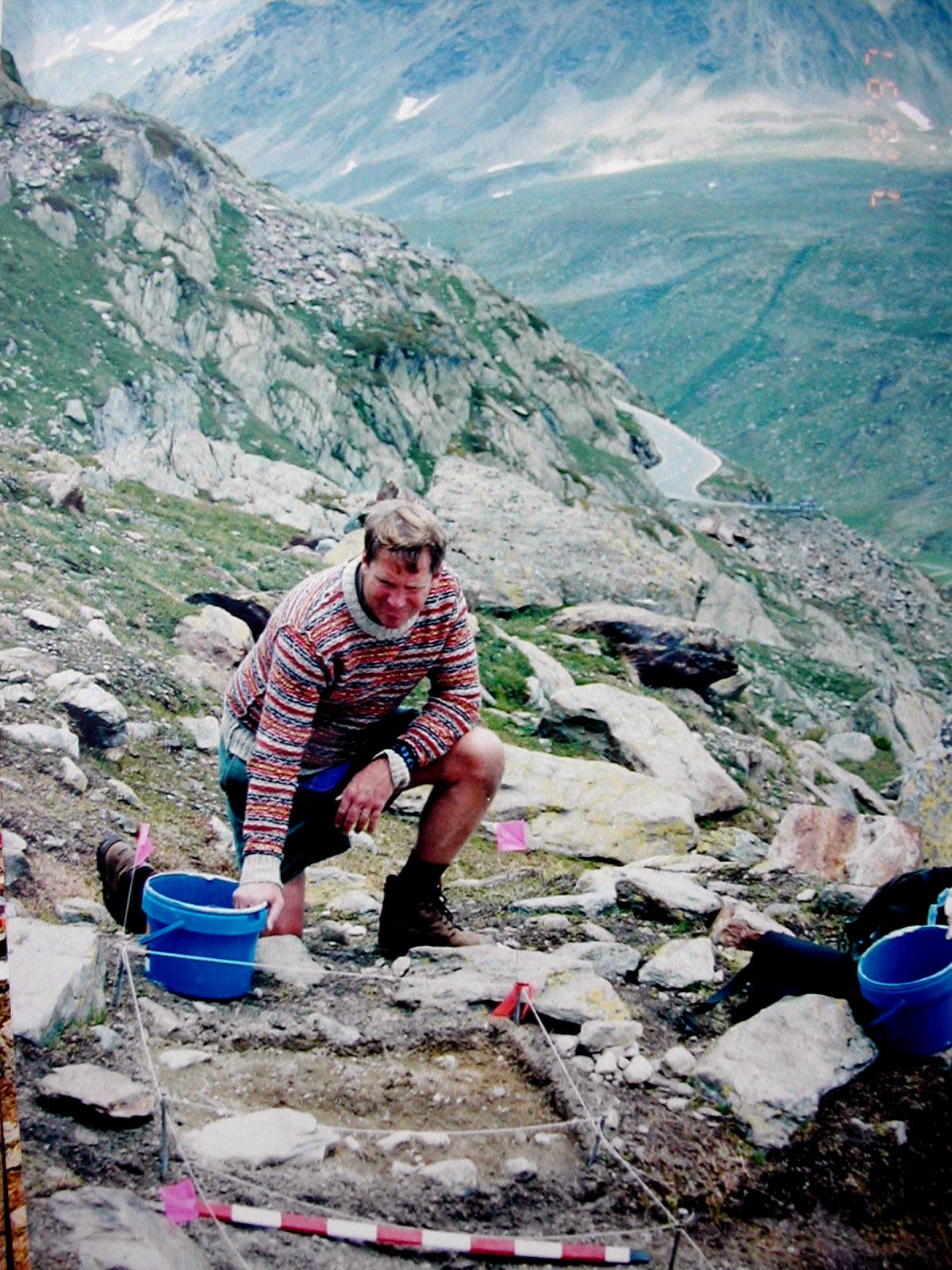
Hunt hunting the Alpine haunts of Hannibal

“He struggled furiously to pull out the head of the broken
shaft, and called for the quickest means of assistance:
to cut open the wound with a broadsword, lay open
the arrow-tip’s buried depths, and send him back to war.

Now Iapyx, Iasus’s son, approached, dearest of all to Apollo,
to whom the god himself, struck by deep love, long ago
offered with delight his own arts, his own gifts,
his powers of prophecy, his lyre, and swift arrows.
But Iapyx, in order to delay the fate of his dying father,
chose knowledge of the virtues of herbs, and the use
of medicine, and, without fame, to practise the silent arts.
Aeneas stood leaning on his great spear, complaining bitterly
amongst a vast crowd of soldiers, with Iulus sorrowing,
himself unmoved by the tears. The aged Iapyx, his robe rolled back
in Paeonian fashion, tried hard in vain with healing fingers
and Apollo’s powerful herbs: he worked at the arrow uselessly
with his hand, and tugged at the metal with tightened pincers.”

Venus heals the hero with the herb dittany, which even the goats roll in to heal their injuries. Hunt broke his foot in the Alps a few years back while looking for the lost Hannibal and had to climb downhill for a day with a broom as a crutch, so the Virgil’s image of fallen Aeneas is more than a little evocative for him.  And of course the doctor is using forceps – apparently a standard feature of an ancient Roman doctor’s toolkit.  Then Patrick pointed to an image from Pompeii (also the book’s cover, above) – the same scene, with the goddess hovering nearby as Aeneas is treated with herbs and the doctor’s painful, prodding forceps.  Exactly as written.

Virgil’s poem – which he once wished to burn, he was so dissatisfied with it – was painted on this Pompeii wall within a decade after the poem was written.  What does it all mean?

“Harry Potter status,” answered one student.  Voilà!

Biographer Peter Stansky on George Orwell and writing

Share

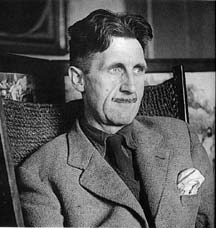
Orwell: No biographies, please

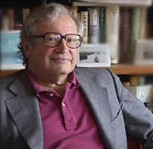
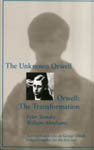
The eminent historian Peter Stansky’s good old-fashioned common sense prevailed in last week’s “How I Write” series — and perhaps after yesterday’s post, it’s timely to revisit George Orwell a bit.  Stansky is the author of more than twenty books, as well as an Orwell  biographer.  In 1972,  he wrote The Unknown Orwell, and followed it up in 1979 with Orwell: The Transformation, with co-author William Abrahams.  The Cambridge-, Yale-  and Harvard-educated writer is also a Fellow of the Royal Historical Society.

“Research is the enemy to completing a book,” Stansky told his sizable audience in his interview with Hilton Obenzinger. “Write as soon as you can – that’s the first thing I tell graduate students.  You’ll have a better sense of what’s missing.”

Despite 2008’s The First Day of the Blitz, he said he’ll pass on writing a biography of Adolf Hitler.  He wouldn’t, he said, want to write any biography of someone he didn’t like – “on the other hand, no one’s perfect.”

Stansky chose wisely

When setting off on a biographical stroll, “You don’t know what you’re going to discover – you might find them less attractive than you thought.”  Hitler saved him time: he was unattractive at the outset.

Stansky’s biographies of Orwell avoided nitty-gritty revelations of his life, instead focusing on “Orwell’s achievement as a writer, a biography that illuminates his writing.”

Wise choice, since Orwell’s forbade any biographies in his will.  Sonia Orwell, the writer’s widow, was practiced in the art of withholding copyright permissions as a way of undermining and controlling scholarship, nevertheless she eventually complained about “errors and misconceptions” in Stansky’s books, without specifying details.

Newsweek noted it’s “not a biography in the usual sense,” and still “the best biographical study of Orwell we have.”

Others biographies have come since, but Stansky is reconciled.  “No historian can discover everything – there’s always more to be found out or a different way of looking at it.”

As for reviews, he admits that “it’s better to be reviewed in a mixed way than not at all.”  Here’s a memorable and illuminating passage I found in Benny Green’s 1980 review in The Nation, recalling the postwar years:

“Orwell was already a distinguished figure, feared for his moral courage and respected for his passionate love of lucid prose, for he knew that when precision of language becomes blurred, then precision of moral judgment will soon be imperiled.  However, in retrospect it seems remarkable that in order to arrive at this position … he had first to become a policeman in Burma. The Burmese episode was indeed the watershed that Stansky and Abrahams say it was, but how extraordinary that he had actually to go there and see blood being shed before he could perceive the possibility that there might be a Burmese here and there who resented the British presence.  In the light of Orwell’s sanctified status today as a Deep Thinker, it comes as a shock to learn that he had been one of those dullards who need to have omelettes stuffed up their nostrils before they can extrapolate the existence of eggshells; the sad truth is that if every polemicist came to a state of grade only after the personal experience of vileness, there would be no world left to save at all.  Orwell’s conversion to anti-imperialism in Burma is in fact uncomfortably reminiscent of a later generation of Vietnam veterans who brought home the sensational news that setting fire to people was not after all entirely honorable – all of which illustrates a truth which Orwell came to know very well, that the saving grace of this world is not the experience of the eyewitness supping on horrors but the possession of a little imagination.”

Bad reviews?  He must have received some, because he apparently speaks from experience:  “Oh, you’re never over it.”

“I don’t believe in rising above it.  Being angry is good for the psyche.”

Paul Krugman vs. George Orwell. (Hint: Orwell wins.)

Share

He's right.

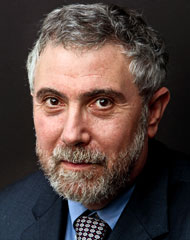
Nobel economist Paul Krugman is a smart guy.  So why does he use clichés?  His article today, “The World as He Finds It” refers to President Obama‘s “soaring rhetoric.”  Lordy, I am tired of that term.  A google search for the phrase turned up 136,000 usages for “soaring rhetoric” and Obama — for one suggestive, if not entirely reliable, measure.

To quote George Orwell‘s matchless “Politics and the English Language” (always worth a rereading) this usage falls into a class of “dying metaphors,” notwithstanding its airborne nature:

He's wrong.

Dying metaphors. A newly invented metaphor assists thought by evoking a visual image, while on the other hand a metaphor which is technically “dead” (e.g. iron resolution) has in effect reverted to being an ordinary word and can generally be used without loss of vividness. But in between these two classes there is a huge dump of worn-out metaphors which have lost all evocative power and are merely used because they save people the trouble of inventing phrases for themselves.

Thank goodness Krugman didn’t use “progressives” rather than “liberals,” another cliché, or rather, a marketing term, or maybe just wishful thinking.

“Progressive” always assumes you know which way history is going, and are somehow are ahead of it or on top of it.  Unfortunately, we learned in the 20th century that the road of “progress” usually detours towards the gas chambers, the crematorium, the concentration camps, or the killing fields.  I’m not sure that detour is something I’d want to represent.

In other words, it’s a great marketing term … but isn’t that the same as propaganda?

Late night postscript from Jeff McMahon, or rather from Martin Amis channeled by Jeff McMahon: Martin Amis: “To idealise: All writing is a war against cliché. Not just the clichés of the pen but the clichés of the mind and the clichés of the heart.”  [Joseph Brodsky used to call this “the vulgarity of the human heart.”]

Aleksandr Etkind: Memory, exile, and a four-line revenge

Share

Cooling his heels in the backwaters of empire

I stopped in briefly to hear Aleksandr Etkind‘s talk in Piggott Hall, “From Gogol’s Khlestakov to Tolstoy’s Ivan Ilyich: Imperial Intellectuals, Provincial Officials, and their Literary Hybrids.”  The Cambridge professor with two PhDs is known for his big, fat books (500 or 600 pages is typical).

However, the small man with dark, bright eyes and a thatch of salt-and-pepper hair read quickly from a paper, in a heavy Russian accent, barely moving his lips — hard to follow.

In a show-and-tell, Etkind passed around the newsletter it took a million euros to make“East European Memory Studies,” the written counterpart to the website, “Memory at War:  Cultural Dynamics in Russia, Poland and Ukraine” (which contains another review of Bloodlands by Timothy Snyder here — we wrote about it over the weekend here).

One remark Etkind emphasized, and I have thought about since:  historian V.O. Klyushevsky‘s contention that “The history of a Russia is the history of a country that colonizes itself.”

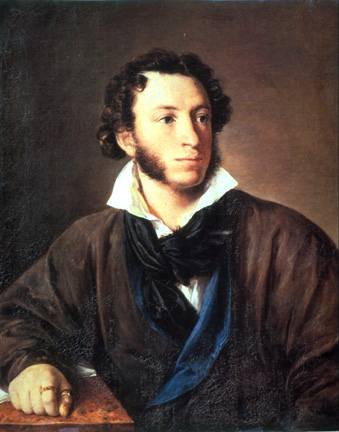
The Bloodlands, and Klyushevsky’s remark about self-colonization, brought to mind Aleksandr Pushkin‘s colorful fall from favor.  After he had angered the government with his mildly revolutionary activities, he was sent to sticks — the very places where self-colonization would take place. I recalled visiting Pushkin’s modest digs in Odessa, where he hunkered down to begin Eugene Onegin; Etkind’s remark reminded me of what a backwater the Odessa was — a century  before it was Isaac Babel‘s haunt, and still a grimy, tough provincial city. (Kishinev even more so, though I didn’t have a chance during my brief stay to investigate Pushkin’s traces.)

Pushkin was initially pleased he had not been sent to Siberia, and did not realize he was exiled till several years had gone by without his recall. He passed the time  shooting wax bullets into patterns on his bedroom wall and twirling a heavy iron cane wherever he went to strengthen his trigger hand (it didn’t work; he died in a duel anyway). And he also wrote pornographic, blasphemous, lyric and politcal poems.  But he also began his masterpiece, Eugene Onegin, in Odessa.

Alas, these activities were not enough to keep him fully engaged. In 1824, he began a love affair with the wife of the governor general, the Countess Vorontsova in Odessa.  The aggravated count begged the authorities to get rid of the poet.  Pushkin was sent to the Dniester area to investigate crop damage.

Pushkin’s irritated report was brief, and registered his scathing resentment at wasting his short time.  He wrote it in verse, a four-line poem:

The locusts flew and flew over the plain.
They landed on the ground.
Ate everything they found.
And then the locusts flew and flew away again.

Peace Train? The Atlantic revisits Cat Stevens/Yusuf Islam, Salman Rushdie

Share

The paparazzi haven’t caught on yet, but I’m famous, kind of.  I’m in the cyberpages of The Atlantic this weekend, a feature item in “Atlantic Wire’s The Long War Between Salman Rushdie and Cat Stevens” by Max Fisher.  The “war” refers to the “still-running and extremely bitter war of words between the two men.”

However, the words from the crooner were not merely “bitter” — as I described in my post, Cat Stevens/Yusuf Islam was supporting murder, however much he may (or may not) have changed his position since, in carefully crafted ambiguous statements, such as the one here. Stevens clearly wishes to move beyond the controversy, yet fails to show the slightest remorse or concern for the well-being for those whose lives he has further endangered (the list has grown much longer since Rushdie’s 1989 fatwa, including the murder of several people).

Fisher notes:

The conflict reignited most recently when a reporter asked Rushdie for his thoughts on Stevens’s performance at the Washington, D.C., rally held by Jon Stewart and Steven Colbert.

Actually, Rushdie was text messaging a friend in the media, not responding to a reporter’s questions.

Fisher noted in my follow-up post I was “reporting more of Rushdie’s unhappiness.”  Well… yes… I guess “unhappiness” describes it.  I’d be pretty unhappy too if someone endorsed nutters who were putting a bounty on my head.  (He also says Rushdie was telling “another Stanford blogger” — nope, it was still Nick Cohen, a Standpoint blogger.  )

It sounds like Fisher was writing on the trot, like most bloggers.  I plead guilty to the same charge.

Although I was aware that Salman Rushdie was making more and more public appearances (in fact, I covered one here), I wasn’t aware that he has no longer considers himself officially in “hiding.” Brave man.  I understand that a fatwa can only be repealed by those issuing them, and Khomeini is dead.  That means any nutcase who wants to make a name for himself can pick off Rushdie during his guest stint at Emory University or during one of his lectures on contemporary literature.

Fisher comments: “Havens [sic]  concludes by lamenting the state of free speech, although it’s not clear if she’s criticizing Rushdie’s objection that Stevens would appear at the rally or Stevens’s possible support for killing Rushdie.”

Got me again — writing on the trot.  My free-speech comments may have appeared to come out of the blue, so apologies for that.  Here’s where I was coming from:  When I raise topics like these, I get objections that, for example, Rushdie isn’t such a red-hot writer anymore. I must nowadays reaffirm that I support a writer’s right to write even a bad book without being stabbed, gunned down, or beheaded.  Similarly, when I defend Ayaan Hirsi Ali‘s right to exist, even when she’s offensive, I’m told that she’s received support from the right-wingers.  I support non-violent free speech for the left and right.  Similarly, with Molly Norris, I’m told what a bad idea it was to launch a “Everybody Draw Mohammed” day, and that she was “asking for it” by doing so (even though she later withdrew her suggestion and apologized for it) — but the whole point of being a cartoonist is to be edgy, and nobody “asks for” a fatwa.

I will even support Cat Stevens/Yusuf Islam’s right to sing Golden Oldies at a rally for “sanity” — but I also reserve the right to call it out — and I will call out the lazy, ironic, faux-sophistication of Jon Stewart, Stephen Colbert, & co., as they sit on the sidelines on important moral issues, as if the issues do not have anything to do with them.

In the words of Jeff Sypeck:

“As far as I’m concerned, if you’re breaking no other laws, then you can say whatever you want, draw whatever you want, and deface or defile anything that’s your own property, be it a flag, a holy symbol, an effigy, you name it. However, in return, I reserve the right to judge you, denounce you, lobby against you, tell others how wrong you are, and speak vociferously in reply.”

My comments on this issue are becoming boilerplate.  I guess this isn’t covered in 9th grade civics anymore.  Witness this witless comment on the Standpoint article:

… The point is that Jon Stewart didn’t say he was “fine with it,” Salman Rushdie interpreted Jon Stewart’s apology as such. Who cares what Rushdie thinks anyway. Khomeini is dead and Salman Rushdie, well, he’s yesterday’s man too… indeed if it wasn’t for the dated Fatwa no-one would even be talking about him anymore.

Rest in Peace: Theo van Gogh

It’s hard to believe we’ve arrived at a juncture where we have to explain all this stuff.  Again and again and again.

Peace is more than dreaming and singing songs.  Sometimes it requires courage.  In fact, it doesn’t mean much unless it does.  Otherwise, it’s just the easy pacifism of the non-combatant.

Some people “get it.”  Last March, Michael Gordon-Smith wrote for Australian Broadcasting wrote:

Ultimately, however, it’s not something to be made light of. It’s not a yawn. It mattered then and it matters now. Yusuf supported killing a man because someone took offence at what he had written.  …

But 20 years on Yusuf seems to think all the wrongs were done by others. Journalists asked him loaded questions. His replies were misinterpreted. It was the book, not the call for violence that “destroyed the harmony between peoples and created an unnecessary international crisis”.   At worst, his remarks were silly but they were dry English humour. …
He will probably sing Peace Train at his concerts:

Now I’ve been crying lately,
thinking about the world as it is
Why must we go on hating,
why can’t we live in bliss?

It’s time he stopped singing the question and answered it. He had an opportunity to stand for peace and tolerance when the need for such a voice was critical. Instead, when Geoffrey Robertson asked the question, he found no room for tolerance or doubt, but with dogmatic certainty took the side of violence and tyranny.

For me, it remains the most important thing he ever did. Unless he revisits the issue and finds room for difference, in my mind he’s forever defined by the choice he made in those weeks in 1989. The only message I hear from him is the echo of Khomeini’s threat not just to Salman Rushdie but to every free thinker in the world: If you speak your mind we may kill you.