The good news: Liu Xiaobo’s writing will be published in English. The bad news: not till 2012.

Share

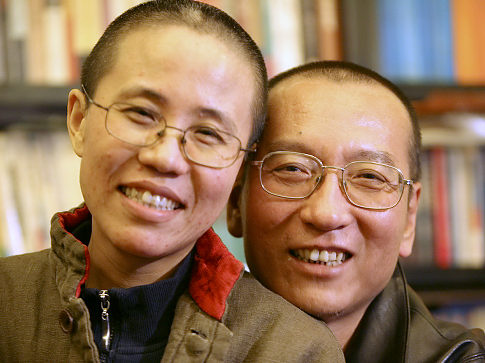
Liu Xiaobo and wife Liu Xia: "I will embrace you with ashes"

Some time ago, I wrote that it was unfortunate that we had no access to the writings of this year’s imprisoned Nobel peace prize winner, Liu Xiaobo.  All writers, after all, would rather be known for their writings rather than their persecution.

Now it’s official that the prestigious Graywolf Press will be publishing a bilingual edition of the Chinese writer’s June Fourth Elegies.  The book will be out in 2012.  The title of his book, which of course has not come out in China, refers to the June 4, 1989, suppression of pro-democracy demonstrations at Tiananmen Square.

From Galleycat, we also learn that poet Jeffrey Yang will translate the collection. Literary agent Peter Bernstein negotiated the deal with Jeffrey Shotts and publisher Fiona McCrae.

That’s not all.  Harvard University Press (also prestigious) will publish a selection of works by the Chinese dissident, also next year.  The untitled anthology will contain poetry, essays, and social commentary.

The academic press has enlisted UC-Riverside’s  Perry Link to direct a translation team. Said Link: “Until he won the Nobel Peace Prize, Liu Xiaobo was little known in the West. This collection offers to the reader of English the full range of his astute and penetrating analyses of culture, politics, and society in China today.”

“God Bless Us, Every One!” — NYT, Ian Morris, and a postscript to the Berkeley concert

Share

"Hey, mom!"

At Berkeley’s “Slavic Choral Concert Christmas in Kraków”, described yesterday, I had to scour the rows to find a vacant chair, even as a singleton.  It seemed that the entire Slavic population of the Bay Area was in the crowded Hillside Club.  Naturally, I went to the front, first: I never underestimate people’s unwillingness to be close to the action.  Two African-American matrons, dressed to the nines for the occasion, were holding down the front seats in the lefthand corner.

“Well, you don’t look Polish!” I said to them.  They laughed.

“We’re all part of Mother Africa!” said one.

It’s true.

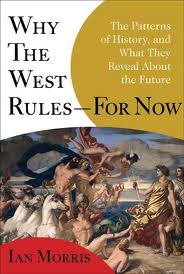
Don’t believe me (or her)?  Listen to Ian Morris, who received a very good review in yesterday’s New York Times Book Review (Orville Schell calls him “a lucid thinker and a fine writer,” with the tone of “an erudite sportscaster”):

“Historians like giving long, complicated answers to simple questions, but this time things really do seem to be straightforward. Europeans do not descend from superior Neanderthals, and Asians do not descend from inferior Homo erectus.  Starting around 70,000 years ago, a new species of Homo — us — drifted out of Africa and completely replaced all other forms.  Our kind, Homo sapiens (“wise man”), wiped the slate clean: we are all Africans now.  Evolution of course continues, and local variations in skin color, face shape, height, lactose tolerance, and countless other things have appeared in the 2,000 generations since we began spreading across the globe.  But when we get right down to it, these are trivial.  Wherever you go, whatever you do, people (in large groups) are all much the same.”

So, as Tiny Tim said, “God bless us, every one!

Or, in the words of the cheerful African-American woman at the Slavic gig:  “We’re everyone!” she said, waving toward the crowd on the darkening Thursday evening among the Christmas lights, the mulled wine, and the decidedly un-African decor.

Postscript on 12/15:   was named one of the top ten books of 2010 by the New York Times.  Tk it out here.

Miłosz on Christmas carols: “perhaps one ought to look at them for the essence of Polish poetry”

Share

I’ve always liked Christmas carols — even with their sing-songy obvious rhymes (bright-light-night) and simplicity of form.  Perhaps that’s why I like them.  I’m happy to say Czesław Miłosz shares my enthusiasm.

In any case, last Thursday I made the terrible trek to Berkeley during rush hour.  The occasion:  the eighth annual “Slavic Choral Concert Christmas in Kraków” at the Historic Hillside Club.  I guess all the recent posts about Katyń have returned my mind to Poland.

Carols are an important part of Christmas for all Slavic peoples, especially Poles.  The program brochure put it this way:  “The melodies are truly Polish – jolly, meditative, tender, and sometimes humorous. The Polish Christmas carol occupies a unique place in the musical literature of Christianity.”

The event was heavily attended – a crush, really – and among other seasonal accoutrements was a Polish szopka, an elaborate, cathedral-like Nativity scene.

Miłosz wrote in his A Year of the Hunter, “In Poland, it isn’t easy to separate ‘folk’ elements from the contributions of Church writers and musicians, not to mention seminarists and minstrels who worked for the parish.  The most intense activity occurred in the 17th century; thus, old Polish ‘folklore’ and, most of all, the carols bear a strong imprint of the Baroque.”

My favorite is “Bóg się rodzi” – a Polish Christmas carol that is, in part, a national anthem.  The carol is actually a mazurka,  which is to say, a Polish folk dance in triple meter, with an accent on the second or third beat.  The lyrics (“God is Born”) were written in 1792 by Franciszek Karpiński, a leading poet of the Enlightenment period.

In the Andrzej Wajda movie Katyń, the imprisoned Polish soldiers sing “Bóg się rodzi on their somber Christmas Eve.  A mazurka usually has a lively tempo, but not this one  (it’s a little after 6.20 on the Youtube video here); the melody remained with me long after the carol movie was over.

In a controversial move (and I can’t remember why it was controversial), Miłosz ended his A Year of the Hunter with a story attending the Pastorałka: “Without a doubt, Polish carols possess a particular charm, freshness, sincerity, good humor, that simply cannot be found in such proportions in any other Christmas songs, and perhaps one ought to look at them for the essence of Polish poetry,” he wrote.  “My susceptibility to that performance can be explained by my having listened to carols from childhood, but also because only the theater has such an impact, appealing to what is most our own, most deeply rooted in the rhythms of our language.”

The occasion, of course, was not just for Poles.  A number of other national groups performed – each accomplished, and together emphasizing the distinct and very vibrant cultural groups of Eastern Europe — a Ukrainian performance; the curious flattened singing of the Hungarian Christmas carols that’s a sound unlike any I have heard; the loud and noisy Bulgarians, with bagpipes, singing and stamping — the brochure referred to their “antique, pre-Christian and Hellenistic roots”

Miłosz wrote that “to this day I am united in enthusiasm … with the entire audience, when Pastorałka concludes with a Dionysian dance.  This is total madness, an unbridled frenzy on stage, a letting-go beyond all bounds, although the words are as plain as can be.”

I thought the same, as I pulled away during the intermission for the trek back to Palo Alto.  The excited crowd had spilled out into the sidewalk and curb.  And in the midst of the clapping mob, the exuberant Bulgarians with their bagpipes, stamping and singing and dancing as if it were their last night on earth.

NYT: “Do colleges need French departments?” Josh Landy thinks they do.

Share

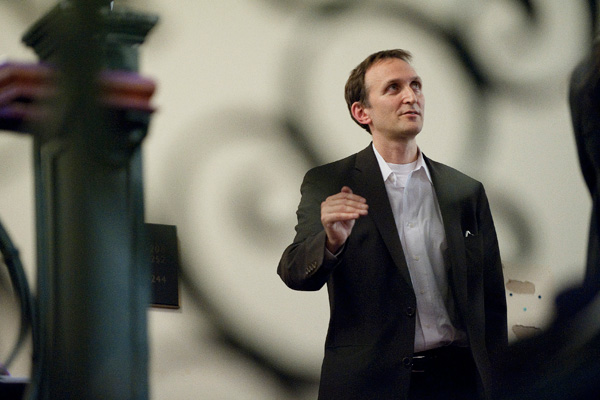
My recent article on Joshua Landy‘s rousing defense of the humanities built on an earlier New York Times article:  “Do Colleges Need French Departments?”  The Proust scholar addressed the question with his students in the video above, and to the rest of the world here.  The NYT focus is once again the Albany Massacre, which we wrote on the Book Haven here and here.

Josh told me that he’d made a similar spirited defense on Arcade, “SUNY Albany, Stanley Fish, and the Enemy Within.” It’s worth a look.  Inevitably, perhaps, Josh also attacks Stanley Fish‘s much-blogged post, “The Crisis of the Humanities Officially Arrives“:  “Let’s put it this way: if the most prominent humanists are publicly proclaiming their belief in the utter uselessness of what they do, what reason could a cash-strapped administrator possibly have for not shutting down their departments?” he asks.

Fortunately—as many excellent Arcade posts, among other things, have shown—not all of us feel the same way our “friend” Stanley does.  But it’s time for all of us to get just as vocal as him.  Yes, it may be embarrassing for us to make positive claims for what we do (we’ve specialized for quite a while in making negative claims about more or less everything), but we may just have to accept a little embarrassment.  Perhaps it’s the price we’ll have to pay for heading off future Albanys.

What can we say? Plenty. Here are his talking points:

  • Yes, the humanities do enhance our culture. … In fact, it’s hard to know what culture is if it’s not things like Picassos and Pink Floyd albums and Toni Morrison novels.  Not to mention the people, like Henry Louis Gates and Michael Fried and Helen Vendler (or for that matter Sister Wendy or Benard Pivot or the makers of Art21), who help us to love those works even more.  This may not be an exciting thing for us humanists to say to each other, but it’s straightforwardly true.

    "Has he not read his Bakhtin? Has he not read, well, anything?" (Photo: L.A. Cicero"

    "We need every voice we've got." (Photo: L.A. Cicero)

  • Yes, some of those books that people teach do contain “the best that has been thought and said.”  It should be remembered here that Fish has a very hard time distinguishing between the humanities in general and literary study in particular.  But the rest of us, I think, understand that the humanities also include, among other disciplines, that of philosophy.  Who wants to say that W. E. B. DuBois’s The Souls of Black Folk, to take just one example, is not among “the best that has been thought and said”?  I’m not in any way arguing for a core curriculum (it’s part of Fish’s polarizing thinking that you’re either a hip value-denier or a pathetic canon-defender; let’s resist that false dichotomy).  I’m just saying that people who teach DuBois (and Lao-Tsu, and Nietzsche, and de Beauvoir…), in whatever context, are doing everyone a favor.multidisciplinary minds and a broad spectrum of experiences.” (qtd. in Daniel Pink, A Whole New Mind, 132.)  These are not humanists.  These are business people.
  • What is more, the humanities expose us to—and, very often, cause us to fall in love with—other cultures, both within our country and outside it.  Is it embarrassing to say this out loud?  Certainly.  Does it need to be said?  Apparently so.
  • And then there’s the fact that exposure to the humanities changes us, enriches us, expands our imagination, clarifies our thinking, gives new depths to our being.  Yes, even the literary humanities manage this.  Fish appears to believe—stunningly!—that great literary works could help us only if they provided examples for emulation in the form of heroic characters.  Has he not read his Bakhtin?  Has he not read, well, anything?

Josh concludes:  “There’s much, much more to be said; please help me in saying it.  We need every voice we’ve got.”  A lively discussion follows — check it out.

The empty chair, a presidential statement: “Mr. Liu Xiaobo is far more deserving of this award than I was.”

Share

While he was named as this year’s Nobel Peace Prize recipient, Liu Xiaobo was incarcerated, probably working in the prison factory that makes electrical switches.  In Oslo — an empty chair represented him.

Some Twitter users who listed their location as Beijing had changed their profile pictures to an empty chair.

In light of the refusal of one-third of the invited nations to attend in the face of Chinese threats — China, Russia, Saudi Arabia, Pakistan, Iraq and Iran — it is gratifying to know that President Obama sent out this graceful statement of support today:

One year ago, I was humbled to receive the Nobel Peace Prize – an award that speaks to our highest aspirations, and that has been claimed by giants of history and courageous advocates who have sacrificed for freedom and justice. Mr. Liu Xiaobo is far more deserving of this award than I was.

All of us have a responsibility to build a just peace that recognizes the inherent rights and dignity of human beings – a truth upheld within the Universal Declaration of Human Rights.  In our own lives, our own countries, and in the world, the pursuit of a just peace remains incomplete, even as we strive for progress.  This past year saw the release of Nobel Laureate Aung San Suu Kyi, even as the Burmese people continue to be denied the democracy that they deserve.  Nobel Laureate Jose Ramos Horta has continued his tireless work to build a free and prosperous East Timor, having made the transition from dissident to President.  And this past year saw the retirement of Nobel Laureate Desmond Tutu, whose own career demonstrates the universal power of freedom and justice to overcome extraordinary obstacles.

The rights of human beings are universal – they do not belong to one nation, region or faith.  America respects the unique culture and traditions of different countries.  We respect China’s extraordinary accomplishment in lifting millions out of poverty, and believe that human rights include the dignity that comes with freedom from want.  But Mr. Liu reminds us that human dignity also depends upon the advance of democracy, open society, and the rule of law.  The values he espouses are universal, his struggle is peaceful, and he should be released as soon as possible. I regret that Mr. Liu and his wife were denied the opportunity to attend the ceremony that Michelle and I attended last year.  Today, on what is also International Human Rights Day, we should redouble our efforts to advance universal values for all human beings.

Orwell Watch #2: Murder in Yeovil

Share

Thank you, George.

Last month, I jeered at the cliché “soaring rhetoric” (already on the wane by the time I whacked at it), challenged the liberals’ rebranding of themselves as “progressives,” and, to be an equal opportunity offender, in the comments section I questioned the right-wing highjacking of the meaningless, self-congratulatory term “values.”

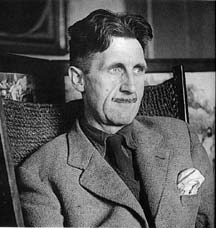
It seems timely to launch the second installment of the Orwell Watch, in honor of George Orwell‘s immortal essay, “Politics and the English Language” — especially after Books Inq. alerted me to a blog post datelined from the odd little burg of Yeovil, a few miles from my own ancestral village outside Glastonbury.

While Orwell’s rule “Never use the passive where you can use the active,” should, like everything else, be used in moderation (in this sentence, for example), it’s a pretty good yardstick to measure the intent to obfuscate.  In this squalid murder case, reported by Theodore Dalyrimple, the prosecutor has pretty effectively distorted a straightforward narrative.  The prosecutor’s through-a-glass-darkly verbiage attempts to describe the murder of 38-year-old Glynn Rowlands, over some stolen gold.

For simplicity (Dalyrimple’s phrasing is rather ornate), the prosecutor’s words from the Western Gazette are italicized below.  The journalist’s queries are indented.

Ben [one of his co-accused] started tying up his [the victim’s] arms and legs. Steve [another of the co-accused] picked up a brick and let it go in his face.

Let it go in his face? Do bricks, then, fly spontaneously into people’s faces like poltergeists, unless diverted from their course? Why did the young man not write that Steve threw, or smashed, the brick into the man’s face?
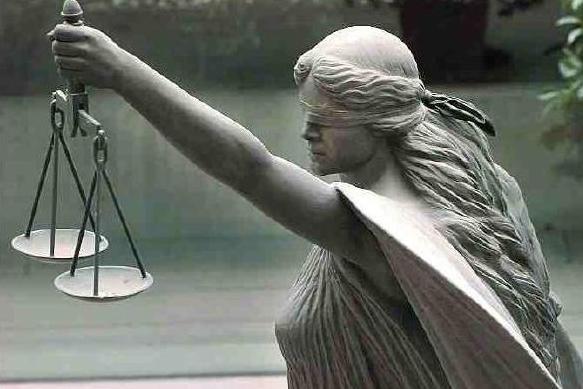
Glynn Rowlands had fallen into an ugly dispute with [the accused].

By the force of what social (or antisocial) gravity does one “fall into” ugly disputes? Of course, it is possible that the accused picked a quarrel with the victim completely at random: some people behave like that, though it is unlikely in this case, and in fact the prosecutor did not believe it. But an ugly dispute? One does not fall into ugly disputes as into cunningly-disguised elephant-traps.

Retribution was required.

But required by whom or by what? By the laws of the universe? Clearly the prosecutor meant by the accused; but then why not say “The accused sought retribution”?

He was to tell good friends who went to see him in hospital the reality of how gold was missing…

How gold was missing? Did it go missing spontaneously, of its own accord and volition? … Or did someone take the gold? If so, why not say so? Why the passive construction? Since the prosecutor soon went on to say that Rowlands “returned nothing”, he clearly believed that Rowlands had stolen the gold. Why did he not say “Rowlands confessed to stealing the gold”?

It was to get worse …

What was to get worse? The situation, that presumably acted like a demiurge independent of how the participants in it acted? What the prosecutor meant was that the accused allegedly behaved more and more threateningly towards the victim until they actually killed him.

At 3.17 pm on Thursday, December 3, hours before Glynn Rowlands was to lose his life…

Glynn Rowlands was to lose his life? In a fit of carelessness, perhaps, in the way that I sometimes mislay my keys because I am preoccupied by something else? Or by the spontaneous development of a head injury and multiple fractures of the ribs, as some — including Dickens — once thought that people could die by spontaneous combustion? Someone, whether the accused or others, killed Glynn Rowlands.

Does it matter?  I think it does.  As Orwell points out, fuzzy language leads to fuzzy thinking. Here a brutal murder by brutal people has been treated as a sort of inevitability, like leaves falling in the autumn. Human agency has been blanketed by a soft carpet of moral snow.

Legal pomposity is commonplace, and the journalist reacted to it with understandable derision.  Still, some active, Anglo-Saxon verbs — “beat,” “hit,” “stab” and “kill” — would have gone some way to describing the reality of the wretched man who was kidnapped, bound, stripped naked, brutally assaulted and left dying in a cold and muddy on a remote country lane.

Postscript on 12/10:  Of course in my perambulations around the internet, I ran across a photo of Glynn Rowlands; it seemed exploitative to use it on a blog post that is essentially about the use of language. So I settled for a generic “Lady of Justice” image instead. On reflection, however, it seems wrong and indecent not to use it.