
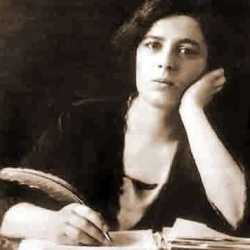
Rebecca West called for “a new and abusive school of criticism.” It’s still needed.

Share

Saving souls through litcrit

A few months after World War I began, writer Rebecca West wrote:  “Disgust at the daily deathbed which is Europe has made us hunger and thirst for the kindly ways of righteousness, and we want to save our souls.”

The New Republic, almost a year ago, reprinted her 1914 remarks, calling us to “a serious duty … the duty of listening to our geniuses in a disrespectful manner.”

So much for “kindly ways.”  West wrote, “Criticism matters as it never did in the past, because of the present pride of great writers.”

West’s prose is a little febrile, and she hopelessly confuses the mind and the soul, but in an era of anomie, her passionate outcry is refreshing:  “Indeed, if we want to save our souls, the mind must lead a more athletic life than it has ever done before, and must more passionately than ever practise and rejoice in art,” she wrote.  “For only through art can we cultivate annoyance with inessentials, powerful and exasperated reactions against ugliness, a ravenous appetite for beauty; and these are the true guardians of the soul.”

She continues:

“A little grave reflection shows us that our first duty is to establish a new and abusive school of criticism. There is now no criticism in England. There is merely a chorus of weak cheers, a piping note of appreciation that is not stilled unless a book is suppressed by the police, a mild kindliness that neither heats to enthusiasm nor reverses to anger. We reviewers combine the gentleness of early Christians with a promiscuous polytheism; we reject not even the most barbarous or most fatuous gods. So great is our amiability that it might proceed from the weakness of malnutrition, were it not that it is almost impossible not to make a living as a journalist.

Well, that much has changed at least.  Journalists are feeding out of dumpsters nowadays.

Nor is it due to compulsion from above, for it is not worth an editor’s while to veil the bright rage of an entertaining writer for the sake of publishers’ advertisements. No economic force compels this vice of amiability. It springs from a faintness of the spirit, from a convention of pleasantness, which, when attacked for the monstrous things it permits to enter the mind of the world, excuses itself by protesting that it is a pity to waste fierceness on things that do not matter.

But they do matter. The mind can think of a hundred twisted traditions and ignorances that lie across the path of letters like a barbed wire entanglement and bar the mind from an important advance.”
Sleeping with the enemy

Is West’s call to arms dépassé?  We think not.  Dana Gioia wrote nearly two decades ago in “Can Poetry Matter?” that in literary journals

the essays and reviews are overwhelmingly positive. If it publishes an interview, the tone will be unabashedly reverent toward the author. For these journals critical prose exists not to provide a disinterested perspective on new books but to publicize them. … The unspoken editorial rule seems to be, Never surprise or annoy the readers; they are, after all, mainly our friends and colleagues.

By abandoning the hard work of evaluation, the poetry subculture demeans its own art. Since there are too many new poetry collections appearing each year for anyone to evaluate, the reader must rely on the candor and discernment of reviewers to recommend the best books. But the general press has largely abandoned this task, and the specialized press has grown so overprotective of poetry that it is reluctant to make harsh judgments.

Robert Bly wrote in a similar vein about the same time:

We have an odd situation: although more bad poetry is being published now than ever before in American history, most of the reviews are positive. Critics say, “I never attack what is bad, all that will take care of itself,” . . . but the country is full of young poets and readers who are confused by seeing mediocre poetry praised, or never attacked, and who end up doubting their own critical perceptions.”

West concludes:  “Now, when every day the souls of men go up from Finance like smoke, we feel that humanity is the flimsiest thing, easily divided into nothingness and rotting flesh. We must lash down humanity to the world with thongs of wisdom. We must give her an unsurprisable mind. And that will never be done while affairs of art and learning are decided without passion, and individual dulnesses allowed to dim the brightness of the collective mind. We must weepingly leave the library if we are stupid, just as in the middle ages we left the home if we were lepers. If we can offer the mind of the world nothing else we can offer it our silence.”

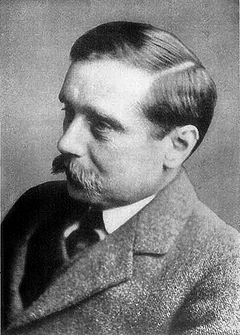
West hammers into George Bernard Shaw and H.G. Wells.  She says nothing about the ethics and politics of sleeping with the authors she reviews.  She was Wells’s lover for a decade and bore his son.
David Lang’s postmodern passion: “It is not a pretty story”

Share

Just in time for Christmas (Photo: Peter Serling)

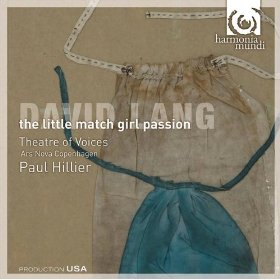
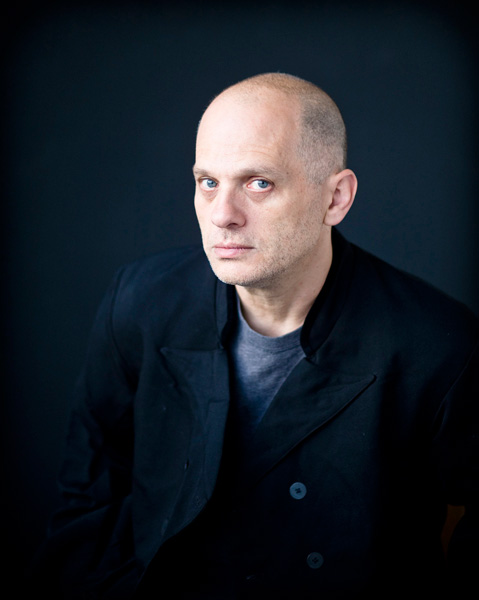
I’m not always au courant with the latest musical offerings —  so I missed David Lang‘s Little Match Girl Passion when it won the Pulitzer in 2008.  Only when I interviewed and wrote about Lang did I familiarize myself with this stunning composition.  A friend of mine, Tim Page of the Washington Post‘s said of it, “I don’t think I’ve ever been so moved by a new … composition” and that it was “unlike any music I know.” It’s in keeping with the darker side of the season, a postmodern take on the Hans Christian Andersen story that inspired it.

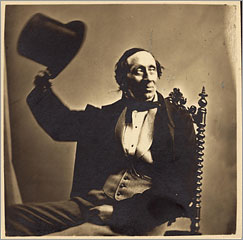
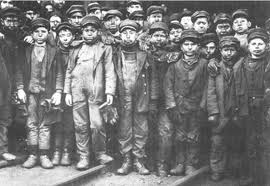
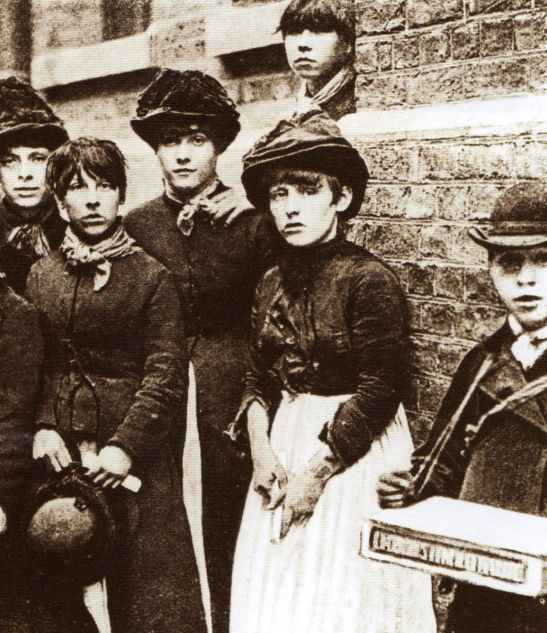
“It is not a pretty story,” says Lang, who wrote the text.  True. It’s always surprised me that the tale — all of two-and-a-half pages in my 1906 edition published by J.M. Dent & Co. in London — is viewed as something to be read to children.  Lang rightly observes that “it has that shocking combination of danger and morality that many famous children’s stories do.”  And in Lang’s sensitive hands, the story comes shockingly alive once again: a poor young girl tries unsuccessfully to sell matches on New Year’s Eve, fears returning to the impoverished home where she is beaten by her father, and freezes to death while having visions of her grandmother, “the only person who had ever been kind to her,” as Andersen explains in the story.

Knew poverty from the inside out

“Through it all she somehow retains her Christian purity of spirit,” Lang writes.  You can hear the whole Passion on Lang’s website, here.

Andersen knew what he was talking about: “When Hans Christian Andersen was a child, he was almost as poor as the ‘little match-seller’ in one of his own tales,” Ernest Rhys writes in an editor’s note to my edition.  He “almost starved” as a teenager in Copenhagen, and his early poem “The Dying Child” earned him lasting fame.

Lang writes in the notes that accompany the CD, “What drew me to ‘The Little Match Girl’ is that the strength of the story lies not in its plot but in the fact that all its parts—the horror and the beauty—are constantly suffused with their opposites. The girl’s bitter present is locked together with the sweetness of her past memories; her poverty is always suffused with her hopefulness. There is a kind of naive equilibrium between suffering and hope.”

In other words, Andersen’s work demands a return to radical innocence.  That dark insistence is at the heart of this short, incomprehensible work.   Other Industrial Revolution writers – William Blake in his poems,  Charles Dickens in his stories – would have understood.  Without it, the story is mere pathos and sentimentality. Radical innocence is a to-the-death imperative,  as Andersen knew, as Blake knew.  (That tenacious survivor, Czesław Miłosz, tries to recover it in “The World” cycle of poems. Clearly, it was the Eden he longed to return to.)

“A Passion,” of course, is about suffering — typically, the passion not only tells the story, but also comments upon it, giving the tale a “powerful inevitability,” said Lang.   It also includes texts from other sources to tell its story (Lang borrows from Genesis, the Song of Songs, and Ecclesiastes). It embraces different p.o.v.s — the reactions of the crowd, penitential thoughts, statements of general sorrow, shock, or remorse, as well as other texts altogether.  These tools place us in the middle of the action, rather than allowing us the emotional as well as temporal distance of bystanders.

Lang modeled his own Passion on Bach’s Saint Matthew Passion — “what has always interested me, however, is that Andersen tells this story as a kind of parable, drawing a religious and moral equivalency between the suffering of the poor girl and the suffering of Jesus. The girl suffers, is scorned by the crowd, dies, and is transfigured. I started wondering what secrets could be unlocked from this story if one took its Christian nature to its conclusion and unfolded it, as Christian composers have traditionally done in musical settings of the Passion of Jesus.”

Merry Christmas to all.

(Listen, at least, to the opening “Come, Daughter” piece here.)

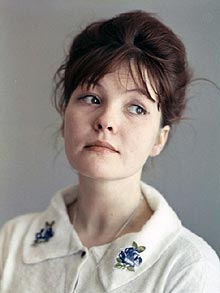
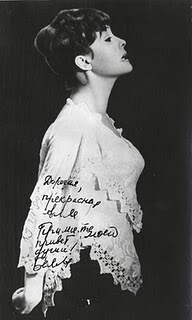
Remembering Bella Akhmadulina: “purity, conscience, and independence”

Share

I ran across Robin Varghese‘s recent post on 3 Quarks Daily noting that, he, too, had somehow missed the obituaries for the 73-year-old Russian poet Bella Akhmadulina, who died on November 29 of a heart attack.  I spent a little time this afternoon catching up: William Grimes‘s New York Times obituary for the “bold voice in Russian poetry” is here.

Akhmadulina came to fame in the post-Stalin years, the years of the Thaw.  She never emigrated, and never was exiled.  The Telegraph reported:

“Yet in her own quiet way Bella Akhmadulina was as much of a dissident as better known Soviet writers. Her work as a translator – she translated into Russian poetry from France, Italy, Chechnya, Poland, Yugoslavia, Hungary, Bulgaria, Georgia, Armenia and many other countries – led to her expulsion from the Soviet Writers’ Union in the Brezhnev era, and she openly supported persecuted writers like Boris Pasternak and Alexander Solzhenitsyn and political dissidents such as Andrei Sakharov.”

In 1979, she fell out of favour by contributing a surreal short story, ‘Many dogs and one dog,’ to the Samizdat publication Metropol, and was subsequently condemned for the “eroticism” of her verse and banned from publication.”

Said the poet:  “How did I manage?  Well, I think a person has some sort of guiding light.  Without doubt, something or someone looks after us from on high.” sThat quotation is from Valentina Polukhina‘s exhaustive and enlightening series of interviews, Brodsky Through the Eyes of His Contemporaries, volume 1.

I didn’t know her poetry — or at least I didn’t know it much.  I remember her instead as the the bright, original, and unambiguous voice in Polukhina’s 1987 interview:  “The presence of any great poet in the world creates a marked effect on human existence.”

An excerpt:

“But in exceptional cases, as with Bunin, with Nabokov, we are talking about people who have taken with them something that became … as if they created the Russian language inside themselves.  He doesn’t need to hear Russian spoken around him; he himself becomes a force that is ripe.  He himself is both garden and gardener. …

I said this at some time to Nabokov.  He asked me, ‘Do you like my language?’ and I answered, ‘Your Russian, it’s the best,’ and he said, ‘But it seems to me that it is like frozen strawberries.’  And whatever fate does … Well, with such people what is fate?”

In a literary world notorious for backbiting and artistic rivalries, she said this of Joseph Brodsky:

“My particular relationship to Brodsky can be described quite simply: uncritical, one of adoration.  I myself have stated somewhere in connection with Akhmatova:  ‘Of all calamities, adoration is the worse.’  An admirer can never expect his adoration to be returned.  And I am sure, that Joseph … I never think about myself when I think about him.  And even when they said to me, ‘you know, what Brodsky thinks of you!’ (Thumb downward.)  As he pleases.  But it is my business to talk about him with thumbs up.”

Polukhina, however, contradicted her:  “He said that Bella is one of the few Russian poets living in Russia who by some miracle has succeeded in preserving her purity, conscience and independence.”

Akhmadulina’s finest online send-off may be the memoir from Gregory Freidin on Arcadehere.  He gives us the context for Akhmadulina’s rise to prominence:

“Because of the richness of inflection and infinite melodic variability of the language, Russian poetry is blessed with extraordinary expressive force and a mighty mnemonic potential. This comes in handy if you happen to live under a repressive ideocracy like the Soviet Union, since verses can be easily memorized and leave little material evidence. Indeed, there was no better time to realize Russian poetry’s mnemonic and ethereal  potential than in the post-Stalin Soviet Union where the absence of independent publishing coexisted with burgeoning youth culture and a minimal – and for that reason infinitely titillating – lifting of the skirt of Soviet censorship. For us, who belonged the post-WWII generation, shaped by the de-Stalinization campaign and cold war, known euphemistically as ‘peaceful coexistence,’ this toying with the ideological hemline excited our imagination and set our minds on fire! Grim and sclerotic as the Soviet empire was in its decline, it became a Garden of Eden for poetry – and a purgatory, not to say a minor inferno, for the poets themselves. Some, like Brodsky, were exiled or jailed, others went through torments of hell in trying to combine the imperative of remaining true to their calling with the relentless and crushing pressure to conform. That was the cup that Akhmadulina, twenty and otherworldly beautiful in 1956, drank to the dregs.”

I won’t spoil Freidin’s post for you; it deserves a full reading here.  And for a taste of Akhmadulina’s distinctive voice, girlish and throaty, click below:

Orwell Watch #3: Please. No “gifting” this Christmas.

Share

Please.  No “gifting” this Christmas.

I’m not particular sensitive to nouns used as verbs, but this one gets to me.  I have consulted my Oxford English Dictionary, and apparently it thinks the fault is mine — it lists a variety of instances in which “gift” was used as a verb from the 17th to 19th century.  The OED bids me keep my petty grievances to myself.

But I can’t.  The sudden reemergence of the term coincides with a number of other words that have been recycled into verbs — I am tired, also of people being “tasked” with unimportant activities.  Wordnik has a list of irritations here, and admittedly, in the debauched wordsmithery of journalism, I am guilty of many sins on this score.  “Impact,” for example.

So why do “gifting” and “tasking” irk me so?  Perhaps because of what I suspect is the underlying motive in their use.  “Gifting” someone sounds so much more self-important than “giving a gift.”  Being “tasked” with some trivial occupation gives it the aura of high mission.

But while I’m at it, a recent article I wrote, interviewing literary scholars, turned up these clinkers:  One spoke of “foregrounding” different opinions. I had left the passage in my final article, but it made my editor throw up a little in his mouth, so it was deleted.  Another scholar spoke of “theatricalizing” such differences.

Perhaps we could “gift” people with a few useful synonyms as gifts this Christmas?

Postscript:  Clearly, I am in a minority.  A poll showed that most think “whatever” to be the most grating word, followed by “like.” As Jim Erwin commented on my Facebook page:  “Fail on currenting. Teh mos def gr8ting spelling now is, like, ‘Whatevs'”

Postscript on 12/22: An interesting, lawyerly p.o.v. from Max Taylor on my Facebook page: “Hoary legitimacy only makes the experience of words we wish would go away worse. Like the Latin ‘nuculum’ in which the embarrassing “nucular” might find refuge.”

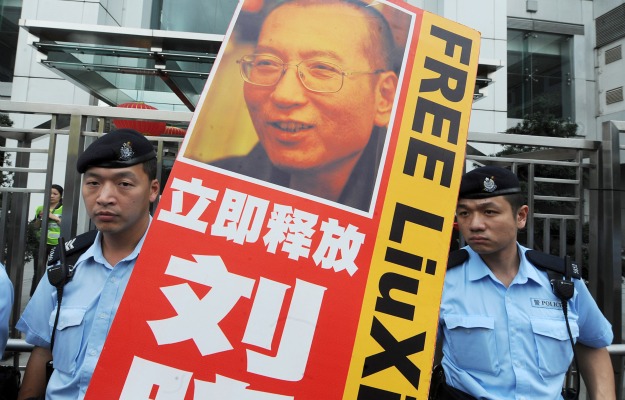
“I have no enemies”: Perry Link writes on his friend Liu Xiaobo and the Nobel’s empty chair

Share

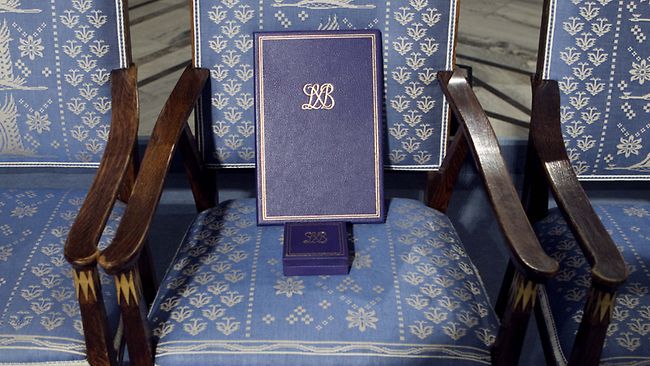
A few days ago, I discussed UC-Riverside’s Perry Links forthcoming Harvard University Press edition of the writings of the imprisoned Nobel peace laureate, Liu Xiaobo.  I didn’t realize that he had just posted about his friend on the New York Review of Books blog, including his recollections of this month’s awards ceremony in Oslo, dominated by the Chinese writer’s empty chair.  It’s worth a read, here:

The ceremony was one of the most exquisite and moving public events I have ever witnessed. The presentation speech was made by Thorbjørn Jagland, the chairman of the prize committee who is a former prime minister of Norway and now secretary-general of the Council of Europe. Only a few minutes into the speech, he said:

We regret that the Laureate is not present here today. He is in isolation in a prison in northeast China…. This fact alone shows that the award was necessary and appropriate.

When he had finished reading these words the audience of about a thousand people interrupted with applause. The applause continued for about thirty seconds and then, when it seemed that the time had come for it to recede, it suddenly took on a second life. It continued on and on, and then turned into a standing ovation, lasting three or four minutes.

The actress Liv Ullman read the full text of the statement that Liu Xiaobo had prepared for his 2009 trial in Beijing. The statement is called “I Have No Enemies.” Chinese authorities halted the statement mid-stream during last year’s trial.

Another friend of the Nobel laureate, Renée Xia, who is overseas director of China Human Rights Defenders, said this about the ceremony: “To us,” she said, “that empty chair is not the least bit surprising. Of course Beijing treats its critics that way. This is wholly normal. If the rest of the world is startled, then good; maybe surprise can be the first step to better understanding of how things really are.”

Hu Ping, editor of Beijing Spring in New York and a long-time personal friend of Liu Xiaobo’s, said he wasn’t expecting China to yield on human rights and democracy.  Why should they?

“As they see it, the current strategy works. The formula ‘money + violence’ works, and we stay on top. We know what the world means by human rights and democracy, but why should we do that? Aren’t we getting stronger and richer all the time? Twenty years ago the West wasn’t afraid of us, and now they have to be. Why should we change what works?”

Liu Xiaobo was more optimistic, in a way.  Hu recalled him saying some years ago: “We are lucky to live in this time and this place—China. It may be difficult for us, but at least we do have a chance to make a very, very large difference. Most people in their lifetimes are not offered this kind of opportunity.”

More on the powerful image of the empty chair here.

A letter from Timothy Snyder of Bloodlands: Two genocidaires, taking turns in Poland

Share

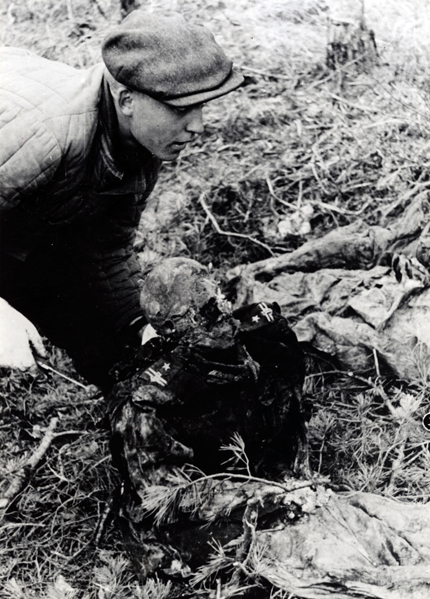
The Germans investigated in 1943 (Photo: Polish Ministry of Information and Documentation records, Hoover Institution Archives)

One of the pleasures of blogging is receiving cyberletters from those I mention in the Book Haven. So I was pleased when my inbox showed the name of Timothy Snyder of Yale, who had read my recent blog posts about the current Katyń exhibit at Hoover Institution and also my discussion of his new book, Bloodlands. (I also challenged the London Review of Books for allowing a hostile critic, Richard J. Evans, review the book.)

In his letter, Snyder added a few more reasons why the Katyń atrocity plays such an important part in Polish memory: about two-thirds of the Polish officers killed at Katyń and the four other massacre sites were reserve officers.  University graduates served as these reserve officers.  The move was part of “a general Soviet policy of decapitating the nation.”

“Thus the blow struck chiefly the educated elite — people who, in Polish national myth and also in reality, were crucial to the survival of the nation,” he writes.  It also struck their families:  “Just as the men were being shot, their wives, children, and parents were being deported to Soviet Kazakhstan (about 60,000 people).”

For those who have seen Andrzej Wajda’s Katyń, this won’t come as a surprise – the movie portrays precisely one such episode.

After my recent conversation with Hoover archivist Nick Siekierski, he wrote,  “I may have mentioned earlier that while the Soviet’s were preparing and carrying out the Katyń massacre, the Nazis executed about 40,000 Poles in the part of Poland that they occupied from  1939-1940. These were also local government officials, public servants and professionals, the community leaders of their respective areas.”

This was news to me, though I don’t pretend to be a scholar of the war.  I asked Tim about it.  He apparently finds Nick’s numbers a little conservative:

“The first major killing actions of the German Einsatzgruppen involved the murder of educated Poles.  At almost exactly the same time as the Katyń crime, the Germans were carrying out the AB-Aktion, which murdered thousands of people thought likely to resist.  The demographic profiling of the two regimes was so similar that, in some cases, the Germans murdered one sibling in the AB-Aktion right after another was killed at Katyń.  The Germans kept poorer records than the Soviets, but we can be sure that these policies killed more than 50,000 Polish citizens.”

September 1939. Warsaw.

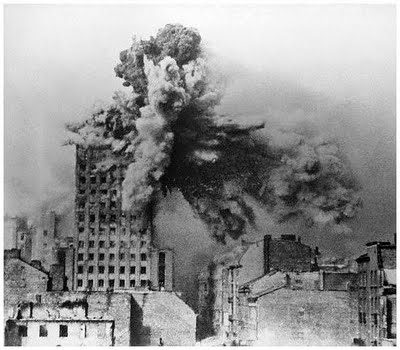
That’s right.  That means the Nazis had a systematic killing that was more than double the Katyń murders.  Who speaks of it?  When it came to the Poles, the Nazis and Soviets worked, more or less, as a team – not a surprise to anyone who remembers the Nazi destruction of Warsaw, as the Soviets waited for the Nazis to complete their block-by-block destruction of the city before they entered the city the following year.

Of course, after the Germans discovered the mass graves at Katyń in 1943, the Soviets naturally blamed the Germans for the crime. This was the version that the Americans and the British found convenient to believe.  After all, we had been allies of the Soviets – and the denial of what Stalin was ran deep.  Time magazine put Stalin on its cover 11 times.

“Thus the Polish sense of abandonment runs a bit deeper than perhaps we like to remember,” Snyder writes.

There’s more.  A little chunk of history even Poles scarcely remember that occurred just prior to the outbreak of war:

“We know now that the Great Terror in the Soviet Union of 1937 and 1938 included a number of ethnic shooting and deportation actions, the largest of which was the Polish Operation.  In the Great Terror, about 700,000 people were shot, of whom about 85,000 were ethnic Poles (who represented only 0.4% of Soviet citizens).  An ethnic Pole in the Soviet Union was 40 times more likely to be shot than his fellow Soviet citizens during the Great Terror.  Katyń was the last time that the Soviets applied the methods of the Great Terror.  It is no less horrifying but it is perhaps less surprising when this prior history is borne in mind.”

August 1944. The destruction of Warsaw.

Why is this so little known, even compared to Katyń?   Tim points out that these Nazi massacres bring back the “awkward recollection” of a time when the Nazis and the Soviets were allies — not a memory the Soviets wanted to revive.  Nick Siekierski suggested this:

“I haven’t studied the issue enough to know so I can only hypothesize. Since the Katyń graves were uncovered during the war and the Nazis made a concerted propaganda effort to use it against the Soviets, it entered the public consciousness early on, and continued to be a sore spot as the Soviets denied complicity for half a century. The cover-up of the massacre magnified the crime. Also, the list of crimes committed by the Nazis is so lengthy that their earlier crimes are less focused on than the Holocaust. It seems that slowly a greater understanding of the breadth and depth of the atrocities committed by both the Nazis and Soviets, against a variety of social and ethnic groups, is emerging.”

And as this understanding deepens,  it certainly gives more weight to Norm Naimark’s arguments in Stalin’s Genocides that our definition of genocide ought to be broadened to include what is certainly a systematic attempt to destroy a nationality through massacre, by two totalitarian states working in tandem.