


Alter at Berkeley’s Heyday (Photo: Wendy Ruebman)
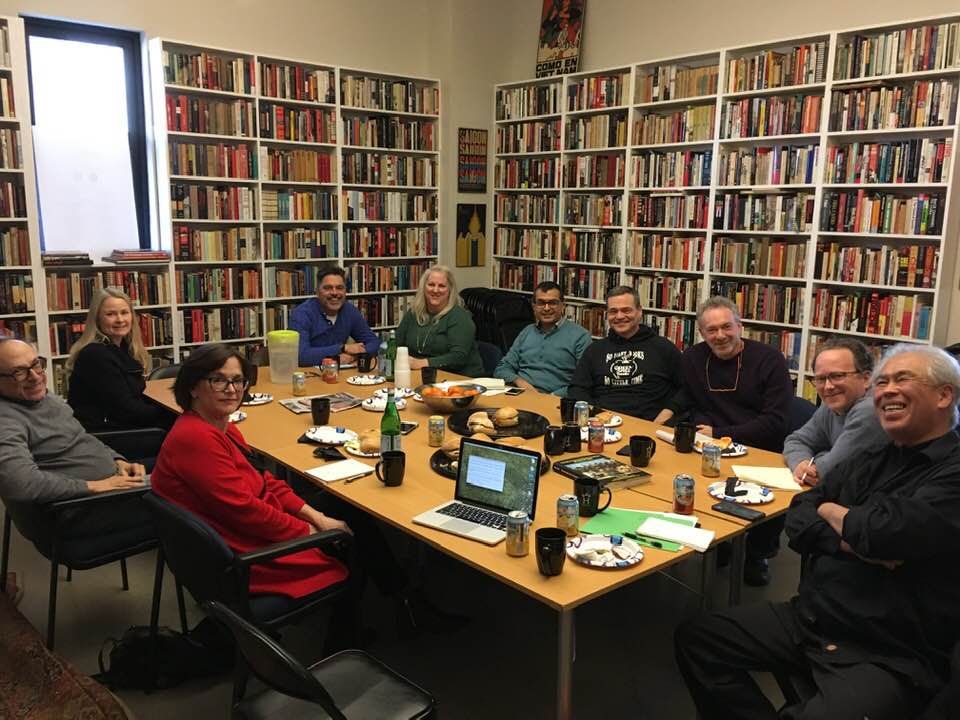
This week, Berkeley’s Robert Alter honored a lunchtime gathering at Heyday Books with his gentle presence and his scholarly wisdom – just in time for Purim. Alter is the translator of the surprise hit of the year: the new acclaimed 3,500-page Hebrew Bible (Norton). (We’ve written about his work here and here.) He’s also the author of Princeton’s The Art of Bible Translation.
I’ve been a big fan since I read his translation of Genesis more than two decades ago, and so I lugged my big-splurge purchase of 2019, the three-volume set, for his signature. (Gauche, I know, but I couldn’t resist – he only signed one volume before he rushed off to pick up his wife.)
The largely atheist/agnostic/”none” crowd was skeptical of the foundational masterpiece of Western civilization, but in a short hour or so, the amiable, learned Alter had them eating out of his hand. Rhythm, he said, is “the beating heart of good prose” and “not merely decorative.” He spoke about the iambic rhythm of Shakespeare, Milton, and Melville – “it wasn’t just icing on the cake for Melville” – and the intricacies of replicating the rhythm of ancient Hebrew. He decried “the dumbed-down modern versions – and they’re all dumbed-down.” He had to “scrape off the theological veneer” for “the detective work of language.”
I had a chance to chat with him for a few minutes before his talk. I mentioned that René Girard calls the Genesis story of Joseph the first representation of forgiveness, as something more than letting go of a debt or not clubbing an enemy, after all. Alter didn’t disagree, but he pointed out that the Old Testament also shows the first hero who changes over time, i.e., “character development.” To wit: the patriarch Jacob, who begins as a trickster on the make, ends by being tricked himself, and suffers cruel loss and bereavement. On his deathbed – humbled, broken, mourning – he says: “Few and evil have been the days of the years of my life, and they have not attained the days of the years of my fathers in their days of sojourning” (in Alter’s translation, of course). Ancient heroes like Ulysses don’t do that – when he gets back home to Ithaca after twenty years he turns right back and heads for the sea again. (Dante condemned it, though Tennyson rendered it as an act of heroism.)
In his introduction, Heyday publisher Steve Wasserman called Alter “enviably erudite and lovely.” He is, he is.


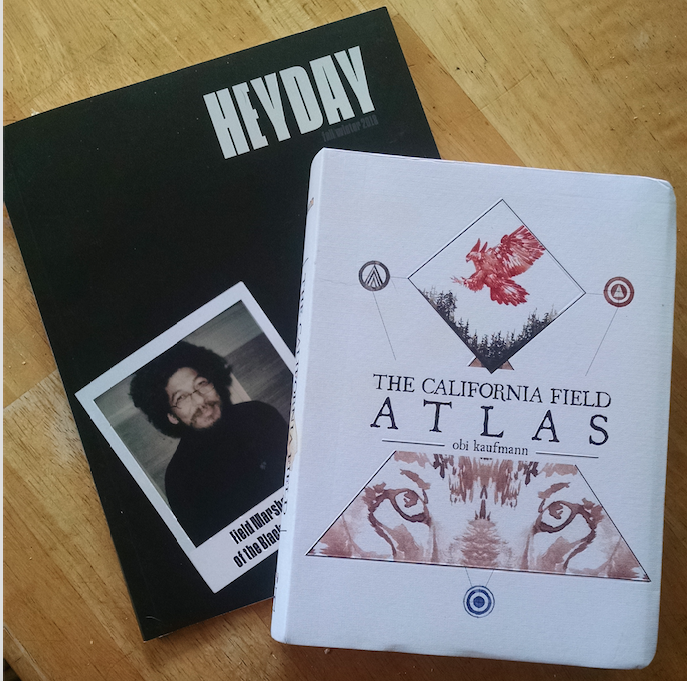

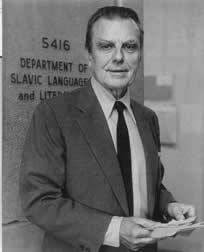
 That night, the corridors were crowded with chattering people and the tables laden with a lavish spread of potluck offerings. The band performing by the entryway made conversation improbable. Nevertheless, Steve and I found a quiet room to chat, and he told me about his new publishing initiative at Heyday called “California Lives.”
 Steve was won over. Here’s what he wrote about the poet in a publisher’s statement for the NEH: “He is emblematic of a host of mid-century émigrés who sought refuge from the calamities of the twentieth century in California. It is a state that is both a place and a state of mind whose literature reflects a range of affection and unease. Miłosz’s contribution to that literature is a red thread that runs through some of his most important work, but is curiously neglected in most of the critical commentary. Heyday aims to correct that omission.”




 Proust then goes on to cite the following sentences as perhaps among the loveliest in Chateaubriand’s lengthy recollections: “A sweet and subtle scent of heliotrope was exhaled by a little patch of beans that were in flower; it was brought to us not by a breeze from our own country but by a wild Newfoundland wind, unrelated to the exiled plant, without sympathy of shared memory or pleasure. In this perfume, not breathed by beauty, not cleansed in her bosom, not scattered where she had walked, in this perfume of a changed sky and tillage and world there was all the diverse melancholy of regret and absence and youth.” (I too had similarly been prey to such emotions, as indeed my return to California eighteen months ago was in no small measure prompted by my inability to rid myself down the decades of the scent of night jasmine, eucalyptus, and a wee bit of the Berkeley tear gas, which had clung so insistently to my nostrils, inflaming my imagination and beckoning me to return to what even after forty years away I still considered home.)