
Steve Wasserman on the Penguin Random House acquisition of Simon & Schuster (hint: it’s not the Four Horsemen of the Apocalypse)

Share

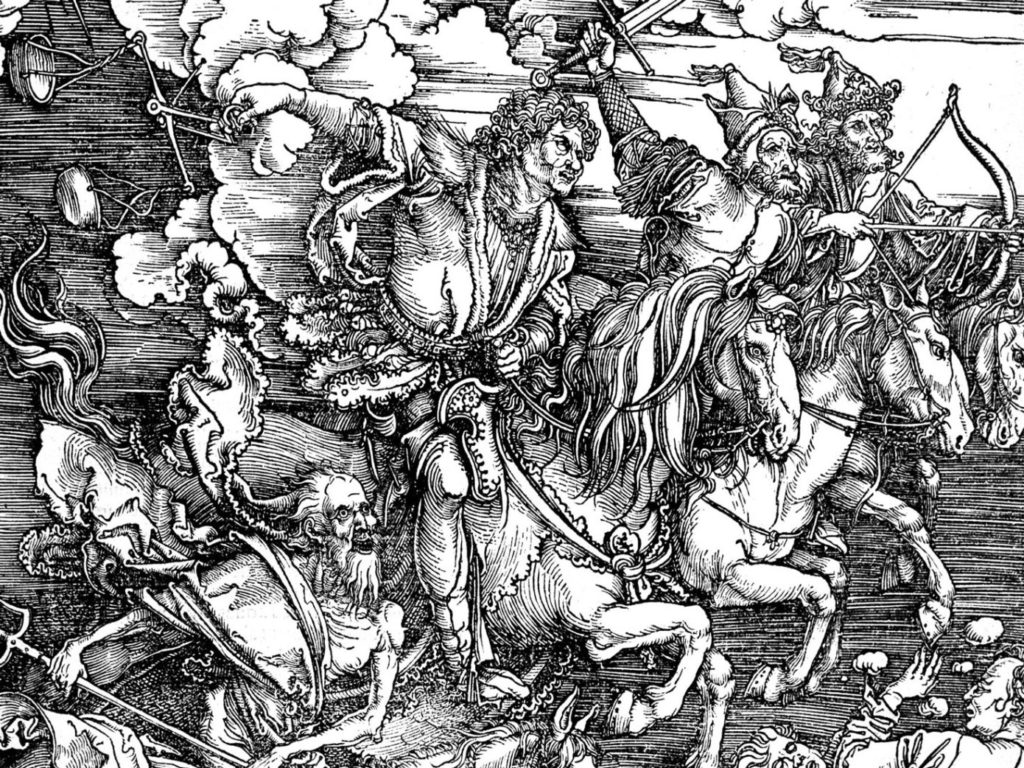
Not this.

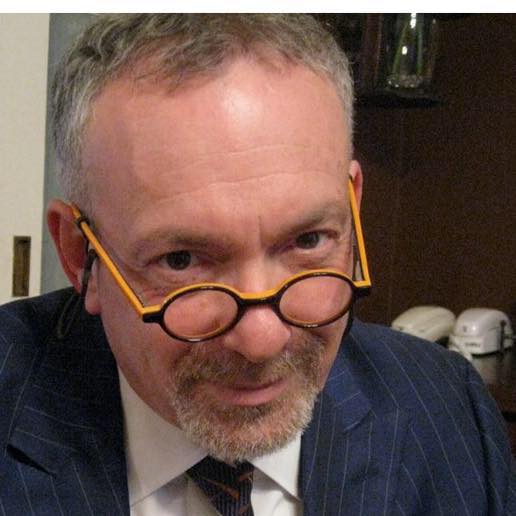
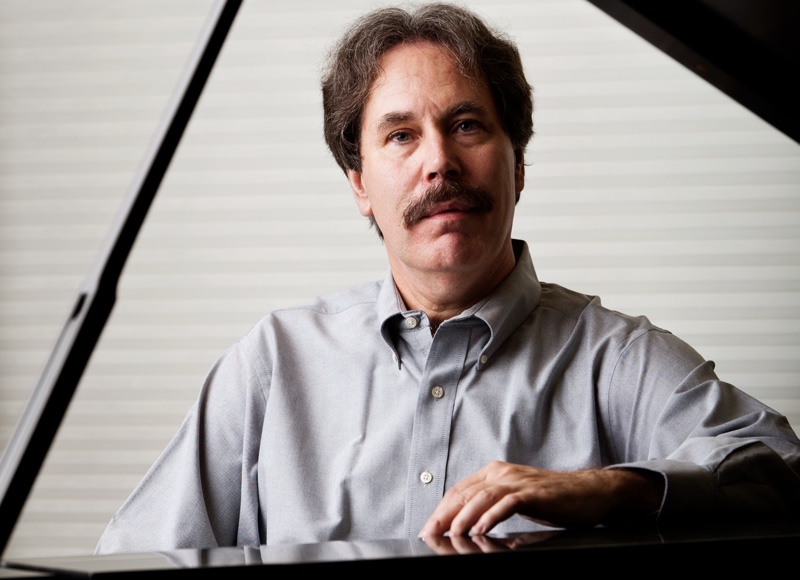
Yesterday the Book Haven posted man-of-letters Steve Wasserman‘s COVID reading (the list has proved quite popular!) – but he was posting as a connoisseur, not in his role as publisher of Berkeley’s Heyday Books. He arrived from East Coast in 2016 to head that small, adventurous California-themed publisher, and it’s been on the rise ever since. He had most recently served as editor-at-large for Yale University Press. Before that, he was my editor at the Los Angeles Times Book Review when it was the best, most adventurous book section in the country, bar none.

Below, his thoughts about the major book event in today’s news.

Department of My Two Cents: The news today that Bertelsmann, the German owner of the publishing empire Penguin Random House, has made an all-cash offer of $2 billion to acquire Simon & Schuster, continues the relentless conglomeration that has marked global publishing for the past forty-plus years. If approved, the deal will leave only four gigantic publishing enterprises dominating the landscape of American publishing. The prospect is thought by some to pose a threat to the nation’s delicate ecology of literary and cultural life. Considerable alarm over the fate of the so-called mid-list book and a further contracting of diversity in the marketplace is widespread. How real are these fears?

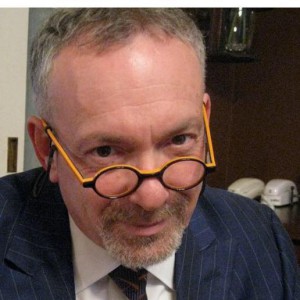
Berkeley’s natty man of letters

The predicament facing us is best understood against the longstanding backdrop of at least two overlapping and contending crises: the first is the profound structural transformation that has for some decades been roiling the entire book-publishing and book-selling industry in an age of conglomeration and digitization; the second is the sea change in the culture of literacy itself, the degree to which our overwhelmingly fast and visually furious culture renders serious reading increasingly irrelevant, hollowing out the habits of attention indispensable for absorbing long-form narrative and the following of sustained and serious argument. These crises, taken together, have profound implications, not least for the effort to create an informed citizenry so necessary for a thriving democracy. The moral and cultural imperative is plain, but there may also be a much-overlooked commercial opportunity for the plethora of smaller, independent publishers who will likely be a chief beneficiary.

The struggle for market dominance, impelled by the continuing threat posed by Amazon, is, for many smaller publishers, akin to the internecine battles mounted by the gods on Mt. Olympus. If past experience is a useful guide to the future, we need not overly fear such imperial mergers and acquisitions. Indeed, even a cursory glance at the landscape of contemporary American bookselling and publishing makes it hard not to believe we are living at the apotheosis of our culture. Never before in the whole of human history has more good literature, attractively presented, sold for still reasonable low prices, been available to so many people. Diversity, in all realms, is increasingly the watchword guiding publishing decisions as the readership expands and demands to be heard. In a word, all publishers understand that profits are to be had by appealing to an insurgent millennial culture even as the old habits die. Today, you would need several lifetimes over doing nothing but lying prone in a semi-darkened room with only a lamp for illumination just to make your way through the good books that are on offer. There is money to be made in culture and victory will go to those publishers, whether large or small, who are nimble and imaginative enough to take advantage of the opportunities that lie all around them.

But I am no Cassandra. It would be a mistake to regard the quartet of publishing behemoths that will remain after the likely approval of the Bertelsmann acquisition of Simon & Schuster, as synonymous with the Four Horsemen of the Apocalypse. Opportunities abound. It’s almost enough to give one hope.
38 books I bet you didn’t read during COVID! Steve Wasserman’s reading list will shame us all…

Share


So what have you been doing during COVID, you bunch of wastrels? Huh? Huh?? Huh??? Eating a lot, drinking too much, complaining of ennui, watching TV, not working on the neglected novel you intended to finish, posting cat pictures and videos, oversleeping, baiting and snarling at each other on Twitter? At least that’s what I gather from my visits online.

The Hero of Heyday, Steve Wasserman

Behold and weep! Heyday publisher Steve Wasserman has given us his list of COVID reading (in no particular order) since the shelter-in-place edict was issued eight months ago, way back in mid-March 2020. It will shame us all. Here what he’s been reading as he hunkers down in Berkeley:

The War for Gaul by Julius Caesar, translated by James J. O’Donnell
The Ruins Lessons: Meaning and Material in Western Culture by Susan Stewart
The Last Assassin: The Hunt for the Killers of Julius Caesar by Peter Stothard
God’s Shadow: Sultan Selim, His Ottoman Empire, and the Making of the Modern World by Alan Mikhail
Caste: The Origins of Our Discontents by Isabel Wilkerson
A Fistful of Shells: West Africa from the Rise of the Slave Trade to the Age of Revolution by Toby Green
The Man in the Red Coat by Julian Barnes
Inside Story by Martin Amis
Posthumous Memoirs of Brás Cubas by Machado de Assis
Rambling On: An Apprentice’s Guide to the Gift of Gab by Bohumil Hrabal
Memoirs of a Dutiful Daughter; The Prime of Life; Force of Circumstance; All Said and Done; Adieux: A Farewell to Sartre – all by Simone de Beauvoir
The Words by Jean-Paul Sartre
Tête-à-tête: Simone de Beauvoir and Jean-Paul Sartre by Hazel Rowley
Left Bank: Art, Passion, and the Rebirth of Paris, 1940-50 by Agnès Poirier
Wagnerism: Art and Politics in the Shadow of Music by Alex Ross
The Great Black Way: L.A. in the 1940s and the Last African American Renaissance by RJ Smith
Set the Night on Fire: LA in the Sixties by Mike Davis and Jon Wiener
Music: A Subversive History by Ted Gioia.
The Big Goodbye: Chinatown and the Last Years of Hollywood by Sam Wasson
Murder in the Movies by David Thomson
Epidemics and Society by Frank M. Snowden
The Decameron by Boccaccio
A Journal of the Plague Year by Daniel Defoe
Inky Fingers: The Making of Books in Early Modern Europe by Anthony Grafton
Abe: Abraham Lincoln in His Times by David S. Reynolds
Tacky’s Revolt: The Story of an Atlantic Slave War by Vincent Brown
Black Spartacus: The Epic Life of Toussaint Louverture by Sudhir Hazareesingh
My Life in 100 Objects by Margaret Randall
Gambling with Armageddon: Nuclear Roulette from Hiroshima to the Cuban Missile Crisis by Martin J. Sherwin
Mayday 1971: A White House at War, a Revolt in the Streets, and the Untold History of America’s Biggest Mass Arrest by Lawrence Roberts
Garner’s Quotations by Dwight Garner
Notebooks: 1936-1947 by Victor Serge
The Habsburgs: To Rule the World by Martyn Rady
Men on Horseback: The Power of Charisma in the Age of Revolution by David A. Bell

(Original watercolor by Wendy Ruebman)

Steve Wasserman: making his mark on California publishing – and writing the next chapter of Berkeley’s Heyday Books, too.

Share

Making his mark, as always

Steve Wasserman has 15,000 books –all of them choice, and all of them on display at the offices of Heyday Books, where he is publisher. I don’t know how this compares to other Bay Area private collections, but it must be high in the rankings. Certainly when it comes to quality:

“I’m a snail who’s hostage to an oversized shell,” he jokes during a tour of his library. Unlike most personal collections, Wasserman’s is intrepid and surprising: belles lettres, poetry, literary criticism. Black history, civil rights, California history. Fiction from The Arabian Nights to Stefan Zweig.

“This is all wheat, no chaff,” he says with pride. Turn a corner and find Antiquity, Ancient Rome and Ancient Egypt, geology and dinosaurs. Civil War, the Holocaust, Vietnam. Art, dance, architecture.

“Books are like Aladdin’s lamp,” Wasserman enthuses. “You don’t rub the lamp, the geni doesn’t come out. And a book that lies on the shelf is in something of a coma. Writers need readers to complete the work.” 

We’ve written about him here and here and here, among other places. Now Edward Guthmann, a former San Francisco Chronicle writer, has written about him, too. He has just published a profile of Steve, one of our favorite subjects, for the current Oakland Magazine. But the best parts always are the bits from Steve himself. He has an enviable way with words. And a sense of style.

Back at his table at Chez Panisse (photo: Moi)

Guthmann captures the trademark nattiness of Steve in this paragraph: “There’s a watchful, canny look in his eyes. On the day of our meeting, he’s dressed in a retro, semi-dandy style: Purple corduroy trousers, purple necktie, black vest, button-down white shirt, and cuff links. His shoes are two-toned, brown and buff, and a handkerchief blooms in the breast pocket of his wool blazer — a gallant sartorial gesture.”

Steve was editor of the Los Angeles Times Book Review when it was the best book section in the nation, bar none. Then he did a stint as editor at large at the Yale University Press. What lured him back to Berkeley? You can read the reasons in the piece, but this some of those factors were Heyday’s small-scale “lack of bureaucracy” and the chance  “to write Heyday’s second chapter and to make a mark on independent California publishing. Plus, Alice Waters promised me I could have back my old table at Chez Panisse.”

Steve has a remarkable gift for the crisp, polished, quotable phrase that makes me weep with envy. Here’s an example:

“I feel a little bit like Rip Van Winkle,” Wasserman says. Soon after his return to the East Bay, he took his dog, Pepper, for a walk in Codornices Park in the Berkeley Hills and entered a small redwood grove he hadn’t seen in 50 years. “It was a summer day, the sunshine dappling through the trees, and the smell of the redwoods braided together with eucalyptus and oak and that particular kind of barometric pressure that suffuses the Bay Area, which is very light on the skin. None of the East Coast humidity. I stood there, my eyes welling up with tears. It was almost, I’m tempted to say, a Proustian moment.”

Shit, Steve. Braided. The smells were braided together. I wish I’d said that. (I know, I know … I will). 

Read the whole thing here.

Poet Robert Hass at Heyday – on his new book, ecology, lost friends, and Czesław Miłosz. It’s all on Soundcloud!

Share

Lunchtime guest Bob Hass

One of the little-known pleasures of Bay Area life is the Heyday Books lunchtime conversations series in Berkeley. Great company, light lunch, and excellent speakers – Robert Alter, David Ulin, among them. Because of the series, I’m running up my mileage back and forth to Berkeley, which, apart from rising gas costs and wear-and-tear on my old Honda, is always a good thing.

And so I made the trek last month to hear Robert Hass, whose latest collection, Summer Snow, is getting a lot of attention. I wrote about that here.

I recognize that not everyone will be able to zap over to San Pablo Boulevard on a weekday. So I have coaxed publisher Steve Wasserman and his assistant, Emmerich Anklam, to provide an alternative, and they have. Lucky for all of us, the Hass event is the debut entry on the Heyday’s brand new Soundcloud page here. Steve moderates the discussion.

You never lose some friends.

Bob is always a fascinating speaker, and he spoke about the dangers to our environment, friends who have died, and the unusual process of putting together Summer Snow. One of his favorite topics is Czesław Miłosz, in fact, that’s how we met. I get plenty of opportunities to talk, so I generally like to be quietly inconspicuous at these events, but an hour into the talk about lost friends and the poems of Summer Snow, he asked for one last question and I couldn’t resist the chance.

My own trepidatious question around the 59 minute mark. Could he read one of his poems about Milosz? In particular, the one about the Miłosz’s tomb at Na Skałce? He hesitated. It was long, he said, counting the five pages. But then, with the encouragement of the crowd, he read the poem, “An Argument About Poetics Imagined at Squaw Valley After a Night Walk Under the Mountain.”

It was an astonishing, dare I say unforgettable, reading. Everyone was moved. One person was crying. Listen for yourself.

One hitch: the battery on the recording device died before the poem ends. So I include the final lines for you below:

One small fly in the ointment:
You described headlights sweeping a field
On a summer night, do you remember? I can quote to you
The lines. You said you could sense the heartbeat
Of the living and the dead. It was a night in July, he said,
In Pennsylvania – to me then an almost inconceivably romantic name –
And then the air was humid and smelled of wet earth after rain.
I remember this night very well. Those lines not so much.


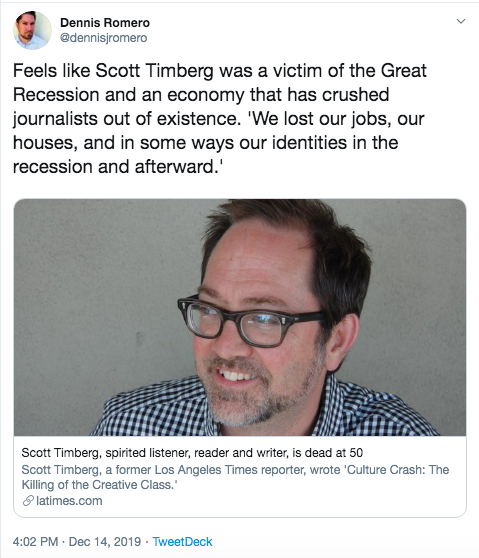
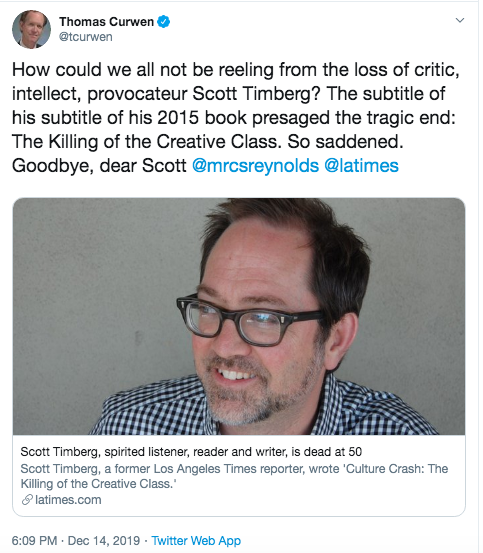
Intellect, critic, provocateur Scott Timberg: “His death is a casualty in the fight for the soul of the city.”

Share

I didn’t know Los Angeles cultural journalist and author Scott Timberg, but it seemed all my friends did. The Los Angeles Times obituary called him “a ferocious listener and reader whose cultural appetites fueled his career as an author and journalist in Los Angeles and led him to question the future of the arts in the internet age.” Timberg died on Tuesday. He was 50.

“His death by suicide shocked us all while also silencing a voice of tremendous insight and eloquence about so, so many things that he loved,” wrote the writer’s brother, Craig Timberg, in a message to friends.

The Palo Alto-born journalist wrote Culture Crash: The Killing of the Creative Class, which discussed how digital technology and economic polarization were damaging American cultural life. The acclaimed book was published in 2015 by Yale University Press.

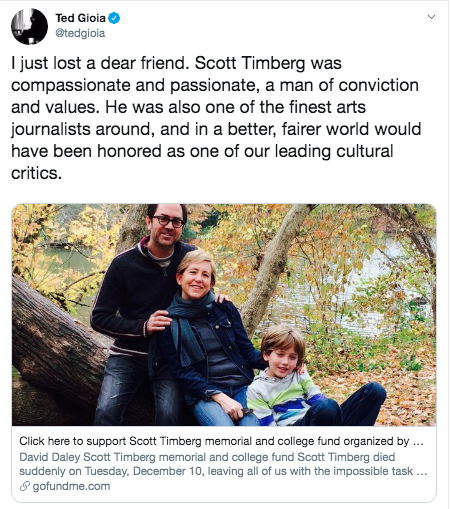
Ted Gioia recalls “earnestness and enthusiasm”

“You could talk to him about virtually any subject,” wrote friend and author Ted Goia. “In fact, I don’t think I’ve ever met anyone who combined earnestness and enthusiasm (typically opposed traits) in such a high degree.”

An excerpt from the obituary:

Timberg’s cultural explorations continued after The Times laid him off amid budget cuts in 2008, and the Timberg family had to relinquish their home. Timberg began to question conventional wisdom about the internet boosting opportunities for writers, artists, musicians and others.

Between freelance assignments for clients including the New York Times, Timberg gradually assembled the manuscript that became Culture Crash and took it to Steve Wasserman, who edited the book for Yale University Press and now serves as publisher and executive director of Heyday.

The book, wrote reviewer Richard Brody in the New Yorker, is “a quietly radical rethinking of the very nature of art in modern life.”

Timberg’s lament for the creative class “seemed to have been written with a pen dipped into the inkwell of his own blood,” Wasserman said Friday. He called Timberg a man of “exquisite, promiscuous curiosities” whose death “is the moral equivalent of a book-burning.”

“A pen dipped into the inkwell of his own blood”

“He could write about music better than any other literary journalist, and he could write about literature better than any other music journalist,” said David Kipen, a friend, editor and founder of the nonprofit Boyle Heights lending library Libros Schmibros.

Said his friend and editor Joe Donnelly, “His death is a casualty in the fight for the soul of the city.”

After discussing his book, the L.A. Times says: “The sting of those disappointments, friends and family said, never seemed to fade.” It wasn’t clear whether it was the disappointment in  the digital technology and economic polarization, or being laid off and losing one’s home. I know what it is like to live as a free-lancer in the “gig economy.”

I look forward to reading his book. He will be missed.

Read the whole thing here. Tweets from NBC news journalist Dennis Romero, Ted Gioia, and the Los Angeles Times‘s Tom Curwen.

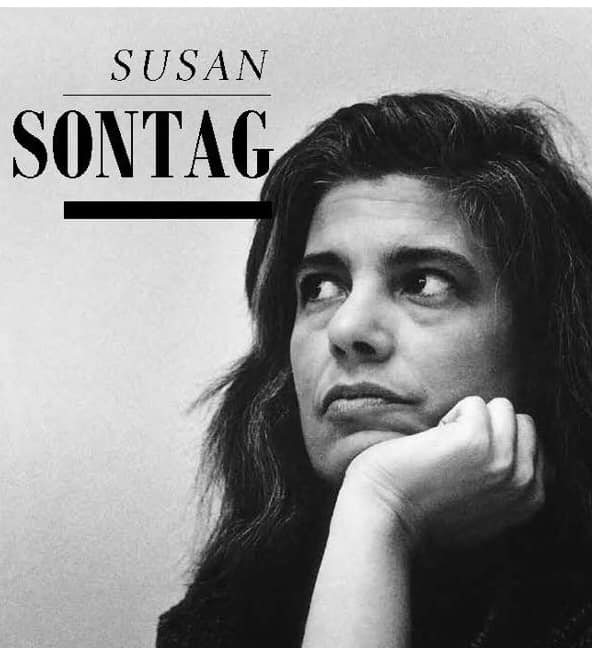
New Sontag bio: “a voyeuristic emphasis on celebrity and careerism”? A friend speaks out.

Share

The New York Times called Ben Moser’s Susan Sontag: Her Life and Work (Ecco) “a landmark biography, the first major reintroduction of an incomparable literary heavyweight to the public since her death.” Leslie Jamison, writing in The New Republic, called it “utterly riveting and consistently insightful . . . The book takes this larger-than-life intellectual powerhouse—formidable, intimidating, often stubbornly impersonal in her work—and makes her life-size again . . . fascinating.” I haven’t read it yet. However, her close friend, Steve Wasserman has, and he disagrees. (He’s spoken about her before on The Book Haven, here and here.)

His mini-review below:

Ben Moser’s biography of Susan Sontag is appallingly reductive. Her actual writings and ideas interest him rather less than what he construes as her private life. He is transfixed by the halo of celebrity that seemed to hover above Sontag during her life and which, even after her death, continues to glow. As a result, his biography is strikingly coarse and prurient, mocking and condescending, even as it pretends to an unearned seriousness of purpose, accompanied by a style designed to tell readers what to think and feel. He accuses Sontag of being a coward about her sexuality, a narcissistic diva, a person whose efforts to transform herself are derided as comic.

Suppose he is right. What does this have to do with the work — her writings — which is, after all, why we ought to care, if we care at all, about Susan Sontag. If people think the work is no good, or at least that it’s wildly overrated, fine, then they should say so. But if the work has any true and lasting merit, then this voyeuristic emphasis on celebrity and careerism is, to say the least, misplaced, not to mention that it seeks to have it both ways, and exploits the very fame it so condescends to. But then, condescending to Sontag while fixating on her, even when she was alive, is something so commonplace as to be tediously familiar.

Paying any attention to Sontag, especially now, fifteen years after her demise, matters only if her work matters. Everything else amounts to gossip about a person who was famous in her lifetime, or is grist for the most trivial sort of social and cultural history. Moser seems to believe that what matters most about Sontag was her effect on her contemporaries, not her work. This view is a disservice to and a caricature of the woman and writer I knew.

(Photograph above right by Andy Ross, Berkeley, circa 1995.)