
Another Look’s 10th anniversary pick: Glenway Wescott’s “The Pilgrim Hawk: A Love Story” – Wednesday, October 5!

Featured

Share

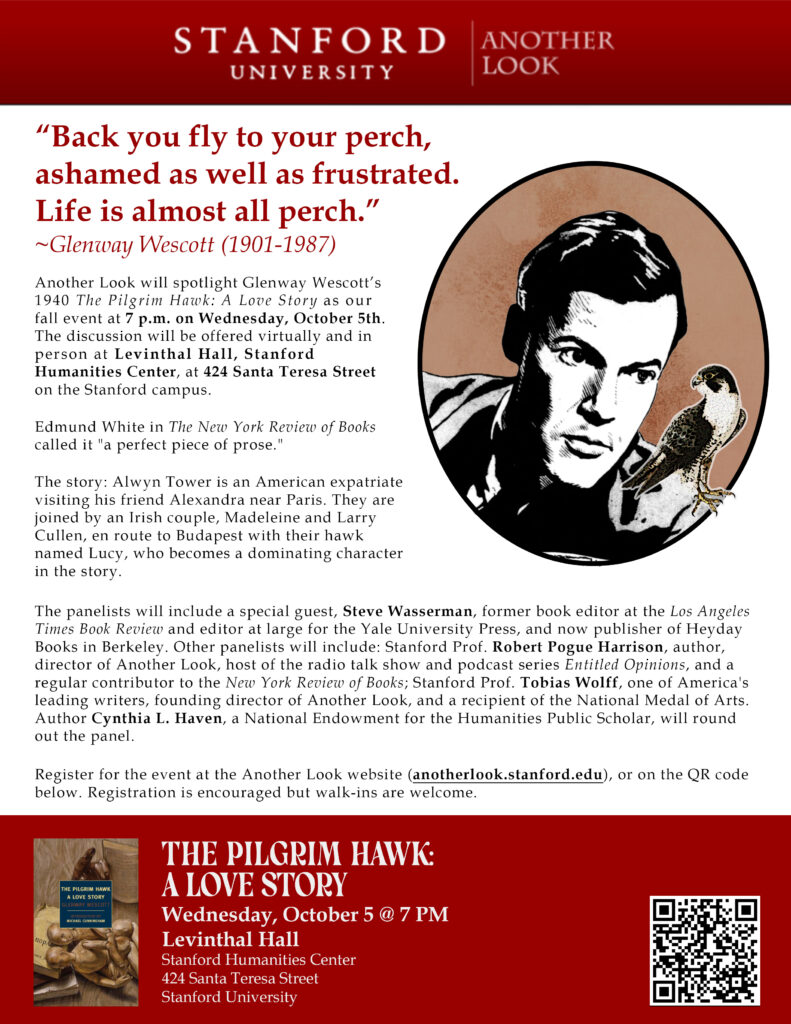
Another Look was launched in November 2012, with William Maxwell’So Long See You TomorrowNow we celebrate our tenth anniversary with another wonderful and too-little-known book, Glenway Wescott‘s 1940 novella The Pilgrim Hawk: A Love Story (NYRB Classics)The event will take place at 7 p.m. on Wednesday, October 5, at Levinthal Hall in the Stanford Humanities Center, 424 Santa Teresa Street, on the Stanford campus. The event will also be livestreamed. Come celebrate our tenth with us! 

Registration is encouraged, but walk-ins are always welcome. Register here – or on the QR code on the poster below.

The Book

The Pilgrim Hawk: A Love Story traces a single afternoon in a French country house during the 1920s. Alwyn Tower, an American expatriate and sometime novelist, is staying with a friend outside Paris when a well-heeled Irish couple drops in — with Lucy, their trained hawk, a restless, sullen, disturbingly totemic presence. Lunch is prepared, drink flows, and the story that unfolds is both harrowing and farcical.

Novelist Michael Cunningham in his introduction calls the book “murderously precise and succinct.” Critic and author Susan Sontag said, “The ever-astonishing Pilgrim Hawk belongs, in my view, among the treasures of twentieth-century literature, however untypical are its sleek, subtle vocabulary, the density of its attention to character, its fastidious pessimism, and the clipped worldliness of its point of view.”


The Panelists

The panelists will include a special guest, Steve Wasserman, former book editor at the Los Angeles Times Book Review and editor at large for the Yale University Press, and now publisher of Heyday Books in Berkeley. Other panelists will include: Stanford Prof. Robert Pogue Harrison, author, director of Another Look, host of the radio talk show and podcast series Entitled Opinions, and a regular contributor to the New York Review of Books; Stanford Prof. Tobias Wolff, one of America’s leading writers, a founding director of Another Look, and a recipient of the National Medal of Arts. Author Cynthia L. Haven, a National Endowment for the Humanities public scholar, will round out the panel.

The Venue

Some of you may remember that Levinthal Hall is where Another Look began a decade ago. You’re right! Our audience attendance outgrew that venue in 2015, and we moved to a larger space. However, now we are offering virtual as well as in-person attendance, which allows us to return to our former home. We will announce how to register for the virtual event in our next email, as we are still finalizing arrangements.

Parking

Metered parking spaces are available along Santa Teresa Street. Parking is free after 4 p.m. Free parking is also available on the lot adjacent to the Stanford Humanities Center after 4 p.m.

How to get the book

Books are available at Kepler’s Books in Menlo Park (650-324-4321) and Books Inc. at Town & Country in Palo Alto (650-321-0600). We’d recommend calling first to make sure a book is waiting for you. Books are also available at Amazon and at Abebooks. If all else fails, you can order directly from the publisher here.

Our October 5 event is sponsored by Stanford Continuing Studies, the Stanford Humanities Center, and the Division of Literatures, Cultures, and Languages.
April 12: Stanford discusses “The Strange Case of Dr. Jekyll and Mr. Hyde” – be there!

Featured

Share
It came to him in a dream.

PLEASE REGISTER HERE.

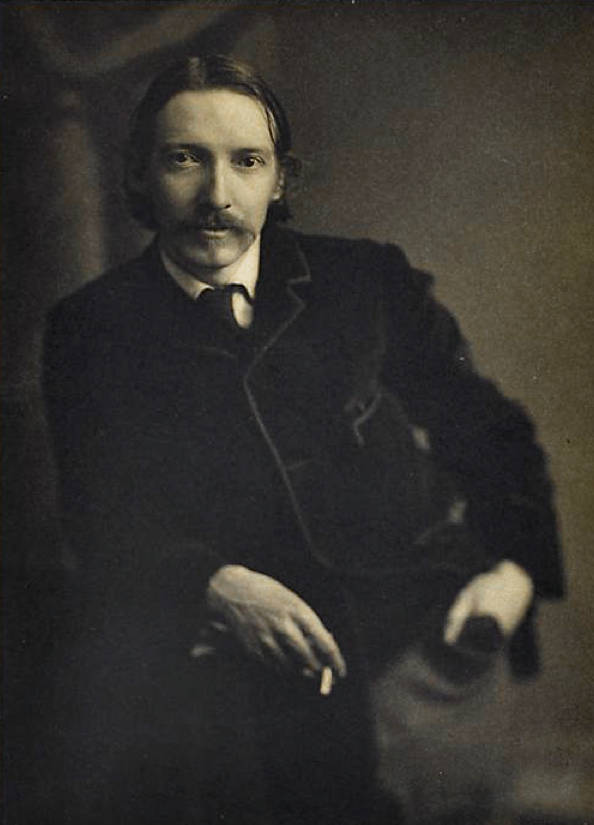
Stanford’s “Another Look” book season continues in 2022 with Robert Louis Stevenson’s The Strange Case of Dr. Jekyll and Mr. Hyde. The discussion will take place at 7 p.m., Tuesday, April 12, at the Bechtel Conference Center in Encina Hall. Go here to register.

Stevenson’s short 1885 novel is universally known but little read today – an important reason why it needs “another look.” Vladimir Nabokov called it “a fable that lies nearer to poetry than to ordinary prose fiction.” The Russian author compared it to Flaubert’s Madame Bovary or Gogol’s Dead Souls.

“Is Jekyll good?” he asked. “No, he is a composite being, a mixture of good and bad, a preparation consisting of a 99% solution of Jekyllite and 1% of Hyde … He is a hypocritical creature carefully concealing his little sins.” Popular author Stephen King agreed that Stevenson’s novel is moral tale, “a close study of hypocrisy – its causes, its dangers, its damages to the spirit.” Utterson, he contends, is the book’s real hero.  

Henry James called Dr. Jekyll and Mr. Hyde a “short, rapid, concentrated story, which is really a masterpiece of concision.”  

Stevenson’s dark vision had come to him in a dream – as it had for Mary Shelley, who went on to write Frankenstein, a book that Another Look featured in 2018. Both works share a fascination with the limits of science, medicine, and technology on our humanity.  

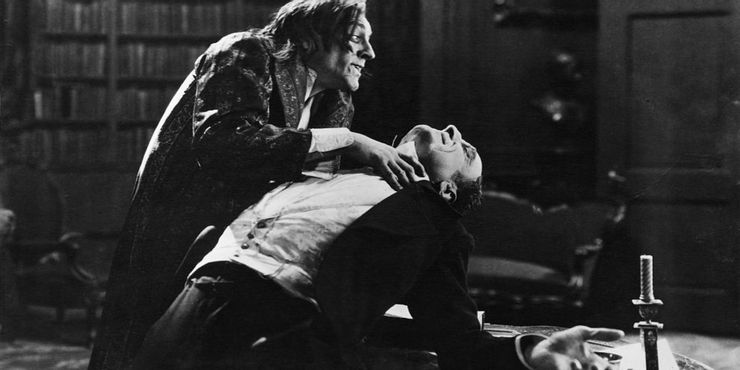
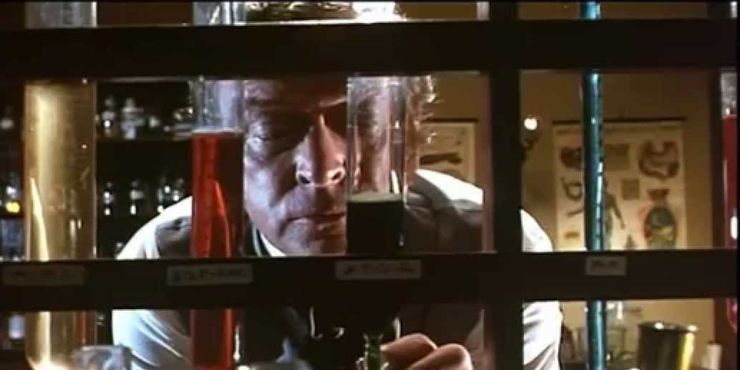
Michael Caine as Jekyll and Hyde

Acclaimed author Robert Pogue Harrison will moderate the discussion. The Stanford professor who is Another Look’s director writes regularly for The New York Review of Books and hosts the popular talk show, Entitled Opinions. He will be joined by eminent novelist Tobias Wolff, founding director of Another Look and a National Medal of Arts winner, and Ana Ilievska, Andrew W. Mellon Postdoctoral Fellow and Stanford Humanities Center and a lecturer in Stanford’s Department of French and Italian. 

Books are available at Stanford Bookstore and Kepler’s – but the book is also widely available online and is offered as a free e-book on Amazon as well.

The event marks our first in-person event since the beginning of COVID in 2020. The occasion will also be offered virtually for those who cannot attend on the Stanford campus. (Registration encouraged, but walk-ins are welcome.) 

We survive on donations, so go here if you’d like to further the cause of good books. Register HERE to attend what looks like it will be a terrific event!

The 1920 silent film with John Barrymore – a silent classic.

A UCLA prof, a Pakistani writer, a Stanford radio host: making bridges across the world

Featured

Share
Nizami Ganjavi’s her thing.

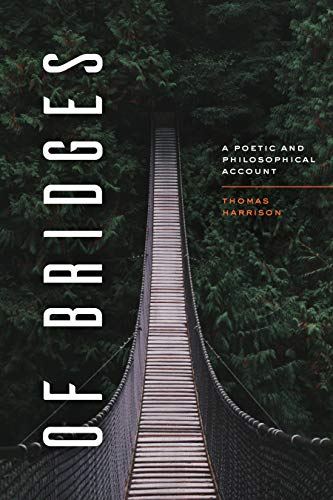
Thomas Harrison grew up next to the oldest bridge in the world, on the Aegean in İzmir, Turkey – a city known as Smyrna in the ancient world. The bridge marked the western endpoint of the “Assyrian Route,” the 1500-mile stretch that was the most important trade route in the ancient world. (Legend has it that Homer crossed it as a boy.) The UCLA professor has just written a book about bridges:  Of Bridges: A Poetic and Philosophical Account, (University of Chicago Press). We wrote about that endeavor here.

Which brings to mind another “Harrison” who also grew up in İzmir, next to the same bridge: Stanford’s Robert Pogue Harrison, who is his brother. Thanks to the Robert’s celebrated radio/podcast series, Entitled Opinions, they found a spiritual ally half a world away. Aqsa Ijaz was teaching literature in Pakistan when she discovered the show in 2012. “The show was a strange expansion of my world,” she said. So much so that she’s now a doctoral candidate at the Institute of Islamic Studies, McGill University, where she teaches all levels of Urdu. The writer and translator’s academic focus is the North Indian reception of a 12th-century Persian poet, Nizami Ganjavi and his love stories. She’s also featured in an Entitled Opinions interview on Rumi here.

She’s written a review of the Thomas Harrison’s book. It’s over at Marginalia and begins:

“Bridges, of all kinds, have traditionally represented our desire to know and connect with what’s on the other side. They symbolize our hopes to traverse vast and sometimes impossible distances across time and space. As I finished reading Thomas Harrison’s fascinating new book, entitled Of Bridges: A Poetic and Philosophical Account, I remembered that it was the image of the bridge that my grandfather gave me when, as a young girl, I asked him about the nature of our existence and the life hereafter.

“Fond as he was of metaphors, he explained to me that our journey here is like walking on a bridge (pul) a kind of crossing over to the other side. He wanted me to understand the transitory nature of life, which like a bridge allows us only a passage to the other side–not a home. Reading Harrison’s meditations on ‘word bridges’, it struck me that my grandfather used the ultimate bridging capacity of language, i.e., the metaphor to make me comprehend what was essentially incomprehensible. Through the inherent paradox of a bridge; he connected me to the other side in a figure of speech but essentially kept me separate from it. In language, he joined for me what was essentially apart.”

She points out that the Urdu word for death (inteqāl) actually means “crossing over to the other side”, or more accurately, “to transfer.”

Which is in a sense what all three of them have been doing all along. Making bridges of all kinds, whether via books, podcasts, radio shows, or teaching – across continents, linking minds.

Read Aqsa’s article over at Marginalia here.

“Love makes me speak”: three new translations of Dante’s Purgatorio – just in time for the holidays!

Featured

Share

Purgatory seems to be on people’s minds this year – we have several new translations of Dante’s canticle to consider in time for Christmas. Fortunately, we have Dantista Robert Pogue Harrison to do the considering for us in the current holiday issue of the New York Review of Books.

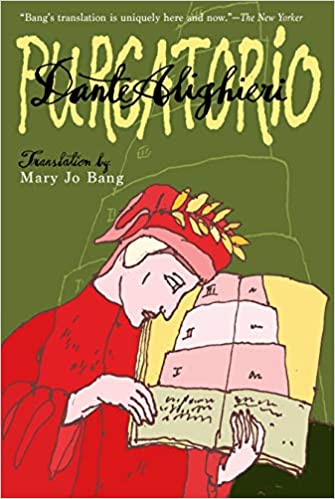
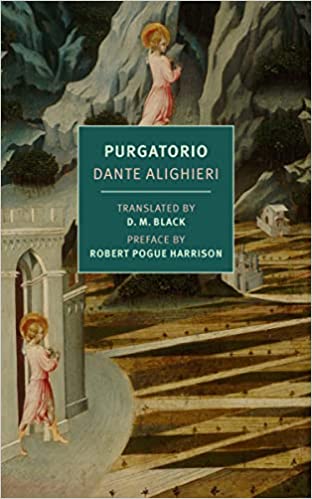
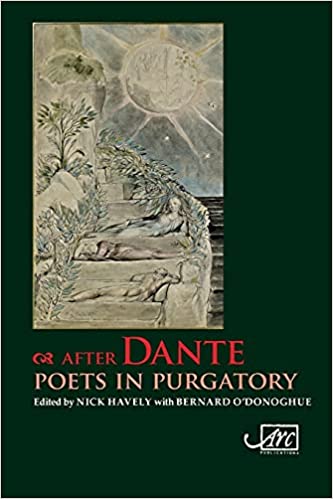
Your choices: a Graywolf Purgatorio translated by poet Mary Jo Bang, another translation by Scottish poet and psychoanalyst D.M. Black (with a preface by Harrison himself – read about it here) from New York Review Books, and finally After Dante: Poets in Purgatory: Translations by Contemporary Poets edited by Nick Havely with Bernard O’Donoghue and published by Arc in Yorkshire. Harrison gives especial attention to a different kind of translation, from words into art: Illustrations for Dante’s Inferno by the late Rachel Owen, edited by David Bowe and published by Oxford’s Bodleian Library.

Why the abundance of translations? “Given Merwin’s excellent version of Purgatorio, plus dozens of others in English, the only reason to undertake yet another translation of it—or any other part of The Divine Comedy, for that matter—is love. ‘Love makes me speak,’ as Dante said…”

Purgatorio is the most approachable of the three canticles of Dante’s Divine Comedy. It has always been my favorite. As Harrison points out, it is the only one of the three in which time matters. And effort matters, too – its inhabitants are all in the struggle to work out their own salvation.

But there’s more. As Harrison writes: “Whereas Hell has no stars, sunsets, or seashores, on Mount Purgatory we are once again under the open sky, where the sun’s movement marks the hours and seasons; where night gives birth to day, and day dies into night; and where the shimmering seas of the southern hemisphere surround the island from all sides.”

“A palpable terraphilia informs the canticle. We find here a love of the planet and everything that makes it our cosmic home—its rivers, valleys, seas, and mountains; its diurnal cycles; its ever-changing light and color; and above all its celestial dome. Not to mention its plant life. After Dante enters the earthly paradise of Eden at the summit of Mount Purgatory, the fair Matelda informs him that he has risen above Earth’s zone of meteorological disturbance. The gentle breeze that graces the ancient forest of Eden comes, she says, from the heavenly spheres as they move from east to west around the planet. This rotational wind scatters seeds from the flora of that primal place to the rest of the planet below: ‘And then the Earth, according to its character/and where it is beneath the heavens, conceives/and by its various powers bears various plants.’ In sum, all the plant life of our burgeoning, self-renewing biosphere has Edenic origins.”

Harrison suggests that Dante had roamed Hell as an insomniac, and that his nightmarish visions were the result of extended sleep deprivation. “

In Purgatory he and Virgil are under strict orders from the angelic guardians of the realm to halt their ascent of the mountain toward evening and, at least in Dante’s case, to sleep at night. On each of the three nights he spends on Mount Purgatory, Dante has vivid dreams, and with each new dawn he wakes up restored.

“Indeed, restoration marks the very purpose of the purgatorial process. While Hell figures as a great gash in the body of Earth, where all the vices that disfigure the soul and human history fester, Purgatory is where the slow, laborious work of healing takes place. Dante, whose pilgrim arrives on the realm’s shores on Easter morning, calls it the soul’s rebeautification (“Creature who cleanse yourself/to go back beautiful to your Creator,” he addresses a penitent in Purgatorio 16). The penitential ordeals of Dante’s Purgatory—many of them as harsh as the punishments in Hell—are intended to restore the prelapsarian probity of human nature and prepare the way for a return to Eden, which Dante locates at the mountain’s summit. Dante himself will enter Eden at the end of his journey through the second realm, and so will all the other penitents after completing their purgation. From that garden of recovered innocence they too, like Dante’s pilgrim, will ascend into heaven.”

Read the whole thing here.

Postscript: Here’s poet and psychoanalyst D.M. Black talking about his translation with NYRB’s Edwin Frank. It’s fascinating.

Stanford’s “thought warrior”

Featured

Share
He listens to dead voices

Not many Americans read The Australian, the leading national newspaper Down Under. It’s a shame – they’re going to miss Janet Albrechtsen’s excellent profile of the man who has been called America’s leading humanist, born in what may be Homer’s birthplace – Izmir, Turkey. Stanford’s Professor Robert Pogue Harrison, a leading Dante scholar (we’ve written about him lots on the Book Haven), has taught literature at Stanford for almost three decades. His books include The Dominion of The Dead, where he explores how the living maintain a connection with those we’ve buried, and Juvenescence, where he considers how we are growing younger culturally, losing a very necessary reciprocity with our past.

Albrechtson writes: “Harrison is not part of the splurge of political podcasts waging war with the left or the right. One of the original long-form podcasters, before the word was born, Harrison started recording his meandering interviews, called Entitled Opinions, in 2005 in what he calls the catacombs of Stanford University’s radio station KZSU. He chooses “catacomb” deliberately. This is where, as he tells his listeners, new religions are born, his being ‘the persecuted religion of thinking.’”

A couple excerpts from the article:

Dead voices are writ large in Harrison’s life and work. He is concerned that the genius of innovation and change, now at speeds not seen over the course of human history, is breaching our connection with the wisdom of the past. “Genius liberates the novelties of the future, (and) wisdom inherits the legacies of the past, renewing them in the process of handing them down,” he writes in Juvenescence.

Harrison is too cool to be a ­curmudgeon. He recognises that being young is positive. “It’s ­vibrant, it’s energetic, it’s creative,” he tells me.

“But if we forget our cultural age and pretend like we’re children, then it’s really dangerous. And when you lose your cultural memory and connection with the past and with the dead voices that speak from the deep past, then you also, I think, lose the sources of rejuvenation. You can either rejuvenate or you can juvenilise. I don’t know how we can go forward into the future viably without a solid kind of foundation in the past.”

A radical kind of guy

Harrison draws on Dante to explain the dynamic synergy between genius and wisdom. “Dante in the Middle Ages is in a deeply Christian society, and he becomes the first person to write a Christian epic in the first person singular. That was very radical. That was very new. That opened up a whole new genre for the future. But he did not just invent it like Silicon Valley start-up companies say they are all about innovation. He found his way into the new possibilities of a Christian epic by the systematic study of Virgil, and with Virgil, the epic tradition that came from Greek and Roman sources,” he says.

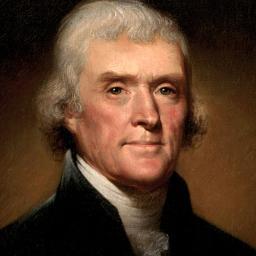
He points to the same intellectual synergy between genius and wisdom when the Founding Fathers created a new nation. “Thomas Jefferson used to translate the Greek Bible into Latin and the Latin Bible into Greek when he was in high school. President Garfield, a century later, when he wanted to amuse his friends … he would take two pencils (one in each hand) and write Greek and Latin letters – sentences – at the same time.

“The framers of the American constitution … would go back and pour over the annals of the history of Rome and where Carthage went wrong. The whole new nation of America, the new republic, was thought up very deliberately by this constant persistent reference to antiquities and its models of the future.”

***

Translated Greek, Latin as a kid

He laments that education, especially the humanities, is deliberately trouncing dead voices. And he is unsurprised that humanities degrees at Australian universities have been penalised by a fee hike by the government.

He blames a cynical crusade over the past few decades where the humanities have become “more of a deconstructive enterprise rather than a reconstructive one. If we, the teachers, are the first ones to put into the tribunal all of the white males that represent the tradition, and invariably, when you put them in the tribunal, almost all of them are going to be indicted and proclaimed guilty, then it’s not unusual that governments should say, ‘Why should we fund a dead story?’”

What is a humanist? Obviously, Harrison is one. I’m not going to attempt a definition, but I will describe a characteristic. A humanist is someone who explores, explains, and inhabits literature, or philosophy, or history, or any of the other explorations are the essence civilization and human endeavor. They do this not (or at least not only) self-interested motives – a degree, a tenured appointment, a prize, or prestige as a PBS commentator – but because it is the world they inhabit, one that they wish to carry into the future by offering at least a single perishable link in an unbroken chain – not only for humanity’s sake, but also because it is their own lifeblood.

Read the whole thing here, if you can evade the paywall.

In Praise of Purgatory: translator Robert Chandler writes in The Financial Times

Featured

Share
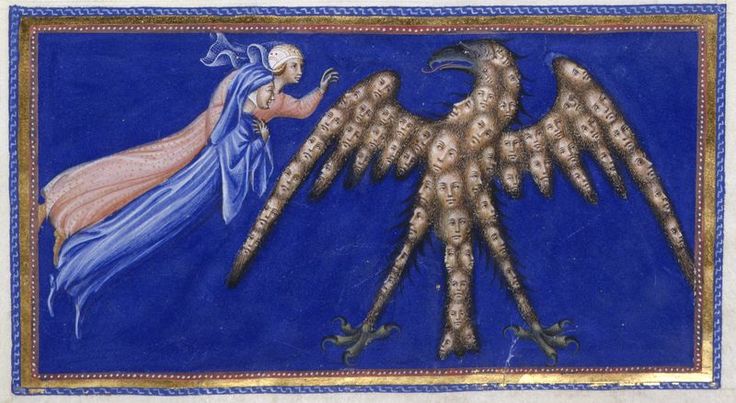
Dante, Beatrice, the Eagle, and the collective voice of the just

The supreme translator honors the supreme poet. It is the 700th anniversary of Dante Alighieri‘s death – and Robert Chandler, who has translated Vasily Grossman‘s Life and Fate and Stalingrad, among other Russian stunners, turns his attention from the Russian classics to Dante’s Italian masterpiece.

A sadist? We think not.

The occasion for the article is a new translation of The Purgatorio, by poet D.M. Black, published by New York Review Books with a preface by Robert Pogue Harrison, who estimates that there are more than a hundred translations of The Divine Comedy into English already. So why do we need a new one? Because The Purgatorio is special.

If Russia seems a long way from Florence, Chandler threads the connections together in his new article, “Divinity and Damnation: Why Dante Still Matters,” at The Financial Times: “Anna Akhmatova’s last public appearance was in October 1965, during a celebration of the 700th anniversary of Dante’s birth.  In a moving affirmation of loyalty, she wrote in her preparatory notes that the deepest bond between her and her fellow-poets Nikolay Gumiliov and Osip Mandelstam, both killed decades earlier by the Soviets, was ‘love for Dante.’” (Mandelstam described the Divine Comedy as a perfect crystal with 14,233 facets – the number of lines in the poem.)

Readers are generally drawn to the Inferno, partly because of the set pieces like Paolo and Francesca, but also for the same reason people prefer horror films to mid-century musicals.

“Some have see Dante as a vengeful sadist, while for T. S. Eliot he was an epitome of classical restraint.  Some see Dante as a mystic visionary; others see the Divine Comedy as Thomas Aquinas’s Aristotelian Catholicism put into verse,” Chandler writes. “In a recent issue of The New Yorker, Judith Thurman has described him, during his long exile from Florence, as ‘an itinerant diplomat and secretary for the lords of northern Italy’ and as an ’embittered asylum-seeker.’”

I’ll plump for The Purgatorio too. It has more movement. But Stanford’s William Mahrt would also point out that it is the only one of the three sections of the Divine Comedy that has music. There is no music in The Inferno – just noise and wails and grunts. The Paradiso leads us beyond music. But the Purgatorio rings with hymns and psalms and chant. Chandler adds: “The Purgatorio, however, is a more satisfying whole.  The structure is more meaningful, the verbal music more delicate – and, above all, it is more human.  In Hell and Paradise everyone is fixed in their despair or bliss; in Purgatory everyone and everything is in flux.  Sinners struggle to resolve their inner conflicts.  Above all, there is a sense of freshness and hope.”

Chandler, translator extraordinaire

Chandler concludes: “The Purgatorio is, above all, a search for meaning, and in the final cantos Beatrice enables Dante to understand that the only source of meaning is love.  One of Black’s previous publications is titled Why Things Matter: The Place of Values in Science, Psychoanalysis and Religion (Routledge, 2011).  Both in this translation and in his afterword Black shows us why Dante matters, and how, 700 years after his death, he can still help us to understand what may give meaning to our own lives.”

Read the whole thing here.