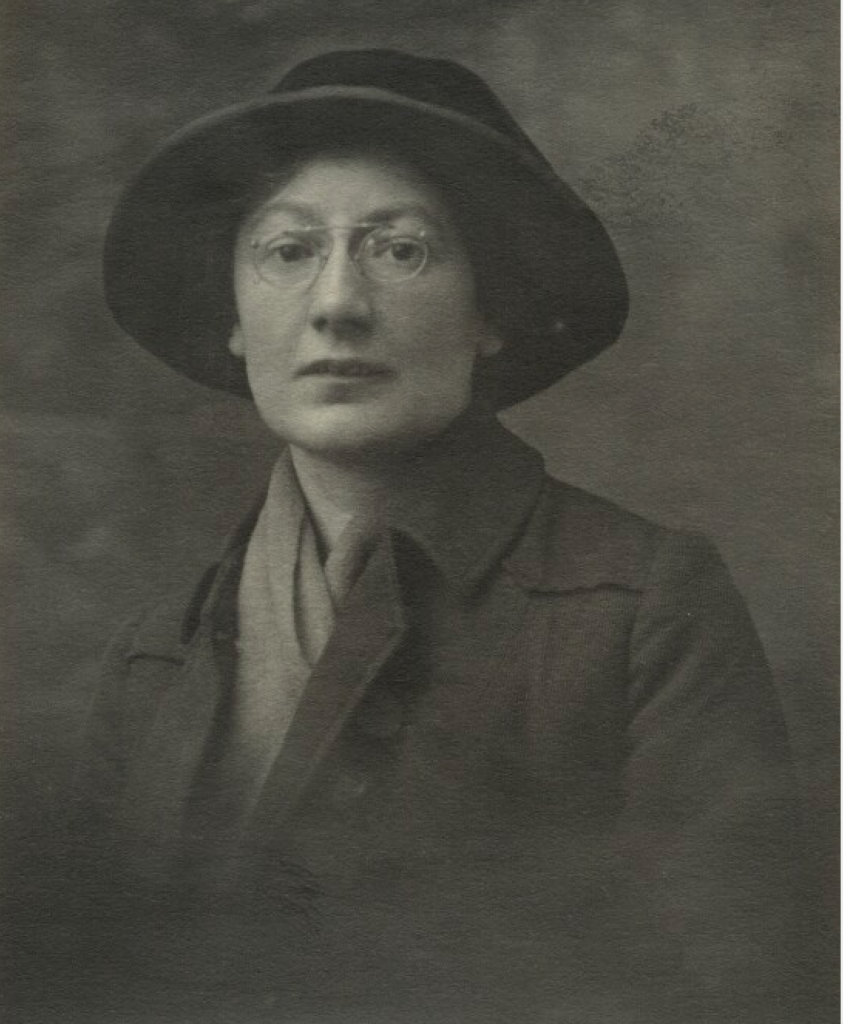
Dorothy Strachey (1865-1960), sister of the writer Lytton Strachey, was a Bloomsbury insider.
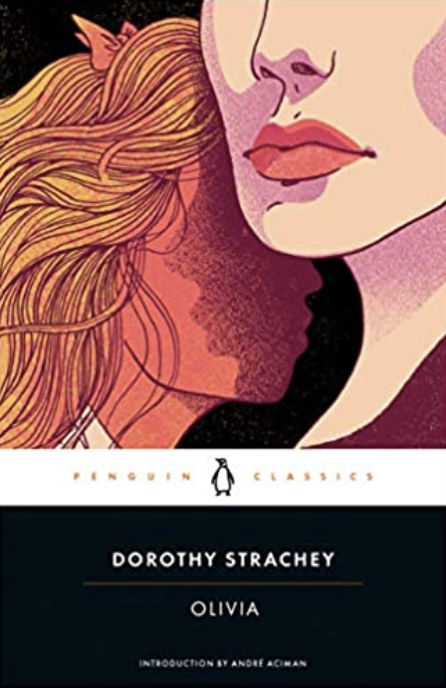
Please join Stanford’s Robert Pogue Harrison, Maria Florence Massucco, and Tobias Wolff, for a webinar discussion of Dorothy Strachey’s 1949 novel, Olivia.The event will take place 5:00-6:30 p.m. (PST) on Wednesday, October 13. Given the ongoing COVID situation, this will be a virtual event.
Stanford’s Prof. Robert Harrison, an acclaimed author and director of Another Look, will lead the discussion, joined by the eminent novelist Tobias Wolff, founding director of Another Look and a National Medal of Arts winner. Massucco, a PhD candidate in Italian Studies who specializes in the 20th century novel, will round out the panel.
André Gide called Olivia“a little masterpiece,” and we think you’ll agree. The story traces the intense emotional currents among the girls and teachers in a finishing school outside Paris. Olivia, a 16-year-old English girl, finds herself falling under the spell of the charismatic Mademoiselle Julie, a founder of the school. The Times (London) praised Olivia’s “strange combination of strength and delicacy” and the Wall Street Journal noted that the book is “extravagantly French in its sensibilities.”
Dorothy Strachey and her famous brother, the writer Lytton Strachey, were prominent in the Bloomsbury group. Olivia is her only novel.
The book is available through Amazon (also on Kindle), as well as Stanford Bookstore (650-329-1217) Kepler’s in Menlo Park (650-324-4321), and Bell’s Books in Palo Alto (650-323-7822). Secondhand copies are also available on Abebooks as well. If all else fails, you can order directly from Penguin at 800-793-2665, but allow for delivery time and shipping costs.
Like all our events, this webinar is free and open to the public, but please register on the link below. See you on Zoom!
“We aim to take market share and usurp, but we’re very much operating within the system.” ~ Vlad Tenev
In 2013, Vlad Tenev launched the “Robinhood” platform to democratize financial markets. So what common ground does the Bulgarian-American entrepreneur share with Entitled Opinions host and humanist Robert Pogue Harrison, who claims that teaching, thinking, and writing about cultural history has been his lifelong vocation?
The Stanford professor made a guest appearance on Tenev’s half-hour podcast series “Under the Hood” to explore the connections. Here’s an obvious one: the CEO also started at Stanford, where he envisioned a trading platform to encourage young investors by not requiring minimum accounts or charging commissions. You can listen to the conversation at the Los Angeles Review of Books here.
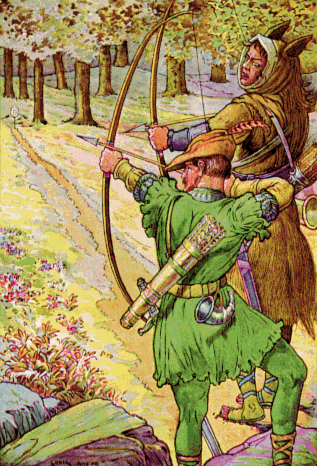
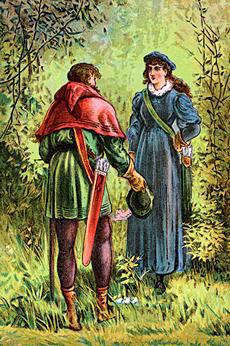
The fugitive “Robin Hood” was another link. Tenev suggested that Robin Hood’s intent was to democratize resources, adding that “he wanted to open up the forest and have it not just the purview of the king, but open for everyone to hunt.”
Harrison, the author of Forests: The Shadow of Civilization, drew an analogy between the outlaws’ Sherwood Forest and the markets of Wall Street, adding, “Your platform is trying to get the underdogs or the least privileged into a system which traditionally enriches the already rich.”
Both men also share an interest in the work of the late French theorist René Girard, who taught at Stanford for decades. Girard said society’s last taboo is envy, which drives today’s social media. Recalling Girard’s most famous protégé, the early Facebook investor Peter Thiel, Harrison observed, “Facebook is a machine of engendering envy, and people keep upping the ante of how happy they are, how beautiful their kids are, and how wonderful their vacations and meals are. You enter into this mad mimetic escalation of self-representation on one hand, and the envy of your friends and rivals on the other. “ Yet Tenev noted that Robinhood also started with social media, allowing people to interact in ways unimaginable a decade before.
“In our capitalistic society, there’s not just one king. There are several kings. They are the banks, the corporations, the hedge funds, the investment bankers.” ~ Robert Pogue Harrison
The recording of the conversation is over at theLos Angeles Review of Bookshere.
More potent quotes:
“In our capitalistic society, there’s not just one king. There are several kings. They are the banks, the corporations, the hedge funds, the investment bankers.” ~ Harrison
“You can’t just throw prudence out of the equation altogether.” ~ Harrison
“Do these trading platforms have a declared sense of responsibility in caring for the investors who use it? How does one go about trying to protect the users?” ~ Harrison
“Your Robinhood platform is not revolutionary because it’s not trying to overthrow.” ~ Harrison
“You can’t just throw prudence out of the equation altogether.” ~ Harrison
“We aim to take market share and usurp, but we’re very much operating within the system.” ~ Tenev
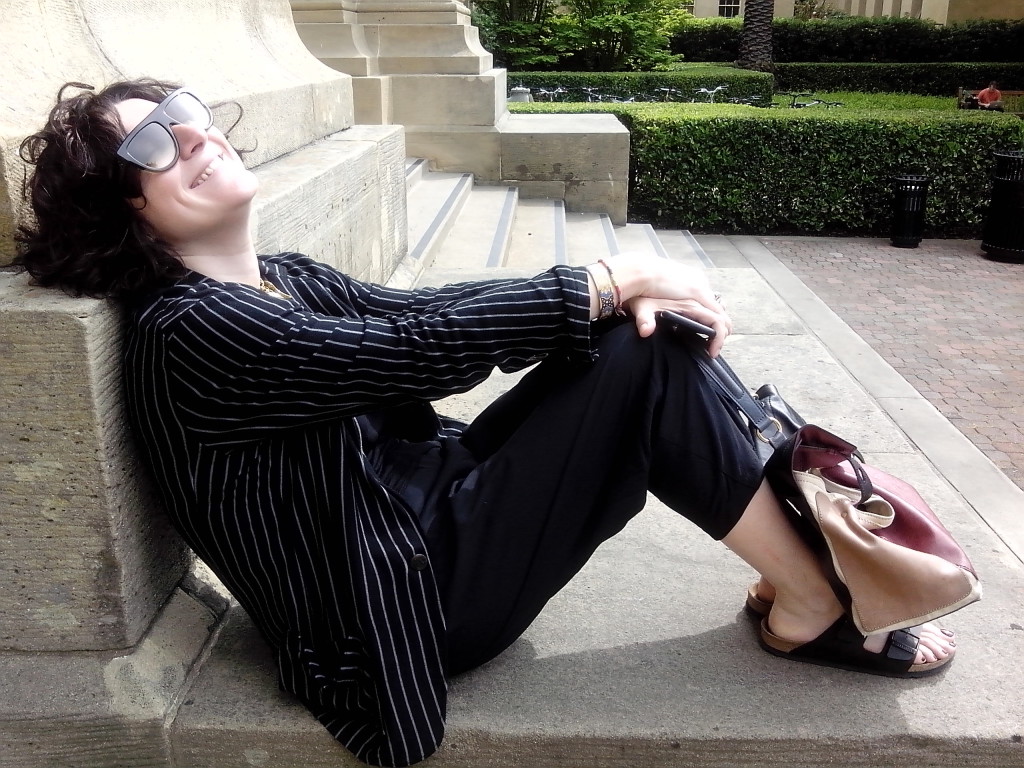
Feeling alive: Maria Stepanova on the steps of Stanford’s Green Library (Photo: C.L. Haven)
“It is something very intimate, the way we communicate with the dead.”
The Guardian called 2021 “the year of Stepanova” for good reason. Russian poet Maria Stepanova’s new book, In Memory of Memory (New Directions), has been long-listed for the Booker Prize. Given the incandescent reviews, it is likely to be her break-out book in the West, giving her overdue recognition for works that have made her one of Russia’s most recognized writers. The Russian poet and essayist has two more books out this spring: The Voice Over: Poems and Essays (Columbia University Press) and War of the Beasts and the Animals (Bloodaxe).
Entitled Opinions’ host Robert Pogue Harrison interviewed her during her Stanford visit in 2016, and her words are as timely today as they were then. You can listen to the discussion HERE. The conversation began with a discussion of one of her other high-profile roles: she’s the publisher of the online Colta, Russia’s first crowd-sourced journal, which has been compared to a Russian Huffington Post and TheNew York Review of Books combined.
The conversation focused on the Russia’s “schizoid” treatment of the past and present.
She noted that whether he realizes it or not, Putin is performing a parody of Soviet empire. “The main difference is there is no meaning under Putin’s reign – no inner meaning, no hidden meaning, and no explicit meaning … no brand of an idea,” she said. “And so people are disoriented.”
“We’re living in a country where we have a corpse that has been lying in the Red Square for almost a hundred years,” she said. “People still think the dead are the best governors.”
“In Russia, nothing is solid. You’re always expecting some ugly turn of reality, in your own biography or in the country’s story. Anything can happen,” she continued. “We are prepared to consider our present state acceptable as long as things don’t get worse.” Media has been replaced by propaganda, and unreliable sources have replaced informed knowledge. “The experts sitting at the roundtable are different kinds of freaks – futurologists, conspiralogists, astrologists, whatever. … Nothing is real.”
What role for poetry? Stepanova sees some positive aspects to the current turmoil: “Now the poetry audience is getting much, much wider – maybe it’s what happens in times of big historical shifts, when people are expecting poetry to give them some kind of an answer – or maybe a question.”
Stay tuned also for Stepanova’s impressive, intensely musical reading of her poem, “The Women’s Changing Room at ‘Planet Fitness.’” (Robert Harrison reads the poem in English.)
I also interviewed Stepanova for the Los Angeles Review of Books here.
About Maria Stepanova
Maria Stepanova was already an important and innovative poet by the time of Vladimir Putin’s accession, but the times called for a tougher, more public role. Today, she is one of the most visible figures in post-Soviet culture – not only as a poet, but as a journalist, a publisher, and a powerful voice for press freedom.
She is the founder of the Colta, the first independent crowd-funded source of information that exists in Russia today. The online publication has been called a Russian Huffington Post in format and style – and also compared to the New York Review of Books for the scope and depth of its long essays.
She is the author of eleven poetry collections and the recipient of several Russian and international awards (including the prestigious Andrey Bely Prize, the Berlin Brücke Prize for the novel, and Joseph Brodsky Fellowship).
You can listen to the conversation HERE. An article about Maria Stepanova’s recent Stanford talk is here.
“Even our inner reality is ruled by the dead. They are the inner deities.”
POTENT QUOTES:
“In Russia, the dead are never dead enough.”
“The past never dies. It never goes away. It is still active.”
“We are prepared to consider our imperfect present state acceptable as long as things don’t get worse.”
“The real problem of contemporary Russia is not in our obsession with the past, but in the fear of the future.”
“If you don’t feel like you can belong to a future, then it’s very hard to feel that you can belong to a past.”
The only time I heard Shirley Hazzard use the word ‘hate’ during the thirteen years I knew her was one night in Rome when I walked her back to the Hassler Hotel after a dinner at Otello on Via della Croce. (For half a century, both with and without her husband Francis Steegmuller, she stayed in the same room at the Hassler Hotel whenever she was in Rome, and only occasionally did she and I ever dine at a restaurant other than Otello when we got together in Rome). I mentioned something about a place that had changed. She stopped in her tracks, put her hand on my arm, and declared: ‘I hate change.’
Given how many tumultuous and destructive transformations the world underwent during her lifetime, one can understand Hazzard’s aversion to change. That aversion also accounts for her attachment to the city of Naples, about which she wrote so eloquently and where she owned a home. What she prized above all about Naples was its unaltered landscape. As she once remarked to me, were Virgil to sail into its bay today, he would recognize all the lineaments of his adoptive city.
During her lifetime Shirley Hazzard published four novels, two collections of short stories, and six non-fiction books. One of the novels – The Transit of Venus (1980) – is a masterpiece that has earned her the status of a major writer rather than merely a distinguished one. The enduring devotion Hazzard has inspired in her readers – a devotion that comes through in the many high-profile reviews that the recently published Collected Stories elicited in the United States and England – is due mostly to the lasting impression this novel made on us. As the centre of Hazzard’s corpus, The Transit of Venus now shapes our perception of the books that preceded and followed it.
A quotation to remember:
Hazzard’s evaluation of Patrick White’s The Eye of the Storm applies to her own fiction as well: “The matter in hand here is no less than existence: our brief incarnation in a human experience, our efforts to make a coherence of, or retreat from, the improbable combinations of flesh, feeling, vanity, virtue, and reason laid upon us like preposterous puzzles.”
The Bard of Albany, Irish-American author William Kennedy
It’s happening! It’s finally happening! At 3 p.m. (PST) on Friday, February 26, Stanford’s Another Look book club hold its long-postponed Another Look discussion honoring author William Kennedy, a Pulitzer-prizewinning, MacArthur “Genius” Fellow. Our event for the 1978 book was one of the early COVID casualties at Stanford last spring. Now it will be rescheduled as a Zoom event (isn’t everything nowadays)?
From our announcement:
Pulitzer prizewinning novelist William Kennedy has been called the Bard of Albany, but he began his career as a reporter. After a stint in the military and in Puerto Rico, he returned to his hometown, and saw the city of his birth with new eyes: “Without a sense of place, you don’t, as a writer, have very much. Place is all those forces of a given society impinging upon and determining character. Without it, a book becomes bloodless.”
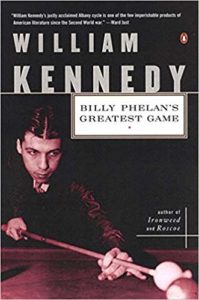
According to Stanford’s Tobias Wolff, who will lead the discussion: Billy Phelan’s GreatestGame belongs to William Kennedy’s celebrated Albany sequence of novels. Set during the Depression, it concerns a young gambler and bookie, the Billy of the title, who suffers a setback that compels him to embark on an odyssey – and I use that word advisedly – through the demimonde of his city, during which he encounters temptations and dangers that test his resolve to the limit. There are gangsters, there is a kidnapping, but at its core this novel is about character, and what this man will do and endure to preserve his honor.”
The discussion will be led by National Medal of Arts winner Tobias Wolff, with panelists Carol Edgarian, novelist and founding editor of Narrative Magazine, and AnotherLook Director Robert Pogue Harrison, an acclaimed author and host for the popular radio series, Entitled Opinions.
Like all our events, it is free and available to the public. Registerhere.
And check out my Los Angeles Review of Books interview with Bill Kennedy, discussing his life and, in particular, Billy Phelan’s Greatest Game. An excerpt:
CYNTHIA HAVEN: Hemingway wrote: “Everything changes as it moves. That is what makes the movement which makes the story. Sometimes the movement is so slow it does not seem to be moving. But there is always change and always movement.” It’s a thought you echo more than once in Billy Phelan, for example, when you write: “We are only as possible as what happened to us yesterday. We all change as we move.” You’ve said, “The movement is what creates the action, and the action is what creates the story” — which in turn creates more movement. Clearly, you’ve thought about this a lot. Could you share a few more thoughts?
WILLIAM KENNEDY: I must’ve been deeply persuaded by Hemingway’s lines to have lifted them without crediting him; but I always listened to what he said about writing. In The Angels and the Sparrows, I created Francis Phelan, a wino in his 30s, a clever, obnoxious loner returning home for his mother’s funeral (she kicked him out), who stops at a neighborhood bar for a beer and is hostile to the bartender. It was a good scene. He was a sad, broken young guy, but I disliked him seriously, even as I was creating him, and didn’t want to carry him forward.
Then, maybe 15 years later I started to write Billy Phelan and I reinvented the Phelan family. I had to get rid of Francis as that antipathetic young wino. He still had to be a bum, but I aged him into a tortured figure at the bottom of the world who was Billy’s father, and his life immediately became an open-ended challenge to my imagination. It turned out that he had abandoned his family 22 years earlier after his 13-day-old son, Gerald, slipped out of a diaper while he was changing him, fell off a table, broke his neck and died. In the fall of 1938, Francis drifts back to Albany to vote in a Democratic primary election, knowing the machine will pay him $5 for this; so he votes 21 times, earning $105, and is put in jail. Billy, the gambler, hears he’s in town and bails him out. The new Francis, after living through 16 years of shame and guilt over dropping the infant and running off, became a pitiable but likable human being. I don’t know where Gerald came from. There was no such incident in my life, nor can I remember hearing of one; perhaps I forgot it. But years ago I decided it was a gift from my unconscious, a fruitful one. In Billy, Francis was so vitally real that he leaped onto my typewriter and demanded his own novel. So I wrote Ironweed for him.
“Shirley Hazzard’s Collected Stories is a work of staggering breadth and accomplishment. Taken together, these twenty-eight short stories are masterworks in telescoping focus, ranging from quotidian struggles between beauty and pragmatism to satirical send-ups of international bureaucracy, from the Italian countryside to suburban Connecticut. Hazzard’s heroes are high-minded romantics who attempt to fit their feelings into the twentieth-century world of office jobs and dreary marriages. After all, as she writes in ‘The Picnic,’ ‘It was tempting to confine oneself to what one could cope with. And one couldn’t cope with love.’ And yet it is the comedy, the tragedy, and the splendor of love, the pursuit and the absence of it, that animates Hazzard’s stories and provides the truth and beauty that her protagonists seek.”
Her friend at Stanford.
“Hazzard once said, ‘The idea that somebody has expressed something, in a supreme way, that it can be expressed; this is, I think, an enormous feature of literature.’ Her stories themselves are a supreme evocation of writing at its very best: probing, uncompromising, and deeply felt.”
According to Harrison, “Conrad once said that the written work of art must justify itself word by word, sentence by sentence. That justification is always at work in her prose. Her use of English is at once exact and expansive. She inhabits the language as only someone who was nourished on its very best literature at an early age could inhabit it.”
“She has a unique stylistic signature, one that combines extreme narrative discretion with probing psychological insight; a masterfully terse yet complex prose that always looks for and finds le mot juste; the most astonishing and expressive metaphors of any writer of her generation known to me.” (Robert Harrison also interviewed Hazzard in 2006 for Entitled Opinions here.) He adds that ” the commitment to description in her books is relentless.”
Hazzard’s biographer Brigitta Olubas and Australian novelist Michelle de Kretser will also be on hand to discuss the author’s legacy.
Postscript on 11/11 from Dana Gioia, former NEA chair and California poet laureate: How good to see Shirley Hazzard remembered! I second Robert Harrison’s praise of her style. She had an amazing ability to present the emotional reality of her characters and a genius for vividly depicting the most diverse settings. “The Transit of Venus” and “The Great Fire” are among my favorite contemporary novels–two very different books similar only in their elegant prose and deep humanity.
I wonder if part of her obscurity is that, like the equally superb Sibylle Bedford, Hazzard was so international. She lived in Australia, New Zealand, Italy, and the U.S. She doesn’t fall neatly into either Australian or American literature. Thanks for featuring her work.

 WILLIAM KENNEDY: I must’ve been deeply persuaded by Hemingway’s lines to have lifted them without crediting him; but I always listened to what he said about writing. In The Angels and the Sparrows, I created Francis Phelan, a wino in his 30s, a clever, obnoxious loner returning home for his mother’s funeral (she kicked him out), who stops at a neighborhood bar for a beer and is hostile to the bartender. It was a good scene. He was a sad, broken young guy, but I disliked him seriously, even as I was creating him, and didn’t want to carry him forward.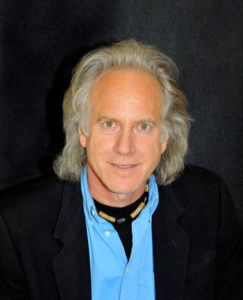
 Postscript on 11/11 from