
“Too big to be swallowed”: Robert Hass, Adam Zagajewski, Clare Cavanagh remember Czesław Miłosz

Share

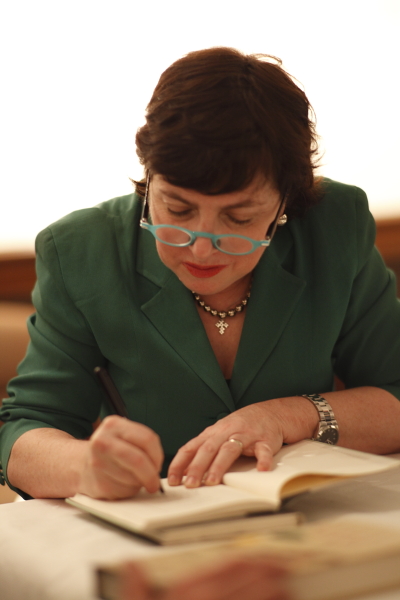
Clare signs books after the event (Photo: David A. Goldfarb)

The apocalyptic scene enveloping Japan brings to mind Czesław Miłosz‘s poem, “A Song on the End of the World,” written in Warsaw, 1944, during another kind of apocalypse.  The poem ends with a white-haired old man binding his tomatoes, who would be a prophet but is “too busy to be a prophet,” repeating:

No other end of the world will there be.

Sound wrong?  According to translator Clare Cavanagh, speaking at the 92nd Street Y on Monday night, it’s a new kind of right.  The line is usually translated “There will be no other end of the world.”  But the original Polish has an inversion that doesn’t always work well in English.  Antoni Miłosz has translated the poem, keeping the original inversion.  I kinda like it — the poem ends with a dactylic chant.

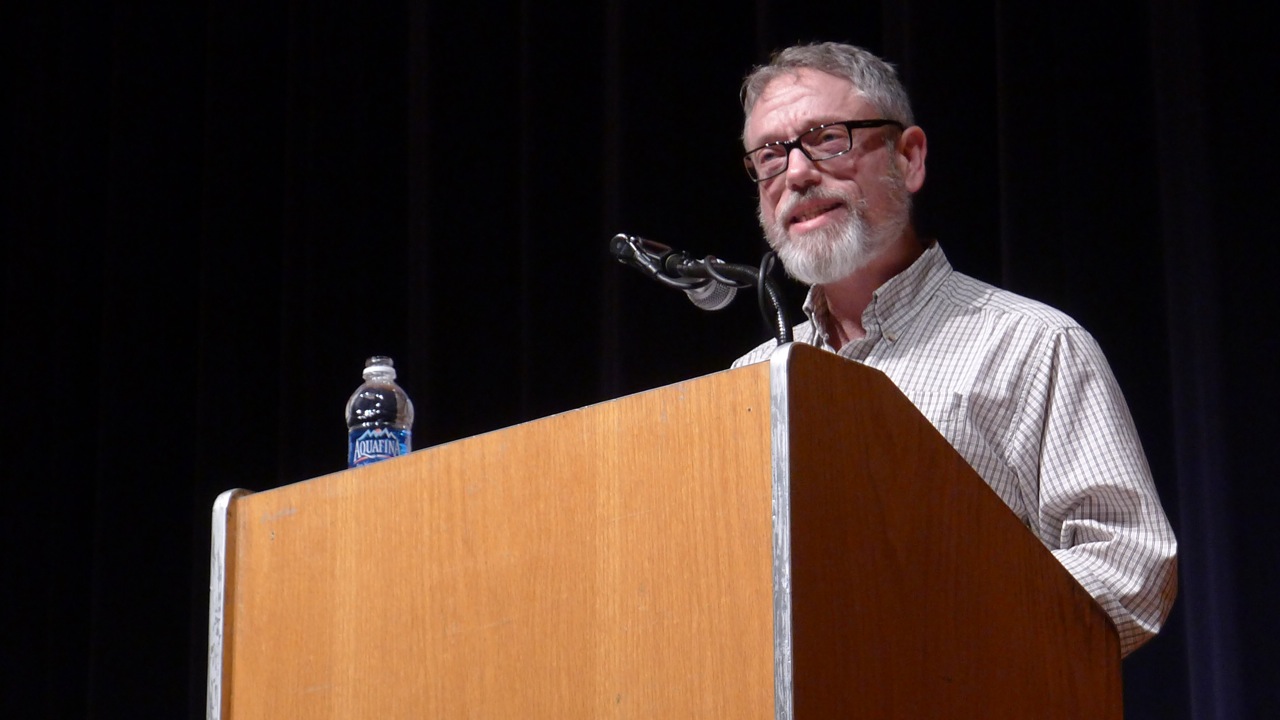
Clare was one of three heavy-hitters speaking about Miłosz that night and reading his poems – Robert Hass and Adam Zagajewski were the others.

Clare pointed out that, although Miłosz celebrates the rural Lithuania childhood, it is at least part an invented one.  In fact, his father was a civil engineer working in Russia, and the six-year-old experienced the Russian Revolution firsthand and traveled widely.  Movement was as much a characteristic of his upbringing as the stability he mythologized.
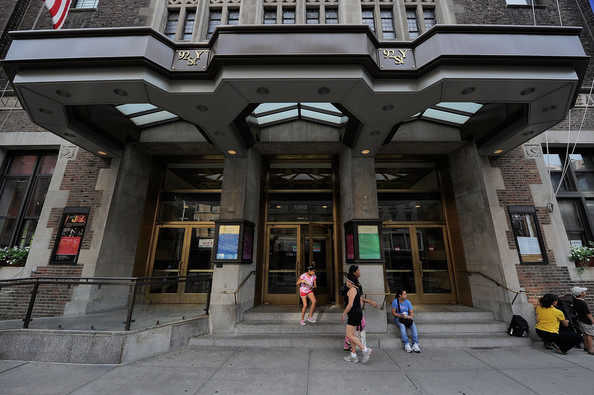
The venue: 92nd Street Y

She recalled the long theological discussions that I mentioned in my post several days ago.  She wouldn’t describe them in the essay she wrote for An Invisible Rope – and she wouldn’t describe them Monday night either.  I hope her silence on this subject is not permanent. “I’m not going to repeat what he said,” she finished, “but I keep wondering what he knows now.”

Bob Hass, wearing a heavy bandage on his nose, told the audience he hadn’t been in a fight, but advised his listeners to wear sunscreen.  He recalled a poet “tormented by how inexpressible experience was.”
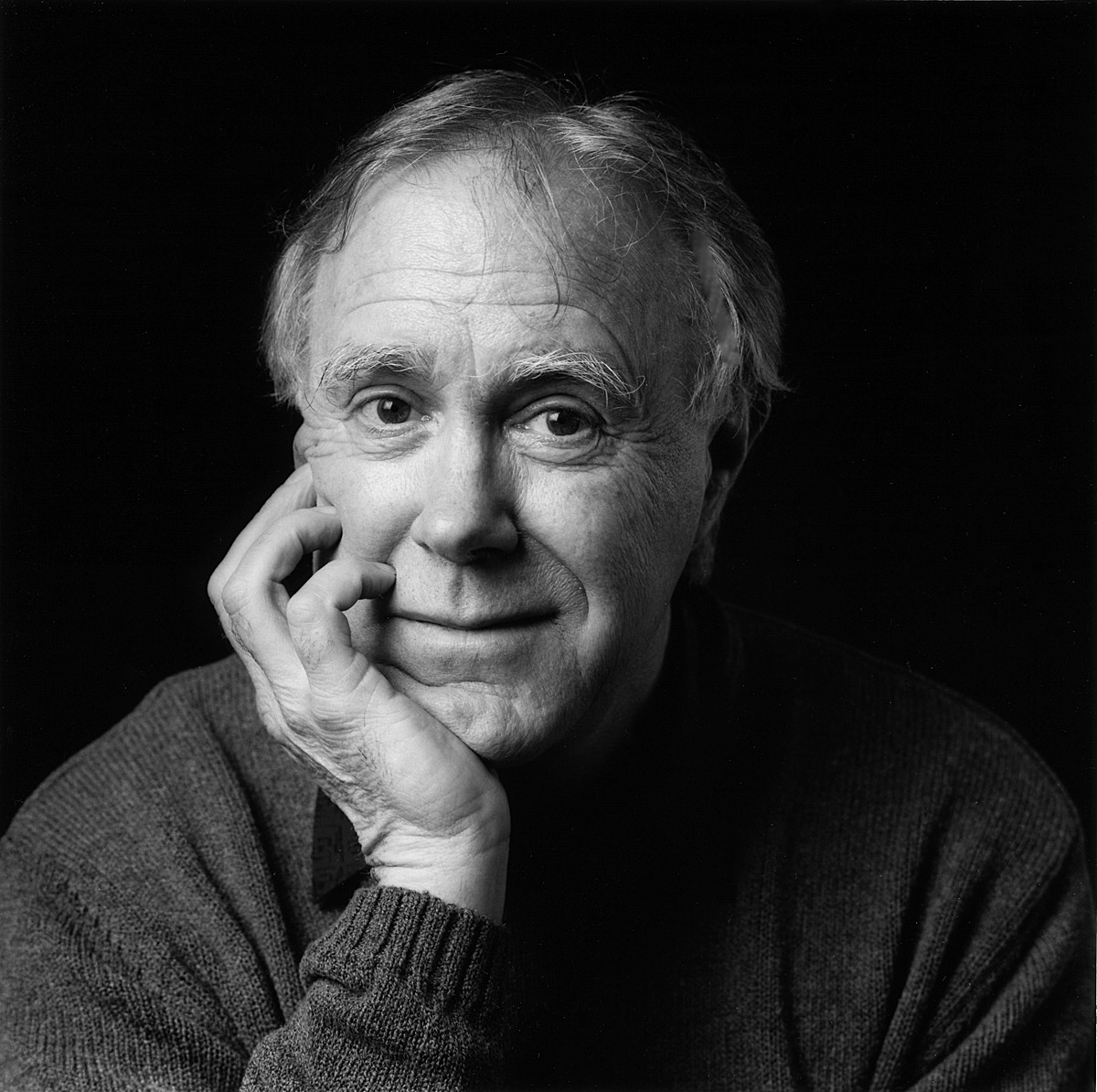
"Please wear sunscreen"

Bob quoted Milosz, “War is only nature speeded up.”

The Berkeley prof recalled approaching Miłosz to discuss an anti-nuclear movement on campus, only to be told,  “I am against anti-nukes.”

“Blue hair?  Why does no one protest blue hair?” the elder poet responded. Beautiful young women become old ones with blue hair (note to young ‘uns: blue-tinted rinse was a common for elderly women in the 20th century).  “Who protests?”

“The true enemy of man is generalization,” Hass recalled Milosz saying.  His response to generalization was memory, said Clare. Miłosz’s memory was “beyond human – except that it’s most perfectly human, the way memory ought to be – how it should be in heaven.”

Hass recalled traveling in rural California, and on a whim going into an old secondhand shop – or rather, he said, it was as if he were drawn to it.  He found a thick book, in Polish, on the history of women’s underwear.  He plopped the $40 for the book and gave it to Milosz.

“I do not know that I have ever seen him so happy,” he said.  Suddenly, he could identify the underclothes he had seen on his aunt’s clothesline during his childhood.
"to glorify things as they are"

Adam Zagajewski spoke last – the perils of having a name that begins with “Z,” he said.

He noted Miłosz’s many contradictions.  He was drawn to the notion of “secret knowledge,” Adam said. “He craved initiation and looked for gurus” — for example, Miłosz’s influential kinsman Oskar Milosz and the man called “Tiger” in Native Realm. At the same time, he had “a longing for ignorance and innocence,” said Adam – which accounts for his attraction to William Blake, in part.

Ivan Turgenev said that poets are either rivers, absorbing everything in their current, or mountains, overlooking the world from an elevated plane of existence.  According to Adam, Miłosz decided he wanted to be “like a river and a mountain.”  The result?  A poet “too big to be swallowed,” he said.

Though Miłosz “loathed propaganda poetry,” Adam said he walked “the narrow road between pure poetry and poetry engagée, which he thought a mistake.”

In his restless questioning of existence, Miłosz took on God — “God being the strongest enemy that was,” said Adam, and objected to Blaise Pascal’s wager, which Adam said, “was like a shopkeeper saying it’s better to save some money because times can be hard.”

Adam concluded, “This is his religious vocation – to glorify things as they are.” And in this mission he was truly omnivorous. His poetic hubris – wanting to understand everything, wanting to experience everything – has caused his eclipse in current Poland.  Will his reputation wax again?

“I don’t worry.  I am totally convinced he will return.  He will have the last word.  Not I.” (Adam’s “Z” notwithstanding.)

Meet you in Manhattan!

Share

I’m off!  Or at least I will be in a few hours.

I’m on my way to a week of gigs honoring the Czesław Miłosz centenary in New York City — with a side order for Zbigniew Herbert.  I posted about them a while back here.

Come up and say hello if you see me — otherwise, prepare for a few logistical delays, but I expect to be posting about Clare Cavanagh, Robert Hass, Edward Hirsch, Adam Zagajewski, Anna Frajlich, Bogdana Carpenter, James Marcus, and many others in the coming days.

See you there!

Join me in NYC for the Czesław Miłosz Centenary!

Share

There’s a swirl of events March 21-28 honoring the Czesław Miłosz centenary in New York City (and one event for Zbigniew Herbert).  Join me in celebrating, if you’re in town!  It’s certainly a rare event for me — at least a decade since I’ve been in New York at all, sedentary little West Coaster that I am.

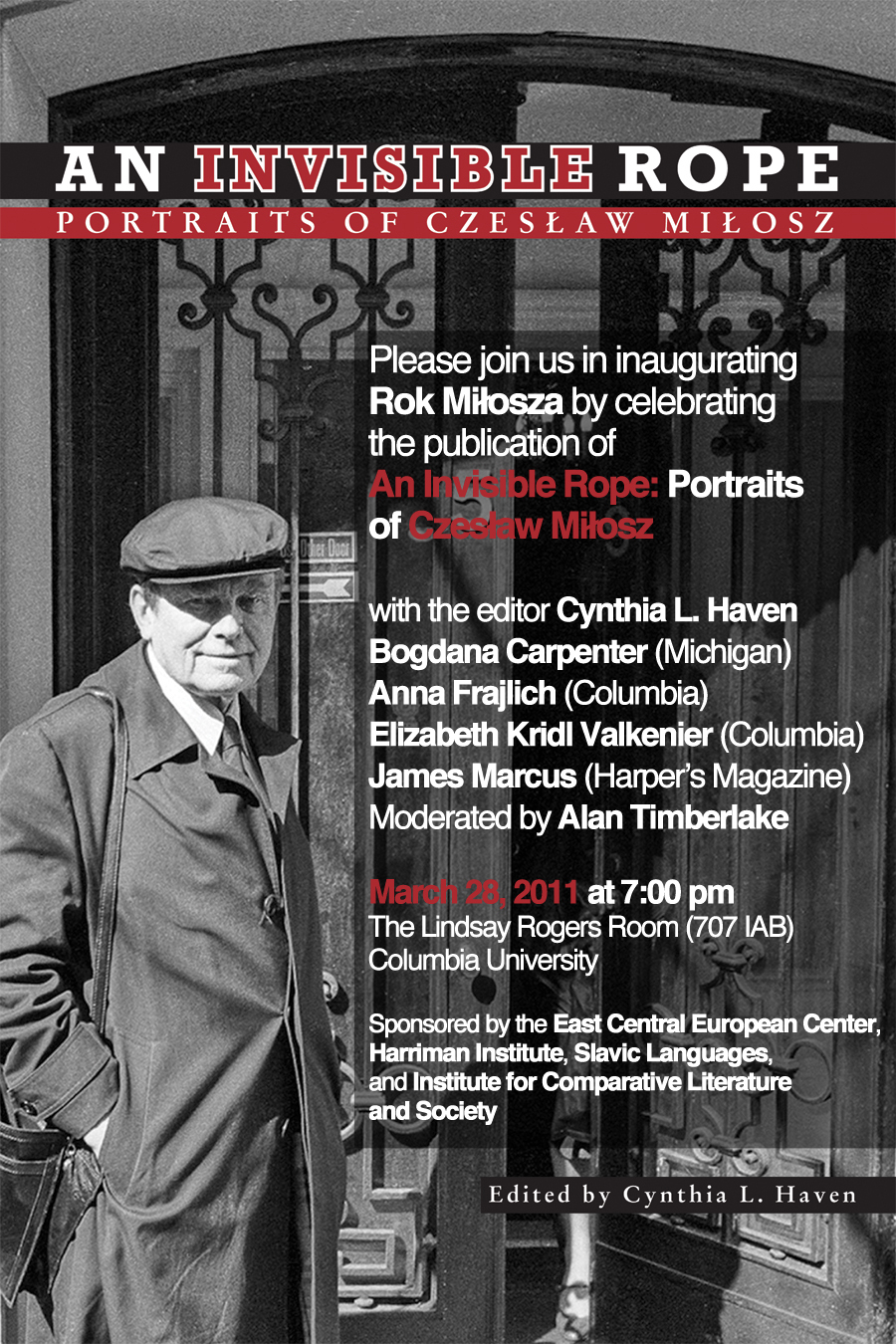
I will be speaking at Columbia University (see poster at right) on the 28th and at the Brooklyn Central Library on the 27th.

Ann Kjellberg at Little Star has blogged about some of the other events here.

They include:

March 21 — 8 p.m., Kaufman Concert Hall, 92 Street Y: “A Celebration of Czesław Miłosz with Robert Hass, Adam Zagajewski and Clare Cavanagh

March 22 — 7 p.m., Music Building, Queens College: “A Centennial Celebration of the Work of Czesław Miłosz” — Clare Cavanagh, Robert Hass, Edward Hirsch, Adam Zagajewski

March 24 — 7 p.m., Poets House: “A Poet’s Prose: The Poetic Vision of Zbigniew Herbert,” Edward Hirsch, Charles Simic, Alissa Valles, Adam Zagajewski

March 27 — 1.30 p.m., Brooklyn Central Library, “An Invisible Rope: Portraits of Czesław Miłosz,” Cynthia Haven, Adam Zagajewski, Anna Frajlich, Elizabeth Valkenier and Zygmunt Malinowski

March 28 — 7 p.m., The Lindsay Rogers Room, Columbia University, “An Invisible Rope: Portraits of Czesław Miłosz,” Cynthia Haven, Anna Frajlich, Elizabeth Valkenier, Bogdana Carpenter, James Marcus, and Alan Timberlake


Peter Dale Scott’s “J’aime mais j’accuse”

Share

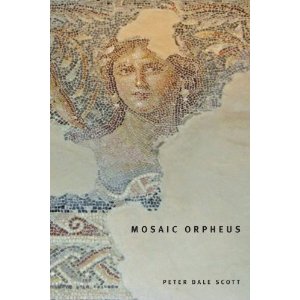
Poetry reviews are hard to come by in our increasingly distracted world, so Peter Dale Scott wrote me yesterday to say that he is understandably chuffed with John Peck‘s hefty, megawatt review for his  Mosaic Orpheus in the current Notre Dame Review. (If you scroll way down to the bottom of the screen here, you can download the 15-page pdf, which is certainly a clumsy way for NDR to do things.)

Peter, a former Canadian diplomat, is one of the few to tackle political poetry in a way that is gritty and specific, rather than the more commonplace attempt to commandeer politics to give oneself unearned gravitas via airy and politically correct generalities.  Robert Hass called Peter’s 1988 Coming to Jakarta: A Poem About Terror “the most important political poem to appear in the English language in a very long time.”

Peck’s discussion opens with the 1988 “contemplative epic”: 

“Coming to Jakarta, his attempt to contain distress over the blocked publication of his investigative research findings comes up against ‘mosaic darkness’—not familiarly seamless obscurity, but kaleidoscopic stuff—while in the poem’s later books Dante’s civic grief and wrath, with his loyal love for a dead woman, make him an Orphic brother-father to Scott, in that Alighieri’s existential defeat folds out into contrary visionary assurance. Such is not regulation Orphism, particularly as invoked collegially against American amnesiac indifference toward a largely occulted, webby congress of state terrorism, proxy mass slaughters, off-the-books funnelings of the sluice from international drug cartels to black ops, economic decline and the management of fear by debt, false-flag events, assassinations, and greasy resource wars.”

Shovel ready

Peck’s writing style is dense, but often rewarding.  And while I hadn’t been terribly looking forward to a long gaze at the nastiest sides of American policy — other than that proffered by the daily news — I must say that Peck’s review has heightened my interest.  Of Scott, Peck writes:

“He must be the only poet now writing who can say that Czesław Miłosz, peace-studies scholar Ola Tunander, various prominent vipassana teachers, and certain unnamed informants in government service deceased in mysterious circumstances, equally have nourished his effort. This span, together with an iron stomach for the forensics and catharsis of difficult findings, spell his personal equation. His poetics therefore will likely be neither a standard Orphic affair nor a canonical Buddhist one, although the poetry plainly arises in order to square those canons, and that personal equation, with a civics obdurately impersonal and malign.”

Peter, one of Miłosz’s earliest translators, describes his up-and-down relationship with the Nobel laureate — the two parted over politics, but reconciled much later — in my  An Invisible Rope: Portraits of Czesław Miłosz.

Peck concludes:

“The spirit of research in this our dump needs every acolyte who carries a shovel. My Ketman-meter, its needle pushing into the red zone, tells me that our bitched order forces doubleness into both zones, out behind the vast oligarchic scrim and down into the crannies of palimpsested authority.  Scott has done us the honor of adopting this country as his own. Shall we read his voluminous J’aime mais j’accuse with due attention? His vade mecum, Mosaic Orpheus, reminds us that this labor has been one of hopeless, yet justified, love.”

By the way, Clive Wilmer called Peck, a Pittsburgh-born psychotherapist, “the outstanding American poet of his generation–as well as one of the most difficult.” As a young man he studied under Yvor Winters, and earned his Stanford PhD with doctoral thesis on Ezra Pound, supervised by Donald Davie.  Some of Peck’s poems are at the Poetry Foundation here.

Poet D.A. Powell: “Why not celebrate?”

Share

D.A. Powell: Career as playwright nipped in the bud (Photo: Ken Fields)

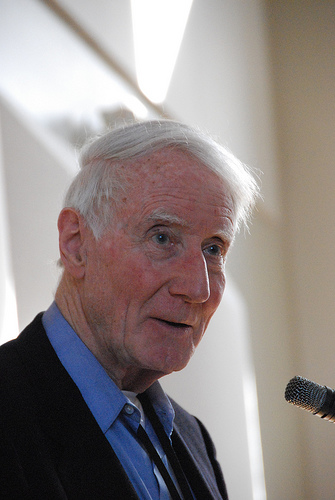
Poet D.A. Powell didn’t begin as a poet.  Early on, he said, “I conceived of myself as a budding playwright.”  He told a noon gathering at Stanford today that he “has some sense of pride” in getting a “D” in his collegiate playwriting class — “but I may have gotten an ‘F,'” he admitted ruefully.

At that time, he was into “absurdist drama” — “plays where people sat around and talked about nothing — and talked about how nothing nothing was.”  The feedback: his plays lacked conflict.

Powell recalled that Sergei Eisenstein learned while editing and cutting his films that he needed to use first person, second person, and third person — something Euripides accomplished with a chorus. He recalled a portion of Eisenstein’s Battleship Potemkin that shows, in the first shot, meat full of maggots, in another shot men looking through the entryway at the chef, and in the third shot, a bubbling caudron, to show the meat “is being cooked for consumption of sailors who are angry.  It’s emotional equivalent is anger coming to a boil.”

“The poet needs something else that balances the drama,” he said.  “You have to be willing to be the scenery and the antagonist as well.”  He quoted Robert Hass saying “a good poem contains its opposite.”

Powell’s first three books —  Tea (1998), Lunch (2000), and Cocktails (2004) — have been considered a trilogy for the AIDS pandemic.  His most recent book, Chronic (2009) received the Kingsley Tufts Award and was nominated for a National Book Critics Circle Award.  He’s working on another, which he read from last night.  The photo comes to me courtesy of Ken Fields, who sent it to me after after Powell’s reading.  Alas, some other deadlines had consumed my evening, so I couldn’t attend, but I was able to catch a few minutes of today’s colloquium.  As I left, he was responding to a student who asked him about the distinction between art, popular culture, and camp in his work.

“When you’re being completely camp, you’re not completely aware of it,” he said.

He discussed the “doubt and mystery of one’s own aesthetics” and “finding note of authenticity within the detritus of society.”

Pay It Forward was a “terrible, terrible film,” he said — yet he recalled crying while watching it.  “Instead of being embarrassed by it, why not celebrate it?”

Memorial reading for Morton Marcus on Nov. 6: a literary “bright spot” on West Coast

Share

At Vasili's Greek Restaurant, 2009 (Photo: Valerie Marcus Ramshur)

“If you were going to make a literary map of America, there would be a bright spot on the map at Santa Cruz,” said Robert Hass, who will be the keynote speaker at the first annual memorial for poet Morton Marcus tomorrow night at 7.30 p.m., at the Cabrillo College Music Recital Hall, 6500 Soquel Drive in Aptos.  (Gary Young, Stephen Kessler, Joe Stroud will also read.  Tickets are gone — arrive at 6.30 for no-shows and returns.)

Perhaps Mort is a bright spot on the bright spot.

“He was larger than life,” said Santa Cruz poet Stroud, who knew Marcus for more than 40 years. “Mort loved nothing more than to have a meal and to have a conversation. I think of him as a conductor almost, eating and drinking and driving the conversation this way and that. It was an unforgettable experience.”

I met Morton Marcus via the world wide web — and our relationship, alas, remained an epistolary one.  Poet Jane Hirshfield brought my attention to his remarkable memoir of Czesław Miłosz in his autobiographical Striking Through The Masks, and I approached him about contributing to a book I had in the back of my mind.  (The book, An Invisible Rope: Portraits of Czesław Miłosz, will be out soon — really it will.)  He wrote a note back in September 2006, with some evocative thoughts about Prague:

I’m back now. It was my second trip. This time I was there to teach a poetry composition class in the Prague Summer Program. It really is an incredible city, but a far as I’m concerned not for the reason other people are so enchanted by it. The Renaissance and baroque buildings are masks that cover centuries of suffering which are marked by the extraordinary number of memorials that dot the city. If one looks, one sees a microcosm of all cities in Prague, and one experiences the timeless misery and joy of being alive. Then going to Prague becomes a pilgrimage to pay homage to all our ancestors.

I’m not a professor, by the way. I’ve taught classes at UC, but mainly I taught Literature and Film for thirty-two years down the road at Cabrillo College.

Thanks for your interest, and I hope we’ll meet one day.

Jane Hirshfield

We didn’t.  But in a book that was filled with a not-always-harmonious assortment of contributors, he was one of the most easygoing of the bunch.   Good natured.  Not a prima donna.  It was appreciated.  As we were finishing up in June 2009,  he wrote to me the terrible news:  “I’m glad the book is coming out. When will that be? Since last year, my life has drastically changed: I’ve been diagnosed with terminal cancer. So before I go I have to get as many facts down on paper about new work coming out as quickly as I can.”

He sent me a brief bio for the book, and ended with the comment:  “I’m still standing.  Regards to all.”

I’m told he sank into pain, but never into less than good spirits.  I asked him about second opinions:  “It’s all through my bloodstream with growing tumors in my lungs and liver verified again and again. Second, third and fourth opinions, too. No problem; I’ve had a great life,” he wrote with daunting equanimity.  I offered at last to visit — but thought he might be less interested in meeting pen pals than gathering himself into himself.  I guessed right.  His last note to me said:  “Thanks so much for your thoughts, Cynthia, and the offer of a visit, but as you’ve guessed I’m more interested in solitude.”

Jane wrote to me to tell me he had died on October 28 last year.  His final words were, “I’m ready.”

Two poems from his last collection, The Dark Figure in the Doorway: Last Poems

ALL WE CAN DO

All we can do on this earth is step into the future
with a sense of the many people behind us,
the living and the dead, as if we carried our bodies
like amphorae filled with sunbeams into each new day,
continually reaching inside ourselves
to scatter golden butterflies over the land before us,
or to fling them against the night, not like tears, but like stars
that will guide those who follow across the darkness.

WHAT IS ALIVE IN US

What is alive in us, what vibrates
in our animal skins, is a harp string
that is never still, a harp string
tuned to the drone of silence.
It is the single thread, the radiant filament,
that sews us to our coat of darkness,
the umbilical that holds us
to the planet each of us is
yet allows us to wander among the stars —
the guy rope that secures us
to ourselves, yet lets us venture
into the darkness all the way
to the planet of someone else.

One can see why Miłosz liked him.