Hurricane comes to the Book Haven

Share

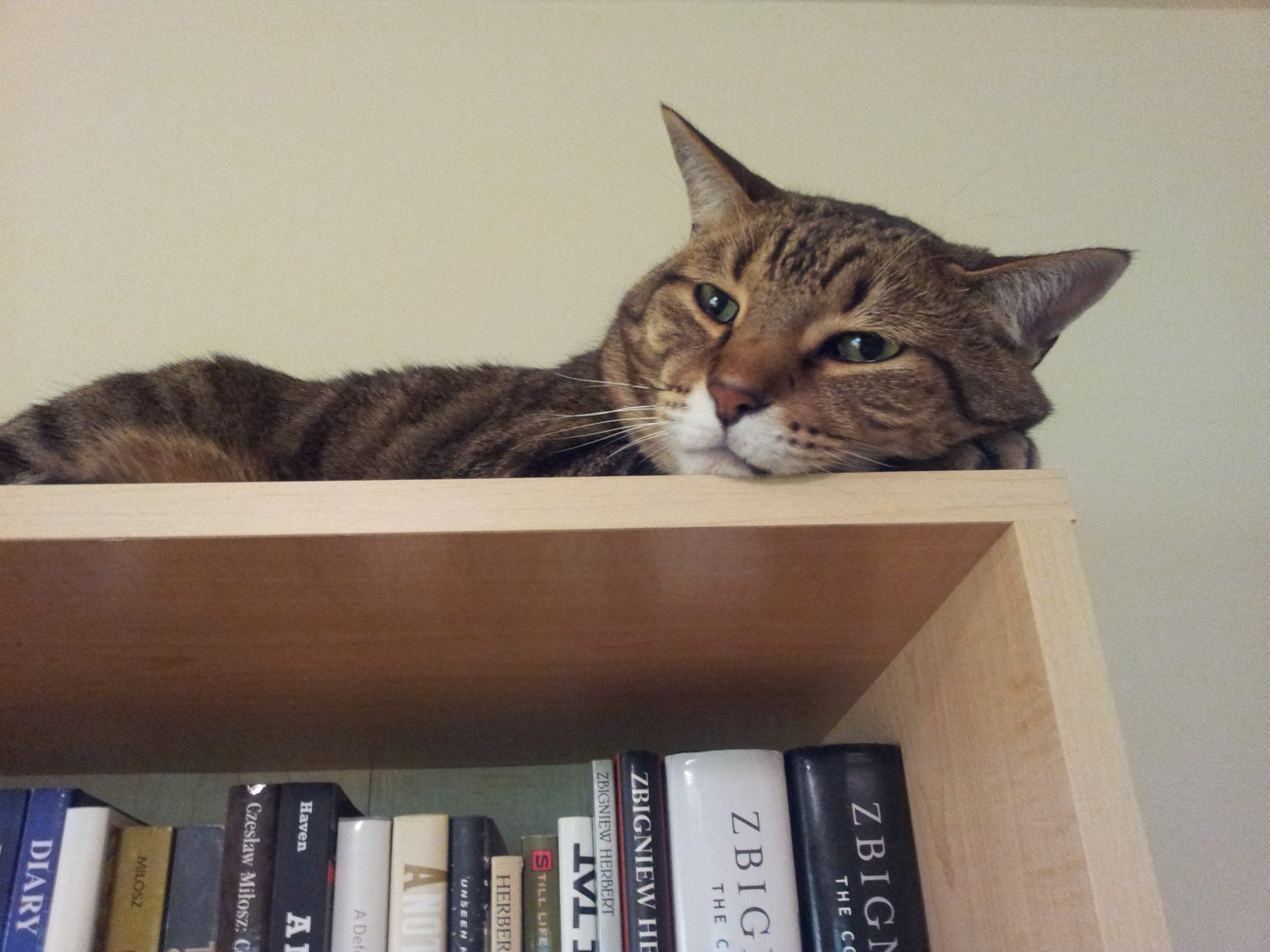
It’s been awhile since we heard from our friend Patrick Kurp, who runs the excellent blog, Anecdotal Evidence. It’s been awhile since we’ve heard from pretty much from anyone, hunkered down over a book manuscript as we are. However, he sent me this recent photo to add to our gallery of best book cats. This one is his own feline, Hurricane, who is keeping on top of Polish literature, as you can see below. I recognize two of my own books on the shelf: An Invisible Rope: Portraits of Czesław Miłosz and Czesław Miłosz: Conversations. It’s nice to be nestled in-between two beloved poets: the Polish Nobel laureate himself, and Adam Zagajewski, via his prose,  In Defense of Ardor: Essays and his memoir, Another Beauty. Why such an ominous name for this handsome tabby?  Patrick explains that his son Michael, then about four, named him in December 2005, when the furball showed up at the door just a few months after Katrina and Rita. Welcome to our pages, Hurricane! (Photo: Sylvia Wood)

WP_000724

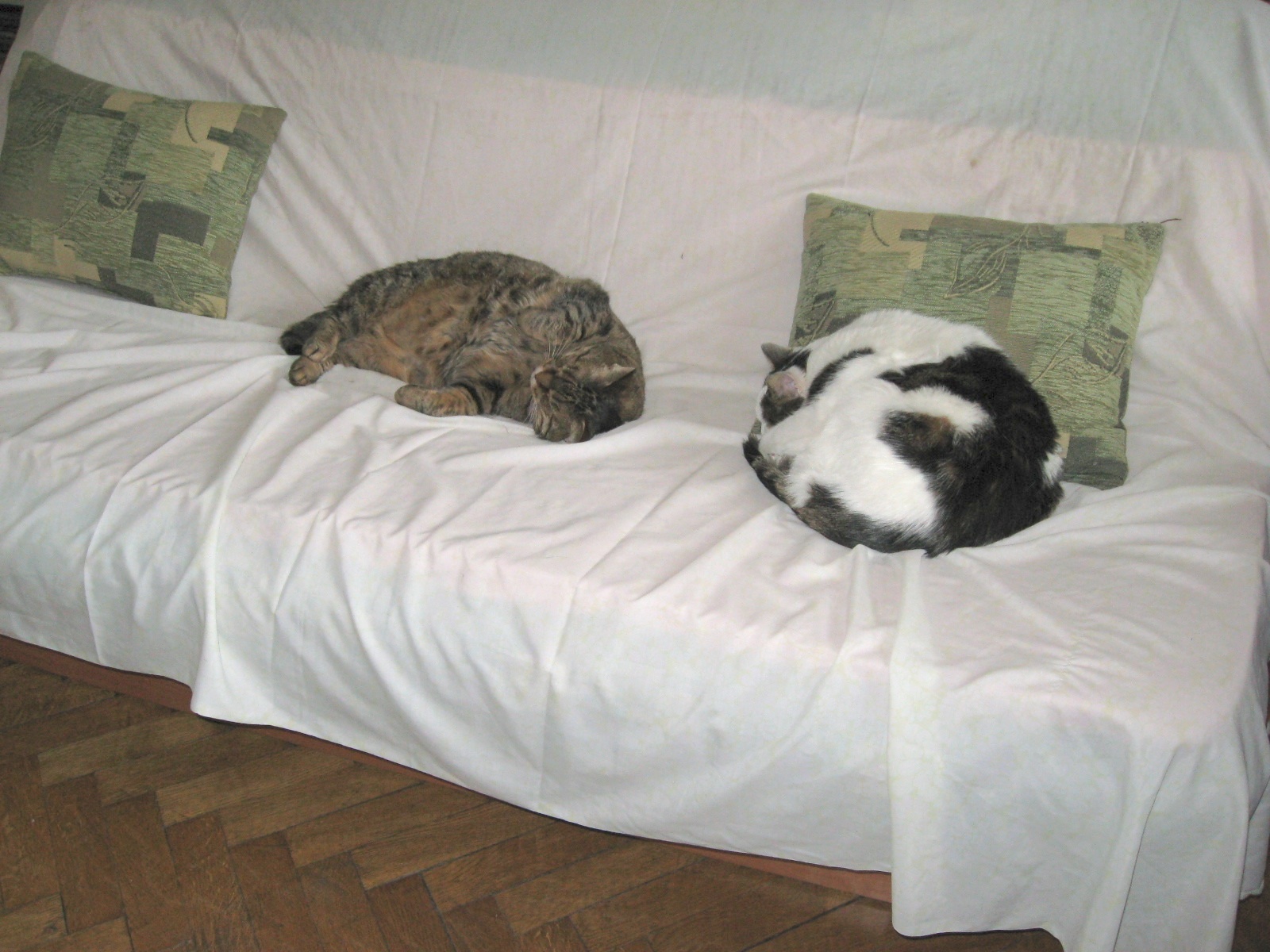
Postscript: Patrick posted about his “Pole Cat” today here. He pointed out that Zbigniew Herbert (who shares the bookshelf) would have approved. Don’t we know it. We visited the poet’s cat a few years back in Warsaw. That’s Herbert’s big cat Szu-szu at right, and Mouszka at left, a later addition to the family by Madame Herbert. Stroking Herbert’s cat made a wonderful frisson of connection with the poet through time.

szu-szu

Can a dog be the test of a good poem?

Share

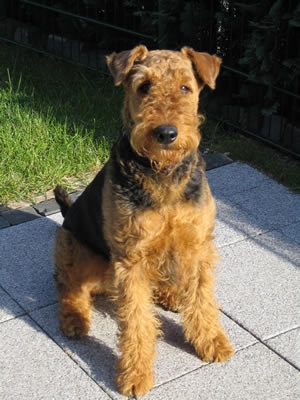
Winters loved Airedales.

Patrick Kurp‘s blog Anecdotal Evidence is always a treat, but it is particularly excellent today, as it celebrates the birthday of two poets: the late Yvor Winters and very current Les Murray, who identifies himself as “a very high-performing Asperger’s.”

How can we avoid sentimentality?  According to Murray, “I think it’s probably in not telling lies. There’s always something false about the sentimental. When it’s feeling without lies, it’s terribly scary, but it’s not sentimental.”

Winters defined a poem as “a statement in words about a human experience,” and later in the same text added, “special pains are taken with the expression of feeling.”

He wrote elsewhere:  “The basis of evil is in emotion; Good rests in the power of rational selection in action, as a preliminary to which the emotion in any situation must be as far as possible eliminated, and, in so far as it cannot be eliminated, understood.”

These are two very different poets, but one thing they had in common was their love of dogs.  “Here’s a test for both poets,” says Patrick. “If any subject invites sappy sentimentality, wallows in whimsy, it’s dogs. Their extreme poetic admirers want to be admired for their love of canines. To address the subject in poetry without falsity or self-admiration means swimming against the warm fuzzy tide.”

See how both poets fare in Patrick’s essay, with two poems on the death of their dogs.  Well worth the read.  It’s here.

Meanwhile, happy birthday, Les Murray and Yvor Winters, wherever you are in time and space.

Miłosz at the Faculty Club

Share

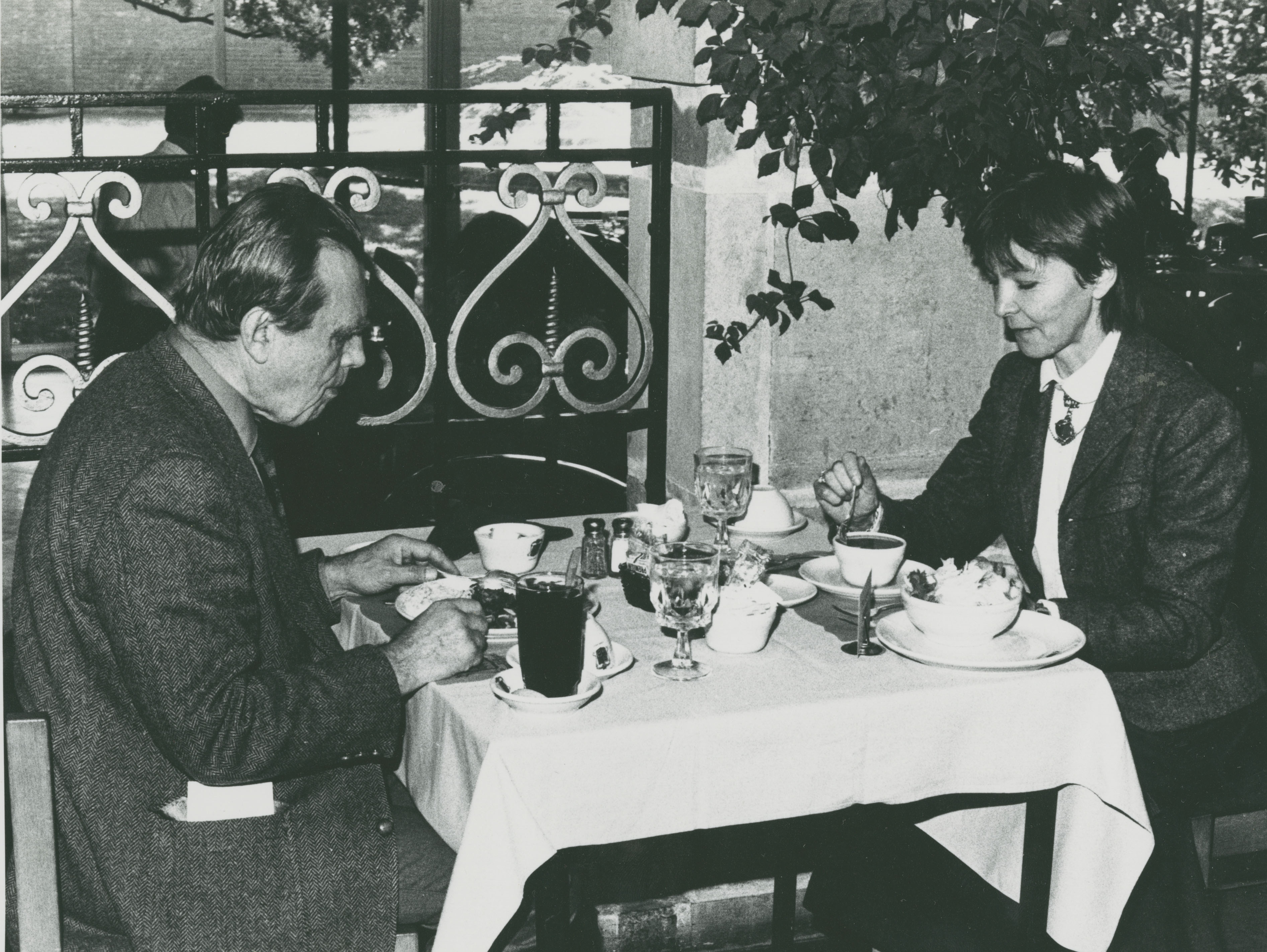
My friend Mike Ross immediately thought of me when he read today’s post from “The Rice History Corner” blog at his alma mater, Rice University in Houston.  (I’m flattered.)  It features a Czesław Miłosz having lunch at the university’s faculty club with Prof. Ewa Thompson.  The Nobel poet recorded a program for KUHT-TV with Thompson and other Houston writers and scholars, and also gave a talk at the University of Houston.

Zagajewski provided another Houston link

The column is written by the university’s “centennial historian,” who doesn’t give her name.  She has good taste, though:  Patrick Kurp‘s blog Anecdotal Evidence is at the top of her blogroll.  Moreover, she delights in such poets as Zbigniew Herbert and Adam Zagajewski, as well as Miłosz.

The connection between Miłosz and Houston rang a bell in other ways.  Adam Zagajewski arrived on the campus of the University of Houston in 1988, and later launched a program connecting the students in Texas with Miłosz in Kraków.  So the link between Miłosz and Houston is stronger than might be supposed.

Meanwhile, in my perambulations around the web, I found Christopher Hitchens‘s “The Captive Mind Now,” words written on Miłosz’s death in 2004, in which he revisits the landmark Captive Mind and “ketman,” and somehow brings Azar Nafisi‘s Reading Lolita in Tehran into the mix, with its dedication from the Polish poet’s “Annalena”:

To whom do we tell what happened on the
Earth, for whom do we place everywhere huge
Mirrors in the hope that they will be filled up
And will stay so?

“The Hitch” concludes:  “The long-term achievement of Milosz was to have scrutinized, not just in between but clean through, and well beyond, the party ‘lines’ that claim for themselves exclusive truth. In doing so he shamed the so-called intellectuals who managed the ugly trick of denying freedom to their own minds, the better to visit the same deprivation upon others.”


Quarterly Conversation: “For Brodsky, poetry was a ticket out of this world.”

Share

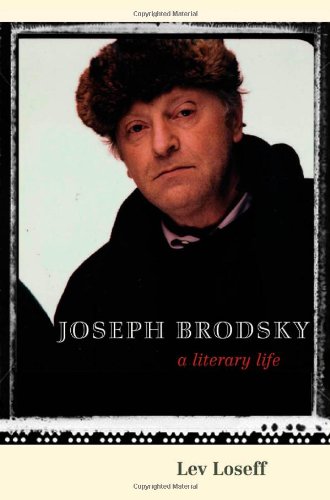
A brilliant article in today’s Quarterly Conversation offers a fresh take on Lev Loseff‘s much-discussed Joseph Brodsky: A Literary Life. Marbled with impressive insights, it represents the finest standards of literary journalism, and should establish a new highpoint for the rapidly disappearing genre … let me dissemble no further, dear reader, I myself wrote the review.

A hackneyed opening gambit, I know … So let’s cut to the chase with a little shameless plugging via an excerpt:

“For Brodsky, poetry was a ticket out of this world. And in Russia, the poet is godlike. To know both is to understand the context for this erudite and often wise book—a work more likely to find readers among current fans, rather than find new ones. Yet Joseph Brodsky: A Literary Life is simultaneously enlightening, perplexing, and exasperating. The knowledgeable reader is left feeling rewarded and cheated at once, as if invited to a sumptuous banquet and offered only canapés. The protean figure remains beyond the range of these pages. The door remains at once half open and half closed to us.

You’ll read no secrets in Loseff’s volume. But neither will you get Brodsky’s bewildering, mesmerizing blend of hubris and humility, charm, and abrasiveness. Brodsky was a Catherine Wheel of metaphysical brilliance, scathing insults, and intellectual splendor.

Russia’s longing for pure poet-heroes held an incandescent grip on the Russian psyche, and the nation bleaches its bards to an unearned whiteness. Writers have always claimed special moral exemptions for themselves—wishing to be something grander than simply a guy who wields a ballpoint or stares at an empty computer screen. Brodsky upped the ante.

He told Loseff that the lesser cannot comment on the greater, the mice cannot review the cat. Was he exempting himself from criticism? Certainly. But Brodsky was also the first to bend his knee to those he saw above him on the ladder—from Ovid to Auden. The sense of hierarchy may rub against the egalitarian Brodsky who once wrote, ‘Evil takes root when one man starts to think that he is better than another,’ but the contradiction can be chalked up to his complex humanity as easily as his self-blindness.”

Read the rest here.

Quarterly Conversation is run by Scott Esposito. It’s another valiant online effort to sustain serious literary criticism – and that’s no hyperbole.

It’s gotten some rave reviews, from The Nation, among others.  From Columbia University Press: “It would not be a stretch to say that The Quarterly Conversation has come to be one of the better places—online or in print—to turn to for literary and cultural criticism.”  According to Canongate Books’s “Meet at the Gate”: “If a website was able to drool, Meet At The Gate would be drooling over The Quarterly Conversation. It’s what online literary magazines are meant to be.”

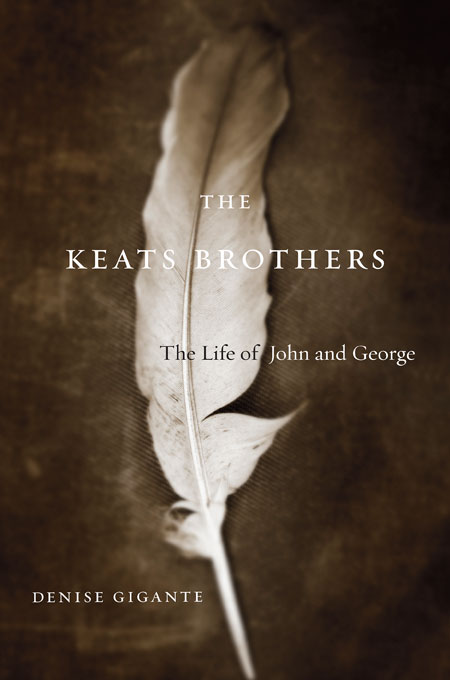
The always insightful Patrick Kurp, by the way, reviews Denise Gigante‘s The Keats Brothers: The Life of John and George in the same issue – it’s here (and the Book Haven Q&A with Denise is here).  An excerpt from Patrick’s review:

… despite Gigante’s standing as an academic in a major university English department, she is a writer, not a slinger of theory or political poseur. Out of primary documents she reanimates a major poet and his world, and crafts a transatlantic adventure story with a novelist’s gift for moving narrative along. In brief, Gigante convincingly demonstrates that George Keats, the poet’s junior by sixteen months, served as John’s “muse.” In an 1818 letter to Ann Wylie, John says: “My brother George has ever been more than a brother to me, he has been my greatest friend.”

Eros as delusion: Poet Helen Pinkerton tips her hat to Thomas Aquinas (and Yvor Winters)

Share

Helen's hero ... as seen by Bernardo Daddi

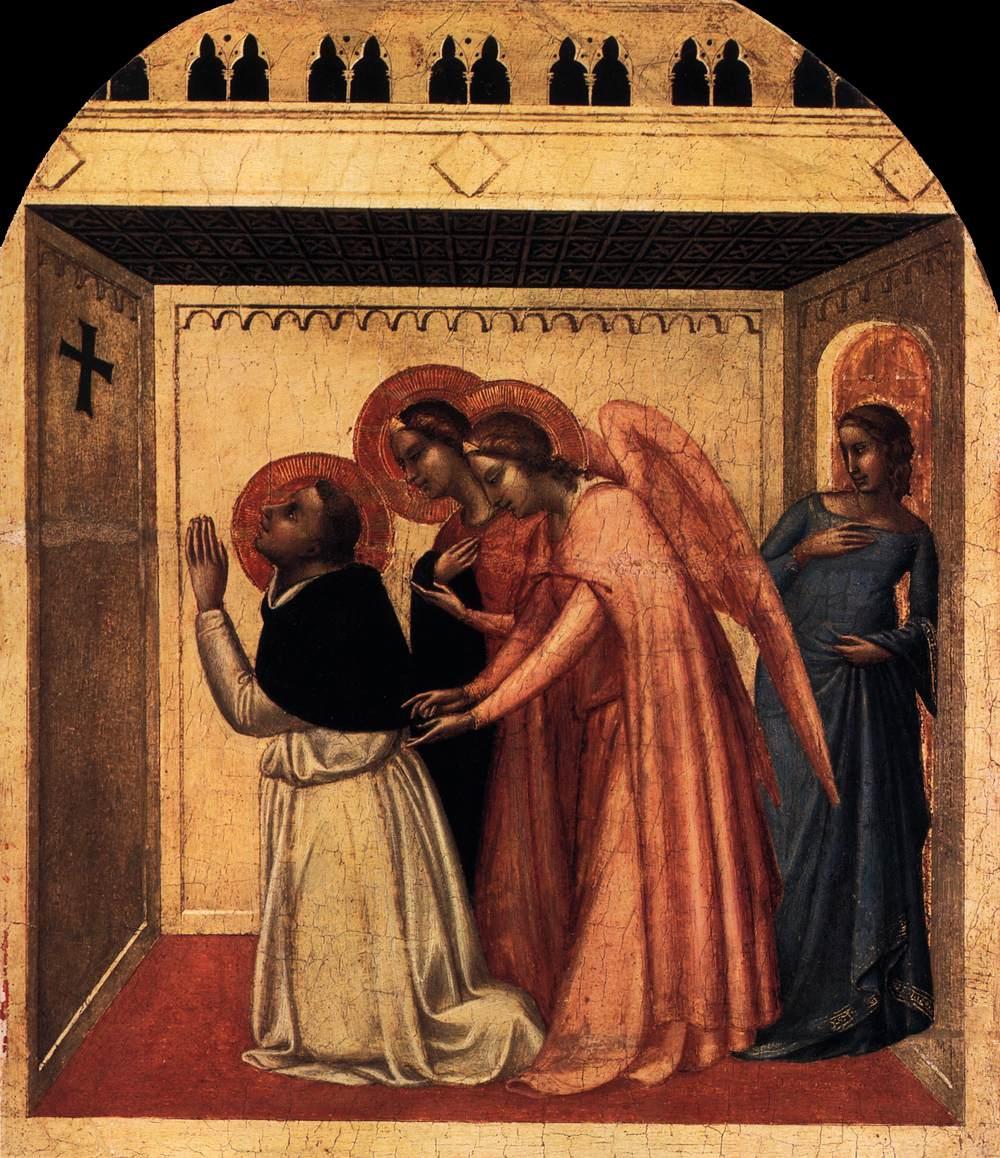
Helen Pinkerton‘s interview in Think Journal, “The Love of Being,” starts out slowly – but by the time she gets to Thomas Aquinas, she’s on a tear.

The octogenarian poet came from hardscrabble upbringing in Montana. Her father died in a mining accident when she was 11, leaving her mother with four children to raise – well, if you want that story, you can read it in my own article about her here.

Then, she landed at Stanford, where she was one of Yvor Winters‘ inner circle, along with folks like Janet Lewis, Thom Gunn, Edgar Bowers, Turner Cassity, and J.V. Cunningham.  Although she intended to be a journalism major, her plans changed abruptly: “Winters’ level of teaching, the kinds of topics he expected us to write about, the seriousness of his consideration of literary and philosophical questions of all sorts simply brought out in me a whole new capacity for thinking and writing.”  After that, and a course on narrative with Cunningham, she launched an alternative career as a poet and a Herman Melville scholar, too.

After that experience, Pinkerton found that her subsequent graduate work at Harvard “was a breeze and made little mark on me as a poet or a scholar.”

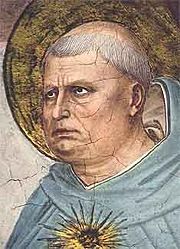
Fra Angelico's Aquinas

Winters described Pinkerton’s poetry as “profoundly philosophical and religious,” and she discusses how  Ben Jonson scholar William Dinsmore Briggs led her in that direction, though she never met him – his teaching on medieval and Renaissance learning “permeated” the work of Winters and Cunningham, she said.  Helen became preoccupied with the Thomistic notion of esse, and sees “nothingness” as the primary temptation of humankind.  Hence, her poem, “Good Friday” (included in her book Taken in Faith), which claims:

Nothingness is our need:
Insatiable the guilt
For which in thought and deed
We break what we have built.

But more than temptation – it is delusion.  “The chief aspect of the drive is the metaphysical assertion that nothingness is the real reality – that there is no real being.”

She links this drive with the thinking of the 19th and 20th century, particularly romanticism, which she sees as a drive toward annihilation.  “Real love is the love of being. Eros is the love of non-being”:

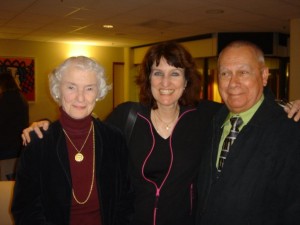
Helen, me, and the late Turner Cassity

I found my way out of it by grasping the Thomistic idea of God as self-existent being. There is no nothingness in reality. It is a kind of figment of the imagination. To believe that there is is a verbal trick – a snare and a delusion. Much of modern philosophy (Hegel, the Existentialists, et al.) are caught up in this delusive state of consciousness.

I do scorn and critique (always) “romantic religion” – or the religion of eros … as I call it – and I did see in others, as well as in myself – a pervasive “unavowed guilt” in our culture – based on an unavowed longing for “nothingness.” This is a kind of obsession of mine in my early thinking (and consequently in my poems) after I came to a realization of the nature of my consciousness. What was driving me to be dissatisfied with everything and everyone, including myself, was this “eros,” this craving for extremes of feeling, for a kind of perfection in things and in others.

Patrick Kurp has written some lovely stuff about Helen at Anecdotal Evidencehere, and here, and here … oh, just type “Pinkerton” into his search engine.  There’s lots.  I’m proud to have introduced them.

Meanwhile, an Yvor Winters reading was always mesmerizing.  You can get a taste of it in this recording from San Francisco’s Poetry Center on Valentine’s Day, 1958:

Yvor Winters Reading – 1958

“Only silence is innocent”: Zagajewski on Rilke, irony, and the future of poetry

Share

they warm themselves...

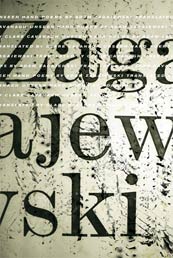
Kraków sustains a steady descant through the pages of Adam Zagajewski‘s new collection, Unseen Hand – most often, it’s Kazimierz, the old Jewish quarter where I stayed in May:

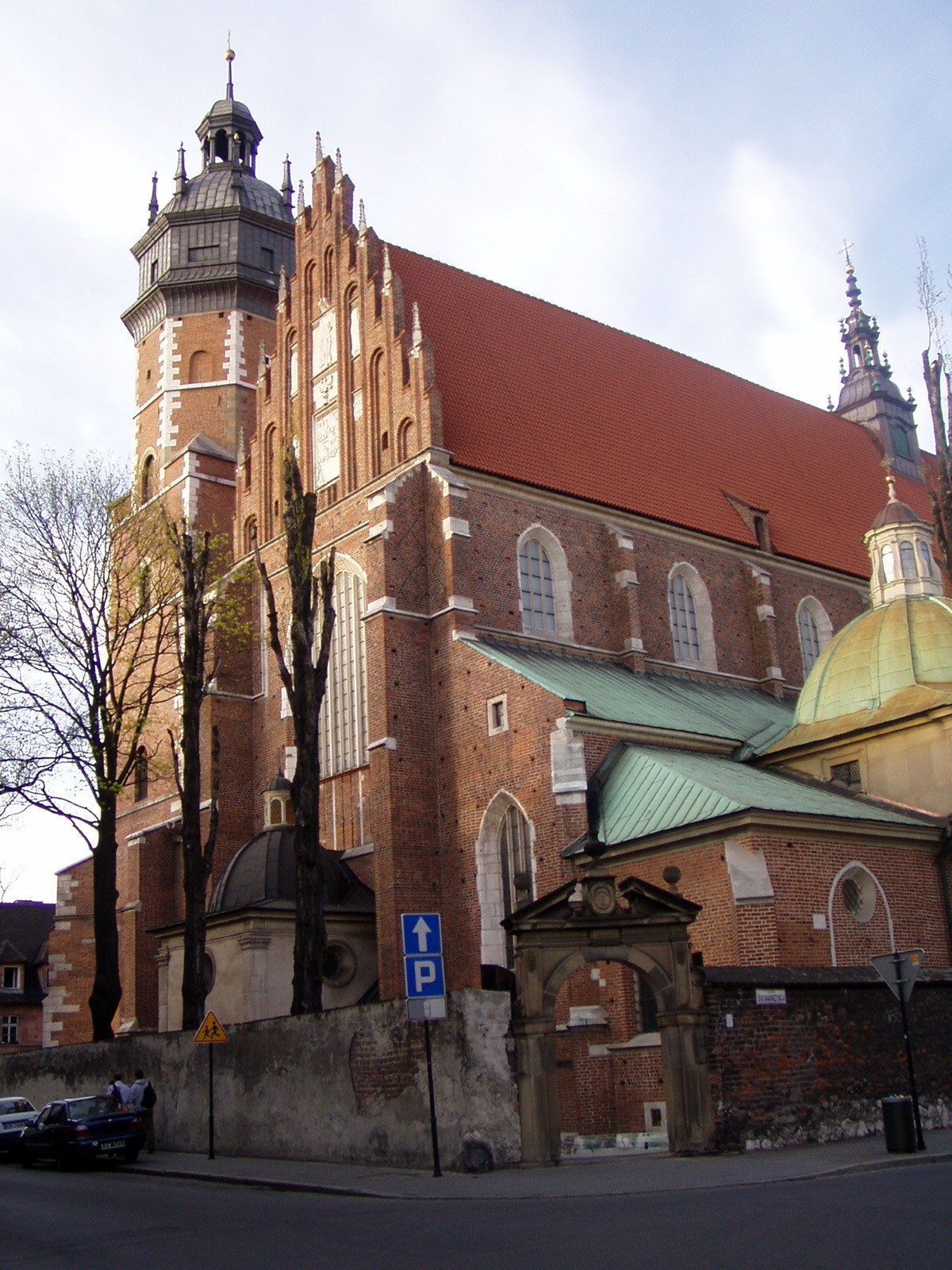
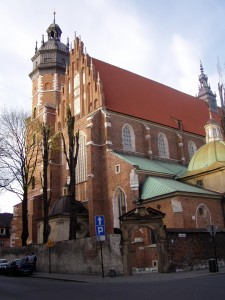
In the Church of Corpus Christi I lit candles for my dead,
who live far off – I don’t know where
– and I sense they warm themselves in the red flame too
like the homeless by a fire when the first snow falls.

That’s Corpus Christi, outside my window in Wolnica Square.  And one poem for St. Catherine’s Church, and at least three references to Jozef Street, catty-corner to Wolnica Square.  “Joseph Street in Winter,” is dedicated to Joachim Russek, the head of the Judaica Foundation, a tutelary spirit for my first trip several years ago:

In winter Joseph Street is dark,
a few pilgrims flounder through wet snow
and don’t know where they’re going, to which star,

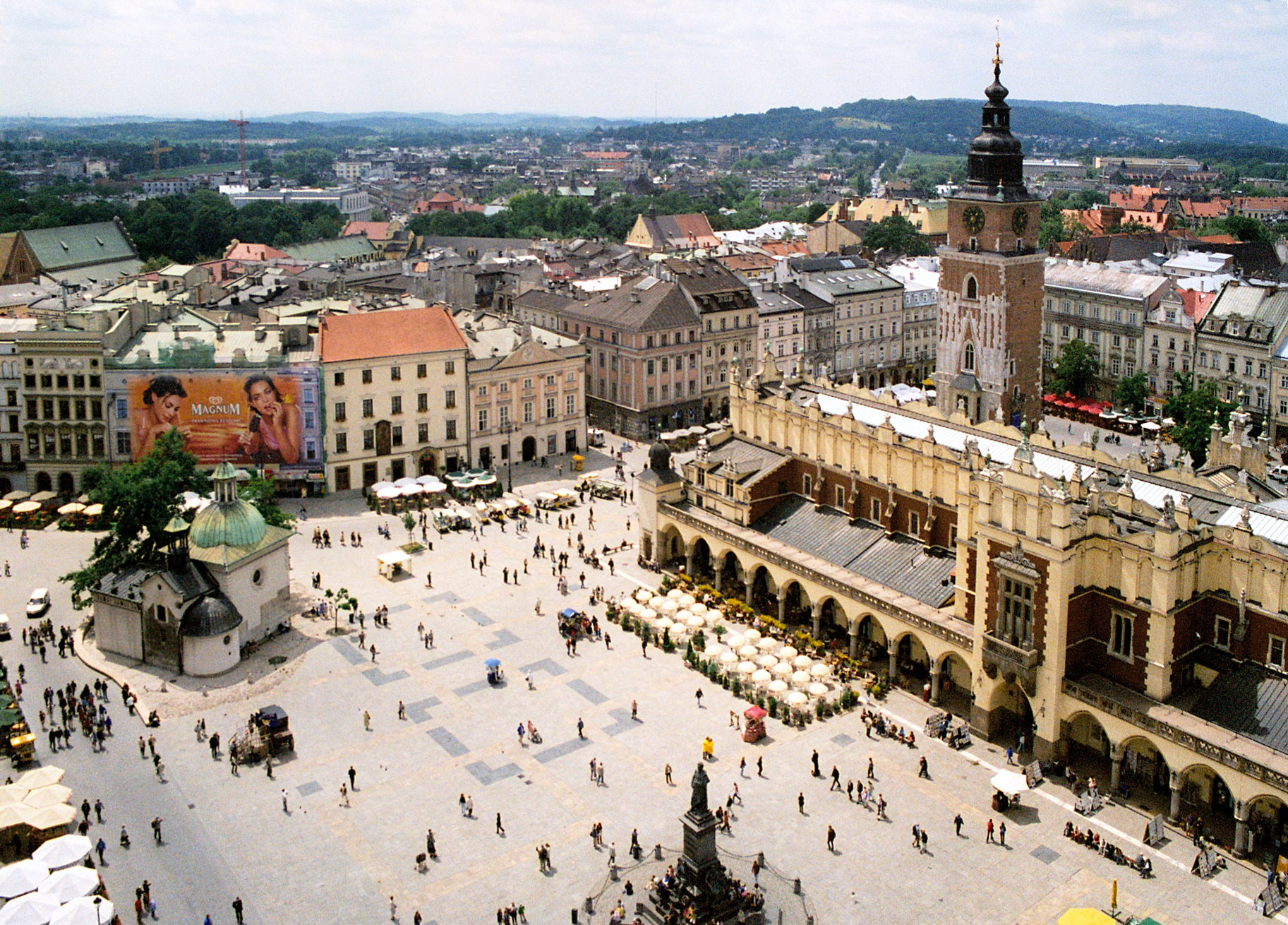
And two references to pigeons – charitable, because I know Adam finds them contemptible.  It was the subject of our first discussion when we met in Rynek Główny, which was swarmed with pigeons.
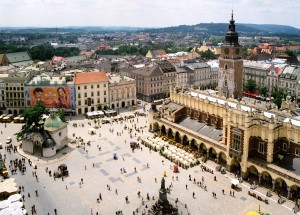
He didn't like the pigeons.

I actually “met” Adam during an online interview six or seven years ago for an article that was published Poetry Foundation article).  But much of the short interview never made it to the final piece.  For example, I asked him what gave rise, to a generation of giants:

“Good question. I have many contradictory explanations. One of the main ones is that the attention given to the meaning of human life in radical circumstances  (as opposed to the hermetic direction, or to a purely formal quest) in Polish poetry after the WWII catastrophe was a very important move: it gave the dying Modernism a new energy. It ‘rehumanized’ a highly sophisticated but a bit empty palace of modern poetry.”

On irony:

“Well, the disease of irony seems to be well identified. I adore irony as a part of our rich rhetorical and mental apparatus but not when it assumes the position of a spiritual guidance. How to cure it? I wish I knew.”
"We'll be living in small ghettos..."

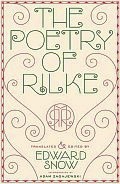
He has earned my own fealty, not only for his poetry, but for his many kindnesses.  So I was pleased when I read on Ann Kjellbergs website for her journal Little Star, a lengthy excerpt from his introduction to Edward Snow’s translations of Rainer Maria Rilke. (It was also excerpted by Poetry Daily here.) Adam is much in demand for introductions, blurbs, reviews, and essays.  This introduction is one of his best (I excerpt from Ann’s excerpts – and by the way, thank you, David Sanders, for pointing out the piece in Poetry News in Review):

“We have a new sorrow today: after the terrible catastrophes of the twentieth century, after the disasters that entered both our memory and imagination, we tread gingerly at the point where poetry meets society; “Don’t walk beyond this line,” as the sign on every jetliner’s wing warns us. And yet the central issue for us is probably the question of whether the mystery at the heart of poetry (and of art in general) can be kept safe against the assaults of an omnipresent talkative and soulless journalism and an equally omnipresent popular science—or pseudo-science. It also has a lot to do with the weighing of the advantages and vices of mass culture, with the influence of mass media, and with a difficult search for genuine expression inside the commercial framework that has replaced older, less vulgar traditions and institutions in our societies. In this respect, it’s true, poets have less to fear than their friends the painters, especially the successful ones, who, because of the absurd prices their works can now command, will never see their canvases in the houses of their fellow artists, in the apartments of people like themselves, only in vaults belonging to oil or television moguls who don’t even have time to look at them. Still, the stakes of the debate and its seriousness are not very different and not less important than a hundred years ago.
We know that the main domain of poetry is contemplation, through the riches of language, of human and nonhuman realities, in their separateness and in their numerous encounters, tragic or joyful. Rilke’s powerful Angel standing at the gates of the Elegies, timeless as he is, is there to guard something that the modern era—which gave us so much in other fields—took away from us or only concealed: ecstatic moments, for instance, moments of wonder, hours of mystical ignorance, days of leisure, sweet slowness of reading and meditating. Ecstatic moments—aren’t they one of the main reasons why poetry readers cannot live without Rilke’s work? I mean here readers of contemporary poetry who otherwise are mostly kept on a rather meager diet of irony. The Angel is timeless, and yet his timelessness is directed against the deficiencies of a certain epoch. So is Rilke: timeless and deeply immersed in his own historic time. Not innocent, though: only silence is innocent, and he still speaks to us.”
From my interview (I had cited this in an earlier post last fall, when Adam’s name came up again for a Nobel), when I asked him about the future of poetry and poetry-lovers in the world of tweets and sound bites he said this:

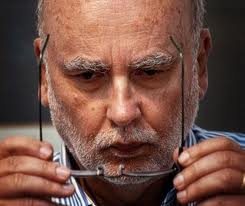
“We’ll be living in small ghettos, far from where celebrities dwell, and yet in every generation there will be a new delivery of minds that will love long and slow thoughts and books and poetry and music, so that these rather pleasant ghettos will never perish — and one day may even stir more excitement than we’re used to now.”

By the by,  Patrick Kurp of Anecdotal Evidence has a review of Unseen Hand here.