
Is it possible to collapse from too much love?

Share
Pont_de_l'Archevêché

At the Pont de l”Archevêché, “a forest of glittering objects…” (Photo: Francis Hannaway)

Some months ago we posted this, from Marilyn Yalom‘s How the French Invented Love:

During the summer of the [Dominique] Strauss-Kahn affair, I found myself walking behind the Cathedral of Notre Dame and wondering how I could finish this book. Had love in France become little more than a myth?  Were the French abandoning the ideal of “the great love” in favor of serial affairs?  Had seduction won out over sentiment? And then my eye was drawn to a strange sight. I saw, attached to the grille on the Pont de l”Archevêché crossing the Seine, a forest of glittering objects, small padlocks with initials or names on them, sometimes with dates or hearts: C and K, Agnes & René, Barbara & Christian, Luni & Leo, Paul & Laura, 16–6–10. There must be at least two or three thousand. And already, on the other side of the bridge, a few similar locks were clinging to the grille.  How long before that side would also be completely covered?

I hung around, enchanted by the spectacle, and was rewarded by the sight of two youthful lovers, who came across the bridge arm in arm, affixed a lock to the grille, drank from each other’s lips, and threw the key into the Seine.
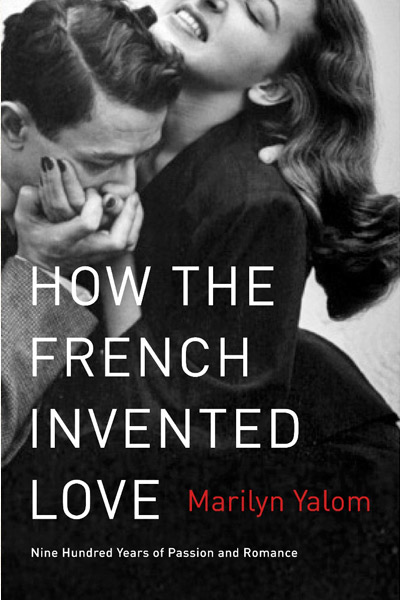
how-the-french-invented-loveWe wondered at the time … can love sometimes be too much? Could the burden of love be lighter?  Is it possible to collapse from too much love? Yes! And that’s exactly what happened:

… the celebrated bridge had to be evacuated at the weekend after part of the railing collapsed under the weight of love locks attached to it.

Police ordered visitors to leave and closed the footbridge after a 2.4-metre section of railing broke loose.

Since the phenomenon began in 2008 it has become a headache for city officials. Not only is the full 150-metre Pont des Arts covered in locks, but visiting lovebirds have targeted other bridges in the French capital. Forty locks are reported to have been removed from the Eiffel tower. …

Protesters who say the thousands of locks are an eyesore and vandalism have long warned they are also a risk to the iron bridge, which is a listed monument, and launched a petition to have them removed. There are also campaigns on FacebookTwitter and Instagram.

The protesters wrote an open letter to the Paris mayor, Anne Hidalgo, saying the locks were “like a plague on our city’s historic bridges and sites.” They complained: “This is most apparent on the Pont des Arts, which has been terribly degraded, both visually and structurally In a few short years, the heart of Paris has been made ugly, robbing Parisians of quality of life and the ability to safely enjoy their own public spaces along the Seine, which has itself been polluted by thousands of discarded keys. The time has come to enact a ban on ‘love locks’ in order to return our bridges to their original beauty and purpose.”

The Guardian article is here. Or the BBC article here. One reader worried: “Does this mean that thousands of innocent tourists have now fallen out of love? Their dreams consigned to the watery depths of the Seine?” Another sniped: “Nothing says I love you like putting a padlock on a bridge in Paris.” I’d settle for a trip to Paris and a 7th floor walk-up on the Rue des Petits Champs.
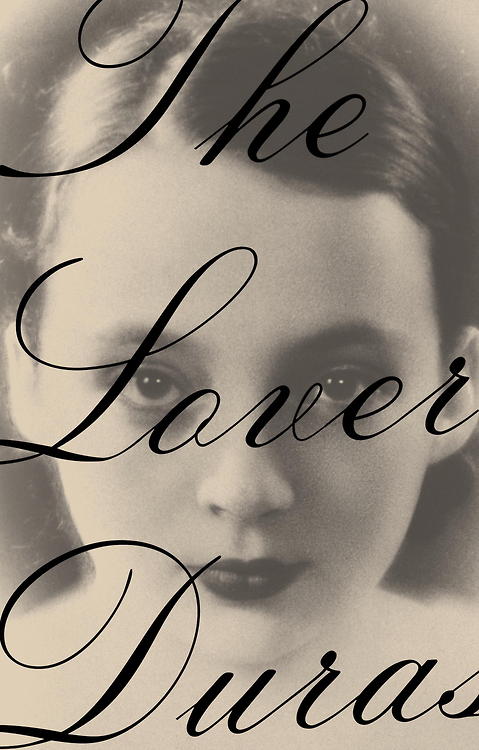
Stanford’s “Another Look” spotlights Marguerite Duras’ The Lover

Share

Stanford’s book club honors the famous French writer’s centenary with a May 12 discussion of The Lover, her autobiographical tale of her scandalous teenage affair with an older Chinese millionaire, set in her native Saigon. Read more below.

.

pantheon-coverLong before most Americans could find Vietnam on a map, the French ruled Indochina, and its Chinese, French, and native Annamese denizens lived in an unequal colonial stew. So when a 15-year-old French schoolgirl had a passionate affair with a wealthy 27-year-old Chinese lover in Saigon, it created a scandal. The affair eventually became a book, and the book became a masterpiece.

The writer, Marguerite Duras, would tell the story again and again, throughout her lifetime, but never more compellingly than in The Lover, which received a prestigious Prix Goncourt when it was published in 1984, and sold two million copies.

Now, in Marguerite Duras’s centenary year, the “Another Look” book club is celebrating the author and her book at 7:30 p.m., Monday, May 12, at the Stanford Humanities Center’s Levinthal Hall. The panel will be moderated by Blakey Vermeule, professor of English, with her colleague Paula Moya, professor of English, and Stephen Seligman, a psychiatrist and professor at the University of California, San Francisco. The event is free and open to the public.

Vermeule had read the short novel as a high school student, but on rereading it, “I was gobsmacked,” she said. “It’s one of these masterpieces that gets rediscovered again and again. It’s a very intense book, so powerful it had slipped my mind what a truly great and subtle work of art it is.” With the centenary, she thought it was an excellent moment to revisit the book the New York Times Book Review had called “powerful, authentic, completely successful … perfect.”

Duras’ simple, terse writing style reads “as if language itself were merely a vehicle for conveying passion and desire, pain and despair,” wrote British author and journalist Alan Riding. “The mysteries of love and sex consumed her, but she had no room for sentimentality in her works, or indeed, in her life.”

“I write about love, yes, but not about tenderness,” she had told him in a 1990 New York Times interview. “I don’t like tender people. I myself am very harsh. When I love someone, I desire them. But tenderness supposes the exclusion of desire.”

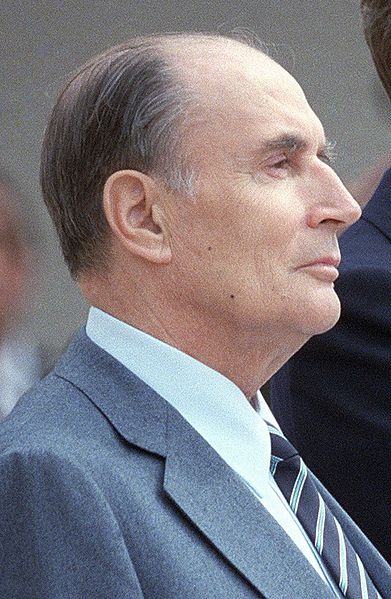
Mitterrand

A presidential pal

Duras was born in Gia Dinh, near Saigon. Her father fell ill and returned to France, where he died. Her widowed mother, a teacher, was bankrupted in a shady land deal. The family struggled as impoverished colonials in a small tight-knit, gossiping community. Duras recalls an abusive mother who had severe bouts with depression, a drug-addicted brother who beat his sister fiercely and stole from the family (and even its servants), and a beloved younger brother who died young. When she met a Chinese millionaire on the ferry crossing the Mekong River, the teenager saw a doorway to a different world. The affair continued until Duras returned to France to finish her education at 18.

In France, she worked in the French Résistance in a team under the direction future French President François Mitterand, who remained a lifelong friend. After the war, she became a member of the French Communist Party. Duras is often categorized with the writers of the postwar “nouveau roman,” a movement that loosened the grip of plot- and character-driven narrative, blurring the boundaries of time and space, but Duras resists easy categorization. She experimented with novels, plays, films, essays, journalism, and memoir. She was fascinated, in particular, by the possibilities of film, most notably writing the screenplay for Alain Resnais‘s 1960 classic, Hiroshima, Mon Amour.

She wrote The Lover at 70, when she had become a tiny old woman, her body wracked by alcoholism and cigarettes, giving interviews often read like a parody of what a French avant-garde writer is expected to sound like. She told the story in different ways with widely divergent details, so much so that until the discovery of an unpublished diary, there could be doubts that the affair had happened at all.

“She had an intensive, almost anti-social capacity to tell the story the way she wanted to tell it, in all its violence and ugliness,” said Vermeule. “The need to be utterly solitary, and socially antipathetic – very rarely does one see it in women writers. It’s not a pose they claim,” she said.

“This book is so very psychoanalytic. She’s clearly under that spell. Look at the nonlinearity of the story. As narrrator, she is almost dissociated from herself, moving from first to third person and back.”

The_lover

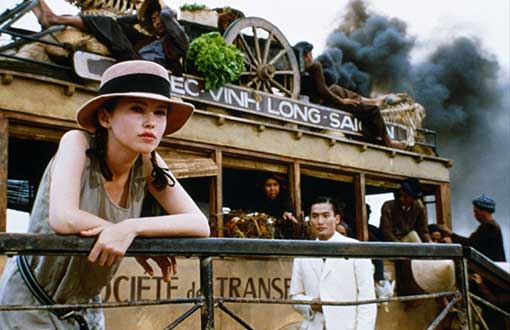
The 1992 film that irked her…

Duras quarreled with film director Jean-Jacques Annaud as they collaborated on the 1992 film of the book, and retaliated with 1991’s The North China Lover, as a way of reclaiming her story. But no version before or since had the luster of The Lover. According to Stanford scholar Marilyn Yalom writing in How the French Invented Love, “She could transform a somewhat sordid affair into a mutually passionate romance and project into posterity her vision of love as an irresistable force that penetrates through the skin, regardless of its color.”

That vision continues to transfix readers, and The Lover continues to draw fans, decades after its first publication. In The Independent, South African playright and novelist Deborah Levy wrote in 2011, “The Lover does not just portray a forbidden sexual encounter of mind-blowing passion and intensity; it is also an essay on memory, death, desire and how colonialism messes up everyone.”

“Marguerite Duras was a reckless thinker, an egomaniac, a bit preposterous really. I believe she had to be. When she walks her bold but ‘puny’ female subject in her gold lamé shoes into the arms of her Chinese millionaire, Duras never covertly apologises for the moral or psychological way that she exists.”

***

The “Another Look” book club focuses on short masterpieces that have been forgotten, neglected or overlooked – or may simply not have gotten the attention they merit. The selected works are short to encourage the involvement of the Bay Area readers whose time may be limited. Registration at the website anotherlook.stanford.edu is encouraged for regular updates and details on the selected books and events.


Lit Crawl, Litquake, and the City of Love…

Share
Pont_de_l'Archevêché

At the Pont de l”Archevêché, “a forest of glittering objects…” (Photo: Francis Hannaway)

clayton San Francisco’s Litquake kicked off last weekend, and one of the opening events took place close to home – at the deathless (literally, so far) Kepler’s bookstore in Menlo Park.  In all likelihood, I won’t be able to attend any other events this year, but there was no excuse for not toddling over to Menlo Park, especially since a friend, Marilyn Yalomwas one of the writers scheduled for the reading.

A pleasant but exhausted woman named Jane Ganahl, one of the Litquake co-founders (download the schedule here), told the audience that the place to be this weekend is Lit Crawl, Litquake’s signature event.  Participants are asked to dress for the night in a classic literature T-shirt, for sale at the Lit Crawl headquarters at 518 Valencia Street, purchase a cocktail, and tip the bartender.

chessmanAt the event, the organizers threaten us with “30 bearded men singing at a barbershop, a post-mastectomy stripper, a Twitter novelist, a Holocaust survivor, award-winning TV writers, a professional hair model, and the executive director of NaNoWriMo.” There’s more: readings inside a botanical brewery, a consignment store, and a rug retailer.  Plus an open mic.  I won’t be going. The idea of staggering about the noisy streets of the Mission District with a stack of books in one hand and a martini in the other leaves me cold – and at this time of year, this will be a literal, not figurative, cold.  Another reason to show up at Kepler’s … if one needed a reason.

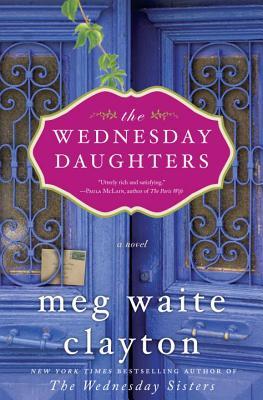
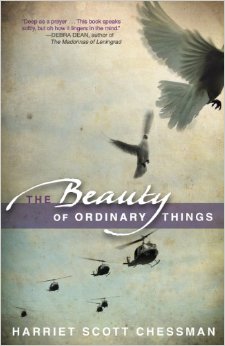
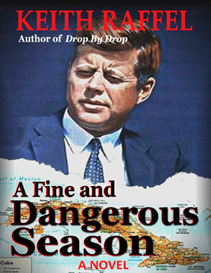
raffelAt Kepler’s, Harriet Scott Chessman read from her new book, The Beauty of Ordinary Things, a novel in two voices, one a Vietnam vet and the other a novice at a Benedictine abbey in rural New Hampshire.  Meg Waite Clayton read from The Wednesday Daughters, a sequel to the Wednesday Sisters, focusing on a group of women combing through a tangled family history in England’s Lake District.  The only male in the group, Keith Raffel, read A Fine and Dangerous Season, a thriller spun from the “what ifs” that flow from John F. Kennedy‘s fall quarter at Stanford in 1940.  Michelle Richmond read from her forthcoming novel, Golden State, which takes place on a single day when California votes for secession. It’s due out in February. Ellen Sussman read from her novel, The Paradise Guest House, which explores one survivor’s coming to grips with the 2002 terrorist bombings in Bali.  You’ll notice I’ve listed everyone alphabetically?  That’s the order in which they read.

Marilyn’s last name begins with a “Y.”  She finished the reading with this, from How the French Invented Love:

how-the-french-invented-loveDuring the summer of the [Dominique] Strauss-Kahn affair, I found myself walking behind the Cathedral of Notre Dame and wondering how I could finish this book. Had love in France become little more than a myth?  Were the French abandoning the ideal of “the great love” in favor of serial affairs?  Had seduction won out over sentiment? And then my eye was drawn to a strange sight. I saw, attached to the grille on the Pont de l”Archevêché crossing the Seine, a forest of glittering objects, small padlocks with initials or names on them, sometimes with dates or hearts: C and K, Agnes & René, Barbara & Christian, Luni & Leo, Paul & Laura, 16–6–10. There must be at least two or three thousand. And already, on the other side of the bridge, a few similar locks were clinging to the grille.  How long before that side would also be completely covered?

I hung around, enchanted by the spectacle, and was rewarded by the sight of two youthful lovers, who came across the bridge arm in arm, affixed a lock to the grille, drank from each other’s lips, and threw the key into the Seine.


Marilyn Yalom is having a good year – and so is How the French Invented Love

Share

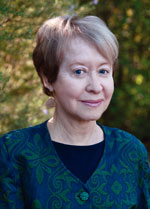
yalomMarilyn Yalom, author of How the French Invented Love, dropped me a line to tell me her book has been noticed in high places (read more about it here and here and here).

She’s just been nominated for a Phi Beta Kappa Society Christian Gauss Award, which carries a $10,000 prize.  The prize is offered for literary scholarship or criticism.

The other nominated books are are:  Charles Dickens and ‘Boz’: The Birth of the Industrial-Age Author, by Robert L. Patten; Jane Austen’s Cults and Cultures, by Claudia L. Johnson; The Long and Short of it: From Aphorism to Novel, by Gary Saul Morson; and The Worlds of Langston Hughes: Modernism and the Translation in the Americas, by Vera M. Kutzinski.

how-the-french-invented-lovePrevious award winners have included books written by eminent authors such as Harold Bloom, Christopher Benfey, and Marjorie Garber.

That’s in addition to the earlier news that she’s been nominated for the American Library in Paris Book Award, given to the best book of the year in English about France or the French-American encounter.  The 2013 book award jury is high-powered:  Diane Johnson, Adam Gopnik, and Julian Barnes.

The winner of the award receives a prize of $5,000. But this may be the best part: the winner is invited to Paris, with air travel and accommodation at the Library’s expense, for an award ceremony on and a public reading.

Both awards will be announced in October.  It will be an interesting month.  Stay tuned.

Remembering Dostoevsky scholar Joseph Frank: “He had no enemies.”

Share
JoeFrank

Joe in his Princeton days (Photo: Robert Matthews)

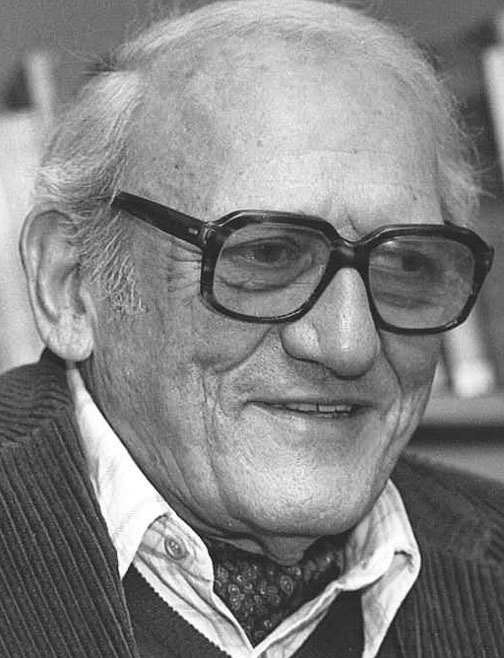
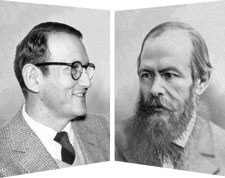
Among the quieter events in a busy week at Stanford: about a hundred friends, colleagues, students, and family members gathered at the Stanford Humanities Center to commemorate the life and work of one of Stanford’s most eminent figures, Dostoevsky scholar Joseph Frank … well, “Dostoevsky scholar” … he was so much more than that.

As author Jeffrey Meyers of Princeton noted during his talk that afternoon (his remarks are published in his retrospective here):

Learned, widely read, and well informed about a wide range of subjects, Joe could talk intelligently about almost anything. The depth of his knowledge was astonishing and delightful. We talked about our current work, classic and recent books, Russian writers from Gogol to Solzhenitsyn, major biographers, struggles with editors, conferences attended, favorite films (if not, for Joe, “too depressing”), mutual friends in Stanford and Berkeley, wide-ranging travels, current politics, children and grandchildren, jokes and literary gossip. It was especially interesting to compare our reviews of the same book, Olivier Todd’s excellent life of André Malraux. I urged him to read the novels of Olivia Manning, J.F. Powers, and James Salter; he retaliated, unfairly I thought, by suggesting the German philosopher Max Scheler, “the founder of the sociology of knowledge.”

I liked to hear Joe reminisce about distinguished writers who’d been his friends—Allen Tate, John Berryman, Ralph Ellison, Saul Bellow, Robert Lowell, Anthony Burgess, and Carlos Fuentes — and urged him (unsuccessfully) to write a memoir about them. He remembered Elizabeth Bishop telling him of her visits to Ezra Pound in St. Elizabeth’s Hospital in D.C. and getting books for him from the Library of Congress. He recalled seeing Mary McCarthy in a hospital in New York, just before she died, and her pressing his hand at the time. He’d met the reclusive South African novelist and Nobel Prize winner, J.M. Coetzee, and found him “quite laconic and reserved, but with a kind of genuine inner warmth with people he likes.”

Bill Chace, president of Emory, opened the memorial event with the remark, “If Joe were with us today …,” or words to that effect.  Nobody seemed to notice at the moment the lights flickered for a moment, and then came on again.  Well, it is easy to make too much of small things, but still, for this observer it was a poignant moment, as if Joe were saying, “Don’t write me off just yet!”  One comment from Bill Chace’s remarks that I scribbled in my program:  “He had no enemies.”  From what I knew of Joe, it was true … but how?  How does one get through a life like this one without accumulating any enemies?  Given Joe’s unconventional path through academia, there must have been dozens of jealous or resentful knives sharpened for him.

JoeFrank2Perhaps part of the secret was related by Marilyn Yalom in her remarks. She  recalled how Joe used to light up when she came into the room.  It was only later that she realized that his face lit up when anyone entered the room.  We all thought he only had eyes for us – but that was only a fragment of his genial charm.

Granddaughter Sophie Lilla, a freshman at New York University, recalled the story of Joe leaping off the bus in postwar Paris, a stop before his intended one. He had seen an attractive woman on the bus and didn’t want to let the opportunity slip.  And shortly afterward, he went so far as to marry her.  Sophie said she wished she had the nerve – but I suspect she does (she’s could pass for the woman who inspired the incident so many years ago, her grandmama Marguerite Frank).  The tributes were interspersed with Benny Goodman tunes, and Lensky’s aria from Tchaikovsky‘s Eugene Onegin, a favorite of his.

Stanford Slavic scholar Gregory Freidin was in Paris, but colleague Gabriella Safran read his remarks – you can, too.  Grisha posted his talk on his blog The Noise of Time here.  An excerpt:

Great musicians, it is said, do not choose their calling—music chooses them. Reading and rereading Joseph Frank’s writings, it seems the spirit of modernity itself chose him to be its voice—a great choice for the age when brute force remaking the world was matched and animated by a titanic struggle of ideas.

Joseph and Marguerite Frank

Joe and the lady he saw on a Paris bus, in Linda Cicero’s now-iconic photo.

How else to explain, then, that Frank’s debut in Scholastic, bore a title more fitting for the epilogue of a career: “Prolegomena to All Future Literary Criticism?” The year was 1935. Frank was seventeen and an orphan. A mere decade later, while he worked as a reporter, came entry into the big leagues: The Idea of Spatial Form. His last book, Responses to Modernity, with a telling subtitle Essays in the Politics of Culture, was published just a few months before illness claimed him. In-between, there are almost three hundred essays and reviews, some in French, and a monumental biography of a Russian writer whose fictional characters come alive even as they reenact the metaphysical mystery play of the modern era.

Frank’s stutter, which he struggled with all his life (but I remember with fondness), looks in retrospect like a mark of election. The affliction came along with an extraordinary aesthetic talent and a gift for empathy. The stutter forced him to develop, while still in his teens, a powerful voice as a writer of critical prose. Authoritative and subtle, uncompromis­ing yet forgiving, it was so deeply resonant and expressive that had Hollywood come calling, only an Orson Welles with the strut of John Wayne could have filled the bill. Its force is already present in his  “Dedication to Thomas Mann,” published in the NYU student journal in 1937; it is undiminished in “Thinkers and Liars,” one of his last pieces in The New Republic, and it reverberates throughout the entirety of his Dostoevsky  Pentateuch, the first five books of every Slavicist Bible.

His writer’s voice was Aaron to his Moses, except that it was inflected with an extraordinary aesthetic intelligence—and a sense of empathy, too. For Frank, the world picture—like a poem for T.S. Eliot, as Frank noted wryly—had to “preserve some ‘impurity’ if it was to be humanly meaningful.”

I haven’t blogged the talk I gave on this occasion – and I don’t expect to – but you can read the earlier retrospective I wrote for Stanford Magazine here.

With all these articles and comments, and the memories of the man himself, which keep returning to me at odd moments, I’m coming to understand the scale of our loss. My appreciation for him grows, and in retrospect, I am humbled even more that he, who had so much to offer, appreciated me.  But he appreciated everyone, I suspect. Maybe that’s why he had no enemies.

Marilyn Yalom’s How the French Invented Love in the New Yorker!

Share

Marilyn Yalom in The New Yorker! Okay, okay, it was in “Briefly Noted.”  Still, although I wouldn’t exactly kill for the spot, I’d do a great deal for it.  It’s great news for Marilyn and her book, How the French Invented Love.  According to the review:

“This amiable tour through changing French attitudes toward love during the past millennium begins in the twelfth century, when – according to Yalom, a former professor of French – troubadours granted the female objects of their songs an unprecedented power and status. Various manifestations of courtly love followed, and then a centuries-long oscillation between romanticism and cynicism, as exemplified in the first case by Rousseau and George Sand, and in the second by Molière and Flaubert.”

The rest is at the New Yorker here.”

Congratulations, Marilyn!