The history of the heart: how a pinecone, eggplant, and pear became a ❤

Share

I’d say it’s more like a pear

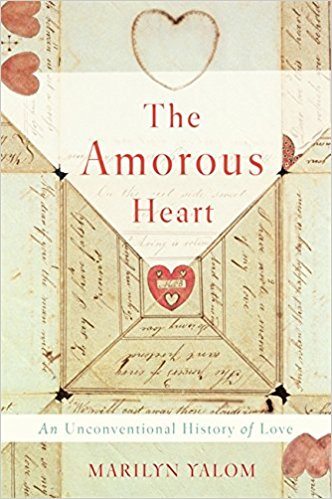
A couple weeks ago, we wrote about Marilyn Yalom‘s latest book, The Amorous Heart: An Unconventional History of Love. Her onstage conversation at Kepler’s Books considered the history of the ❤, but left us a bit fuzzy about how the symmetrical shape took hold, sometime in the fifteenth century.

Her article in the Wall Street Journal this weekend gives the details: “the lack of real knowledge of physiology left open fanciful possibilities. The second-century Greek physician Galen asserted that the heart was shaped like a pinecone and worked with the liver. This view carried into the Middle Ages, when the heart first found its visual form as the symbol of love.”

Hence, “The earliest illustrations of the amorous heart, created around 1250 in a French allegory called ‘The Romance of the Pear,’ pictured a heart that looks like a pinecone, eggplant or pear, with its narrow end pointed upward and its wider, lower part held in a human hand.”

And then there’s Giotto, in his 1305 fresco of Caritas in the Scrovegni Chapel of Padua – (Proust makes much of this image – read about it here). I rather like the discreet pear-like objet passed between the lady and the saint (is she giving or taking it?) – a casual transaction like handing over a five-buck bill, that occurs cleanly without a fuss, rather than the messy, bloody, pulsating thing that makes a mess of our real lives.

But soon enough, science and biology took over, and that’s no fun at all:

The great exception, in this as in other matters of art and science, was Leonardo da Vinci, who studied both human and animal dissections. The painstaking illustrations in his notebooks show his longstanding dedication to anatomical accuracy. (Human dissection, long taboo, began appearing as early as 1315 in Italy, but it could be banned at any time, according to the mood of the pope.)

Queen of Hearts (Photo Margo Davis)

Andreas Vesalius, the 16th-century Flemish physician who is considered the father of modern anatomy, was allowed to dissect cadavers at the University of Padua, thanks to a judge who supplied him with the bodies of executed criminals. In his groundbreaking book “The Fabric of the Human Body” (“De humani corporis fabrica”), Vesalius corrected certain errors made by Galen that had been blindly repeated by successive generations of doctors since the second century.

The detailed plates in Vesalius’s “Fabrica,” like the drawings in da Vinci’s notebooks, pictured a heart that looked more like the real thing. Yet the advance of science did nothing to shake popular attachment to the image of the heart as bi-lobed at the top and pointed at the bottom.

Lub-dub, lub-dub, lub-dub. Here’s to artifice over the real thing, which brings us back to the pristine object we began with: ❤

Read the Wall Street Journal article here.

Kepler’s Books ❤ Marilyn Yalom and her “Amorous Heart”

Share

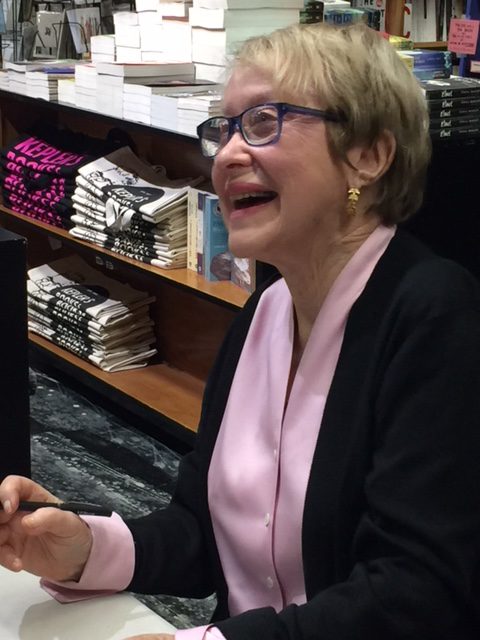
Author in the pink. (Photo: Margo Davis)

The shape is ubiquitous: two rounded curves swooping downward to meet in a single point. It’s meaning is universal: love. But where did it come from?

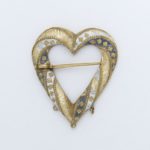
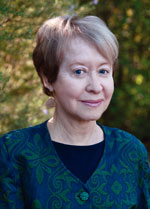
Marilyn Yalom, author of the brand new The Amorous Heart: An Unconventional History of Love (Basic Books), was in the British Museum when the question came to her a few years ago, as she gazed at a treasures from the 15th century in the “Fishpool Hoard,” discovered in Nottinghamshire in the 1960s. In the midst of the jewelry: a perfect heart-shaped brooch. As she marveled at the delicately enameled piece, she knew she was hooked.

Hence her new book, which had her at Kepler’s earlier this week, in a “public conversation” with Theresa Donovan Brown, a longtime friend and sometimes co-author. Marilyn, a longtime friend of mine as well, is also the author of the acclaimed How the French Invented Love – we wrote about it here and here. (And about her husband, the eminent psychoanalyst Irving Yalom, is also an author, here and here).

The Amorous Heart is likely to be as successful as her previous efforts, with Robert Pogue Harrison proclaiming it “Another tour de force by one of America’s leading cultural historians.”

“For anyone whose heart has ever palpitated in love or devotion, this is a thumping romp through the history of hearts – in love, literature, illuminated manuscripts, and valentine cards,” added Christopher de Hamel, author of Meetings with Remarkable Manuscripts.

The heart that launched…

For the Kepler’s occasion, fueled by plenty of Prosecco and heart-shaped cookies, almost everyone seemed to be wearing pink – even yours truly, though it was happenstance in my case. Fortunately, our mutual friend, photographer Margo Davis (who was wearing NYC black, without a touch of pink) was around to document the occasion. (See photo above.)

What did she discover in her long journey that began in the British Museum? Marilyn learned that the heart has been considered the “home of love” at least as far back as Sappho, though the visual rendering didn’t occur until much later. The first known rendering is ambiguous – a heart stamped on a coin in Libya, circa the third or fourth century B.C. It may, however, reflect the shape of a variety of a fennel pod still extant during the time. (Catullus makes mention of the fennel plant as a means of contraception … a clue?)

It was “a form in search of a meaning” until the 13th century, when the troubadours were full of amour and the need to represent it. In art, however, the heart was usually portrayed as a cone-shaped object, thanks to the imprecise discoveries of medicine. Sometime in the 15th century – we don’t know how, or where, or exactly when – the heart shape caught on. By the 14th century the heart had become a commonplace symbol, as Marilyn’s beloved brooch demonstrates. By the 16th and 17th?  Shakespeare uses the term “heart” almost as much as he does love.

Religion was never the same again. The “Sacre Coeur” of the Church became ubiquitous and portrayed with leaping flames and crowns of thorns. Its more regular representations continued unabated in the profane arts, too. Just as the image was about to sink into inevitable kitsch, it was revived by none other than Martin Luther.

Then, the 20th century, with more innovations. The heart became a verb, as in I ❤ NY. Or I ❤ San Francisco. Or Paris. Or Berlin. Then the computer age, and the Japanese made it into an emoji. Is it dissipating into meaninglessness? Marilyn celebrates it nonetheless. Might we suggest the delightful volume for Valentine’s Day?

“It’s the most popular symbol in the world, the perfect shape,” said Yalom. Two equal halves, conveying the Platonic idea. “It really moves our hearts, makes us feel good. Something in the shape itself.”

Photographer Margo Davis and “the landscape of the face”

Share

Photo by Margo Davis, of course.

Loyal readers of these pages know the legendary self-effacement and humility of the Book Haven. You should. We keep telling you about it. But we are shedding our accustomed modesty and shyness for a brief holiday.

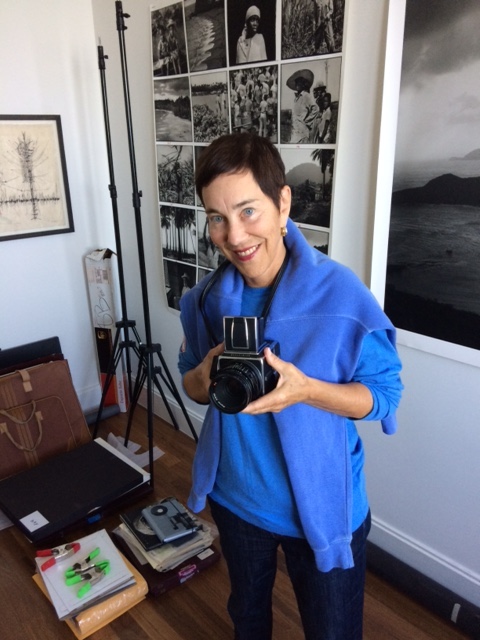
Humble Moi no more! Now it’s Glamorous Moi! Elegant Moi! For we have had our photograph taken by the esteemed Margo Davis, whose artistic focus is fine arts portraiture.

The notable photographer and I met in an elevator, some years ago. We were both on our way to visit Marilyn Yalom, who was hosting the Middlebrook Salon at her lovely Russian Hill home. Margo was memorable. She was wearing a black leather jacket, with her hair characteristically short, and she spoke in a rapid-fire Connecticut accent (not New York, as my imprecise ear thought).

We’ve seen each other since – usually at Marilyn’s home. So naturally Marilyn recommended her as the perfect photographer for my once-every-seven-years photograph. Marilyn was correct, as she so often is.

Humble Moi is not the easiest client to photograph. I panic and freeze before the camera and my eyes bug out and go glassy. But Margo just kept talking, and she kept snapping, too. She talks about getting to know her photographic subjects as “a waltz between two people trying to do something in the way of a portrait.”

Margo, in color.

“You have to spend time,” she said. “This is not a journalistic activity, an in-and-out thing.” The result of her efforts above.

Margo has spoken in the past about being drawn to the “landscape of the face.” As a young photographer, she recalled: “When I was going through my proof sheets I realized I was really gravitating toward portraiture. And from that point on, I think I started moving in closer towards peoples’ faces. It was a process, it wasn’t something that happened overnight.”

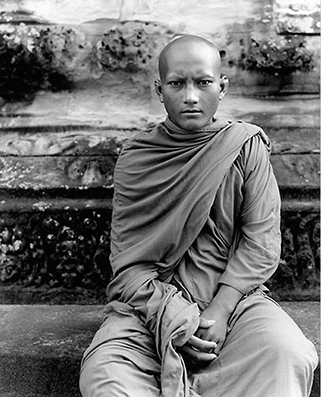
Margo always uses natural light, and is known primarily for her black-and-white portrait photography, because, she’s said, “you’re already in an abstraction process, because the real world is in color.” In black and white, she’s photograph such celebrities as Saul Bellow, Maxine Kingston and Ursula K. Le Guin as well as average people in Africa, the Caribbean, Asia and Latin America. But in my case she clearly made a colorful exception. In the quick tour she gave me of her home, I fell in love with her black-and-white portrait of an Angor Wat monk. He looks just as uncomfortable in front of the camera as I was, meditation notwithstanding.

An especial focus for her work has been Antigua in the Caribbean, as well as Africa: “I borrowed the methodology of an ethnographer: participant-observation, becoming part of the fabric of the culture,” she has said.

My favorite guy. He looks nervous, too.

“Being married to an Antiguan [her former husband Gregson Davis] and returning there often, I was able to work with this axiom in mind; the importance of getting to really know people.”

She has taught photography at Stanford University forever, as well as the University of California, Berkeley, and the University of California, Santa Cruz.

By my count, she’s up to half a dozen photography books now. Her newest book this year is Antigua 1967-1973 from Nazraeli Press. Previous books include: Antigua Pride, Edition One Press, 2013; Under One Sky, Stanford University Press, 2004; The Stanford Album: A Photographic History, 1885 – 1945 (Stanford, 1989); Antigua Black: Portrait of an Island People (1973); and Women Writers of the West Coast (1983), with text by Marilyn Yalom.

Margo’s work is in major museums, including the San Francisco Museum of Modern Art Cantor Art Center at Stanford, the Brooklyn Museum, and the Bibliothèque Nationale de France.

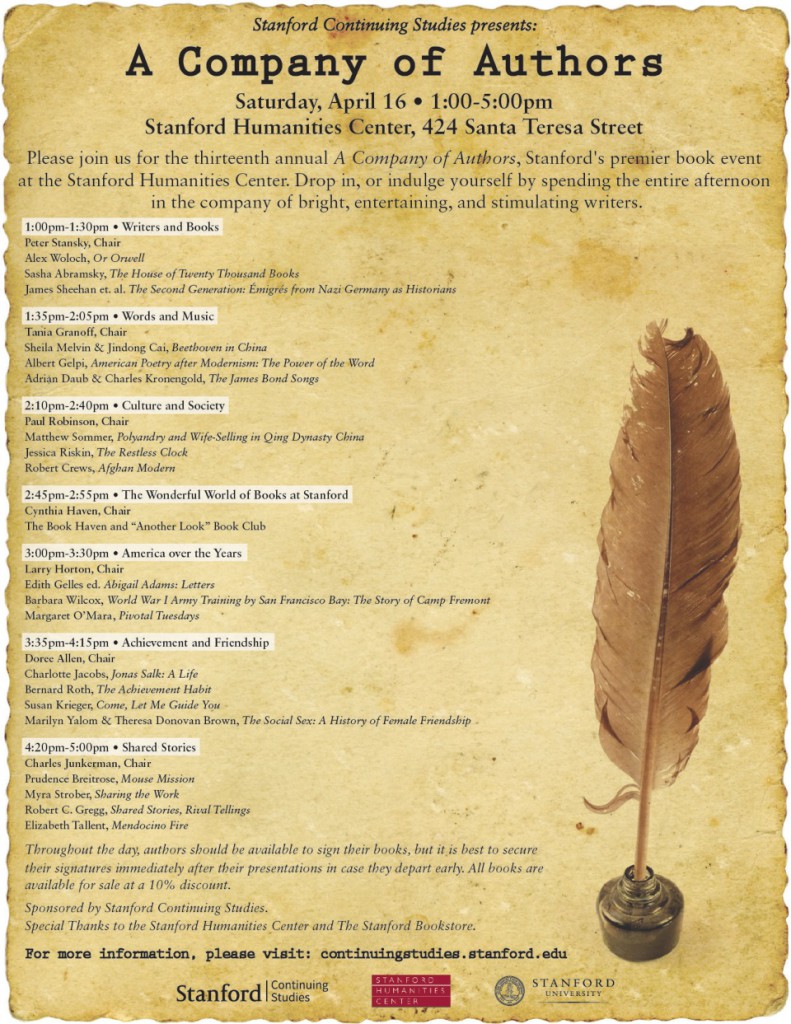
“A Company of Authors” – a pleasant afternoon of classy books this Saturday. Be there!

Share
stansky

Our hero, Peter Stansky.

It’s that time. Peter Stansky‘s annual “A Company of Authors” is happening this Saturday, April 16, from 1 to 5 p.m. at the Stanford Humanities Center, 424 Santa Teresa Street on the Stanford campus. The annual event gathers Stanford authors from the previous year to present and discuss their books.

yalom

Encore, Marilyn!

I’m particularly looking forward to Myra Strober‘s new memoir, Sharing the Work and Albert Gelpi’s American Poetry After Modernism. I’ve heard Marilyn Yalom and Theresa Donovan Brown speak about The Social Sex: A History of Female Friendship  before, and also Edith Gelles on Abigail Adams‘s letters (we’ve written about Marilyn here and here and here, and Edie here) – I look forward to doing so again. It’s always fun.

So many people on this list I really want to see this weekend … oh, I could go on and on. What’s that you say? Why, yes, yes … Humble Moi will be speaking at 2:45 p.m. on “The Wonderful World of Books at Stanford.” I’ll be talking about the wondrous success of the “Another Look” book club which brings little-known or overlooked masterpieces to the Bay Area community – and which, I might add (and I will), has received international coverage. I’ve written about the open book club – which focuses on a series of public events –  here and here and here and here, among a zillion other places.

Anyway, great fun, and the Stanford Boostore will be selling the books in the lobby – at a 10% discount, too.

companyofauthors

Yalom’s Cure: Stanford’s famous psychotherapist onscreen – and it’s fun!

Share
-1

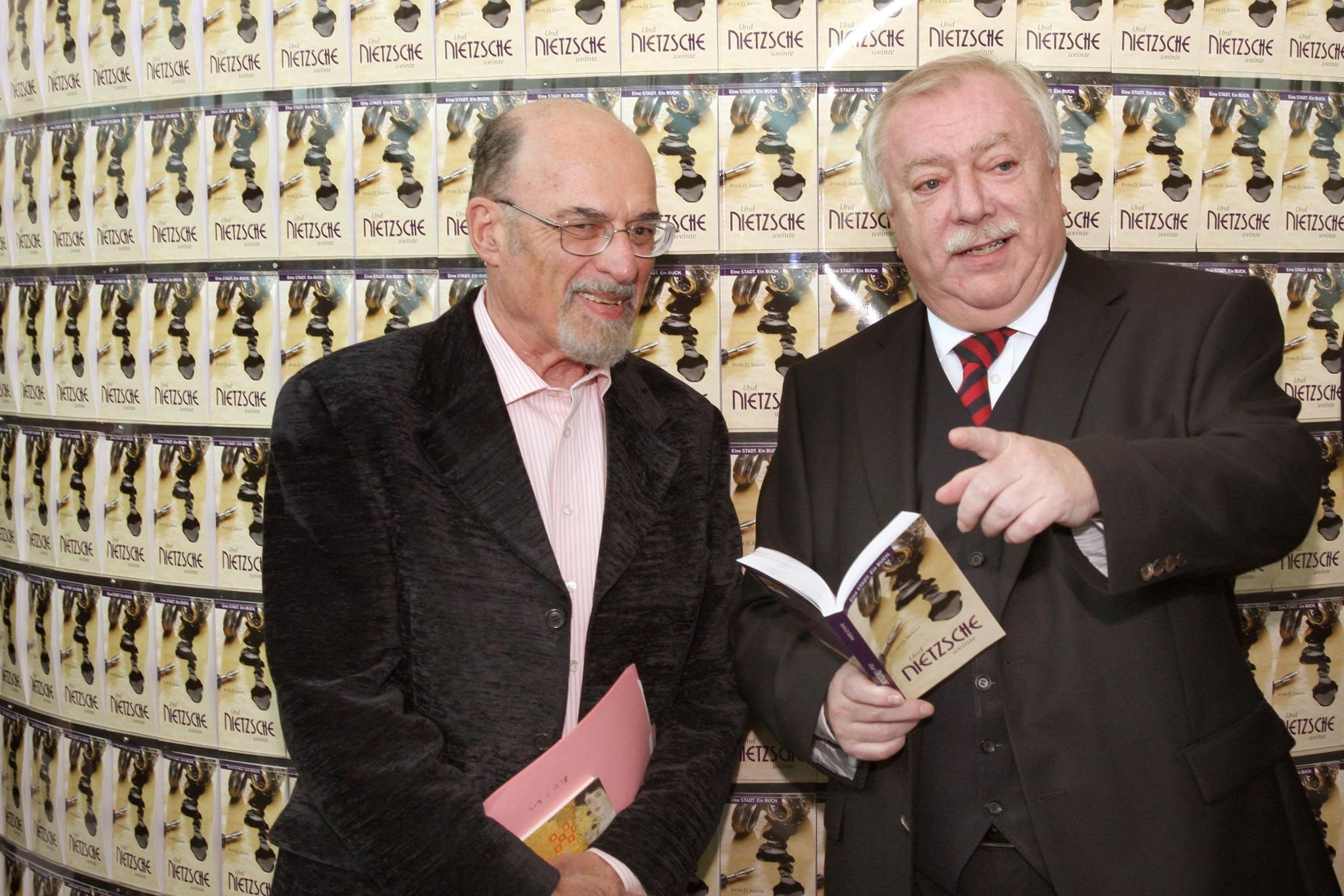
With Vienna’s mayor Michael Häupl in 2009 – and lots and lots of his books

André Malraux once asked a parish priest who had listened to confessions for half a century what he had learned about mankind. On the first page of his 1968 Anti-Memoirs, the French writer recorded the priest’s reply: “First of all people are much more unhappy than one thinks…and then the fundamental fact is that there is no such thing as a grown up person.”

Not a bad starting point for this week’s Stanford premiere of Yalom’s Cure, an hour-long film about Irvin Yalom, one of the world’s most celebrated existential psychotherapists. Irv is now a well-known author as well, leveraging psychology into literature with Love’s Executioner and Other Tales of Psychotherapy, When Nietzsche Wept, The Schopenhauer Cure, The Spinoza Problem, and others. (We wrote about the Viennese “Eine Stadt. Ein Buch” celebration of his book here and here – 100,000 copies of When Nietzsche Wept were distributed throughout Vienna.)

yalom3

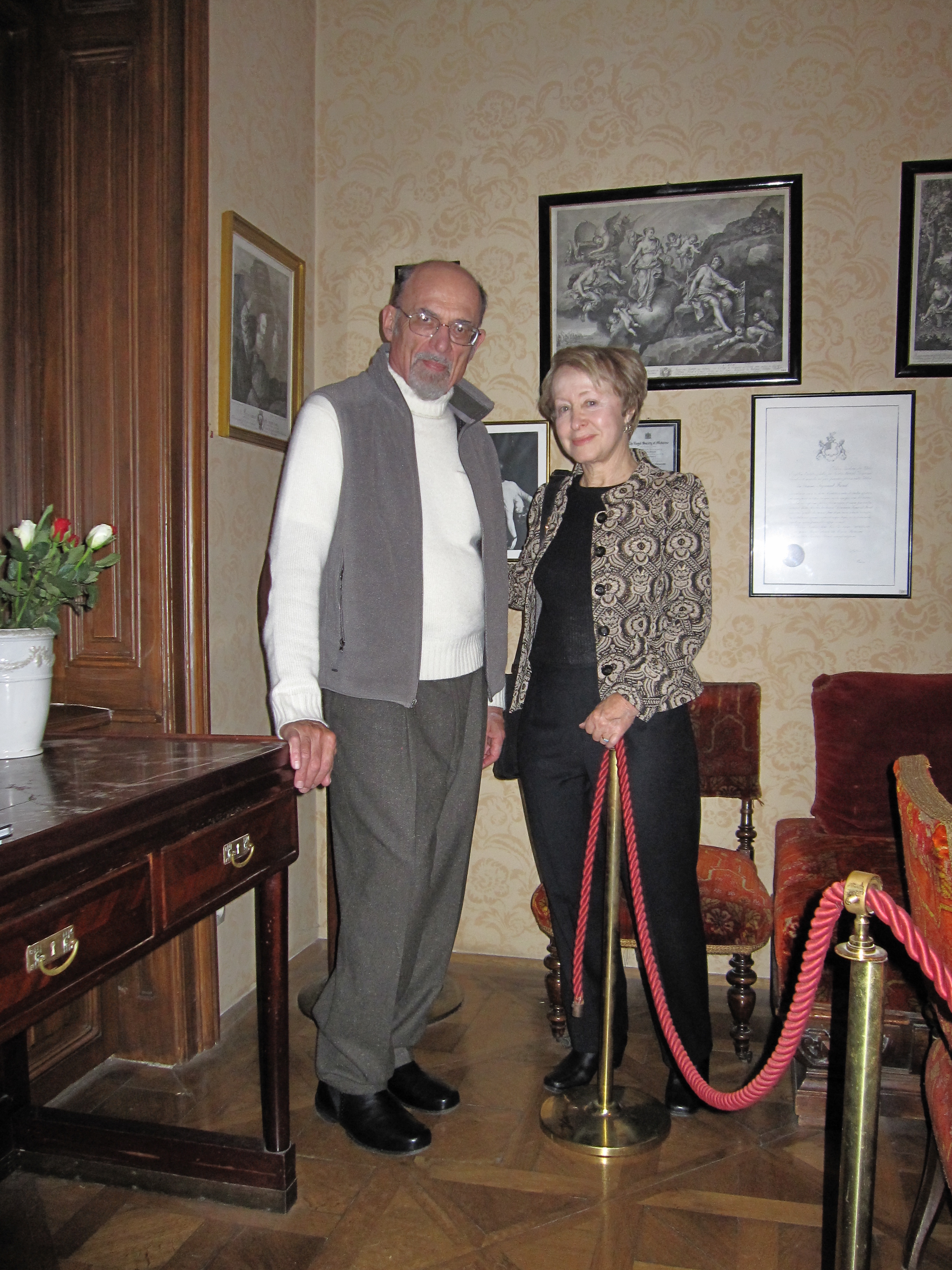
The Yaloms enjoying Vienna’s Freud Museum.

Stanford’s Irv was obviously guest of honor for the screening, along with his wife Marilyn Yalom, one of the founders of the Clayman Institute for Gender Research and author of the acclaimed How the French Invented Love – which, I’m told, is as big a hit in France as it has been on this side of the Atlantic. (We wrote about it here and here and here.) The screening was also attended by a number of Stanford luminaries we’ve written about – among them Gerhard and Regina Casper, John and Mary Felstiner, Myra Strober, Marguerite Frank, and also Georgia May, widow of the eminent existential psychologist Rollo May.

Writer/director Sabine Gisiger and her film crew filmed hundreds of hours of the Yaloms and their family – the result? “This movie is making me squirm. I feel very exposed,” the good doctor said. But I came to the event cold, with no expectations, and was both exhilarated and moved by the film, which premiered in Zurich and already has been featured in San Francisco and Mill Valley film festivals. For locals, it features an awful lot of Stanford and Palo Alto, and brought back memories of my previous visits to their idyllic Palo Alto home… well, I didn’t need much in the way of memory… I had visited a few days ago.

The doctor turns 84 this June, and said that facing death has been a “long odyssey… I’m much less terrorized by it.” He explained part of his attitude towards psychotherapy with Thomas Hardy‘s words: “If way to the better there be, it exacts a full look at the worst.”

Don’t be puzzled by the German. The trailer is in English. Want the whole movie? Try here.

“I am dying, and that’s a helluva way of introducing the book of my greatest love”: Middlebrook’s posthumous Young Ovid; Djerassi’s last public appearance

Share
×Ä

Last wishes fulfilled. (Photo: Amanda Lane)

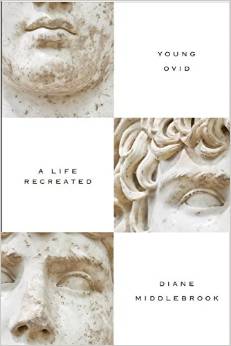
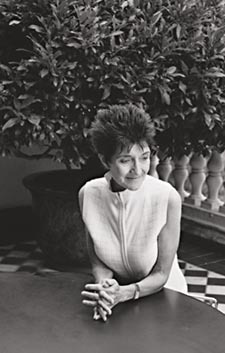
Carl Djerassi had a way of stealing the show, and last week may prove, in retrospect, to have been no exception. The January 22 occasion was the launch of biographer Diane Middlebrook‘s posthumous book, Young Ovid: A Life Recreated (Counterpoint Press) a book that has taken seven years since the author’s death to find its way into book form. Last week’s event, at the fabulous Djerassi digs atop Russian Hill, will be known equally as Carl’s last public appearance. The eminent chemist who has been called “father of the pill” (surely a contradiction in terms) – and also an author, playwright, and founder of an artists’ colony – died yesterday of cancer at 91. It’s certainly appropriate that his final public appearance was a last salute to his late wife, who died of cancer in 2007.

According to Diane’s daughter, Leah Middlebrook, the posthumous book would not have come out with him. “He kept her alive and kept her distracted,” she recalled. She had reached a lowpoint in her long illness when she realized she would not be able to finish her book. Carl suggested a “Young Ovid” biography, and that gave her new life. She discussed the manuscript with Carl to the last days of her life. A pleasure as well as a duty, for Ovid was her lifelong passion. “Reading a page and a half will convince you her voice is still present with us,” said her daughter.

I bought a copy, available at the event courtesy Green Apple Books in San Francisco, and though I’ve only had a chance to cast a casual eye over it, it’s impressive, perhaps some of her best work. “It is Diane’s prose. It is Diane’s writing,” said Leah. It wasn’t easy. Middlebrook had continued writing until a month before her death. She conveyed to a circle of insiders her plans and intentions for the finished book. The execution finally rested in the hands of others – and the search of a publisher was a labor of its own. The New Yorker has already named it as one of their “Books to Watch Out For” here.

At the event last week, however, tribulations were forgotten amid plenty of champagne, plenty of brie, plenty of dolmas, and plenty of little bits of goat cheese wrapped in strips of fried zucchini, against the backdrop of what must be one of the most stunning views in a city full of them. I described it a dozen years ago (here) this way:

“The couple’s art interests are evident in their home, surely one of the most fabulous apartments in San Francisco. It occupies the entire 15th floor (they gradually absorbed four apartments) of an art-deco building on Green Street, atop Russian Hill. The elevator from the lobby opens onto blue walls meant to suggest a night sky, with poetry by Ovid, Paul Klee, Wallace Stevens, Basho, Hughes and others written across it in different scripts and languages and illustrated with zodiacal signs. To the left are living quarters; to the right, offices and the salon area, where the couple entertains. They enjoy a 360-degree view of the city.

(Photo: Isabella Gregor)

He liked this one. (Photo: I. Gregor)

“Middlebrook’s office features Eurodesign cabinets and built-in bookcases, with a computer desk and round work table. As in the hotel room, all is very neat, very well-organized—a Middlebrook cardinal virtue. A painted baroque ceiling, with blue, gray and plum-colored swirls, gives the impression the sky is right above you.

“Works of art by Klee, usually on the walls in the salon area, are currently on loan to San Francisco’s Museum of Modern Art, keeping company with the permanent Klee collection Djerassi donated. The couple has one of the world’s most significant private Klee collections.”

Much of the evening buzz over hors d’oeuvres was about Carl’s health – whispers that this would be his last public appearance, and so it was. (I still can’t believe that he won’t email me tomorrow with the photo he’d rather have me use for this farewell post – but the one I’m including is the one he preferred last time, so here it is again.) When Carl finally appeared and was helped to a chair at the front of the gathering he was startlingly thin, exceedingly frail, but erect and dignified, surprisingly present, altogether there. “Can you hear me back there? All of you back there?” he called. “I’m losing my voice, and I am losing my voice because I am dying, and that’s a helluva way of introducing the book of my greatest love.”

He had a slender, old-fashioned paperback – 1930s, Europe – on the small table next to his side as he spoke, and told his story about fleeing Austria with his mother in 1938 to escape the Nazis. “What would you take as a refugee? No furniture of any size, nothing heavy,” he recalled. Just clothing, pictures, and some books – and one of the books was this one – naturally, a book of Ovid. Heavy going for a teenager who had only four years of Latin, he admitted, but the relic from his past traveled with him to New York; Newark, New Jersey; the Midwest; Mexico; and California. It’s still with him. If he were writing a book, it would be framed as a prefiguration of the woman he would find towards the end of a journey – a woman whose lifelong passion was Ovid – and the book that would connect them at the end of both their lives.
middlebrook1“Diane, I want to tell you how important that book was to me that you finally finished,” he said.

Let the last words be hers, however. Her close friend Marilyn Yalom read, if not a page and a half, at least this part from the introduction to the book, turning on Ovid’s own words: “Throughout all ages,/if poets have vision to prophesy truth, I shall live.”

“To a biographer, Ovid’s declaration ‘I shall live’ can feel like a glove slapping a cheek across twenty centuries. Quite aside from its embarrassingly self-promotional aspect, the phrase can be dismissed as empty convention: Ovid’s most celebrated contemporaries incorporated lines like this in work of their own they most admired. But what if Ovid meant it? What could support a writer’s belief that works of poetry could be immortal and that his own was destined for this rare elevation?

“Biography is a medium for working out solutions to such puzzles. Yet Ovid is not an obvious candidate for biography; there is almost no documentation of Ovid’s life outside his poetry. The evidence inside his poetry is all we have to go on. But it is enough, for Ovid was an unusually autobiographical writer for his time. His voice comes toward us like a plucked string, immediate and recognizable across two millenia, partly because he made frequent use of an effective rhetorical strategy: accosting us readers as if we were present in the room with him. At one point he even calls us, his heirs, by name: ‘Who is this I you read … ?/You want to know, posterity? Then attend” (Tristia 4.10.1-2).