
How the French invented love: Renate Stendhal weighs in

Share

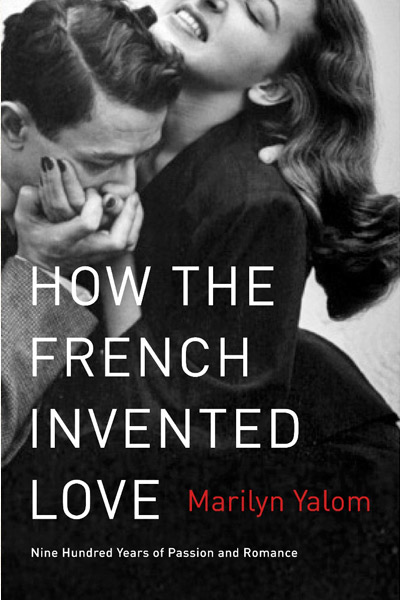
Renate Stendhal takes a long, thoughtful look at Marilyn Yalom‘s How the French Invented Love over at the Los Angeles Review of Books. (The Book Haven discussed Marilyn’s new book earlier here.)

Ms. Stendhal writes:

“Did the French invent love? Or would it be more true to say that love is endlessly reinvented every moment, in every culture, every epoch? What the French did is what Arabian and Persian cultures had done before them: invite the beastly, sexual part of human nature into culture. The French cultured and cultivated love from the Middle Ages onward until it became l’amour à la française — a reason for national pride. The clichés of French sexiness, French charm, French people’s ease about their own and their presidents’ affairs are hard to dispute; they go together with the well known sensuous importance in France of food and flirtation, verbal brilliance and fashion. There has been a recent flurry of books by Americans attempting to decode the better sex lives of the French and the enduring mystery of French women. (Among them, What French Women Know: About Love, Sex, and Other Matters of the Heart and Mind; Entre Nous: A Woman’s Guide for Finding Her Inner French Girl; All You Need to Be Impossibly French: A Witty Investigation into the Lives, and Little Secrets of French Women; French Women Don’t Sleep Alone; The Skinny, Sexy Mind: The Ultimate French Secret; and La Seduction: How the French Play the Game of Life.) Marilyn Yalom’s new study, How the French Invented Love: Nine Hundred Years of Passion and Romance, reaches beyond the stereotypes by focusing on literature, making an erudite, elegant, and charming case for France’s love ‘invention.'”

I’m not sure that the idea that the French are the world experts in love isn’t itself a kind of invention.  It often goes at odds with my own observations of my French friends.  The sting of betrayal and the ugliness of lies hurt them just as much, and there, as everywhere, families are rent by the suppressed hostilities and the unspoken tensions.  (Look at all the lives that get ripped apart in Laclos’s Les Liaisons Dangereuses, for pity sake!)  Maybe the idea that somewhere, somehow, sex doesn’t carry psychological price tags is one of our most pervasive myths. But that may be a minority opinion.

Marilyn certainly knows her stuff, whether giving her own opinion on Dominique Strauss-Kahn or then-President Nicolas Sarkozy, who made the unfortunate comment that it was ridiculous for civil service exams to include questions about the 1678 classic La Princesse de Clèves: “As president Sarkozy’s popularity declined among the French, sales of La Princesse de Clèves soared,” Marilyn Yalom observed.  As Stendhal writes, “Yalom’s literary examples of French passion and naughtiness are told in a relaxed, conversational tone that mixes her analyses of books and history with anecdotes about her own experience living and teaching in France.”

The relaxed, conversational tone – bien sûr!  Check out the LARB review here.
How the French invented love… and a few dating tips from the experts

Share

A confessed Proustian

I had a pleasant visit with Marilyn Yalom the other day, on the sun-drenched patio of her Palo Alto home.  According to the Publishers Weekly, the “avowed feminist, confessed Proustian, admitted Simone de Beauvoir groupie, the erudite and charming Yalom is the perfect companion.”  And so she is.  She talked about French literature, she talked about her time as a doctoral student under René Girard, and she talked about love.

Her new book, How the French Invented Love, will be out this fall.  From a June Q&A interview in Publishers Weekly:  “The French believe that love is embedded in the flesh. They have little tolerance for ethereal ideas of nonconsummated love.”  But… but… but… what about all those troubadours?  Isn’t France the home of amour lointain?

Too much time on their hands

She talks about that, too.  From her book:

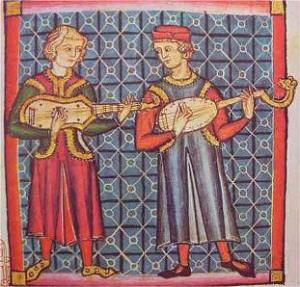
In the north, minstrels known as trouvères took up troubadour themes, though the music itself was heavily influenced by the Parisian school of Notre Dame, which was devoted to the cult of the Virgin Mary.  When you listen to this music from the twelfth and thirteenth centuries, you discover that sacred and profane songs sound much alike, even if the words are different.  Enough manuscripts still exist to give us a sense of the music, which was sung to the accompaniment of a small harp. Love in the north of France appears to have become more and more idealized, and the beloved lady more and more inaccessible, with the poet-minstrel downplaying his expectation of a physical reward.  Unlike their southern counterparts, northern minstrels emphasized a love of longing rather than fulfillment.

Clearly, however, consummated love is more to her liking. In a frivolous mood, I recently sent her a link to an article on  “How to Love Like a French Woman.”  Did she agree with statements like this?

American women (and Americans in general) tend to be very goal-oriented when it comes to love, sex, and dating. Rather than setting things in motion and embracing the unknown, Americans generally prefer to set things in stone with a list of clear objectives, goals and outcomes: Is he/she my soul mate or my future spouse? Where, exactly, is this relationship going? Does he/she love me, or not? From the time we’re little girls, we grow up thinking about love in terms of total love or absolute rejection — unlike the French.  …

When relationships don’t pan out, we tend to interpret that as the failure of the whole experience instead of doing what the French do — which is to say, they consider that the emotional integrity of a relationship might lie solely in the experience of it and not necessarily in its outcome or ultimate resolution.

Or this:

The American woman’s approach to dating is heavily influenced by the extent to which sex has either been sensationalized or pathologized in her mind. People are either having mind-blowing encounters — and women’s magazines are cluttered with tips/techniques on how to achieve it — or their libidos have gone into permanent retirement and need to be “fixed.” There’s always a notion that things can be bigger or better. Ditto for whom we are in general, given our culture that expects constant self-improvement and self-transformation.

” I agree with her on almost everything she says,” Marilyn dashed back in a emailed note.  Almost? I forgot to ask her about her reservations.

Here’s mine: Why are these columns almost always directed to women?  I don’t see men curling themselves into pretzels trying to analyze their women or shopping for exotic underwear.


Maxine Hong Kingston: Not scared of poetry

Share

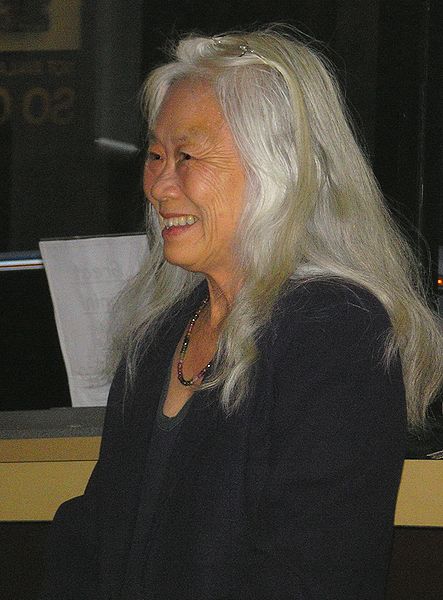
But does she understand men? (Photo: David Shankbone)

Maxine Hong Kingston decided a few years back that she preferred writing poetry to prose.  “No more big, full dramatic scenes,” she explained to a Middlebrook Salon gathering on Sunday in Palo Alto.

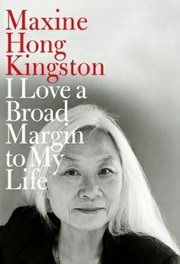
The most recent result is “a book-length book about me” – I Love a Broad Margin to My Life, published in March.  There are downsides to doing poetry, she said.  Publishers don’t like it.

“They’re scared of poetry.  Poetry doesn’t sell.”

“They insisted on calling it a memoir,” she said.  “But I don’t think that’s right.  A memoir remembers the past. I am remembering the future.”  Her book discusses “how we accumulate and lose time.”

The silver-haired author was competing with sunlight.  The conversation and reading took place on Marilyn and Irv Yalom‘s lawn, a lush green setting for the drone of the hummingbirds and the plashing of an unseen fountain on the beautiful August late afternoon.  (I wrote about the dedication of the Diane Middlebrook Memorial Residence here.)

Clearly, times have changed. Maxine recalled the days when finishing a manuscript meant hopping on a plane to New York, and meeting her publisher face-to-face to hand it over.  After some time he would finish reading it.  She would hope on a plane back to New York.  The publisher would have marked the manuscript with scores of post-its.  They would go through the manuscript page by page.

Then there was the terrible day in 1979 when her publisher met her and said, “Well, my dear, I’m afraid this book is a failure.”

“You don’t understand men,” he told her.

By bus, she returned back to the friends’ apartment where she was staying. They had arranged a party to celebrate the new book with champagne.  Instead, she sat down to her IBM Selectric as the others partied.  She wrote a new scene for her revised book.

One of the people at that party – an actor named Earl – was on hand to read the chapter with her that night.

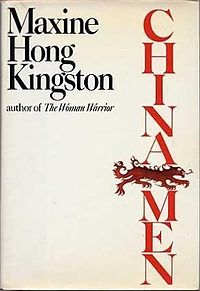
The book, China Men, was published in 1980.

Maxine said the New York Times called it a “virtually perfect book.”

Diane Middlebrook: “It’s all been delicious. Every minute.”

Share

Salonnière Diane (Photo: Amanda Lane)

“You felt smarter and more talented and more capable in her presence.”

Such was Kate Moses’s summary of the late biographer Diane Middlebrook’s “genius for friendship” – or at least, that was part of it.

Salonnière Kate read from her “Chocolate Cake for Diane” — featured right now, here, at the online Narrative Magazine — to a roomful of women assembled in her memory last August.  Diane organized several literary salons for women: first in London and San Francisco, and later in New York.  According to Moses, “she admitted without apology that she wouldn’t schedule a salon event in one city while she was in the other because she didn’t want to miss anything.”  The Middlebrook salons continue – a place for women to gather, celebrate their achievements, discuss their work, and network.

In Irv and Marilyn Yalom‘s Palo Alto home tucked away in wooded seclusion off the main streets, one wondered if perhaps the spirit of Diane is contagious.  We were all feeling smarter and more capable in the Bay Area writer’s salon – and boy, there are times we need to.

Kate’s “fertile creative partnership” with Diane flourished as Kate was writing her fictional story of Sylvia Plath and Ted Hughes, Wintering, while Middlebrook was working on her biographical account, Her Husband. “By sharing all of our research, we made twice as much progress in half the time.”

I wrote Diane Middlebrook’s obituary here.  At the time, I found the most arresting part of Diane’s story to be her absolute determination to finish her biography of Ovid, even in the face of a rare and ultimately deadly liposarcoma.

Diane had been reading and studying Ovid since graduate school, and later taught him and lectured on him.

“‘I am not ready to die,’ she said again and again, her voice brisk and emphatic, that elegant index finger aloft,” Kate recalled.  “From the last days of January 2004, when Diane learned that her tumor had returned with a vengeance, she never took her eyes off Ovid.  Through those surreal years her book was her anchor, as the life of her elegant mind had always been.  She was single-minded in her concentration, hoarding away time from successive chemotherapies and monthly dendritic cell treatments and surgeries and the repetitive struggle to recover from every onslaught her body had to withstand.”

She returned to San Francisco to dazzle the salon with a reading from her Ovid manuscript “and an animated talk on the challenge of writing a biography without primary sources.”

Moses recalled the last visit in London:  “We left the Athenaeum arm in arm, descending into the Tube together and kissing goodbye at Leicester Square, Diane calling ’till December!’ as her train pulled away.”

“Nothing, after that, happened the way any of us had planned or hoped or thought possible.” By September, she could no longer keep down solid food.  The doctors turned to palliative care, and she could no longer continue the book on her own.

Salonnière Kate Moses (Photo: Ramona Pedersen)

“She was so weak and in such constant pain she was sometimes not able to hold a pencil, and her pain medications were disorienting: timed-release doses that periodically submerged her mind like a carnival dunking machine.  But she might, with great concentration and will, be able to talk about Ovid, to dictate the blueprint for her book’s final form, and she wanted to try…”

The experiment involved Kate making digital recordings of Middlebrook’s ideas for the books, interviewing her, teasing out ideas and taking notes, with hopes of assembling the book later.

To that end, “Diane asked her doctor to adjust her medications, so that she would have more control over her thoughts and her ability to articulate them.  This meant, in practice, that she would have to withstand more pain in order to work on Ovid, a price she was willing to pay for as long as she could stand it. … it was downright superhuman most of the time, a heroic and determined effort on her part to stay focused and acute when her body was impatiently tugging her in the other direction.  It was often like watching a great, dignified actor remain in character and deliver his staggering final soliloquy as the theater is being dismantled board by board all around him.”

Eventually, Kate was joined by a few other insiders, including Diane’s daughter Leah Middlebrook, to work as a team to shape the manuscript with the notes, recordings, outlines, and Diane’s help.  “Diane was in noticeable pain, but when [we] would ask if she wanted to stop, Diane would grimace, shaking her head no.  ‘Let’s keep going,’ she’d say.  Eventually, they covered it all.  “‘Good,” Middlebrook said, holding her daughter’s hand.  “Because the rest is unthought.” Kate meant to come back for more sorting out, but that was the last time she was able to speak to Diane, who died a week later.

Listening to Kate read in front of a large picture window glowing with the late-afternoon, late-summer sun, its remarkable how many women (and, for the annual August event, men were invited too) were touched by Diane’s life – enough so that a memorial residence for writers is planned by the Djerassi Resident Artists Program.

Salonnière Kate described a more personal goodbye had happened a week earlier, at the hospital, when Kate suddenly felt Diane’s hand on her wrist:

“Every minute has been delicious,” she said dreamily, not knowing if she was truly dreaming or tumbling in the surf of her mind, her focus turned inward. “Every minute with you, Kate,” she said then, holding my gaze, squeezing my wrist.  “It’s all been delicious.  Every minute.  How many relationships can we say that about?”

Curses and blessings

Share

New edition

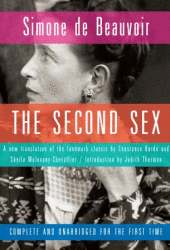
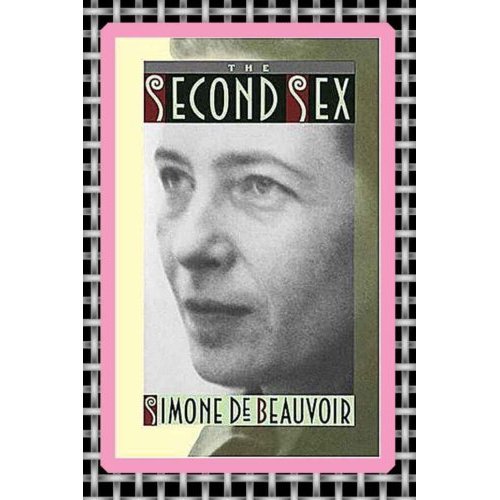
Francine du Plessix Gray reviews Constance Borde and Sheila Malovany-Chevallier’s newly translated edition of Simone de Beauvoir’s Second Sex in the New York Times here.  The original translator, Howard M. Parshley, cut 15 percent of the original 972 pages of the book — the new edition restores the lost pages; the new edition promises to bring a new generation to the work.  While Gray salutes the “fierce, often wrathful urgency” of the feminist classic, she finds it largely dated.

The review concludes:

“What a curse to be a woman!” Beauvoir writes, quoting Kier­kegaard. “And yet the very worst curse when one is a woman is, in fact, not to understand that it is one.” No one has done more than Beauvoir to explain the conditions of that curse, and no one has more eloquently, irately challenged us to turn that curse into a blessing.

Not everyone agrees, however, that Gray’s review is a blessing.

Among the three letters in today’s New York Times is one from Marilyn YalomAuthor Yalom faults Gray for avoiding Beauvoir’s central contention that women will be second-class citizens until they can support themselves.  Women still make — what? — 70 or 80 cents for every dollar a man makes.  Surely the hand that not only rocks the cradle but pays for it in monthly installments ought to have have achieved pay parity in 2010.

Yalom also takes issue with Gray calling Beauvoir’s claim that one is not born, but rather becomes a woman “preposterous.” Gray bases her argument on seeing male toddlers grabbing cars and guns while girls cuddle their dolls.  Writes Yalom: “Let me simply add my personal experience to Gray’s: as the mother of three sons and one daughter, I observed a much greater fluidity in their choice of toys, marked less by gender than by individual temperament.”

Old edition

Via blog, may I add my own observation as well?  My daughter went for the trucks and the dinosaurs (with a brief, but intense, foray into sharks), and had only a passing interest in dolls.  An eminent physicist of my acquaintance, Stanford Prof. Patricia Burchat, tells me her own sons wanted a dollhouse.  Why not?  The family drama has an intense fascination for children of both sexes, and what better place to control and reenact it than a dollhouse?  Pat triggered mild alarm when she brought legos to a little girl’s birthday party years ago — so tell me again, please, that toddlers have no gendered programming by that age?

Yalom finally zeroes in on Gray’s lambasting the new translation, which the critic finds wordy and cumbersome.  Yalom counters:  “The Second Sex is — among other things — a philosophical text. Would anyone think of translating Heidegger so that he flows nicely, when he rarely does?”

Judge for yourself with an excerpt here, or Judith Thurman’s introduction to the volume here.  Meanwhile, Gray takes another whack from Stephen Heyman in “Being and Frumpiness;  he notes that Gray once described Beauvoir’s “look as ‘bleakly emancipated,’ which sounds something like being ugly while wearing comfortable shoes.”