
Joseph Brodsky monument: It’s the thought that counts.

Share

There'll be bird poop on his face within a week.

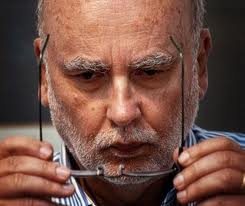
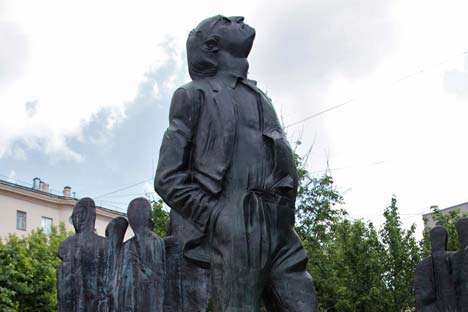
I don’t care for the likeness, but I do rather like the chutzpah of the sculptor, Georgy Frangulyan.  His proposed statue of Joseph Brodsky lost a contest in the Nobel poet’s native St. Petersburg, and earlier was the subject of frenzied internet opposition.  So he up and decided to put the statue up on his own dime (or ruble) … in Moscow.

“It is my own personal monument,” said Frangulyan. “I didn’t have a choice, as there was a crisis and all those who had promised money withdrew.”
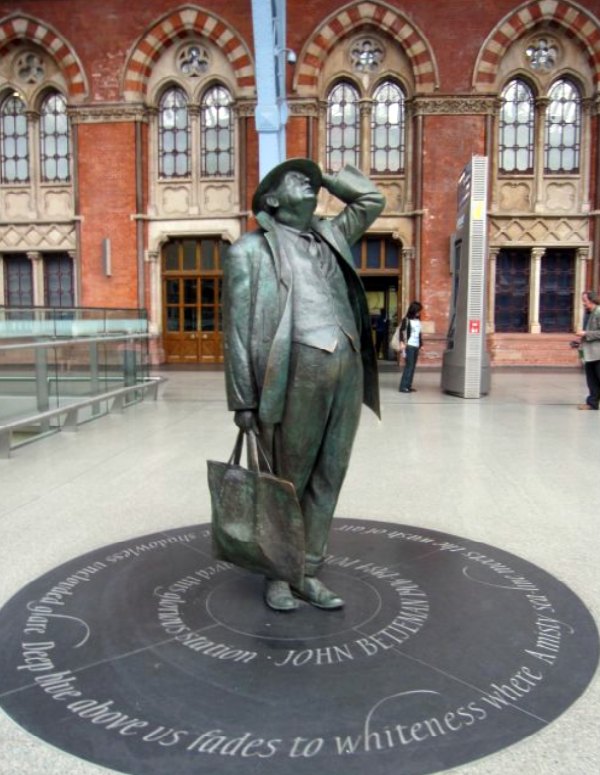
Late for the train, John?

Frangulyan wouldn’t say exactly how much it cost, but priced it at a few million dollars.  Since the sculptor is fronting the money for the project out of his own pocket, without anyone buying the statue, I don’t know how he would assess its value.  Materials?  I doubt he had that kind of money to invest.  Labor?  He puts a high price on himself.  Usually, the value of artwork is determined by someone making a bid.  But if these are the new rules, this post is worth $50K, and I expect you all to start chucking money at me.

As for the locale, Moscow worthies decided to put it across from the U.S. Embassy:  “We looked for a place for a long time,” said Alexander Kuzmin, Moscow chief architect, in 2007. “We looked to see where the relatives of the poet lived. Then we asked ourselves a question: What most of all links Brodsky and Moscow? And we understood – the American embassy, from there he left the U.S.S.R.”

The Russia Beyond the Headlines article, here (with a hat tip to Dave Lull) is a masterpiece for what is left unsaid. The article states that “Brodsky actually left for Vienna, initially…”  Well, no, the government had a policy of shipping its unwanted Jews to Israel.  Vienna was merely the stopover where he bailed, with Russian scholar and friend Carl Proffer, and headed for the U.S. instead.  The article notes that he never visited his parents again after his exile.  Well, no, he didn’t.  Even though he petitioned repeatedly, with increasing desperation, to get them a visa.  He even wrote about it, bitterly.

Nearby are sculpted silhouettes of twelve people in two groups, but Brodsky is obeying a shopworn convention of the otherworldly poet, staring into the sky, abstracted, not watching to see if he is stepping into pigeon crap.

According to the article:

Frangulyan said it shows how a poet is alone but with a circle of followers. “Some people go through life like a shadow and some become individuals,” he said.
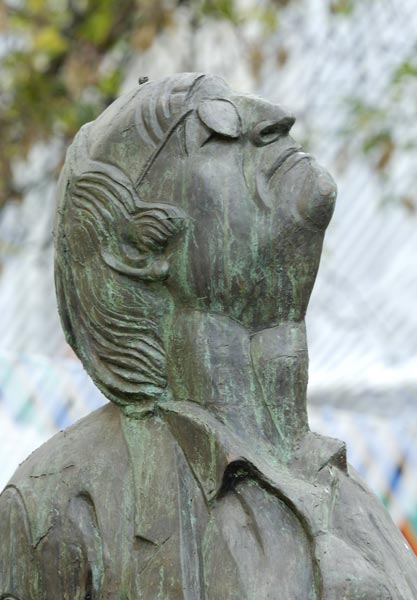
Well, okay.  Whatever.  But the look on his face is, well, a little disdainful.  Like he’s looking down his honker at everyone.

David Sanders suggested that he was on the lookout for overhead pigeons.  The first well-targeted pigeon bombing should dispel that one.  It’s likely to land on his prominent nose.  He won’t see coming: his eyes are closed, if you look closely at the face.

I have another explanation:  He’s finally back in the new Russia – but he is stubbornly refusing to look at it.

For purposes of comparison, here’s a statue of John Betjemin in the square where I lived briefly some years ago.  He also, is looking up – but looks rather confused, and lost in the St. Pancras/Kings Cross Station, and maybe late for a train.

Postcript on 7/10:  David Sanders, in his emailed Poetry News in Review, had this more sagacious comment, which humbled me mid-snark: “Maybe it’s time for a renaissance in publicly memorializing poets and writers through the strategic placement of their likenesses, if only in hopes that it will prolong the life of their words, raise their public profiles (so to speak), and give them equally footing with our other heroes. For some of us, these men and women are our heroes.”
“Only silence is innocent”: Zagajewski on Rilke, irony, and the future of poetry

Share

they warm themselves...

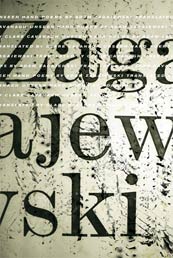
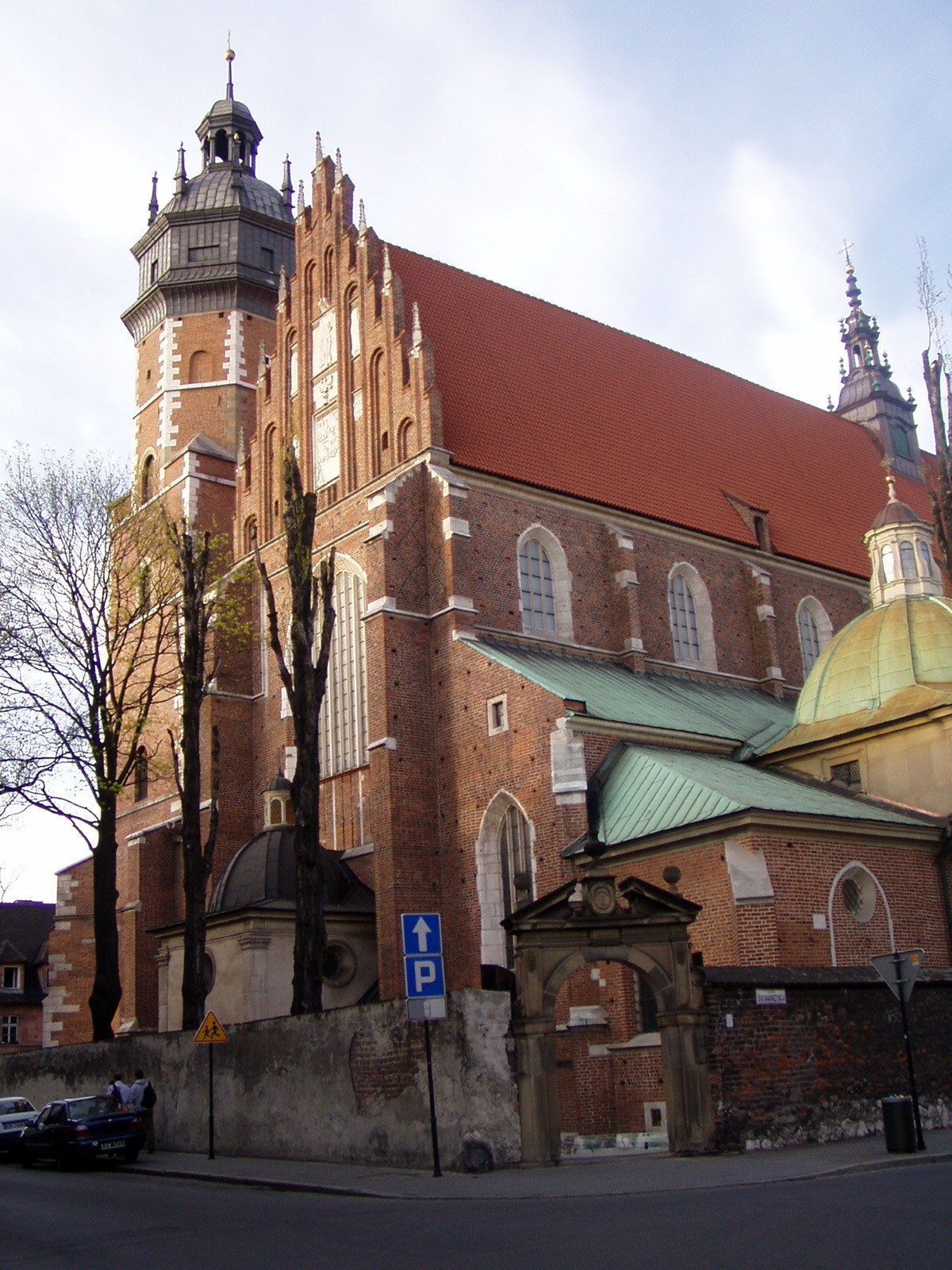
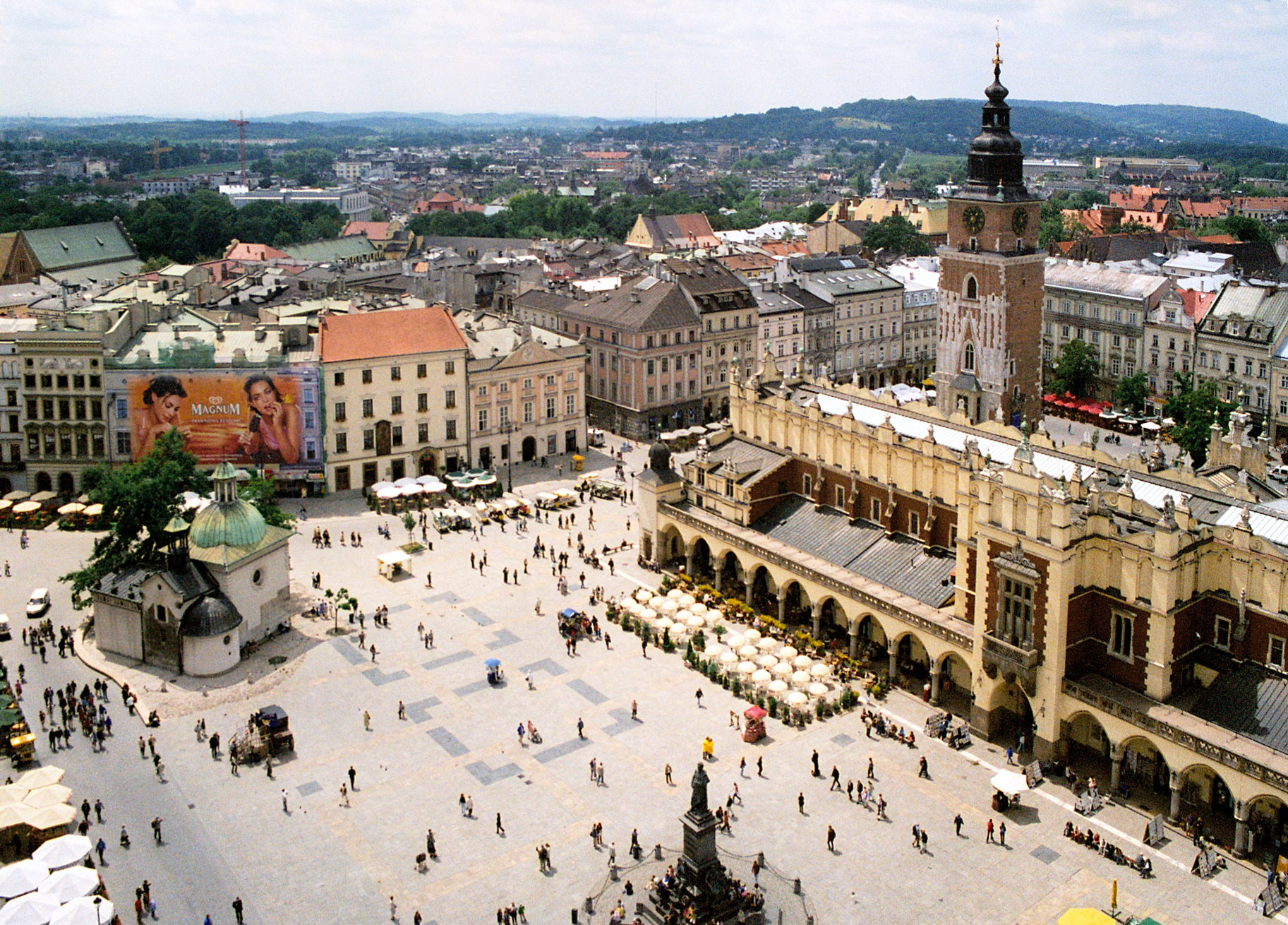
Kraków sustains a steady descant through the pages of Adam Zagajewski‘s new collection, Unseen Hand – most often, it’s Kazimierz, the old Jewish quarter where I stayed in May:

In the Church of Corpus Christi I lit candles for my dead,
who live far off – I don’t know where
– and I sense they warm themselves in the red flame too
like the homeless by a fire when the first snow falls.

That’s Corpus Christi, outside my window in Wolnica Square.  And one poem for St. Catherine’s Church, and at least three references to Jozef Street, catty-corner to Wolnica Square.  “Joseph Street in Winter,” is dedicated to Joachim Russek, the head of the Judaica Foundation, a tutelary spirit for my first trip several years ago:

In winter Joseph Street is dark,
a few pilgrims flounder through wet snow
and don’t know where they’re going, to which star,

And two references to pigeons – charitable, because I know Adam finds them contemptible.  It was the subject of our first discussion when we met in Rynek Główny, which was swarmed with pigeons.

He didn't like the pigeons.

I actually “met” Adam during an online interview six or seven years ago for an article that was published Poetry Foundation article).  But much of the short interview never made it to the final piece.  For example, I asked him what gave rise, to a generation of giants:

“Good question. I have many contradictory explanations. One of the main ones is that the attention given to the meaning of human life in radical circumstances  (as opposed to the hermetic direction, or to a purely formal quest) in Polish poetry after the WWII catastrophe was a very important move: it gave the dying Modernism a new energy. It ‘rehumanized’ a highly sophisticated but a bit empty palace of modern poetry.”

On irony:

“Well, the disease of irony seems to be well identified. I adore irony as a part of our rich rhetorical and mental apparatus but not when it assumes the position of a spiritual guidance. How to cure it? I wish I knew.”

"We'll be living in small ghettos..."

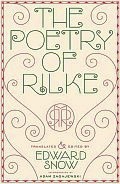
He has earned my own fealty, not only for his poetry, but for his many kindnesses.  So I was pleased when I read on Ann Kjellbergs website for her journal Little Star, a lengthy excerpt from his introduction to Edward Snow’s translations of Rainer Maria Rilke. (It was also excerpted by Poetry Daily here.) Adam is much in demand for introductions, blurbs, reviews, and essays.  This introduction is one of his best (I excerpt from Ann’s excerpts – and by the way, thank you, David Sanders, for pointing out the piece in Poetry News in Review):

“We have a new sorrow today: after the terrible catastrophes of the twentieth century, after the disasters that entered both our memory and imagination, we tread gingerly at the point where poetry meets society; “Don’t walk beyond this line,” as the sign on every jetliner’s wing warns us. And yet the central issue for us is probably the question of whether the mystery at the heart of poetry (and of art in general) can be kept safe against the assaults of an omnipresent talkative and soulless journalism and an equally omnipresent popular science—or pseudo-science. It also has a lot to do with the weighing of the advantages and vices of mass culture, with the influence of mass media, and with a difficult search for genuine expression inside the commercial framework that has replaced older, less vulgar traditions and institutions in our societies. In this respect, it’s true, poets have less to fear than their friends the painters, especially the successful ones, who, because of the absurd prices their works can now command, will never see their canvases in the houses of their fellow artists, in the apartments of people like themselves, only in vaults belonging to oil or television moguls who don’t even have time to look at them. Still, the stakes of the debate and its seriousness are not very different and not less important than a hundred years ago.

We know that the main domain of poetry is contemplation, through the riches of language, of human and nonhuman realities, in their separateness and in their numerous encounters, tragic or joyful. Rilke’s powerful Angel standing at the gates of the Elegies, timeless as he is, is there to guard something that the modern era—which gave us so much in other fields—took away from us or only concealed: ecstatic moments, for instance, moments of wonder, hours of mystical ignorance, days of leisure, sweet slowness of reading and meditating. Ecstatic moments—aren’t they one of the main reasons why poetry readers cannot live without Rilke’s work? I mean here readers of contemporary poetry who otherwise are mostly kept on a rather meager diet of irony. The Angel is timeless, and yet his timelessness is directed against the deficiencies of a certain epoch. So is Rilke: timeless and deeply immersed in his own historic time. Not innocent, though: only silence is innocent, and he still speaks to us.”

From my interview (I had cited this in an earlier post last fall, when Adam’s name came up again for a Nobel), when I asked him about the future of poetry and poetry-lovers in the world of tweets and sound bites he said this:

“We’ll be living in small ghettos, far from where celebrities dwell, and yet in every generation there will be a new delivery of minds that will love long and slow thoughts and books and poetry and music, so that these rather pleasant ghettos will never perish — and one day may even stir more excitement than we’re used to now.”

By the by,  Patrick Kurp of Anecdotal Evidence has a review of Unseen Hand here.

“Not poetry, but the idea of poetry”: Charles Bernstein disses National Poetry Month

Share

Bernstein has a counterproposal

Courtesy of David Sanders‘s weekly Poetry News in Review, another diss for National Poetry Month, this time from language poet Charles Bernstein, who points out that the whole bland endeavor “not poetry but the idea of poetry, and the idea of poetry too often has meant almost no poetry at all.”

National Poetry Month is about making poetry safe for readers by promoting examples of the art form at its most bland and its most morally “positive.” The message is: Poetry is good for you. But, unfortunately, promoting poetry as if it were an “easy listening” station just reinforces the idea that poetry is culturally irrelevant and has done a disservice not only to poetry deemed too controversial or difficult to promote but also to the poetry it puts forward in this way. “Accessibility” has become a kind of Moral Imperative based on the condescending notion that readers are intellectually challenged, and mustn’t be presented with anything but Safe Poetry. As if poetry will turn people off to poetry.

That’s just the beginning.  He notes that some of the sponsors who have backed the Academy of American Poets‘ National Poetry month are among the corporate chains that have driven small presses and independent bookstores out of business.  Then he goes on a tear:

“I also note this year that The New York Times is a major sponsor of National Poetry Month; but if the Times would take seriously the task of reviewing poetry books and readings, it would be doing a far greater service to poetry than advertising its support for National Poetry Month. The whole thing strikes me as analogous to cigarette makers sponsoring a free emphysema clinic.”

He suggests an anti-poetry month, with full-page ads:
.
Go ahead, don’t read any poetry.
You won’t be able to understand it anyway:
the best stuff is all over your head.

And there aren’t even any commercials to liven up the action.

Anyway, you’ll end up with a headache trying to figure out
what the poems are saying because they are saying
NOTHING.

Who needs that.

Better go to the movies.

Bad taste in my mouth, on the page: Donald Hall, Sarah Palin, and WaPo

Share
No caption needed.

No caption needed.

Alexandra Petri of the Washington Post gives us more evidence that she is not a class act, though after her rather tasteless derision of the octogenarian poet Donald Hall receiving the National Medal of Arts last week, we really needed no further proof.  I posted about David Sanders‘s comments in “Poetry News in Review” on March 7, and the post was picked up by (among other places) the conservative Weekly Standard.

When Sarah Palin tweeted about Petri’s “caption contest,” I feared it might become a political football, and I was right. A fundamentally human issue fell into the mighty left-wing/right-wing chasm that now disfigures this country’s public discourse.

Petri grabbed the low-hanging fruit.  In her blog post, she reveals:

“My first thought on hearing that Sarah Palin had tweeted this in response to something I’d written was: ‘Oh no, she’s read the Justin Bieber coverage.’

After all, I frequently wake up in cold sweats from dreams in which I am reprimanded by Sarah Palin for writing too much about Justin Bieber — or vice versa. This is the single most shameful thing that can happen to anyone, ever, including wearing white after labor day while being Charlie Sheen.”

While I’m not a fan of the Alaskan governor, she (or whoever wrote the tweet for her) happened to be right on this one.

However, Petri appears to be one of those people who only opens her mouth to change feet.  Hence, she continues:

Meh.

“Still, I’m not sure if you’re aware of this, Sarah Palin et al., but caption contests have been around for a while. They fall, like rain, on the just and the unjust alike. From the sounds of the coverage, you would think I’d gone to Mr. Hall’s home with a megaphone and read ‘Sudden Things’ in a snide voice, or that caption contests were a new invention, designed explicitly to bedevil old gentlemen with rich life experiences who wind up in amusing snapshots.”

Nice to see you googled Donald Hall to read one of his works, Ms. Petri – not his best effort, but I don’t expect you’d know the difference, given the cultural interests you’ve cited.  In any case, we’d prefer you’d stuck to Justin Bieber and Charlie Sheen.  Caption contests don’t fall “like rain,” they are developed by writers, approved by editors, and then read by the public.  This isn’t a big issue – and I certainly didn’t expect a moment of conscience from you – but it’s worth noting, which is why I took time to write about it.  I had hoped for better from your editors.

“Maybe this is a good time to explain the concept.

“A caption contest presents you with a photo. (Sarah, a photo is basically like a TLC series about you, but sometimes it can show you in an unflattering light.) Then, the people who see this photo attempt to write something called a caption, the goal of which is to provoke laughter in the people who read it with the photo.”

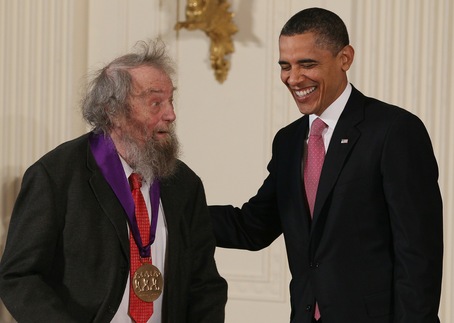
Donald Hall receives honor from Pres. Obama

Yes, Ms. Petri, we gathered that was the point.  That’s why many people wrote about their dismay and your lack of respect for people who are clearly your betters.  We were appalled by the low cultural level your writing represents for a once-great national newspaper.  We were repelled by the ageism you encouraged in the comments. When you offered, in today’s post, your own picture, for more funny captions, we are puzzled by your lack of self-respect as well.  But it explains a lot.  Really.

“I’ve written more than a dozen pieces about Palin herself, who is like cocaine except that there are rare occasions when cocaine might make your writing better.”

Whatever it takes, Alex.  Whatever it takes.

Postscript: Mark Bauerlein at The Chronicle of Higher Education weighs in: “It must be read to be believed.”  Read more here.

Postscript #2:  Frank Wilson at Books Inq throws in his 2 cents:

[Petri] certainly appears either incapable or unwilling to grasp that the problem was not with her having a caption contest, but with her choice of photo, which was of a person deserving respect, not derision. So let’s help: You were making fun of a frail old man, Alex, for no other reason than that he looked frail and old. Most people regard doing such as in terrible taste. Don’t hide behind Sarah Palin. Go take a course in remedial manners.

Donald Hall and the Washington Post – not a pretty site

Share

No, I’m not talking about Donald Hall‘s appearance in this headline – rather, I’m talking about the ugliness of the Washington Post‘s online derision of him, following his acceptance of the National Medal of Arts last Wednesday (we posted about the awards here – and there’s a nice March 2 article about Donald here).

In the column, which is determined to be unflaggingly perkyAlexandra Petri commented on the 82-year-old poet, “who is not, in fact, a yeti.” She invited us to think of a funny caption for the photo – but the suggestions in the comments section make clear the mean-spiritedness of the whole, largely ageist, enterprise.  If the comments aren’t enough, you can read a discussion of the submissions on the chat here.

“What does this photo say to you, other than: ‘Help! I’m a talking photo!'” Petri asked.  David Sanders in his emailed newsletter, Poetry News in Review, responded more graciously than I could:

A better question might be what does a photo caption competition say about you. I wish I can articulate exactly why this bothers me. I suspect it has something to do with my own inclination to poke fun at the perceived deficits of others without regard to whether they are self-created, congenital, or accidental, as if that mattered. It’s not a side of me that is attractive, but mockery is easy and instantly gratifying.

In this case: Donald Hall, a white, male, octogenarian, successful poet, with an unkempt mane and beard, appearing with our dashing president to accept a prestigious award. So which of these things is open to ridicule and mockery at the behest of our utterly charming Washington Post columnists? All of them.

Of course, this bothers me particularly because I know who Donald Hall is, what he’s achieved, and admire his body of work. I’ve met him only once and that was in passing a couple of years ago, but he seemed to be content with himself. So I assume that this little cleverness from our well-tailored friends at the Post would not bother him, if he even knew about it. And he doesn’t need me to defend him. So I won’t. But I will be embarrassed for the rest of us.

Thank you, David.

(You can subscribe to David’s Poetry News in Review here.)

Postscript on 3/8Philip Terzian writes:  “One of the embarrassments of the nation’s capital is that the dominant newspaper in Washington is relentlessly philistine, and routinely second-rate in its cultural coverage. Its free-standing book section was discontinued last year, and its coverage of music, art, dance, theatre, and film is either nonexistent or seemingly aimed at the lowest common denominator in its readership. The jeering, juvenile tone of this Petri joke at the expense of Donald Hall is, sadly, all too typical.”

Postscript on 3/9: After Terzian wrote about this kerfuffle in The Weekly Standard following my post, Sarah Palin picked up the banner on Twitter.  From there to the world.  (Ted Gioia posted my post on his Facebook page, where Terzian found it and commented – the evolution of a tweet.) This is a bipartisan issue – or rather, a totally apolitical one – so I hate to see it become a political football of one side or ‘tother.  David Sanders‘s judicious and humane comment speaks for itself.  I think his remarks are still the best reflection on this whole situation.

Postscript on 3/10:  Petri’s definitely not a class act.  She defends her ridicule of Donald Hall by attacking Sarah Palin – and the sight isn’t pretty.  More here.

Poet Moore Moran: A death in Ordinary Time

Share

Moore Moran, Sept. 27, 1931 - Feb. 27, 2011

I received an email from my publisher at Ohio University Press/Swallow Press earlier this week – the poet Moore Moran, known to his friends as Mike, died on February 27.  He was 79.

I had blogged about the Santa Rosa poet here and here. He had published his first full-length book, Firebreaks, in 1999 – it bagged a National Poetry Book Award.  His newest book, The Room Within, was published last year.

“Imagine a poet who could deal with the experience of Jack Kerouac but with too much intelligence to limit himself to the road. You don’t have to imagine him. He exists. He has many skills, all of them beautifully bright, and on occasions when he looks into the abyss they take him safely over it,” said Turner Cassity of Moran’s poems.

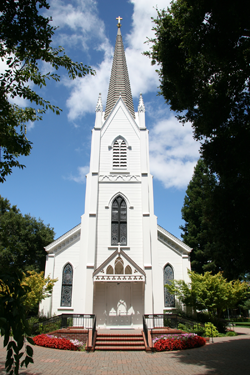
But I was startled when I reread the email a few days later and realized I had overlooked that the memorial would not be in Santa Rosa, but nearby, in Menlo Park – where, it turns out, he had graduated from high school before getting two degrees from Stanford.

So I dropped in on Friday afternoon to pay my respects to a poet in the century-old Church of the Nativity.  But it was not a poet who was being honored so much as  “husband, father, grandfather, great grandfather, father-in-law, friend, poet,” according to the program.

He was much loved.  About 150-200 friends and family came to the mass, with bluegrass guitar and bass fiddle performers Dennis and Ehlert Lassen singing “Amazing Grace” and Leonard Cohen’s “Hallelujah.”  Not necessarily what one would expect from the poems, with their bleak, spare mystery.

Surprisingly, everyone looked like they had come for the same event – the men were all in jackets and ties, and the women in somber suits and dresses. Banished were all traces of “California casual,” where some people look as if they had wandered in from the garden or the beach or a cocktail party.  Nor did there seem to be any poets on hand from the “Yvor Winters Circle” – but then, the room was crowded and I was in a back corner, and this was a very quiet death, after all.

The priest, referred to only as “Father Davenport,” recalled that Moore Moran, despite disability, was “always smiling” and “a good man.”

His son, businessman Mike Moran, said, “I never stopped amazing my dad, and my dad never stopped amazing me.”  The son, to put it mildly, was not a poet or lit freak.

His father taught the kids Latin and music, as well as Yvor Winters, John Steinbeck, and J.D. Salinger.  He was “an encyclopedia of jokes,” recalled his son.  And, in fact, the program included his poem “Just Joking,” written on his 51st birthday, when he had “maybe a third of a tank left”:

…the bewildered heart in us which,
Year by year, measuring our slim attainments
With mounting despair, still feeds
In its recesses some faint hope, despite
The certain knowledge that what it hopes for
Cannot change the tide…

“He was often lost in afterthought,” said his son.  “I’m certainly no poet, but I came to appreciate my father’s poetry.” He recalled the children’s hesitancy to have their father correct their writing, because “then we’d go back for another hour of writing.”

But sometimes dad came in handy.  Moran Jr. recalled a long discussion his father launched when the son was having trouble “getting” Chaucer‘s Canterbury Tales.  The next day in class,  Moran Jr. performed the usual duck-and-hide with averted gaze, to avoid the teacher targeting him with a question.  The teacher targeted him anyway.

Thanks to his dad’s monologue, the so-so student poured forth with a reply “at a depth and level far beyond what my teacher had.”

The class was “absolutely stunned.  The whole room was silent,” he recalled.

“I was bumped up to AP English,” he said, and paused for only an instant. “That lasted about four days.”

On Moran’s memorial page at legacy.com, David Sanders wrote: “A gentleman and a fine poet. It was an honor to edit and publish his last book.”

“Just Joking,” with its rambling style is nice, but my favorite Moran poems are quick and cryptic – like this one:

Ordinary Time in the Pews

Church of the Nativity, Menlo Park

Ordinary days again.
Advent, Pentecost are past;
who now will accept our sins,
raise the dust in which we’re cast?

Cold the God flesh on the tree,
banned the crèche to attic murk,
sheer the silence after prayer.
Nothing seems at all to work.

Yet we try and try again
serving Him we hardly know:
honk if you love Jesus, friend,
beeping blessings as we go.

Here we meet who, somehow, must
rescue meaning from the dust,
where betrayal’s kiss presents
our best hope of relevance.

PostscriptPatrick Kurp at Anecdotal Evidence has added a lovely tribute here.  “Earth only will find him cold.”

Postscript on 3/7: Looking online for others who remember Moore Moran, I found this mini-memoir from Peter Robinson.