
I get a nice review, but Agustín Maes gets Paris

Share

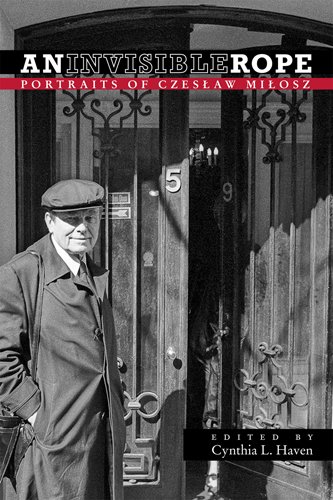
Dave Lull sent me a link for another review of my book, from Gregory Wolfe‘s Image journal:  “This year is the centenary of the poet and Nobel Laureate Czeslaw Milosz’s birth. As a writer he is universally celebrated, but his life and work exist on such an epic scale that many of us are intimidated by the idea of actually clambering up those heights. So the publication of An Invisible Rope: Portraits of Czeslaw Milosz, edited by Cynthia L. Haven, is a welcome addition to the literature.”  The writer  concludes that although the book is not an introduction to the poet’s life and work, “it can be an excellent companion for the reader who decides to take the plunge and get to know a great man who lived through dark times and yet went on to become a witness to truth, goodness, and beauty.”

Covered with glory

Beneath the review I saw a familiar face:  San Francisco’s Agustín Maes was just named as one of two runners-up for the first-ever Paris Literary Prize, an international competition sponsored by legendary Paris bookshop Shakespeare and Company in collaboration with the de Groot Foundation. Winner Rosa Rankin-Gee took the 10,000-euro prize, and Adam Biles was the fellow runner-up. Their work was chosen from over 430 novellas submitted from 34 countries.  The contest highlights the novella as a literary form and is open to writers who have not yet finished a book.  The winners were announced on 16 June during an award event held at the Société des Gens de Lettres in Paris – so Agustín got a trip to Paris.

Erica Wagner, jury chair and literary editor of The Times (London), wrote:

“Along with my fellow judges, I was dead certain that the author of one of the runners- up, Newborn—about a naïve teenage girl forced to deal with an unwanted pregnancy— must be by a young woman. I mean, obviously, right? Nope. Its author turned out to be Agustin Maes, an American man… The kind of imagination evidenced by a story such as his is a reminder of what a magic trick really fine writing can be. It is the writer’s job wholly to inhabit the characters he or she invents: a rare gift that few authors truly possess.”

Congratulations, Agustín!
Joseph Brodsky monument: It’s the thought that counts.

Share

There'll be bird poop on his face within a week.

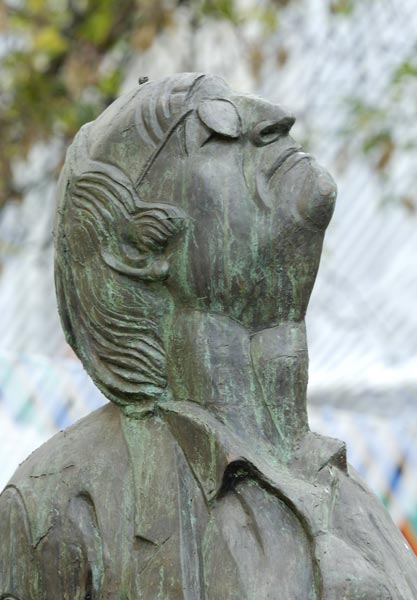
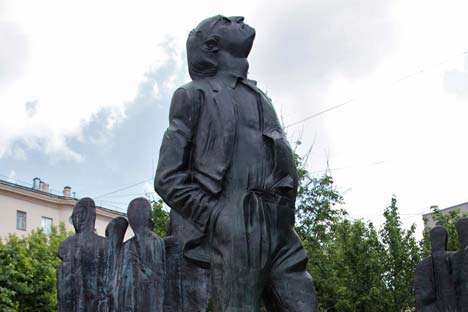
I don’t care for the likeness, but I do rather like the chutzpah of the sculptor, Georgy Frangulyan.  His proposed statue of Joseph Brodsky lost a contest in the Nobel poet’s native St. Petersburg, and earlier was the subject of frenzied internet opposition.  So he up and decided to put the statue up on his own dime (or ruble) … in Moscow.

“It is my own personal monument,” said Frangulyan. “I didn’t have a choice, as there was a crisis and all those who had promised money withdrew.”

Late for the train, John?

Frangulyan wouldn’t say exactly how much it cost, but priced it at a few million dollars.  Since the sculptor is fronting the money for the project out of his own pocket, without anyone buying the statue, I don’t know how he would assess its value.  Materials?  I doubt he had that kind of money to invest.  Labor?  He puts a high price on himself.  Usually, the value of artwork is determined by someone making a bid.  But if these are the new rules, this post is worth $50K, and I expect you all to start chucking money at me.

As for the locale, Moscow worthies decided to put it across from the U.S. Embassy:  “We looked for a place for a long time,” said Alexander Kuzmin, Moscow chief architect, in 2007. “We looked to see where the relatives of the poet lived. Then we asked ourselves a question: What most of all links Brodsky and Moscow? And we understood – the American embassy, from there he left the U.S.S.R.”

The Russia Beyond the Headlines article, here (with a hat tip to Dave Lull) is a masterpiece for what is left unsaid. The article states that “Brodsky actually left for Vienna, initially…”  Well, no, the government had a policy of shipping its unwanted Jews to Israel.  Vienna was merely the stopover where he bailed, with Russian scholar and friend Carl Proffer, and headed for the U.S. instead.  The article notes that he never visited his parents again after his exile.  Well, no, he didn’t.  Even though he petitioned repeatedly, with increasing desperation, to get them a visa.  He even wrote about it, bitterly.

Nearby are sculpted silhouettes of twelve people in two groups, but Brodsky is obeying a shopworn convention of the otherworldly poet, staring into the sky, abstracted, not watching to see if he is stepping into pigeon crap.

According to the article:

Frangulyan said it shows how a poet is alone but with a circle of followers. “Some people go through life like a shadow and some become individuals,” he said.

Well, okay.  Whatever.  But the look on his face is, well, a little disdainful.  Like he’s looking down his honker at everyone.

David Sanders suggested that he was on the lookout for overhead pigeons.  The first well-targeted pigeon bombing should dispel that one.  It’s likely to land on his prominent nose.  He won’t see coming: his eyes are closed, if you look closely at the face.

I have another explanation:  He’s finally back in the new Russia – but he is stubbornly refusing to look at it.

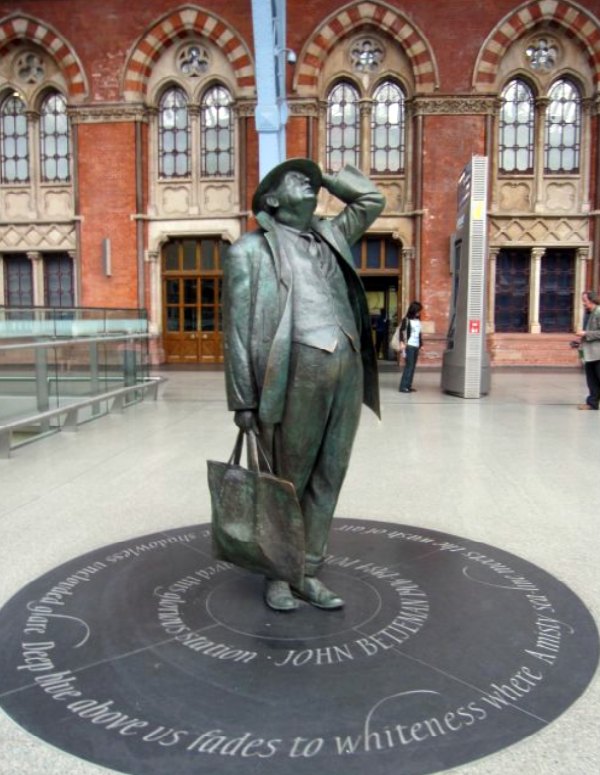
For purposes of comparison, here’s a statue of John Betjemin in the square where I lived briefly some years ago.  He also, is looking up – but looks rather confused, and lost in the St. Pancras/Kings Cross Station, and maybe late for a train.

Postcript on 7/10:  David Sanders, in his emailed Poetry News in Review, had this more sagacious comment, which humbled me mid-snark: “Maybe it’s time for a renaissance in publicly memorializing poets and writers through the strategic placement of their likenesses, if only in hopes that it will prolong the life of their words, raise their public profiles (so to speak), and give them equally footing with our other heroes. For some of us, these men and women are our heroes.”

Orwell Watch #11: One man’s lonely war against cliché

Share

“The internet is not destroying the language after all, then, but giving us new ways of shaming its most prominent practitioners into using it better. Let us set politicians a quiz. What are guarantees always made from? Cast iron. And with what are their bottoms made? Copper. And what are they not worth? The paper they are written on. (Or, alternatively, the paper that they are not written on.) For whom do politicians speak? The silent majority. Or hard-working families. Especially the ones who work hard and play by the rules.

Well, it turns out that the silent majority want to read and hear fresh, clear and original language. So go to independent.co.uk/bannedlist and nominate your suggestions for inclusion. I’d say we should crowd-source this project, but I’ve put crowd-source and project on the Banned List.”

A man after my own heart (whoops! another one!)

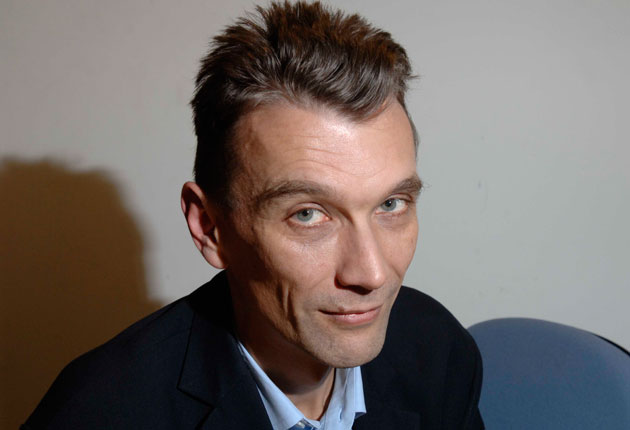
These are the … dare I say it? … fighting words from John Rentoul of the Independent, and I’ve just discovered his cliché column.

The phrases that make him grind his teeth don’t necessarily make me grind mine – apparently, “any time soon” is the one kicked him over the edge – but he’s fingered “progressive” as an empty bit of self-congratulation, a charge that earned me some brickbats when I wrote about it here.  But how did he miss “heads up”?  Or “take responsibility for” when referring to those who will do nothing of the kind (I wrote about that one here)?

From the top 100  (check them out for yourself here:

1. Celebrating diversity.
2. Inclusive.
3. Black hole (in a financial context).
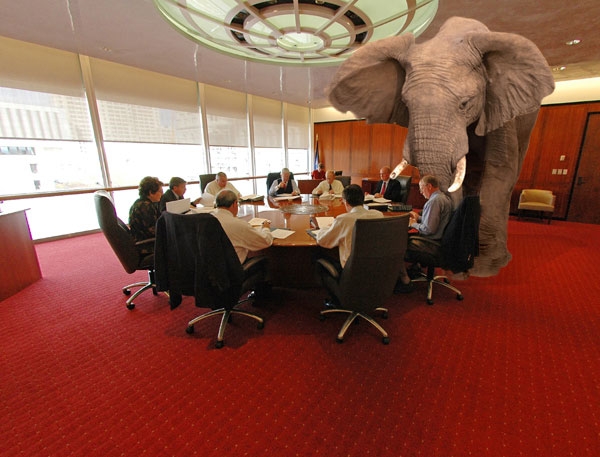
4. The elephant in the room.
5. Perfect storm.
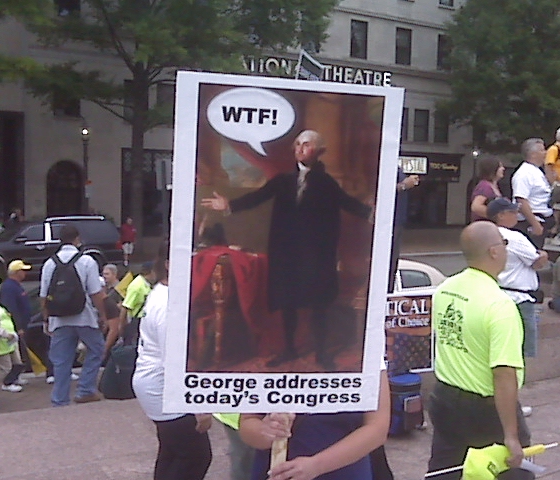
6. IMO, IMHO, LOL, ROFL and so on. I mean, whose opinion is it going to be? Genuinely witty abbreviations, however, are permitted, for example, QTWTAIN, YYSSW, IICRS (Questions to Which the Answer is No; Yeah, Yeah, Sure, Sure, Whatever; Iraq Inquiry Coverage Rebuttal Service).  [Shall we add WTF? – Ed.]
7. Vibrant (when used to mean lots of non-English people).
8. It’s in his/her/their DNA.
9. Let’s be clear.
10. “The truth is…” before the peddling of an opinion.
11. Any journey not describing travel from A to B.
12. A no-brainer.
13. What’s not to like?
14. Max out (in relation to credit cards only).
15. Coffee, the waking up and smelling thereof.
16. Out of the box (especially thinking).
17. Radar, to be on someone’s, or to be under the.
18. “All the evidence tells us” to mean “I’ve read something about this somewhere that confirms my prejudices”.
19. Stakeholder.
20. Who knew?
21. “And yet, and yet …”
22. The suffix -gate added to any news theme supposedly embarrassing to a government.

I shudder to think how many of these I have used – and not in the distant past, but recently. Sometimes hourly.

Also banned this month:

“What a difference a day makes”, which was used on Newsnight to mean: “Yesterday we reported something and today the Government has done something about it.” It is a bit like “a week is a long time in politics”, which is as hard to eradicate as cockroaches.

Rentoul ends with George Orwell‘s six rules from “Politics and the English Language.”  Great comments section, too.  What’s not to like?

Postscript on 6/25: Some interesting feedback from Jeff Sypeck in the comments section:

I’d like to see pundits, commentators, etc., stop saying “You want fries with that?” when they talk about college kids majoring in unmarketable subjects. Not only is it unoriginal–Google News shows 27 news outlets using the phrase this month alone–but no one at a fast food joint has even asked a customer this question since the late 1980s! For 25 years, we’ve been ordering complete fast-food meals, with fries, by number. (I also question whatever truth supposedly underlies this cliche, because class distinctions generally mean that the recent college grad with an English or Sociology degree is more likely to be doing filing or photocopying in an office or perhaps working in retail. He’s not the most common sight in the fast-food biz.)

Go to the comments section for the rest of his remarks (about the use of “urban” to mean “black”) and also, Dave Lull directs you to the clichés of love.

The world celebrates Bloomsday

Share

Coming soon: Public domain for writings

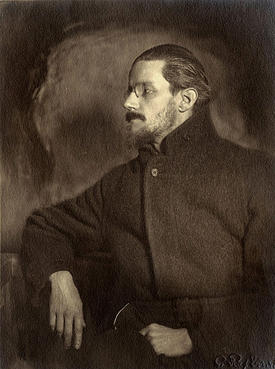
Happy Bloomsday, the day set aside to celebrate the life of James Joyce and relive the events in his novel Ulysses, all of which take place on June 16, 1904, “a day which for some of us is far, far more important than Midsummer,” says author John Naughton.

Time magazine offers five ways to celebrate.  The easiest?  “Drink up!”  Complimentary drinks at the Ulysses’ pub in downtown New York, but for those of you who can’t make it, you can probably track down a Guinness at the local Safeway.

Not to be outdone, the Los Angeles Times offers eight ways to celebrate – but here’s the funnest:  a rare recording of James Joyce reading from his own writing, pointed out by Boing Boing in 2009. The James Joyce Centre says that he was recorded reading from his work in 1924 and 1929 at the urging of Sylvia Beach, publisher of Ulysses.

Naughton notes, “When I first heard it I was astonished to find that he had a broad Irish-country accent. I had always imagined him speaking as a ‘Dub’ — i.e. with the accent of most of the street characters in Ulysses.”

There’s even a blog to commemorate the whole occasion:  Ulysses Meets Twitter 2011.

Still not enough?  Think of this:  James Joyce’s work begin migrating into public domain in January.  That’s enough to bring a smile to this lady’s face.

Meanwhile, a different kind of celebration below:

Postscript: Dave Lull pointed out a Wall Street Journal article recounting celebrations in Croatia, Australia, Shanghai, Norway and Argentina. (And Dublin, of course.) It’s here.

George Orwell: Love, sex, religion, and ghosts

Share

Aaaaa–choo!

I have to confess that I’d never had a thought, one way or ‘tother, about George Orwells views on anything supernatural. Frankly, I didn’t know that he had any – that is, until Dave Lull sent me a link for the following piece, Robert Gray‘s “Orwell vs. God,” from the most recent edition of The Spectator.

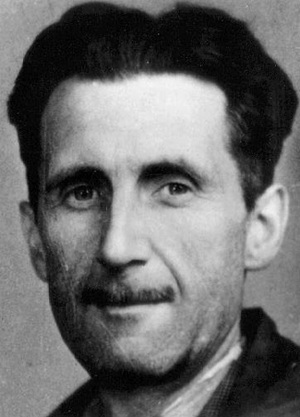
It probably won’t strike many as too much of a surprise that Orwell (a.k.a. Eric Blair) had a nearly allergic reaction to religion.  But that’s far too simple a characterization of a complex, intellectually tortured, relationship.

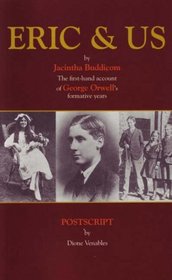
Yet as Orwell approached death, his intolerance of religion seemed to relax. In his last year he was delighted to receive a letter from Jacintha Buddicom, whom he had met at the age of 11, and who had become, during his teenage years, the first girl seriously to attract him — though his urgent desire was never returned. In her memoir, Eric and Us (1974), Jacintha Buddicom recalled how the young Eric Blair had loved ghost and horror stories, and how — jokingly, of course — he had given her a crucifix to keep away the vampires. Half the people walking the streets, he had speculated, were ghosts.

As long as his appetite for horror had been confined to imaginary worlds, he had been able to retain a capacity for joy in the real one. Jacintha Buddicom remembered him as a notably happy boy, and her memoir shows him full of kindness and fun, vastly different from the image he later purveyed of the miserable schoolboy at St. Cyprians, and still further removed from the misanthropic cynic who emerged at Eton.

But then in his first year at Eton Orwell had suffered a severe trauma. Infuriated by the bullying of an elder boy called Philip Yorke, brother of the novelist Henry Green, Blair and his friend Steven Runciman had constructed a wax model of their persecutor, and torn off one of the legs. Shortly afterwards Yorke broke his leg; a few months later he died of leukaemia. Sheer coincidence, no doubt, but deeply disquieting for the boys who had created the model. Runciman remained all his life an enthusiast for the occult; Eric Blair, perhaps more profoundly shocked, thenceforward shied away from any suggestion of the supernatural. Evil was clearly rampant, whereas ‘the good and the possible never seem to coincide’. It was at about 14, he later confessed, that he had abandoned his belief in God.

But that’s not all.  Gray continues:

Thanks to Animal Farm...

Yet seven months before Orwell died, he wrote to Buddicom, insisting that there must be some sort of afterlife. The letter, unfortunately, is lost, but Buddicom remembered that he had seemed to be referring not so much to Christian ideas of heaven and hell, but rather to a firm belief that ‘nothing ever dies’, that we must go on somewhere. This conviction seems to have stayed with him to the end: even if he did not believe in hell, he chose in his last weeks to read Dante’s Divine Comedy. [I wonder which translation – ED.]

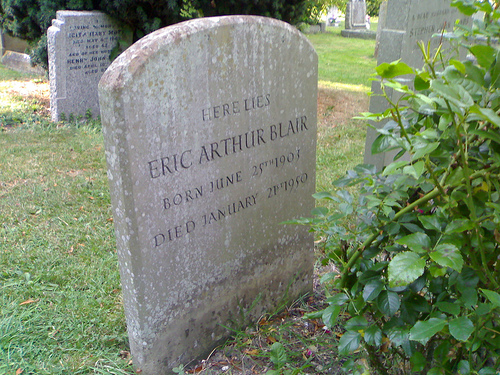
In his will Orwell had left directions that he should be buried according to the rites of the Church of England. Of course no one was better qualified to appreciate the beauty of the Book of Common Prayer; nevertheless the request surprised some of his admirers. A funeral was duly held at Christ Church in Albany Street; and David Astor, responsible for the arrangements, asked if his friend’s body might be interred in a country churchyard, at Sutton Courtenay, in Berkshire.

There was, however, a hitch. One of the churchwardens at Sutton Courtenay, a farmer, seemed doubtful that permission should be given. Had this fellow Orwell, or Blair, or whatever, really been a sound Christian? Fortunately the vicar had the inspired idea of showing the agricultural churchwarden a copy of Animal Farm. It was a title which instantly removed all scruples.

And that’s where he remains.

There’s lots more to the story – check out The Spectator article.

By the way, Jacintha Buddicom was the recipient of more than distant yearnings – John G. Rodwan’s  fascinating, and very well-informed, discussion of hot, steamy sex … well, the desire for hot, steamy, sex, anyway… under the stuffy title, “George & Jacintha: On the Limits of Literary Biography,” is here.

Postscript on 6/14:  Dave Lull wrote to add a note on a parallel theme, a review of David Lebedoff’s The Same Man: George Orwell & Evelyn Waugh in Love and War – it’s reviewed briefly in “A Study of Two Masters of English Prose,” by John P. Rossi.  The thought extends a passage from The Spectator article:  “Perhaps Evelyn Waugh divined something of Orwell’s buried spirituality when he wrote to congratulate him on Nineteen-Eighty-Four, and subsequently visited him in the nursing home at Cranham in Gloucestershire. On the other side, one of Orwell’s last attempts at writing was to draw up notes for an essay on Waugh, who, he considered, ‘is abt as good a novelist as one can be (i.e. as novelists go today) while holding unacceptable opinions’.”

Old names, new faces: Book cover contest launched by a man with a pierogi obsession

Share

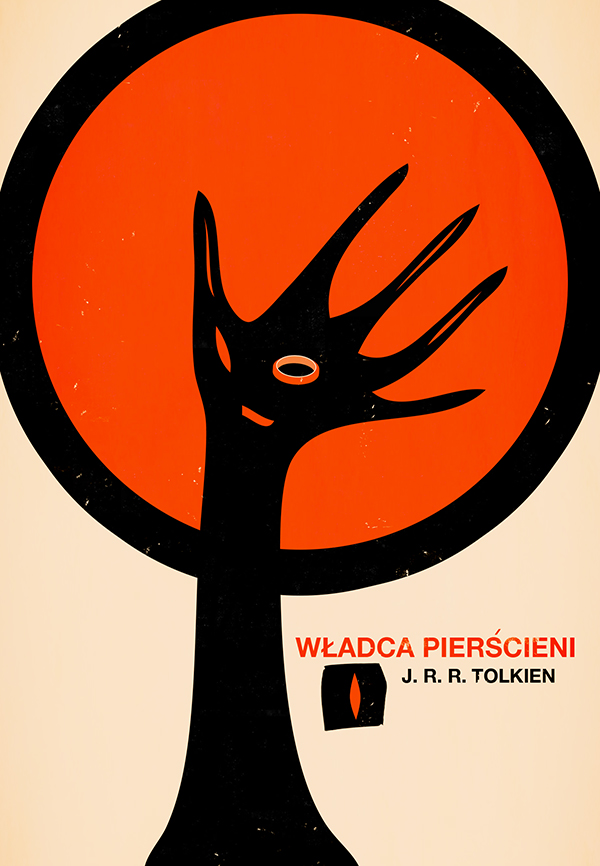
"Lord of the Rings"

Dave Lull sent me this site some days ago, but it took me a while to “get it.”  Chalk it up to the whimsy of the internet.

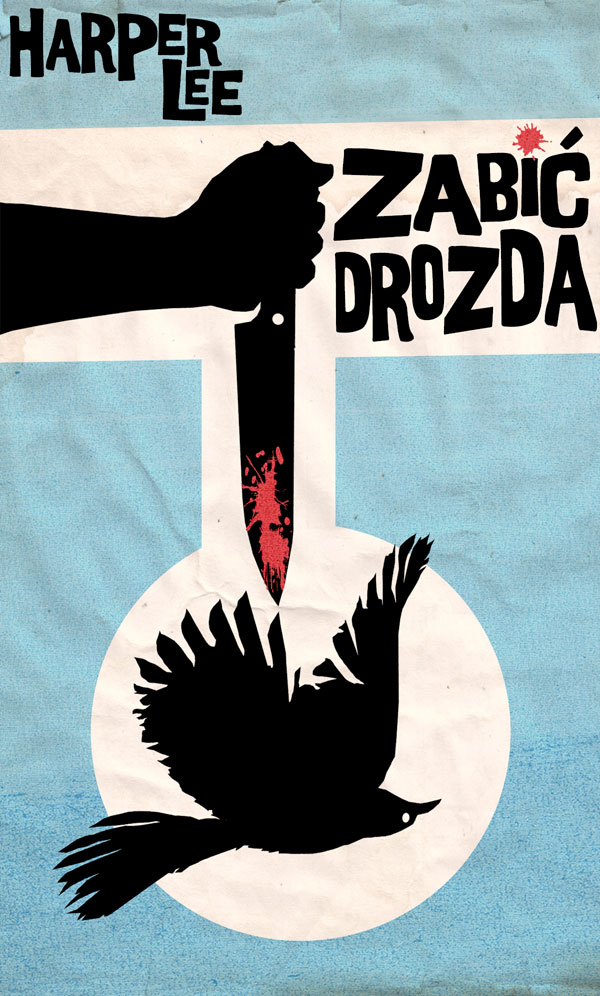
The art blog 50 Watts‘ Polish Book Cover Contest asked contestants to design the “Polish edition” of their favorite book.  Why Poland?  According to the site, Poland has an “incredibly rich history of book design” – for example, see the new book 1000 Polish Book Covers.  Also, see this post.)

Who was eligible?  “Anyone in the entire universe, not just Poland,” writes Will Schofield, the man behind 50 Watts.  “The submission fee is zero dollars, made payable to the Ghost of Jan Lenica.”

"To Kill a Mockingbird"

“I’m asking you to create a fake cover in the style of the Polish book designers featured in this post and elsewhere on 50 Watts. Do I have a preference for styles from 1920 to 1985? I do, but don’t let that ‘cramp your style,'” he writes.

Some of the judges appear to have been real Poles: Aleksandra and Daniel Mizieliński (editors of 1000 Polish Book Covers, founders of Hipopotam Studio, and book collectors), as well as Peter Mendelsund (book cover designer and the man behind Jacket Mechanical); and Schofield, the man behind Jacket Mechanical as well as the proprietor of 50 Watts.

Schofield answers other questions about the contest here.

His ulterior motive? “Pierogi endorsement.”