
The news is out! I’m a brand-new 2018 National Endowment for the Humanities “Public Scholar.” It is obviously a great honor, and I am thrilled beyond words. The letter of announcement is here and list of recipients is here. The Washington Post story is here. As for the project I will be undertaking as an NEH Public Scholar:
“I did not choose California. It was given to me,” wrote Nobel poet Czesław Miłosz. His attempt to come to grips with California was a lifelong psychological journey, and one that changed America as well as the poet himself. This story will be told in “The Spirit of the Place”: Czesław Miłosz in California, a book that was born in a British Academy talk I gave in London, 2012. It is the first book-length study to consider the Lithuanian-born Polish poet as an American.
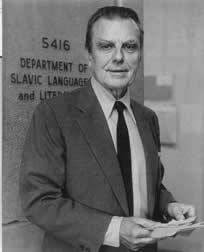
The Berkeley poet.
It all started at a Christmas party, a year-and-a-half ago, when I was still knee-deep in bringing Evolution of Desire: A Life of René Girard to press (Wall Street Journal review is here). Steve Wasserman, my former editor at the Los Angeles Time Book Review when it was the best in the nation, and more recently editor-at-large for Yale University Press, was returning to his rodina, Berkeley. He had just taken the helm at Heyday Books – in his words, “a unique cultural institution that promotes awareness and celebration of California’s many cultures and boundary-breaking ideas. Through well-crafted books, public events, and innovative outreach programs, Heyday seeks to build a vibrant community of readers, writers, and thinkers.”
We had spoken on the phone, we had emailed each other, but we had never actually met face to face until that chilly night on December 17, 2016.
The setting was Heyday’s cozy offices on University Avenue, only a mile from Chez Panisse, the legendary restaurant that is Steve’s second home. Heyday was a rabbit warren of booklined walls and dark wood paneling. Old Berkeley at its best. (It’s since had to move house, alas.)
 That night, the corridors were crowded with chattering people and the tables laden with a lavish spread of potluck offerings. The band performing by the entryway made conversation improbable. Nevertheless, Steve and I found a quiet room to chat, and he told me about his new publishing initiative at Heyday called “California Lives.”
In his words again: “The series will consist of book-length biographical essays on the men and women who, taken singly and together, have built a state which is a source of relentless reinvention, a magnet for peoples the world over who have sought an escape from history and a new identity in a land of seemingly endless possibility.” He wondered if I had any ideas.
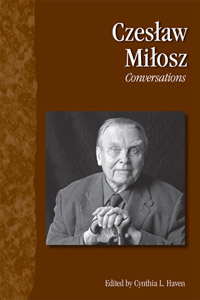
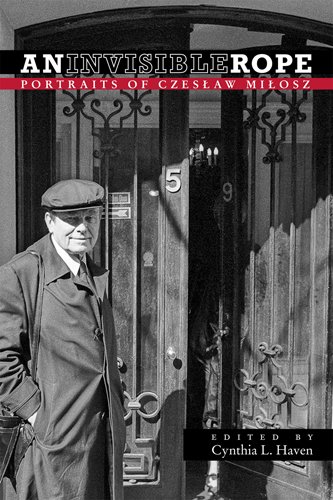
“Yeah, what about Czesław Miłosz?” I suggested. But … he’s Polish, he answered. “Well, we’re all from somewhere else, aren’t we?” I answered – it’s especially true in California. And, after all, the Nobel poet was a U.S. citizen – UC Berkeley’s first and only Nobelist in the humanities. Steve’s brow furrowed. But didn’t he dislike the U.S.? And California, for that matter? Consider his arguments about Robinson Jeffers. “What could be more American than opposition?” I answered. “We’re all protesting something.” He loved Walt Whitman, quarreled with the spirit of Jeffers, and he engaged American culture – while always remaining ambivalent about it. I had the expertise to advance the argument: I’ve written a welter of articles about Miłosz, and have two volumes about him to my credit, Czesław Miłosz: Conversations and An Invisible Rope: Portraits of Czesław Miłosz. And I’m a longstanding Californian – though across the Bay from Miłosz’s (and Steve’s) Berkeley.
 Steve was won over. Here’s what he wrote about the poet in a publisher’s statement for the NEH: “He is emblematic of a host of mid-century émigrés who sought refuge from the calamities of the twentieth century in California. It is a state that is both a place and a state of mind whose literature reflects a range of affection and unease. Miłosz’s contribution to that literature is a red thread that runs through some of his most important work, but is curiously neglected in most of the critical commentary. Heyday aims to correct that omission.”
Steve has another reason to be drawn to the subject: “I confess a personal stake in his story. I grew up in Berkeley and went to high school with his two sons. I spent time in his home on Grizzly Peak Boulevard. Later, when I was deputy editor of the Los Angeles Times opinion section I was among the first to interview him when he received the Nobel Prize for Literature in 1980.”
Steve has also been a longstanding champion of the proposed author of the book, too. Let me conclude with some praise for my humble self:
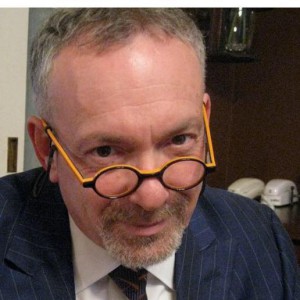
Thank you, Steve.
“Cynthia Haven’s writing on East European and Central European writers is superb, as I know from my years publishing her reviews in the Los Angeles Times. Moreover, as a longtime resident of California, she brings to bear a deep understanding of the state and its paradoxes. She is alive to irony and knows the virtues of a short declarative sentence. She is remarkably clear without neglecting nuance. She embraces the Eros of the difficult and translates it into terms that can be grasped by ordinary readers. Her perspicacity, diligence, and acute intelligence are ideal for this necessary book on Miłosz. She will help Californians in particular, and Americans more generally, enter Miłosz’s mostly unfamiliar but remarkably influential and important world. Her gifts as a researcher and writer—indeed, as a cultural journalist—are very nearly unrivaled in this arena.”
Steve was almost as pleased as I was by the NEH honor. And of course he suggested we celebrate at Chez Panisse soon, soon…

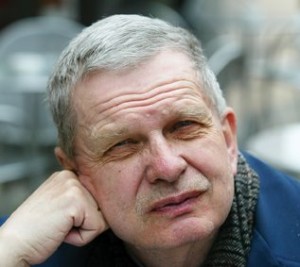
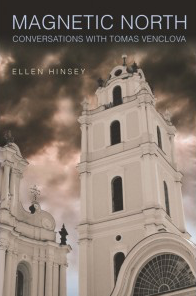 Lithuanian, the native tongue of 3 million people, continues to fascinate and sustain him, as it is “not only archaic, but rich and sonorous, virtually on a par with the Greek of Homer and Aeschylus. To me, as a poet, this has been rewarding”. He likens its rough phonetics to feldspar, adding that it has retained an archaic vocabulary and grammatical structure akin to preclassical Latin of the third century BC. And, Venclova points out, while it is one of the classical Indo-European languages, like Latin, Ancient Greek, Gothic, or Old Slavonic, it is the only one of them that is still alive. It nearly was not so. In the nineteenth century, it was in serious decline, like Gaelic or Welsh. Venclova compares it to the former, another archaic language that embodies an ancient past. Neighbouring Poland views Lithuania the way the English view Scotland, as wild and untamed, with “more primeval forests and a valiant but not-too-civilized people”.
 Come back,
 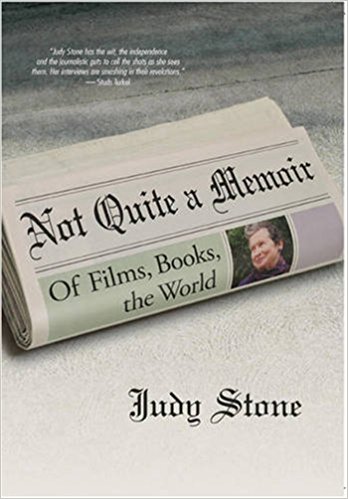 I had looked forward to meeting Judy Stone, The San Francisco Chronicle’s movie critic. She wasn’t solely a film buff. The passionate advocate for world cinema also published a number of stunning interviews with leading figures in literature and culture.
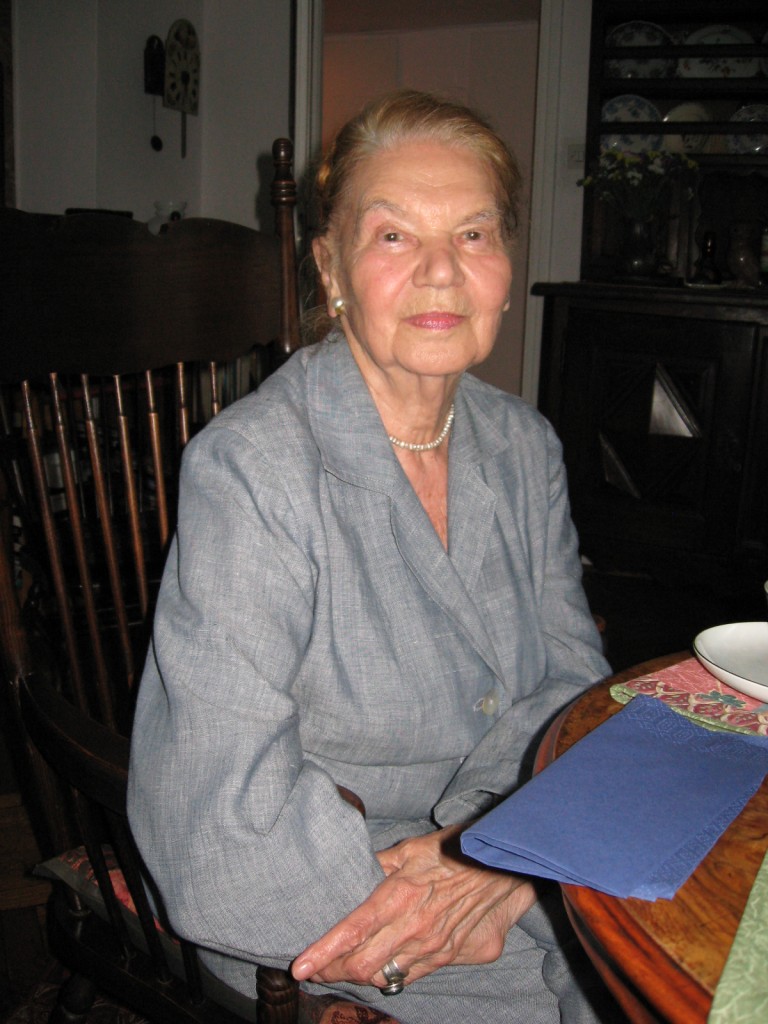
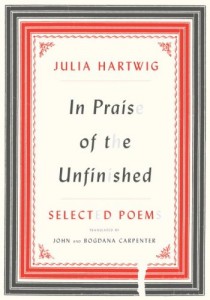 The photo at above was taken at our first meeting in 2008, after Marek guided me on foot through the backstreets of Warsaw at dusk of a hot August day. She was a gracious hostess. She always had a glass of wine and at least a light meal or snack prepared for me – and on that day, she also gave me a hardcover copy of In Praise of the Unfinished, newly published in English. Her accented English was formal but fluent, for she and her husband had spent years in America on the academic circuit. She told me of the war years – she had been a courier for the Home Army during the German Occupation, and as a teenager, was tipped off that the Gestapo were looking for her. She had to walk out of the city with the clothes on her back. (I write about her description of that experience and others in World Literature Today article, again