Warsaw poet Julia Fiedorczuk and “the only solid ground for empathy”

Share


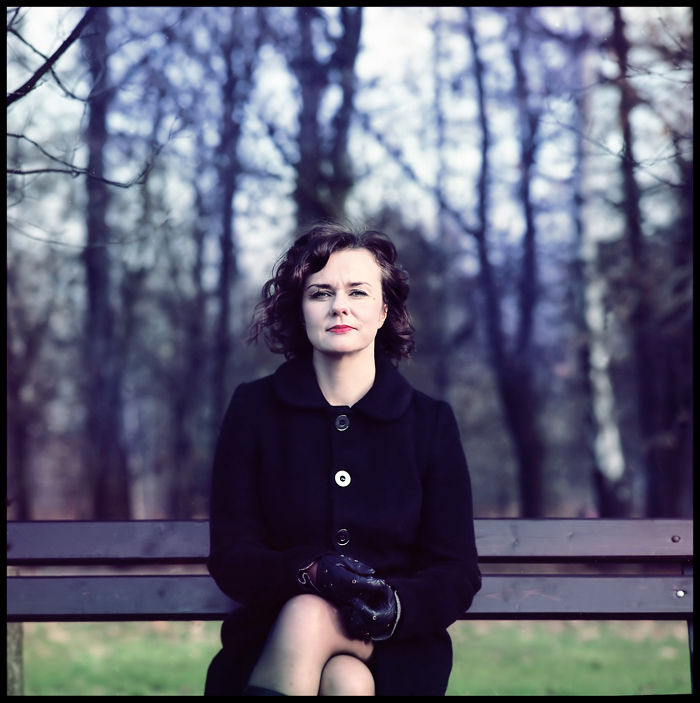
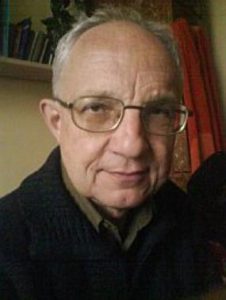
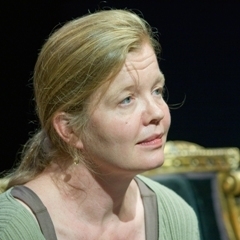
“The vulnerability of bodies” (Photo: Radek Kobierski)

.

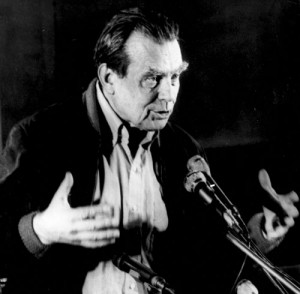
Yesterday was the anniversary of Nobel poet Czesław Miłosz‘s death. What better way to celebrate his legacy than to note the influence he’s had on a younger generation?

In his later years, the Polish maestro worked on translating the Psalms into Polish – he even taught himself Hebrew for the task. The result became a classic in the Polish language. And the endeavor bore fruit in his own poetry. His last poems are redolent with the cadences of the Psalms, along with their timeless spirit of grief and hope.

His psalms, and the effort to recreate them, have inspired others – notably the Warsaw poet Julia Fiedorczuk. “I gradually started studying the Hebrew originals with the help of a friend who knows Hebrew. I also looked at other translations into Polish – many Polish poets have translated the Psalms.”

“I’m attracted to Psalms because they express an attitude of gratitude and trust, even though some of them are written from the depth of despair,” she wrote me. “It is a desperate moment for the world right now, and in my Psalms I focus on contemporary problems. I also attempt to articulate a kind of post-religious metaphysics rooted in the experience of the vulnerability of bodies (human and non-human), which I believe to be the only solid ground for empathy.”

“My Psalms do relate to the originals, some very loosely, some a bit more closely. Sometimes they contain quotes (the Polish versions will allude to Miłosz’s versions). My Psalm 25 is a kind of ‘translation.’ Sometimes the allusion is only thematic, sometimes there is irony and distance (where Psalms of David glorify violence and anthropocentrism). It is an on-going experiment and I have no idea where it will take me.”

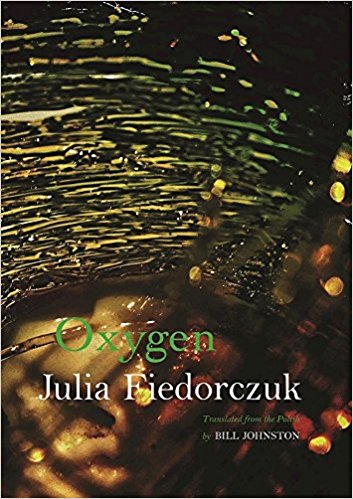
Psalm 31 was my favorite among the ones I’ve seen. Now it’s included in her new collection in English, Oxygen (translated by the inestimable Bill Johnston), published by Zephyr Press. The connection with its majestic prototype is indeed loose – it’s more a meditation on it. I see the homage, however, in the “mesh of branches,” which recalls the fourth verse of the psalm: “Pull me out of the net that they have laid privily for me: for thou art my strength.”


Psalm XXXI

for K.K.

a chickadee had perched on the windowsill like a message
generated by the mist, October
was turning into November in the birches oaks alders,
in the frost-resistant flowers, in the cemeteries
where our fathers wrote no memoirs,
where they would not recognize our children, our
poems, ourselves. The television was showing Poland
that had perished, and then had not perished, and then
again had perished, and then not, and then the sun
flung up a mesh of branches, all at once
the chickadee was absorbed by sky before I could say
remember, remember me –

Trans. Bill Johnston

The death of reading and the state of the soul

Share

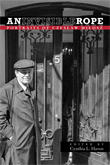
Years ago, when I wrote the introduction to An Invisible Rope: Portraits of Czesław MiłoszI made some remarks about the Nobel poet’s consideration of the world of “être” and “devenir” – and a world where reading has been replaced by tweets. We live in an era of globalization—as literary scholar Valentina Polukhina describes it, “a period in which our long history has been put into single storage.”

My publisher chided me for sounding like an old fogey – but of course I wasn’t talking about what was happening to the younger generation. I was talking about what was happening to me, and the fragmentation of my own attention. The passage in question:

Sven Birkerts regrets the loss of “deep reading.”

Miłosz’s worldview, his sense of hierarchy and values, puts him squarely, if reluctantly, in a select spiritual salon. In our times, it is a lonely place to be. Miłosz has become an icon, his works canonical, but head-on-a-coin status can often be a substitute for real understanding. This is particularly true when those spending the coins never lived under the Generalgouvernement of the Gestapo. For Generation Y, the communism years (and communism itself) constitute only a tedious chapter in history textbooks. … It may be a universal truth that a younger generation must try to distance itself from the seriousness of purpose in an older generation of giants.

This mileage provides a raison d’être for this book, as the distance stretches to the horizon’s vanishing point and threatens with extinction the very values Miłosz endeavored to preserve. This statement is more than old fogeyism or the specter of apocalypse—for Miłosz’s peers are almost entirely gone (he would have been one hundred years old in 2011), and, moreover, the restlessness, the segmentation of attention, and the increasing difficulty in absorbing anything more than 140 characters long are not merely traits of the younger generation but affect us all. Few can deny the dizzying rate of social and technological upheaval in the information age, where we communicate in real time with Peru and Twitter back what we hear, yet human greed, cowardice, and power-lust remain essentially the same. That acceleration, juxtaposed with man’s fallibility, is very much to the point.

One metric for measuring the chasm pertains to what Miłosz called être and devenir. (Or, to put a Thomist slant on it, he uses the Latin esse elsewhere.) When I interviewed him at his legendary Grizzly Peak home a decade ago, I asked him about être and devenir. He dodged the question: “My goodness. A big problem,” he said.

After some hesitation, however, he elaborated. “We are in a flux, of change. We live in the world of devenir. We look at the world of être with nostalgia. The world of essences is the world of the Middle Ages, of Thomas Aquinas. In my opinion, it is deadly to be completely dissolved in movement, in becoming. You have to have some basis in being.

“In general, the whole philosophy of the present moment is post-Nietzsche, the complete undoing of essences, of eternal truths. Postmodernism consists in denying any attempt at truth.”

Then he retreated to his initial reservations: “In truth, I am afraid of discussing this subject. The subject needs extreme precision. In conversation, it’s not possible.”

That was seven or eight years ago. Now everyone’s caught up with me, or perhaps everyone has caught up with Miłosz. Most recently, Philip Yancey observed the same thing. From the Washington Post:

The Internet and social media have trained my brain to read a paragraph or two, and then start looking around. When I read an online article from the Atlantic or the New Yorker, after a few paragraphs I glance over at the slide bar to judge the article’s length. My mind strays, and I find myself clicking on the sidebars and the underlined links. Soon I’m over at CNN.com reading Donald Trump’s latest tweets and details of the latest terrorist attack, or perhaps checking tomorrow’s weather.

Worse, I fall prey to the little boxes that tell me, “If you like this article [or book], you’ll also like…” Or I glance at the bottom of the screen and scan the teasers for more engaging tidbits: 30 Amish Facts That’ll Make Your Skin Crawl; Top 10 Celebrity Wardrobe Malfunctions; Walmart Cameras Captured These Hilarious Photos. A dozen or more clicks later I have lost interest in the original article.

Neuroscientists have an explanation for this phenomenon. When we learn something quick and new, we get a dopamine rush; functional-MRI brain scans show the brain’s pleasure centers lighting up. In a famous experiment, rats keep pressing a lever to get that dopamine rush, choosing it over food or sex. In humans, emails also satisfy that pleasure center, as do Twitter and Instagram and Snapchat.

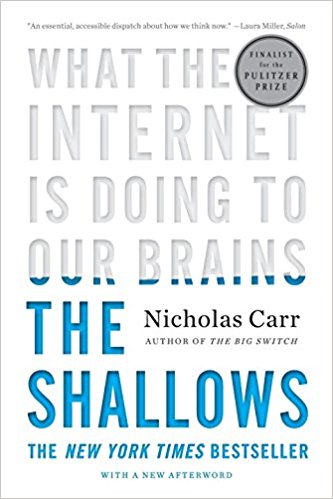
Nicholas Carr’s book The Shallows analyzes the phenomenon, and its subtitle says it all: “What the Internet Is Doing to Our Brains.” Carr spells out that most Americans, and young people especially, are showing a precipitous decline in the amount of time spent reading. He says, “Once I was a scuba diver in the sea of words. Now I zip along the surface like a guy on a Jet Ski.” A 2016 Nielsen report calculates that the average American devotes more than 10 hours per day to consuming media—including radio, TV, and all electronic devices. That constitutes 65 percent of waking hours, leaving little time for the much harder work of focused concentration on reading.

In “The Gutenberg Elegies,” Sven Birkerts laments the loss of “deep reading,” which requires intense concentration, a conscious lowering of the gates of perception, and a slower pace. His book hit me with the force of conviction. I keep putting off Charles Taylor’s “A Secular Age,” and look at my shelf full of Jürgen Multmann’s theology books with a feeling of nostalgia—why am I not reading books like that now?

Why indeed? Time to open all those J.M. Coetzee novels I have waiting on the shelves. Or return to Dostoevsky. Read the WaPo article here.

Happy birthday, Czesław Miłosz! He answers a few embarrassing questions on the occasion.

Share

It started in childhood.

Tomorrow, June 30, is Czesław Miłosz‘s 106th birthday. And the late Nobel poet himself offered me a kind of present.

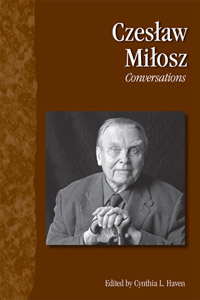
As I was thinning the ranks of my bookshelves – a very rare and reluctant activity – I stumbled across a 1982 issue of Ironwood, a once esteemed by now defunct journal. It was one of many random journal issues around the house, and before tossing it in the discard pile, I thumbed through to see what treasures it might disclose. Surprise! I found a 1979 Q&A interview with Miłosz I swear I’d never seen before. I’m sure I hadn’t seen it when I compiled my Czesław Miłosz: Conversations. How did I miss it? On consideration, however, no surprise: I’d barely heard of the poet’s name back in 1982, and I think the volume had been sitting on my shelves undisturbed for all the years since. I was even more pleased to see that the interviewer is a Polish friend, Aleksander Fiut, of the Jagiellonian University in Kraków.

What better way to celebrate his birthday than to share a few excerpts from the interview? You won’t find this easily anywhere else.

The eminent writer is often considered a philosophical poet, which he denied in the interview: “Because the philosopher thinks first before he formulates his thoughts into sentences. Whereas for me, the meaning is incorporated into the sentence, already present in the rhythm,” he said.

“One develops one’s ear for language in childhood. I did not, after all, grow up in an environment where Polish was spoken daily. It’s true, we spoke Polish at home, but the language we heard around us was not Polish. It was either Russian, at the time of my childhood in Russia, or Lithuanian, or Byelorussian, or that strange mixture spoken by the people in Wilno … But it may be that it is a sensibility developed through contacts with West European languages. The incantation may also be the result of the influence of church Latin, I don’t know.”

Interlocutor

Much of the interview concerns questions of Polish prosody, which he was, however, reluctant to discuss: “These are, how shall I say, embarrassing questions. These are intimate questions, questions of private craftsmanship.”

From the interview:

Fiut: What makes you choose traditional poetic forms? When you write a poem, how does it happen? Maybe I’m entering here into the intimate sphere of craftsmanship, but this is really interesting to me. Why do you sometimes choose a simple form, say for example, from the Middle Ages, and at other times a very refined and complex form?

Miłosz: It’s difficult to answer. That is to say, some questions are easy to answer, but not necessarily truthfully. I’m used to always having an answer ready when students ask me. But that does not mean that the answer is the most truthful one. Here it seems to me that several factors come into play. Who knows? Maybe the fact that I found myself isolated from Poland, that I”ve had to establish myself inside Polish literature, make it my home, maybe that is one of the reasons. That is to say, the entire past of the language feels like a palace of mine, a palace that I visit. I go into this room, open that door…

Fiut: You seem to have, as it were, two heroes in Antiquity, Heraclitus and Herodotus.

Miłosz: I’ve read Heraclitus. As much of Heraclitus as there is to read that is, what has been preserved. The little, the few fragments which have been preserved.

Fiut: You seem to return often to these authors.

Miłosz: Because Heraclitus interests me.

Fiut: Why Heraclitus in particular?

Miłosz: Because when I was a student, I was fascinated by what is usually called the river of time. And I remember, I wrote an essay on this particular subject at the examination that took place at the end of secondary school. Well, as far as Heraclitus goes, it was his preoccupation with flux and change, with the river of time that interested me. That’s one thing. The other thing was that he wept so much over human fate.

Fiut: In “From the Rising of the Sun” you write: “And if they say that all I heard was the rushing of the Heraclitean river/That will be enough, for the mere listening to it wore me down.” Yet the poem “Heraclitus” does not deal with change, but with the dialectical relation between the particular and general existence that is the Cosmos.

Miłosz: The conflict between the universal and the particular: But that is, I imagine, the fundamental conflict that underlies everything I have written. That is a fundamentally unsolvable, awful problem. When you start thinking about it, you realize everything is there. The entire riddle of human existence. Also the conflict between free will and determinism. It’s the same. Or between grace and will, to use theological terminology, but there are no answers.

Czesław Miłosz: the moment his world turned upside down

Share
franaszek

Author, author!

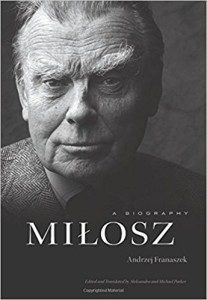
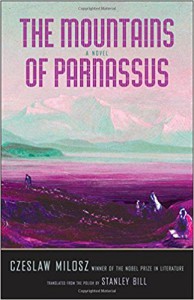
My review of Andrzej Franaszek’s Miłosz: A biography (Harvard University Press) is in the current issue of the Times Literary SupplementI also discuss the publication of the Nobel poet’s fragmentary science fiction novel, Mountains of Parnassus (Yale University Press). Kudos to translators Aleksandra and Michael Parker for the former, Stanley Bill for the latter.

My piece, “Writing Not Fighting,” is behind a paywall, alas. But you can read the first few paragraphs here.  An excerpt:

It may be a cliché that the great poet gives everything to his art, but in [Czesław] Miłosz’s case the platitude appears to have been agonizingly true. Miłosz: A biography  by Andrzej Franaszek, abbreviated and translated from the 960-page Polish edition published in 2011 (TLS, November 25, 2011), describes Miłosz’s unsparing choices. Literary ambition drove him to abandon the woman he called his “true and tragic love” in his native Lithuania in the 1930s (she may have been pregnant as well). After the Warsaw Uprising, he told friends that he would not take arms, because he must survive the war. His death would be meaningless: he must write, not fight.

milosz-biographyAt one shattering moment in his life, however, he rejected his vocation: on February 1, 1951, Miłosz, in Paris as a cultural attaché for the Stalinist government of Poland, stepped into a waiting taxi that took him to Maisons-Laffitte in the suburbs. The thirty-nine-year-old defector spent three and a half months in hiding at the offices of Kultura, an important émigré journal of politics and literature. He wrote: “my decision marks the end of my literary career”. He had walked out on more than five years of service to the Communist government, most recently in the grim, barricaded Paris embassy where insubordinate employees were drugged and delivered to the airport, and where others never left the building for fear of being dismissed. He had longed for “a place on earth where I could wear a face and not a mask”, but still believed he had turned his back on the future by defecting.

parnassusMiłosz was the first writer and intellectual of such distinction to defect from the Soviet bloc, and the first to give his reasons publicly, saying that a lie is the source of all crime and that “the paramount duty of a poet is to tell the truth”. For this, he was subjected to vicious slander and attacks from old friends in Poland, the left-wing Parisian intelligentsia, and even other émigrés. Miłosz became an Orwellian un-person in his native land, and would not see his wife and two sons again for more than two years.

At Maisons-Laffitte, he spent his days shouting, pacing, chain-smoking and drinking as he skirted a nervous breakdown. He could not “shake off his attraction towards Stalinism, like a rabbit toward a snake”, wrote Jerzy Giedroyc, the editor-in-chief at the publishing house Instytut Literacki as well as its journal Kultura. The émigrés who gathered round Kultura seemed to be history’s has-beens, fighting a rearguard action for a cause that had long ago been lost. But the “future of history” may not go where we imagine, and the cause that looks lost may, in fact, have time on its side. Today, Giedroyc is a legend, along with Józef Czapski, Zygmunt Hertz and his wife Zofia, who shared the villa in Maisons-Laffitte.

Well, we’ve told some of that story in the Book Haven after our own visit to the villa in Maisons-Laffitte. Again, the full article is here

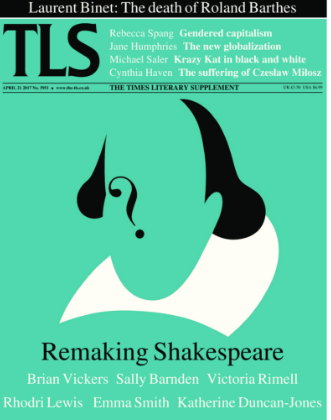
Postscript: Oh, and we got a line on the cover of the issue. How cool is that?

.
tls


Farewell, Robert Silvers (1929-2017): “unadulterated gold”

Share
silvers

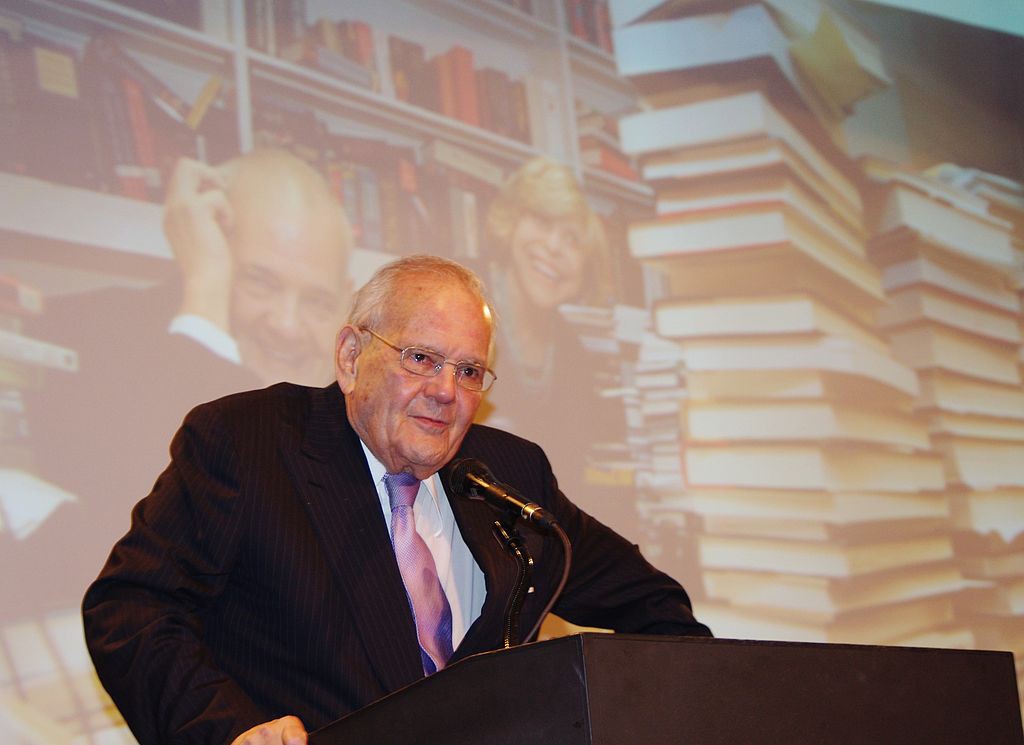
In 2012, accepting the Ivan Sandroff Lifetime Achievement Award. (Photo: David Shankbone)


It’s been a season for death, we’ve written about the Nobel poet and playwright Derek Walcott and the emerging writer Okla Elliott – so the passing of the legendary editor and founder of the New York Review of Books editor Robert Silvers caught us somewhat off-guard. My contact with him was about two emails in total, but we have mutual friends, including Robert Pogue Harrison, Ann Kjellberg, and Mark Danner. And some of them had something to say.

harrison3

Harrison

“Robert Silvers is one of the truly great heroes of our time.  For five decades running he gave us 24 issues of The New York Review a year, each one of them a treasure in itself.  Nothing compares with the sum total of that cultural capital.  It is unadulterated gold, and we owe it all to him.” That was from Robert Harrison, a regular contributor to the NYRB (we’ve written about him here and here and here).

“We miss him already. We missed him instantly,” wrote Lorrie Moore in the New Yorker. “Bob was an editor so hiply catholic in his tastes and interests, and so limber and youthful in his receptivity, that he was game for practically any cultural commentary one could imagine: meditations on regional politics, reports on television programs, every manner of book, film, or event. Gameness is a beautiful quality in a person. Before I moved to Nashville, in 2014, he gave me a plastic packet of press passes and said, “See what you find down there. I’m sure it will be interesting. There might be a gun show you will want to write about.”

From the Washington Post’Christian Caryl:

Lorrie_Moore

Moore

He loved ideas but looked askance at ideologies. His guides were Czeslaw Milosz’s book The Captive Mind, which explored coming of age under Stalinism, and George Orwell’s essay “Politics and the English Language.” These works shared a realization that language, for all of its power to forge connections and create communities, could also be turned to nefarious ends when harnessed by dehumanizing philosophies. For Bob, getting at the truth wasn’t just a laudable exercise — it was also a vital ethical and political act, one that he pursued with unwavering single-mindedness, every day.

This respect for the truth, which he managed to uphold without a trace of sanctimony or pompousness, was closely linked to his second prominent trait, a deep sense of empathy with other human beings. In the 1960s the Review commissioned a whole stable of writers — most notably, perhaps, the dogged investigative journalist I.F. Stone — to report on the catastrophe of Vietnam, predictably outraging conservatives. But the magazine also went on to embrace Soviet Bloc dissidents, defending Andrei Sakharov and Alexander Solzhenitsyn, to the horror of many of Bob’s friends on the left. (The New York Review was one of the first American publications to examine the Soviet Union’s use of psychiatric clinics against dissidents.) The magazine defended physicist Fang Lizhi, one of the greatest critics of the Chinese Communist Party, and Desmond Tutu, a leader of the fight against apartheid.

kjellberg

Kjellberg

In the 1990s Bob commissioned journalist Mark Danner to chronicle the war in the former Yugoslavia, exhaustively detailing Serb aggression. But in 1999 he also published a memorable essay by U.S. poet Charles Simic (who also happened to be an especially eloquent critic of Slobodan Milosevic) mourning the NATO bombing of Belgrade during the intervention in Kosovo.

Ann Kjellberg, a deputy editor at the Review who went to work for Bob in 1988, recalls how the Review resoundingly condemned the onset of the war in Iraq in 2003, citing the devastation that was likely to result. The liberal magazine The Nation then published an article praising Bob for returning to his left-wing origins, but he didn’t see it that way at all.

“It was a continuum,” Kjellberg says. “He was always sensitive to state overreach. He was always asking the questions, ‘How many civilians are being killed? Who’s dying? Who’s in prison?’ It wasn’t ideological. He always brought it back to the human.” And he was doing it right up to the end, allowing his writers to examine the darkness of the Syrian civil war, the crackdown in Egypt in the wake of the Arab Spring, the slow-motion collapse of Europe as an idea.


Gustaw Herling: “I never stopped thinking about the evil I had seen.”

Share

herlingPolish writer Gustaw Herling is too little known in the West, although Nobel poet Czeslaw Milosz (a longtime Berkeley resident) called him “one of the most important witnesses of the twentieth century, a heroic man and truly worthy writer.”

It was a generous appraisal. Although Herling always recognized Milosz as a great poet, the younger writer took issue with Captive Mind, Milosz’s landmark analysis of what happens to the creative mind under totalitarianism, through four case studies. “Our friendly relations were not affected by his negative opinion of my book, The Captive Mind, though I was never able to grasp his argument,” Milosz wrote. “He seemed to reproach me for ascribing ideological motives to intellectuals who had collaborated with communism. According to him they acted mostly out of fear or a desire for a career.

“Herling had valid reasons to judge severely the intellectuals of the twentieth century. Those in the West closed their ears to his report on Soviet Gulags. In Italy, where he lived for many years, the intellectual establishment, which was controlled by Communists, changed him into a nonperson only to discover him suddenly after the fall of the Soviet empire. My Captive Mind had hardly fared better with leftist readers than his World Apart.

He experienced some of the worst the last century had to offer, beginning with World War II in Poland. He established Poland’s first anti-Nazi resistance cell, fled east to join the Free Polish Army, was arrested by the NKVD (precursor to the KGB) in Soviet-occupied Poland, and was imprisoned in a labor camp on the White Sea. After his release in 1942, he was wounded in the Battle of Monte Cassino. He co-founded the influential literary journal Kultura in Maisons Laffitte with Jerzy Giedroyc (well, we told that story here). His books include A World Apart: The Journal of a Gulag Survivor, Volcano and Miracle, The Island, and others.

A few excerpts from Kelly Zinkowski’s excellent Paris Review Q&A from 2000 – first, on Captive Mind, a book that was very influential for me, describing not only life under Communism, but anywhere the mind is “bent”:
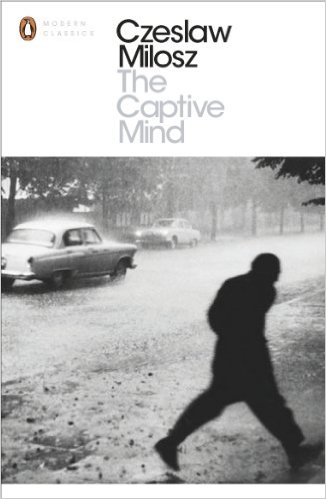
captive-mindHerlingThe behavior of the intellectuals before the war, during the war and after the war with respect to fascism, communism, and other forms of totalitarianism of various descriptions was not very respectable. So they were happy to have Milosz’s book, to have their behavior absolved, if not validated. Because to have something like Ketman or the New Faith is certainly preferable to listening to me telling them that they had betrayed themselves for career and family. Not that the Poles were alone in this. The behavior of writers and intellectuals in Italy during the Fascist reign was the same thing. They should be ashamed of what they wrote, especially because they weren’t writing out of any genuine conviction of fascism’s merits. They were merely trying to advance their respective careers. To some extent it was the same with German writers under the Nazis. Thomas Mann wasn’t sure about what choice to make.

InterviewerUnlike Robert Musil, who in his exile liked to say that he was merely following his readers.

HerlingYes. Mann was in a way negotiating with the Nazis. He wanted to know if the Nazis would publish his books, if they would guarantee the safety of his great library in Munich, and so on. We have to be extremely conscious of this problem. I remember the great Italian writer, my friend Ignazio Silone; his intransigence against Italian Fascism was very badly looked upon by his colleagues. They called him a fanatic, which is a terrible word—

Interviewer: Implying that he’d lost his reason.

HerlingAnd so on. I don’t mean to reopen this discussion with Milosz. He’s a great writer. I recognize his greatness, in his poetry especially, his beautiful novel The Issa Valley, and in other things. I was very pleased by, and contributed to his getting—because they’re not so easy to get!—the Nobel Prize. But I remain adamant where our dispute is concerned.

***
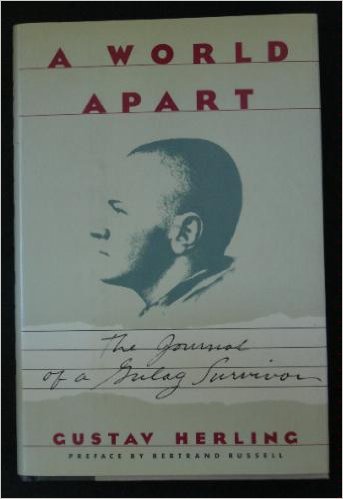
world-apartInterviewerCould you talk a bit more about your position vis-à-vis those who compromised, either with communism or fascism?

Herling Let us divide these intellectuals, as far as Poland is concerned, into two categories, the first being single-minded Communist careerists who didn’t want to allow any anti-Communist voices. I remember a very well-known writer who visited me during the time of Poland’s Communist regime. I told him, You’re writing trash, absolute trash. He reached into his jacket pocket, took out a photograph of his wife and family and said, This is my answer. So just stop with all your anti-Communist moralizing.

InterviewerA difficult point to argue, under the circumstances.

HerlingBut we are marked by what we do. This is the first category. The second category is much more dignified, that of writers and intellectuals in totalitarian regimes, like fascism or Nazism, good writers with Nazi sympathies . . . If you could interrogate Heidegger, for example, you would get all of his explanations for why he did what he did, why he accepted the position of university rector, why he wrote all that trash. There was always a reason—he wasn’t stupid. So the second category is this: those who tried to invent good and intelligent reasons. When Milosz says they are using the technique of —claiming to believe everything they were supposed to believe, just to live, to work—it was a kind of lie.

InterviewerAlbeit a historically sanctioned lie—a flamboyantly erudite example of Emerson’s maxim that once a particular point of view is taken, all of history can be made to prove it.

HerlingYes.

***

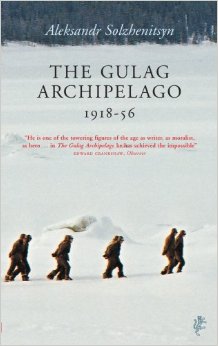
gulag-archipelago

On Alexander Solzhenitsyn: 


Herling
Take the three volumes of Solzhenitsyn’s The Gulag Archipelago. Although it goes under his name, he is not the only one who wrote it. It was compiled from the memoirs of some two hundred Gulag veterans to whom he had written and asked to recount their experiences. So it’s not really his book; it’s a kind of encyclopedia of the camps. It is true, it is good, it is interesting, it made a profound impression in the West. In my opinion it utterly transformed the position of the French intelligentsia vis-à-vis the Soviet Union; it eradicated communism as a viable position among the intellectual classes there. But it is not Solzhenitsyn’s book in the same way that One Day in the Life of Ivan Denisovich is. I didn’t plan to write the story of my two years in Kargopol near the White Sea. But, as I’ve said, it was there that I was awakened as a writer, so I approached my subject as a writer, not as a rapporteur. In some respects it is a book of fiction, but not as conventionally understood.

***

On evil:

HerlingDuring my two years in the concentration camp, I saw an accumulation of evil that left a very deep trace. Even after I was released and reacquired some sense of normality, I never stopped thinking about the evil I had seen. Then, observing the world, reading the papers, listening to stories, it became absolutely apparent that evil exists and is spreading every day. This became my obsession, and it is a constant theme in my stories. My idea of evil differs from the one shared by the church, Plotinus, and Thomas Aquinas, which maintains that evil is merely the absence of goodness. This is the official theory, and I don’t believe it. I think evil is utterly autonomous. What I see every day, in this terrible procession of events, disgusts me and confirms me in my belief; I am almost desperate. And the germ of this notion was formed in the camps. I saw a lot of things there, some of which I wrote about, some of which I didn’t. For a man of my age then, it was a terrible experience to see how the world really is. And this is the reason I decided to abandon my plans for a university career and to become a writer.

Read the whole thing here