
Warsaw poet Julia Hartwig: “You never know when you need to pull out your pen and stop being silent.”

Share

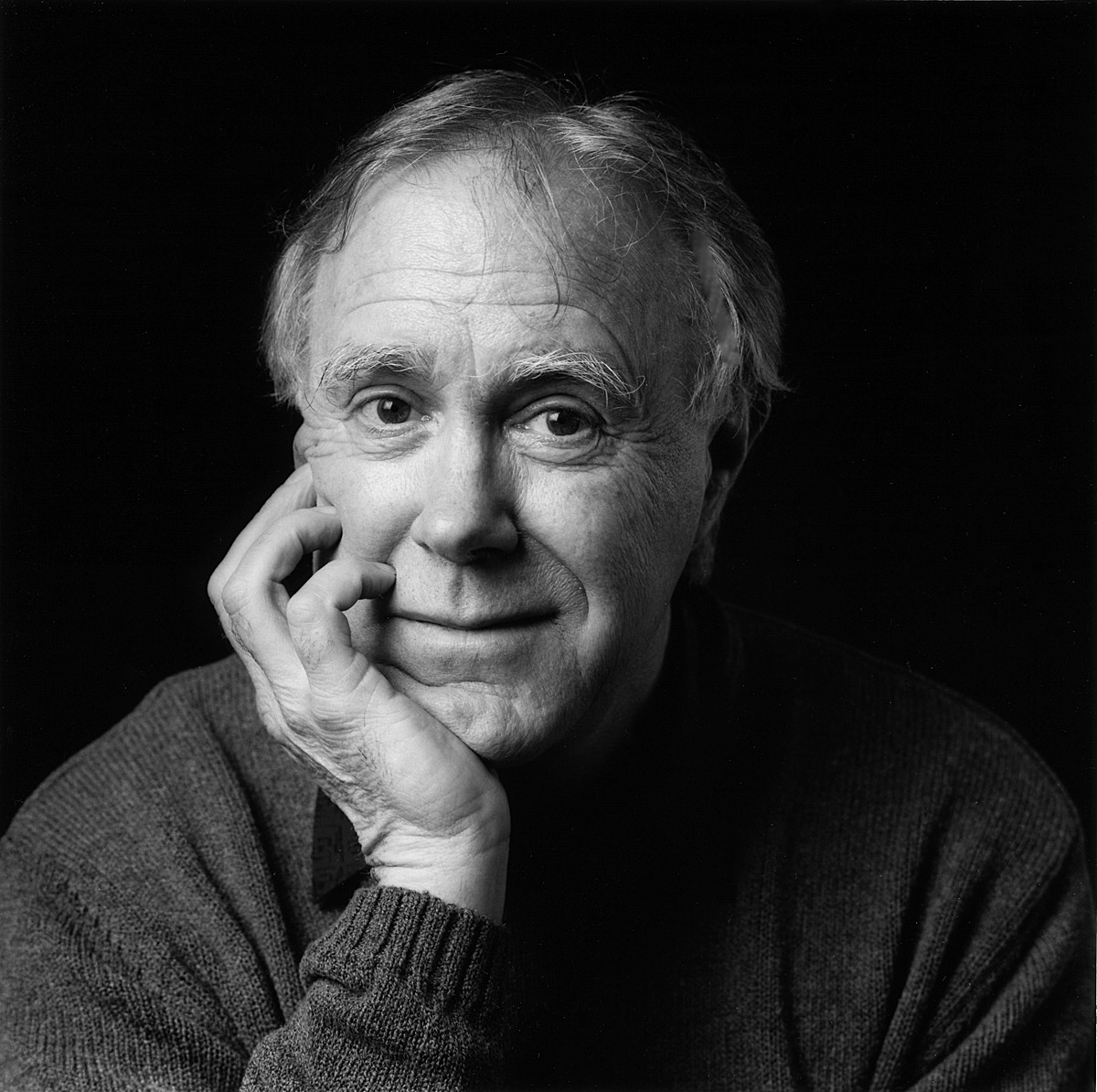
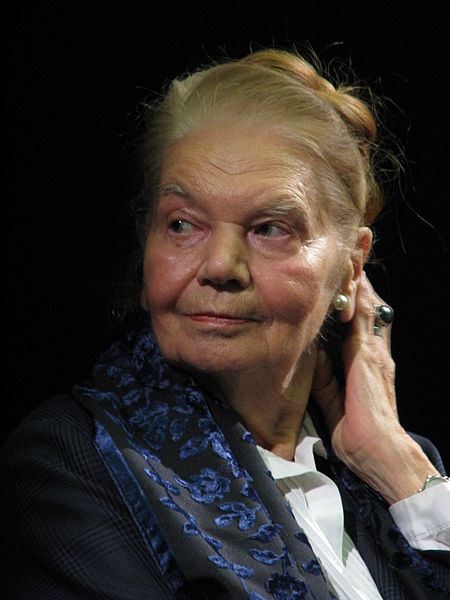
“If humanistic values ​​cease to be important to us, the future of the world is fragile.” Photo: Mariusz Kubik/Wikipedia

Czesław Miłosz called her “the grande dame of Polish poetry.” Celebrated journalist Ryszard Kapusciński called her “one of the foremost poets of the twentieth century.” Yet Julia Hartwig (1921-2017) is too little known in the United States, where she spent some years. (I’ve written about her before, here and here and here and more.)

It’s three years since she died. New York librarian and salonnière extraordinaire Izabela Barry remembers her by publishing a 2006 interview she did with the poet, which was published in Polish here. A few excerpts in English below:

Is it easier for a poet to translate other poets?

I am deeply convinced that poetry should not be translated by anyone except poets. This is a task for poets because only a poet can penetrate into the structure of a poem, enter its atmosphere, read the second intentions of the poem. The poet has richer access to the poem. I believe that the most successful translations are made by poets. Therefore, I boldly started translating poems, because I believed that I have a greater right to do so, and at the same time I stick to the principle of translating only poets that I like or love.  I’ve managed to continue this way until today, with the possible exception of when we were preparing an anthology of American poetry with my husband, Artur Międzyrzecki. That book was the result of several years of work and is almost entirely translated by us. In that case, it was necessary to translate many poets.

I have the impression that in your poetry you distance yourself from the political situation, you do not touch current events. It seems that since martial law, you have abandoned this sphere in favor of writing about events not directly related to our political lives.
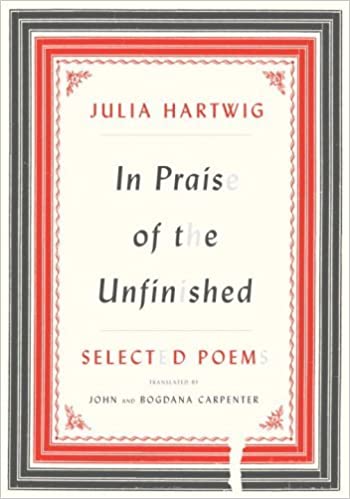
Her 2008 book in English.

Not necessarily. Recently, a few of my poems have appeared in which I “deal with” great poets who turned out to be anti-Semites. Besides, I had some issues with that and called Miłosz, who said: “We need to expand the space of poetry.” These poems are included in my last volume of poetry, which is about great American and English poets who are not very famous in this respect. It amazes me, because I have always thought that great minds should be great in every way. Of course, I am very interested in the situation in Poland, I never run away from it. I maniacally read daily newspapers and know perfectly well what I don’t like, and mostly I don’t like what is happening at the moment. Poetry, on the other hand, is never a direct response to topicality. If I take part in the internal discourse that bothers the nation, I am looking for something that is really deep and important. And I hope that what is happening in Poland at the moment is temporary. But, of course, I can be wrong. You never know when you need to pull out your pen and stop being silent.

In your memoirs, you write a lot about Zbigniew Herbert, about your friendship with him. You probably noticed that there are many larger and small political groups in Poland that try to appropriate Herbert and make his work a banner for their own activities, which Herbert – it seems to me – would not necessarily have supported or accepted.

He was our great friend. We knew him back when he was a very charming young man. He was a frequent guest in our home. When we were in America, the Herberts had just come back and they lived in our house. There was even a very funny situation when television reporters came to interview Herbert, and he was talking with them in our apartment, sitting at our table, and our friends were surprised to recognize this interior. So you can see that our relationship was really close.

As for his views, there has been a great deal of misunderstanding, because Herbert was surrounded by people who should not have had access to him in difficult times. This happened when he was weak and sick, at a time when he tried to cut himself off from his former friends, declaring that they had political views that were too leftist. It was very sad for all of us. We never anticipated such a situation. In this, Herbert’s wife, Katarzyna Herbert, who brought a lot of order to these matters, was of great help. She gave an extensive interview to Jacek Żakowski in Gazeta Wyborcza and assessed the condition of Herbert and the people around him very fairly. She was very upset that his friends had been hurt by being in such a painful situation.
With Szymborska in 2011, Kraków

In an essay about Herbert, I wrote that the most terrible thing is that the “directives” in his poetry began to sicken me. It’s terrible to say that, because “The Message of Mr. Cogito” is a very beautiful poem, but I can’t really read it anymore, mainly because it is used so much by the right, and in the most extreme, very unpleasant way. I do not think that Herbert would be pleased that the contents of his poems were placed under every banner. This is the danger that awaits the poet: trivialization. This poem is difficult to listen to, because everyone recites it and everyone refers to it. Poetry is lost and the poet himself is lost. After all, poetry is an absolute reflection of personality, and certain interpretations work to its detriment.

There are many moments in your American poems that touch me personally as an immigrant. Yet you have never had the status of a full immigrant, someone who does not intend to return to his or her homeland.

Four years of absence from the country is a particular experience, naturally limited in some ways, and incomparable compared with the feeling of a man who does not intend or cannot return home. We left because of a difficult situation, but when our friends pressed us to come back, we did immediately and were very happy to do so. Our best work was created after we returned from America, because it took on new horizons, it became more rounded. America entered our consciousness, but also Poland through it.
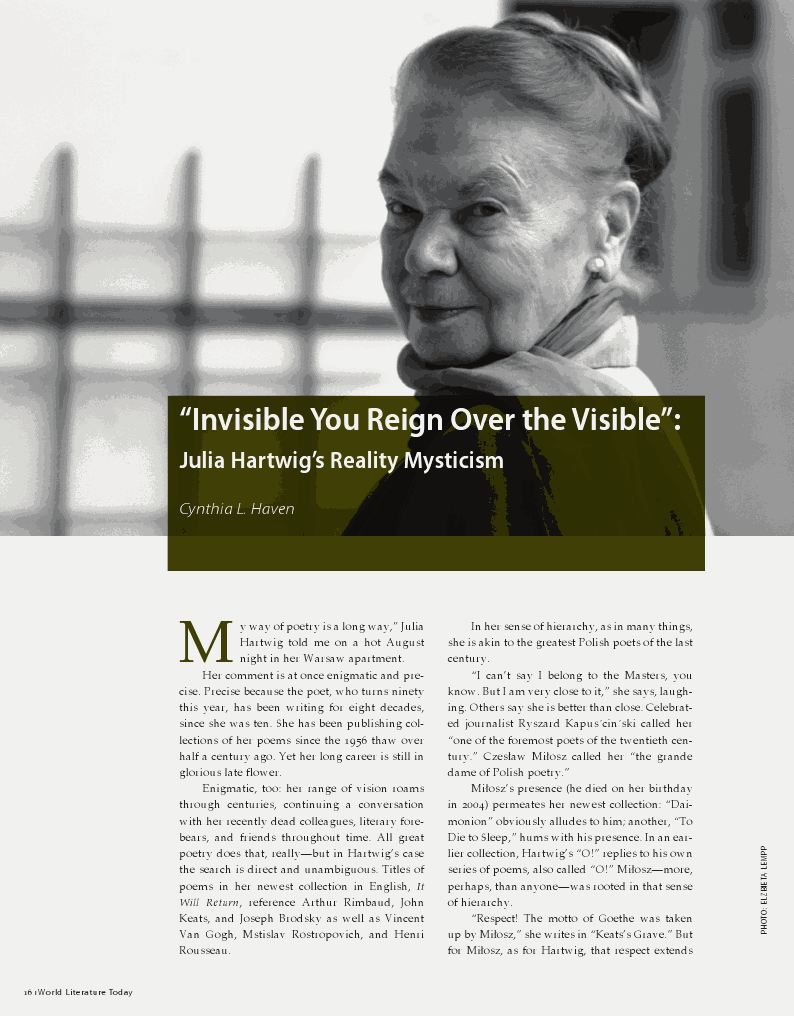
My own 2011 interview with her in “World Literature Today”

I regret that my volume American Poems (2002) is relatively unknown. I don’t know why this is, because my other books have been much discussed, and this one has been left a bit aside. Perhaps I’m wrong, because during one of my last meetings at the PEN Club I read a few poems from it and the listeners bought out the stock immediately. American Poems amused them, because there is a lot of humor, light, greenery, the city, and at the same time a some healthy nostalgia. It describes people, Americans, who interested me immensely. This collection expresses all my affection for America.

A volume of your poems translated into English is being prepared here in America…

Yes, Bogdana and John Carpenter, who are translators, have already sent me the texts of a new book that will appear here, I hope. I have looked through the whole thing and I think that they are very good translations. Of course, the poet will always find something small, and the Carpenters were grateful to me for my comments. I believe that this is a great opportunity if the poet has the opportunity to check the language of the translation. Miłosz always co-translated his poetry, he had a very good eye and hearing, he always claimed that he was happy to be able to participate in the translation process. Virtually all of his poems published in English are translated under his supervision. Sometimes you can destroy a poem in translation and we won’t even know it.

And can poetry – I ask naively – save the world?

This is not a naive question. Miłosz talked about it in [his 1945 volume] Ocalenie. I, too, have tried to ask myself what poetry is worth if it cannot save anything. But … we don’t know whether or not it can. Joseph Brodsky believed that it could. He was so convinced that I could only admire his faith. After all, he saw, perhaps even more deeply than others, what was happening and what the modern world is like. He was not a naive man, he closely watched the present day, yet he believed that poetry had a great task ahead of it. He even said such things that if a nation does not read poetry, it is in danger of totalitarianism. These are very harsh words, and vague of course, but you’d have to dig into what it really means. And it means that if humanistic values ​​cease to be important to us, the future of the world is fragile.

Read the whole thing in Polish here.
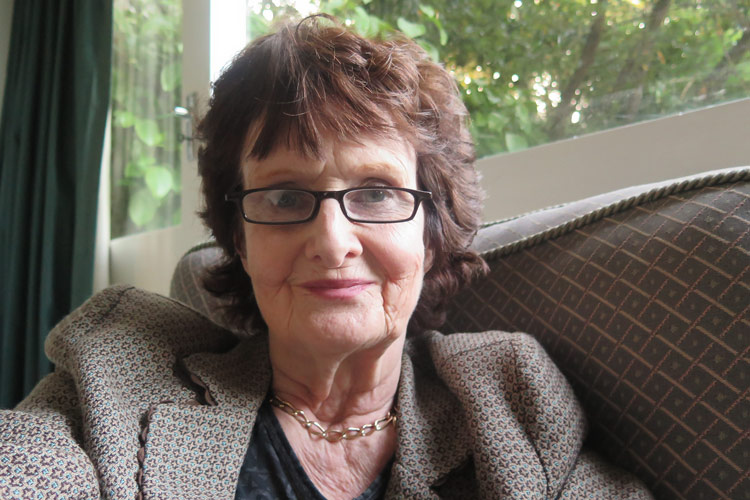
Irish poet Eavan Boland is dead. From her NYRB essay on literature, religion, the communal imagination, and the summer of ’85 in West Cork

Share

One of Ireland’s leading poets, Eavan Boland, died this morning of a stroke, at her home in Dublin. She was 75. I knew her, and yet was at a loss about what to say, so instead I reposted a her poem about Ireland’s Great Famine, which I published a month ago on these cyber-pages, including the thoughts she shared with me. It’s here,

Eavan spent half the year in Ireland and the other half as a professor at Stanford. Occasionally when I’d be driving a car on campus, I’d see her trudging back to her campus home along Campus Drive or Lagunita, wearing an capacious calf-length skirt and jacket in earth tones, carrying a satchel full of papers. A sign that all was right with the world. I’d think to honk and wave … but you don’t honk at Eavan Boland. You just … don’t…

From poet Alfred Corn on his Facebook page:

Depending…

The last time I spoke to Eavan was in 1994 during a literary conference at Washington University in St. Louis, organized by William Gass, the topic being “The Writer and Religion.” Apart from Gass (writer against religion), the participants were William Gaddis (against), Grace Mojtabai (for), me (for, depending), Amitav Ghosh (neutral), and Eavan (respectful but dubious). She spoke of the miraculous BVMs [i.e., Blessed Virgin Marys – ED] that sometimes appear in Ireland, attracting large crowds of believers. Which puzzled me because I regard such things as epiphenomena, not as exemplifying religion per se. But then I’m not Irish.

I wondered what Eavan had said on that occasion, and by chance today I found that she had discussed that very conference in a remarkable 1995 essay in The New York Review of Books“As the Spirit Moves” is being made available without subscription for awhile on the occasion of her death. It’s here

It begins with a fine summer in 1985, West Cork, along the seaboard. “In the town of Kinsale, which is a summer resort on that coast, there were more tourists than usual. This is one of the beautiful parts of Ireland and indeed, without being tribal, one of the beautiful parts of Europe. Surrounding it are small towns, villages, and farms. The terrain is fairly flat, without some of the Gulf Stream warmth which produces the dramatic palms and tropical branches of certain parts of Kerry further west.”

This is what happened there. And this is how it stirred almost the whole of Ireland during that summer. Traveling back by car on one of those fine evenings, a woman stopped at a grotto which contained a statue of Our Lady. Ireland, which in the Republic at least has sustained a largely Catholic culture, had celebrated what was called a Marian year in 1950: a year, that is, in which Our Lady was honored as the Mother of Christ. The result of the celebrations was that hundreds of small grottoes and statues and shrines to Our Lady remained scattered around the countryside as continuing places of worship. This one was just outside the village of Ballinspittle, perhaps ten miles from Kinsale. It was eloquently set in the recess of a hillside, about thirty feet above the road. And on one of those sunny evenings, in late July, when travel in a car, or a visit to the places which contained such a grotto, must have seemed like a pleasant and appropriate summer diversion, a woman saw that statue of the Virgin Mary move.

Within not weeks, but days, someone reported a similar phenomenon. Then another. Then another. Then more and at different shrines. Sub-headlines of the Irish Times, second leaders on the evening news, whole radio programs, and finally television documentaries were devoted to the phenomenon. A woman had seen a statue move in a city church. Another had seen the Virgin reach out her hand. Another saw her move as if to step down from her shrine.

Then the headlines gave way, at least in the urban press, to analysis. Sociologists, psychologists, psychiatrists began to be featured on television. They explained that this was not unusual, that in times of stress, of hardship and recession, this sort of thing had been observed widely. By this time the summer evenings were getting shorter but the clear, warm hours before dark, and just after it, were filled with literally hundreds of cars, visitors, couples, and whole families converging on any place along the seaboard, but especially near Kinsale, where this had been observed. In an outpouring of insistence and longing, men and women with accents which were not so often features of the urban Dublin news programs described what they had seen, and they could not be shaken from their stories.

Then the explanations grew less frequent. The outrage and suspicion of the Catholic clergy, disowning and warning against these visions, became less emphatic. The journalistic silly season passed. The evenings grew colder. The rain returned. Suddenly, as quickly as it had come, the phenomenon was over. No statues moved. No sociologists talked. Normality returned.

I remember that summer clearly. I remember driving down the Dublin roads, where the luburnum and lilac filled the verges with yellow and violet, and listening to my car radio. Something seemed to have happened that was not faith, and could not be called religion; that was short of hysteria and yet by no means rational. From the safety of a cosmopolitan city, which Dublin has finally become—with fast cars and fast food and a limited concentration span—I could hear, to use Joyce’s phrase, “the batsqueak” of another Ireland. Through the statistics of debt and unemployment, and Northern violence, I could hear the elegy and anger break out one last time, lamenting a simpler time and a surer one.

I did not believe that the statues had moved. But I did not believe the sociologists either. I knew enough about the unreason of Irish history to respect and even be in some awe of what had taken place on those fierce and unaccountable evenings, in the long light hours, in small towns and farmlands where television cameras hardly ever reached, and where political scientists usually never went, except briefly at election time. And I was troubled.

As I listened to disc jockeys and radio broadcasters speaking jovially or contemptuously, whichever way you viewed it, of the faith and hallucination of those who saw those statues move … Since I lived in Dublin, I heard more of the skepticism and muted contempt which a place of purported sophistication has for a simpler region than anything which might indicate sympathy with what had happened.

And yet I was moved. I could not completely share in the cynicism of a capital city.

Second Space.

What follows afterwards is a discussion that’s hard to summarize, about the communal imagination and the role of literature, and the “monstrous” development of  “the religion of poetry” – the attempt of poets to become priests, and losing their poetry, too.

“In their attempt to make sacred a time and a country that were resolutely being defined as secular, they were testifying to an enormous loss and a true deprivation,” she writes. Well, Czesław Miłosz said the same thing. He mourned our loss of “Second Space,” which is also the title of the last collection he published before his death in 2004. Well, that’s another story for another article.

Requiescat in pace, Eavan Boland. You can read her whole essay here, while it’s still available.

Poet Robert Hass at Heyday – on his new book, ecology, lost friends, and Czesław Miłosz. It’s all on Soundcloud!

Share

Lunchtime guest Bob Hass

One of the little-known pleasures of Bay Area life is the Heyday Books lunchtime conversations series in Berkeley. Great company, light lunch, and excellent speakers – Robert Alter, David Ulin, among them. Because of the series, I’m running up my mileage back and forth to Berkeley, which, apart from rising gas costs and wear-and-tear on my old Honda, is always a good thing.

And so I made the trek last month to hear Robert Hass, whose latest collection, Summer Snow, is getting a lot of attention. I wrote about that here.

I recognize that not everyone will be able to zap over to San Pablo Boulevard on a weekday. So I have coaxed publisher Steve Wasserman and his assistant, Emmerich Anklam, to provide an alternative, and they have. Lucky for all of us, the Hass event is the debut entry on the Heyday’s brand new Soundcloud page here. Steve moderates the discussion.

You never lose some friends.

Bob is always a fascinating speaker, and he spoke about the dangers to our environment, friends who have died, and the unusual process of putting together Summer Snow. One of his favorite topics is Czesław Miłosz, in fact, that’s how we met. I get plenty of opportunities to talk, so I generally like to be quietly inconspicuous at these events, but an hour into the talk about lost friends and the poems of Summer Snow, he asked for one last question and I couldn’t resist the chance.

My own trepidatious question around the 59 minute mark. Could he read one of his poems about Milosz? In particular, the one about the Miłosz’s tomb at Na Skałce? He hesitated. It was long, he said, counting the five pages. But then, with the encouragement of the crowd, he read the poem, “An Argument About Poetics Imagined at Squaw Valley After a Night Walk Under the Mountain.”

It was an astonishing, dare I say unforgettable, reading. Everyone was moved. One person was crying. Listen for yourself.

One hitch: the battery on the recording device died before the poem ends. So I include the final lines for you below:

One small fly in the ointment:
You described headlights sweeping a field
On a summer night, do you remember? I can quote to you
The lines. You said you could sense the heartbeat
Of the living and the dead. It was a night in July, he said,
In Pennsylvania – to me then an almost inconceivably romantic name –
And then the air was humid and smelled of wet earth after rain.
I remember this night very well. Those lines not so much.


Au revoir to Yale’s Alexander Schenker: “intelligence,” “quick wit,” and “the ability to understand the soul of another human being.”

Share

A postwar life at Yale. (Photo: Andrzej Franaszek)

Author and Slavic scholar Alexander Schenker died today. He was 94. The Kraków-born scholar was deported to a Soviet labor camp in 1940, after the fall of Poland in World War II. As he put it, “As if answering my childish prayers, World War II interrupted my general education in the ninth grade of Polish high school. As a result, I had to spend my formative years outside of Poland.”

He studied at a university in Tajikistan, then left the Soviet Union in 1946 and studied at the Sorbonne, followed by graduate studies in Yale’s Department of Linguistics, receiving a Ph.D. in 1953. He taught at Yale until his retirement in 1995.

A Facebook tribute from Andrzej Franaszek, author of celebrated biographies of Czesław Miłosz and Zbigniew Herbert (translated from the Polish by Alla Makeeva Roylance):

“Alexander Schenker has died, or rather, Olek, as he was called by those who knew him. His biography covers a whole chunk of the last century. From his life in Kraków during the 1920s and 1930s, the war flung him deep into the Soviet Union. A few years later, luck brought him to the States, then to his studies in Paris, and later a return to the East Coast, settling in New Haven, with decades of work at Yale. He was a Slavist, the author of textbooks. The last book, which apparently is being published by “słowo/obraz terytoria” [the name of a publishing house] is about the monument to Peter the Great in St. Petersburg. He was a man blessed with a gift of selflessness. A close friend of Czesław Miłosz, Zbigniew Herbert; he also knew a good many Polish artists. He was veritable fountain of wit, but at the same time he possessed something much more important – psychological insight, empathy, the ability to understand a soul of another human being. His combination of intelligence and quick wit made him the perfect embodiment of the best Polish-Jewish cultural amalgam. In recent years, he came to Krasnogruda [Miłosz’s birthplace, now a conference center], on the invitation of Krzysztof Czyżewski; he began to work on his memories, and he also had a chance to talk about Herbert in front of Rafael Lewandowski‘s camera, so we will see him again in the fall – or at least his image, a specter of him. A very important person in my life. Kind, profound, I owe him a lot. If only for the  fact that eighteen years ago, in New Haven, Olek and his wife Krystyna made me feel like a family, invited me to their beautiful house in the woods – hosted, uplifted, mentored me. And many more such guests were there before me (and what guests! even Jerzy Turowicz) and after …”

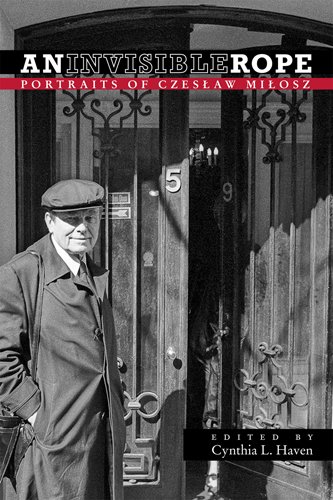
I knew him from my work with him on his essay, “Wanderer,” in my An Invisible Rope: Portraits of Czesław MiłoszAn excerpt:

“I knew that Miłosz was superstitious; therefore, I never dared mention a possibility of his being nominated for the Nobel, although such a speculation circulated quite openly by then. Still, I was confident (and for good reason, as it turned out ten years later) that a simple comment on the “nobelization” process did not warrant a jinx from whatever dark forces were at play. Therefore, I allowed myself to remind him how important it was to have good English and Swedish translations of his work. As an example, I cited the case of a Bosnian writer, Ivo Andrić, who received a Nobel just a few years after his Bridge on the Drina appeared in a Swedish translation. I did it deliberately because I was satisfied neither with the quantity nor with the quality of existing English renditions of Miłosz’s poetry, which, unlike Herbert’s or Tadeusz Różewicz’s, does not lend itself easily to translation. Although clear as crystal in his prose, in his poetry Miłosz makes his exposition denser and emphasizes the phonetic aspect of the verse, especially in his frequent references to the language of bygone centuries and to dialects. The fact that, even in the loosely fitting garment of the English tongue, Miłosz achieved such an enthusiastic following among international readers and literary critics is yet another measure of his greatness.”

My last correspondence with him was on November 15, 2012. I had just suffered a nasty spam attack on my email account. I was mortified. My entire mailing list received an email purportedly from me, under the subject header: “Hey about careers in online marketing?” The body of the text included some cheesy story about hard work poorly remunerated, and urging clicks to a scammy website so that the recipient can say goodbye to bad jobs forever. The most witty and rueful reply to me was from Alexander Schenker, a former inmate in a Soviet forced labor camp:

“Mine was even worse – It was cold and I was paid in kopecks, Alex”

Postscript on August 24: An email from Prof. Susanne Fusso of Wesleyan University: “I would probably have left graduate school after one year if it hadn’t been for Alexander Schenker. He listened to me (a blessing in itself), gave me a stipend, and gave me a job. I will always remember his kindness. My deepest sympathy to his family.”

Happy 108th birthday, Czesław Miłosz!

Share

“The River Neman, not far from its mouth on the Baltic Sea, is fed by several smaller tributaries flowing from the north, out of the very heart of the peninsula. It was on the banks of one of these tributaries, the Niewiaża, that all my adventures began…”

Nobel laureate Czesław Miłosz (6/30/1911–8/14/2004), Native Realm

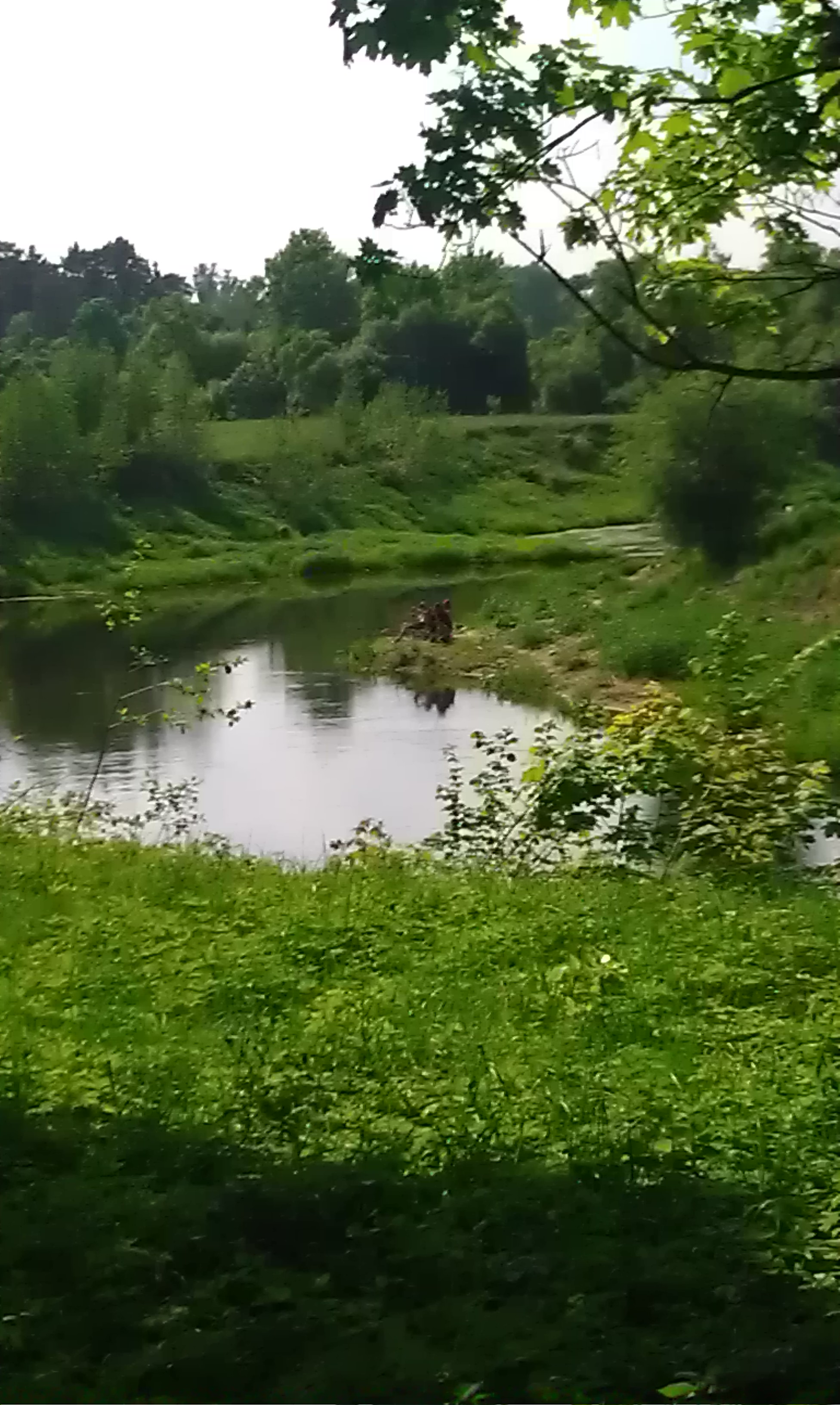
I had the great good fortune in May to visit Czesław Miłosz’s birthplace in the rural Lithuanian village of  Šeteniai. And yes, it is as idyllic as he said it was. I took this photo with my Droid on the former family estate, overlooking the river. The fishers called out to ask if we had permission to photograph them. Yes, one of us shouted back, there was a journalist in the group. They laughed, thinking it was a joke.


A book is born! A celebratory lunch for “‘The Spirit of the Place’: Czesław Miłosz in California” with publisher, friend Steve Wasserman

Share

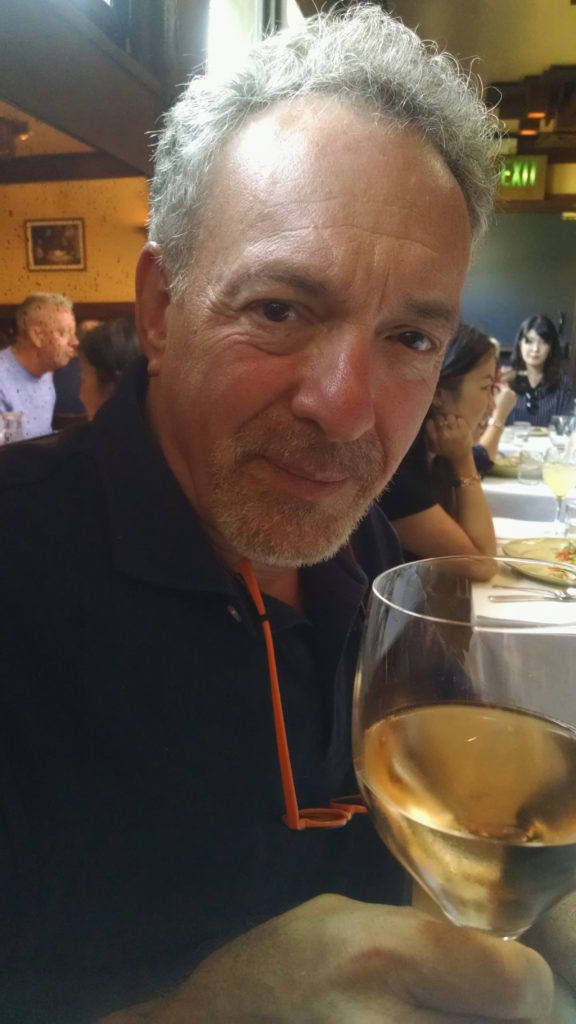
The Bandol Rosé was excellent.

A toast, a book, and bon appétit with Steve Wasserman at Chez Panisse. He promised me a celebratory repast for my National Endowment of the Humanities Public Scholar grant, and he delivered. The book that I will undertake during 2018-19 will be “The Spirit of the Place”: Czesław Miłosz in California.

What did it mean for one of the greatest Polish poets of the 20th century for to spend most of his career in California? In a 1975 poem “Magic Mountain” the lonely exile expressed his isolation and alienation this way:

So I won’t have power, won’t save the world?
Fame will pass me by, no tiara, no crown?
Did I then train myself, myself the Unique,
To compose stanzas for gulls and sea haze,
To listen to the foghorns blaring down below?

Until it passed. What passed? Life.
Now I am not ashamed of my defeat.
One murky island with its barking seals
Or a parched desert is enough
To make us say: yes, oui, si.
“Even asleep we partake in the becoming of the world.”
.
But he also grew to love it, even as he criticized it – and he had a career here that would have been impossible in Communist Poland.

At Chez Panisse, we demonstrated some contrary California spirit with a French wine – a 2015 Bandol Rosé, Domaine Tempier. Steve told me it is one of the favorites of Chez Panisse founder and chef, the legendary Alice Waters, an old friend.

He worked quickly.

He recalled stories about his good friends Susan Sontag, Christopher Hitchens, and the experience of coming back to California after decades away, his most recent port-of-call at Yale University Press, where he was editor at large. I also recalled the Polish poet’s own adventures at Chez Panisse, as related by Ecco publisher Daniel Halpern in An Invisible Rope: Portraits of Czesław Miłosz. 

And I retold something that poet Robert Hass, a California native, once said after I mentioned I had grown up in Michigan. He paused a moment, and said, “Then your eye must be always searching for a shade of green it never finds here.” And so it does.

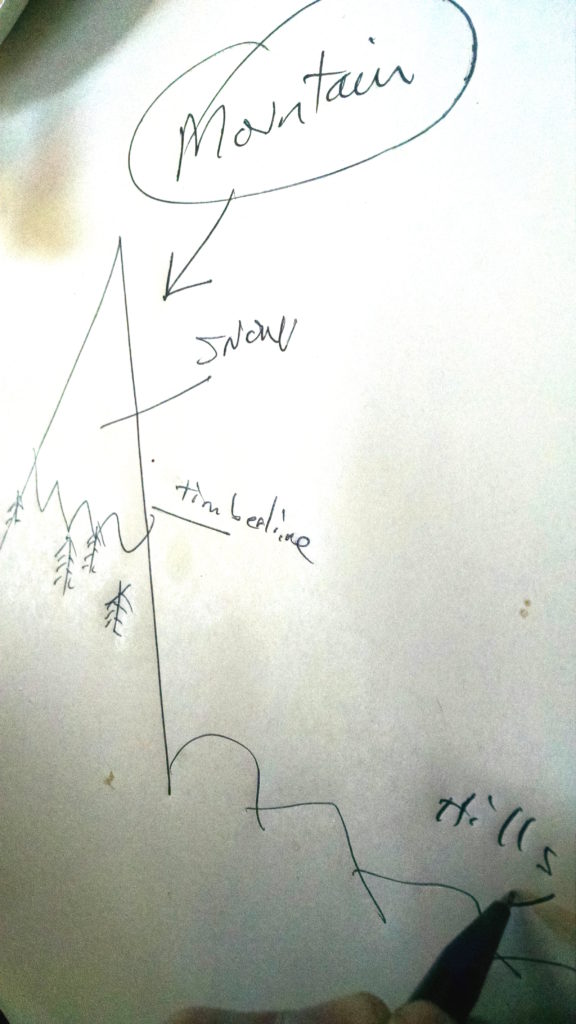
We talked about California – land of endless invention, miraculous weather, and addictive sunshine. Everywhere else is something of a disappointment. He recalled traveling through the Catskills as a child, and the adults pointing out the “mountains.” “Where?” he asked eagerly. “There!” they said. “I don’t see them!” “Over there.” Those were hills, he told me scornfully, “eroded stubs!” He pulled out a pen and swiftly drew a picture on the paper tablecloth. This, this is a mountain: snow at the top, timberline, hills at the bottom. The Sierras.

What did we eat? Normally I don’t say, but … Chez Panisse. I ordered the fettuccine with chanterelles, gremolata, and Parmesan; Steve had the summer vegetable tagine with shell beans, couscous, yogurt, and chermoula. I started with the baked andante dairy goat cheese with garden lettuces, he had the fennel and rocket salad with crème fraîche, mint, figs, and toasted almonds. We shared a bittersweet chocolate pavé with caramel ice cream and candied hazelnuts. No, we didn’t take any photos of our food. And yes, we had to ask the waiter what some of these words meant.

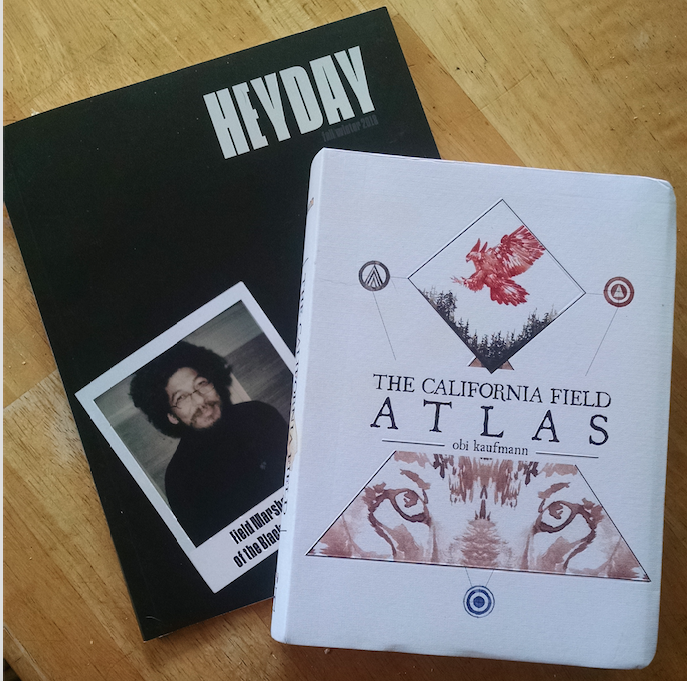
And I left with a celebratory gift from Steve: Heyday’s best-selling The California Field Atlas by Obi Kauffman, and a catalog of books-to-come. Spirit of the Place won’t be in it for a while yet.