
The Cahiers Series: “really, really beautiful” – and hand-stitched, even

Share

In a world where everything is becoming faster, cheesier, and more functional – when books are no longer tactile, sensual objects, but characters on Kindle – it’s cheering to see anything swimming upstream.  Bonus points if it extols that most underrated of literary trades, translation.

Applause keeps mounting for the Cahiers Series, published by the Center for Writers & Translators at the American University of Paris and Sylph Editions. It’s hard to stay on top of it.  But Daniel Medin, one of my more charming correspondents, has been sending me updates from the American University.
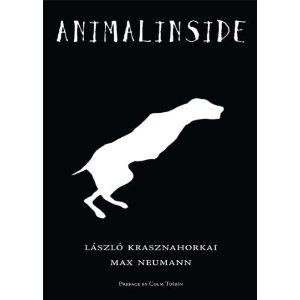
The latest plug is in Friday’s New York Review of Books blog, where Colm Tóibín introduces László Krasznahorkai‘s Animalinside (with illustrations by Max Neumann):

The prose of Hungarian novelist László Krasznahorkai is full of menace, but it would be a mistake to read the menace either as political or as coming from nowhere. In novels such as The Melancholy of Resistance and War & War, his imagination feeds on real fear and real violence; he has a way of making fear and violence seem all the more real and present, however, by removing them from a familiar context.

Daniel, now an associate professor at the American University (after teaching at Stanford a year or two back), said this:

The allegorical tissue in that text [i.e., Animalinside] is very thick, the “animal inside” a literal and metaphorical thing at the same time – think Herbert‘s Report from the Besieged City, where “a rat became the unit of currency.” We’re in the realm of Kafka and Beckett here, and not just in approach: I believe that Krasznahorkai is a writer of nearly the same magnitude who has the mixed fortune of having been born Hungarian – mixed because of that country’s embarrassment of (literary, cultural) riches on one hand and its linguistic isolation on the other.
Quite a coup for a small series that lives more or less hand to mouth, on uncertain funding. Part of the problem is shipping, which makes U.S. distribution difficult, even for a downright modest price of, say, $15.  Distribution in France is a little problematic, too, since the language is English.  “Every penny goes toward quality of production and keeping down the price,” Daniel writes.

Via the Cahiers Series subscription page you can buy a boxed set of volumes 1-6 (or a boxed set of volumes 7-12) for £51 – “which is approximately $4,000, but like I said, these are really, really beautiful. (Kidding—£51 is only $75 and these are worth every dime),” according to the Three Percent blog.  (Sorry, the blogger got me going for a moment – so I had to try it on you.)

[New updated deal: In addition to having the option of ordering cahiers individually, readers can now select any 6 cahiers for £55 in Europe/£59.50 everywhere else. Check it out here.]

Last year Daniel  told the Three Percent blog: “There are two main justifications for the Cahiers Series. The first is that we publish material that cannot easily be published anywhere else; we can play with form in a way that commercial publishers cannot. The second justification is to make something where the parts, through their relation to each other, add up to more than just that.”

Much more.  Clearly, the project is gaining momentum and some very high-profile attention – for example, from James Wood in the New Yorker here.

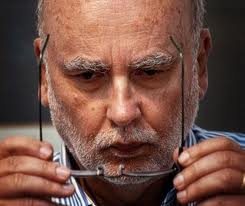
Daniel – handsomer than this, really

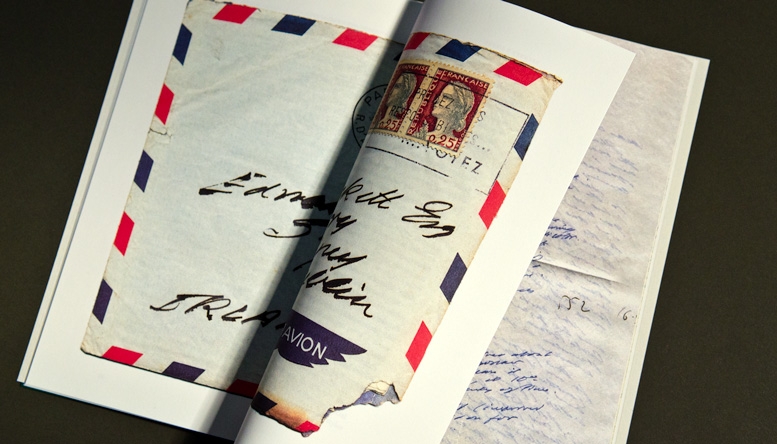
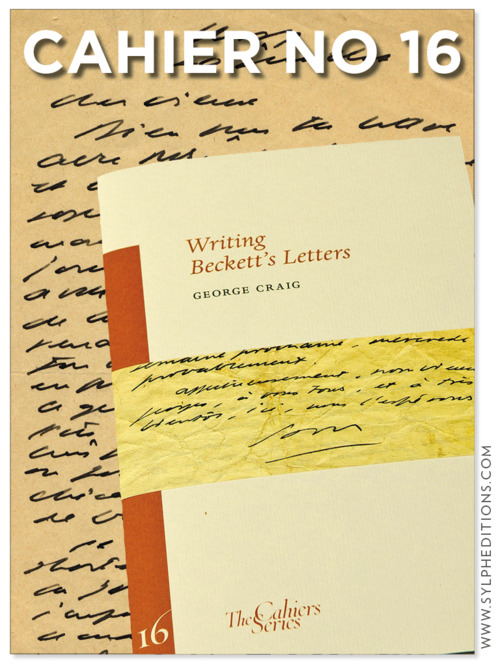
Daniel also sent me a copy of George Craig‘s Writing Beckett’s Letters. Craig spent 15 years translating the thousands of letters Beckett wrote in French.  It’s chock full of impressive insights, and handsomely produced – hand-stitched, even. I haven’t had a chance to read it yet, but Rhys Tranter did, and said this in the Spectator Book Blog (it’s here and here):

Whilst George Craig’s book is neatly timed to anticipate the next volume of Beckett’s Letters, it is more than just a preview of things to come. To Beckett scholars and enthusiasts, the appeal of this book is obvious, tightly-woven with rare insight and beautiful reproductions. But it is also thoughtful and engaging introduction to the problems of translation, and a testament to the status of correspondence as a kind of art-form. To paraphrase Craig’s description of Beckett and Duthuit’s correspondence, this is a work that abounds in strange, unexpected things.

Prescient words. Daniel has been promoting literary translations in other ways: He’s proud that the first invitation he issued at the American University was to Adam Zagajewski, who read from his latest collection and chatted with his students about his first encounter with Kafka. “An incredibly lucky bunch, they were: Tomas Venclova dropped by the next week and shared his own stories about discovering The Metamorphosis – in Polish!”

We’ll be writing more on the exceptional Cahiers series in posts-to-come.
Can poetry save the world? Zagajewski, Auden: the poets of 9/11

Share

"Try to Praise the Mutilated World"

Matthew Kaminski of The Daily Beast says that Adam Zagajewski was “The Poet of September 11,” thanks to his poem “Try to Praise the Mutilated World.”

Well, not quite so.  That honor belongs to W.H. Auden, with his “September 1, 1939.”  Let’s say that Adam was the greatest living embodiment of that atrocity:

“Try to Praise the Mutilated World” recalls a trip Zagajewski took with his father through Ukrainian villages in Poland forcibly abandoned in the population transfers of the post-Yalta years. “This was one of the strongest impressions I ever had,” he says. “There were these empty villages with some apple trees going wild. And I saw the villages became prey to nettles; nettles were everywhere. There were these broken houses. It became in my memory this mutilated world, these villages, and at the same time they were beautiful. It was in the summer, beautiful weather. It’s something that I reacted to, this contest between beauty and disaster.”

"We must love one another or die"

I have to agree with Adam – and I guess it’s sacriligeous to say it this week – that 9/11 didn’t change my fundamental worldview, which always included a mysterious allowance for evil in human goings-on. He thinks, however, it has changed our collective response to trauma. In “the past in general and not only in Europe,” he says, “the rule was to forget, to move on. There’s a relatively new idea that you have to work on it—that you have to keep everything in our memory. Which I like. It’s changing us. I don’t think people in the mid–19th century were going back to the Napoleonic wars and thinking, ‘We have to work on it’?”

Goodness, I wish that were the case.  The way I see it, memory has all but evaporated.  I was speaking to jazz artist Jim Cullum recently, and he was telling me about classes he taught, filled with bright students – but when he wrote “December 7, 1941” on the board, they had no associations with that date.

Kaminski says Adam “often purrs his words and speaks slowly” – well, not quite.  In America, we call it a kind of Polish drawl. I  recall someone hesitating to invite Adam as a speaker on a panel because, well … you really never knew how long a sentence from Adam would take.

I like this paragraph from Kaminski’s piece the best:

Polish poets have long thought of themselves as national bards, called to engage with the harsh world around them. “Polish poetry is one of the marvels of 20th-century literature,” wrote former U.S. poet laureate Charles Simic, who cited its “one rare virtue: it is very readable in a time when modernist experiments made a lot of poetry written elsewhere difficult.” Zagajewski says some critics see “something barbarian” in Polish poetry’s emphasis on meaning over syntax or style. “I’ve heard some French poets say Polish poetry is just journalism, because you can understand it.”


From the March event at NYC’s 92nd Street Y, which I wrote about here:

The future of book reviewing and one cranky man…

Share

By "Drew" at "Toothpaste for Dinner" blog

More lamentations on the demise of the book review industry – if it was ever an industry – and the elimination of free-lancers and staff at the once-great Los Angeles Times Book Review (I wrote about that here, and I wrote about the demise of the Washington Post Book World here).

Richard Rayner and Susan Salter Reynolds, evacuees from the L.A. Times Book Review debacle, have been absorbed by the Los Angeles Review of Books. “Once you step past the rubble, the smoking ruins,” Reynolds says, “you see that there are still places for book reviews that care more about readers and writers than bottom lines and bean counters, more about the future than fashion, more about the thrill of reading than the so-called death of the book. The Los Angeles Review of Books is such a place and I am delighted to be a part of it.”  One problem:  It doesn’t pay its contributors. Just like other online sites.

Their editor-in-chief Tom Lutz writes:

Book review supplements have been shuttered at the Washington Post, the Boston Globe, the Chicago Tribune, and elsewhere, all for the same reason: the sections were not (and never had been) profit centers. Traditionally, of course, the editorial side of the paper dictated what to cover and the business side figured out how to pay for it. This allowed decisions about what was “fit to print” to operate independently from the courting of advertisers. Zell came to the Times vowing to break down what he called this “artificial wall” between editorial content and advertising sales, a misunderstanding of the most basic precept of ethical journalism. Worse yet, each section of the paper, it was decided, needed to make its own profit or die, like subsidiaries of a company. Since book advertising had never fully supported the Sunday supplements, they were preordained casualties.

Of course, sports sections aren’t asked to support themselves by the advertisements of sports stores or the manufacturers of catcher’s mitts, so this standard has always been unevenly applied.  It’s a shortsighted policy in any case.  As the ever-wise Jeff Sypeck commented on my earlier post about the L.A. Times:

“As I see it, one of the ironies here is that the paper is gutting the section that attracts obsessive readers–not just of book reviews, or books, but potentially the entire rest of the paper. (I’m reminded of your post from earlier this year about how one Washington Post blogger made fun of Donald Hall while the newspaper devoted virtually no coverage to the artists and writers who received the National Arts and Humanities Medals.) I often think that the final obituary for the newspaper business will conclude that, among other causes of death, they chased imaginary audiences of people who otherwise don’t really read instead of catering to the inquisitive, hard-core readers they already had.”

Much is made of how difficult it is to support oneself as a book reviewer.  Heavens,  I’m surprised that they even tried.  During my free-lance days, my book reviewing was my high-profile prestige work, a habit supported by magazine features that paid better.  As Edward Champion puts it so pointedly on the website Reluctant Habits:

"We'll be living in small ghettos..."

The dirty little secret is that freelancers get paid hardly anything. A fortuitous freelancer can count on a sum just under $200 if a review is commissioned by the Dallas Morning News, the San Francisco Chronicle, or the Philly Inquirer. But shouldn’t one expect more from three of the top 50 United States newspapers? If we translate that $200 into labor — let’s say that it takes about fifteen hours to read a book and five hours to write the review — the freelancer basically earns around $10/hour before paying taxes. You could probably make more money working at a touchless car wash. Small wonder that so many, including yours truly, have dropped out of this dubious racket, leaving it to increasingly sour practitioners. Book reviewing has reached a point where those who are left practically have to beg editors to get into a slot. And if book reviewing has become a vocation in which veteran and novice alike must debase themselves for scraps, one must legitimately ask if there’s any real point in such an uncivilized and undercompensated trade carrying on.

A few years ago I asked Adam Zagajewski about the future of poetry poetry-lovers in the world of tweets and sound bites – but his words might apply to book lovers as well:

“We’ll be living in small ghettos, far from where celebrities dwell, and yet in every generation there will be a new delivery of minds that will love long and slow thoughts and books and poetry and music, so that these rather pleasant ghettos will never perish — and one day may even stir more excitement than we’re used to now.”

On a less cerebral note, Harlan Ellison rants on youtube about the about the unpaid labors of writers.  It’s been viewed more than half a million times:

“Only silence is innocent”: Zagajewski on Rilke, irony, and the future of poetry

Share

they warm themselves...

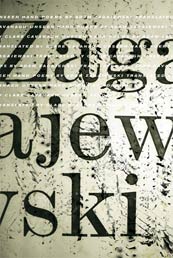
Kraków sustains a steady descant through the pages of Adam Zagajewski‘s new collection, Unseen Hand – most often, it’s Kazimierz, the old Jewish quarter where I stayed in May:

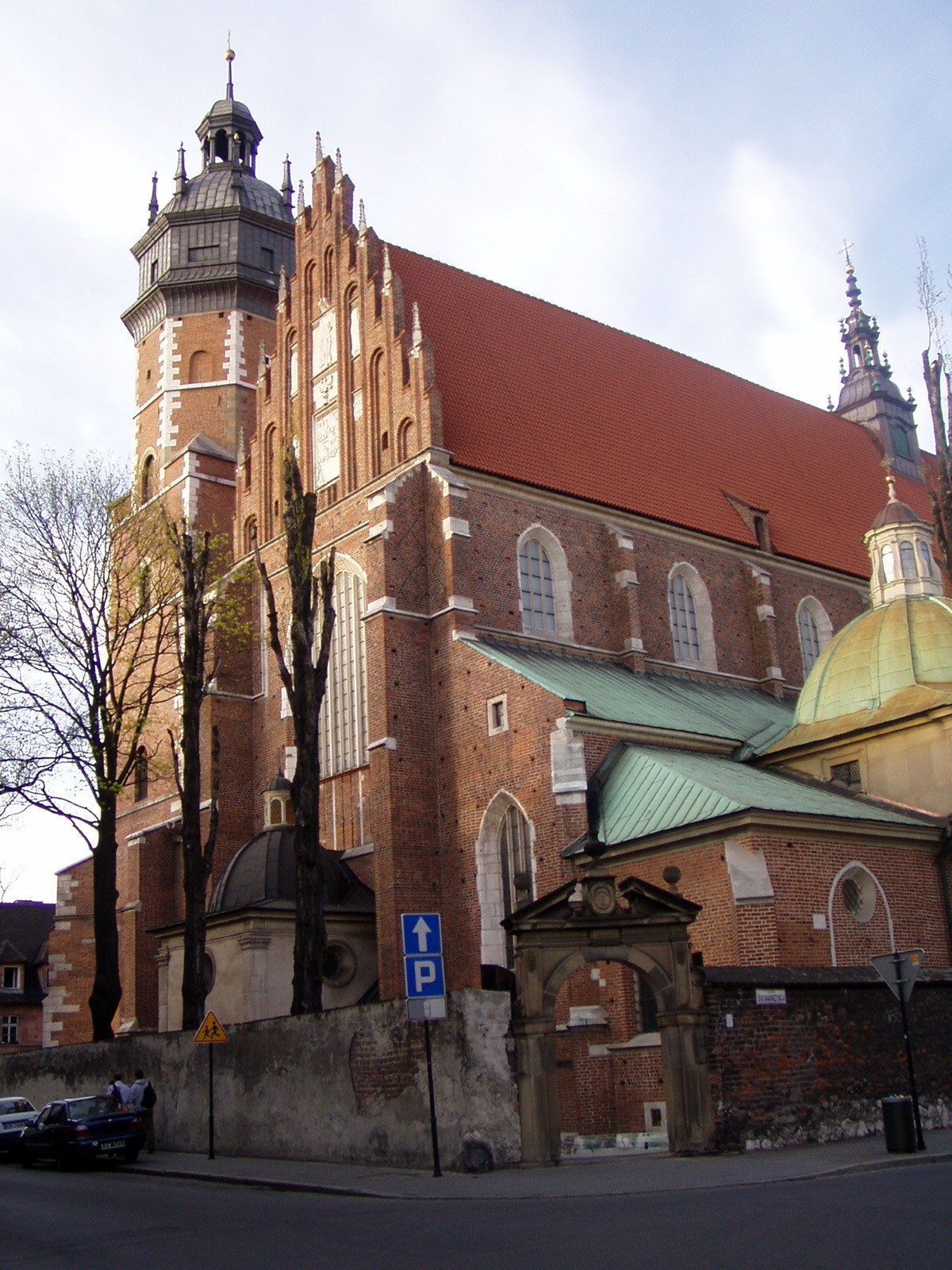
In the Church of Corpus Christi I lit candles for my dead,
who live far off – I don’t know where
– and I sense they warm themselves in the red flame too
like the homeless by a fire when the first snow falls.

That’s Corpus Christi, outside my window in Wolnica Square.  And one poem for St. Catherine’s Church, and at least three references to Jozef Street, catty-corner to Wolnica Square.  “Joseph Street in Winter,” is dedicated to Joachim Russek, the head of the Judaica Foundation, a tutelary spirit for my first trip several years ago:

In winter Joseph Street is dark,
a few pilgrims flounder through wet snow
and don’t know where they’re going, to which star,

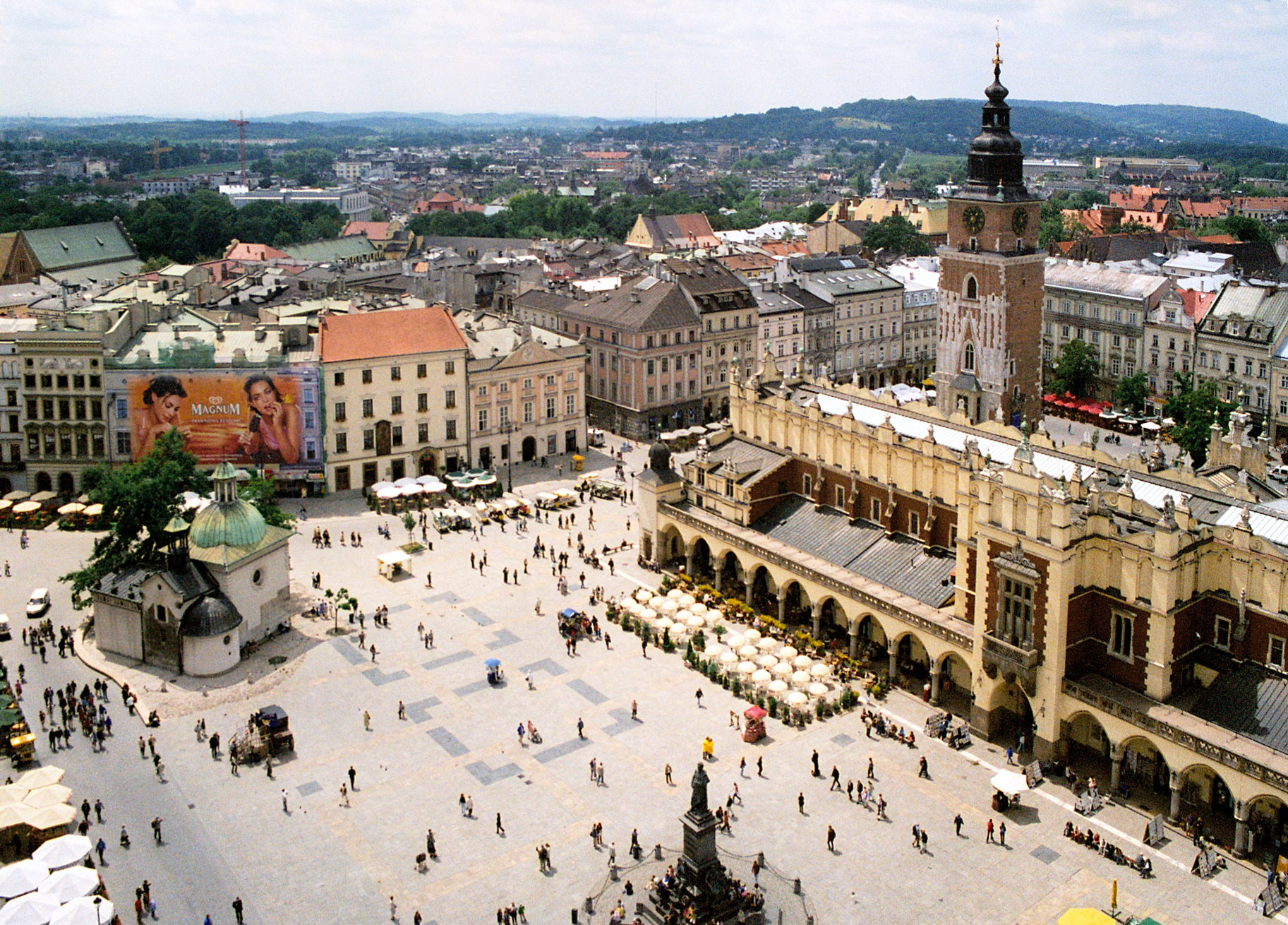
And two references to pigeons – charitable, because I know Adam finds them contemptible.  It was the subject of our first discussion when we met in Rynek Główny, which was swarmed with pigeons.

He didn't like the pigeons.

I actually “met” Adam during an online interview six or seven years ago for an article that was published Poetry Foundation article).  But much of the short interview never made it to the final piece.  For example, I asked him what gave rise, to a generation of giants:

“Good question. I have many contradictory explanations. One of the main ones is that the attention given to the meaning of human life in radical circumstances  (as opposed to the hermetic direction, or to a purely formal quest) in Polish poetry after the WWII catastrophe was a very important move: it gave the dying Modernism a new energy. It ‘rehumanized’ a highly sophisticated but a bit empty palace of modern poetry.”

On irony:

“Well, the disease of irony seems to be well identified. I adore irony as a part of our rich rhetorical and mental apparatus but not when it assumes the position of a spiritual guidance. How to cure it? I wish I knew.”

"We'll be living in small ghettos..."

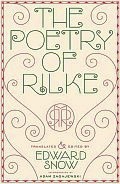
He has earned my own fealty, not only for his poetry, but for his many kindnesses.  So I was pleased when I read on Ann Kjellbergs website for her journal Little Star, a lengthy excerpt from his introduction to Edward Snow’s translations of Rainer Maria Rilke. (It was also excerpted by Poetry Daily here.) Adam is much in demand for introductions, blurbs, reviews, and essays.  This introduction is one of his best (I excerpt from Ann’s excerpts – and by the way, thank you, David Sanders, for pointing out the piece in Poetry News in Review):

“We have a new sorrow today: after the terrible catastrophes of the twentieth century, after the disasters that entered both our memory and imagination, we tread gingerly at the point where poetry meets society; “Don’t walk beyond this line,” as the sign on every jetliner’s wing warns us. And yet the central issue for us is probably the question of whether the mystery at the heart of poetry (and of art in general) can be kept safe against the assaults of an omnipresent talkative and soulless journalism and an equally omnipresent popular science—or pseudo-science. It also has a lot to do with the weighing of the advantages and vices of mass culture, with the influence of mass media, and with a difficult search for genuine expression inside the commercial framework that has replaced older, less vulgar traditions and institutions in our societies. In this respect, it’s true, poets have less to fear than their friends the painters, especially the successful ones, who, because of the absurd prices their works can now command, will never see their canvases in the houses of their fellow artists, in the apartments of people like themselves, only in vaults belonging to oil or television moguls who don’t even have time to look at them. Still, the stakes of the debate and its seriousness are not very different and not less important than a hundred years ago.

We know that the main domain of poetry is contemplation, through the riches of language, of human and nonhuman realities, in their separateness and in their numerous encounters, tragic or joyful. Rilke’s powerful Angel standing at the gates of the Elegies, timeless as he is, is there to guard something that the modern era—which gave us so much in other fields—took away from us or only concealed: ecstatic moments, for instance, moments of wonder, hours of mystical ignorance, days of leisure, sweet slowness of reading and meditating. Ecstatic moments—aren’t they one of the main reasons why poetry readers cannot live without Rilke’s work? I mean here readers of contemporary poetry who otherwise are mostly kept on a rather meager diet of irony. The Angel is timeless, and yet his timelessness is directed against the deficiencies of a certain epoch. So is Rilke: timeless and deeply immersed in his own historic time. Not innocent, though: only silence is innocent, and he still speaks to us.”

From my interview (I had cited this in an earlier post last fall, when Adam’s name came up again for a Nobel), when I asked him about the future of poetry and poetry-lovers in the world of tweets and sound bites he said this:

“We’ll be living in small ghettos, far from where celebrities dwell, and yet in every generation there will be a new delivery of minds that will love long and slow thoughts and books and poetry and music, so that these rather pleasant ghettos will never perish — and one day may even stir more excitement than we’re used to now.”

By the by,  Patrick Kurp of Anecdotal Evidence has a review of Unseen Hand here.

“The Wolf Who Ate Books”: Michnik, Vendler, Hirshfield, and others remember Miłosz

Share

Aleksander Fiut in foreground, Michnik in striped shirt, Vendler in back (Photo by my Droid)

Jane Hirshfield recalls that Czesław Miłosz lived in a “storybook” cottage on Grizzly Peak in the hills of Berkeley.  But to describe the fairy tale that took place within the cottage, you’d need a new character, a new story – “The Wolf Who Ate Books,” she suggested.

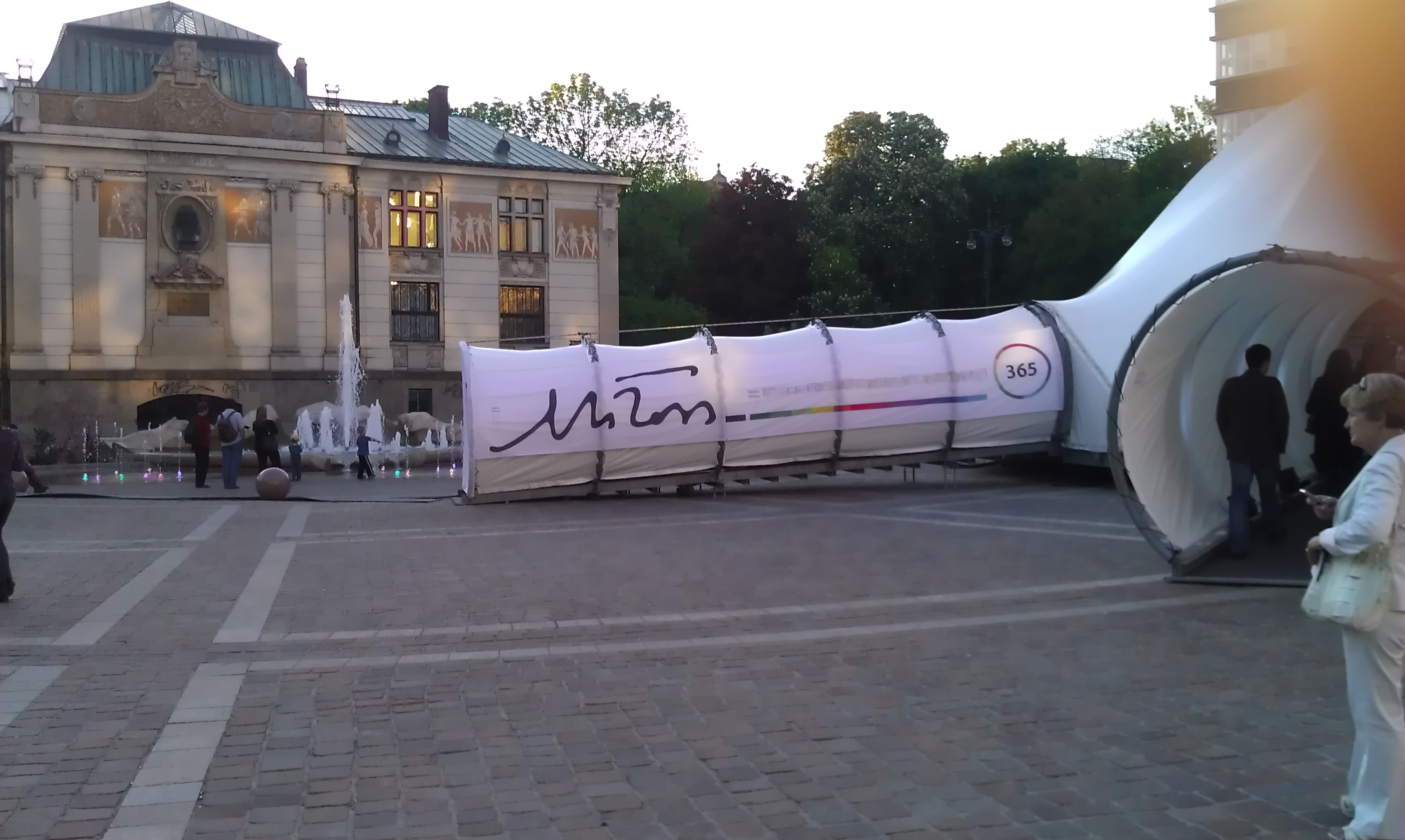
In the elegant and newly revamped Szczepanski Square, the Miłosz Pavilion – a strange, science fiction-y formation of hemispherical  tents and tunnels – hosted a range of activities during the Czesław Miłosz centenary festival. One spotlighted reminiscences with, as well as Jane, scholar Aleksander Fiut, Gazeta Wyborcza editor Adam Michnik, poet Tomas Venclova, leading critic Helen Vendler, and poet Adam Zagajewski. As with so many of the events, Znak publisher Jerzy Illg hosted.  Here are a few of their memories:

Michnik recalled Miłosz trying to meet him at a very particular Bulgarian restaurant in Paris, where Miłosz spent the lonely, tormented decade following his lonely defection from Communist Poland.  “Then Miłosz said a sentence I would remember for the rest of my life:  ‘I wanted to meet you here, because here, in the 1950s, very often I kept feeling I would commit suicide,'” he confided to his friend.  Michnik recalled his famous essay of the time, “Nie” [No], where he explained his defection to the world.  It opened: “What I’m going to tell now could well be called a story of a suicide…”

He also remembered Miłosz’s triumphant return to Poland in 1981, with the heady rise of Solidarity.  “It was a time of euphoria, carnival – it was our victory,” he said.

Miłosz was more cautious.  He told Michnik, “The atmosphere feels like just before the Warsaw Uprising. Please be careful.” Tanks rolled into Warsaw and martial law was declared a few months later.

Tomas Venclova recalled when Stanisław Lem was rumored to be up for the Nobel prize.  “I don’t care about the Nobel prize,” Miłosz told him, “but if any other writer gets it, I wouldn’t be too happy.”

A 21st century monster of hemispheres and tunnels (from my Droid)

Aleksander Fiut traveled with Miłosz to Stockholm for the 1980 Nobel.  On the way to the event, in a chauffeur-driven limousine, Miłosz was hungry.  Where did they stop?  He told the chauffeur to pull into McDonald’s.  “Her facial muscles didn’t even move,” Fiut recalled.

Jerzy Illg recalls the poet at 90, looking deeply into a vodka and a piece of herring – two of his favorite things.  “Happiness is accessible,” he declared finally. Illg had him write that down and sign it. “It’s a valuable security paper I hold,” Jerzy reflected.

Jane met both Carol and Czesław at a Bay Area picnic, where the hostess urged her beforehand to chat with the Miłoszes, since many were too intimidated to be social.  So, unfortunately, was Jane.  It was as if, she said, she had been told, “Please go talk to Yeats.  Please go talk to Shakespeare.”

Jane also recalled the death of Miłosz’s much-younger wife Carol, in 2002.  At the memorial service in Berkeley, she remembers Miłosz sitting erect, “evidence of decades of unbearable loss being carried.” She spoke to him afterward, and “for three seconds he completely broke down.”

“I never held a grief that large in my arms,” she said.

From Kraków: Zagajewski and other poets don yarmulkes for Temple Synagogue reading

Share

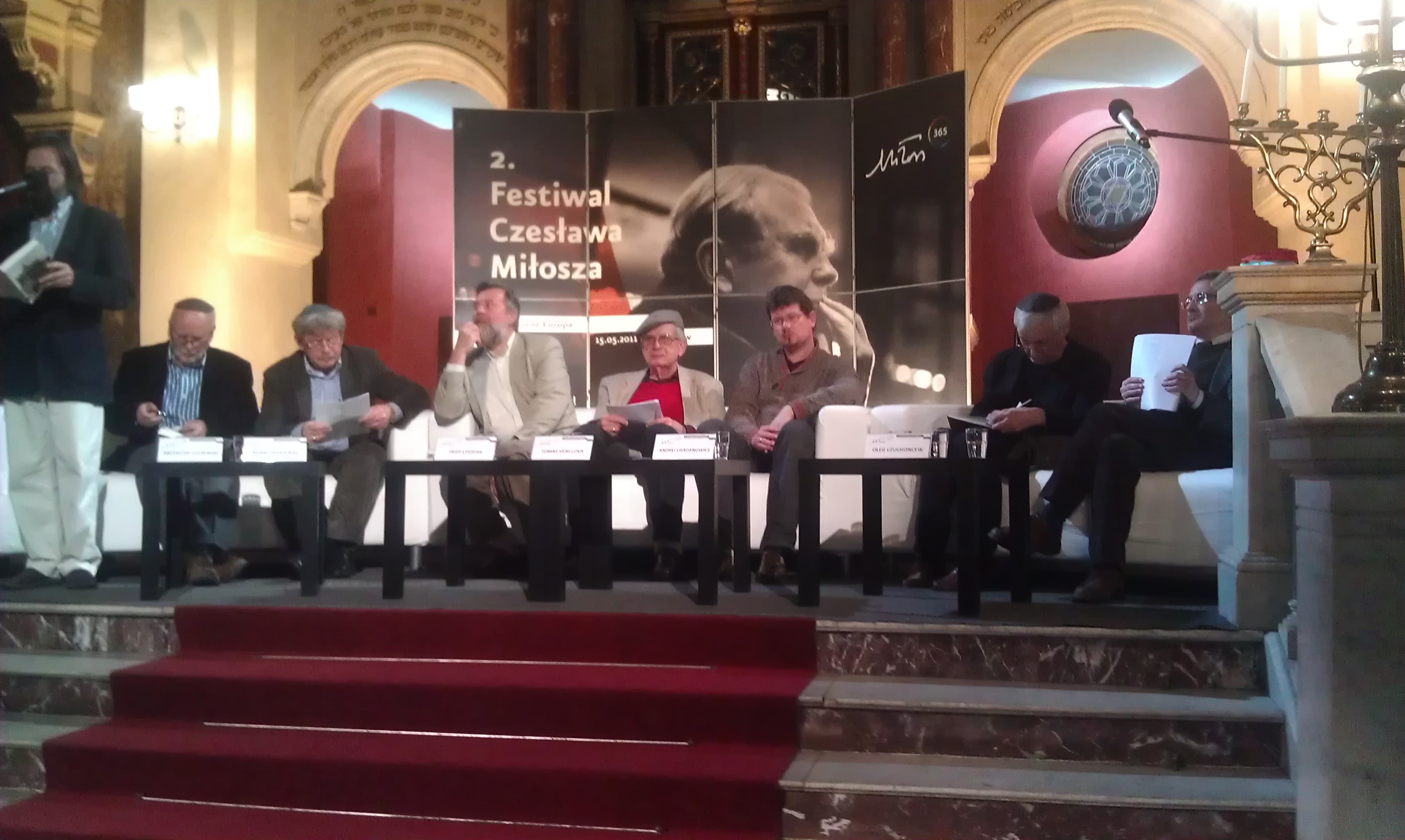
Zagajewski seated at far left, Lyszeha third from left, Venclova in red, and Chukhontsev second from right. (Photo: My Droid)

An impressive reading tonight in Kraków’s Temple Synagogue – at least, the parts I understood. I count it as one of the highpoints of the Czesław Miłosz Centenary Festival, a celebration not short of highpoints.

The idea behind tonight’s reading was “The Grand Duchy of Poetry,” including major poets from Poland, Lithuania, Russia, Ukraine, and Belarusia, represented respectively by Adam Zagajewski, Tomas Venclova, Oleg Chukhontsev, Oleh Lysheha, Andrej Chadnowicz.

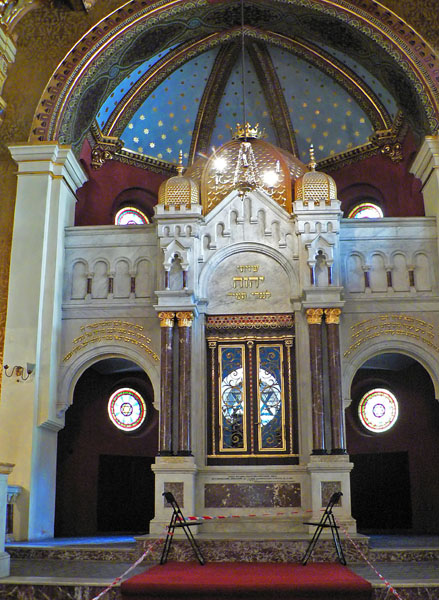
The setting was the city’s neo-Romanesque temple from 1862, with its richly decorated interior and ornate, gilded ‘Moorish’ woodwork, the style hammered out some time between Art Nouveau and Art Deco, during the revival of folk art themes, I suppose.

The men were suitably donning yarmulkes, except for Tomas Venclova, who wore a sort of newsboy cap.

Alas, the English translations of the poems read tended to disappear quickly from the festival table, and I was left to make do with what was left. No simultaneous translations tonight.

The Belarus poet Chadnowicz was youngest, in his 40s, and had a theatrical, energetic performance – tapping the microphone like a drum, at one point. The word “Belarusia” kept surfacing in his poems. I can only guess what he was saying – no handout. No handout for Ukrainian Lysheha, either.

I’d never heard of 73-year-old Oleg Chukhontsev, and I don’t know if his work exists in English, but it should.  The handouts showed a single translation by the eminent Russian scholar and translator G.S. Smith – if it’s any indication, this is an undiscovered nugget of gold.

Adam is clearly a poet at the top of his form, with many years ahead of him.  His poem, “Impossible,” translated by Clare Cavanagh, wasn’t my favorite (I preferred “Improvisation”), but it its closing was a great personal signature as the mind-boggling Milosz Festival winds to a close:

Sometimes I envy the dead poets,
they no longer have “bad days,” they don’t know
“ennui,” they’ve parted ways with “vacancy,”
“rhetoric,” rain, low pressure zones,
they’ve stopped following the “astute reviews,”
yet still keep speaking to us.
Their doubts vanished with them,
their rapture lives.

I’ve only recently discovered Tomas Venclova’s quietly luminous poems – like Adam, Venclova’s name appears annually in the Nobel shortlist. But it’s surprising how little has been written or said about the brilliant fruits from his steady labor, even though he’s hardly invisible – he’s on the faculty at Yale. Take this, the last two verses for his poem for Susan Sontag, “Landscape, Summer 2001”:

A loudspeaker by the open window
broadcasts the roar of the archangel’s trumpet,
and God, upon waking, reduces
the square to a pinch of love and ashes.

The sun comes up above the ruined city.
Light gropes for the desk and quickly finds it,
and empty time is severed by a sentence
which contradicts the night that has just ended.

Please, Nobel Committee, Tomas Venclova in 2011. It’s time.