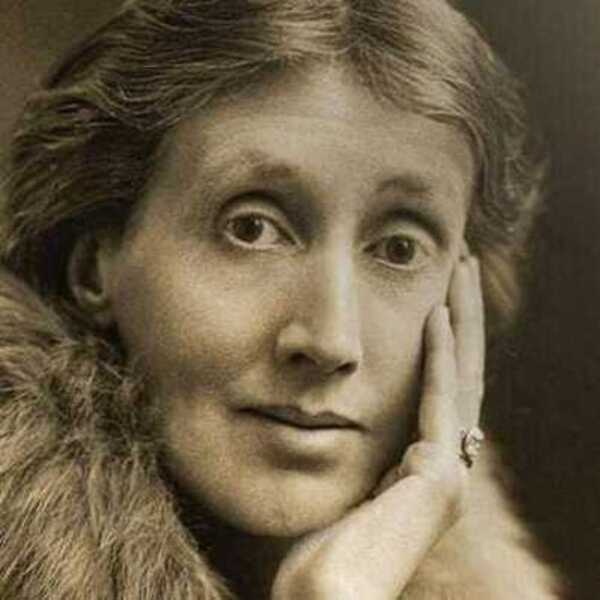
Please join us for a discussion of Virginia Woolf‘s 1929 A Room of One’s Own at 7 p.m. (PST) on Tuesday, April 11, in Levinthal Hall, Stanford Humanities Center, 424 Santa Teresa Street on the Stanford campus.
The Guardian called the book “a landmark in feminist thought and a rhetorical masterpiece” and rated it one of the top 100 non-fiction books of all time. Read about that here.
According to a contemporary review in The Los Angeles Times: “If you miss this book, which is profound and subtle and gently ironic and beautifully written, you will have missed an important reading experience.” Another Look will consider the work’s legacy a century later. The Bloomsbury author’s iconic book, an extended essay, is in public domain and widely available.
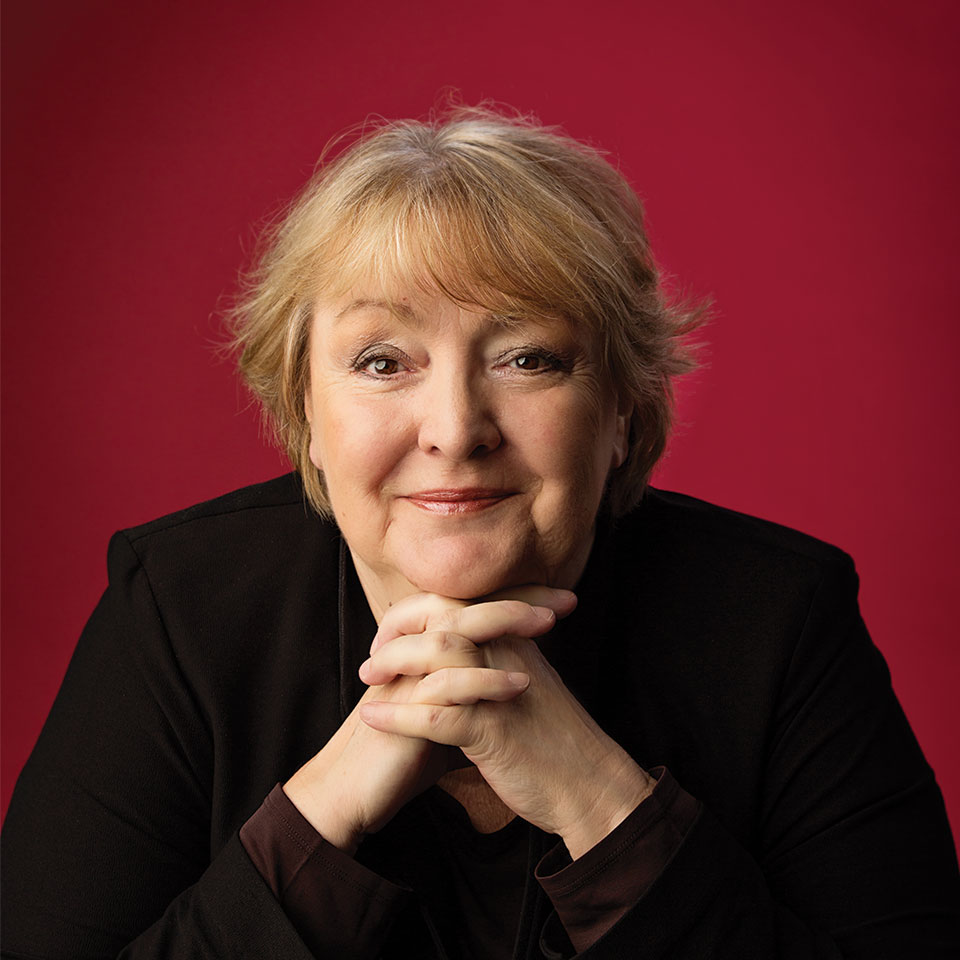
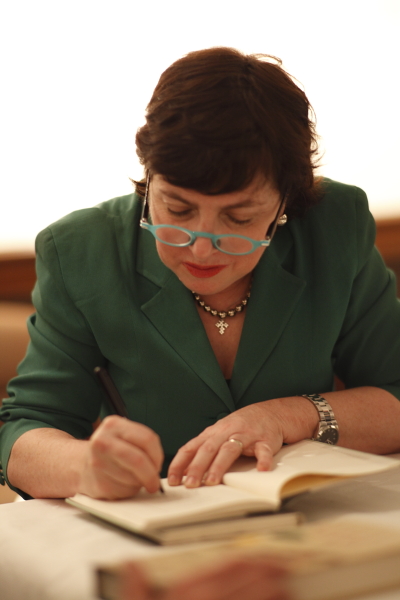
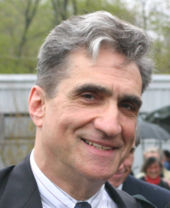
Panelists will include: Stanford Prof. Robert Pogue Harrison, author, director of Another Look, host of the radio talk show and podcast series “Entitled Opinions,” and a regular contributor to The New York Review of Books and Stanford Prof. Tobias Wolff, one of America’s leading writers, a founding director of Another Look, and a recipient of the National Medal of Arts.
Constance Solari is a writing coach and the author of four novels, including 2012’s Sophie’s Fire: The Story of Saint Madeleine Sophie Barat. Maria Florence Massucco, is a PhD candidate in Italian Studies who specializes in the 20th century novel. You’ll remember her from our discussion of Dorothy Strachey‘s Olivia.
Join us in person or virtually, but please register here. Or scan the QR code. We look forward to seeing you on April 11th! It’s going to be a great discussion.
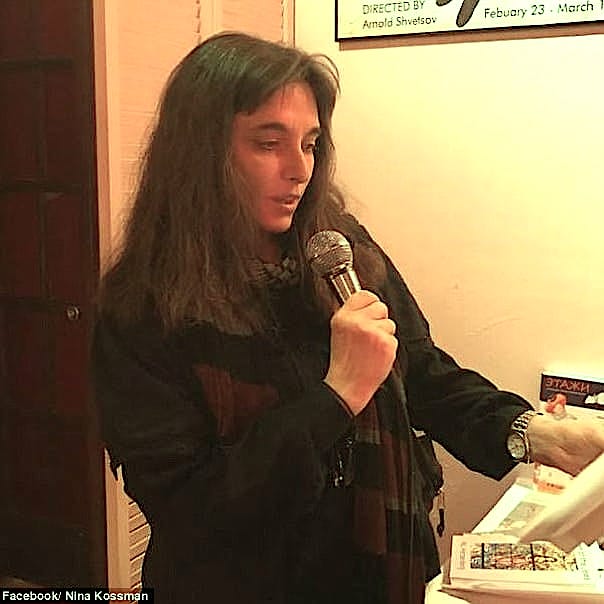
Russian poet Nina Kossman and a stranger sat next to each other on a recent flight from New York to Prague, en route to Ukraine. We’ve written about the U.S.-based writer’s translations of Marina Tsvetaeva here, but that was in a far less fraught time. A few minutes’ conversation between the two women laid bare the ongoing challenges of overlapping ethnicities, the terrible war, and the lifelong plight of the émigré. It went like this:
The woman in the seat next to me said something I didn’t understand right away. Something about a belt. I was thinking about something else, so I was a bit slow to react. Ah, a seatbelt! Is this my seatbelt or yours? I pointed at my seatbelt, already clasped on me, and then at hers, hanging from under her armrest.
Nina Kossman reading from her poems
“Ah!” she said, “Okay!” Her accent – the reason I didn’t understand her right away – sounded very familiar to me. “Do you speak Polish?” I asked.
“Yes,” she said. “And you? Where you from?” she said.
“I’m from the country that I’m sure you don’t like,” I said.
“Russia?” she guessed.
“Yes,” I said. “I was born in Russia. But I live here.”
“Why I don’t like?” she exclaimed with that mix of deep feeling and the hyper-drama I’m used to seeing in Eastern Europeans and which I notice in myself, too, once in a while.
“Russian people want war. So war.”
It sounded like a statement rather than a question, therefore I said, “The government wants the war, not the people. The people who approve of this war are just brainwashed.”
A very loud, emotional tirade ensued, and I suggested we not discuss politics. “I don’t want to fight with you while we are flying over the ocean.”
“You Russian,” she said. Again, it sounded like an assertion rather than a question, therefore I said, “Not really, although it’s true that I was born there.”
“What’s your last name?”
Ah, I thought, now I really feel like I am going to Eastern Europe. I knew what would follow my telling her my last name. Only in Russia and Eastern Europe I expect this question about my last name to be followed by “Not Russian,” and an instant later, by contemptuous “Jew?” Years ago, when I was a member of the now defunct PEN chapter “PEN/ Writers in Exile,” its Hungarian-born president never missed an opportunity to mispronounce my last name as “Koshman,” with barely concealed contempt, often followed by “Why is someone with the last name Koshman claiming to be Russian?”
That was in New York, where you don’t expect this sort of thing to happen, and it might be worth adding that the lady in question was not your usual illiterate antisemite but someone who knew every European writer personally and signed every PEN letter protesting the imprisonment of writers no matter where in the world the imprisonment took place, and herself was no lightweight as an author of critical studies of Hungarian literature as well as a literary translator. To prevent our conversation from taking the familiar route, I said calmly, “I’m Jewish, not Russian. Not ethnically Russian, that is.”
“Ah,” she said. “Then you not guilty. Not guilty of Russia war.”
“Right, I’m not responsible for this war – and not only because I’m Jewish and not Russian. “
“So why you say you Russian? Say ‘I Jewish,’ then no one thinks you guilty of this war.”
“In America, I’m seen as a Russian,” I say. “Being Jewish is a nationality only in Russia and Eastern Europe. In the rest of the world, and certainly in the U.S., you’re seen as Jewish if you go to a synagogue at least a couple times a year, that is, if you identify as a Jew, at least a Jew culturally, because here” – we were leaving the U.S., so I felt that “here” needed a clarification – ”in the U.S.,” I added, “Judaism is a religion, not a nationality as it is in Russia or Eastern Europe.”
“NO!” she said, with more feeling than I thought was necessary. “No! Say you Jewish, not Russian, then no one thinks you guilty. You not guilty of this war!”
“Whatever,” I said. “Perhaps we shouldn’t have this conversation here, just so we can have a peaceful flight.”
“You do not understand me! I say ‘Jewish – good!’ Not bad!”
“Okay,” I said, “Okay, okay.”
But we were not finished, because when a short pause during which she sat with her eyes closed was over, she said: “Tell me! Why you fly to Praga [Prague] now?”
“I’m flying to Prague just because I can’t fly straight to Ukraine. No passenger planes are flying to Ukraine, as you know.”
“I know!”
“Good,” I said, hoping this would be enough to end our conversation on a peaceful note.
I was wrong again. She sat in silence for a minute, and then said: “But why you go to Ukraine?”
“I want to work with animals that have been traumatized by the war.”
“But if you live in America, you can’t work in Ukraine! You need special papers to work there! Work papers! It’s another country! To work in another country, you need work papers!”
“I am not going to work for money. I’m going as a volunteer. Volontyor,” I used the Russian form of the word, thinking it might sound like Polish. “I wouldn’t work for money in a country at war.”
“Ah, you go there to help! Not to work!”
“Right.”
“That’s good!” she said Good luck!”
“Thank you,” I replied.
“My mother was a teacher of Russian in Poland. She went to Moscow many times. She said beautiful city! I wanted to see it but now I will never see it. Because of this war. Moscow is beautiful, right?”
“In a way.”
“But Leningrad is more beautiful. I always wanted to see it. Only if Putin dies! But he is only 70! And he has good Jewish doctors to keep him alive! War will end when he dies.”
“I hope it won’t be that long. But you never know.”
“Never know! That’s right! He wants to make the Soviet Union like in the old days. You know Poland was like number sixteen republic? It had fifteen republics – and Poland was sixteen!”
“Yes, I know.”
“It was like a train – one car, another car, Ukraina, Latvia, Belorussia, Estonia, Lithuania, fifteen republics, fifteen cars – and Poland car number sixteen! And after Ukraina, he will want to take Poland – to get his train back!”
“But Poland is part of NATO, so he won’t dare.”
“NATO is his fear! He sees NATO even where it is not!”
“Yes,” I said, “it’s a crazy fear of his.”
She touched my armrest gently.
“Jewish and Russian – not the same! Say you’re Jewish next time! It’s better! And good luck to you in Ukraine!”
“Thank you,” I said again. Like a real American, I’ve learned to say “thank you” to avoid saying anything substantial.
“I sleep now.”
“Okay,” I said, careful not to add “thank you” one more time.
She leaned back in her seat and closed her eyes. I tried to sleep, too, but nothing came of it, so I took out a piece of paper and a pencil and jotted down our conversation, while every word we had said was still fresh in my memory.
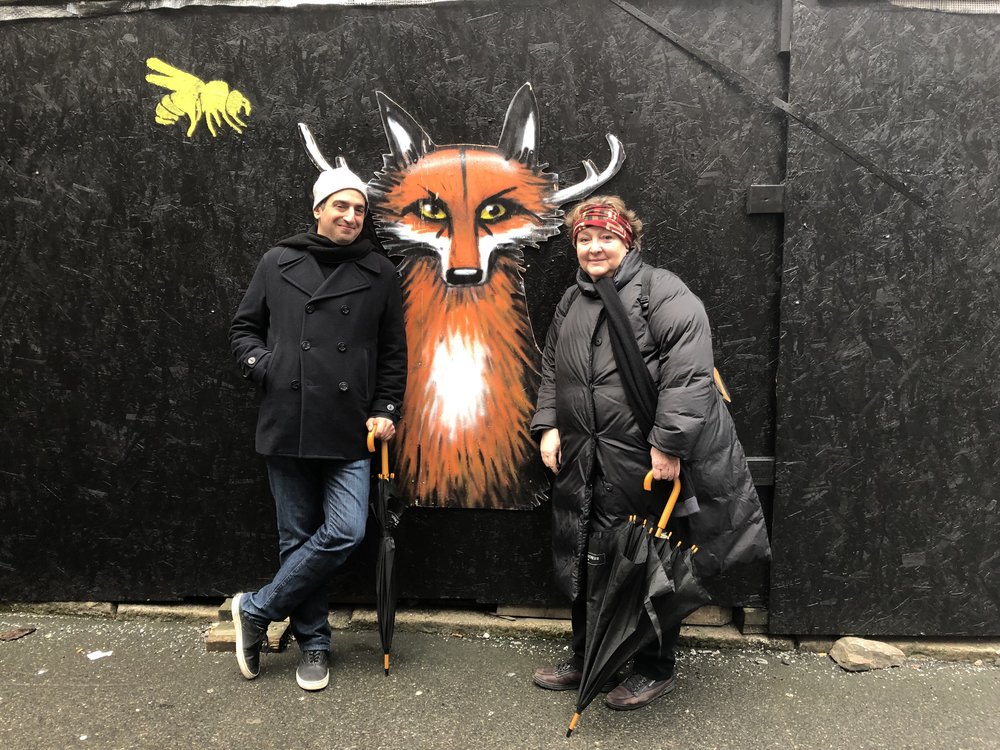
In happier times: Ugrešić with Prof. Daniel Medin of the American University of Paris, and an antlered fox in Bergen. Photo: Alisa Ganieva.
The Croatian writer and Neustadt winner Dubravka Ugrešićdied two days ago, on March 17, at her home in Amsterdam, surrounded by family. She was 73. I interviewed her at the inaugural Bergen Literary Festival in Norway, 2019. That interview was published in Music & Literaturehere.We talked about the break up of Yugoslavia, we spoke about the hate campaign against her and how she became one of the region’s many scapegoats.
But she also spoke the relationships between men and women, and, as the biographer of the French theorist René Girard, I couldn’t help but see a mimetic thread in her conversations. An excerpt from that interview:
CH: Something you said that I think is very true: “That through women, men find their way to other men.”
DU: Let us be fair, men are not the only ones who, consciously or unconsciously, manipulate. However, it is fair to say that there are some examples of women in history who attracted men because they were known as mistresses of other men. Love is often a struggle for territory and power, a social game. Literary life is rich in such examples. One such example is Lily Brik, wife of Russian futurist Osip Brik and mistress of Vladimir Mayakovsky. Both of her men died, and she carried on, living with another two men who were honored by inheriting “the territory” previously owned by two famous men. Such liaisonsdangereuses are not foreign to human nature, but Brik’s story happened in the time of sexual liberation—remember Alexandra Kollontai! Also later, during the Communist era, sexual privacy was the only territory of freedom that was left.
CH:The comment we’re discussing is another remark from the character of the Widow in [her novel] Fox, who was speaking about Alma Mahler. You wrote—or rather, the Widow said—“her main talent was a deep and abiding knowledge of the economy of love.” What else might she had said that you didn’t have time to write down?
DU: Everything’s about the economy of love. When I see men—how they are natural, relaxed, and comfortable in the company of other men—I realize that it will take much longer for both genders to become emancipated from God’s given roles. Many men see the world like military life—that is the strongest human meme, where women stay at home and wait for men to come back from glorious battles with other men. Or, to use an analogy that is a bit more current, many men see the world like a football game, where they play with each other in order to play against each other. Why do men never wonder why women are so obviously excluded from so many zones of public life? Why doesn’t one of them ever protest that he will not participate in the conference, discussion, forum, or event unless the number of participants is equally divided: half women and half men? Why? Because they don’t see anything unusual in the landscape they are so used to.
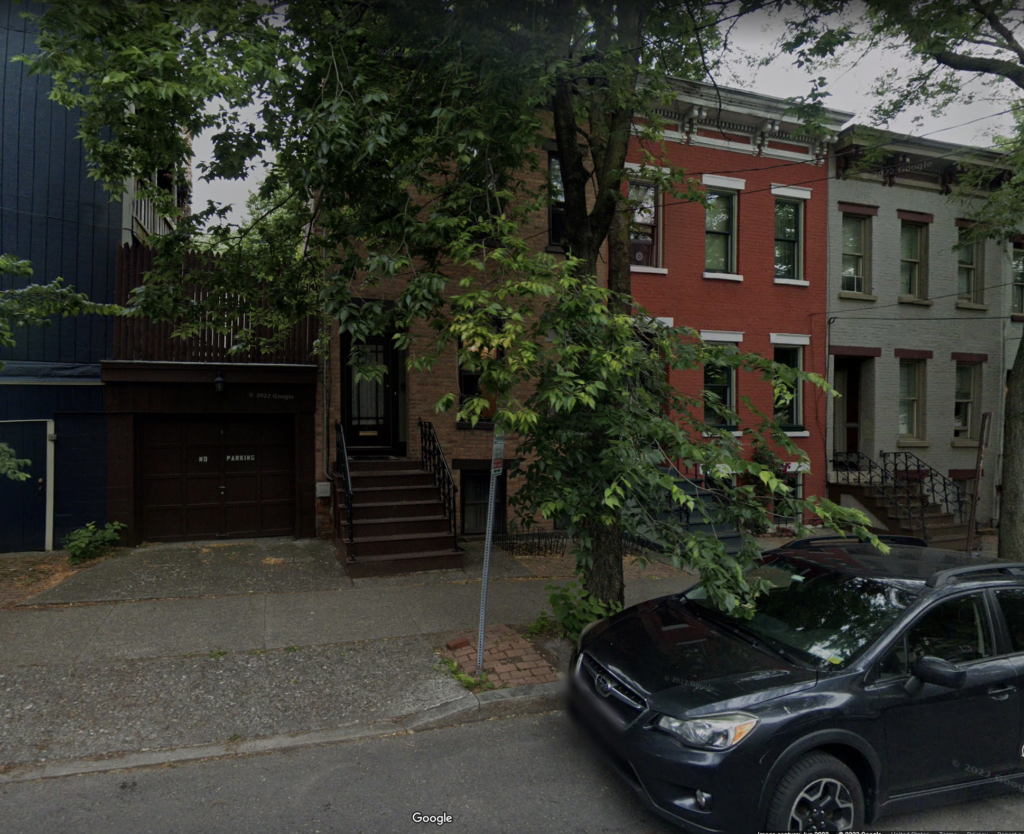
67 Dove Street – it’s the brown townhouse, hidden behind the trees.
Want to buy a unique piece of real estate with some history behind it? Try this: the home where Irish-American gangster “Legs” Diamond was gunned down in 1931. The townhouse is currently owned by the novelist William Kennedy, Pulitzer prizewinning author of Ironwood and MacArthur “Genius” Fellow. He is also the author of the classic novel Legs, the first book that launched his renowned “Albany Cycle.”
Paul Grondahl, Director of the New York State Writers Institute and a columnist for the AlbanyTimes Union tells the story. An excerpt:
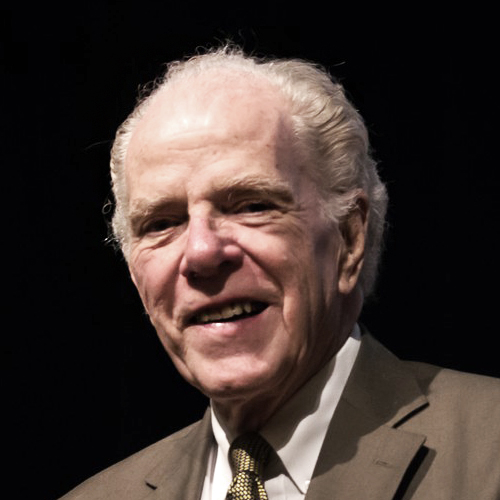
Bill Kennedy: He’s part of the house’s history, too!
It is a stop on local history walking tours. Historic Albany Foundation attached a plaque to the brick exterior of the 19th-century building that operated as a rooming house in Diamond’s era.
Novelist William Kennedy bought the Center Square property in 1984, when Francis Ford Coppola planned to make a movie out of Kennedy’s novel about the legendary bootlegger and cold-blooded killer.
That movie never happened, but Kennedy used the rowhouse forwriting and entertaining. He wrote parts of several novels at 67 Dove St. The years piled up. Now, he is 95 and his wife, Dana, was diagnosed with Alzheimer’s disease.
***
Kennedy and his wife welcomed a who’s who of notable authors for nightcaps in the front parlor after New York State Writers Institute events, including Toni Morrison, Saul Bellow, Norman Mailer, William Styron, Philip Roth, Cynthia Ozick, George Plimpton, Stephen Sondheim, August Wilson, and Russell Banks.
If you stopped by in the morning or afternoon, you might hear the staccato clacking of Kennedy pounding the keys on a 1930s vintage L.C. Smith & Corona manual typewriter positioned on a glass coffee table in front of a sofa in the back parlor.
He hammered away at the keys and had so many stacks of heavy research books piled up on the coffee table that the glass top broke. He got the glass replaced and kept writing there.
He wrote much of his 1988 novel, Quinn’s Book, and his 1992 novel, Very Old Bones, as well as portions of others in his Albany cycle at 67 Dove St.
“I loved the neighborhood because it had everything I needed,” he said.
It’s a piece of history going for just shy of half a million dollars. Chump change in California.
When Clare Cavanagh was first invited by a mutual friend to translate the poems of Adam Zagajewski, who died two years ago this month, how did she respond? “I froze, answered ‘No,’ and hung up the phone.” She was known for her translations of Stanisław Barańczyk, and so the suggestion seemed somehow disloyal. “How could I work without Stanislaw? How could I translate the great Zagajewski on my own? I told my husband, who said I was an idiot. ‘It’s translating, not sex,’ he said. ‘You can do it with more than one person.’ Adam loved that line.”
Cavanagh signing books in Kraków
You can read Clare’s article, “Working with the poet who told us to ‘Praise the Mutilated World,'” over at the Washington Post here. I love Clare Cavanagh’s writing – frank, unpretentious, and yet unpretentiously insightful. The occasion for the article: the great Polish poet’s latest collection, his final volume, True Life, is out in English this month.
Why did Adam approach her through an intermediary? “I discovered the reason for Adam’s shyness only long after. I’d published a scholarly book on the poet Osip Mandelstam that year, and Adam had actually read it. I’m still a bit shocked by that decades later,” she writes.
“He’d thought I would be some remote, imposing professor and was afraid to call me himself. This too continues to shock me. He was a great Polish poet after all, and I was just some Slavist in Wisconsin. But he knew I loved Mandelstam. And he knew I’d been translating Wisława Szymborska with his longtime friend, the great poet and translator Stanislaw Barańczak. So he thought it was worth a try.”
Again, read it all here. It’s worth it. I don’t want to spoil the stories for you, and I’d be tempted to tell them all.
I love Robert Pinsky’s writing, too, and his tribute to Adam, “A Poet Whose Tone Was Personal and Whose Vision Was Vast“ in The New York Times is here. It’s a retrospective as well as a review of True Life. An excerpt:
Poet, friend, and translator
“Proper names occur in many of the poems, sometimes the innocent-looking place name (Drohobycz, Belzec) of an extermination ghetto, sometimes the name of a crucial, renowned or emblematic victim, such as the artist and writer Schulz, or Jean Améry, repeatedly tortured, known for his writing about sadism as the defining, essential nature of fascism, not incidental to it.
“The poems of True Life do not denounce these horrors explicitly, but seemingly allude to them almost as if in passing. The surface calm avoids the customary postures of condemnation; this poetry has a blade of penetration that is less forgiving and more demanding than ordinary, rhetorical righteousness. To put that point another way, Zagajewski by implication doubts the reassurance of “never again” or “never forget.” Slogans cannot correct the absence of moral imagination.
“An extreme of truth-telling.”
“The poems are at an extreme of truth-telling. They deploy understatement like a talisman as they enter the grandly menacing yet oblivious borderland of our worst human doings. Where does this manner, with its indictment by reason, come from? Zagajewski invokes and declines a particular intellectual-historical source in a poem of 11 short lines, entitled “Enlightenment.”
Czeslaw Milosz wrote in his introduction to Zagajewski’s 1985 selected poems in English, “Tremor” (translated by Renata Gorczynski), that Zagajewski, “taking the lead in the poetry of my language,” gives “living proof that Polish literature is energy incessantly renewed against all probabilities.”
Robert Pinsky extends a line of thought I advance in my own book, Czesław Miłosz: An American Life: “The poetry of Miłosz, Zbigniew Herbert and Wisława Szymborska in English translation has been a powerful strand in American poetry. In a tradition Zagajewski inherited, those three senior poets, in their different ways, by necessity engage historical realities. That mission has mattered to American writers.”
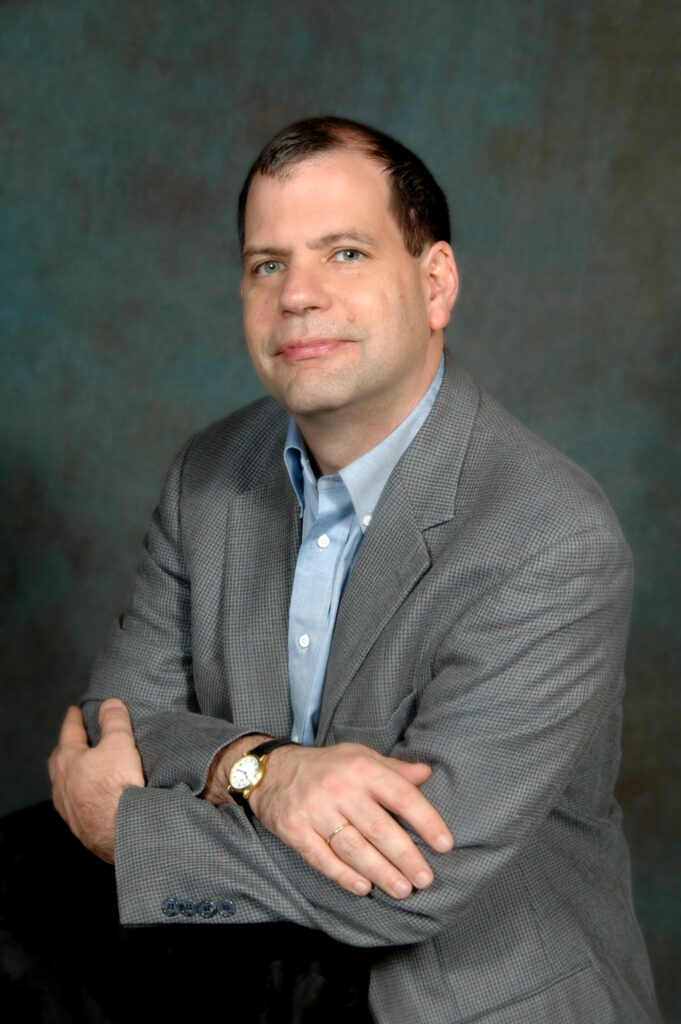
Economist Tyler Cowen, is always quotable – even when he doesn’t try to be. For the three or four of you out there who haven’t heard of him, he’s professor of economics at George Mason University and the director of the Mercatus Center, a free-market research center and think tank. He is also the co-founder of the popular economics blog Marginal Revolution, and he’s host of the podcast series Conversations with Tyler – he interviewed my humble self some time ago here.
Check out this Q&A interview with Jon Baskinin “Progress Studies” in the current issue of The Point. The subject is artificial intelligence. When I saw the quote about paper clips, I knew this would have to be a Book Haven post.A couple excerpts that carry a lot of pith and punch:
“People are right to feel angst. But it’s also an opportunity.”
JB: What kind of benefits do you see AI delivering? Will it bring us some of those big public benefits that you’ve talked about have been missing since 1973?
TC: I think within two years or so, AI will write about half of all computer code, and it will write the boring half. So programmers will be freed up to be more creative, or to try new areas where the grunt work is more or less done for them. That will be significant. Of course, the code has to be edited and checked, there will be errors. But it writes so much of it for you so quickly. And I think that will lead indirectly to some fantastic breakthroughs and creativity of programming.
And then, individuals will have individualized tutors in virtually every area of human knowledge. That is something that’s not thirty years off—I think it’s within one year, when GPT-4 is released, or when Anthropic is released. So imagine having this universal tutor. It’s not perfect, but much better than what you had before. We’ll see how these things are priced and financed. But that, to me, is a very significant breakthrough.
JB: Obviously, there’s a lot of anxiety among, I guess, humanities people, broadly speaking, but also people like the effective-altruism crowd thinking about the ways that AI could go terribly wrong. Do you think those worries have merit? How do we create a market and situation where we are able to advance the beneficial parts of AI and limit some of the potential damages?
TC: I’ve never been convinced by the scenario that the AI will rise up and destroy the world, or turn us into paper clips. [Read about how paper clips could bring about the end of the world here. – ED] I just don’t see the evidence. It doesn’t interact with the physical world in a way where it can do that. It doesn’t think. It’s a predictive language model.
You know, the humanities are going to have a lot of problems. So people are right to feel angst. But it’s also an opportunity. So far the most visible problem is students using GPT to write their term papers, right? I don’t know how we’ll deal with that. I don’t pretend to have the answer. I think there’ll be other problems related to misinformation, or maybe people treating it like a religious oracle. Every technological advance has difficulties, and this one will too.
***
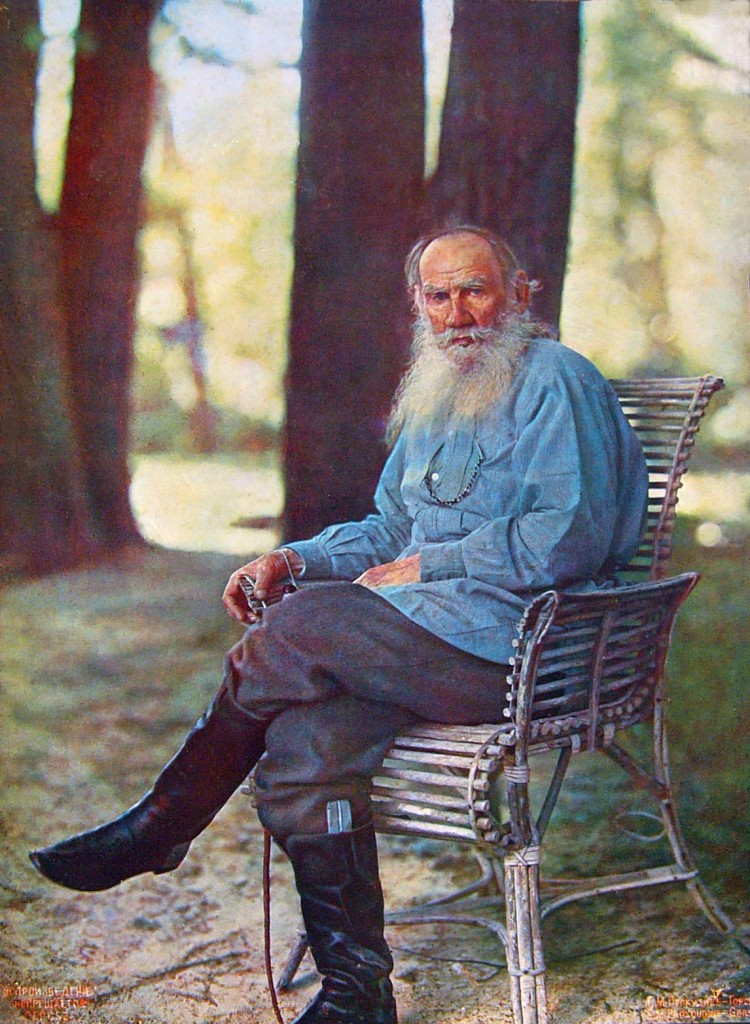
Not a happy kind of guy.
JB: I want to talk a little bit about Tolstoy. Max Weber, in his famous 1917 lecture “Science as a Vocation,” says that Tolstoy is the person who most sharply raises the question of whether the advances of science and technology have any meaning that go beyond the purely practical and technical. And he quotes Tolstoy saying that, basically, for the person who puts progress at the center of their life, life can never be satisfying, because they’ll always die in the middle of progress. How would you respond to this charge from Tolstoy about progress?
TC: I’m pretty happy and Tolstoy was not, would be my gut-level response.
I would put it this way. If there was backwards time travel, and you had to send me back to his time, apart from satisfying some historical curiosity, I would be terrified at that prospect. Life in Tolstoy’s Russia was quite horrible. Even for the intelligentsia, never mind the peasants who had been recently freed from being serfs. And then that’s followed by Soviet Communism, as the reaction against how bad things were under the tsar. That’s awful. Give me Australia and Denmark and northern Virginia. Ask random immigrants or would-be immigrants: Would you rather migrate to Fairfax County or, you know, to Tolstoy’s Russia? It’s not even a choice. I don’t think you’d get many people going to Tolstoy’s Russia. And that, to me, suggests the importance of progress.