
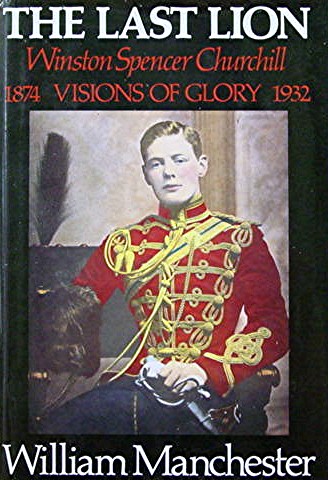
Out from under his bed: Paul Reid speaks about Churchill, Manchester, and The Last Lion

Share

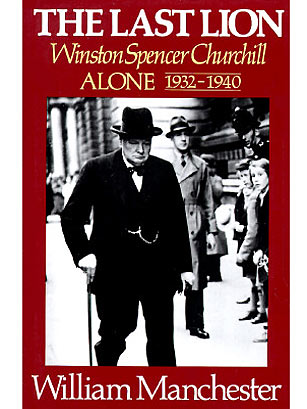
A few weeks ago I wrote about the world anxiously awaiting the final third volume of William Manchester’s The Last Lion: Winston Spencer Churchill, Defender of the Realm:  “I know, I know,” I wrote. “It’s going to be written not by Manchester, who died in 2004, but by Paul Reid, and everyone is wondering if it will be up to snuff.  So much so it’s a wonder that Reid doesn’t just hide under his bed and refuse to write anything at all.”

Relax, everyone!  He’s fine!  Paul Reid emailed me over the weekend to say: “I have emerged from under my bed to assure you that The Last Lion is being edited, all 470,000 words, every man-jack of them composed, proofed, and sourced while I labored with just ten inches of head room.  It’s so cramped under there even the rats are stoop-shouldered.”

Then he invited me to chat:  “Please allow the phone to ring several times, as it takes me a while to crawl from under the bed, climb the ladder from the bunker to the padded room, and reach the phone.”

Chat we did, and it was great fun.

He recalled the October night when his friend Bill Manchester, in failing health, asked him to continue the series.  “We were watching a Red Sox game – the Red Sox lost, as usual.”

“The night he asked me to do it, I said, ‘Gee I don’t know, Bill.’”

Both men had been feature writers for daily newspapers, banging out articles of about 800 words.  Manchester’s advice to the budding author: “String together a thousand short feature stories and you’ll have a book.”

“If I imagined 800 pages, I would have been pretty daunted,” Paul admitted. He also said that he would have been cowed if asked to write about, say, Paganini.  However, Paul had been a World War II buff from way back:  “I knew the battles, I knew Montgomery, ‘Bomber’ Harris – my whole life, that’s been my hobby. I loved history, from my earliest memory.”
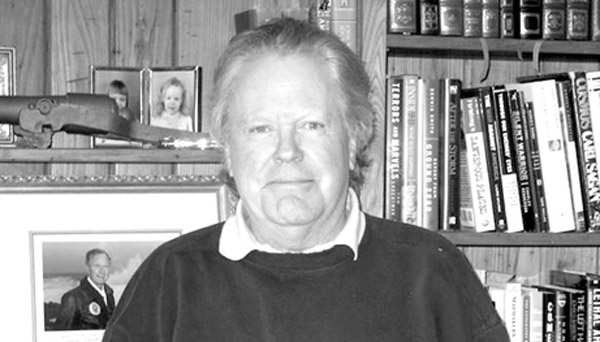
Speaking out from the bunker

“You can do it, just write,” Manchester exhorted Paul. “I’ll have my red Number 2 pencil. I’ll edit; you write.”

That was the plan.  “But he died 7 months later,” Paul said.  Then the younger author was on his own, guided by 4,000-5,000 pages of Manchester’s notes.

Manchester was “an organization guy.” But it was an organization not necessarily recognizable to anyone else.

“He had his own system for putting his notes together.” Manchester had called them “clumps” of notes, formed by taking a hundred sheets of paper, taping or gluing pairs of them together to form one long sheet, and binding them at the top to create his own “tablet.” He would tape or glue Xeroxes of speeches and official documents.  He left behind dozens of these makeshift tablets.
Manchester also had his own notation system. On the lefthand margin of the manuscript, he would jot one of at least a hundred “topic codes” (for example, De Gaulle, Nazi Germany).  A little pound sign would indicate information on Churchill’s family.

He marked the righthand side with cryptic “source codes.”  Paul cracked one early: HAR was a code for Averell Harriman’s memoir. But the others?

“I finally had a brainstorm,” he said.  He called the Wesleyan Library where Manchester did his research, and asked for a list of all the books Manchester had borrowed.  It didn’t keep any such list.  “Because I knew Bill,” Paul said he had another flashbulb moment:  Could have a list of all Manchester’s overdue books? “That ran to dozens of pages.” The code was cracked again.

“I went out and purchased everything,” including collections of Hitler speeches, Roosevelt speeches, diaries of generals.  The Bostonian’s North Carolina bunker has about 25 linear feet of World War II books.  “The war is 85 percent of the story, and that what a lot of people are waiting for.”

Manchester’s manic writing habits were famous (Vanity Fair wrote about Manchester here) – 7 days a week, for 12-14 hours a day.  Paul, however, is a bit more leisurely: he spends about 5 or 6 hours going over sources about a particular week in the war, writes for a few hours, and starts over the next day.

So what does Churchill have to say to us today? “For Churchill, courage – moral courage – was the first virtue in the Aristotelian sense.”

Paul recounted an incident where the prime minister talked to 8 and 9 year old schoolboys at his former Harrow school in 1940.  “That’s when he said, never give in, never give in, to tyranny, to evil.  These are not dark days, best days of our lives.”  This lesson, for 8 and 9 year children, Paul emphasized.
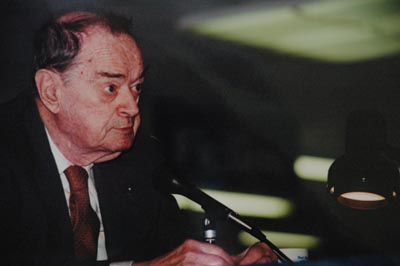
He had a system.

“There was no guile with Churchill.  He didn’t know how to be dishonest.  Stalin knew that.  He [Churchill] was a brave man, but not foolhardy man.”

Nor was he a despot, like his famous foes:  “He pursued knowledge, not power,” said Paul. His pugnacious stances were not just based on opinions, but on his wideranging study:  “He read everything – Aristotle, Plato, Thucydides, Cicero, The Aeneid, The Iliad, The Odyssey, Thomas Aquinas, Augustine, British empiricists,  Macaulay, and all of Gibbons, Yeats and Keats and Byron and Shelley, Longfellow and Emerson.  Everything.”

Manchester and Churchill both threaded through Paul Reid’s mind as he worked, but the final work?  “The work is not only yours, it’s you.”

Now he is close to the finish line.  He won’t prophesy exactly when the book will be out – “it’s a big project, and it will take some time.”

“Churchill would just push ahead. That’s what you have to do.”

Just like I said a few weeks ago.”
I should have paid a visit.

Share

"A resemblance of the divine mind"?

During my recent London sojourn, I passed the National Gallery in Trafalgar Square.  I hadn’t visited in years, and didn’t this time. Yet I remembered an old friend there: the Leonardo da Vinci charcoal cartoon of the Madonna, Child, St. Anne and John the Baptist.  I remember sitting contemplatively in the darkened alcove that housed it after I first moved to London years ago.

I should have stopped in last month.  Little did I know that a megawatt exhibition of Leonardo’s paintings had just kicked off.  On the other hand, a friend reminded me, do I want to fight my way to spy Leonardo intermittently through large mobs of chattering people?

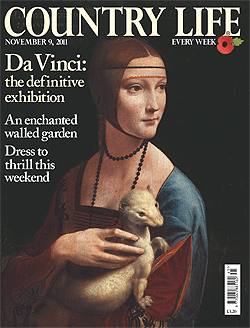
My desire was piqued more than assuaged when I saw a magazine on a friend’s coffeetable, with another old friend on the cover.  No wonder the Lady with an Ermine was not available for viewing when I went to Kraków last spring (I’d introduced myself in 2008).  She was being gussied up for London.

“Yet what is even more impressive is the way that these spectacular loans have been devised, not simply to draw crowds – although they will, of course, do that – but to encourage us to think more deeply about Leonardo as an artist. Far more even than Michelangelo, he has come to stand as the archetype of universal genius – an anatomist, inventor and theorist pursuing his pioneering studies alone – to such a degree that the fact that he was primarily a painter operating in the commercial and courtly world of Renaissance Italy has been in danger of being forgotten.  The exhibition focuses on the 18 years he spent in Milan at the court of Ludovico Sforza.”

The article, by Michael Hall, was the cover story on a magazine I hadn’t thought about for years, ye olde Country Life, which I had always thought a stuffy, snooty sort of affair, filled with the names of people I’d never heard of.  It’s been revamped, and now it’s rather fun. There’s still a lot of pricey estates in the English countryside (though now it looks a bargain when compared to the Bay Area housing markets), but it also discusses a William Golding centenary exhibition, “Lord of the Flies and Beyond,” at the Bodleian, and a small tidbit on how the proceeds of the sale of two sketch-leaves of Edward Elgar‘s unfinished 3d Symphony are going to the great-great-granddaughter of the woman he he loved madly (she’ll be using the money to study at the Royal College of Music).

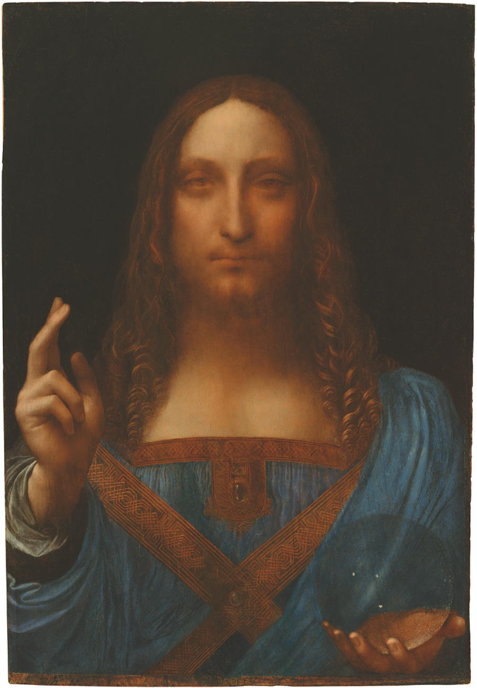
Meanwhile, the Leonardo exhibition continues till February 5, though I’m unlikely to catch it. It brings together more than half of his known paintings.  It also includes the first painting in over a century to be accepted as a hitherto unknown Leonardo:

“…an emphasis on perfect beauty that is strongly evident also in the newly discovered Christ as Salvator Mundi, begun in about 1499. … Leonardo strives to go beyond reality to embody an approach to art that he described thus: ‘The divinity which is the science of painting transmutes the painter’s mind into a resemblance of the divine mind.'”

For the record: more on Brodsky and the Marlin Café

Share

Back in the U.S.S.R.

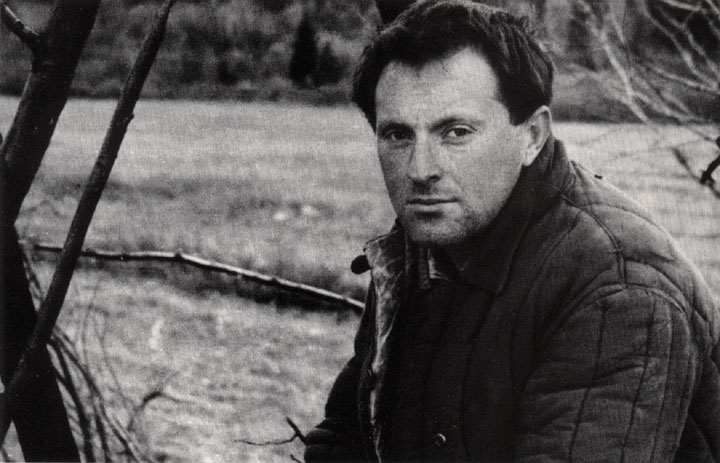
At first I mistrusted M.G. Stephens‘s “Sunday Morning at the Marlin Cafe,” which was published in Ploughshares in autumn 2008.  It recounts an encounter with Russian poet Joseph Brodsky as a Sunday morning drunk at a seedy café near Columbia University, sometime in the mid-1980s.  I wrote about the tale in a recent post, “M.G. Stephens on Brodsky: “It is the voice that seduces us” (And wrote about J.B. more recently here.)

Then I got a note from M.G. Stephens himself, writing at 6 a.m. from the U.K.  He insists that it’s all true.  “Going to the Marlin was a kind of slumming for people from Columbia. It was a run-down old-man’s bar at 110th & Broadway. I taught my creative writing classes there. Other profs frequently hung out there. It was quite dodgy, but also a place where Morningside Heights intellectuals let down their hair, away from the glare of academe. It was more intimate, too, than the West End Café up the road.”

Moreover, he told me, “I did not write that Brodsky essay for many years until I could verify my facts.” Ten years, actually, “checking with as many people as I could to be sure it was him.”

It's true.

He noted that “upwards of fifty people from Columbia, where he taught, and I also taught, his former students, people from the neighborhood, and three of the bartenders in that bar all verified that he frequently came to the Marlin, drank vodka, and sometimes got too drunk.”

“That was my only encounter with him, though I did see him in there myself many times,” he added.

Stephens is also a theater historian, from Yale, who has taught at University of London, though he is retired now. Hence, he was not intimidated when challenging the Nobel laureate’s perceptions regarding Greek drama, especially its comedy. They had differences of opinion about whether “Aristophanes was a kind of Richard Pryor of his time.”  Read the rest here.

“My next project is to read his poetry more thoughtfully. Many Russians in London have told me that I should, and I believe them.” Indeed, he should.


Robinson Jeffers gets his due.

Share

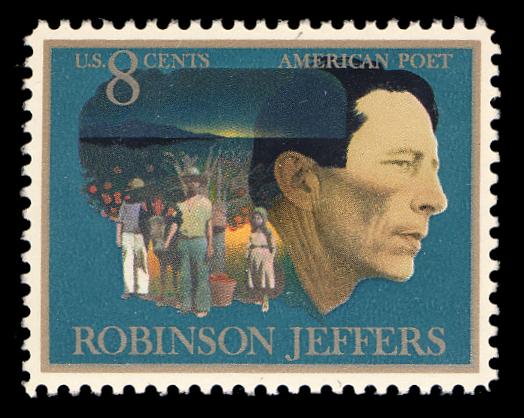
My friend and sometime-editor Terry Hummer triumphantly posted on Facebook that he had managed to buy four Robinson Jeffers stamps on ebay, after the first sale was cancelled because the seller was “out of stock.”

Perhaps it’s a good sign that there’s a demand for Jeffers – even if only in stamp form. Few American poets have undergone quite so much disparagement and neglect (I wrote about that here).  Like Walt Whitman, however, Jeffers always had his fans.  As I wrote a few years ago:

“Unlike most contemporary American poetry, his legacy has been kept alive by individuals who love his work, not by academia’s class-assignment sales. Such luminaries as Stanford’s late Yvor Winters, who in 1947 declared Jeffers’s work ‘unmastered and self-inflicted hysteria,’ effectively banned him from the curriculum.”

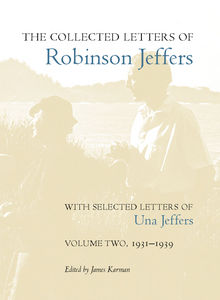
Thoughts of Jeffers and the U.S. postal service turned me weighty tome that arrived in my mailbox a few days ago – the 1,100 page second volume of Jeffers’ letters (covering 1931 to 1939), and newly published by Stanford University Press.

I wrote about the earlier volume of letters here, which included the years of his courtship and marriage to Una Kuster.

“I’ll say he’s the most important poet of the 20th century, but nobody’s buying that yet,” said James Karman, editor of the projected 3-volume series. “No one in the 20th century came near to what he was trying to do. The sheer scope of his endeavor is unrivaled. There’s nothing like it in American literature in the 20th century.”

According to Tim Hunt, editor of Stanford University Press’ five-volume Collected Poetry, Jeffers is “the least understood of the major American poets from the first half of the 20th century.”

The volumes include a substantial number of letters from Una Jeffers, as well as her husband. You can get a good feel for both the Jeffers in even their most casual notes.  Here’s her Christmas thank-you to Bennett Cerf in January 1938:

Now thanks very much for the two Christmas {books} I’ve just finished the Iceland book [that is, W.H. Auden and Louis MacNeice‘s Letters from Iceland] tonight & O but its clever! & its packed full of information too   I never expected to like Auden as well as I do this very moment!  As for the New Yorker – I must confess I stand alone almost in not being its enthusiastic reader. It is funny – but so all alike & always taking people down is so easy & in the end so humiliating to every human. & bathtubs & fat ladies bulging out of their lacey lingerie, & over-fed dogs & betrayed & betraying businessmen husbands are tiring to keep one’s mind on.

But I suspect that I make myself disliked by carping at the New Yorker.

Here’s his 1933 letter to a Mr. Pumphrey from the Jeffers’ legendary home, Tor House in Carmel (definitely worth a visit if you haven’t been there):

Thank you sincerely for your letter; but I have not time to copy the verses. You lose nothing by that, for my handwriting – you see – is neither beautiful nor easy to read.

And I am sorry not to be able to answer your question. One can say that Mount Everest is higher than Mont Blanc, but there is no way to measure poetry. I cannot even tell whom I prefer to read – sometimes Yeats, sometimes some other.

The publisher’s website promises “a full account of the 1938 crisis at Mabel Dodge Luhan‘s home in Taos, New Mexico that nearly destroyed their marriage.”  A crisis that has not disturbed my sleep to date.  Can’t wait.

Postscript:  I  had thought the Jeffers stamp was a new issue.  Silly me.  Terry corrected me quickly.  It came out in the 1970s.  The new ones for 2012 are described here.

Postscript on 12/9:  I got a note from David Rothman, president of the Robinson Jeffers Association: “I don’t know if you’ve seen our website, at www.robinsonjeffersassociation.org – it’s quite thorough and you might enjoy it. Also, I wrote a review of the first volume of the Letters that you can see here, if you’re curious: http://muse.jhu.edu/journals/sewanee_review/summary/v119/119.1.rothman.html.”

By the by, if you live in the area and haven’t been to see Jeffers’s Tor House in Carmel … well, you must.  You really must.  The poet learned stonecutting so he could build it himself.  It is a peculiar kind of Pacific perfection.


Meet me at the San Francisco Public Library for Miłosz centenary celebration Dec. 7

Share

The centenary for Nobel poet Czesław Miłosz has been a year-long, international saga for many of us who knew him, translated him, or wrote about him – but it’s finally winding to a close this month.

Think of tomorrow night as one of your last chances to get in on the act.

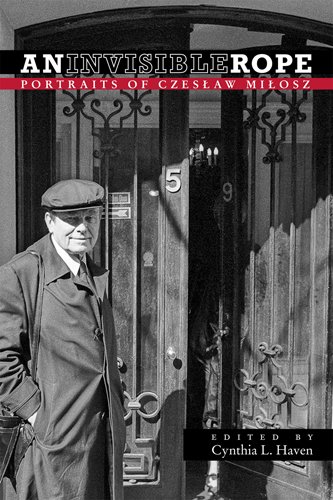
On Wednesday, December 7, I will be speaking at the San Francisco Public Library for a Celebration of Czesław Miłosz – and also a celebration of An Invisible Rope: Portraits of Czesław Miłosz from 6:30 to 8:00 p.m. in the Latino-Hispanic Meeting Room at the library on 100 Larkin Street. The book will be for sale at the event.

Here’s what’s going to happen:  the host of a weekly KUSF radio show Zbigniew Stanczyk will be interviewing me and one of the Polish poet’s earliest translators, Peter Dale Scott, poet, author, and former Canadian diplomat in Warsaw.

But here’s the deal:  Pan Stanczyk also knew Miłosz, and there’s a few questions I’d like to ask him, too.

What’s more, I’m sure the audience will have a few questions to ask us about the renowned poet who spent four decades of his long life in Berkeley – and I’m sure some of those in the room also knew Miłosz, so I hope we’ll have some time to hear from them, too.

It will all be very democratic.  With luck, even Miłosz himself will have a say.  I have some video clips to play, if I can get the whole techno-thing working right.

So come along for a evening of readings, recollections, and books.  It should be fun.

Last call.

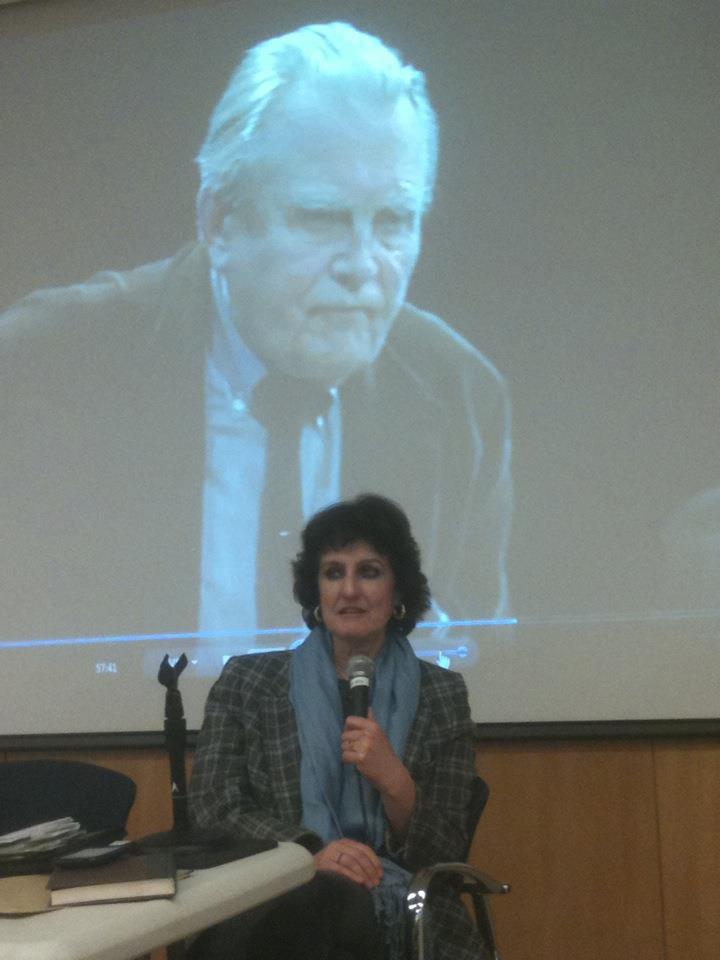
Postscript on 12/7:  And a fine event it was.  As you can see from Caria Tomczykowska‘s cellphone photo at right, I spoke in the shadow of giants.

And it was indeed very democratic!

Quarterly Conversation: “For Brodsky, poetry was a ticket out of this world.”

Share

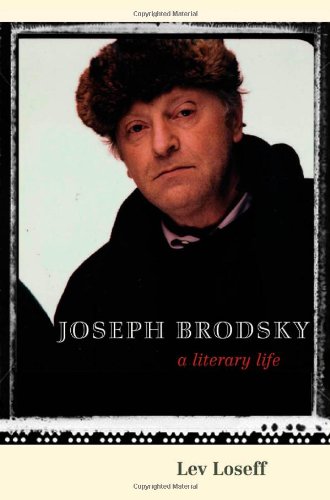
A brilliant article in today’s Quarterly Conversation offers a fresh take on Lev Loseff‘s much-discussed Joseph Brodsky: A Literary Life. Marbled with impressive insights, it represents the finest standards of literary journalism, and should establish a new highpoint for the rapidly disappearing genre … let me dissemble no further, dear reader, I myself wrote the review.

A hackneyed opening gambit, I know … So let’s cut to the chase with a little shameless plugging via an excerpt:

“For Brodsky, poetry was a ticket out of this world. And in Russia, the poet is godlike. To know both is to understand the context for this erudite and often wise book—a work more likely to find readers among current fans, rather than find new ones. Yet Joseph Brodsky: A Literary Life is simultaneously enlightening, perplexing, and exasperating. The knowledgeable reader is left feeling rewarded and cheated at once, as if invited to a sumptuous banquet and offered only canapés. The protean figure remains beyond the range of these pages. The door remains at once half open and half closed to us.

You’ll read no secrets in Loseff’s volume. But neither will you get Brodsky’s bewildering, mesmerizing blend of hubris and humility, charm, and abrasiveness. Brodsky was a Catherine Wheel of metaphysical brilliance, scathing insults, and intellectual splendor.

Russia’s longing for pure poet-heroes held an incandescent grip on the Russian psyche, and the nation bleaches its bards to an unearned whiteness. Writers have always claimed special moral exemptions for themselves—wishing to be something grander than simply a guy who wields a ballpoint or stares at an empty computer screen. Brodsky upped the ante.

He told Loseff that the lesser cannot comment on the greater, the mice cannot review the cat. Was he exempting himself from criticism? Certainly. But Brodsky was also the first to bend his knee to those he saw above him on the ladder—from Ovid to Auden. The sense of hierarchy may rub against the egalitarian Brodsky who once wrote, ‘Evil takes root when one man starts to think that he is better than another,’ but the contradiction can be chalked up to his complex humanity as easily as his self-blindness.”

Read the rest here.

Quarterly Conversation is run by Scott Esposito. It’s another valiant online effort to sustain serious literary criticism – and that’s no hyperbole.

It’s gotten some rave reviews, from The Nation, among others.  From Columbia University Press: “It would not be a stretch to say that The Quarterly Conversation has come to be one of the better places—online or in print—to turn to for literary and cultural criticism.”  According to Canongate Books’s “Meet at the Gate”: “If a website was able to drool, Meet At The Gate would be drooling over The Quarterly Conversation. It’s what online literary magazines are meant to be.”

The always insightful Patrick Kurp, by the way, reviews Denise Gigante‘s The Keats Brothers: The Life of John and George in the same issue – it’s here (and the Book Haven Q&A with Denise is here).  An excerpt from Patrick’s review:

… despite Gigante’s standing as an academic in a major university English department, she is a writer, not a slinger of theory or political poseur. Out of primary documents she reanimates a major poet and his world, and crafts a transatlantic adventure story with a novelist’s gift for moving narrative along. In brief, Gigante convincingly demonstrates that George Keats, the poet’s junior by sixteen months, served as John’s “muse.” In an 1818 letter to Ann Wylie, John says: “My brother George has ever been more than a brother to me, he has been my greatest friend.”