
Christmas in NYC, and avant-garde director Robert Wilson’s latest

Share
foto_©Zygmunt_Malinowski

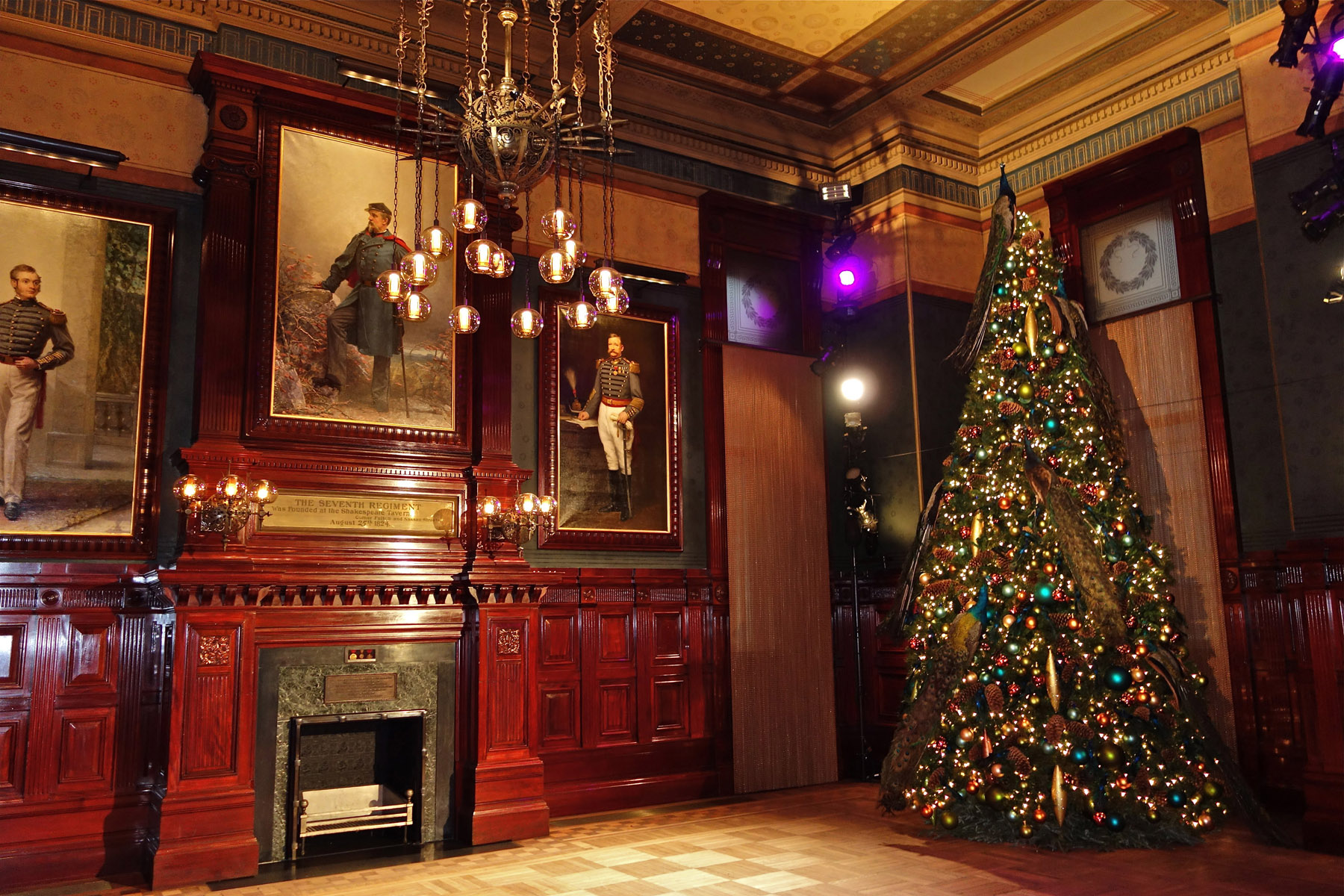
One of NYC’s many treasures, the Park Avenue Armory. (Photo: Zygmunt Malinowski) 

Here’s the Christmas I’m missing in New York City (I’m also missing one in Amsterdam, St. Petersburg, Rome, and Madrid…)  I just received a holiday message from photographer Zygmunt Malinowski, with this photo.

“Living in New York City, I still surprise myself that there is a place or a street that I haven’t seen before. I passed Park Avenue Armory so many times but hadn’t been inside,” he wrote. “It’s known for its Gilded Age beauty with wonderful architecture and fine decorative elements, as you can see on my photo.”  It was also the site of Robert Wilson’s latest production, the opera The Life and Death of Marina Abramović, which he attended last weekend (I’ve written about the avant-garde director here).
wilson_onstage

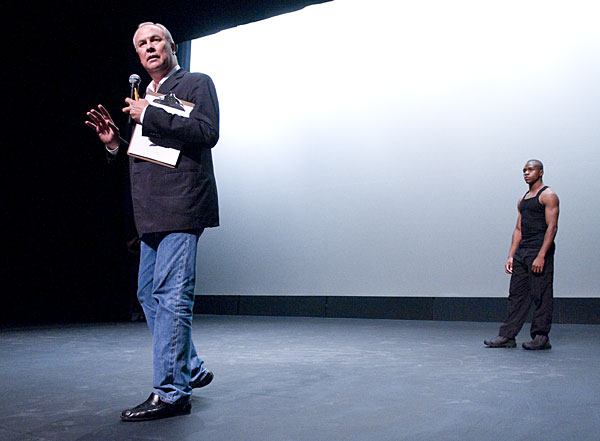
Robert Wilson at Stanford, 2008 (Photo: L.A. Cicero)

“Marina pioneered performance as visual art form (she had a retrospective at MOMA in 2010), and the actor Willem Dafoe had one of the leading roles. The opera sold out quickly but I caught the last performance,” he wrote.

The New York Times had mixed feelings about the the critically acclaimed re-imagination of the Belgrade-born Abramović’s biography, saying that “much of what takes place in Life and Death defies easy exegesis, or even simple comprehension”:

The rigorous, elemental aesthetic that has defined Ms. Abramovic’s own works here has been amplified by the manifold contributions of her collaborators, resulting in a show whose lavish effects tend to keep the woman at its center at a distance, atop a glossy pedestal instead of uncomfortably in our faces, as she is in her solo performances. The Life and Death of Marina Abramovic feels more like the gilding of an icon rather than the illumination of an artist’s experience.

Zygmunt, however, was sold: “Robert Wilson, the innovative theatre director, staged a Solidarity anniversary in Gdansk shipyard three years ago that I attended, but it was disappointing. However, he redeemed himself in the current production. It was awesome.”

More about the production below.
New York City in 62 hours: revisiting old memories, making new ones

Share

I spent a whirlwind 62 hours in New York City, but they were “cherce.”  Fortunately, photographer (and friend) Zygmunt Malinowski was on hand to document some of the highlights, and has kindly allowed the Book Haven to feature them.

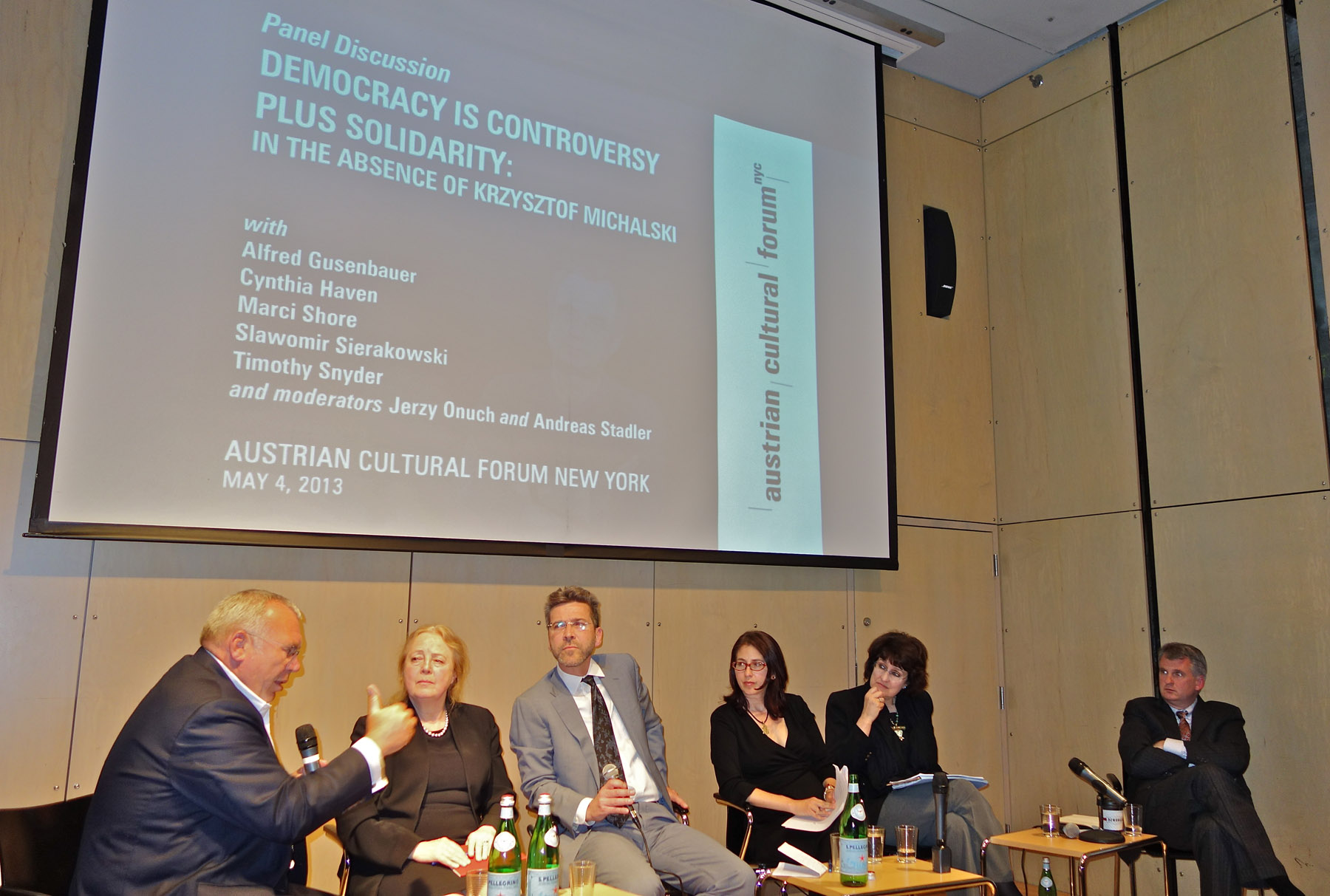
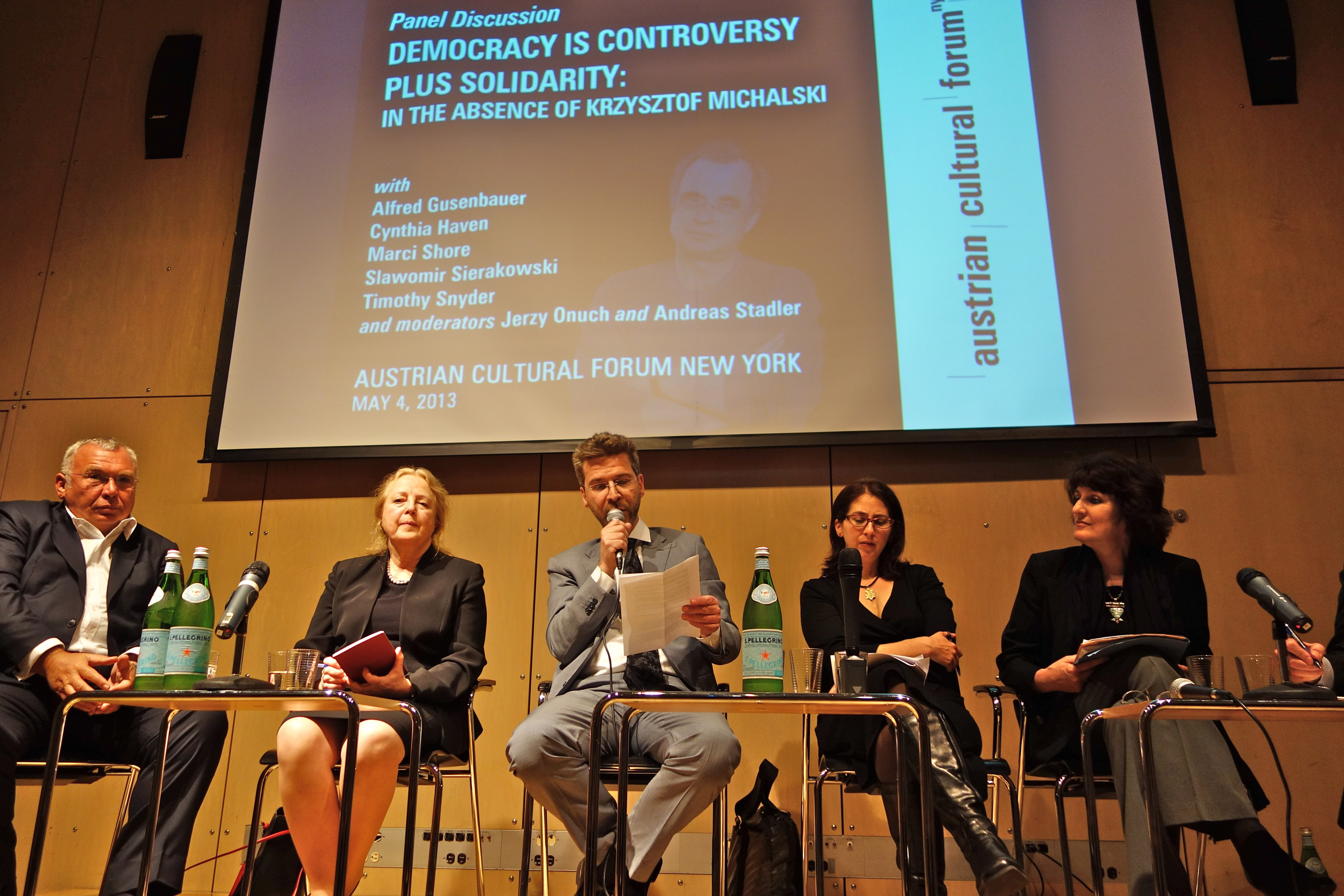
First, I spoke at a commemorative event for Krzysztof Michalski, the founder of Vienna’s Institut für die Wissenschaften vom Menschen, where I was Milena Jesenská Fellow a few years ago.  “Democracy is Controversy Plus Solidarity: In the Absence of Krzysztof Michalski” was sponsored by the Austrian Cultural Forum and the Polish Cultural Institute, in conjunction with the P.E.N. Festival in New York City.

The panel left to right:  Alfred Gusenbauer, former prime minister of Austria;  literary historian and author Irena Grudzinska Gross of Princeton;  Andreas Stadler, director of the Austrian Cultural Forum; Marci Shore of Yale author of The Taste of Ashes: The Afterlife of Totalitarianism in Eastern Europe, and Humble Moi…

2_foto_©_zygmunt_malinowski-1

Whoops!  There’s someone missing from this line-up.  Same cast of characters, but below you can also see Yale’s Timothy Snyder, author of Bloodlands (and Marci Shore’s husband) at far right.

3_foto_©_zygmunt_malinowski-1

Next, some of us who met for the Czesław Miłosz centenary in New York City two years ago decided to celebrate a reunion.  What better place than the famous Russian Samovar, a longstanding mecca for the Russian literati (and other Slavs … and non-Slavs)? The place was a familiar haunt for Joseph Brodsky, a friend of Miłosz’s.

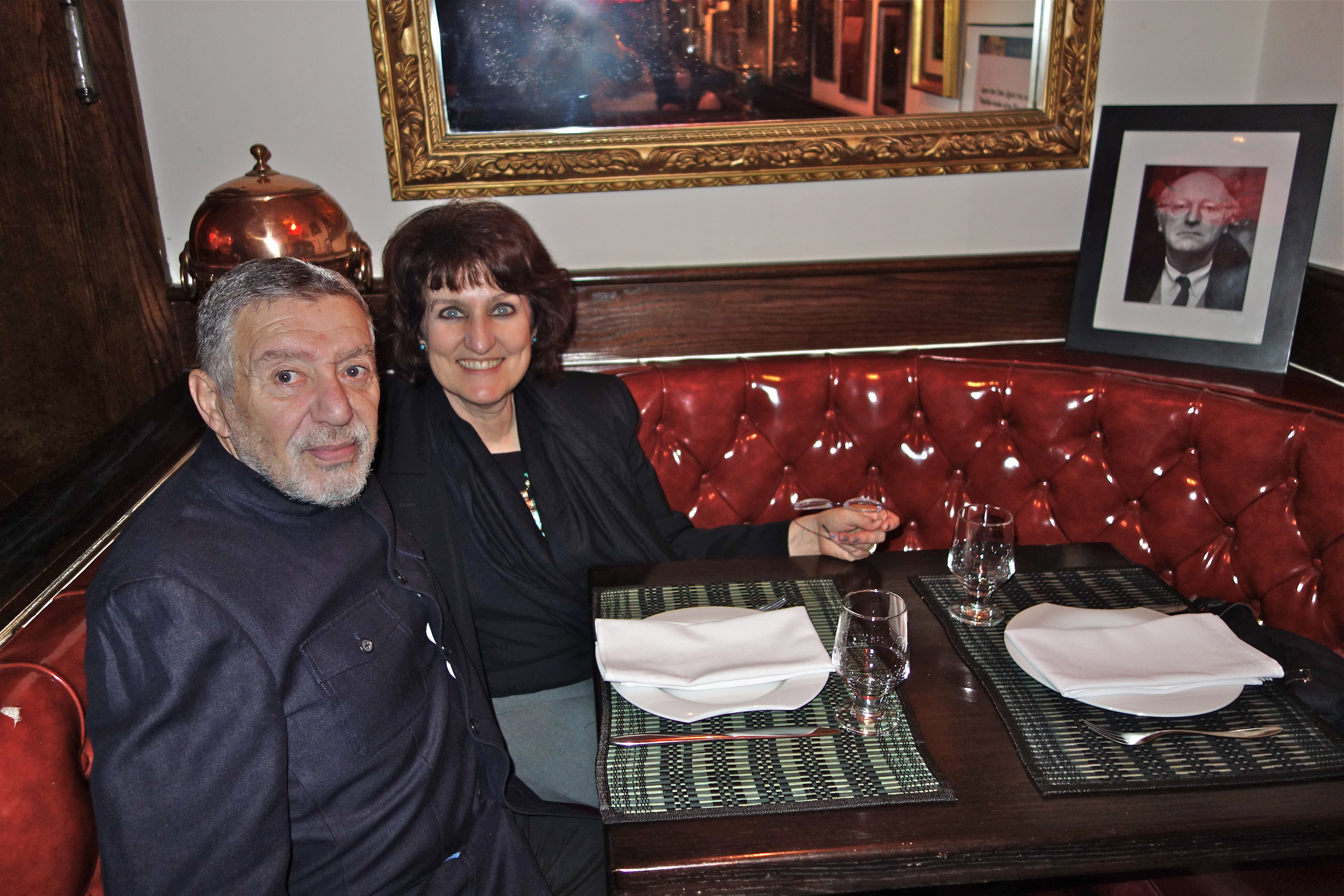
The Russian Samovar’s legendary proprietor Roman Kaplan appeared toward the evening – he’d founded the hang-out with Mikhail Baryshnikov and he’d also been an especially close friend of Brodsky’s.  No sooner did he find out about my association with the Nobel poet than he pulled me into the corner seat, where Joseph Brodsky had usually held court, and a photo with the (by then) glassy-eyed Moi was snapped.  Glassy-eyed, but nevertheless … stepping into a page of New York cultural history.

1_foto_©_zygmunt_malinowski_

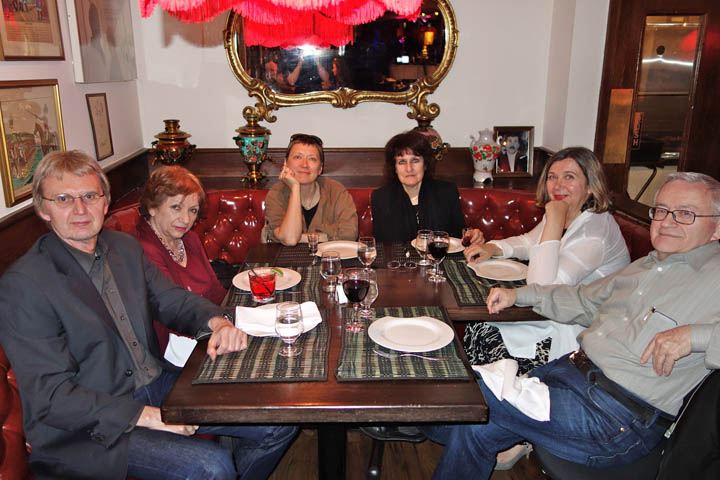
Finally, here’s the whole reunion crew.  This is the only photograph in the group that is not by Zygmunt, because that’s him at far left, looking gravely into the camera (in the mirror you can see the mystery guest photographer’s arms).  The poet Anna Frajlich is next to Zygmunt, then Alla Roylance, Moi, Izabela Barry, and Władek Zając.  Couldn’t find a better group of people.  And you’d hard-pressed to find a better dinner, beginning with vodka infused with horseradish, cranberries, and lemon (you can read about them at the Paris Review here) continuing with Georgian and traditional Russian dishes, and finishing with samovar tea with jam.  Dostoevsky would have approved entirely.

web version zygmunt malinowski archives-1

After the panel discussion, we ended at the residence of U.N. Ambassador Martin Sajdik.  Risotto with white spargel, a perfectly chilled white wine from the Kamp River region, quince schnapps, and plenty of Mozartkugeln.  Can’t top that … but ohhhhh, I wish I could find that brilliant Austrian wine here, but the ambassador, rightly known as a connoisseur, told me the American market likes its wines a little more fruity, a little less delightfully sharp – you have to go to Vienna to get these.  As good an incitement as any, should you need one.

Here’s Roman Kaplan reading Joseph Brodsky’s poems in the commemorative corner:


Salman Rushdie: “I’ve got a house, I’m going home. Protect me.”

Share


Breyten Breytenbach, an unnamed editor, Philip Gourevitch, and the man himself (Photo: Zygmunt Malinowski)

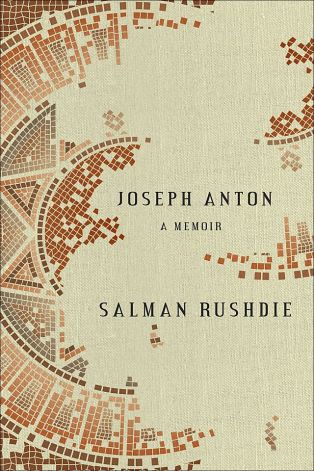
Bright spots  in dark times: My photographer friend Zygmunt Malinowski dropped a note to say he enjoyed the Tom Lehrer video in my post a few days ago, about First Amendment freedoms and  Iranian crazies raising the bounty on Salman Rushdie‘s head.  Then he asked me if I’d see the New York Times‘ Q&A with Rushdie, who has just published a book, Joseph Anton, describing his time in hiding after the 1989 Valentine’s Day fatwa.

Rushdie’s response to the news of $3.3 million for his death:  “I’m not inclined to magnify this ugly bit of headline grabbing by paying it much attention.” In his interview with Charles McGrath, he recalled the imposition of the fatwa, and the day “my picture of the world got broken”:

“We all have that — we all have a picture of the world we live in and we think we know what shape it has and where we are in it. Another word for that would be sanity. And then suddenly it was very difficult to know what shape the world was and where I stood in it and how to act. All these decisions we make and suddenly I didn’t know anything. Another name for that is insanity. I do think there was a period there when my sanity was under intense pressure and I didn’t know what to say or do or how to act. I was literally living from day to day.”

Rushdie unevenly occupies the momentous role that has been given him. He has always struck a disheartening pose, seesawing between cerebral heroism and the uncharitable dig at an ex-wife, between high-mindedness and silliest self-serving vanity – he’s too small for the historic chair he sits in.  So let’s pick out the best.  Here are a couple highlights from the interview (you can read the whole thing here):

Q. … the book also has a bigger agenda. It’s meant to document something important?

A. I found myself caught up in what you could call a world historical event. You could say it’s a great political and intellectual event of our time, even a moral event. Not the fatwa, but the battle against radical Islam, of which this was one skirmish. There have been arguments made even by liberal-minded people, which seem to me very dangerous, which are basically cultural relativist arguments: We’ve got to let them do this because it’s their culture. My view is no. … Killing people because you don’t like their ideas — it’s a bad thing. We have to be able to have a sense of right and wrong which is not diluted by this kind of relativistic argument. And if we don’t we really have stopped living in a moral universe.

Q. What advice do you have for someone who might find himself under a similar threat?

A. Two bits of advice, really. One has to do with the head and the other is practical. The thing in the head is: Don’t compromise. It’s a question of self-knowledge, knowing who you are And why you did what you did. Stand up for it. The other thing is that if I were to do it again, I would refuse the hiding. I’d say: “I’ve got a house, I’m going home. Protect me.”

“We are nothing without our language.” Salman Rushdie and courageous footwear.

Share

Breyten Breytenbach, an unnamed editor, Philip Gourevitch, and the man himself (Photo: Zygmunt Malinowski)

This week, we posted about great literary slugfests.  But are they a thing of the past?  One prominent literary agent thinks so:

“The day of the writer as public character is greatly diminished,” said Mort Janklow, the veteran literary agent. “Writers are more professional. You don’t hear about feuds. You don’t see the most prolific writers out.”

“It’s hard to be a great social figure and a great writer.”

And that, apparently, means the end of feuds.

This comment came from a New York Times article about Salman Rushdie, that witty, brilliant, and increasingly banal figure on the public literary scene.

Just when you are about to give up on him entirely, just when you want to see no more of this leering, goateed, grizzled grandee with another grinning babe on his arm, just when you are about to conclude that he has descended on a smug, one-way trip into vulgarity and a cliché, he whips out with a crisp comment like this one:

“The human being, let’s remember, is essentially a language animal. We are a creature which has always used language to express our most profound feelings and we are nothing without our language. The attempt to silence our tongue is not only censorship. It’s also an existential crime about the kind of species that we are. We are a species which requires to speak, and we must not be silenced. Language itself is a liberty and please, do not let the battle for this liberty be lost.”

The comments are from The Guardian article about his “rousing address” in Delhi – read the whole thing here; I found it rather plodding and waspish, always ready for a jab at a foe.  I guess after what he’s been through he’s entitled to the jabs.  One just longs for … well, a little nobility, a little moral grandeur.

The fatwa thrust him unexpectedly to an international stage – potentially the foremost in a new generation of giants such as Alexander Solzhenitsyn, Joseph Brodsky, Vaclav Havel. So it’s dispiriting to see him living in a cheesy fantasy of celebrity; he’s shrinking before our very eyes.  Am I missing something?

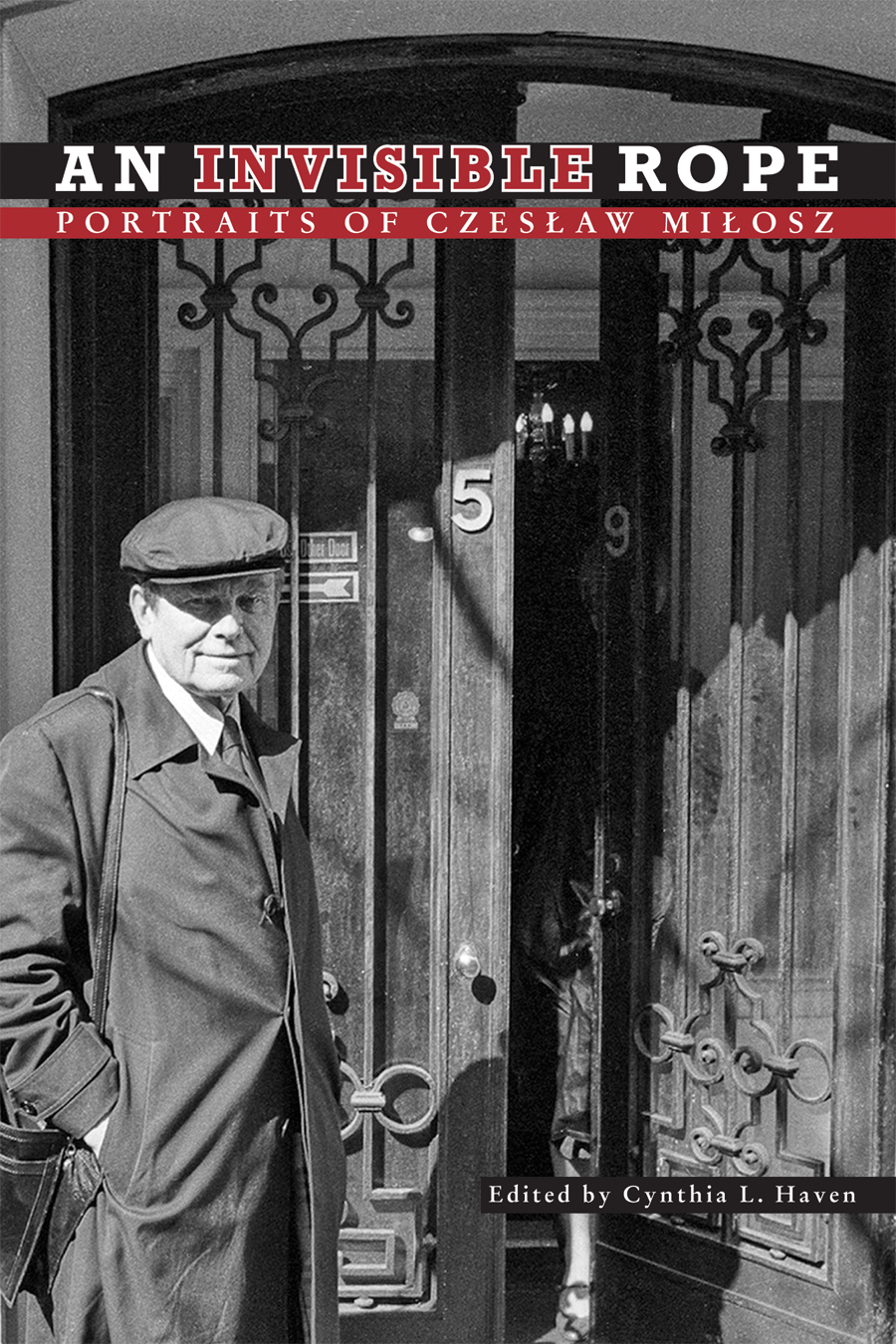
My friend Zygmunt Malinowski, the photographer who provided the images for An Invisible Rope: Portraits of Czeslaw Milosz, alerted me about the NYT article.  He’s a bit more cautiously optimistic than I am: “I don’t know what to think about a writer who is that popular in the celebrity business. It seems to me that he broke the mold of the isolated writer such as Salinger, Updike and of course Czeslaw Milosz. Good for him.”

He sent me this photo: “I photographed him a few years back by the  New York Public Library with the editor of Paris Review and with Breyten Breytenbach and his editor walking close by.  They just finished a talk about Ryszard Kapuściński.  S. Rushdie was very interesting to listen to.

“Their footwear is fun, sneakers and red shoes – that takes a bit of courage too!”

Youtube immortality — Adam Zagajewski, Anna Frajlich, and me in Brooklyn

Share

Everyone asks about the Brooklyn Central Library launch for An Invisible Rope: Portraits of Czesław Miłosz. How did it go?

You can see for yourself here and here — or click on the links below to hear poets Anna Frajlich (at top) and Adam Zagajewski (at bottom) share their memories of Miłosz for a few minutes. (By the by, the woman to Adam’s left is art historian Elisabeth Kridl Valkenier, who knew  Miłosz in the 1930s. And the man to Elisabeth’s left is photographer Zygmunt Malinowski, who kindly provided photos, including the cover art, for An Invisible Rope.

Thanks to Grzegorz Worwa for providing the clips.

Columbia University honors Czesław Miłosz — and launches An Invisible Rope

Share

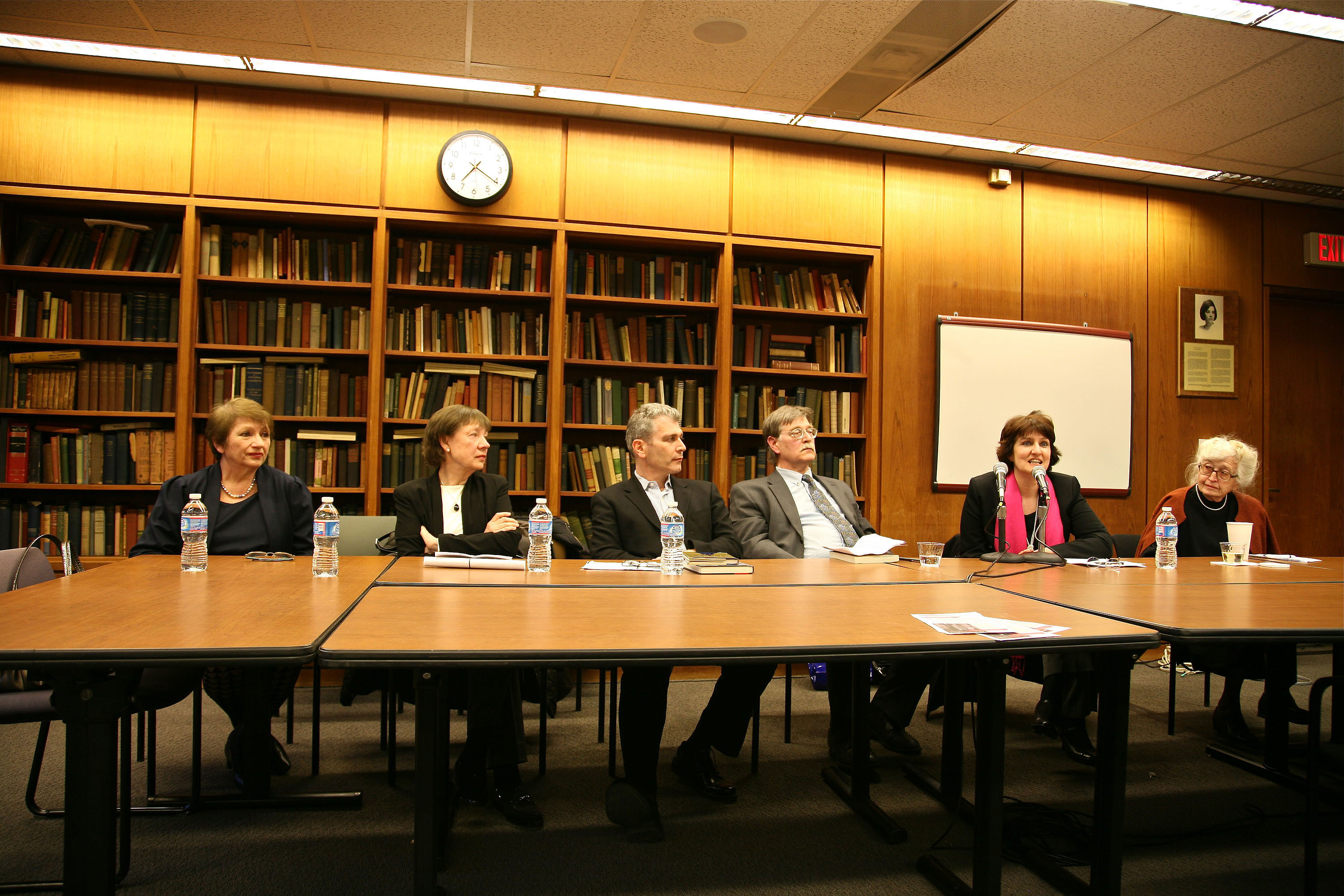
Last night Columbia University honored Czesław Miłosz — and launched An Invisible Rope: Portraits of Czesław Miłosz — with a panel discussion.  Left to right:  poet Anna Frajlich; scholar and translator Bogdana Carpenter; James Marcus, deputy editor of Harper’s Magazine; Alan Timberlake, chair of Slavic Languages at Columbia; humble moi; and scholar Elisabeth Kridl Valkenier.  The photo is courtesy Zygmunt Malinowski, whose photograph of Miłosz graces the cover of An Invisible Rope.

The evening held some surprises — I’ll write more in a few hours.  After nine days in chilly, rainy, New York, I’ve just arrived back in beautiful California, where the temperature is warm, the sun is out, and the flowers are everywhere.  Hard to believe Miłosz sometimes considered it the landscape of the damned — or, as Clare Cavanagh said, “the landscape of the damned — with good weather.”