
Nitpick, lightning.

Share

April 12: I said it was bad, and I meant it.

A gentle reader took issue with last month’s post on Library Porn: fabulous places for booklovers everywhere:  “I relished the Rabelaisian (would that it were Menippean and broke forth into verse!) satire in Ex vero portu librorum pars quattuor de bibliotheca erotica (From the Veritable Haven of Books, Installment the Fourth Concerning the Pornographic Library).”

But then he cut loose:

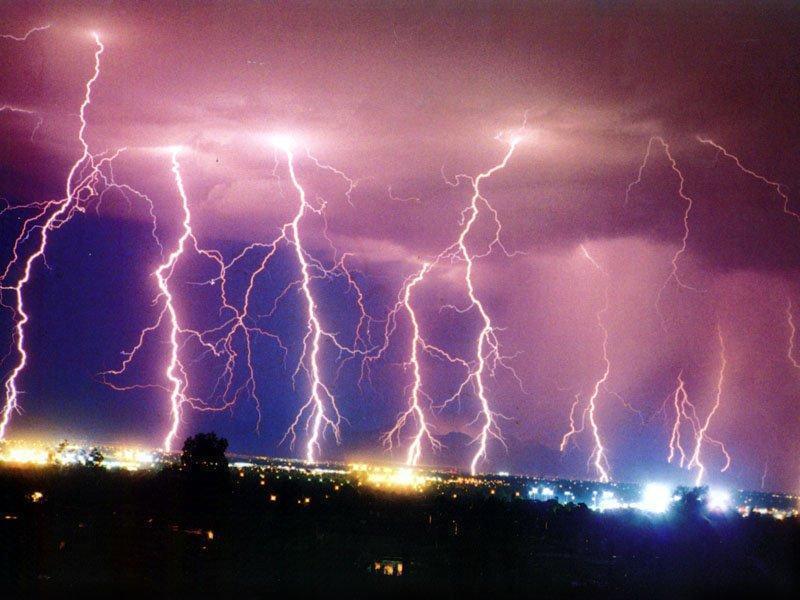
Placing weather first and foremost is a sine qua non of wretched writing, but rather than opening with “It is a rainy night with thunder and lightning,” introduce the porn theme immediately with learned literary allusion to Bulwer-Lytton and library classification systems: “It was a dark and STEAMY night in the PA-PN stacks.”

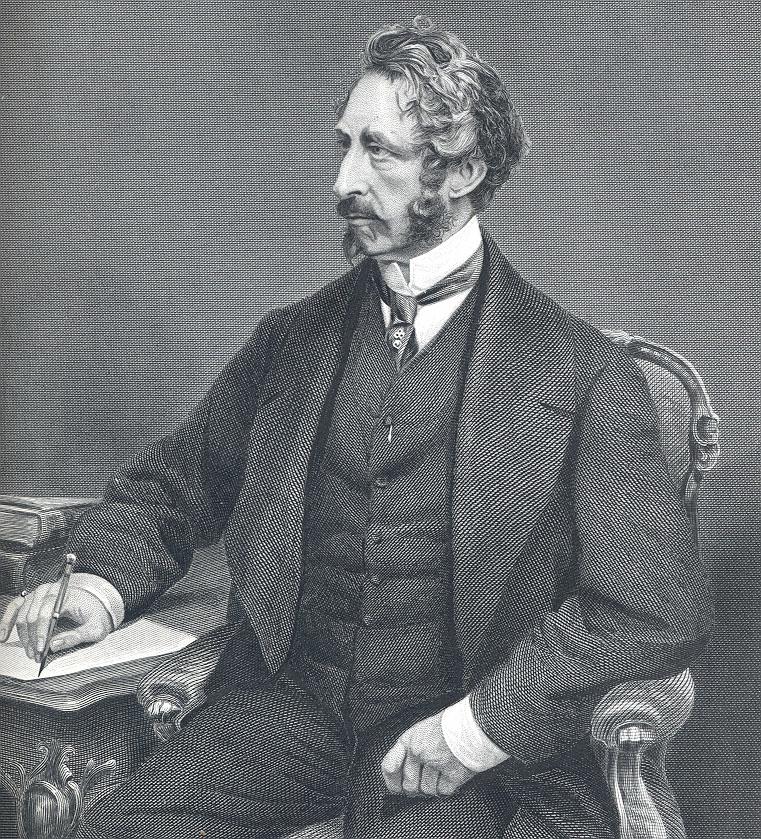
But is Edward Bulwer-Lytton‘s “It was a dark and stormy night” really the sine qua non of wretched writing? (We’ve written about the Bulwer-Lytton Bad Writing contest here and here.)  Coincidentally, about the same time I was scribbling the sentence-in-question, blogger Levi Stahl over at I’ve Been Reading Lately was wondering:

Like nearly everyone alive today, I’ve not read Bulwer-Lytton. I’ve long thought, however, that he didn’t deserve his infamy–at least not if the sole piece of evidence against him is, as it usually seems to be, the above sentence. Oh, it’s not a good sentence. Yes, it would likely have made Nabokov or Updike shudder. But is it really that bad? If we can pretend briefly that the opening phrase hasn’t yet become a cliché, then the ground for complaint are two:

Crummy father.

1 The unnecessary, interpolated elaboration of the gusts of wind
2 The poorly positioned parenthetical that locates the book in London.

Both are clumsy and could easily have been improved by the casting over them of even a weak editorial eye–but is the sentence as it now stands all that bad? Worse than what our best-selling, low-grade thriller writers turn out on page after page? Worse than James Frey‘s Hemingway-cum-Fight Club masochismo? I just don’t see it.
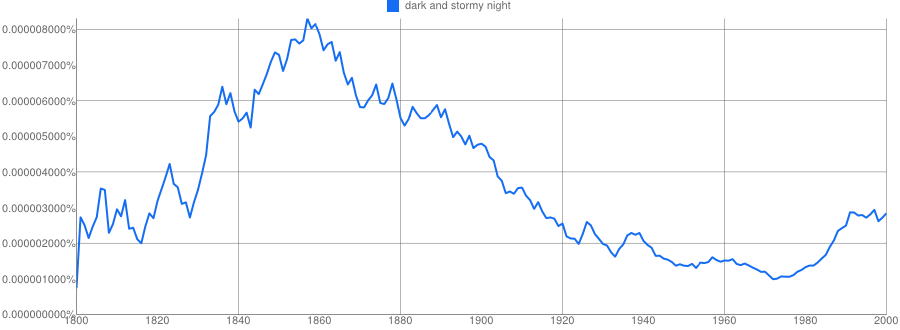
When did the opening line of the 1830 novel Paul Clifford become a cliché?  A Google’s Ngram viewer is inconclusive. The phrase was repeated a lot in the first three decades, but then faded over the subsequent century.

Stahl is convinced that Bulwer-Lytton has been damned for the wrong sin? Has he been consigned to the wrong circle of literary hell?

According to John Sutherland‘s Lives of the Novelists (Yale University Press) he was the world’s worst husband and father.  He abandoned his daughter to die of typhus in a London lodging house.  His wife eventually accused him of hiring an assassin to kill her. What’s a little rain compared with that?

Oh read it for yourself, over here.  Meanwhile, here’s the blogger’s Ngram:


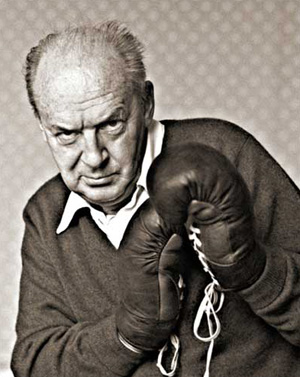
Nabokov on Lolita: “I leave the field of ideas to Dr. Schweitzer and Dr. Zhivago.”

Share

I had never heard Vladimir Nabokov speak, until I ran across this video while reading up my post a few days ago. In this late-1950s video, Nabokov discusses his novel Lolita – or appears to – with an unnamed moderator and the critic and author Lionel Trilling. I suspect much of what he’s saying is a leg-pull. If these comments and questions are typical of the kinds of interviews he faced, it’s no wonder he skived off to Switzerland with the cash he made on the appalling film version of Lolita with Sue Lyon.  (And the comments on the youtube video are a good indication of why he stayed.)

I learned a few things from these videos: According to Mr. Nabokov, I am a philistine.  I confess that I am, on occasion, “a user of cozies” – tea cozies, anyway.  Who knew it was so easy? On those who think his book is about sex? “But maybe they think in clichés. For them sex is so well-defined there’s a gap between it and love. They don’t know what love is, and perhaps they don’t know what sex is, either.” What does it all mean? “I leave the field of ideas to Dr. [Albert] Schweitzer and Dr. Zhivago.” He doesn’t miss a chance to get in a dig at Boris Pasternak.

Postscript on 3/8:  The Book Haven attracts a very broad readership, but never before have we attracted a fan from the tea cozy world.  This from a reader who identifies himself/herself only as FlockofTeaCosy: “This video is from Close Up, a CBC programme from the 1950s, and Nabokov is being interviewed by Trilling and Canadian author Pierre Berton.” There you have it. The name of the third man in the clips.  (And check out the avant-garde tea cozies here.) And from one of our more usual readers, Elena Danielson, “I think Nabokov would approve of your tea cozies – but not of Pasternak.” See their comments below.

The word has a life of its own – “it lives in the kingdom of the mouth and the mind.”

Share

The author

When I visited Ann Pasternak Slater last fall, I asked if her husband, the writer Craig Raine, might have a copy of the famously blistering review he wrote of Joseph Brodsky‘s poetry. I say “famous,” but my efforts had failed to uncover any copy of the review in any library. He hadn’t, but some weeks later she wrote that he had suggested I look up the review in his 500+ page book of essays, In Defense of T.S. Eliot.  Feeling a little rebuffed, I nevertheless found a copy of the book in Stanford’s Green Library, and I must say that he’s rather won me over, on every subject except Brodsky.

This paragraph, in particular, from the essay “A Book that Changed My Life,” about finding Vladimir Nabokov‘s Lolita as a 14-year-old boarding school student in 1959:

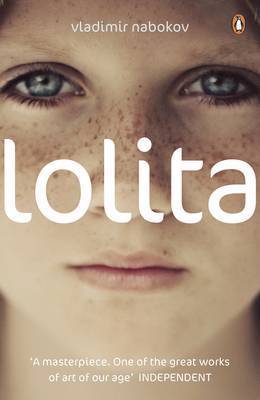
“I settled to read this dirty book – undeceived by the international tributes to Nabokov’s art which were anthologized at the back – and was at once bouleversé by the first paragraph, which had, as it turned out, a particular personal message from Nabokov to me. It was this: the word has a life of its own, a sound of its own and a shape of its own. It isn’t simply a harmless drudge, it is also a monarch with a retinue of associations. It lives in the kingdom of the mouth and the mind. If it is to obey you, you must cherish it as an individual and respect its unique powers and properties. Every word is irreplaceable, as Roget paradoxically but invariably demonstrates.”

Coincidentally, today’s Washington Post announced the death of 77-year-old Dmitri Nabokov, the author’s son, whose position as heir inevitably meant much of his life was spent protecting his father’s literary legacy and translating and editing his father’s plays, poems, stories, including the novella The Enchanter and the Selected Letters.

“My father is gradually marching — with his two favorite writers, Pushkin and Joyce — arm in arm into the pantheon to join the greatest of all, Shakespeare, who is waiting for them,” Nabokov told The Associated Press in a 2009 interview. “I like to think that I did my bit to keep things on track.”


Pablo Neruda: Greatest pick-up artist evah?

Share

The conversation erupted on my Facebook page, debating the eternally recurring subject of unjust Nobel awards. It’s recently been revealed that J.R.R. Tolkien had been snubbed by the Nobel committee because his writing wasn’t up to snuff.

Other poor Nobel choices came to mind among my FB friends – the 1971 Nobel to Pablo Neruda over Tolkien?  Or over W.H. Auden, for that matter?  Or Jorge Luis Borges?  Or Vladimir Nabokov?

Another Nobel laureate, Octavio Paz called Neruda “the greatest bad poet of the century,” a much-repeated soundbite that sticks.  Yet Nobelist Gabriel García Márquez called him “the greatest poet of the twentieth century – in any language.” To which one can only reply Osip Mandelstam, W.H. Auden, Marina Tsvetaeva, T.S. Eliot, Czeslaw Milosz.

Our view of Neruda is now inevitably colored by his Stalinist politics.

Apologists say the Stalinists couldn’t possibly have known about the murderous excesses of the U.S.S.R.  Couldn’t possibly have known?  Despite a generation of slaughtered, imprisoned and exiled writers from Russia?  Despite a man-made famine that starved millions?  Despite the writings of Robert Conquest?  If Neruda had any questions, all he had to do was ask Czeslaw Milosz, who defected in 1950.  Instead, he infamously penned a denunciation of Milosz as “The Man Who Ran Away.”

There is nothing so dangerous to us as the thing we do not want to be true, the thing we turn our backs to.

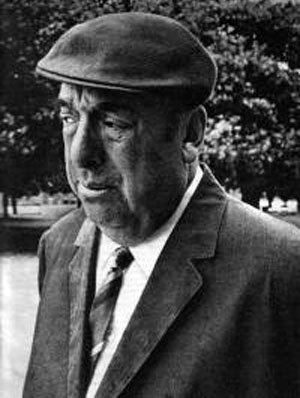
Not bad for a dumpy-looking guy

In time for the 2004 Neruda centenary, Stephen Schwartz (not a literary critic, but a conservative political commentator), wrote in a seminal article that has been cited all over the internet:

There is probably no more chance of halting this current binge of Neruda worship than there is of banishing the cicadas, but, still, the truth does need to be said: Pablo Neruda was a bad writer and a bad man. His main public is located not in the Spanish-speaking nations but in the Anglo-European countries, and his reputation derives almost entirely from the iconic place he once occupied in politics – which is to say, he’s “the greatest poet of the twentieth century” because he was a Stalinist at exactly the right moment, and not because of his poetry, which is doggerel.

So does Neruda’s poetry have a future?

Eternally.  On Facebook, my friend Kevin assured me that Pablo Neruda has enduring market value in the Spanish-speaking world for his … pick-up lines. Not bad for a dumpy-looking guy (see right).

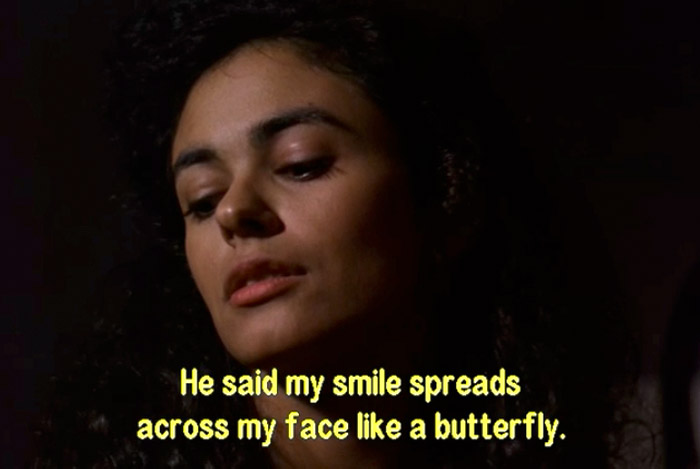
Hard to argue that point – an award-winning film was made on precisely that subject, Il Postino/The Postman.  The plot: nerdy Italian postman wants to pick up pretty girl.  He befriends the exiled Neruda and voilà!  Plagiarism is born in a small Italian village.

As Schwartz himself admitted:

Yes, his work is still plagiarized by teenage boys in Latin America, who see his Twenty Love Poems and a Desperate Song and figure there is nothing wrong with borrowing from it–just as one poem in the book is itself stolen from Rabindranath Tagore – and presenting its overwrought lines to their girlfriends. But if those boys grow up to be serious writers, they leave Neruda behind.

No luck with the line

But Kevin had a story of his own.  During a summer studying at the London School of Economics, an attractive young Spanish woman caught his eye.  How to attract her attention? His friend Pedro (there were a lot of Spaniards around that summer)  said it was very important to open with a sure-fire line.  Neruda was the ticket.

A dormitory lunchroom discussion of Neruda and the art of line-by-line seduction followed.  The young woman demanded an example of a florid Iberian pick-up line: “Let me hear it.”

Kevin recalled the line Pedro had taught him:  “The sentence would be something like “Oh, cielito mío, que Dios me dió” [Oh, my little heaven, given to me by God].

“It’s the cheesiest thing in the world.  And she said, ‘Wow, that’s really good.’”

Did he get the date?  No.  But he learned his lesson: “That’s how it’s done in España.”


No more billets-doux, no more epistolary novels, no more Collected Letters

Share

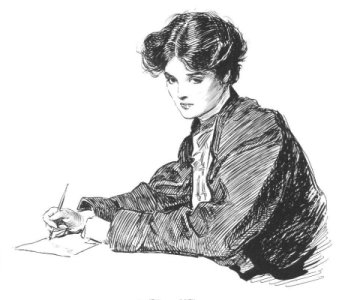
Write a letter lately?  I haven’t either.

According to a story in the Associated Press, nobody else is, either:

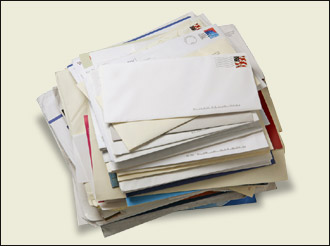
For the typical American household these days, nearly two months will pass before a personal letter shows up.

The avalanche of advertising still arrives, of course, along with magazines and catalogs. But personal letters — as well as the majority of bill payments — have largely been replaced by email, Twitter, Facebook and the like.

“In the future old ‘love letters’ may not be found in boxes in the attic but rather circulating through the Internet, if people care to look for them,” said Webster Newbold, a professor of English at Ball State University in Muncie, Ind.

Well, not so.  We’re not likely to be able to retrieve them.  Such missives are likely to be harbored in defunct email systems on old computers.  I save a bunch seven-inch floppies with interviews on them, in hopes I’ll find a computer that can decode them.  Nothing like hard copies, even if I can’t lay my hands on them readily.

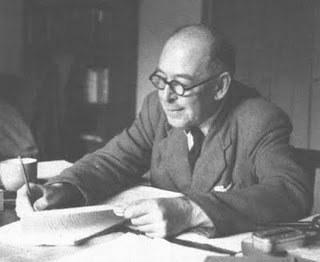
Voltaire wrote about 15,000 letters during his 83-year life.  In more recent times, C.S. Lewis is the patron saint of pen pals. His Collected Letters amount to thousands and thousands of pages. I reviewed the 1,800+ page third volume for the Washington Post here.

Lewis wrote everyone, including T.S. Eliot, the sci-fi maestro Arthur C. Clarke, and the American writer Robert Penn Warren.  “Other letters were from cranks, whiners and down-and-out charity cases; he answered them all,” I wrote.

"...the oar to a galley slave..."

“The pen has become to me what the oar is to a galley slave,” he wrote of the disciplined torture of writing letters for hours every day. He complained about the deterioration of his handwriting, the rheumatism in his right hand and the winter cold numbing his fingers. In the era of the ballpoint, he used a nib pen dipped in ink every four or five words.

Who, in the future, will have volumes of Collected that will be thicker than a slim paperback?

Beyond the prospect of no Collecteds, whole novels have been held together by letters – Laclos‘s Liaisons Dangereuses, for example, or, since we’ve mentioned Lewis, his  Screwtape Letters, or his Letters to Malcolm.  Or his friend Dorothy L. Sayers‘ mystery novel-in-letters Documents in the Case.  Or  Johann Wolfgang von Goethe‘s Sorrows of Young Werther and Friedrich Hölderlin‘s Hyperion.

Beyond even that, letters provide pivotal revelations in Jane Austen‘s Pride and Prejudice.  Or in almost anything by Henry James.  The sudden realization, the catharsis, the flushed cheek…

Vladimir Nabokov‘s Lolita begins with a letter – the letter that tells of the death, in childbirth, of the title character at age 16.  If people read it more carefully, they would have a different view of the “sexy” novel.  (Also if they read between the lines of Humbert Humbert’s self-serving pronouncements.  But without early training on all those day-after-Christmas letters and learning to write the evasive “thank yous,” how would we learn the most subtle nuances of writing at all?)

The very act of letter-writing consumed hours and hours of people’s time.  At Stanford, a whole project, Mapping the Republic of Letters, has evolved from the effort to track the to-and-fro correspondence during the time of the Enlightenment.  It turns out that we can map coteries, friendships, cultural epicenters, and famous journeys through letters.

AP again:

The loss to what people in the future know about us today may be incalculable.

In earlier times the “art” of letter writing was formally taught, explained Newbold.

“Letters were the prime medium of communication among individuals and even important in communities as letters were shared, read aloud and published,” he said. “Letters did the cultural work that academic journals, book reviews, magazines, legal documents, business memos, diplomatic cables, etc. do now. They were also obviously important in more intimate senses, among family, close friends, lovers, and suitors in initiating and preserving personal relationships and holding things together when distance was a real and unsurmountable obstacle.” …

But Aaron Sachs, a professor of American Studies and History at Cornell University, said, “One of the ironies for me is that everyone talks about electronic media bringing people closer together, and I think this is a way we wind up more separate. We don’t have the intimacy that we have when we go to the attic and read grandma’s letters.”

“Part of the reason I like being a historian is the sensory experience we have when dealing with old documents” and letters, he said. “Sometimes, when people ask me what I do, I say I read other people’s mail.”

What about all those books that describes when a pile of a love letters are ceremoniously burned?  Or returned to the beloved in a ribbon-tied packet after a break-up?  Not quite the same as pressing a “delete” button, is it?  However, that sort of rite-of-passage has been on the downswing since the invention of the xerox machine.

“Letters mingle souls,” as John Donne wrote, but in a wholly different way than what is commonplace on the worldwide web.  Despite my sentimentality, however, I, for one, am not sure I’d trade pages on cream-colored vellum for the zip and brevity and immediacy of quickly typed “Sure. Will do.” on my Mac.


The day after Shakespeare’s birthday, and “the first of arts”

Share

Wordsworth: Yesterday's child

Yesterday was my first time attending “A Company of Authors” – a warm and friendly gathering of about 100 or so booklovers at the Stanford Humanities Center.  (Video will be added when available.)  Particularly memorable: Elena Danielson‘s breathy presentation of the ethical issues of archiving.  Don’t think that sounds exciting?  You have to hear Elena tell about it.  The author of The Ethical Archivist has been privy to billets-doux of the long-dead and recently dead, and all the burning secrets held in donated letters and memorabilia. Ian Morris, author of Why the West Rules—For Now, as always, stole the show with his story about how everything came to be in the last 15,000 or so years.

We celebrated the parade of April 23d birthdays:  William Shakespeare, Alexander Pushkin, Vladimir Nabokov, William Wordsworth, J.M.W. Turner, Shirley Temple Black, St. George, and George Steiner, too.

As promised, Peter Stansky, read George Steiner’s poem:

To choose one’s birthday is the first of arts.
Renowned birthdays mark the man of parts.
The kalends are replete with faceless days,
So why not make one’s entry in a blaze?
Alas, I failed on the first day I was born!  Steiner noted:
And honest Wordsworth  tells us in his Ode
How the Platonic soul in its abode
Must before birth make choice of room and board –
No one is born on my day, although it is St. James‘s Day.  That means I should wear a cockle shell.  Or move to Spain.  Or both.   I shall have to be my own parade.
But all such glories are but dusty ends
When set against this laurel-crown of friends. …
How could the heart do otherwise than say
How wise it was to choose St. George’s day!

Hitting the road

The Times Online wrote this for Steiner’s birthday two years ago: “The polymath Professor George Steiner  said it is rather embarrassing that birthday celebrations are taking place in Florence, Rome and Germany. There is also an event at Churchill College, Cambridge, where he has been a Fellow since 1961. He is researching a book about how great philosophy gets itself written, called The Poetry of Thought. He enjoys walks with his Old English sheepdog, known as Monsieur Ben. Professor George Steiner is 80 today.”

Meanwhile, birthdays march on:  Today Anthony Trollope was born in 1815. And Robert Penn Warren, the first U.S. poet laureate in 1905.  The Swiss poet Carl Spitteler, a 1915 Nobel winner, in 1845.

From Trollope: “As to that leisure evening of life, I must say that I do not want it. I can conceive of no contentment of which toil is not to be the immediate parent.”

Happy Easter, everyone!