
Another Look book club spotlights Joseph Conrad’s Shadow-Line on May 10

Share
conrad-ship

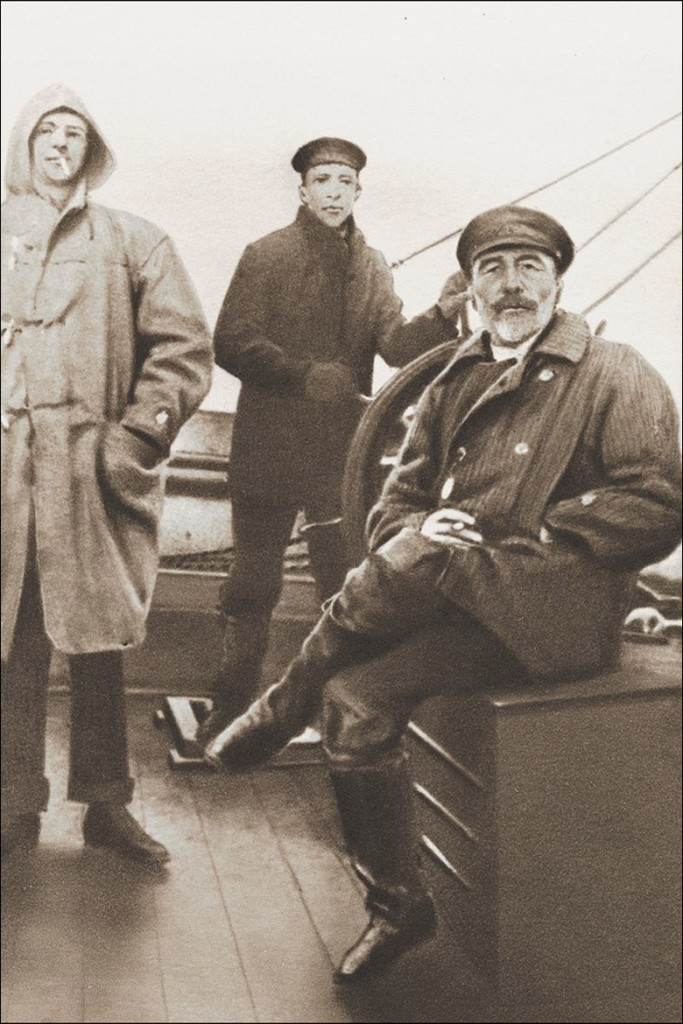
Joseph Conrad (foreground) on board the special service ship Ready in 1916. He wrote The Shadow-Line on his return from the voyage. (Image credit: Beinecke Rare Book and Manuscript Library, Yale University)

The author Joseph Conrad insisted his work The Shadow-Line: A Confession was not a book about the supernatural. But sometimes the real can be spookier than the imagined, and what we observe outpaces our worst nightmares. So it is with Conrad’s late novella.

“The belief in a supernatural source of evil is not necessary; men alone are quite capable of every wickedness,” Conrad said a few years before World War I. Certainly the rest of the century bore out his conclusions.

The Another Look book club will discuss Conrad’s 1917 novella and the Polish author at 7:30 p.m. Tuesday, May 10, in the Bechtel Conference Room of Encina Hall. The Shadow-Line is available at Stanford Bookstore, Kepler’s in Menlo Park and Bell’s Books in Palo Alto.

The panel will be moderated by Another Look director Robert Pogue Harrison, an acclaimed author and professor of Italian literature. Harrison is a regular contributor to the New York Review of Booksand the host for the popular radio talk show Entitled Opinions. He will be joined by drama Professor Rush Rehm, artistic director of the Stanford Repertory Theater, and Monika Greenleaf, associate professor of Slavic languages and literatures and of comparative literature.

The event is free and open to the public.

“I chose this short novel because of its exquisite prose and quintessentially Conradian drama,” Harrison said. “It probes the enigma of fate by putting circumstance, landscape and depth psychology into play all at the same time.”

He added, “Conrad is a master when it comes to putting his characters through trials. The Shadow-Line is one of the most intense of Conradian trials of character. It is not one of his best known novels and is certainly deserving of another look.”

Conrad’s short masterpiece describes the “green sickness” of late youth, when a young man desires to “flee from the menace of emptiness.” The unnamed narrator’s flight ends when he is captain of a merchant ship in Southeast Asia; the terrors of sickness and the sea bring him to grief, maturity and wisdom.

In a two-page author’s note, Conrad denies the supernatural has anything to do with his story. We are meant, then, not to draw a line between the mate’s superstitious and feverish fear of his former captain, buried at sea, and the destruction of the ship to weather, wind and contagious fever. The mate says the ship will not have luck until it passes the spot where the reckless and demented captain was put overboard.
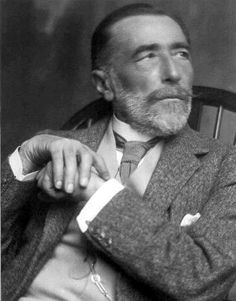
conrad2

(Courtesy Beinecke Rare Book and Manuscript Library)

The Shadow-Line can also be read as a psychological study of the disintegration of an entire ship’s crew. That would be in keeping with Conrad’s worldview; he once called life a “mysterious arrangement of merciless logic for a futile purpose. The most you can hope from it is some knowledge of yourself – that comes too late – a crop of inextinguishable regrets.”

The year The Shadow-Line was published, The Argus praised the novel: “It holds the reader under a spell so strong that the book must be finished at one sitting, and even when it is laid aside it keeps its grip on the memory, and the impression left remains with a curious persistence.”

The Sunday Times wrote, in 1917, “Mr. Conrad is an expert in the business of suggesting mystery and the action of malevolent agencies and the endurance of a man under the buffets of fate. Not even Coleridge has held passers-by more spellbound under a tale of horrors on the ocean than does Mr. Conrad in this work.”

Józef Teodor Konrad Korzeniowski – Joseph Conrad – was born in 1857 in a largely Jewish village in territory that is now Ukraine; it had been part of the Polish-Lithuanian Respublica before partition, and at the time of his birth was part of the Russian Empire. His father was a Polish patriot and man of letters, and the family had a migratory existence. Conrad began a seafaring career as a teenager, and eventually joined the British merchant marine and became an English citizen.

He was one of the very few writers to establish his literary reputation in a foreign tongue. (Vladimir Nabokov comes to mind as well, but the author of Pale Fire and Lolita was reared in an aristocratic Russian family; however, he later claimed English was the first language he learned in his trilingual household.)

World War I was much on Conrad’s mind as he wrote Shadow-Land, and the book is dedicated to his son Borys, a soldier. By the time it was published, Borys had returned from the front, shell-shocked and gassed in the new technology of warfare. The war’s end would change forever the face of the Europe Conrad remembered.

Shortly after the war, a visitor to the Conrad household observed: “Conrad spoke fluently, but his accent, his manner of expression were such as I observed among the inhabitants of the south-eastern Polish borderlands. One felt clearly that when he thought of Poland, it was of a Poland of half-a-century ago. When I listened to him, I could not evade the impression that I am being carried back in time and talk to one of the people of long ago.”

 Another Look is a seasonal book club that draws together Stanford’s top writers and scholars with distinguished figures from the Bay Area and beyond. The books selected are short masterpieces you may not have read before. This article is republished from my Stanford Report piece here.
He got an “A” from Nabokov

Share
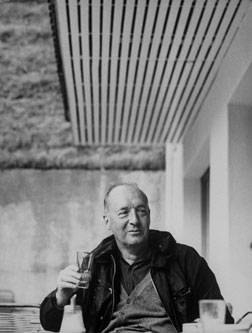
nabokov

Six feet tall and balding.

Delightful piece over at the New York Review of Books by Edward Jay Epstein, recalling his 1954 class with Vladimir Nabokov at Cornell.  We’ve written about Nabokov’s time at Stanford in 1941 here, but that was before he was quite the big-shot.

Here’s an excerpt:

The professor was Vladimir Nabokov, an émigré from tsarist Russia. About six feet tall and balding, he stood, with what I took to be an aristocratic bearing, on the stage of the two-hundred-fifty-seat lecture hall in Goldwin Smith. Facing him on the stage was his white-haired wife Vera, whom he identified only as “my course assistant.” He made it clear from the first lecture that he had little interest in fraternizing with students, who would be known not by their name but by their seat number. Mine was 121. He said his only rule was that we could not leave his lecture, even to use the bathroom, without a doctor’s note.

He then described his requisites for reading the assigned books. He said we did not need to know anything about their historical context, and that we should under no circumstance identify with any of the characters in them, since novels are works of pure invention. The authors, he continued, had one and only one purpose: to enchant the reader. So all we needed to appreciate them, aside from a pocket dictionary and a good memory, was our own spines. He assured us that the authors he had selected—Leo Tolstoy, Nikolai Gogol, Marcel Proust, James Joyce, Jane Austen, Franz Kafka, Gustave Flaubert, and Robert Louis Stevenson—would produce tingling we could detect in our spines.

Read the rest here.  It’s very short and a lot of fun.

Remembering William Maxwell: “He used a pause better than most of us use a paragraph.”

Share
Maxwell

Sophisticated? He didn’t think so. (Photo: Brookie Maxwell)

In preparation for Stanford’s “Another Look,” a new book club launched by the English department at Stanford, I wrote a retrospective on author William Maxwell, whose  masterpiece, So Long, See You Tomorrow, will be the inaugural book for  “Another Look”  on Monday, November 12.   The book will be discussed by award-winning author Tobias Wolff, with Bay Area novelist, journalist, and editor Vendela Vida and Stanford’s lit scholar Vaughn Rasberry, to be followed by an audience discussion.  More on “Another Look” here

***

“I never felt sophisticated,” the erudite and elderly Midwesterner explained to NPR’s Terry Gross in 1995.  His modesty is certainly one reason why William Maxwell remains a connoisseur’s writer, never achieving the wider recognition he deserves.

Yet Maxwell’s career was situated at the epicenter of American literature and letters: On staff at the New Yorker from 1936 to 1975, he was the editor of J.D. Salinger, Vladimir Nabokov, Eudora Welty, Frank O’Connor, John Cheever, and many other luminaries.  He also contributed regularly to the magazine’s reviews and columns, and continued to do so until 1999, a year before his death.  Maxwell wrote six novels, many short stories, a memoir, two books for children, and about forty short, whimsical pieces, which he called “improvisations.” Three volumes of letters have also been published.

Others have readily compensated for Maxwell’s modesty.  Christopher Carduff, editor of the Library of America edition of the author’s complete works, once called him “a kind, wise, quiet voice. One of the essential American voices of our time.”

“I don’t think he tried very hard to promote himself,” said writer Benjamin Cheever, son of novelist John Cheever, in a telephone interview. “He was very, very quiet – both as a public person and as a conversationalist.  He used a pause better than most of us use a paragraph.”

“He lived for art, its appreciation as well as its creation,” wrote John Updike in The New Yorker.  “His shapely, lively, gently rigorous memoirs, out of the abundance of heartfelt writing he bestowed on posterity, are most like being with Bill in life, at lunch in midtown or at home in the East Eighties, as he intently listened, and listened, and then said, in his soft dry voice, exactly the right thing.”

The path of Maxwell’s life took few sharp turns. He was born in Lincoln, Illinois, on August 16, 1908. His professional life was almost entirely bound up with the New Yorker, where he worked for four decades – in a sense, he became the “company man” his father would have approved. After an intensely long and lonely bachelorhood, he married the most beautiful woman he had ever met.  Their marriage lasted until her death, a week before his own.  He and Emily (universally called “Emmy”) had two daughters – the first born when he was 46.

His work habits were relentlessly predictable:  According to his daughter Katharine Maxwell, he was consistently in bed at 10 p.m., and up at 6 a.m.  He didn’t like the superficial chitchat of cocktail parties.  He excused himself abruptly from dinner parties at 9.45 p.m. – he wanted to be fresh to write the next morning.

About four-fifths of his oeuvre is set in or around his hometown. Thanks to him, Lincoln has become a landmark as indelible as Hannibal, Missouri, in the annals of American literature.

“The shine went out of everything”

There was one defining peak on the otherwise rather flat landscape of Maxwell’s life: his mother’s death in the 1918 influenza epidemic, when he was 10. He never really got over it; almost all his friends and acquaintances speak about it when recalling him. “He couldn’t speak of her without tears welling up in his eyes,” recalled his daughter, Katharine Maxwell. She said it resulted in a sort of flinty atheism, a grudge almost – “yet he said he thought God could write a better story than he could.”  Maxwell’s friend and fellow writer at the New Yorker, Alec Wilkinson, described him as “melancholy-minded.” Said Wilkinson: “His mother’s death stamped him forever with an awareness of the fragility of human happiness.  It kept him away from any religions. I remember him saying that ‘no one can fail to be astonished by creation – that’s as far as I’m going to go as to a governing faculty to the universe.’”

Continue reading

Christopher Plummer playing Vladimir Nabokov talking about Franz Kafka.

Share

The genuine article.

It’s not quite Vladimir Nabokov (witness the video of the real thing on video here), but rather the actor Christopher Plummer takes a shot at performing the Russian author, who taught at Cornell University  from 1948 to 1959.

There doesn’t appear to be much online about Peter Medak‘s short television film from 1989, Nabokov on Kafka, which dramatizes Nabokov’s lectures on Franz Kafka’s The Metamorphosis.  Despite NEH funding and TV airing, this film seems to have pretty much disappeared from public awareness.  Certainly I had never heard of it before.  Anyone know anything about this quirky show?

Thanks to 3quarksdaily for pointing it out.


Nabokov biographer Brian Boyd replies – and offers a pretty good sales pitch

Share

Sold!

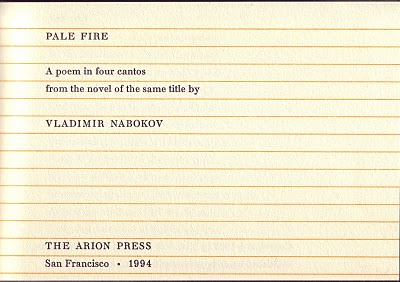
Yesterday, we wrote about the new edition of Vladimir Nabokov‘s  “Pale Fire” poem, liberated from the pages of the the Pale Fire book and published as a stand-alone work.  We also mentioned Stephen Gertz’s reservation about the Gingko Press’ effort – principally that this book is not the first time “Pale Fire” was published all by its lonesome; Arion Press published the poem in 1994.

We received a charming reply today from the eminent Nabokov biographer Brian Boyd, who edited the small volume and wrote a commentary (in another letter below, R.S. Gwynn writes that Boyd’s “close reading of the poem is masterly”). It’s so much fun we thought we would publish the note as a separate post. Boyd writes:

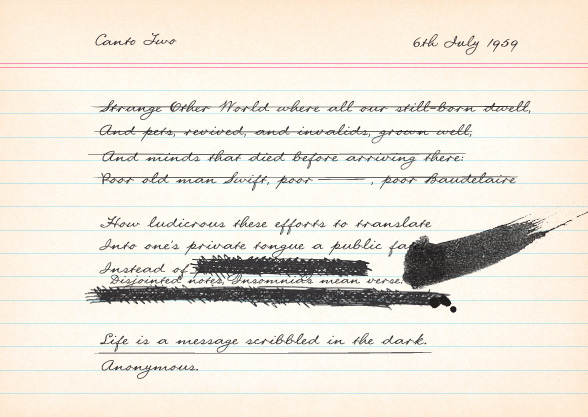
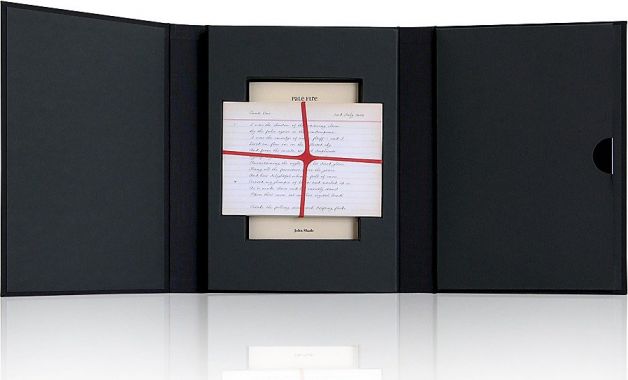
999-line poem on file cards, as the author intended.

“I was also an adviser on the 1994 Arion Press edition of “Pale Fire,” which is an exquisite thing, with a moiré cloth box and cover that manage to capture the interplay of sun and moon in the passage of “Timon of Athens” from which Nabokov and Shade pick the phrase “pale fire.” But that was a limited fine edition of the whole novel (at $600 on release), including the poem of course, but also with a separate booklet for the poem (also in a moiré cloth cover), as part of the same boxed set, typeset as if typed on index cards and bound into booklet form.

What makes the Gingko edition so unprecedented–and here the credit belongs, if first to Vladimir Nabokov, then next to artist Jean Holabird, who proposed the project, is:

a) that it is of the poem alone;

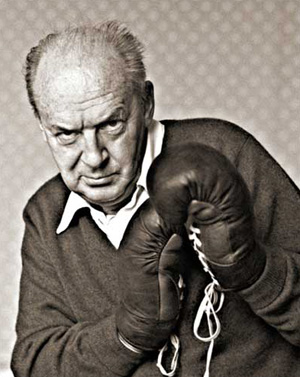
A poet as well as novelist, and perhaps a pugilist, too


b) that the poem appears as if handwritten on index cards (just as Kinbote describes it), with the last 50 lines as if in first draft rather than fair copy (and with the twelve cards of legitimate variants kept by Shade also downloadable from Ginkgo), as if the reader has direct access to what Shade wrote, without the intervention of Kinbote;

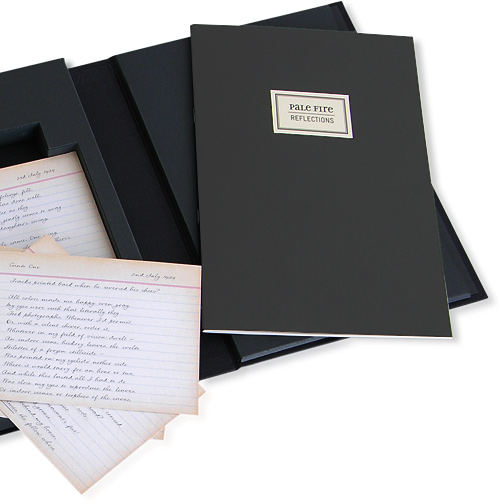
c) that the poem is also presented as a booklet, for easier reading, almost as if it might have been published had Shade been real, and Kinbote had not intervened (with a brief note About the Author and a page listing Other Books by the Author), and with Jean Holabird’s delicate art work, as it were, belatedly launching Shade’s last poetry volume;

d) that there is also a booklet with two essays, by R.S. Gwynn and myself, that focus only on the poem. The focus on the poem, in design and detail, the play throughout with the fiction that readers are for the first time allowed immediate access to a major American poem of 1959, is unique to the Gingko edition, and the result of an admiration for the poem, and a sense of regret that it has been overshadowed by the novel as a whole, however much we might like it (it’s my favorite novel in the world), that is shared by Jean Holabird, Mo Cohen of Gingko Press (and those at the press who became entranced by the project), and Sam Gwynn and myself.

And the Gingko “Pale Fire” pack is not a fine limited edition, but both a literary intervention–very successful, indeed, in inviting people to read and discuss the poem as poem–and “an almost ridiculously lovely package” selling for only $35!

Nabokov’s “Pale Fire” on its own: Does it work? The jury deliberates…

Share

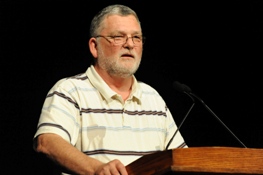
Some time ago we wrote about Sam Gwynn (a.k.a. the poet R.S. Gwynn) and his newest venture:

Ron Rosenbaum, writing in Slateannounces the next hot Nabokov controversy, and the story is making the rounds in the blogosphere.  The poem “Pale Fire” is about to be liberated from Pale Fire. The 900-line poem at the center of what many call Vladimir Nabokov‘s finest novel, written presumably by the murdered John Shade, will be published separately by Ginkgo Press:  “Nabokov wrote it, and the question of why he wrote it and who he modeled Shade on is the subject of what will be an equally controversial essay accompanying the edition, by poet and poetry professor R.S. Gwynn.”

David Orr‘s New York Times review writes that the the long poems comes in “an almost ridiculously lovely package”: “the poem itself is printed in a small booklet, the note cards upon which Shade ‘wrote’ the poem are recreated (complete with faux ink stains), and an accompanying critical text contains helpful essays from the Nabokov scholar Brian Boyd and the poetry critic R. S. Gwynn (who makes a smart case for Nabokov having used couplets partly as a response to Robert Lowell’s early work).”

“But does it work? Can the poem ‘Pale Fire’ exist without the novel Pale Fire? [You see, contra Josh Landy, here is where the Chicago Manual comes in handy. The finky New York Times style italicizes “Pale Fire” both as poem and novel. I have corrected the ugliness. – ED.]
There are reasons to think it cannot. In a New Yorker blog post last year, Paul Muldoon conceded that ‘Pale Fire’ is ‘a quite wonderful poem,’ but he asked, ‘Isn’t it like one of those tall buildings which incorporates in its core the very crane that raised it?'”

Sam at the helm

What can I say.  I wanted to reach out across the continent, shake them both, and cry out:  ” Dr. Zhivago!  What of the poems of Yuri Zhivago in Doctor Zhivago?” They’ve been published separately for years and years and years.

“I’m very fond of Pasternak’s poems from Doctor Zhivago,” Nobel laureate Joseph Brodsky told Solomon Volkov. “They’re remarkable poems, especially ‘Christmas Star.’ I think of them often.”  No talk of buildings and cranes here.

However, Orr continues:  “This is beautifully put, but there is another way to look at things. When authors write ‘as’ a character, particularly in a third-person novel, we usually understand that the text created by that character is subordinate to the world in which the character exists. In Persuasion, for example, Jane Austen brings the novel to its emotional peak with a letter written by Frederick Wentworth — which we understand is really written by Austen and dependent for its resonance on the world of Anne Elliot, the Musgroves, Lady Russell and the rest. It’s hard to imagine anyone reading the letters of Frederick Wentworth for their own sake … In general, the writing of fictional characters is dependent on the larger work, and it is the larger work that reflects the author’s worldview.”

Orr makes a bigger point, about the lyrical “I,” which is a mask and the poet at once.  “There is obviously great potential for confusion as to who is saying what in this arrangement,” he writes.  I’m not quite sure why it matters at all.  In the end, he rather concludes the same: “No poem is ever on its own. And the poem is not Nabokov’s any more than it is John Shade’s. ‘Pale Fire’ is a voice within a voice — a mirrored and thoroughly modern sensibility. And that sensibility, whatever name we give it, is one hell of a poet.”

On the other hand, Booktryst’s Stephen Gertz has a two-year-old bone to pick with Rosenbaum and Gingko Press, publisher of the new “stand-alone” edition of the poem “Pale Fire”:

There’s just one problem. The poem ‘Pale Fire’ was “freed from the shackles..free at last to be a poem on its own,” extracted from the novel and published in its first separate edition in 1994, by Arion Press in San Francisco.

Like the Gingko edition, it’s reproduced just as Nabokov described it in the novel – on file cards.  Read the rest here.