
Ellen Hinsey and “that most archaic idea, ‘thou shalt not kill.'”

Share

Are we facing the start of an "unlawful age"?

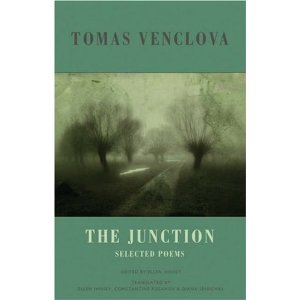
I’d heard the name Ellen Hinsey before.  We have a mutual friend in the eminent Lithuanian poet Tomas Venclova (although I am mostly a long-distance friend, and she is a longstanding colleague).  She has had the pleasure and labor of translating his poems into English for Bloodaxe’s The Junction: Selected Poems of Tomas Venclova.  I had the privilege of publishing an essay by Tomas in An Invisible Rope: Portraits of Czesław Miłosz.

The Paris-based poet is not usually mentioned in the New Yorker, however, so I noted her mention in this week’s “Page-Turner” blog post in the magazine about the closing of Village Voice (I wrote about it here). The relevent passage:  “On the night of the farewell party, it must be said, not everyone was teary. The novelists Jake Lamar and Nancy Huston, the poets Ellen Hinsey and Denis Hirson, and dozens of others were trading sentimental stories.”

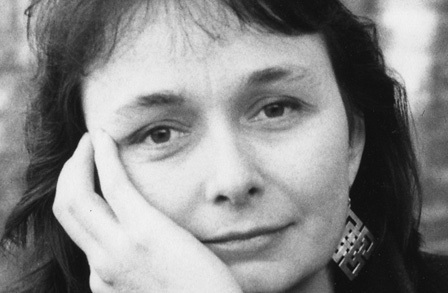
Poetry International has a fascinating Q&A interview with her in 2009.  It starts slowly, but picks up considerable steam. It picks up precisely at the point where she said that a central concern in her The White Fire of Time and Update on the Descent was,  years following a murder in her family,  “how we can renew our belief in that most archaic idea, ‘thou shalt not kill.'”

She also poses “a question that I think we are extremely afraid to confront”:  “The last few years have brought us perilously close to an unspoken fear that we are losing the battle against violence, and that the climate of relative decency we have known is no longer holding firm. Or even that, if we do not do our best to battle against it, we may be facing the start of an unlawful age.”
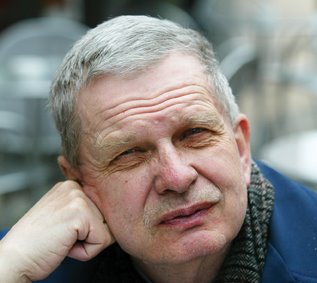
"Above all, love language" (Photo: Dylan Vaughan)

Let me cite the final portion of the interview:

…Some years ago I mentioned that I was interested in the possibility of a “poetics of radical reflection.” For me this means, as Hannah Arendt wrote in the Life of the Mind, the idea that perhaps thought itself can help us to maneuver and survive the dangers around us—the dangers of our own making. With the end of the 20th century we found out that, incredibly enough, we did not arrive at the end of History. History and terror—as well as the possibility of meaning—are still with us. We didn’t escape their noose: they are, and will always be, things with which we must wrestle.

Q.  In the last poem in your book, “Update on the Last Judgment,” there is no “Judgment,” but only an “abyss.” What, then, is “judgment” and who is passing that judgment?

A.  This was a complex poem for me. When you begin to write a poem, you don’t always know exactly what you think about your subject. Regarding the topic in general, I tend to agree with what the Lithuanian poet Tomas Venclova wrote in his poem “Verses for a Child’s Birth”: “it’s best to keep silent/ because we don’t know yet if God hovers/ above the empty featureless waters.” However, it seems fair to say that until we arrive at that unknowable moment, we are entirely responsible for our actions here on earth and it is to our peril that we look for recourse or justification for those actions in any kind of afterlife. For the foreseeable future, we only have judgment with a small “j”, which is to say the mortal, imperfect and fallible judgment that we possess as human beings and with which we have to attempt to make sense of our world. Despite how terribly fragile it is, it is all that we possess. But it is still immense.

I had already bookmarked that particular poem, “Update on the Last Judgment” – the Poetry Foundation has it here.  Read the whole thing.  I’m not going to try to excerpt it.

.
For World Poetry Day: Tomas Venclova on Anna Akhmatova, Joseph Brodsky, and Czesław Miłosz

Share

"Above all, love language" (Photo: Dylan Vaughan)

I met Tomas Venclova in Kraków last May, at the festival celebrating the Czesław Miłosz centenary.  After the grand fête closing the week-long events – an awards ceremony and concert at the Kraków Opera House – a few exhausted party-goers had had enough and were ready for bed.  Those of us who were weary of wine and hors d’oeuvres looked for a way to head back to the hotel in the rain. I was shoveled into a taxi with two men.  One of them was Tomas Venclova, Lithuania’s leading poet, and a writer who is sometimes mentioned as a Nobel candidate.

We had corresponded before, as he was one of the contributors to my book, An Invisible Rope: Portraits of Czesław Miłosz, and I had also heard him reading and reminiscing in the days before – the voice not quite what I had expected, the pitch slightly higher, the timber a little quirky, almost birdlike.

And here he was … or had I introduced myself in the crowded, jostling days before that night?  I must have. I honestly can’t remember.  But this is the first time I do remember, clearly:  he was in the front seat – silent … as tired as I was, perhaps? I could see his silhouette, with his trademark cap, against the rainy windows. I spent most of the time chatting with the fellow with whom I shared the back seat, someone who knew us both – and such are the tricks of memory that I cannot remember who, exactly, that third companion was. He has become a mysterious stranger, though the Lithuanian poet and I have struck up a correspondence since. A penpal by email or letter, from Yale, or Vilnius, or Paris – but  I haven’t seen him face-to-face since May.

Except on these newly released videos of interviews conducted last year in Paris.  I was greatly chuffed that Web of Stories has put them online to celebrate World Poetry Day on Wednesday, March 20.  It’s a good excuse to talk about this quietly marvelous poet – we aren’t likely to do anything later, on his birthday; it falls on September 11.

Here’s your chance to meet the poet and his poems.  Too few know the Vilnius-born poet and his work. Consider it a gift on the first day of spring.

From the email Web of Stories sent me:

In these absorbing clips, Venclova recounts his upbringing in Lithuania, including how he and his father had staunchly opposing political views. He also depicts how his first poems were dedicated to the Hungarian Revolution and despite not being published, they were circulated among groups of people: “I can say with pride that many, many years later when Hungary and Lithuania were free, I received a Hungarian medal for supporting the Hungarian Revolution then through my poems.

He also reminisces about his decision to emigrate to America, losing his Soviet citizenship, being offered a job at Yale and looks back over his career as a writer since leaving Lithuania: “When I left, I thought that it was possible that I’d end up as a lorry driver, for example, or a cleaner or a road layer. But that didn’t happen, I’d been a philologist and a writer and I remained a philologist and a writer.”

Alas, I was not able to embed the story of his meeting with Anna Akhmatova, and her interactions with Alexander Solzhenitsyn – you’ll find that here.

This clip describe Tomas’s meeting with Joseph Brodsky at Akhmatova’s funeral. My friend, the Lithuanian physicist Ramūnas Katilius, translated Tomas’s poems into Russian for the Nobel poet. “This was our triumvirate, our group.”

I didn’t realize that, in fact, that Tomas Venclova first brought Czesław Miłosz (or Česlovas Milašius, in the native Lithuanian) to Joseph Brodsky‘s attention. Here’s the story in the clip below.


Part Deux, with video clips discussing his help from Arthur Miller, his friendship with Timothy Snyder, and his unsuccessful attempt to save an imprisoned dissident, Viktoras Petkus, is here.

Part Deux: Tomas Venclova on Arthur Miller, Timothy Snyder, and an imprisoned friend

Share

More on Tomas Venclova.  I can’t get enough.

Below, a few more clips from the celebration of World Poetry Day at the Web of Stories, continuing my post here.

I certainly didn’t know the playwright Arthur Miller had championed the Lithuanian poet and written a letter to the Communist authorities to protect him. Here’s the story:

I’ve written a lot about Timothy Snyder in these pages – but I didn’t know till now he is friends with Tomas (who is a great fan of Bloodlands). “A relationship with him is something you can be proud of,” he says of the acclaimed author.

A reading of his poem “Before the middle of July, Paris.” The poem is dedicated to the imprisoned Lithuanian dissident Viktoras Petkus. “Well, this is about how a person attempts to reach public opinion in the West, and doesn’t succeed.”

TLS: Czeslaw Milosz around the world

Share

Rock star treatment

What a nice way to celebrate Thanksgiving!  My article in the Times Literary Supplement is online today, and not behind a paywall.  It begins:

In May this year, the streets of old Cracow were dominated by two names, two events. Czeslaw Milosz’s centenary jostled with Pope John Paul II’s beatification in windows, on banners and billboards, on bookstore shelves, in fliers and leaflets – the pope, perhaps, having the edge over the Nobel laureate, except on the kiosks where Milosz Festival posters prevailed. “It seems to me every poet after death goes through a Purgatory”, Milosz told me over a decade ago. “So he must go through that moment of revision after death.” The “revision”, at this point, is a triumph of twenty-first-century branding and marketing, featuring commemorative books, pens, postcards, blank books, and T-shirts; Milosz’s scrawled signature appears on napkins and even on the wrappers of tiny biscotti.

The Works

Few poets have been feted with such rock star exuberance. The “Milosz Pavilion” on Szczepanski Square hosted literary luminaries such as Adam Zagajewski, Bei Dao, Tomas Venclova, Adonis, and Natalya Gorbanevskaya. (Even the reclusive Wislawa Szymborska made a rare public appearance with her colleague Julia Hartwig at the medieval St Catherine’s Church.) Meanwhile, the Jagiellonian University’s Collegium Novum sponsored a week-long scholarly conference with seventy participants from around the world, including the eminent critics Helen Vendler and Clare Cavanagh, and some leading Polish scholars. The Jagiellonian Library, farther from the centre of town, exhibited manuscripts, photographs and first editions. The events were attended by thousands. All this year, books have poured from Polish publishers. Most notably, Milosz’s own publisher, Znak, issued two hefty volumes: Andrzej Franaszek’s 1,000-page biography – a bestseller – and a new 1,500-page Collected Poems. A few of the literati complained to me that Milosz was not receiving his due among the younger generation – an honoured marble bust to be dusted off seasonally, but not read or remembered – but I saw plenty of evidence to the contrary.

The rest is here.

Let the Nobel Follies begin!

Share

Not obscure enough for the prize

Welcome to this year’s Nobel Literature Prize.  Pretty much like last year’s Nobel Literature Prize.

It’s hard to beat the Literary Saloon to the draw:  They led the guessing with a July 1 column, “Nobel Prize speculation (already?!?).”  The site admitted: “Not surprisingly, most of the odds resemble the closing odds for the 2010 prize, but there are big differences, so punters are advised to compare odds before placing their bets.”  Cormac McCarthy (9/2) was just ahead of Ngũgĩ wa Thiong’o (11/2) at Ladbrokes.  Huffington Post picked up the cry here.

We can recycle last year’s reasons why McCarthy won’t get the prize.  Blogger John Matthew Fox thinks he won’t get it because he’s too popular: “The trend over the last few years from the academy is to choose authors that leave a great deal of the world scratching their head and saying “who?” Le Clézio? Please.”

Number Two

Apparently, The Guardian agrees: It has declared Adonis the frontrunner – wasn’t he the frontrunner for awhile last year?

Ladbrokes has made the 81-year-old – who has been described as “the most important Arab poet of our time” – its 4/1 favorite. “Adonis has been a permanent fixture on the shortlist in the past and the odds suggest this could be his year,” said spokesman Alex Donohue.

He’s just ahead of Tomas Tranströmer. “After hitting the woodwork last year we think Tranströmer has a superb chance of atoning for defeat,” said Donohue.  That would certainly be nice. But the Swedish judges seem reluctant to award one of their own.

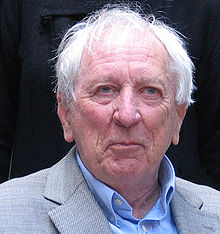
Tomas Venclova anyone?  He hasn’t surfaced on Ladbrokes long list yet.

Yesterday’s post at the Literary Saloon has all the sites to check as the countdown begins here.  Ladbrokes’ betting is here.


The Cahiers Series: “really, really beautiful” – and hand-stitched, even

Share

In a world where everything is becoming faster, cheesier, and more functional – when books are no longer tactile, sensual objects, but characters on Kindle – it’s cheering to see anything swimming upstream.  Bonus points if it extols that most underrated of literary trades, translation.

Applause keeps mounting for the Cahiers Series, published by the Center for Writers & Translators at the American University of Paris and Sylph Editions. It’s hard to stay on top of it.  But Daniel Medin, one of my more charming correspondents, has been sending me updates from the American University.

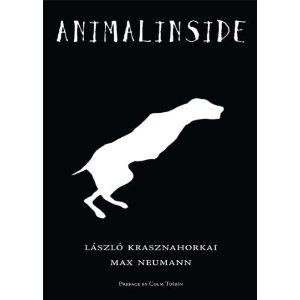
The latest plug is in Friday’s New York Review of Books blog, where Colm Tóibín introduces László Krasznahorkai‘s Animalinside (with illustrations by Max Neumann):

The prose of Hungarian novelist László Krasznahorkai is full of menace, but it would be a mistake to read the menace either as political or as coming from nowhere. In novels such as The Melancholy of Resistance and War & War, his imagination feeds on real fear and real violence; he has a way of making fear and violence seem all the more real and present, however, by removing them from a familiar context.

Daniel, now an associate professor at the American University (after teaching at Stanford a year or two back), said this:

The allegorical tissue in that text [i.e., Animalinside] is very thick, the “animal inside” a literal and metaphorical thing at the same time – think Herbert‘s Report from the Besieged City, where “a rat became the unit of currency.” We’re in the realm of Kafka and Beckett here, and not just in approach: I believe that Krasznahorkai is a writer of nearly the same magnitude who has the mixed fortune of having been born Hungarian – mixed because of that country’s embarrassment of (literary, cultural) riches on one hand and its linguistic isolation on the other.

Quite a coup for a small series that lives more or less hand to mouth, on uncertain funding. Part of the problem is shipping, which makes U.S. distribution difficult, even for a downright modest price of, say, $15.  Distribution in France is a little problematic, too, since the language is English.  “Every penny goes toward quality of production and keeping down the price,” Daniel writes.

Via the Cahiers Series subscription page you can buy a boxed set of volumes 1-6 (or a boxed set of volumes 7-12) for £51 – “which is approximately $4,000, but like I said, these are really, really beautiful. (Kidding—£51 is only $75 and these are worth every dime),” according to the Three Percent blog.  (Sorry, the blogger got me going for a moment – so I had to try it on you.)

[New updated deal: In addition to having the option of ordering cahiers individually, readers can now select any 6 cahiers for £55 in Europe/£59.50 everywhere else. Check it out here.]

Last year Daniel  told the Three Percent blog: “There are two main justifications for the Cahiers Series. The first is that we publish material that cannot easily be published anywhere else; we can play with form in a way that commercial publishers cannot. The second justification is to make something where the parts, through their relation to each other, add up to more than just that.”

Much more.  Clearly, the project is gaining momentum and some very high-profile attention – for example, from James Wood in the New Yorker here.

Daniel – handsomer than this, really

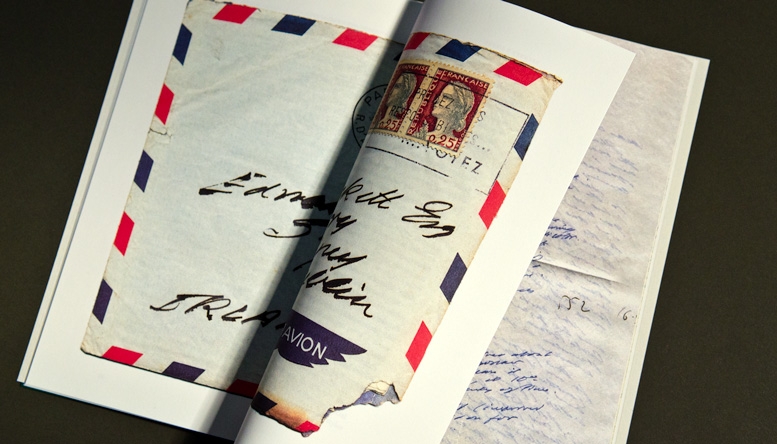
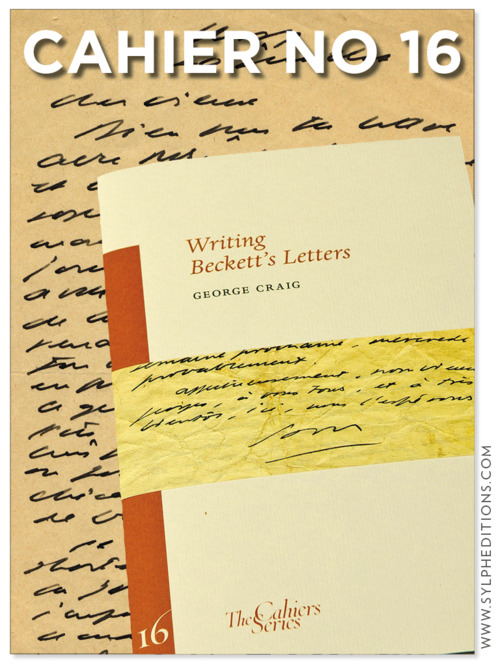
Daniel also sent me a copy of George Craig‘s Writing Beckett’s Letters. Craig spent 15 years translating the thousands of letters Beckett wrote in French.  It’s chock full of impressive insights, and handsomely produced – hand-stitched, even. I haven’t had a chance to read it yet, but Rhys Tranter did, and said this in the Spectator Book Blog (it’s here and here):

Whilst George Craig’s book is neatly timed to anticipate the next volume of Beckett’s Letters, it is more than just a preview of things to come. To Beckett scholars and enthusiasts, the appeal of this book is obvious, tightly-woven with rare insight and beautiful reproductions. But it is also thoughtful and engaging introduction to the problems of translation, and a testament to the status of correspondence as a kind of art-form. To paraphrase Craig’s description of Beckett and Duthuit’s correspondence, this is a work that abounds in strange, unexpected things.

Prescient words. Daniel has been promoting literary translations in other ways: He’s proud that the first invitation he issued at the American University was to Adam Zagajewski, who read from his latest collection and chatted with his students about his first encounter with Kafka. “An incredibly lucky bunch, they were: Tomas Venclova dropped by the next week and shared his own stories about discovering The Metamorphosis – in Polish!”

We’ll be writing more on the exceptional Cahiers series in posts-to-come.