
René Girard’s Sacrifice and Dana’s daily reads

Share

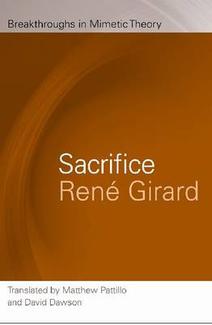
When I ran across Bill Johnsen at the 50th anniversary fête for the seminal Deceit, Desire and the Novel a few months back he gave me three copies of René Girard‘s newest volume, a small, elegant paperback called Sacrifice.  One was for me, he said.

“Who are the other two for?” I asked.  “Two famous people you know,” said the Michigan State University professor.   Did he have anyone in mind?  “Yes, Dana Gioia,” he said.

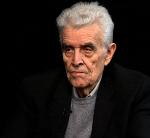
The turnabout was sweet.  In 2007, when Dana was invited to be a commencement speaker at Stanford, Dana was knocked for not being famous enough.  Gioia acknowledged some students’ disappointment: “A few students were especially concerned that I lacked celebrity status. It seemed I wasn’t famous enough. I couldn’t agree more,” he said. “As I have often told my wife and children, ‘I’m simply not famous enough.'”

I sent him the book with that comment, and added a poem by Tomas Venclova and another little-known one by Rainer Maria Rilke, in the James Leishman translation.
Famous

Famous

Bill gift was a nice followup to an earlier event: One of the joys of life is being to introduce your favorite people to each other – so I was honored to have the chance to invite Dana to Palo Alto to meet René some months back.  I hoped the meeting would be fruitful.

And it was, I learned, in the followup that followed the followup.  A few minutes ago, jazz scholar Ted Gioia‘s Facebook page offered a link about his big bro.  From Evan R. Goldstein Q&A in The Chronicle of Higher Education, “My Daily Read: Dana Gioia“:

Q: What books have you recently read?  Do they stand out?

Not famous enough in 2007 (Photo: L.A. Cicero)

A. I still read a great many books. I travel almost every week, so I have long stretches of quiet time on planes and in hotel rooms. I’m also a terrible insomniac so I read for hours late at night.  At the moment I’m reading Meryle Secrest’s Modigliani as well as Peter Humfrey’s Painting in Renaissance Venice, which must seem like an odd pair chronologically.  I’ve also been reading through René Girard’s books on mimetic theory and just finished Sacrifice, which deals with religious violence in the classical Vedic texts. I also enjoyed Kevin Starr’s survey of  California historians, Clio on the Coast.

During my visit to his Santa Rosa home last summer, we had discussed some of the same themes that emerged in the Q&A.  Here’s what I wrote then:

“Dana, Mary, and I sipped wine on the balcony overlooking the valley and the hills.  We talked about the increasing commercialization of society, where marketed celebrities famous for being famous in turn market corporate brands for us to buy — how to keep Guess jeans, Netflix, Jimmy Choo shoes, and apps from monopolizing our remaining memory banks and our lives?  We discussed the crazily increasing speed of 21st century communications and life.  He liked, he said, living in a place where impressions are taken in and thought occurs no faster than the speed of walking.”
He’s clearly still of the same mind – and he dismisses the celebrity phenomenon he had decried in 2010 (and been denied in 2007):

Q. Do you use Twitter?  If so, whom do you follow?

A. I  never use Twitter. In fact, I am deeply suspicious of the massive communications overload that the media obsesses over and glorifies. So much of this activity is just covert advertising for products and celebrities. The objective is to capture and commercialize every moment of people’s time. What we really need is more quiet and less phony connectivity.

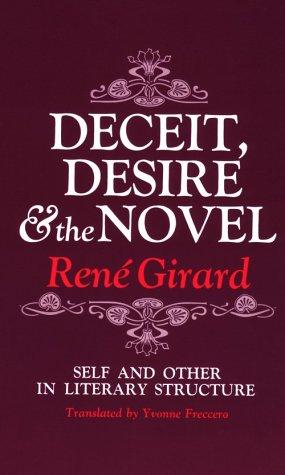
Dana’s reading is far more disciplined than my own.  My attention, admittedly, has been blown to bits by the world wide web.  Meanwhile, it’s good to know Dana and I have something in common:  I am currently making my way through René’s classic Deceit, Desire and the Novel, with plans to hit Things Hidden Since the Foundation of the World next.
Joseph Brodsky: “If we have all this here, why do we need Europe?”

Share

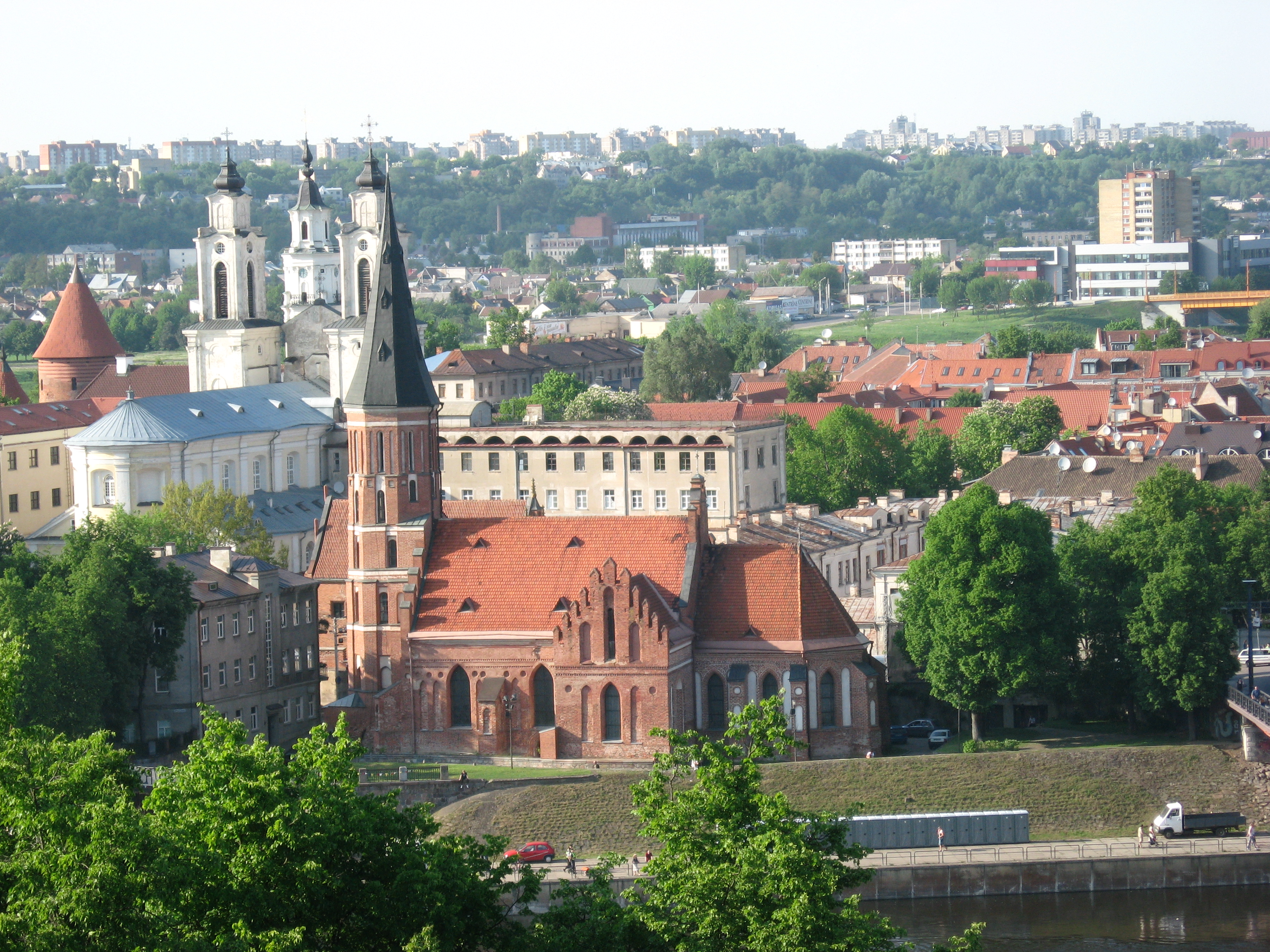
The city where Adam Mickiewicz taught secondary school. (Photo: C. Haven)

“If we have all this here, why do we need Europe?”  That’s what Joseph Brodsky reportedly said in 1966 when he surveyed not Rome, not Athens, but humble Kaunas, Lithuania’s second largest city.

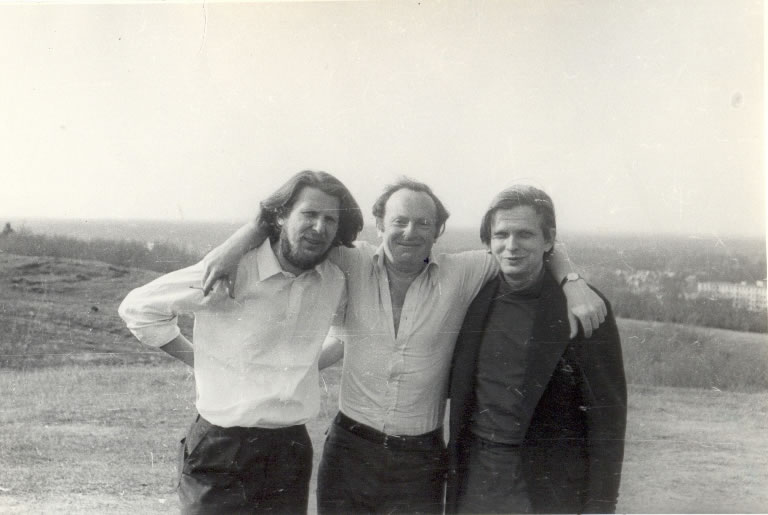
The words come from Ramūnas Katilius, fils, quoting his father, Ramūnas Katilius, père, from this vantage point overlooking the city.  The elder Romas, a physicist, was one of the poet’s greatest chums, sometimes seeing the poet several times a day when they were in Leningrad.  Romas was in the photos of Joseph Brodsky departure from the Soviet Union forever in 1972.

Both Romas and Algirdas Avižienis, professor emeritus at director of the Czesław Miłosz Birthplace Foundation, hosted my visit to Miłosz’s Issa Valley.  I’ve just returned to Poland.

While much of my discussion with Romas was about his friend, Tomas Venclova, the physicist was interested when I told him that I had been a student of Joseph’s (he called me part of “the family”) – and hence our discussion returned to his memories of Leningrad, and J.B.’s time in Lithuania. There’s even a plaque in downtown Vilnius where the Russian Nobel poet stayed.

Admittedly, the quote I have cited above is secondhand, but it’s suggestive of how much the poet liked Lithuania. You could guess that, perhaps, from his poem “Lithuanian Divertissement.”

Ramūnas Katilius, Joseph Brodsky, Tomas Venclova in 1972 (Photo by Marija Etkind from the archive of Ramūnas Katilius and Elė Katilienė)

This remote and stunning little city was the temporary capital of Lithuania, when the Polish army occupied Vilnius in 1920.  The Nazis occupied it during the war, of course, and it was a Soviet Socialist Republic at the time Joseph Brodsky visited.

It’s also very early evidence, before he had seen Venice, Paris, or New York, of his early partiality of the cozy places on the outskirts of empire.  He was later to defend Russia’s historic hegemony in an acrimonious exchange with Miłosz, Derek Walcott and Susan Sontag, as described in Irena Grudzińska Gross‘s Czesław Miłosz and Joseph Brodsky: Fellowship of Poets.

I’m in Poland right now, and obviously don’t have access to Irena’s book or anything else in my library, but a Keith Gessen’s piece in today’s New Yorker (with a dynamite photo by Irving Penn) makes the same point:

Poetry was immortal, he argued: “That which is being created today in Russian or English, for example, secures the existence of these languages over the course of the next millennium.” But this wasn’t true, as Brodsky eventually acknowledged in a great and furious late poem, “On Ukrainian Independence,” in which he berated the independence-minded Ukrainians for casting aside the Russian tongue. “So go with God, you swift cossacks, you hetmans, you prison guards,” it says, and concludes:


Just remember, when it’s time for you, too, to die, you bravehearts,
as you scratch at your mattress and visibly suffer, you’ll forget
the flatus of Taras, and whisper the verses of Alexander.

Alexander Pushkin, that is. Despite itself, the poem is an anguished admission that a Russian state and Russian-speaking subjects are still vital to the project of Russian poetry.

Now.  Here’s an interesting bit about the photo above.  See the white double spires?  That’s the Jesuit church.  Now take a look at the rather nondescript yellowish building in front of it.  That’s where Adam Mickiewicz, the Polish language’s ur-poet (and, like Czesław Miłosz, he was born in Lithuania) taught at secondary school to pay off his university tuition  at the Jesuit’s Vilnius University.

Note to self:  Must read Mickiewicz when I get back to California.  Anyone know the best translations?

“The Wolf Who Ate Books”: Michnik, Vendler, Hirshfield, and others remember Miłosz

Share

Aleksander Fiut in foreground, Michnik in striped shirt, Vendler in back (Photo by my Droid)

Jane Hirshfield recalls that Czesław Miłosz lived in a “storybook” cottage on Grizzly Peak in the hills of Berkeley.  But to describe the fairy tale that took place within the cottage, you’d need a new character, a new story – “The Wolf Who Ate Books,” she suggested.

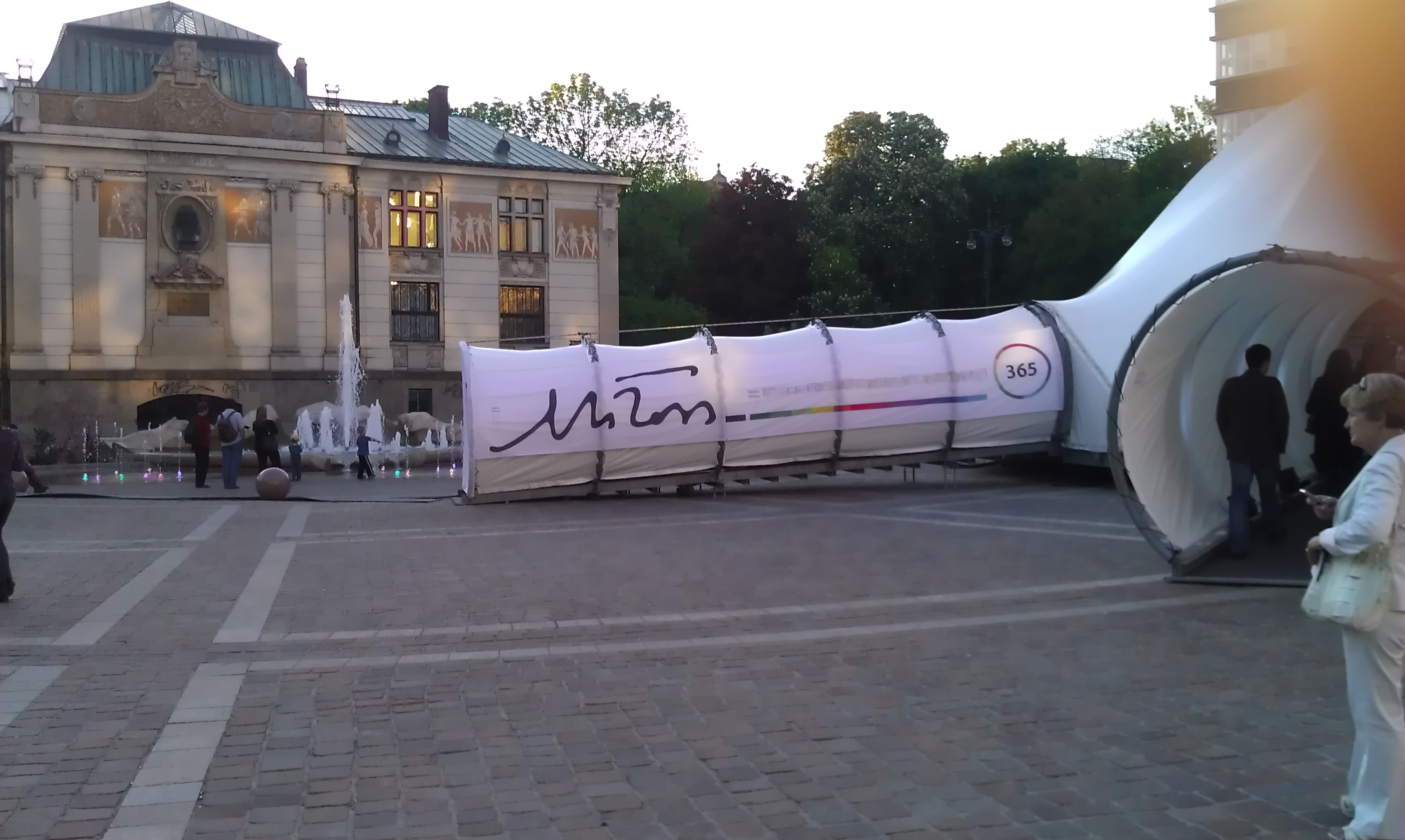
In the elegant and newly revamped Szczepanski Square, the Miłosz Pavilion – a strange, science fiction-y formation of hemispherical  tents and tunnels – hosted a range of activities during the Czesław Miłosz centenary festival. One spotlighted reminiscences with, as well as Jane, scholar Aleksander Fiut, Gazeta Wyborcza editor Adam Michnik, poet Tomas Venclova, leading critic Helen Vendler, and poet Adam Zagajewski. As with so many of the events, Znak publisher Jerzy Illg hosted.  Here are a few of their memories:

Michnik recalled Miłosz trying to meet him at a very particular Bulgarian restaurant in Paris, where Miłosz spent the lonely, tormented decade following his lonely defection from Communist Poland.  “Then Miłosz said a sentence I would remember for the rest of my life:  ‘I wanted to meet you here, because here, in the 1950s, very often I kept feeling I would commit suicide,'” he confided to his friend.  Michnik recalled his famous essay of the time, “Nie” [No], where he explained his defection to the world.  It opened: “What I’m going to tell now could well be called a story of a suicide…”

He also remembered Miłosz’s triumphant return to Poland in 1981, with the heady rise of Solidarity.  “It was a time of euphoria, carnival – it was our victory,” he said.

Miłosz was more cautious.  He told Michnik, “The atmosphere feels like just before the Warsaw Uprising. Please be careful.” Tanks rolled into Warsaw and martial law was declared a few months later.

Tomas Venclova recalled when Stanisław Lem was rumored to be up for the Nobel prize.  “I don’t care about the Nobel prize,” Miłosz told him, “but if any other writer gets it, I wouldn’t be too happy.”

A 21st century monster of hemispheres and tunnels (from my Droid)

Aleksander Fiut traveled with Miłosz to Stockholm for the 1980 Nobel.  On the way to the event, in a chauffeur-driven limousine, Miłosz was hungry.  Where did they stop?  He told the chauffeur to pull into McDonald’s.  “Her facial muscles didn’t even move,” Fiut recalled.

Jerzy Illg recalls the poet at 90, looking deeply into a vodka and a piece of herring – two of his favorite things.  “Happiness is accessible,” he declared finally. Illg had him write that down and sign it. “It’s a valuable security paper I hold,” Jerzy reflected.

Jane met both Carol and Czesław at a Bay Area picnic, where the hostess urged her beforehand to chat with the Miłoszes, since many were too intimidated to be social.  So, unfortunately, was Jane.  It was as if, she said, she had been told, “Please go talk to Yeats.  Please go talk to Shakespeare.”

Jane also recalled the death of Miłosz’s much-younger wife Carol, in 2002.  At the memorial service in Berkeley, she remembers Miłosz sitting erect, “evidence of decades of unbearable loss being carried.” She spoke to him afterward, and “for three seconds he completely broke down.”

“I never held a grief that large in my arms,” she said.

From Kraków: Zagajewski and other poets don yarmulkes for Temple Synagogue reading

Share

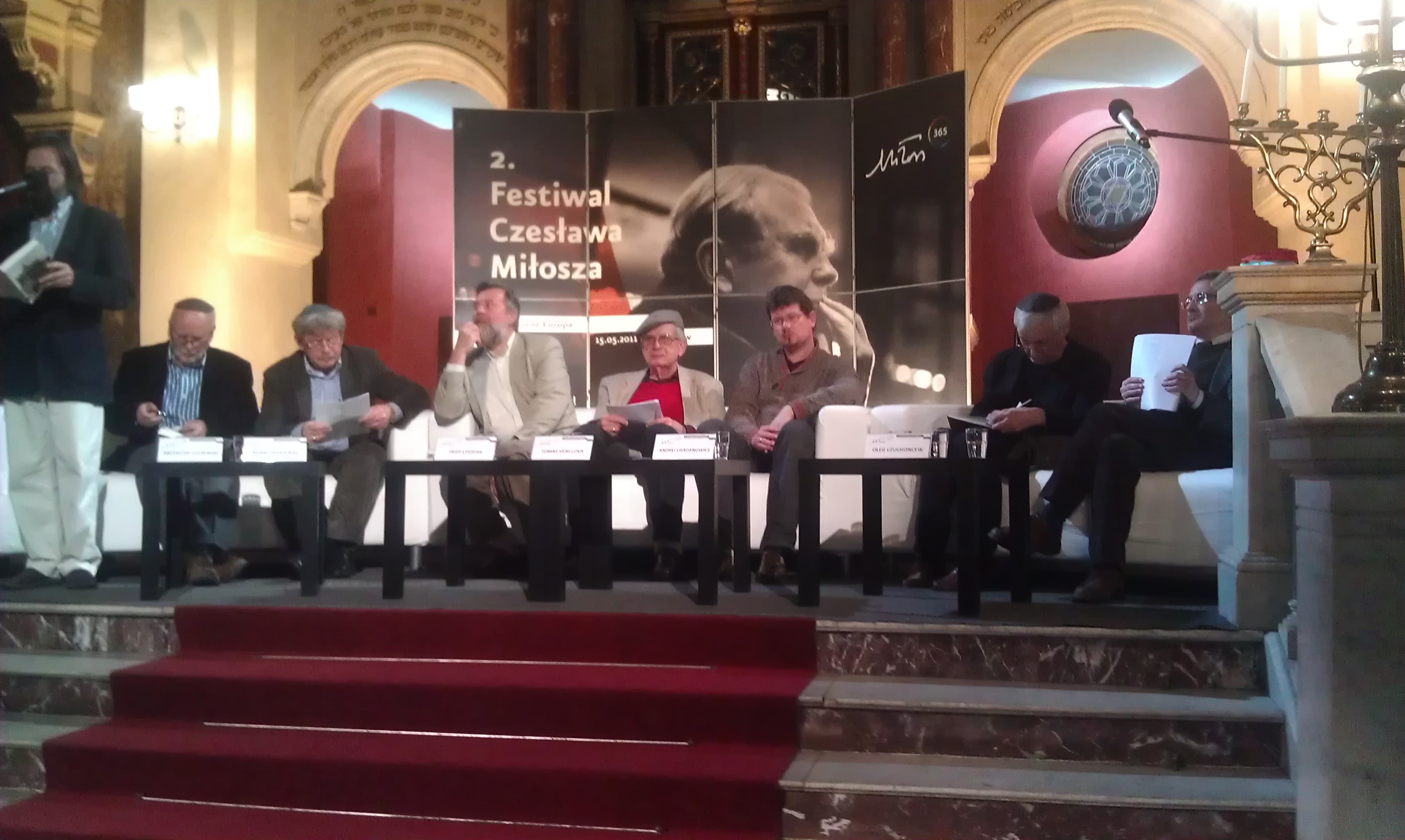
Zagajewski seated at far left, Lyszeha third from left, Venclova in red, and Chukhontsev second from right. (Photo: My Droid)

An impressive reading tonight in Kraków’s Temple Synagogue – at least, the parts I understood. I count it as one of the highpoints of the Czesław Miłosz Centenary Festival, a celebration not short of highpoints.

The idea behind tonight’s reading was “The Grand Duchy of Poetry,” including major poets from Poland, Lithuania, Russia, Ukraine, and Belarusia, represented respectively by Adam Zagajewski, Tomas Venclova, Oleg Chukhontsev, Oleh Lysheha, Andrej Chadnowicz.

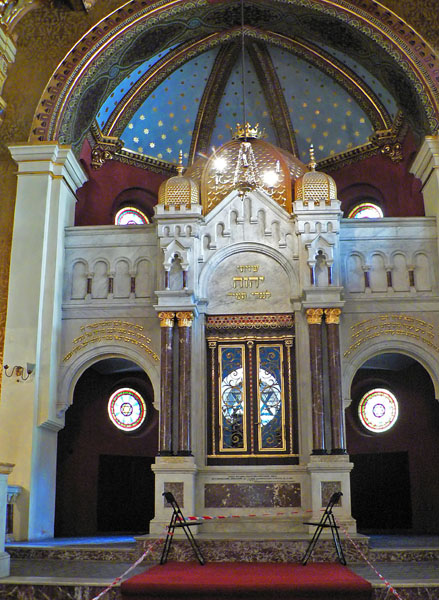
The setting was the city’s neo-Romanesque temple from 1862, with its richly decorated interior and ornate, gilded ‘Moorish’ woodwork, the style hammered out some time between Art Nouveau and Art Deco, during the revival of folk art themes, I suppose.

The men were suitably donning yarmulkes, except for Tomas Venclova, who wore a sort of newsboy cap.

Alas, the English translations of the poems read tended to disappear quickly from the festival table, and I was left to make do with what was left. No simultaneous translations tonight.

The Belarus poet Chadnowicz was youngest, in his 40s, and had a theatrical, energetic performance – tapping the microphone like a drum, at one point. The word “Belarusia” kept surfacing in his poems. I can only guess what he was saying – no handout. No handout for Ukrainian Lysheha, either.

I’d never heard of 73-year-old Oleg Chukhontsev, and I don’t know if his work exists in English, but it should.  The handouts showed a single translation by the eminent Russian scholar and translator G.S. Smith – if it’s any indication, this is an undiscovered nugget of gold.

Adam is clearly a poet at the top of his form, with many years ahead of him.  His poem, “Impossible,” translated by Clare Cavanagh, wasn’t my favorite (I preferred “Improvisation”), but it its closing was a great personal signature as the mind-boggling Milosz Festival winds to a close:

Sometimes I envy the dead poets,
they no longer have “bad days,” they don’t know
“ennui,” they’ve parted ways with “vacancy,”
“rhetoric,” rain, low pressure zones,
they’ve stopped following the “astute reviews,”
yet still keep speaking to us.
Their doubts vanished with them,
their rapture lives.

I’ve only recently discovered Tomas Venclova’s quietly luminous poems – like Adam, Venclova’s name appears annually in the Nobel shortlist. But it’s surprising how little has been written or said about the brilliant fruits from his steady labor, even though he’s hardly invisible – he’s on the faculty at Yale. Take this, the last two verses for his poem for Susan Sontag, “Landscape, Summer 2001”:

A loudspeaker by the open window
broadcasts the roar of the archangel’s trumpet,
and God, upon waking, reduces
the square to a pinch of love and ashes.

The sun comes up above the ruined city.
Light gropes for the desk and quickly finds it,
and empty time is severed by a sentence
which contradicts the night that has just ended.

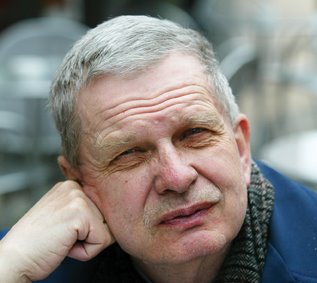
Please, Nobel Committee, Tomas Venclova in 2011. It’s time.

Remembering Bella Akhmadulina, again … and a few words on Tomas Venclova as well

Share

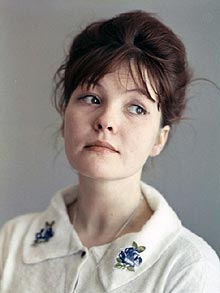
Remembered...

We wrote about Bella Akhmadulina, who died in November,  here.  In that post, we quoted Gregory Freidin‘s insightful tribute in Arcade.

He’s still thinking about her.  And it’s thanks to us.  From Grisha’s post, “Akhmadulina Remembered, Again,” on his blog, The Noise of Time:

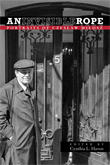
“A few days ago I received a request to review an advance copy of An Invisible Rope: A Portrait of Czeslaw Milosz, edited by my friend and Stanford colleague Cynthia L. Haven (Ohio University Press, to be released shortly). Among other recollections of Milosz (he left an indelible mark in those who knew him), there was ‘Spring in Berkeley,’ by Tomas Venclova. It contains Venclova’s account of the same evening that he and I spent with Bella Akhmadulina and her husband, as it turns out, at Cheshire Cat, a Berkeley pub that is no longer in existence. Having read Tomas’ recollections, I now realize that I must have left the party shortly after Milosz joined it and, fool that I am, missed the rest of the conversation that, unbeknownst to me, continued well into the small hours of the morning.”

"Above all, love language" (Photo: Dylan Vaughan)

He didn’t want to divulge too much of Venclova’s essay, except to note that the evening turned into a battle between Venclova, Milosz, and Akhmadulina over the term central to Milosz’s Captive Mindketman. The term was born in Persia, but revived by Milosz, signifying the double game by which we keep a public face that serves a totalitarian authority, while nurturing a private world of our own values.

Venclova, Lithuania’s foremost poet and one of Europe’s greatest modern poets, is too little known in the U.S., though his name surfaces regularly on the Nobel shortlists.  He was born in 1937, and capped his dissent at the 1956 invasion of Hungary with his outspoken involvement in the 70s with dissident politics – which included being a founding member of the Lithuanian Helsinki Group.  He was banned from publishing, stripped of his Soviet citizenship in 1977, and, exiled. He now teaches at Yale.  According to the Bloodaxe blog:

“Venclova’s experience of growing up in the shadow of these post-war ruins is an integral part of his work. For, as in many European cities, the ruin that surrounded him was not merely metaphorical: in his writings he tells how, on his very first day of school, he got lost in Vilnius’ ruins and wandered for four hours in search of his house. Half of the city was destroyed, and on certain streets, every other house was burned out. Yet by some miracle, all the city’s churches had survived, together with certain other monuments from the capital’s architectural past. As a young man, Venclova came to regard these vestiges as a sign – one that ‘made a statement and exacted a demand’. During the years of Communist monotony and repression, he memorised Vilnius’s architectural details down to the last window frame and column, and at difficult moments in his life he would stand in one of the city’s squares and allow the sheer presence of their historical continuity to lift his spirit. These vestiges represented the remains of a coherent world, a world that – however far off that eventuality might be – could one day, given enough patience, rise from the debris.”

The poet was a sweetheart to deal with on An Invisible Rope — professional in all his dealings, on time with deadlines, invariably courteous and responsive to email requests, not at all big-headed.  I have yet to meet him, but perhaps our paths will cross during 2011, the Milosz centennial year.

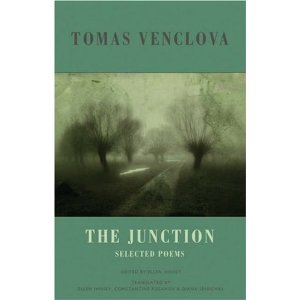
Meanwhile, I got a copy of his The Junction: Selected Poems, published by the preeminent U.K. poetry publisher, Bloodaxe.  I liked especially this poem, “Commentary,” which opens:

Above all, though it’s hard, love language –
humbled in newspapers, obituaries saturated with lies,
in the bedroom’s close darkness, the informer’s confession,
in the cry at the bazaar, trenches, the stench of hospital wards,

in third-rate theatres, secret police offices, on lavatory walls.
In grey buildings where the stairwell’s shaft is guarded
by steel nets, so that it is not a man, but the century,
which selects the instant of his death;

this language, almost collapsed, littered with sound
and fury.  That’s it, love language —
banished to earth beside us,
though carrying with it the primordial Word, …

Postscript:  Don’t miss Grisha Freidin’s 500-word history of Russia here.  Rather like Félix Fénéon’s Novels in Three Lines, which I bought on Jonathan Miller‘s recommendation but haven’t really given more than a cursory look. Or the ten centuries in five minutes I posted some time ago.