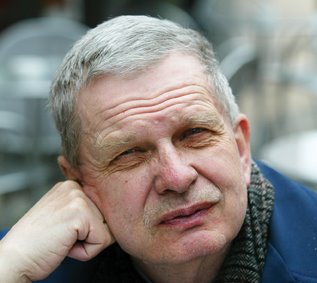
“Caligula at the Gates”: Guess who is the star of Venclova’s new poem?

Share
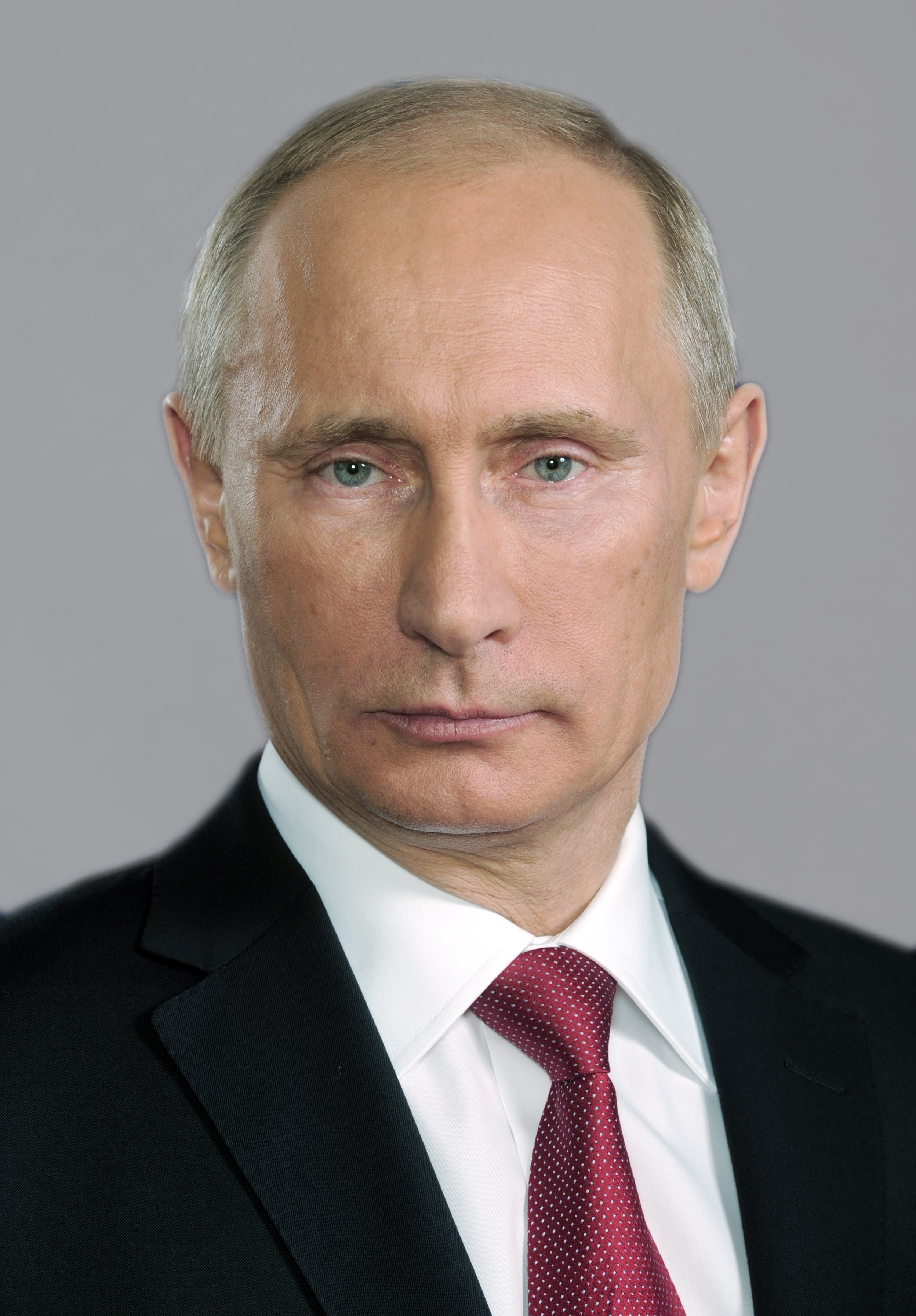
putin

Yes…I see the resemblance…

Those who don’t live in Eastern Europe, where memories of life under Communism during much of the last century linger, don’t fully comprehend the chilling effect across that region of what’s been happening under Vladimir Putin’s rule:

Our respite was short-lived in the end.
But after long hardships it had seemed
It would never draw to a close. Friends
Invoked poetry and feasted in gardens …

When I saw Tomas Venclovas new poem “Caligula at the Gates,”  in The Irish Times (the translator, Ellen Hinsey, had kindly dropped a note to let me know), I associated it with the Lithuanian poet’s autumn sojourn in Rome. Not so, he told me – it was, in fact, written in August, in Montenegro, one of his favorite haunts. And the subject is “Mr. Putin, of course.” Well, of course. The Roman touch is a common metonymy, he reminded me, though I shouldn’t have needed reminding. My head has been far away from current events – a luxury not afforded everyone in the world. I’ve always maintained that Tomas Venclova, who is one of the leading figures in literary Europe, and whose poetry has been published in more than twenty languages, and he should be better known in the United States, where he has been resident at Yale for years and years now (resident, that is, when he’s not on the road, as he is much of the time)…

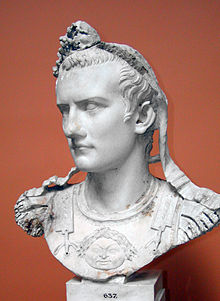
Caligula

They have the same scowl.

We ridiculed the words of the prophets
But, agelessly, they proved to be true …

This poem, in particular, has been already published in Poland, Germany, also in Russia. But you don’t have to be located in any particular part of the world to sense the following:

Blow out the candles and close the gates.

Beyond them – Caligula and the plague.

Read the whole thing here.


Writ on water: Regina Derieva in this week’s Times Literary Supplement

Share

derieva4I’ve written about the Russian poet Regina Derieva since her death last Decemberhere and here.  According to our mutual friend, the prominent Swedish author Bengt Jangfeldt, she was a poet “who in her best poems achieved that true metaphysical quality which, according to T.S. Eliot, is the alloy of thought and poetry at a very high temperature.” I have been fascinated by this utterly unique and uncompromising poetic voice since I learned of the poet’s existence, a few days after her death, from her husband. Now I am thrilled to announce that her papers have come to Stanford. I tell the story in this week’s Times Literary Supplement:

The Russian poet Regina Derieva was born on the Black Sea in Odessa, and enjoyed the shifting rhythms of the sea: “Water is the ideal apparel. However many times you get into it, it’s the same”. Her passion for water was shared by her epistolary friend, Joseph Brodsky, who grew up alongside St Petersburg’s canals and spent as much time as he could in Venice, where he is buried on the cemetery island of San Michele. Derieva, whom Brodsky called “a great poet”, viewed a very different landscape, however: from the age of six, she lived obscurely in Karaganda, Kazakhstan, “perhaps the most dismal corner of the former Soviet Union – once the centre of a vast prison camp universe, later just a gloomy industrial city”, according to the distinguished Lithuanian poet Tomas Venclova. For him, Derieva’s precise, epigrammatic poems limn “the concentration camp zone, where space is turned into emptiness, and time turned into disappearance”.

A few days after Derieva’s sudden death last December at the age of sixty-four, I received a letter from her husband, Alexander Deriev, and our ensuing correspondence eventually led to the Stanford Libraries’ acquisition of this astonishing poet’s archive. A single cardboard box postmarked Märsta, Sweden, is all that remains of a long and productive literary life, augmented by a few files of unpublished manuscripts, photographs, letters and drawings Deriev brought with him to California in his backpack.

There is a reason for the paucity of papers in a lifetime that should have left a mountain of them. Derieva’s life encompassed the upheavals of the past century, but she added an idiosyncratic twist: at each fork in the road, this outcast among outcasts made a choice – and that choice, or as often necessity, took her even farther from the pack.

I’ll have more about her in future posts – but meanwhile, please read the rest of the story in the TLS here.

Tomas Venclova: the future of the Balts and a “cowardly Leningrad hooligan”

Share
t.venclova

An optimist … but a particular kind of optimist…

My friend Ramūnas Katilius, who died on Sunday, is still much on my mind. Last March, the physicist and Soviet-era dissident had written to me of his concern about Russian incursions into Ukraine, but added, “Here in Lithuania, however, we feel rather secure, as we are in NATO and our borders are patrolled by international NATO forces, and NATO jet fighters controlling the air space – actually at this time its USA F15s that are doing the job, with six more fighters arriving to Shiauliai air base just today.”

That was some months ago, and I’m a pessimist. I’m on my way today to the Hoover Institution, where I will be live-tweeting a talk by the former president of Latvia, Vaira Vike-Freiberga, who will be giving a keynote address, “Against All Odds: The Path of the Baltic States to the EU and NATO,” in conjunction with the 3-day conference “War, Revolution, and Freedom: The Baltic Countries in the Twentieth Century.”

I’m a pessimist, but the Lithuanian poet Tomas Venclova, who is also a prominent Soviet-era dissident and human rights activist, is not. He was in the Russian press a few days ago here, and earlier in the Gazeta Wyborcza here. (Please make allowances for your humble and inadequate translator.)

“Putin has demonstrated that he is willing to do anything to intimidate others, but in fact he is more rational dictator than many others, and carefully calculates what he actually does, depending on the costs and benefits,” he said.

Can we expect bombs on Vilnius? Tomas thinks not. “I believe that Putin, in the depths of spirit, is a  cowardly Leningrad hooligan who won’t do that, because he knows that then he would die, and lose his children, his money, along with the rest of that nice life that he leads.”

“He goes crazy, and the world fears him, thinking he is a gentleman in the spirit of Hitler. But Putin is a more rational dictator. I do not like spreading defeatist sentiment – that the West is powerless and venal, and that Putin is doing what he pleases, and that here we have a third or fourth world war, which Putin, who is wiser and stronger, will win. This is stupid and facilitates Putin in his game.”

f15

An F15 … if, like me, you hadn’t a clue…

The journalist asked if the Russian regime finally gave up its “vegetarian diet,” using the poet Anna Akhmatova term to describe the Soviet Union’s less warlike moments. Said Tomas: “I wrote a poem about it. A little style in the style of Cavafy or Milosz … Yes, the monster is putting out his tentacles again, although I’m called a historical optimist – I think that everything will end well. Mr. Putin appears to be unpredictable, but he only uses this to enhance his alleged unpredictability.”

Tomas elucidated his philosophy to me in an email a few months ago, as I was fretting about the state of the world, as I am wont: “I’m a so-called historical optimist and do not think jihadists, Mr. Putin or whoever of that kind would prevail in the final account.” Then he defined his terms:  “Historical optimist can be defined as a person who says: ‘All will end well, but I will not see it.’ One Ukrainian writer defined himself as an apocalyptic optimist – a person who says: ‘All will end well, but nobody in the world will see it.'”

Now more than ever, “white on white”: Regina Derieva (1949-2013)

Share
Klt_Derieva R 21r

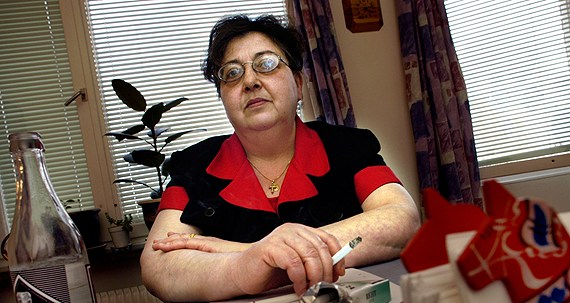
Far from home: a Russian in Sweden (Photo: Jurek Holzer / Svenska)

It’s exhilarating to discover a outstanding poet.  It’s also poignant when you first hear about the poet too late. I learned of the existence of Regina Derieva and her death on the same day, when I received a note from her husband, Alexander Deriev, telling me that the poet had passed away on December 11, in Sweden, her lasting home after emigration. She was two months shy of her 65th birthday.  A requiem mass for this prolific writer was celebrated at Katolska Kyrkogården Kapell earlier this week, on December 23; she was buried at Norra Begravningsplatsen, where this very Russian poet joined Sweden’s elite, including Alfred Nobel, playwright August Strindberg, Prime Minister Per Albin Hansson, and Nobel poet Nelly Sachs.  A tribute page for Derieva is here.
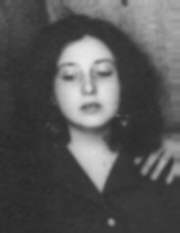
Young poet

Young poet

She is the author of twenty books of poems, prose, and essays. Her books in English include Inland Sea and Other PoemsIn Commemoration of MonumentInstructions for SilenceThe Last Island, and Alien Matter. Her work has also appeared in PoetryQuadrantModern Poetry in TranslationSalt, and St. Petersburg Review as well as many Russian magazines. Her work was championed and translated by Daniel Weissbort, another recent death (we wrote about him here and here and here). Said Valentina Polukhina, Weissbort’s widow, “Regina Derieva’s relationship with the world was severe and tender, truthful and tragic; it reflects her own tragic life as well as the tragedies of the country she was born in.”

She was born in Odessa on the Black Sea, in Ukraine now, part of the Soviet Union then. From 1965 until 1990 she lived and worked in Karaganda, Kazakhstan – I understand it’s the back end of the world, a tough little city of labor camps, coal mining, and now, in the post-Soviet era, industrial pollution. She graduated from university with majors in music and Russian philology and literature. Her poetry was not approved by the state, and she was denied publication and guaranteed KGB oversight.  Her work came to the attention of Joseph Brodsky, who first encouraged her to leave the Soviet Union.

The Swedish author Bengt Janfeldt (we wrote about him here and here) gave the eulogy this week – I don’t yet have an English translation. However, Bengt once said this of her: “Like BrodskyTsvetaeva, she is a very bitter poet. She took every thought to its logical conclusion.” He added, “I believe that Regina is quite an exceptional poet, an unexpected poet. Even though it is not a popular thing to say, she is a masculine poet in her style, her philosophical thought.”
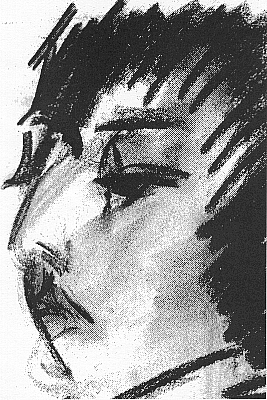
Drawing by Dennis Creffield

Drawing by Dennis Creffield

I bought Alien Matter online – the last copy in stock, and a bargain at four bucks.  Les Murray has a blurb on the back cover:  “Science teaches that eighty percent of the universe consists of dark matter, so called. Regina Derieva learned this same fact in a very hard school. She does not consent to it, though. She knows that the hurt truth in us points to a dimension whee, for example, victory is cleansed of battle. Her strict, economical poems never waver from that orientation.”

I’ve never met Les Murray, but in my background reading it appears the poet and I have many common friends. One of them, the Lithuanian poet Tomas Venclova, reviewed Alien Matter in The New Criterion:

Derieva is, first and foremost, a Christian poet, a worthy heir to the long line of metaphysical poets, be they English, French, or Russian. Without inflated rhetoric or didacticism, her poems reach the very core of the Christian experience—a serious and fearless attitude towards life, suffering, and death. The imagery and syntax of the Gospels and the Prophets is, for her, a natural element—just as apocalyptic presentiments and mystical hope form the axis of her world outlook. She perceives atheism as a foreign language. Still, the religious vocabulary in Derieva’s writing is often juxtaposed with everyday slang and the intonations of prisoners’ songs. This is particularly true of her early poems which might be described as a metaphysics of the totalitarian world, with their constant symbolism of walls, barbed wire, lead poisoning, and torture. They describe a region where “war is forever going on.” The poetic word (and the divine Word) in this inferno “annoys the powers that be because it lives.” One discerns here an echo of Akhmatova’s “Requiem” and of Brodsky’s poetry. Looking for her kin, a reader may also think of Eliot. …  Derieva’s later poetry strives for the inexpressible (“writing white on white”) even more strongly.
Buried in Sweden, here. (Photo Holger Ellgaard)

Buried in Sweden, here. (Photo Holger Ellgaard)

In a 1990 letter to her that Alexander Deriev shared with me, Joseph Brodsky wrote:

“There is a point – literally the point of view – which makes it all the same how one’s life  is going, whether it is happy or nightmarish (for a life has a very few options).  This point is over the life itself, over the literature, and it becomes accessible by a ladder, which has only sixteen steps (as in your poem titled “I Don’t Feel at Home Where I Am”).  For a poem is composed of other things than life, and the making of verses offers more choices than life does. And the closer one is to this point, the greater poet he, or she, is.

You, Regina, are indeed this case – a great poet.  For the poem titled “I Don’t Feel at Home…” is yours only by name, by excellence.  Authentic authorship of this poem is that of poetry itself, of freedom itself. This freedom is closer to you than your pen is to paper.  For a long time, I have not seen anything on a par with your poetry either among our fellow countrymen or among the English-speaking poets.  And I can guess more or less – I can hear – what it cost you to reach this point, the point over the life and over yourself. This is why the joy of reading your poetry is also heartbreaking.  In this poem, you exist in the plane where no one else exists, where no one else can help:  there are no kin and, a fortiori, there are no equal to you.”

Here’s the poem  he praised:

I don’t feel at home where I am,
or where I spend time, only where,
beyond counting, there’s freedom and calm,
that is, waves, that is, space where, when there,
you consist of pure freedom, which, seen,
turns the crowd, like a Gorgon, to stone,
to pebbles and sand…where life’s mean-
ing lies buried, that never let one
come within cannon shot yet.
From cloud-covered wells untold
pour color and light, a fête
of cupids and Ledas in gold.
That is, silk and honey and sheen.
that is, boon and quiver and call.
that is, all that lives to be free,
needing no words at all.

– Translated by Alan Shaw

Daniel Weissbort has a handful of them hereand the Poetry Foundation has his translation of “Days and the Transit System Grind Their Teeth” here.  An interesting post on a Russian literature blog here.
derieva4

Tomas Venclova speaks at the EU about his mother tongue and an “eccentric, capricious city.”

Share
t.venclova

Tomas in Vilnius

I met Tomas Venclova in his role as a poet, and it is primarily as a poet he is known.  However, he has a lesser-known role as a champion of Lithuanian culture, literature, and above all language. His work in that arena is as impressive as his poetry – and he had a chance to show it at the European Union yesterday and today, in Brussels and Luxembourg, where he was speaking.  I asked him if I could share some of his remarks, which he had sent to me. “Mais oui!” he replied.

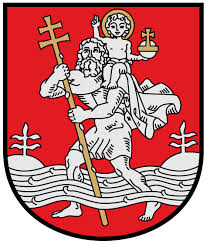
I’ve blogged so much about Vilnius and Lithuania – try here and here and here and here and here. But it’s a wonderful country and during my most recent visit, traveling from Warsaw to Vilnius, I gained a deeper appreciation of its wildness and mystery, of its old superstitions and myths, and the enchantment of  its jewel-box capital, aptly symbolized, on its coat of arms, by Saint Christopher wading through the mud of history.

The Lithuanian language has has kept many archaic features of ancient languages such as Sanskrit or Ancient Greek, and is spoken by about 3.2 million people. Yet, as Tomas pointed out, it’s in better shape today than Gaelic – “now, it is not just the official state language, but also the language of schools, universities, press and other media, as well as of very good theaters. Even before World War I, Lithuanian literature in Vilnius had built quite a reputation, though during the two interwar decades, when the city was annexed to Poland, it was often dismissed as inferior.”

Marvelous Vilnius, a Jerusalem claimed by two nations, the Lithuanians and the Poles, is “the perfect and sacred city which had been lost in the whirlwinds of history,” he said.  The city, which at times almost a religious space, “is often said to be mysterious and magic, eccentric and peculiar, the inspiration of myths and poetry. A particularly strong connection between the city and its surroundings is also very characteristic to it, allowing poets to see Vilnius as a pastoral place with ‘wild’ but idyllic nature intruding into the city center and adorning its baroque décor. … The text of Vilnius is composed of smaller texts, written in different languages, sometimes rich in code-switching, as for instance the seventeenth-century dramas, where Lithuanian and Belarussian cues are interwoven with Polish ones.

“But there is more than just linguistics involved here. Most varied cultural discourses overlay one another, letting competing myths sprout from the primeval mythological trunk. The national identity of many residents of Vilnius is similarly complicated: the same person can simultaneously belong to several cultures, which is why she or he sometimes stands aloof from the rest of society, suffering from an inner conflict.”

Two of the Polish language’s greatest poets were born and reared in Lithuania: Czesław Miłosz in the 20th century and Adam Mickiewicz in the 19th – and Miłosz was a close friend of the Lithuanian-language poet.  Venclova’s talk wasn’t short on his friend:

vilnius3“Czesław Miłosz, the greatest Vilnius poet of the twentieth century, also started his career in the interwar period … The life of Vilnius-Wilno (at that time, annexed to Poland) did not change much from Mickiewicz’s to Miłosz’s times; the city and its suburbs were populated by the same provincial Polish gentry, known as szlachta, the memories of the free masons’ lodges were still alive, and the great University, closed by Tsarist Russia in 1832, was reopened in 1918. Thus, the budding poet could readily feel he was entering a larger tradition. But for Miłosz, Vilnius was not a sanctuary to visit on a pilgrimage; nor was it a place asking for a particular literary genre to record its magnificence, namely, the poetic Baedeker, much exploited by the lesser poets of the time. Miłosz was not a regional but a European poet, as was Mickiewicz. According to him, the Mickiewicz tradition marked a revolt, a disagreement with reality as well as the prospect of exile. But for him, too, Vilnius-Wilno was a sacred city. Finding himself in exile in 1950s, he denied feeling nostalgic: he wanted to start anew and to build his poetic tower without looking back. Yet his texts soon acquired a double perspective: he would depict the city of his youth through the prism of his new French and American experiences, reviving the details of the past life with heartfelt love and skill, and contrapuntally comparing Vilnius to his new surroundings. He recreated the city spaces in the Proustian manner: his city is idealized because of his physical and temporal distance, but the picture is realistic enough and devoid of unnecessary sentimentality. In the cycle Miasto bez imienia (City without a Name) published in 1969, as well as in other poems, Milosz was approaching what he himself called apocatastasis, the revival of purified, primordial reality. He was greatly, probably mainly, interested in the language of that reality. In this, an obvious example and archetype for Milosz was Mickiewicz, but also the Lithuanian Konstantinas Sirvydas, the author of the seventeenth-century dictionary, to whom Miłosz devoted his beautiful poem ‘Philology.’

 “The peak of this poetry is manifest in the poems written after the restoration of Lithuania’s independence, when Miłosz could return to it. Nostalgia acquires a new shape: 52 years later, Vilnius looks like a city of the dead and Lithuania is some ‘other space’ described in metaphysical categories. At the same time, nothing has disappeared from the landscape of Vilnius: Miłosz sees the same ‘forests of brown gold’ in October, when the weather, again, is like wine, and the familiar hills and twisted baroque gables whisper that everything passes but are also witnesses to the permanence of the world, resurrected in human memory.

vilnius2“Miłosz and his companions were interested in the history and culture of the ethnic communities which had their own right to the city, namely, the Lithuanians, the Belarusians and the Jews. Together with a friend, he translated the works of the Lithuanian poet Kazys Boruta and wrote reviews of twentieth-century Lithuanian literature, his lifelong interest. In some ways he considered himself a Lithuanian who wrote in Polish; I remember how happy he was when Lithuanian translations of his poems were published before the Polish originals.”

“Miłosz possessed some knowledge of Lithuanian, just as Yeats possessed some knowledge of Gaelic,” he said – but that’s a bit of an overstatement. Miłosz was born among Lithuania’s Polish-speaking gentry, and didn’t bother to learn the language, even though he had a ethnically Lithuanian grandmother. Robert Hass said he began learning the language instead when Miłosz was in his 80s. Why bother so late?  “Because I think it might be the language of heaven,” he confessed to Hass.

vilniusDespite attempts to make Vilnius a truly national city, Tomas said, “the Lithuanian capital has remained what it had always been―complex and multidimensional, a continent in miniature. But this is a fragile condition, and we are responsible for it.”

“The creation of our continent and our civilization has always been a duty, an uncertainty, and a risk. I don’t know of any place in Europe that better lives up to this risk than Vilnius―a perpetual peripheral area and borderland, an eccentric, capricious, erratic city with a unique past that violates all the rules of logic and probability.”


Fame, I guess. My minute on Moscow TV.

Share
"Above all, love language" (Photo: Dylan Vaughan)

Tomas started it.

It’s a kind of fame I suppose, but centered thousands and thousands of miles from where I live. I’ve written about the Stanford Libraries exciting acquisition of a stunning treasure trove of drawings, poems, photographs, samizdat manuscripts and more from the Nobel poet Joseph Brodsky.  The story began in Vilnius, when I was visiting a friend of the eminent Lithuanian poet Tomas Venclova, the physicist Ramunas Katilius and his family. I told that story here.  The news was picked up by the Russian press – I wrote about that here.

Then a Russian TV station wanted to film the collection for its Moscow viewers.  See below.  Did I flunk my screen test?  My career in Slavic film-making – over before it began!  But working with the handsome young Russian videographer and photographer Grigory Rudko was great fun.  Enjoy the clips of Stanford, the Libraries, the Katilius Collection, and, if you can, Humble Moi.

Yes, yes, I know it’s in Russian. Please stop complaining.  You can read the whole story in English here – or in Russian, over here. And I’ll try to get that fractious look off my face in the screenshot below. (Postscript on 10/17: Fixed the screenshot! Enjoy my hand instead – it’s better than my scowl. Really.)