
Writer Ted Gioia to the Library of Congress: “Pay us!”

Share

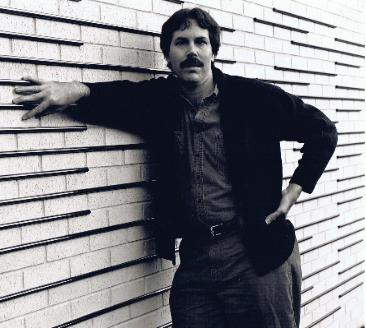
Ted Gioia in Austin, Texas, 2016. (Photo: Brenda Ladd)

Jazz scholar Ted Gioia has had enough. Today, he sent a letter to the Library of Congress that is making the rounds on the social media. Its message is simple: “Pay us!” (The letter is below.) ”

“I find it troubling that writers, musicians, and other members of the creative economy are often asked to work for free,” Ted wrote me. “No one would ever ask a car mechanic or plumber or the chef at the corner restaurant to provide unpaid labor. Why are writers treated this way? But it’s especially troubling when an institution such as the Library of Congress does this –and keeps on doing it over a period of years.”
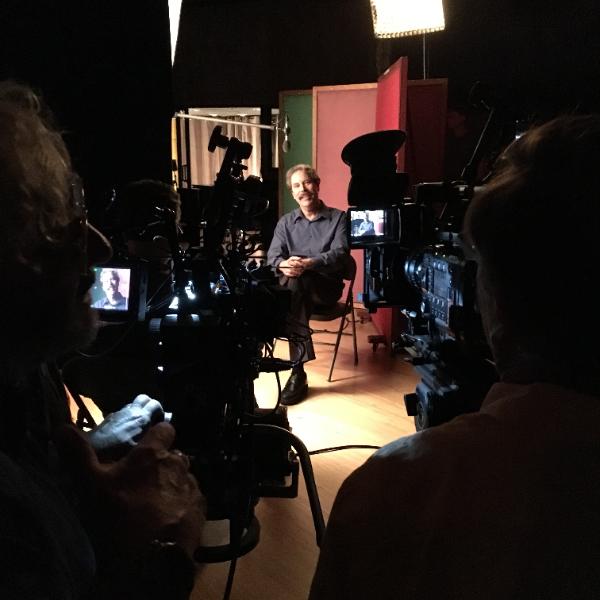
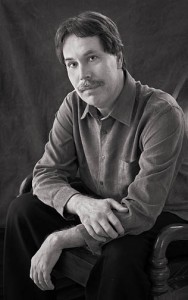
At a film shoot in 2016 (Photo: Terri Dien)

He wrote an article on the subject for The Daily Beast several years ago here, when he was first approached by the Library of Congress. “I recently got asked by an administrator at the Library of Congress to do unpaid labor for its website. Yes, I am familiar with people asking me to do time-consuming projects for free—I get at least one such request every day. But I was dumbfounded to get hit up by a federal agency with an annual budget of $750 million,” wrote the author of The History of Jazz and Jazz Standardsboth published by Oxford University Press.

“Yet clearly my experience was not a random event. A few days later, the Smithsonian launched its Transcription Center, which relies on unpaid volunteers to digitize 75,000 pages of documents. I applaud this effort to preserve our nation’s heritage, but I also am puzzled why our overseers in Washington, D.C. can’t pay minimum wage for this project. They wouldn’t ask people to work for free at other government agencies, so why are arts and culture projects the exception?”

  1. Only charities and non-profits should ask for unpaid workers to staff their operations or undertake time-consuming projects.
  2. If a creative professional wants to volunteer to help a for-profit business, that is permissible. But the professional initiates these relationships, and the business should not request or expect it.
  3. Businesses that ask creative professionals to work in exchange for “exposure” should be publicly named and shamed.
  4. When an organization built on free labor starts making money, it needs to start paying for work. The wealthy should never ask the poor to work for free.

“Pretty simple, no? All this is really just good manners and fair practice.”
Postscript on July 21: Hey, there’s more ways you’re getting swindled. See our follow-up here.
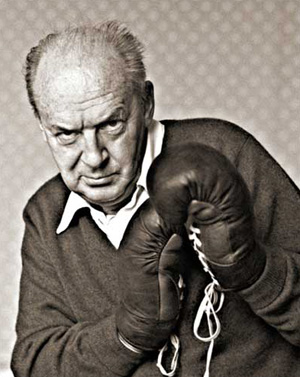
 

Is Nabokov’s Pnin the great refugee novel?

Share
tedgioia

Forget Lolita. Try Pnin.

How much 20th century literature was created by refugees? “Just judging by the Nobel laureates who were exiles from their homeland — a list that includes Thomas Mann, Elias Canetti, Aleksandr Solzhenitsyn, Isaac Bashevis Singer, Czesław Miłosz, and Joseph Brodsky — one might assume that themes of exile and homelessness permeated the modernist literary canon,” writes Ted Gioia. But not so. Many of them remained embedded in the their homeland, however, and did not produced a literature of displacement and the modern experience of exile, certainly not enough to make a large dent in the canon.

I would argue that Joseph Brodsky’s great theme, or one of them, was exile … but Ted is focusing on the novel, not poetry, and he homes in on one exception to the rule in “Did Vladimir Nabokov Write the Great Refugee Novel?” in The MillionsForget about LolitaIt’s Vladimir Nabokov and his novel Pnin.

From the article:

This Russian émigré would seem an unlikely candidate to focus on the plight of refugees. Nabokov left his homeland behind at the end of his teen years, was educated at the University of Cambridge, and was so successful at assimilation that he learned to write the Queen’s English better than the Queen — and her subjects too. If one is seeking a success story from the ranks of the displaced, Nabokov is the ideal candidate. Not only did he survive as a writer in his new language, but he became that greatest of rarities, an American literary lion who was also a bestseller.

nabokov

He fought his way to the top.

Yet Pnin arrived at bookstores before Nabokov had tasted these successes.  And even literary acclaim could never assuage the bitterness of displacement and family tragedy. Nabokov’s father was killed in 1922 by another Russian exile and his brother Sergei later died in a German concentration camp. Around the time of his father’s death, the young author’s engagement to Svetlana Siewert was broken off because of her parents’ concern that Nabokov could not earn enough to support their daughter.  His subsequent marriage to Véra Evseyevna Slonim brought with it subsequent risks because of her Jewish antecedents.  When Nabokov left for the in the U.S. aboard the SS Champlain on May 19, 1940, he had already spent two decades of nomadic existence as a man without a country. He was not coming to America to seek fame and fortune, but rather as a last desperate move to escape the Nazis, who would enter Paris in triumph a few days later.

These experiences set the tone, of bitterness mixed with nostalgia for a vanished world, that permeates the pages of Pnin. The main character, Timofey Pavlovich Pnin, is a comic figure on the campus of Waindell College. His old-fashioned continental ways and thick Russian accent are mimicked and ridiculed. His improvisations and mispronunciations turn familiar terms into extravagant variants — for example, his order of whisky and soda ends up sounding like “viscous and sawdust.”  When asking for the receipt in a restaurant, the best he can come up with is a request for the “quittance.”  His appearance, his gestures, and his general lack of awareness of American manners are fodder for campus gossip and mockery.

One very tiny quibble: It’s a myth that Nabokov mastered English – he never really had to. It was one of his cradle languages, in an upper-crust multilingual household (some even contend that it was in fact his first language).

Of course, we know what happened to Nabokov after he came to America. He came to Stanford. We wrote about that here. But first read the rest of Ted’s essay here.

Can songs heal? Okla Elliott and Ted Gioia think they help.

Share
okla-during

Finding solace where he can.

I met writer Okla Elliott online – well, on Facebook, to be precise.

I’m regularly daunted by his output, which he posts about regularly: His work has appeared in Harvard Review, The HillHuffington PostIndiana Review, The Literary ReviewNew Letters, Prairie Schooner, and he had a “notable essay” in Best American Essays 2015. His books include From the Crooked Timber (short fiction), The Cartographer’s Ink (poetry), The Doors You Mark Are Your Own (a coauthored novel), Blackbirds in September: Selected Shorter Poems of Jürgen Becker (translation), Bernie Sanders: The Essential Guide (nonfiction). The last book has gotten a lot of attention this year, for obvious reasons. Oh yes, and he’s currently working on Pope Francis: The Essential Guide (nonfiction, forthcoming), from an unusual p.o.v.: “I’m probably technically an agnostic, but I am a kind of Tolstoyan/Buddhist/existentialist/leftist-Catholic agnostic, so a theological and philosophical mutt.”

Then, suddenly, his intimidating output briefly plummeted to zero. He fell ill. … like, really near-death ill. A few weeks ago, he was hospitalized for a mysterious illness that turned out to be “diabetic acidosis.”

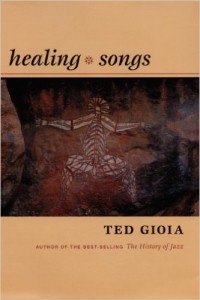
healingsongsNevertheless, he took some unusual medicine. He turned to Gregorian chant. As he explained in his Facebook status: “I listen to the monks of the Abbey of Notre Dame singing in Latin every night for an hour before I go to sleep. It’s oblique immersion research for my pope book; it’s relaxing and enchanting; and it’s just really pleasant. I recommend it highly. I kinda zone out and/or kinda meditate and/or think about random crap, letting my mind float wherever it will. Anyway…this is a pointless status, as are so many, but there you have it…Oh, and it’s streaming on Amazon Prime, so you can listen for free, if you have interest.” It’s on Amazon Prime here.
Yes, it really exists: Poland’s vending machine for Haruki Murakami’s books

Share

Jazz scholar Ted Gioia alerted me to this post on Facebook, and yes, it really exists: a Polish vending machine that sells books by Haruki Murakami. I understand they’re common in Japan, but here?  Soon?  Which writer would you feature in one?  Send me an email or comment in the section below.

vending.machine

Here’s something you didn’t know about Ezra Pound

Share
Pound

The soul of charity?

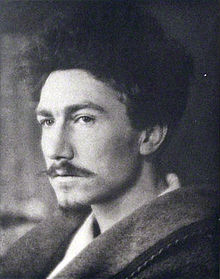
Ezra Pound ranks among the finest poets of his generation, but his greatest trait may have been his eye for talent in others.” That’s the opinion of Ted Gioia in The Daily Beast today, on the 100th anniversary of an unsolicited letter that changed the course of modern fiction.  The object of Pound’s benevolent eye was the unsuccessful young writer James Joyce.

Ted writes:

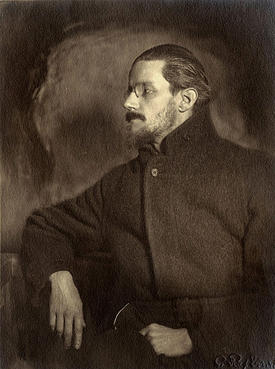
James Joyce, thirty years old, had faced rejection after rejection during the previous decade. He had completed his collection of short stories, Dubliners, eight years before Pound contacted him—but Joyce still hadn’t found a publisher willing to issue the book. Every time he came close to seeing this work in print, new objections and obstacles arose, and even Joyce’s offer to make changes and censor controversial passages failed to remove the roadblocks.

Joyce had even fewer prospects to publish his novel A Portrait of the Artist as a Young Man. In 1911, his frustration had grown so intense, Joyce threw the manuscript into a fire, and only the quick intervention of his sister Eileen, who pulled the pages out of the flames, prevented the loss of the novel. Joyce had made even less headway with Ulysses, a work he had been planning since 1906. His constant financial pressures and despair over his inability to publish his fiction sapped his determination to push ahead with the future masterpiece.

joyce

S.O.S.

During his late twenties, Joyce explored other ways of earning a living. He tried his hand at setting up a chain of movie theaters in Ireland, and worked at importing Irish tweed to Italy. His opportunities to write for hire declined, and most of his income came from teaching English at Berlitz schools. Joyce worked tirelessly at this humble job, but still needed to rely on constant financial support from his brother to pay his bills.

At this low point, James Joyce received a letter from a total stranger.

“Dear Sir,” it began, “Mr. Yeats has been speaking to me of your writing.” Ezra Pound offered to make useful connections for Joyce, and find places where he could publish his writings. “This is the first time I have written to any one outside of my own circle of acquaintance (save in the case of French authors),” Pound admitted, but he was quick to add: “[I] don’t in the least know that I can be of any use to you—or use to me.”

And then Pound performed miracles.  “Ezra was the most generous writer I have ever known,” Ernest Hemingway said. He estimated that Pound devoted about a fifth of his time on his own writing, and the rest to advancing the careers of other artists. Who knew?

Read the whole thing here.  And it’s nice to know something nice about Ezra Pound among all the nasty things that get said, because, well, it’s Christmas.

Two Gioias for the price of one: on family, religion, the arts … and Stanford, too

Share
gioia

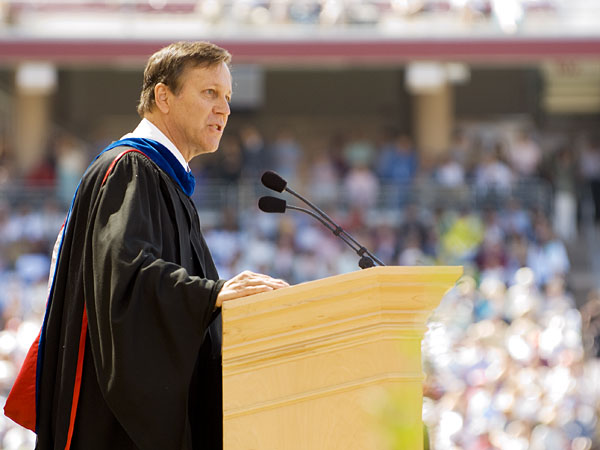
Tireless advocate of the arts, Dana Gioia (Photo L.A. Cicero)

Dana and Ted Gioia are two of my favorite people – but I haven’t had the opportunity to see the jazz scholar (Ted) and the poet (Dana) together.

So journalist Andrew Sullivan brought them together for me, or rather brought my attention to those who have brought them together.  Sullivan, who has been a friend of the Book Haven in the past, mentioned this quote from Ted in his recent post “Finding Sustenance for the Soul”:

“Those committed to a spiritual life understand what popular culture hasn’t yet learned (or is afraid to admit)—namely that the hunger of the soul cannot be satiated with sugary sweets and shallow entertainments.  Somewhere along the way, many people got the idea that the religious sphere and artistic sphere are at odds with each other.  I believe the opposite is true.  Both the arts and spiritual discernment broaden our perspectives and enrich our lives, and in very similar ways.

Ted_Gioia

All that jazz from Ted Gioia

“This was the single greatest lesson I learned from my years studying philosophy at Oxford—namely that the pervasive empiricism of modern life, which only accepts what it sees and quantifies, is ultimately a brutish philosophy.  The most important things in life cannot be seen with the eyes or measured with charts and numbers.  They are love, trust, faith, friendship, forgiveness, charity, hope, the soul, and the creative impulse.  You cannot live as a human without these, although you can’t even prove scientifically that any one of them actually exists.  They are metaphysical (a word used as an insult by my philosophy teachers, but their scorn was mistaken, in my opinion). To embrace these crucial aspects of our life, we must turn to art and religion. This hasn’t changed in the last two thousand years.  Nor will it change in the next two thousand years.”

Now I will bring them together, too, in this post.  You can read the rest of their interview on faith, family, the arts, the humanities, and, yes, Stanford (including its jazz), “The Arts—Agents of Change and Source of Enchantment,” here.