

More on Mo: an “officially sanctioned artist” or merely a cautious kinda guy?

Share

"Don't speak"

As may be gathered from yesterday’s post, I’d never heard of Mo Yan before yesterday’s award.  While everyone today is laughing about the Onion satires that suggest that the Nobel peace prize has been awarded to the European Union (thank heavens it wasn’t the economics prize, as a friend noted), I’m still puzzling on Mo Yan, whose pen name is translated as “don’t speak.”

Here’s what Ted Gioia, whose weekly “Year of Magical Reading” spotlights the magical realism genre (it’s here),  said this about him on my Facebook page: “Not a very inspired choice. If the Nobel judges wanted to turn to Asia, Murakami was the obvious candidate – and his work is more skilled, creative and influential than Mo Yan’s.
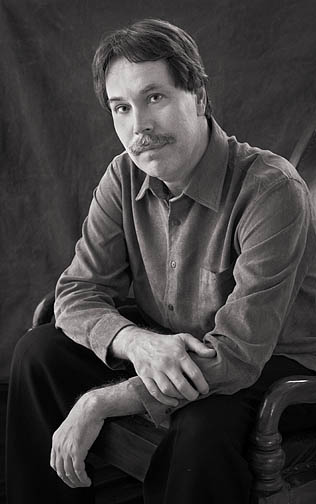
Ted, expert on magic

“He is presented as a brave critic of Chinese repression, but his works are actually quite cautious and seem self-censored to me. He aims for parody and humor, and is sometimes amusing, but I can’t see him as a Nobel laureate – unless the judges were determined to pick a Chinese author this year.”

Why not Bei Dao then … oh that’s right.  They won’t do poetry two years in a row.  Poetry must be kept in its place, after all.

David Ulin, my former editor at the Los Angeles Times Book Review has a piece in the L.A. Times today, spelling out what Ted had summarized:

Mo is what some critics deride as an officially sanctioned artist, a vice chairman of the China Writers’ Assn., celebrated by the establishment. Although he has been called “one of the most famous, oft-banned and widely pirated of all Chinese writers,” he recently was one of “100 writers and artists” who participated in a tribute to Mao Tse-tung. In 2009, he refused to sit on a panel at the Frankfurt Book Fair with dissident writers Dai Qing and Bei Ling, and he has avoided making any public statements about Liu [Xiaobo].

At the same time, his work has often hit on touchy subjects, such as the role of women in Chinese society and the Communist Party’s one-child rule. His 11th novel, Frog, published in 2009 and not yet available in the United States [we published an excerpt here – B.H.], involves a midwife confronted by the forced sterilizations and late-term abortions demanded by the party’s policy.
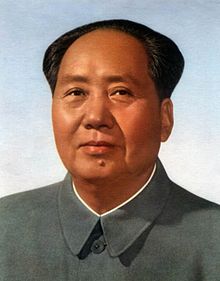
I'll skip the party, thx!

Mo’s detractors are forceful. “For him to win this award, it’s not a victory for literature; it is a victory for the Communist Party,” raged Yu Jui, a writer and democracy activist, in a blog post.
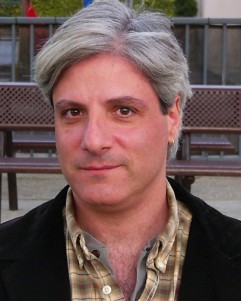
David of L.A.T.

The article launches into something of a defense of new Nobelist, quoting his words in 2009:  “A writer should express criticism and indignation at the dark side of society and the ugliness of human nature,” he said then, “but we should not use one uniform expression. Some may want to shout on the street, but we should tolerate those who hide in their rooms and use literature to voice their opinions.”

Meanwhile, John Freeman‘s interview with the Chinese author at the London Book Fair this week is included in Granta, which seems to be the go-to place for Mo Yan this month.  The Q&A is here.

Am I the only one wondering today when they’re going to let their other recent Nobel writer (though a peace, not lit, prizewinner)  – Liu Xiaobo – out of prison?  He still has the distinction of being the second person ever to be denied the right to have a representative pick up his prize for him.
 

We’re surprised, he’s scared: Mo Yan wins this year’s Nobel

Share

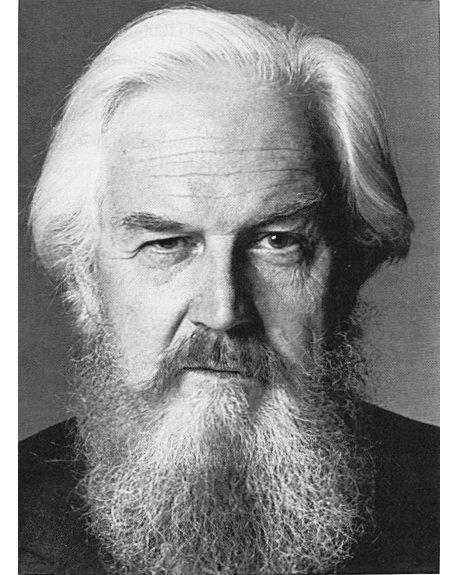
He doesn't look scared, anyway.

By now, everyone knows that China’s Mo Yan is the surprise winner of the Nobel Prize for Literature.  “Surprise,” because he made not even a ripple on Ladbroke’s long betting list, or in any conversations I’ve heard.   Not so much a surprise, however, given that the Swedes were bound to atone for giving last year’s award to their worthy countryman Tomas Tranströmer, by giving it this year to an African or Asian, or anyone far, far away from Stockholm.  But wasn’t the poet Bei Dao a perennial nominee?  The Nobel judges seem disinclined to give to poets two years in a row as well.  At any rate, Mo Yan was “overjoyed and scared” at the news.

Most of us are strangers to his writing, I suspect.  So  here is Ted Gioia‘s review of the author’s Republic of Wine a few years back.

And for his stories, here’s an excerpt from Frogs:

I have to admit that, though I did not make it public, I was personally opposed to my Aunty’s marriage plans. My father, my brothers and their wives shared my feelings. It simply wasn’t a good match in our view. Ever since we were small we’d looked forward to seeing Aunty find a husband. Her relationship with Wang Xiaoti had brought immense glory to the family, only to end ingloriously. Yang Lin was next, and while not nearly the ideal match that Wang would have provided, he was, after all, an official, which made him a passable candidate for marriage. Hell, she could have married Qin He, who was obsessed with her, and be better off than with Hao Dashou . . . we were by then assuming she’d wind up an old maid, and had made appropriate plans. We’d even discussed who would be her caregiver when she reached old age. But then, with no prior indication, she’d married Hao Dashou. Little Lion and I were living in Beijing then, and when we heard the news, we could hardly believe our ears. Once the preposterous reality set in, we were overcome by sadness.

Read the rest at Granta here.

Ted Gioia’s “Year of Magical Reading” looks at Robertson Davies

Share

Jazz baby

Jazz scholar (and lit critic)  Ted Gioia has been celebrating “A Year of Magical Reading” – ranging from Salman Rushdie‘s Midnight’s Children to Lewis Carroll‘s Alice in Wonderland.  Until today, I hadn’t read a word of it.  I’m not terrifically fond of magic realism, as a genre – but I am terribly fond of Robertson Davies (in fact, we had a blog birthday card for him here).

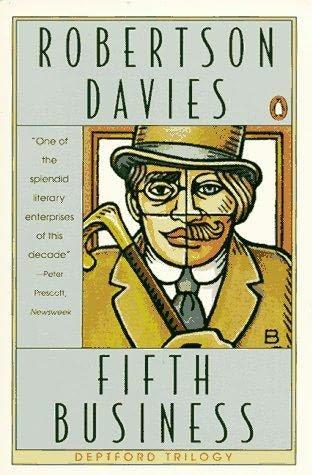
Today, Ted is discussing Davies’s Fifth Business.  The author himself discussed the book in 1989 with Elisabeth Sifton during his  Paris Review interview. He described  the book’s genesis this way:

I did not write Fifth Business until ten years had passed since I first became aware of the idea that lay behind it: it was simply a scene that kept occurring in my mind, which was of two boys on a village street on a winter night—I knew from the look of the atmosphere that it must be just around Christmastime—and one boy threw a snowball at the other boy. Well, that was all there was to it, but it came so often and was so insistent that I had to ask myself, Why is that boy doing that and what is behind this and what is going on? Then the story emerged quite rapidly. …

Well, you see, I hesitate to talk about this, because it sounds mystical and perhaps rather absurd, but I assure you it is not: the minute I recognized that the picture meant something I should pay attention to, the whole thing began to come to life, and I knew who the boys were and I knew what the situation was and I quickly became aware of what lay behind it. Some of it had to be invented, some of it had to be fetched up and rejected—a great deal is rejected in the course of such work—but it was all there as soon as I began to work. And when I began writing, I wrote from the beginning to the end as I always do. I know that many writers—Joyce Cary for instance—compose the principal scenes of a novel before putting the connective work around it; other people work backward and do all sort of interesting things, but I don’t. I just go from start to finish, and that’s the first draft.

Ted laments the recent neglect of the Davies, who died in 1995 at age 82, and attributes it in part to the tendency to pigeonhole him as a Canadian writer: “Davies is too large a talent to be pigeonholed as a regionalist, and his name is not out of place alongside those of his contemporaries Saul Bellow, Graham Greene, Albert Camus and Walker Percy.”  Interestingly, then, Bellow’s name is one of the names that comes up in the Paris Review interview.

Sifton asked: “Saul Bellow once said—and was roundly criticized for it— that American writers, presumably excepting himself, fail to grapple with what he called the central human enterprise. Grappling with the essential human enterprise may be a numbing matter, but what—in the end—is the aim of the novelist?”  Davies, apparently, did not think much of American lit – at least the variety he read in the New Yorker: “I admire their subtlety—but I get so sick of it. I wish they would deal with larger themes.”

I grew up in the only part of the continental U.S. where you have to go south to get into Canada, and am a quarter Canadian – yet Davies’s description of the Canadian psyche hit me with a jolt of immediate recognition:  The problem is, he wrote, we view Canada as a queer mix midway between the U.S. and Canada.  Its mindset is instead closer to the Nordic countries – it is a nation shaped by its northernness, and by winter.

Something I didn’t know, however, until Ted told me: Davies’s epigraph from the novel, attributed to  Danish scholar Tho. Overskou, is a literary hoax, and so is the epigraph that provides a thematic through-line for the novel’s protagonist:  “Those roles which, being neither those of Hero nor Heroine, Confidante nor Villain, but which were nonetheless essential to bring about the Recognition or the dénouement, were called the Fifth Business in drama and opera companies.”

It fooled me, and it fooled many.  Ted writes:  “Many have taken this at face value, and anyone researching ‘fifth business’ on the Internet today, will be reassured by dozens of web sites that it is an old theatrical term.  But Davies invented it for his story—not an inappropriate gesture for a work focused on the ways in which myths are created and disseminated.” And not a surprising gesture for a well-known literary prankster.

By the way, Ted’s brand new book,The Jazz Standards: A Guide to the Repertoireis already getting a lot of buzz.


René Girard’s Sacrifice and Dana’s daily reads

Share

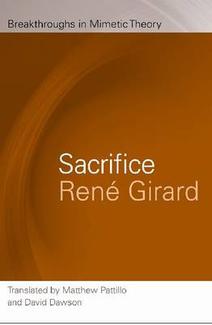
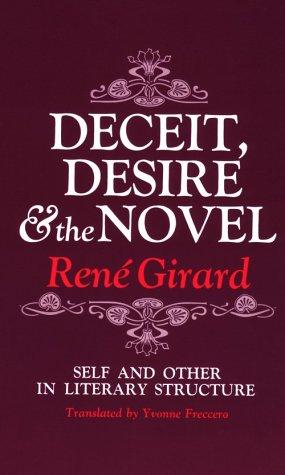
When I ran across Bill Johnsen at the 50th anniversary fête for the seminal Deceit, Desire and the Novel a few months back he gave me three copies of René Girard‘s newest volume, a small, elegant paperback called Sacrifice.  One was for me, he said.

“Who are the other two for?” I asked.  “Two famous people you know,” said the Michigan State University professor.   Did he have anyone in mind?  “Yes, Dana Gioia,” he said.

The turnabout was sweet.  In 2007, when Dana was invited to be a commencement speaker at Stanford, Dana was knocked for not being famous enough.  Gioia acknowledged some students’ disappointment: “A few students were especially concerned that I lacked celebrity status. It seemed I wasn’t famous enough. I couldn’t agree more,” he said. “As I have often told my wife and children, ‘I’m simply not famous enough.'”

I sent him the book with that comment, and added a poem by Tomas Venclova and another little-known one by Rainer Maria Rilke, in the James Leishman translation.

Famous

Famous

Bill gift was a nice followup to an earlier event: One of the joys of life is being to introduce your favorite people to each other – so I was honored to have the chance to invite Dana to Palo Alto to meet René some months back.  I hoped the meeting would be fruitful.

And it was, I learned, in the followup that followed the followup.  A few minutes ago, jazz scholar Ted Gioia‘s Facebook page offered a link about his big bro.  From Evan R. Goldstein Q&A in The Chronicle of Higher Education, “My Daily Read: Dana Gioia“:

Q: What books have you recently read?  Do they stand out?

Not famous enough in 2007 (Photo: L.A. Cicero)

A. I still read a great many books. I travel almost every week, so I have long stretches of quiet time on planes and in hotel rooms. I’m also a terrible insomniac so I read for hours late at night.  At the moment I’m reading Meryle Secrest’s Modigliani as well as Peter Humfrey’s Painting in Renaissance Venice, which must seem like an odd pair chronologically.  I’ve also been reading through René Girard’s books on mimetic theory and just finished Sacrifice, which deals with religious violence in the classical Vedic texts. I also enjoyed Kevin Starr’s survey of  California historians, Clio on the Coast.

During my visit to his Santa Rosa home last summer, we had discussed some of the same themes that emerged in the Q&A.  Here’s what I wrote then:

“Dana, Mary, and I sipped wine on the balcony overlooking the valley and the hills.  We talked about the increasing commercialization of society, where marketed celebrities famous for being famous in turn market corporate brands for us to buy — how to keep Guess jeans, Netflix, Jimmy Choo shoes, and apps from monopolizing our remaining memory banks and our lives?  We discussed the crazily increasing speed of 21st century communications and life.  He liked, he said, living in a place where impressions are taken in and thought occurs no faster than the speed of walking.”

He’s clearly still of the same mind – and he dismisses the celebrity phenomenon he had decried in 2010 (and been denied in 2007):

Q. Do you use Twitter?  If so, whom do you follow?

A. I  never use Twitter. In fact, I am deeply suspicious of the massive communications overload that the media obsesses over and glorifies. So much of this activity is just covert advertising for products and celebrities. The objective is to capture and commercialize every moment of people’s time. What we really need is more quiet and less phony connectivity.

Dana’s reading is far more disciplined than my own.  My attention, admittedly, has been blown to bits by the world wide web.  Meanwhile, it’s good to know Dana and I have something in common:  I am currently making my way through René’s classic Deceit, Desire and the Novel, with plans to hit Things Hidden Since the Foundation of the World next.

When Zbyszek met Kasia…

Share

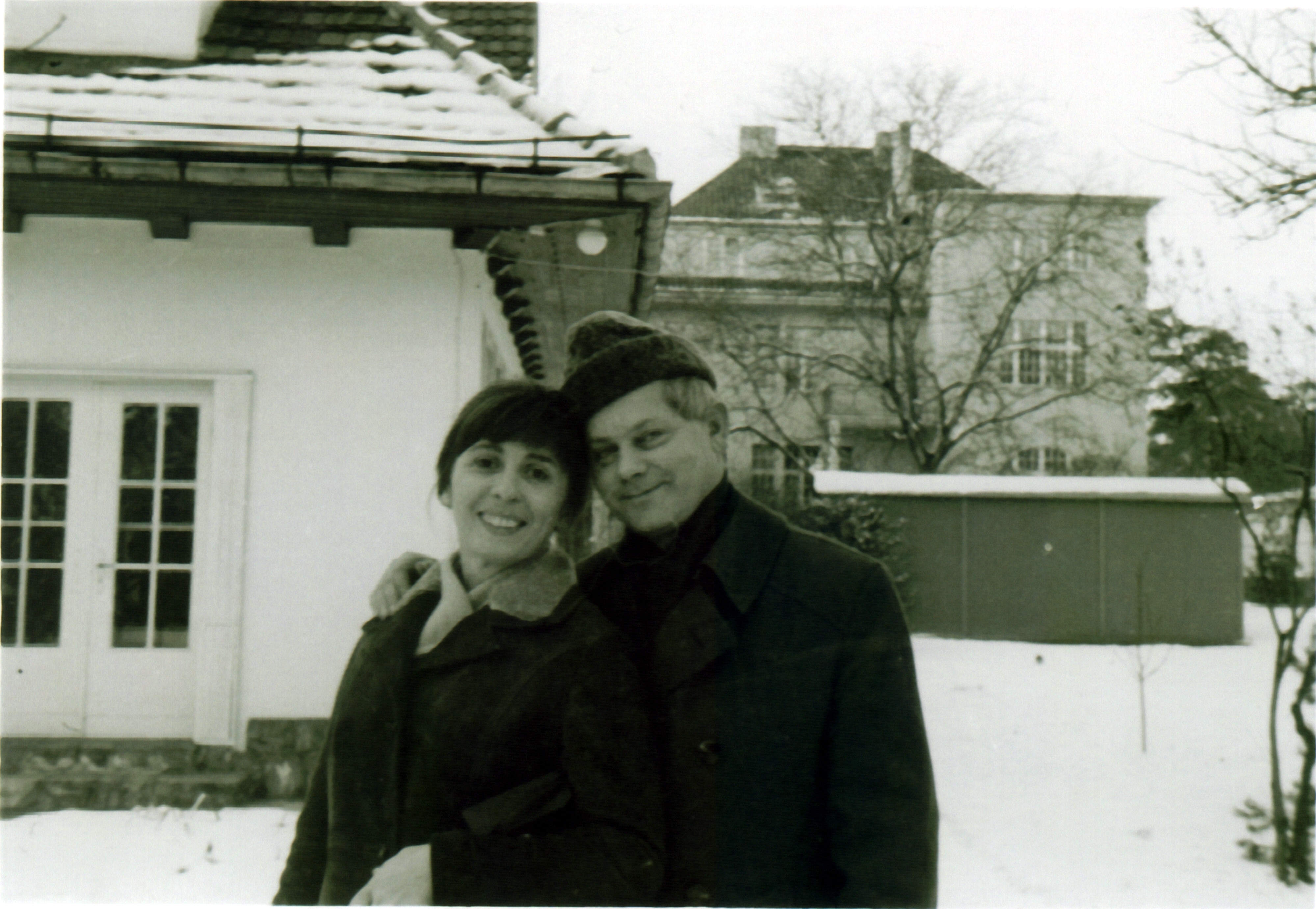
Zbigniew and Katarzyna Herbert ... the happy times (Photo: The Herbert Estate)

In December 2008, I penned these words in the Times Literary Supplement:

Katarzyna Dzieduszycka was sitting at her desk at Warsaw’s Association of Polish Writers and Artists in 1956 when a quiet, unassuming young man sat down in a nearby chair, waiting for an appointment. She noticed that he seemed as shy as she was. When he was finally called into his interview, the twenty seven-year-old secretary whispered to her co-worker. “Who was that?” “He’s going to be our new director!”, the colleague replied.

Zbigniew Herbert, the young man, was not, in fact, particularly young – he was thirty-two years old. Nor was he a composer. But he definitely needed a job; and he got it. The poet was made the head of the Association of Polish Composers. Katarzyna Dzieduszycka, who eventually became Mrs Herbert, now lives in a pleasant, light-filled apartment in Warsaw, next to the verdant enclave of Morskie Park. (It wasn’t posh when the Herberts moved in, but the post-Communist years have been kind to it.) …

The relationship evolved in a cafeteria, Mrs Herbert remembered. As Herbert spoke about poetry and recited poems to her, they drank Egmi Bikower, a ubiquitous Hungarian white wine, the only wine readily available in postwar Poland. To the Polish Galatea, it might as well have been the nectar of the gods. “I wasn’t the first or last one who fell in love with him”, she admitted. “Courtship is nice, but it didn’t last forever, because Herbert treated his life seriously. The time of reciting poetry and flirting soon finished. His first priority was writing.”

Horror!  The column inspired this reply a few days later, which was forwarded to me by my editor:

Dear Sir,

This may appear a piddling point, but the name of “Egmi Bikower”, the “ubiquitous Hungarian white wine” which Zbigniew Herbert and Katarzyna Dzieduszycka drank during their courtship (Commentary, 12th December), bears a more than passing phonetic resemblance to Egri Bikaver, the famous and delicious “Bulls’ Blood from Eger”. Legend has it that the Turks withdrew from a siege of Eger when they heard that the red stains on the beards of the inhabitants were the result of bulls’blood being their favourite tipple – an effect hardly likely to be produced by white wine.

Yours faithfully,
Anthony Ridge

Importing the good stuff (Photo: My Droid)

I had made every effort to make sure that spelling of the wine was correct – I had Madame Herbert write it in my notebook with her own hand.  Somewhere, I still have the notebook with her carefully printed words.  Moreover, I have her words on a digital recording.

But I should have known better – I, the daughter of the Magyars, who had sipped bull’s blood at my grandfather’s knee.  The Polish “w” is pronounced as “v.” And the rest was either pure error or a Polish variant I hadn’t recognized in time. Imagine the shame.

What, you may ask, does this have to do with the attractive man in the photo at left?

Ted Gioia had sent me these wise words on my Facebook page: “Try to find time to visit Wierzynek Restaurant while in Kraków. It’s been providing fine cuisine since 1364, and is one of my favorite European eateries.”

I made the trek to the restaurant (the fare was somewhat more limited for vegetarians … well, not just “somewhat”) and instead I found Davide, who gave me a tour of the historic restaurant, and a tour of its gift shop as well.

And what should he show me?  That’s right.  A bottle of Egri Bikaver.  In Poland.  Which makes it even more likely it was in the company cafeteria in 1956.

Feeding folks since 1364

Poland recognizes its limitations, the connoisseur told me – and one of them is that it doesn’t produce great wine.  So they are happy to import the good stuff from their neighbors.  Hungarians and Poles have always enjoyed an especial affinity – Czesław Miłosz thought so as well.

The wine he showed me, however, is not cheap plonk from a company cafeteria, nor is it white wine.  And it was, alas, too expensive, and too heavy, to haul back in my bulging suitcases.