
No more billets-doux, no more epistolary novels, no more Collected Letters

Share

Write a letter lately?  I haven’t either.

According to a story in the Associated Press, nobody else is, either:

For the typical American household these days, nearly two months will pass before a personal letter shows up.

The avalanche of advertising still arrives, of course, along with magazines and catalogs. But personal letters — as well as the majority of bill payments — have largely been replaced by email, Twitter, Facebook and the like.

“In the future old ‘love letters’ may not be found in boxes in the attic but rather circulating through the Internet, if people care to look for them,” said Webster Newbold, a professor of English at Ball State University in Muncie, Ind.

Well, not so.  We’re not likely to be able to retrieve them.  Such missives are likely to be harbored in defunct email systems on old computers.  I save a bunch seven-inch floppies with interviews on them, in hopes I’ll find a computer that can decode them.  Nothing like hard copies, even if I can’t lay my hands on them readily.

Voltaire wrote about 15,000 letters during his 83-year life.  In more recent times, C.S. Lewis is the patron saint of pen pals. His Collected Letters amount to thousands and thousands of pages. I reviewed the 1,800+ page third volume for the Washington Post here.

Lewis wrote everyone, including T.S. Eliot, the sci-fi maestro Arthur C. Clarke, and the American writer Robert Penn Warren.  “Other letters were from cranks, whiners and down-and-out charity cases; he answered them all,” I wrote.

"...the oar to a galley slave..."

“The pen has become to me what the oar is to a galley slave,” he wrote of the disciplined torture of writing letters for hours every day. He complained about the deterioration of his handwriting, the rheumatism in his right hand and the winter cold numbing his fingers. In the era of the ballpoint, he used a nib pen dipped in ink every four or five words.
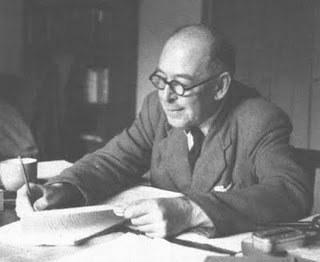
Who, in the future, will have volumes of Collected that will be thicker than a slim paperback?

Beyond the prospect of no Collecteds, whole novels have been held together by letters – Laclos‘s Liaisons Dangereuses, for example, or, since we’ve mentioned Lewis, his  Screwtape Letters, or his Letters to Malcolm.  Or his friend Dorothy L. Sayers‘ mystery novel-in-letters Documents in the Case.  Or  Johann Wolfgang von Goethe‘s Sorrows of Young Werther and Friedrich Hölderlin‘s Hyperion.

Beyond even that, letters provide pivotal revelations in Jane Austen‘s Pride and Prejudice.  Or in almost anything by Henry James.  The sudden realization, the catharsis, the flushed cheek…

Vladimir Nabokov‘s Lolita begins with a letter – the letter that tells of the death, in childbirth, of the title character at age 16.  If people read it more carefully, they would have a different view of the “sexy” novel.  (Also if they read between the lines of Humbert Humbert’s self-serving pronouncements.  But without early training on all those day-after-Christmas letters and learning to write the evasive “thank yous,” how would we learn the most subtle nuances of writing at all?)

The very act of letter-writing consumed hours and hours of people’s time.  At Stanford, a whole project, Mapping the Republic of Letters, has evolved from the effort to track the to-and-fro correspondence during the time of the Enlightenment.  It turns out that we can map coteries, friendships, cultural epicenters, and famous journeys through letters.

AP again:

The loss to what people in the future know about us today may be incalculable.

In earlier times the “art” of letter writing was formally taught, explained Newbold.

“Letters were the prime medium of communication among individuals and even important in communities as letters were shared, read aloud and published,” he said. “Letters did the cultural work that academic journals, book reviews, magazines, legal documents, business memos, diplomatic cables, etc. do now. They were also obviously important in more intimate senses, among family, close friends, lovers, and suitors in initiating and preserving personal relationships and holding things together when distance was a real and unsurmountable obstacle.” …

But Aaron Sachs, a professor of American Studies and History at Cornell University, said, “One of the ironies for me is that everyone talks about electronic media bringing people closer together, and I think this is a way we wind up more separate. We don’t have the intimacy that we have when we go to the attic and read grandma’s letters.”

“Part of the reason I like being a historian is the sensory experience we have when dealing with old documents” and letters, he said. “Sometimes, when people ask me what I do, I say I read other people’s mail.”
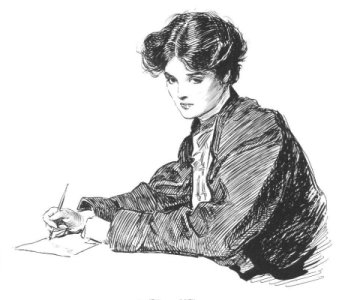
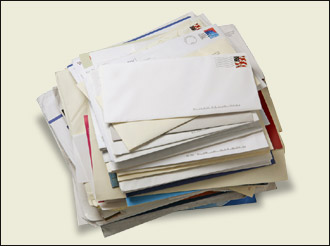
What about all those books that describes when a pile of a love letters are ceremoniously burned?  Or returned to the beloved in a ribbon-tied packet after a break-up?  Not quite the same as pressing a “delete” button, is it?  However, that sort of rite-of-passage has been on the downswing since the invention of the xerox machine.

“Letters mingle souls,” as John Donne wrote, but in a wholly different way than what is commonplace on the worldwide web.  Despite my sentimentality, however, I, for one, am not sure I’d trade pages on cream-colored vellum for the zip and brevity and immediacy of quickly typed “Sure. Will do.” on my Mac.

 

W.H. Auden’s prose, and why art matters

Share

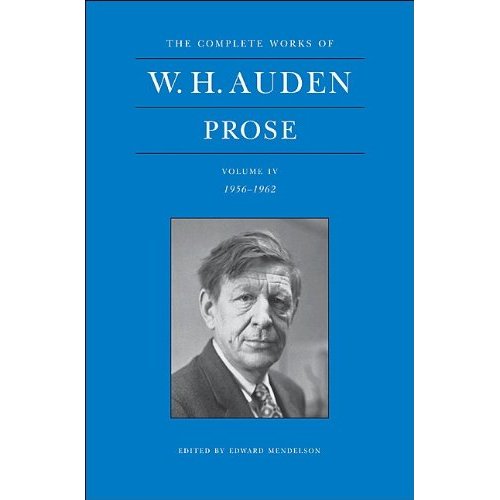
If you haven’t already read it, I recommend Michael Wood‘s “I Really Mean Like” in one of last summer’s issues of the London Review of Books. He discusses The Complete Works of W.H. Auden: Prose Vol. IV, 1956-62, edited by Edward Mendelson.

From Wood’s review:

Marianne Moore says of poetry that she too dislikes it; Eliot tells us that it doesn’t matter; Auden says it makes nothing happen. In fact, none of these propositions represents anything like the whole story for any of these poets, but there’s an element of affectation here all the same, an unseemly wooing of the philistine. Neither Mallarmé nor Valéry ever expressed any interest in a muse who didn’t bother to read poetry – they knew that the world was already full of people saying that it didn’t matter, and saw no reason to join the chorus, even out of strategy.

I wonder if it’s the difference between the French and the English – it’s so easy to sound hysterical in English. In French and Italian,  it doesn’t seem to matter.  Perhaps they are hysterical all the time, so it doesn’t count.

I like this:

… when Auden wants to evoke ‘a parable of agape’, or ‘Holy Love’, he talks about Bertie Wooster’s relation to Jeeves. Bertie in his blithering is a comic model of humility, and his reward is Jeeves’s immaculate and unfailing allegiance. There is also an appealing moment when Auden, suggesting that popular art is dead and that ‘the only art today is “highbrow”,’ suddenly remembers he has to make an exception: ‘aside from a few comedians’. He says he learned long ago that ‘poetry does not have to be great or even serious to be good, and that one does not have to be ashamed of moods in which one feels no desire whatsoever to read The Divine Comedy.’

Forget it.

Note to self:  Go back to The Dyer’s Hand, although Auden makes one weep with envy, not least of all for his aphorisms, like this one:

We enjoy caricatures of our friends because we do not want to think of their changing, above all, of their dying; we enjoy caricatures of our enemies because we do not want to consider the possibility of their having a change of heart so that we would have to forgive them.

Or these: “he says that ‘every good poem is very nearly a Utopia,’ and ‘every beautiful poem presents an analogy to the forgiveness of sins.’ And again, shifting to music but not exactly leaving the other arts behind: ‘Every high C accurately struck demolishes the theory that we are the irresponsible puppets of fate or chance.’”

Can poetry matter?  Wood answers:  “Art can’t redeem the world, and that is why we must be modest about it. But it can show us what redemption would look like, and this is why it matters.”

The most beautiful words in the English language. And the nominations are…

Share

For Frank in Philly.

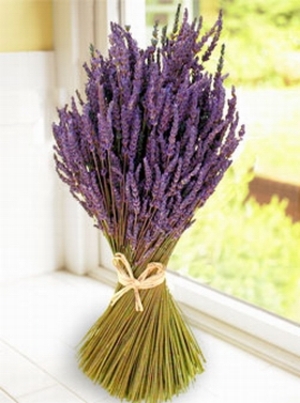
“I’ve always been fond of lavender,” said Frank Wilson of Books Inq.  That was his nomination for the most beautiful word in the English language.  (Earlier nominations here.)

Others chimed in on my Facebook page:

Agustín Maes voted for murmur, also, florid.

Artur Sebastian Rosman was full of ideas:  noctilucent, donut, iris.  Donut? Doesn’t he mean doughnuts, at least?  (Artur, get something to eat.)  He also favored  “TSE words like chthonic.”  TSE is T.S. Eliot – of haruspicate fame (which always sounds like a man clearing his throat, not prophesying). “Filiation is also a lovely word,” Artur added.

“My favorite word of all time and by far the liveliest in any language is…. vivificantem.”  Well, as he noticed, that’s not really English; it’s Latin.  So it shouldn’t count.

Marianne Bacon quarreled with Deshoda, the blog that started the contest:  “I think that list on Deshoda (whatever that is) is a bit silly. How about Chestertonian words, or Jack Lewis words- like woodsmoke, or pipe, or fireplace, or snow, or Christmas, or pudding, or child. Or elf, or lamppost, or courage.”  But the contest isn’t for words with pleasant context or associations, but beautiful sounds.   “OK, inglenook.”  I thought, at first she meant the wine – but no, inglenook is “a chimney corner, is a small recess that adjoins a fireplace.”

Jim Erwin wrote: “prestidigitation and Terpsichore are good examples of fingerpoia and feetpoia.”  Wait a minute, he made those last two up.

Daniel Rifenburgh made half a nomination – Sussurus

From Edward Haven yielded to my entreaties: “I’ve started to like Giraffe, but I have to agree nothing compares to authenticity.”  A son after my own heart.

What?

Erën Goknar is “SO glad you mentioned the much-maligned [Edgar Allan] Poe and his bells!”

Finally, Sarang in my comments section offered “a little stream-of-consciousness: myrtle [in my fancy a portmanteau of myrrh, squirt, and turtle], scavenger, flounder, interred, fever, recalcitrant, splay, stray, splatter, vespers, pageant, expunge, effulgent, excrescence, gun, cleave, hew.”

Jeff Sypeck favored shorter-is-better:

My first impulse is to go with big, fun-to-say words like tatterdemalion, but I don’t think many of our little Anglo-Saxon words get enough credit for euphony: Read. Comb. Sleep. Yore. Soft little words can be beautiful, too!

Postscript on 7/15: A few more suggestions –

Joe Loya: Efficacious; ventriloquy; or supple. I love the way they look, sound, and their flexibility in application.

Another one from Artur Sebastian Rosman: Reconciliation is overused and under-practiced, but what a beautiful word.

And a few late nominees from Patrick Kurp incarnadine, philtrum, wan, atrorubent, flange .

Garrison Keillor, August Kleinzahler, and the perils of one-sided fisticuffs

Share

A polished schtick (Photo: Andrew Harrer)

Sam Leith at the Guardian revisits August Kleinzahler‘s 2004 Poetry magazine “full-frontal assault” on Garrison Keillor’s “appalling taste”.

The occasion was the publication of Keillor’s anthology, Good Poems.

Kleinzahler wrote this:

Now, had Keillor not “strayed off the reservation” and kept to his Prairie Home Companion show with its Norwegian bachelor farmers and Lutheran bake sales (a sort of Spoon River Anthology as presented by the Hallmark Hall of Fame), comfort food for the philistines, a contemporary, bittersweet equivalent to the Lawrence Welk Show of years past, I’d have left him alone. But the indefatigable and determined purveyor of homespun wisdom has wandered into the realm of fire, and for his trespass must be burned.

Full disclosure: I was asked to review Keillor’s poetry anthology some years back (was it for the San Francisco Chronicle? I can’t remember) and I gave it a pass.  I’d seen nothing in the vaunted Prairie Home Companion to convince me that Keillor’s tastes would make his anthology worthwhile reading (and I gave the same pass, for the same reasons, when Camille Paglia‘s anthology came out).  So as far as aesthetics go, I’m probably more along the Kleinzahler end of the spectrum, except for the ire.  Of Kleinzahler’s long-ago review of Keillor, “No Antonin Artaud with the Flapjacks, Please,” Leith writes:

I looked it up: a dismissive review that took two and a half thousand words in the dismissing. It’s been said that criticising P.G. Wodehouse is like “taking a spade to a souffle“. This was something similar; and if you hit a souffle with a spade, you get egg on your face.

Keillor’s taste in poetry may differ from Kleinzahler’s, and his understanding of what it’s for may differ – caricaturally, he thinks it does the soul good, and that makes Kleinzahler wince with embarrassment.  … But it strikes me as odd that the response is not indifference but active rage …

Leith continued:

The divide isn’t actually between people who want to stitch rhymed verse into samplers and sell it in tourist shops, and those so high-minded they think Basil Bunting was a sellout. It’s between people happy for both views to co-exist, and people for whom it isn’t enough to play in the Premier League – you have to be energetically affronted by the existence of Sunday league.

In a calmer moment (Photo: Poem Present)

It isn’t elitist to think that Four Quartets is chewier, profounder and more artful than If or The Song of Hiawatha: it is simply common sense. Indeed, it is so obviously common sense that to be shrill in asserting it makes you look . . . well, weird. Is poetry so sickly that Geoffrey Hill catches a cold when Pam Ayres sneezes? Is the whole project of making high art threatened by the existence of low art? Nobody sensible can think so.

So the Keillors – the live-and-let-live brigade – will always look bigger than the Kleinzahlers. They are in a position to extend what you might call repressive tolerance. As it happens, to view Keillor as a dim, benevolent sweetie-pie – a manatee ripe for harpooning – is to be naive in any case: it is to mistake him for his persona. Nobody who remembers his caustic review of Bernard-Henri Lévy‘s book about America in the New York Times could make the mistake: Keillor skewered Lévy as “a French writer with a spatter-paint prose style and the grandiosity of a college sophomore”, and ended: “Thanks for coming. Don’t let the door hit you on the way out.”

But for Kleinzahler, who swallows the persona in one gulp, Keillor is prepared to kill with kindness. His response, years after the attack, is one of superbly malevolent benignity: “I believe in vigorous free speech. Does no damage whatsoever that I can see. Bless his heart. I wish him well.”

I remember well Keillor’s scalding review of Bernard-Henri Lévy – “On the Road avec M. Lévy” – when I was briefly in the Frenchman’s thrall. It’s a classic.

Otherwise, however, I could never quite “get” the charm of Garrison Keillor’s Prairie Home Companion. Too often I, too, have swallowed the schtick in one gulp  – though I shouldn’t have needed Leith to remind me.

The only part of Keillor I ever really enjoyed was the song below: