Martin Amis: satire as “militant irony”

Share

Getting ink (Photo courtesy Knopf)

Alfred Knopf tweeted this a few days ago, from Martin Amis, who novel Lionel Asbo has been getting a lot of ink of late:

“One definition of satire is that it’s militant irony: It’s irony brought to the pitch where you are actually hoping to bring about change. Irony brushes by a question and leaves you with a thought of it. Satire is meant to be much more vigorous and vehement – the suggestion being that you’re actually wanting to change reality. I don’t attempt to change reality. I would just say that satire is very exaggerated irony and that’s what I deal in.”

I googled, and found that he’d expressed a similar thought, in different ways on different occasions.  I like this one, from a Goodreads interview, which sounds a little less certain:

GR: Goodreads Author Steven Bauer asks, “What do you believe the place of satire is in a society and culture that always seems on the edge of satirizing itself?”

MA: I’ve never been sure what satire is. One of the definitions is that satire is militant irony, which sounds good. The suggestion, though, is that it’s militant and therefore sets the task of bringing about change. I don’t think that satire has actually ever done that. Satire attacks social ill and does it once the injustice has been cleared up, not while the injustice is going on, like imprisonment for debt in Dickens, for instance. I just don’t think that novels have that power. I think novelists are in the education business, really, but they’re not teaching you times tables, they are teaching you responsiveness and morality and to make nuanced judgments. And really to just make the planet look a bit richer when you go out into the street.

"Better than you"

Susan Sontag, I think, expressed the last idea better, from the point of a reader.  In her interview with James Marcus here she said:

“Reading should be an education of the heart … Literature is what keeps us from shriveling into something completely superficial. And it takes us out of ourselves, too. … But I really do think it’s necessary if you want to have a full life. It keeps you–well, I don’t want to say honest, but something that’s almost the equivalent. It reminds you of standards: standards of elegance, of feeling, of seriousness, of sarcasm, or whatever. It reminds you that there is more than you, better than you.”

László Krasznahorkai: “So-called high literature”? Finito.

Share


Hungarian writers tend to be a lonely lot – the fruit of their labor is stranded out on the most inaccessible branch of the broad language tree.  Who speaks Hungarian, except those born to it?  Its closest antecedents are Turkish and Finnish, and they aren’t all that close.  Wisely,  László Krasznahorkai divides his time between New York and Berlin, as well as the cosy little village of  Pilisszentlászló,  about half an hour out of Budapest.  That, in addition to the skyrocketing  reputation of his work, has put him in the world’s literary epicenter.
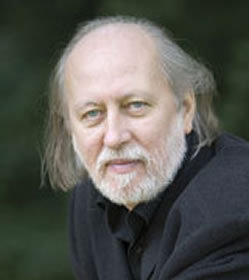
More thoughts on "this rotten world we live in."

After all, Susan Sontag said he is “the contemporary Hungarian master of apocalypse who inspires comparison with Gogol and Melville. W. G. Sebald said, “The universality of Krasznahorkai’s vision rivals that of Gogol’s Dead Souls and far surpasses all the lesser concerns of contemporary writing.”

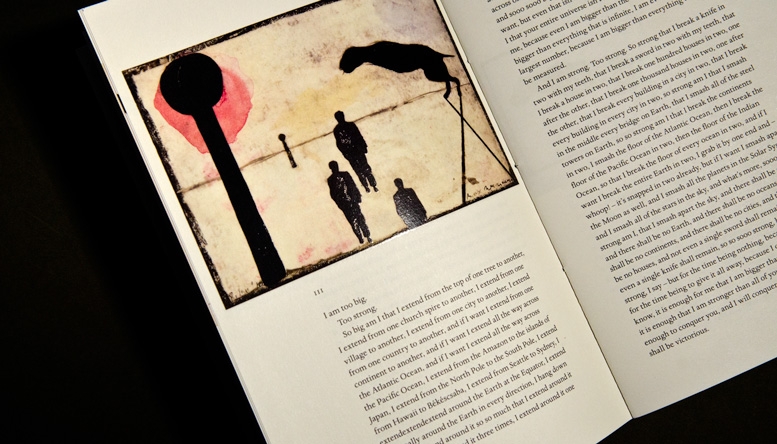
To my discredit, then, I discovered Krasznahorkai only this year when, in Paris, Daniel Medin shoved a Cahier into my hand.  The short, 39-page work,  Animalinside, was undertaken for the Cahiers Series as part of a collaboration with German painter Max Neumann (we’ve written about the Cahiers series here). For reasons to tedious to get into, the book wound up in a stack of backlogged reading, and I’d only got round to reading it after the interview in the current Quarterly Conversation.

The interview is republished from The Hungarian Review – a publication I regard with gratitude, as its editors allowed me to republish Czesław Miłoszs poem “Antigone,” translated by George Gömöri and Richard Berengarten – the poem, in English, exist only in the journal and An Invisible Rope: Portraits of Czesław Miłosz. It’s not the only reason I read the Q&A with interest, however; it’s lively stuff.

A few excerpts:

Ágnes Dömötör: Many people have the impression that your books are hard to read and to understand. That’s a myth, but don’t you think you’ve got some bad PR?

László Krasznahorkai: You know, the problem is that anything that’s the least bit serious gets bad PR. Kafka got bad PR, and so does the Bible. The Old Testament is a pretty hard text to read; anyone who finds my writing difficult must have trouble with the Bible, too. Our consumer culture aims at putting your mind to sleep, and you’re not even aware of it. It costs a lot of money to keep this singular procedure going, and there’s an insane global operation in place for that very purpose. This state of lost awareness creates the illusion of stability in a constantly changing world, suggesting at least a hypothetical security that doesn’t exist. I see the role of the tabloid press somewhat differently. I can’t just shrug it off and say to hell with it. The tabloid press is there for a serious reason, and that reason is both tragic and delicate.

AD: Suppose someone who has never read anything by you picks up this interview and says: what an interesting guy, which one of your books would you recommend to them? What would be a point of entry to your life’s work?

LK: The Old Testament. The Book of Revelation. Let them choose from my books at random.

AD: How do you relate to your fellow Hungarian writers? Do you ever e-mail one another? Would you tell György Spiró, for instance,‟I liked your last book, Gyuri?” I’m asking because in an earlier interview you seemed to see yourself as an outsider on the literary scene.
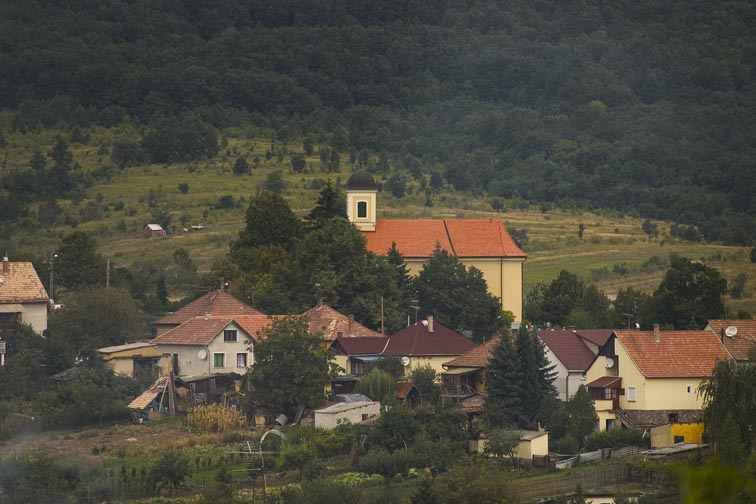
Pilisszentlászló ... half an hour away from Budapest

LK: I don’t just see myself as an outsider, I am one. Which doesn’t mean I’m not happy to see colleagues I admire; after all, we share the same fate. But I also worry about them. I worry, for instance, because they’re in literature, something that you can still sell for awhile, but it’s getting harder and harder. This kind of communication is really over and done with. Its disappearance is a rather obvious process; it is happening faster at some points of the world than at others. I’m afraid this kind of literature is not sustainable.

AD: You mean it’s not just the authority of literature that’s finished but literature as such?

LK: The so-called high literature will disappear. I don’t trust such partial hopes that there will always be islands where literature will be important and survive. I would love to be able to say such pathos-filled things, but I don’t think they’re true.

On our tabloids: “The structure of vulgarity is very complex.”  He also talks about apocalypse, and “this rotten world we live in.”  And rock bands?  You can read about his favorite ones, along with the rest of the interview, here.

What does he think about bloggers, such as Humble Moi?  “Recently one blogger suggested that I should be hanged. I immediately put on my space suit, started the engine and went to the moon for a while.”  That puts me in my place.

Meanwhile, here’s what Irish novelist Colm Tóibín said about Animalinside:

Language for Krasznahorkai is a force struggling against the domination of cliché and easy consumption, offering small, well-organized revolts, plotting in upstairs rooms for plenitude and jagged rhythm, arming itself with clauses, sub-clauses and asides, preparing high-voltage assaults on the reader’s nervous system. … The world of his fiction is enclosed and stable, it must be taken on its own terms. … His work is full of menace, but it would be a mistake to read the menace either as political or as coming from nowhere. …



Can we get her to change her mind? A Paris landmark disappears.

Share

It’s too bad, my French friend lamented, that I won’t be in Paris before the end of the month. I could have had a reading for An Invisible Rope, he said.  I could have, should have…but won’t now.

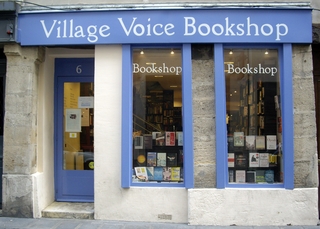
It’s closing. The bookshop that has been a cultural landmark Saint-Germain-des-Près for three decades is shutting its doors forever on July 31.

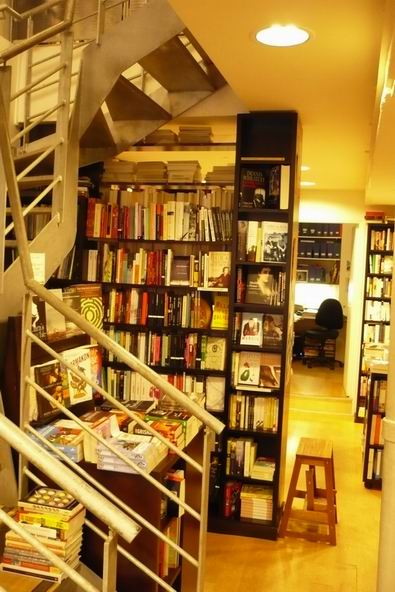
For the last dozen years, Village Voice on the tiny Rue Princesse has been ranked the best independent literary bookstore in Europe by the British magazine Bookseller.  The store carries about 18,000 volumes at any time – carefully selected, the size of its collection notwithstanding.  It has been a refuge for Anglo-Americans abroad, and for those who love them. But these facts don’t capture of the spirit of the place.

Livia Manera has by far the best tribute on the New Yorker‘s blog, “Page-Turner.”  According to legendary owner Odile Hellier:

“The last two years have been hell,” she told me. “You can blame Amazon.fr; you can blame competition among publishers forced to discount prices. But I can tell you the precise day when I realized it was over for us: April 3, 2010, when Apple launched the iPad. From that day, more and more of our customers begun reading on the tablet. That did it.” …

Some reports on the closing of the Voice fail to mention an important factor in its demise. French publishers, bookstores, and independent booksellers have been able to resist the encroachments of e-commerce, with its steep discounts, and the slash-and-burn pricing policies of big chains (which themselves are falling prey to e-commerce) thanks to a law that fixes the prices of both printed books and e-books—so long as they are French in origin. But bookstores selling foreign books are unprotected.

Antoine Jaccottet told me much the same about these cutthroat practices over coffee last February, during the worst cold snap since … well, since about the time Village Voice opened its doors.  Now Hellier will be focusing on a website presence.

Naturally, everyone has stories to tell in the wake of the sad news – stories about the authors who read there (Michael Ondaatje was the last to read on June 28, from his latest book The Cat’s Table), or about bumping into Susan Sontag combing the shelves.

According to David Galenson writing in the Huffington Post, manager Michael Neal was the soul of the shop. He describes the Englishman’s arrival at Rue Princesse:

Michael Neal was working as an antiquarian bookseller when he came into the Village Voice one day in 1993, and saw a large pile of parcels sitting under the front table. He told Hellier she should move the parcels upstairs, and she replied, “Do it yourself.” He thought that was a good idea, so he did it. He began opening the packages, and that was the start of his career at the shop. He has worked there five or six days a week ever since.

It’s hard to capture the ambiance. Manera tries again:

With the exception of the Village Voice, there is generally little collegial contact between the French literary milieu and English-speaking academics and writers who live in Paris, or come here on sabbatical, or to promote their work in translation. … But when you squeezed into the narrow event space on the Voice’s upper floor, French and international book lovers mingled with Parisian editors and publishers, shared a glass of wine, a new discovery, a heretical opinion, and took the conversation outside to the sidewalk of the Rue Princesse, for another shared pleasure: an unguilty cigarette.

My visits to Paris have been far too infrequent and fleeting – it has only recently become a haunt. Just as I’m getting to know the city, one of the best reasons for being there is disappearing, and will be nowhere to be seen when I return this month in bitter November.


Marcel Proust playing air guitar

Share

OK, you’ve got to see thisSusan Sontag in a bear suit.  Flavorwire has Annie Leibovitz‘s photo of her partner thus outfitted – but go to the source, which is here, for a gallery of Leibovitz’s portraits, including some magnificent ones of Sontag.

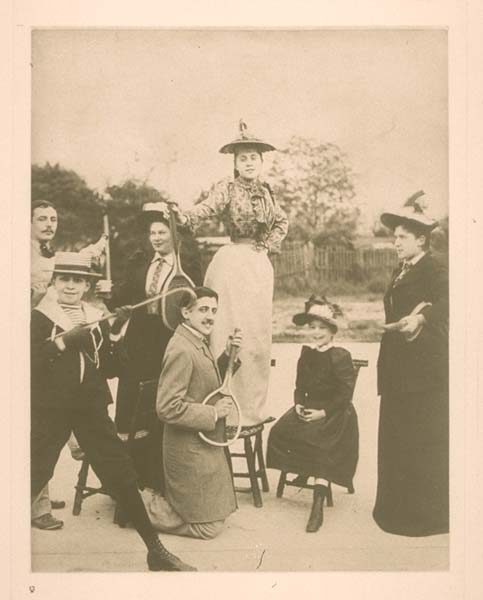
Flavorwire’s “Extremely Silly Photos of Extremely Serious Writers” features Sontag as Exhibit #1, but some of them are more or less unsurprising. Mark Twain playing billiards, Ernest Hemingway kick a can, Hunter Thompson with an inflatable woman, Colette dressed as a cat – but this one takes the cake: Marcel Proust playing air guitar on Boulevard Bineau with his friends in 1892 (his mimetic beloved Jeanne Pouquet in center).  At this time of the photo, he was known as a snob, a dilettante, and a social climber.

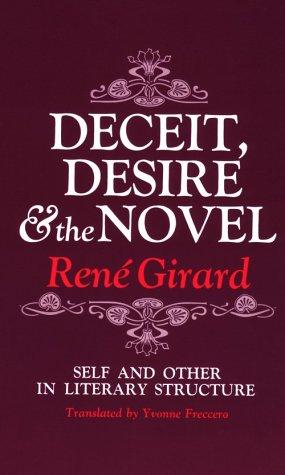
But the somehow sad image brought back the words of René Girard (recently the subject of a post here) from his landmark Deceit, Desire, and the Novel, which celebrated its 50th anniversary since publication a few months ago. His words:

“The sterile oscillation between pride and shame is also found in Proustian snobbism. We shall never despise the snob as much as he despises himself. The snob is not essentially despicable; he tries to escape his own subjective feeling of contemptibility by assuming the new being which he supposedly procures through snobbism. The snob thinks he is always on the point of securing this being and behaves as if he has already done so. Thus he acts with intolerable arrogance. Snobbism is an inextricable mixture of pride and meanness, and it is this very mixture which defines metaphysical desire. …

“The snob bows before a noble title which has lost all real value, before a social prestige so esoteric that it is really appreciated by only a few elderly ladies. … The snob seeks no concrete advantage; his pleasures and sufferings are purely metaphysical.”

The anonymous photo is from the Bibliothèque Nationale de France, which, incidentally, also has the René Girard archive.

Orwell Watch #19: End the war.

Share

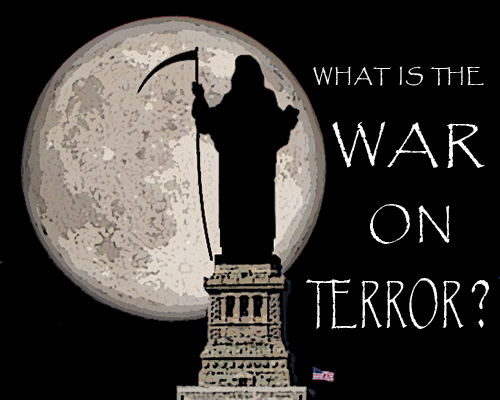
War on Poverty.  War on Drugs.  War on Terror.  War on Christmas.  Now there’s even a War on Women.

End the war!

Remember when “war” was a screaming horror that involved blood and grief and violent death? Human beings  destroyed others like themselves with machine guns and tanks and mines and missiles.  Real blood was spilled, real limbs were blown off bodies, and real wounds needed bandaging.  Always it has been accompanied by atrocities.  War is an awful thing, leaving a scar in a national history.

No more.  Now war seems to have descended on the irrevocable downward path towards metaphor and then cliché.  The use of the term is dishonest in intent.  Often, it is a marketing tool for pre-packaged, manufactured outrage, and deserves an Orwell mention for its falsification of emotion for political ends.  For the marketers who invent these buzzwords (or buzzphrases, in this case) it is a manipulative way to herd people into mobs, so that they will stampede to the ballot box, or tweet an avalanche of angry messages, or fill comment sections with group thinking and group emotions, or send emails to their congressmen and congresswomen, or call television advertisers and cancel subscriptions.

Oddly, we’ve come to use other words for real wars.  I’m old enough to remember when the Vietnam War wasn’t a war but a “police action.”  We called it a war in retrospect – kind of like an economic depression, we’re only willing to look at it truthfully in a rear-view mirror.

Here’s my point: I think war is so terrible that the word should be reserved for the real thing.  Maybe by keeping the word to take a snapshot of the unspeakable, we can help bring war itself to an end.  At the very least we can reserve one, single word to accurately describe our greatest inhumanity. It’s a small step towards truth.

From Orwell:

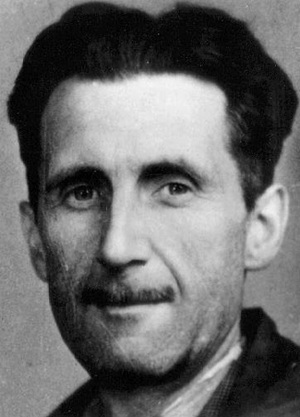
“I have not here been considering the literary use of language, but merely language as an instrument for expressing and not for concealing or preventing thought … one ought to recognize that the present political chaos is connected with the decay of language, and that one can probably bring about some improvement by starting at the verbal end … Political language – and with variations this is true of all political parties, from Conservatives to Anarchists – is designed to make lies sound truthful and murder respectable, and to give an appearance of solidity to pure wind.”

You don’t have to be very old to remember that Susan Sontag launched a firestorm of attack when she suggested that young Islamic men, no matter how misguided, who drove airplanes into buildings could not reasonably be called “cowards,” as was the media fashion in the days following the terrible events of 9/11.

By all means, let us grieve together, but let us not be stupid together,” she wrote.  Her self-evident observation on the misuse of language was buried in a tsunami of denunciation.

I remember a book she wrote long before that, Illness as Metaphor – apparently, it’s considered an “angry” book, but I did not read it with an angry voice in my head, and so it did not strike me so.  She explored the use of the word “cancer,” and before it “consumption,” as a metaphor (isn’t there a “War on Cancer” somewhere, too?). A cancer victim herself, she wrote:

“I want to describe not what it’s really like to emigrate to the kingdom of the ill and to live there, but the punitive or sentimental fantasies concocted about that situation; not real geography but stereotypes of national character. My subject is not physical illness itself but the uses of illness as a figure or metaphor. My point is that illness is not a metaphor, and that the most truthful way of regarding illness—and the healthiest way of being ill—is one most purified of, most resistant to, metaphoric thinking. Yet it is hardly possible to take up one’s residence in the kingdom of the ill unprejudiced by the lurid metaphors with which it has been landscaped. It is toward an elucidation of those metaphors, and a liberation from them, that I dedicate this inquiry.”

So it’s in her spirit I declare war on the word war.  (We’ll take on “rape” as metaphor next.)  And in case you somehow missed George Orwell‘s essay, “Politics and the English Language,” it’s here for free.  A useful guidebook this election year.

I’ll declare a ban on this one, too (Dare I say it? Dare I make the final step into political incorrectness?):  The epithet “haters” is itself an expression of hatred by those who use it. Again: to call someone a “hater” is itself an act of hate. It is usually spat at someone or some group with contempt and a sense of one’s own superiority – it is never oneself who is a hater, only the “Other.” The use of the word is usually a political attempt to marginalize and enrage the target – with luck, bully him or her into shame and silence. However, I suspect I’m already a little behind the curve on this one – this insult has already passed its apex, perhaps having fulfilled its political usefulness.

Joseph Brodsky: “If we have all this here, why do we need Europe?”

Share

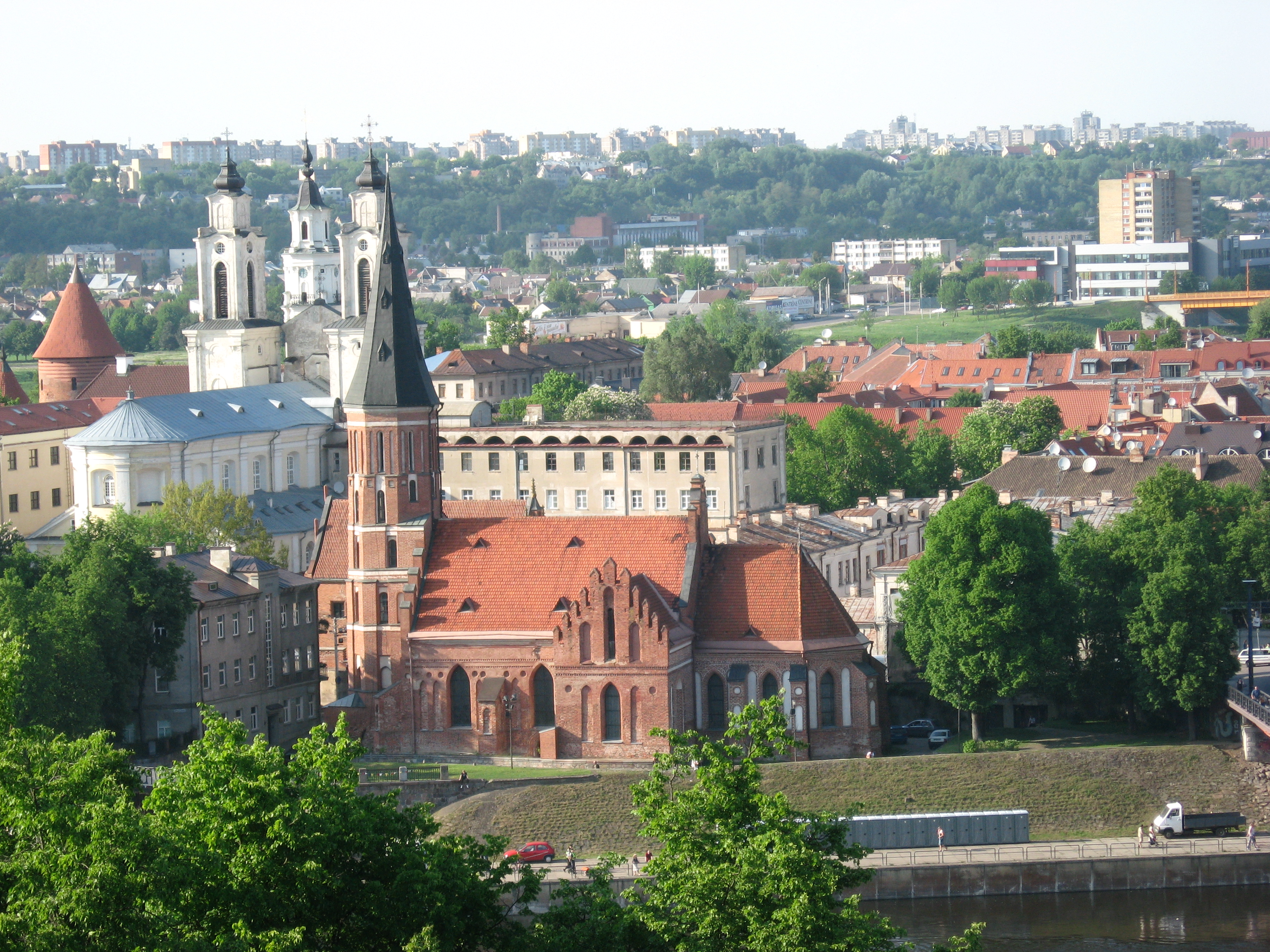
The city where Adam Mickiewicz taught secondary school. (Photo: C. Haven)

“If we have all this here, why do we need Europe?”  That’s what Joseph Brodsky reportedly said in 1966 when he surveyed not Rome, not Athens, but humble Kaunas, Lithuania’s second largest city.

The words come from Ramūnas Katilius, fils, quoting his father, Ramūnas Katilius, père, from this vantage point overlooking the city.  The elder Romas, a physicist, was one of the poet’s greatest chums, sometimes seeing the poet several times a day when they were in Leningrad.  Romas was in the photos of Joseph Brodsky departure from the Soviet Union forever in 1972.

Both Romas and Algirdas Avižienis, professor emeritus at director of the Czesław Miłosz Birthplace Foundation, hosted my visit to Miłosz’s Issa Valley.  I’ve just returned to Poland.

While much of my discussion with Romas was about his friend, Tomas Venclova, the physicist was interested when I told him that I had been a student of Joseph’s (he called me part of “the family”) – and hence our discussion returned to his memories of Leningrad, and J.B.’s time in Lithuania. There’s even a plaque in downtown Vilnius where the Russian Nobel poet stayed.

Admittedly, the quote I have cited above is secondhand, but it’s suggestive of how much the poet liked Lithuania. You could guess that, perhaps, from his poem “Lithuanian Divertissement.”

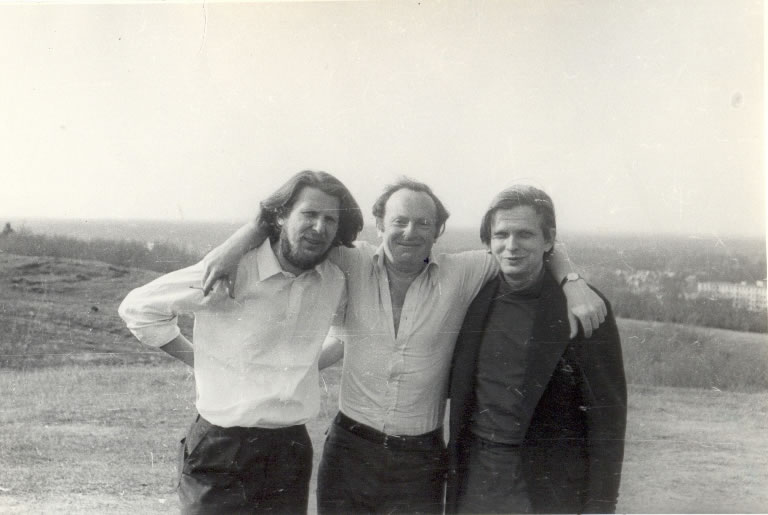
Ramūnas Katilius, Joseph Brodsky, Tomas Venclova in 1972 (Photo by Marija Etkind from the archive of Ramūnas Katilius and Elė Katilienė)

This remote and stunning little city was the temporary capital of Lithuania, when the Polish army occupied Vilnius in 1920.  The Nazis occupied it during the war, of course, and it was a Soviet Socialist Republic at the time Joseph Brodsky visited.

It’s also very early evidence, before he had seen Venice, Paris, or New York, of his early partiality of the cozy places on the outskirts of empire.  He was later to defend Russia’s historic hegemony in an acrimonious exchange with Miłosz, Derek Walcott and Susan Sontag, as described in Irena Grudzińska Gross‘s Czesław Miłosz and Joseph Brodsky: Fellowship of Poets.

I’m in Poland right now, and obviously don’t have access to Irena’s book or anything else in my library, but a Keith Gessen’s piece in today’s New Yorker (with a dynamite photo by Irving Penn) makes the same point:

Poetry was immortal, he argued: “That which is being created today in Russian or English, for example, secures the existence of these languages over the course of the next millennium.” But this wasn’t true, as Brodsky eventually acknowledged in a great and furious late poem, “On Ukrainian Independence,” in which he berated the independence-minded Ukrainians for casting aside the Russian tongue. “So go with God, you swift cossacks, you hetmans, you prison guards,” it says, and concludes:


Just remember, when it’s time for you, too, to die, you bravehearts,
as you scratch at your mattress and visibly suffer, you’ll forget
the flatus of Taras, and whisper the verses of Alexander.

Alexander Pushkin, that is. Despite itself, the poem is an anguished admission that a Russian state and Russian-speaking subjects are still vital to the project of Russian poetry.

Now.  Here’s an interesting bit about the photo above.  See the white double spires?  That’s the Jesuit church.  Now take a look at the rather nondescript yellowish building in front of it.  That’s where Adam Mickiewicz, the Polish language’s ur-poet (and, like Czesław Miłosz, he was born in Lithuania) taught at secondary school to pay off his university tuition  at the Jesuit’s Vilnius University.

Note to self:  Must read Mickiewicz when I get back to California.  Anyone know the best translations?