
The Great Kvetch, or, why kids are turned off by literature

Share
harrison

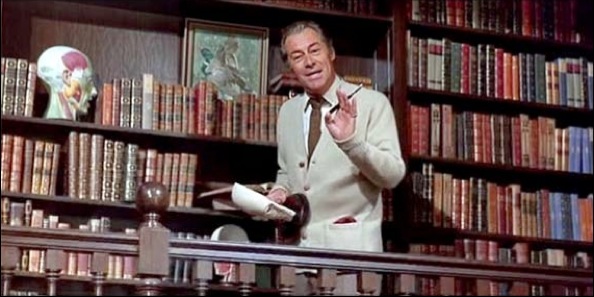
“Why can’t a woman be more like a man?” Read Anna Karenina for answer.

We’ve had some tremendous defenses of literature in the Book Haven pages over the years: Susan Sontag, in an interview with James Marcus, said (here): “Reading should be an education of the heart … Literature is what keeps us from shriveling into something completely superficial. … It keeps you–well, I don’t want to say honest, but something that’s almost the equivalent. It reminds you of standards: standards of elegance, of feeling, of seriousness, of sarcasm, or whatever. It reminds you that there is more than you, better than you.”

morson

There are better photos of him online. Really.

Joseph Brodsky went even further in his Nobel lecture (here), famously saying, “There is no doubt in my mind that, had we been choosing our leaders on the basis of their reading experience and not their political programs, there would be much less grief on earth. It seems to me that a potential master of our fates should be asked, first of all, not about how he imagines the course of his foreign policy, but about his attitude toward Stendhal, Dickens, Dostoevsky. … As a form of moral insurance, at least, literature is much more dependable than a system of beliefs or a philosophical doctrine.”

Lots of selling. Buying? Not so much. I haven’t read that much about why kids don’t read, why lit classes are dwindling. By gum, this is the best thing I’ve read on the topic. Gary Saul Morson writing in Commentary calls the problem the “Great Kvetch” among university professors. Slavist Morson is something of an expert on the topic: he teaches the largest class at Northwestern University – on Russian lit, of all things – for 500 kids. Nor does he teach the easy stuff: Dostoevsky’s The Brothers Karamazov and Tolstoy’s Anna Karenina are on the syllabus, and he devotes another course entirely to War and Peace, attended by 300.

Here are three reasons he gives. Reason #1 is the Wikipedia Delusion. Excerpt:

“I once delivered a paper in Norway on Anna Karenina, and a prominent scholar replied: ‘All my career I have been telling students not to do what you have done, that is, treat characters as real people with real problems and real human psychology. Characters in a novel are nothing more than words on a page. It is primitive to treat fictional people as real, as primitive as the spectator who rushed on stage to save Jesus from crucifixion.’ Here is the crux of it: Characters in a novel are neither words on a page nor real people. Characters in a novel are possible people. When we think of their ethical dilemmas, we do not need to imagine that such people actually exist, only that such people and such dilemmas could exist.”
downton2

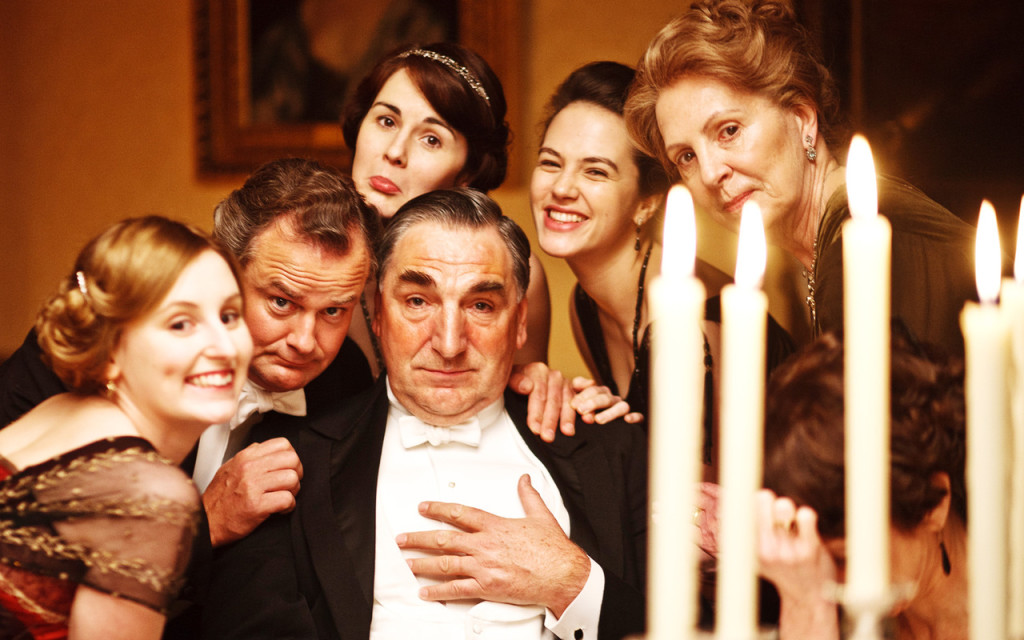
The heartburn wasn’t just his.

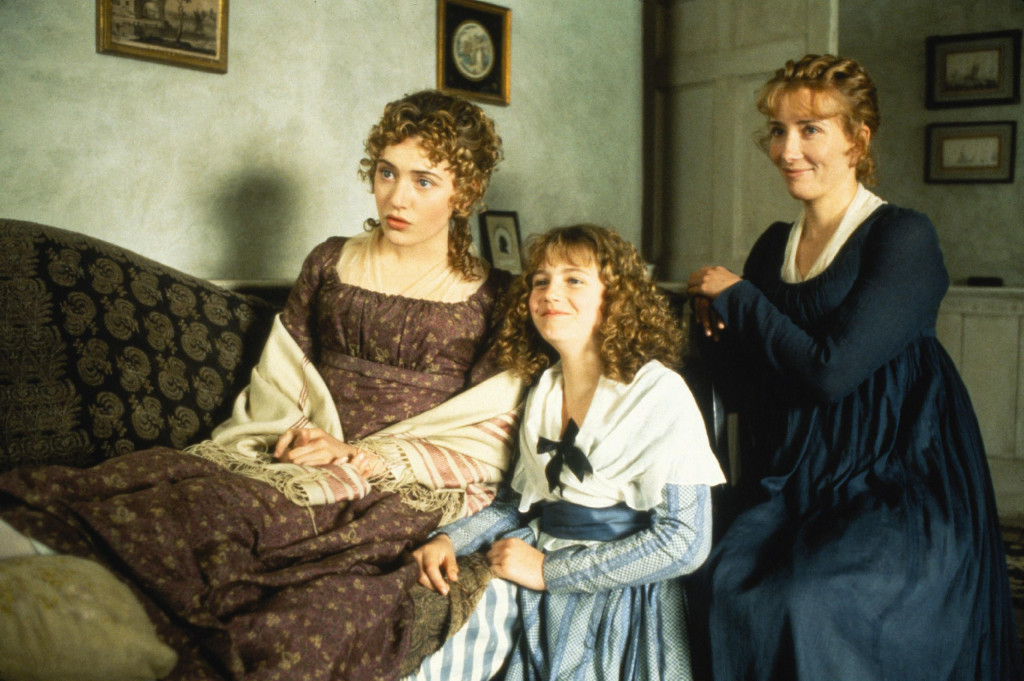
Reason #2, or … why I hated Downton Abbey. Or, “Why don’t the women in Sense and Sensibility just go out and get jobs?” Excerpt:

“In this approach, the more that authors and characters shared our beliefs, the more enlightened they were. This is simply a form of ahistorical flattery; it makes us the wisest people who ever lived, much more advanced than that Shakespeare guy. Of course, numerous critical schools that judge literary works are more sophisticated than that class on Huckleberry Finn, but they all still presume the correctness of their own views and then measure others against them. That stance makes it impossible to do anything but verify what one already believes. Why not instead imagine what valid criticisms these authors would advance if they could see us?”

Reason #3, and here’s Exhibit One: The Norton Anthology of Theory and Criticism, in which the editors “paraphrase a key tenet of the dominant movement called ‘cultural studies,’ which has set the critical agenda”:

“Literary texts, like other artworks, are neither more nor less important than any other cultural artifact or practice. Keeping the emphasis on how cultural meanings are produced, circulated, and consumed, the investigator will focus on art or literature insofar as such works connect with broader social factors, not because they possess some intrinsic interest or special aesthetic values.”
austen

Why don’t they all just get jobs?

I don’t know about you, but they deserve jail time for making “artwork” plural. Morson politely overlooks that, and summarizes the argument this way: “If elements of popular entertainment illustrate social forces better than Pope or Proust do, then they should (and sometimes do) constitute the curriculum. The language of ‘production, circulation, and consumption’ is designed to remind us that art is an industrial product like any other and supports the rule of capital no less, and perhaps more insidiously, than the futures market.”

In short, “When you read a great novel, you put yourself in the place of the hero or heroine, feel her difficulties from within, regret her bad choices. Momentarily, they become your bad choices. You wince, you suffer, you have to put the book down for a while. When Anna Karenina does the wrong thing, you may see what is wrong and yet recognize that you might well have made the same mistake. And so, page by page, you constantly verify the old maxim: There but for the grace of God go I. No set of doctrines is as important for ethical behavior as that direct sensation of being in the other person’s place. … Empathy is not all of morality, but it is where it begins. … It is really quite remarkable what happens when reading a great novel: By identifying with a character, you learn from within what it feels like to be someone else.” Sounds like a recommendation for Tolstoy‘s Resurrection to me.
judelaw

Can’t wait.

Why is all it important? If you aren’t sold so far, try this:

“The more our culture presumes its own perspective, the more our academic disciplines presume their own rectitude, and the more professors restrict students to their own way of looking at things, the less students will be able to escape from habitual, self-centered, self-reinforcing judgments. We grow wiser, and we understand ourselves better, if we can put ourselves in the position of those who think differently.

Democracy depends on having a strong sense of the value of diverse opinions. If one imagines (as the Soviets did) that one already has the final truth, and that everyone who disagrees is mad, immoral, or stupid, then why allow opposing opinions to be expressed or permit another party to exist at all? The Soviets insisted they had complete freedom of speech, they just did not allow people to lie.”

Read the whole thing here. He’s currently working on a study of The Brothers Karamazov. Can’t wait.

Susan Sontag, Berlin, 10 years later: “Thinking is a form of feeling, feeling is a form of thinking”

Share

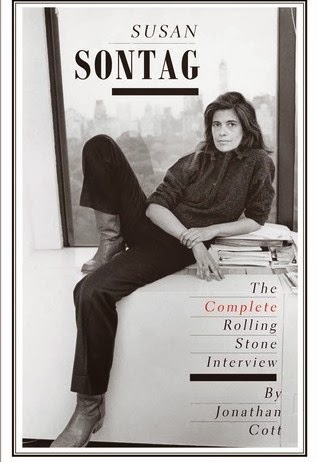
Sontag_06The Institute for Cultural Literacy in Berlin is having a retrospective on cultural icon and author Susan Sontag ten years after her death, to discuss the continuing relevance of her work. The reason I know about this distant event: my former editor at the Los Angeles Times Book Review, Steve Wasserman, will be giving the keynote address. Steve, a friend of the late author and cultural critic, is now editor-at-large for Yale University Press, which under his guidance recently released Jonathan Cott‘s Complete Rolling Stone InterviewSontag was also one of the contributors of the late lamented LATBR, so I was in good company.

“Susan Sontag Revisited” will take place January 29-30 at Christinenstrasse 18/19. Apparently, the organizers are apparently expecting a crowd, for the website warns: “For safety reasons, venue doors will be closed when capacity limits are reached. We apologize for any inconvenience.” Get there early, or you will be pushed away by gendarmes.

In addition to Steve, other speakers include: Andrea Braidt, Carolin Emcke, Jörn Glasenapp, Erika and Ulrich Gregor, E. Ann Kaplan, Nihad Kresevljakovic, Michael Krüger, Juliane Lorenz, Christina Pareigis, Anne Ratte-Polle, Laurence Rickels, Hanna Schygulla, with Christina Tilmann moderating the proceedings, in English and German.

An excerpt from Steve’s blogpost about his friendship with Sontag:

I would repair, at her invitation, to Sontag’s penthouse, Jasper Johns’ former studio, located on the Upper West Side at 340 Riverside Drive.

sontagI remember the apartment well.  Flooded with sunlight, surrounded by a generous terrace overlooking the Hudson, it was spartan: hardwood floors, white walls, high ceilings; in the living room a single Eames chair, an original Andy Warhol of Chairman Mao, and in the dining room a long monk’s table made of oak with a brace of long benches on either side; in the kitchen’s cupboards a stack of plates, a few glasses, and row after row of back issues of Partisan Review; leaning against one wall of Susan’s bedroom a curious stained-glass window from Italy of a spooky Death’s Head, a kind of memento mori and, perhaps most impressive, by her bedside a 24-hour clock featuring time zones spanning the globe.  Most important, of course, were the walls which bore the weight of her 8,000 books, a library which Susan would later call her “personal retrieval system.”

I spent the summer nearly getting a crick in my neck from perusing the books and I remember thinking that, while I had just finished four years of college, my real education was only beginning.  I discovered scores of writers I had never heard of as well as writers I distantly knew but had never read.  For reasons wholly mysterious I found myself drawn to four blue-backed volumes: the journals of André Gide.  These, like others in Susan’s library, were filled with her pencil underlinings and marginal notes.  One such passage by Gide made a deep impression: “When I cease getting angry, I shall have already begun my old age.”

I think Gide is wrong on that one – but I think Sontag is right when she declares, according to Steve, “what amounts to a credo, asserting that ‘thinking is a form of feeling and that feeling is a form of thinking.’” Check out Steve’s post and voice recording of Sontag here.

Susan Sontag: “A freshly typed manuscript begins to stink.”

Share

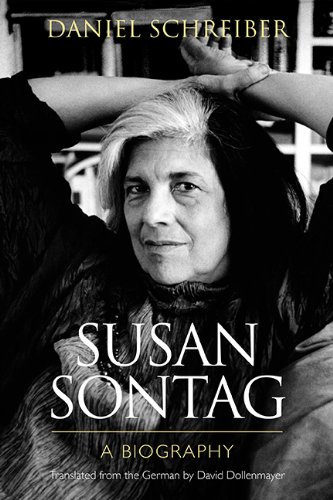
Asontag2 new biography of Susan Sontag  has just hit the shelves. The Wall Street Journal has one of the first MSM reviews on Daniel Schreiber‘s book, translated from the German. Clearly, the writer Micah Mattix didn’t like Sontag, and says Schreiber felt the same:

When it comes to Susan Sontag, there are those who dislike both the woman and the work and those who just dislike the woman. In the preface to his biography of Sontag—the first since the essayist and novelist died in 2004— Daniel Schreiber reluctantly puts himself in the latter group. Writing on Sontag, the German critic tells us, was both wonderful and difficult: “Wonderful because I had the chance to immerse myself in almost everything Sontag had ever written or said. . . . Difficult, also, because Sontag’s character made it impossible for me to adopt the tone of unbridled admiration authors of literary biographies usually adopt.”

Even readers who have never opened the New York Review of Books, where so many of her essays appeared, know the name Susan Sontag. Even those who never puzzled their way through “Notes on Camp,” her provocative 1964 article in Partisan Review that helped define a certain ironic intellectual pose, will recall she was one of America’s most celebrated public intellectuals. Sontag was famous for writings on film, photography and philosophy, as well as for the striking photographs of her that appeared in publications like Vogue and Mademoiselle, which once led Mary Ellmann to call her the “Chanel of the arts.” Mr. Schreiber’s book, translated from the German by David Dollenmayer, presents an opportunity to ask what it adds up to—aside from a sort of intellectual glamour. And, not least, how did Susan Sontag become “Susan Sontag”?

Apparently, Schreiber points out the inconsistencies in Sontag’s descriptions of herself. “She claimed, for example, that she had no idea where her family was from, even though she knew her grandparents had emigrated from Lodz. She would later claim that she was born in Poland herself. Mr. Schreiber is also rightly skeptical of Sontag’s claims about her own youthful brilliance. Her idealization of her childhood, Mr. Schreiber writes, would ‘serve above all to promote the aura of genius in which Sontag consciously wrapped herself later in life.'” Well, of course. Is there anyone who doubted that her accounts of reading Immanuel Kant shortly out of the womb were anything but hyperbolic? Read the WSJ review here.

Flavorwire has a lengthy excerpt from the book, describing how she became “Susan Sontag.” Here’s an excerpt from the excerpt, to remind you that even this famous writer had hard times, a lot of them, in fact:

“After The Benefactor was published, the contradiction between Sontag’s academic career and her literary ambitions became more acute. The fact that she had not completed her dissertation, instead becoming more and more involved with the literary world, led to difficulties with Columbia University. Roger Straus, who had recommended his author for fellowships from the Rockefeller and Merrill foundations, discreetly but urgently told his friend Harry Ford at the latter foundation, ‘As you may know, she is a member of the Philosophy faculty at Columbia, where her writing efforts have been greeted most unphilosophically by her senior colleagues. As a result of this stupid attitude, she is now in financial need.’

sontag

Also recently published

“Sontag’s academic mentor and promoter Jacob Taubes was at this time negotiating his return to Germany to take up a post at the Free University in Berlin, so she could expect no more support from him. Her job would be at risk once he was gone. Finally, however, her publisher’s efforts on her behalf bore fruit. On the basis of her literary and critical publications, the Rockefeller Foundation awarded her a post as writer in residence at Rutgers University during the academic year 1964–1965, and for 1965, she also received a fellowship from the Merrill Foundation. These awards put her in a position to leave her unloved instructorship in Columbia’s Department of Philosophy.

“Sontag’s friend Annette Michelson seemed very surprised by this turn of events. The art historian was pursuing an academic career in film studies, at the time still a completely obscure discipline, and could not understand why Sontag would so cavalierly abandon her university career in favor of a highly insecure existence as a freelance writer, apparently without a backward glance. But Sontag’s departure from academia was not quite as straightforward as that. Three years later, she still regretted not having finished her dissertation and even planned to complete it after all—probably on recent French philosophy—and earn her PhD from Harvard. But she never carried out this plan. The numerous teaching positions, honorary doctorates, and professorships that were later offered to her she mostly also turned down, often with the flippant justification that she had too much respect for a real PhD to accept an honorary one. Although she kept abreast of scholarly publications in the areas of literature, film studies, and cultural history, her essayistic approach remained basically antiacademic. She repeatedly stressed that the life of a writer and that of an academic were mutually exclusive. She had, after all, seen “academic life destroy the best writers of my generation.” It is not difficult to discern behind this remark a pose of wounded vanity. Herself one of the best authors of her generation, Sontag’s failure in academia was due not only to her wish for an antiacademic life but also to the fact that she was a woman in the still strongly patriarchal world of the universities.

“At the end of the spring semester in 1964, Sontag left her teaching position at Columbia and began life as a freelance author and essayist. After early difficulties earning enough to get by, she increasingly was able to support herself with her writing.

“In the few published journal entries from that year, Sontag’s personal problems sometimes shade into self-loathing. With great clarity she mounts attacks against herself, criticizing her tendency “to censor [sic] others for my own vices, to make my friendships into love affairs, to ask that love include (and exclude) all.” What fell victim to her new notoriety was her literary output. After finishing The Benefactor in 1962, Sontag wrote essays almost exclusively. A second novel she had already begun proved too short of breath and appeared as a short story titled ‘The Dummy’ in the September 1963 issue of Harper’s Bazaar.Otherwise, journalism and essays predominated until the fall of 1965, and for good reasons. For one thing, the intense life Sontag led in New York was expensive and her essays, reviews, and articles paid much more than novels or short stories. The Atlantic Monthly, for example, paid $500 for a 3,000–3,500 word article, as much as FSG paid her for the completed manuscript of her entire novel. For another thing, her extraordinary articles appeared to gain her more—and more immediate—recognition from colleagues and friends than her fiction.

“Yet as her journal shows, writing at this time became a real challenge and even a torture for Sontag. ‘A freshly typed manuscript, the moment it’s completed, begins to stink. It’s a dead body—it must be buried—embalmed, in print,” she said. By her own admission, she needed to build up pressure to write. Her work got done in intense bursts: “I write when I have to because the pressure builds up and I feel enough confidence that something has matured in my head and I can write it down.'”

Read the rest here. Or read an excerpt from Jonathan Cott’s The Complete Rolling Stone Interview, also recently published, here.

Susan Sontag to writers everywhere: “Stay home!”

Share

sontagThe book has been in my bedside stack for awhile now, but I didn’t realize quite how long awhile until I reread the note that came with it, on cream-colored Yale University Press letterhead, dated 2 October, 2013. “Dear Cynthia, All yours.”

Steve Wasserman, editor at large, had kindly sent me Susan Sontag: The Complete Rolling Stones Interview by Jonathan Cott. The original interview ran in The Rolling Stone in 1979 – but only a third of the twelve hours of conversations were published, hence this book. From the fly jacket: “Few modern intellectuals relished the art of the interview more than Susan Sontag. She embraced the process of thinking out loud. She spoke to Cott not in sentences but in measured and expansive paragraphs. He was struck by her ‘exactitude’ and ‘moral and linguistic fine-tuning’ – as she had once described Henry James‘s writing style. She would confide in her journals that ‘I am hooked on talk as a creative dialogue’ and added: ‘For me, it’s the principal medium of my salvation.'”

I began almost immediately penciling in arguments, cross-references, and approval in the margins. The text is addictive. But what might the Book Haven reader like to read?  Here’s a favorite excerpt:

… you’re not a public celebrity who gossips in the media about whom you’re going out with.

Well, what serious writer ever did?

I could go through a list.

But those people have destroyed themselves as writers. I think it’s death to one’s work to do that. Surely, the body of the work of writers such as Hemingway or Truman Capote would be on a higher level if they hadn’t been public figures. There is a choice between the work and the life. It’s not only a choice between how much you manifest yourself in the ways that the media invite you to, but just how much you go out altogether.

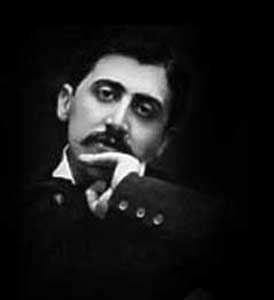
There’s a story of Jean Cocteau – to take an example of a writer I really admire – who, when he was in his late teens or early twenties, went to see Proust, who was already in his cork-lined room. Cocteau brought him some of his work, and Proust said, You really could be a great writer, but you have to be careful about society. Go out a little bit, but don’t make it a main part of your life. And Proust spoke as someone who, in the early part of his life, had lived a very social, what we would call café-society or jet-set life in Paris, but he knew that there was a time when you had to choose between the work and the life. It’s not just a question of whether you’re going to give interviews or talk about yourself – it’s a question of how much you live in society, in that vulgar sense of society – and of having a lot of silly times that seem glamorous to you and other people.

proust

Be careful.

But think of the Goncourt Brothers, who wouldn’t have written what they did unless they frequented parties almost every night in Paris during the Second Empire. In a way, they were extraordinarily brilliant but high-class gossip types.

They were also social historians using both the novel and documentary forms. Even Balzac did that. The problem, however, is a little different in the twentieth century since the opportunities are so much greater. I’m not saying that one has to be in a cork-lined room, but I think that one must have enormous discipline, and the vocation of the writer is, in some deep way, antisocial, just as it is for painters. Somebody once asked Picasso why he never traveled – he never took trips or went abroad. He went from Spain to Paris and then moved to the south of France, but he never went anywhere. And he said: I travel in my head. I do think there are those choices, and perhaps you don’t feel them so much when you’re young – and probably you shouldn’t – but later on, if you want to go beyond something that is simply good or promising to the real fulfillment and risk-taking of a big body of work, then that only becomes a possibility for a writer or a painter after years of work, and you have to stay home.”

A morbid anniversary: two new books mark the half-century since Sylvia Plath’s suicide

Share

plath6Gosh, Terry Castle is a brave writer.  And a bracing one.  She is still recovering from the bashing over her Susan Sontag piece of oh, a decade ago, and here she leaps into the fray with a fire-eating piece on the Sylvia Plath morass in this week’s New York Review of Books. The avalanche of letters she’s triggered may never, ever stop.  She begins:

This year marks the fiftieth anniversary of the suicide of the poet Sylvia Plath (1932–1963), and as one might expect given the sensational details of her short and appalling life, both her US and UK publishers are celebrating the occasion with a kind of vulpine festivity. Faber has just issued an “anniversary” edition of The Bell Jar (1963)—the harrowing autobiographical novel Plath had just published at the time of her death—and has been marketing it, distastefully enough, as “chick lit” avant la lettre. A clutch of new biographies … are likewise among the morbid tie-ins. “Sylvia Plath may be the most fascinating literary figure of the twentieth century”—so the publisher’s copy for one of them gushes. “Even now, fifty years after her death, writers, students, and critics alike are enthralled by the details of her 1963 suicide and her volatile relationship with Ted Hughes.” Such ambulance-chasing fans no doubt also dote on Frida Kahlo’s near-fatal impaling by the tram rail.

Given this opening, it’s not hard to figure out that Terry is not a Plath fan, given the poet’s “shocking necrophilia and refusal of life.”  She claims “Plath’s verse lacks wisdom and humor and the power to console. She invariably scours away anything sane or good-natured.”  I wrote last year (here) about underestimating Plath’s over-the-top sense of the ridiculous – and that her “Daddy” was meant to be dark and above all fun, anticipating Mel Brooks‘s The Producers by five years.

I’m glad April Bernard took up the cry earlier this month in the New York Review of Books:

Plath can cause embarrassment through overstatement—going a little too far is her signature move. (One line from “Elm,” another late poem, that best captures her veer towards overstatement is, “I have suffered the atrocity of sunsets.”) But if we consider embarrassment as an aesthetic strategy rather than as a mistake, we begin to see how funny Plath often is. I confess I had read and admired Plath for several years before her humor struck me full-force—the first time I heard a now-famous BBC radio recording in which she reads “Daddy” with a discernible wave of laughter in her voice. (And yes, there is also rage, and profound sorrow.) I re-read the poem, and realized for the first time that her exaggerations and preposterous claims, which link the Holocaust with an American middle-class “family romance,” were meant to be an elaborate joke, one in extreme bad taste, right on the edge of kitsch.

castle2

Not a fan.

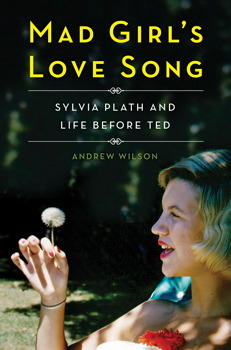
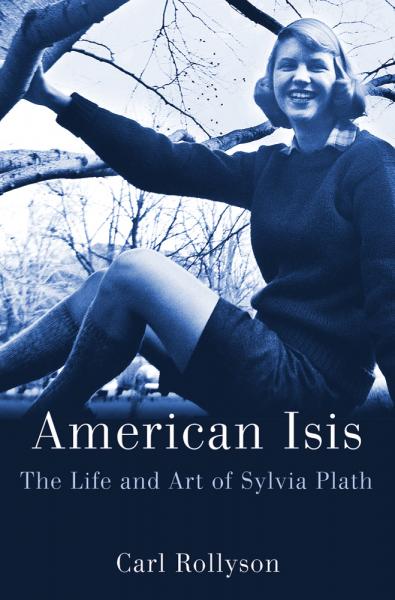
Terry’s task at hand is two new additions to the Plath library:  Carl Rollysons “diverting, gossipy” American Isis: The Life and Art of Sylvia Plath, which “bounces along, jalopy-like, at a madcap pace. No slack metaphor, shameless cliché, or laughable anachronism can slow the authorial juggernaut.”  Curiously enough, she doesn’t mention that one of Rollyson’s more controversial efforts was a biography of Terry’s own bête noir, Sontag.) Andrew Wilson‘s more judicious work, Mad Girl’s Love Song: Sylvia Plath and Life Before Ted, turns over a few new stones – he even had the partial cooperation of Plath’s so-far-silent lover Richard Sassoon.

Could it all have been different?  Counterfactuals abound. A chance meeting at a party Ted Hughes hadn’t planned on attending, interrupting a serious affair in Paris with Sassoon.  Terry writes:

plath5A striking effect of the chronology is to take away some of the fatal glamour one associates with Hughes. He seems less the craggy, carnal bogeyman of Plath mythology here and more just another contender for Plath’s widely broadcast sexual charms. It all could have gone a different way. “Plath’s feelings for Sassoon were so intense,” Wilson argues, “that, had Richard decided to stay in Paris, it’s highly probable that [Plath] would never have returned to England to marry Hughes. It was his rejection that catapulted Sylvia into Ted’s arms.” Waiting in vain for Sassoon to return to Paris, she wrote to a friend, “If he would come today I would stay here with him.”

And here once again, the fancy that Wilson’s book—a study at once stately and strange—so often elicits: how easily the “life before Ted” might have become the “life without Ted.” Would such a tweak in the course of destiny have meant more years—with or without poems—for Sylvia? Sanity, self-possession, and an escape from the prescribed doom? Or merely some other kind of agony and mental collapse?

She tips her hat to a former colleague: with about fifteen Plath biographies in English to date — “some adversarial in tone, others less so” – then rates Diane Middlebrook’s elegiac Her Husband: Ted Hughes and Sylvia Plath—A Marriage as “one of the more balanced and sensible.”  She also credits Eavan Boland for her kindly assessment of Plath’s legacy.  But she has limits to her charity.

At times, Terry seems to be judging the person rather than the poet, even blaming Plath for “creating tragic inhuman mischief from beyond the grave,” with the suicide of her son a few years ago, after a largely lonely life.  She hints that he lacked a mother’s love.  It is a great misfortune to lose one’s mother so young.  But … didn’t he also have a dad somewhere?

Read all of Terry Castle’s piece here. It’s better than coffee for a jolt.  Really.

Toute seule: “One can never be alone enough to write.”

Share

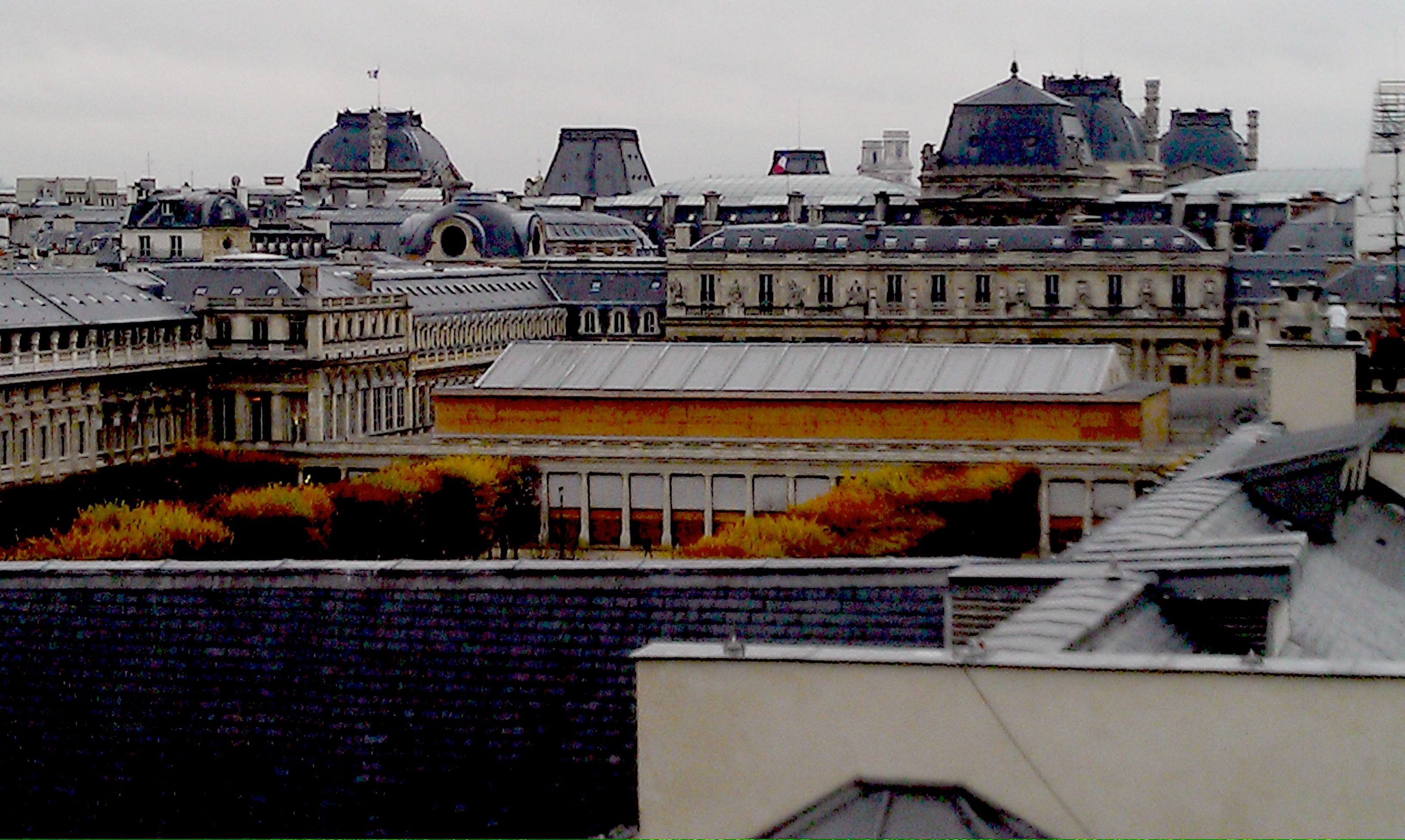
Is it really so bad? The view outside my window. (Louvre at back, with trees of the Jardin du Palais Royal.)

Paris is for lovers, right?  Mais non.

I actually enjoy wandering the narrow streets of the first arrondissement alone, exploring the byways that open unexpectedly to a spectacular scene like the autumn trees of the Jardin du Palais Royal, or ducking out to the fromagerie for some Roquefort from the Pyrenées, or discovering a 200-year-old bakery around the corner, Au Grand Richelieu, which provides homemade marrons glacés – or simply sitting alone, in my tiny studio apartment overlooking the Louvre.  There is no one to mediate or mitigate my interaction with the city – it’s a direct hit, every step I take.

Susan Sontag, who adored Paris, nevertheless found being alone a drag – even for a quick croissant and coffee in the morning with Le Monde.  She told memoirist  Sigrid Nunez that when she was alone, her “mind went blank” like “static on the screen when a channel stops broadcasting.” Yet she also claimed, “One can never be alone enough to write.”  Well, that’s the point, isn’t it?

Emily Cooke discusses the writer’s solitude over at The New Inquiry:  “Being alone lets you develop, become strange, be mad. If to be with people is to be socialized, to submit your rough edges to the whetstone of others’ desires, to be asocial is to be ragged and, thus, original.”

Sontag falls under her lorgnette, but so does Vivian Gornick and Argentine poet Alejandra Pizarnik.

Read the whole thing here.

Postscript on 11/25:  My friend Pierre de Taille over at La Plume Périodique  tells me what I already knew: “Roquefort cheese is not from the Pyrenées but from the region of the village of Roquefort, south of Le Massif Central (http://www.roquefort.fr/decouvrir/le-village/).  There are similar kinds of cheeses in the Pyrénées, one of the best being from the town of Salies-du-Salat, a little hard to find but delicious.”  What can I say?  They told me it was Roquefort from the Pyrenées, but maybe they didn’t want to explain to all their customers why a very similar cheese is from the Pyrenées.  It just confuses us.  The price would certainly suggest it was hard-to-find. Thanks, Pierre!