
Farewell, Robert Silvers (1929-2017): “unadulterated gold”

Share
silvers

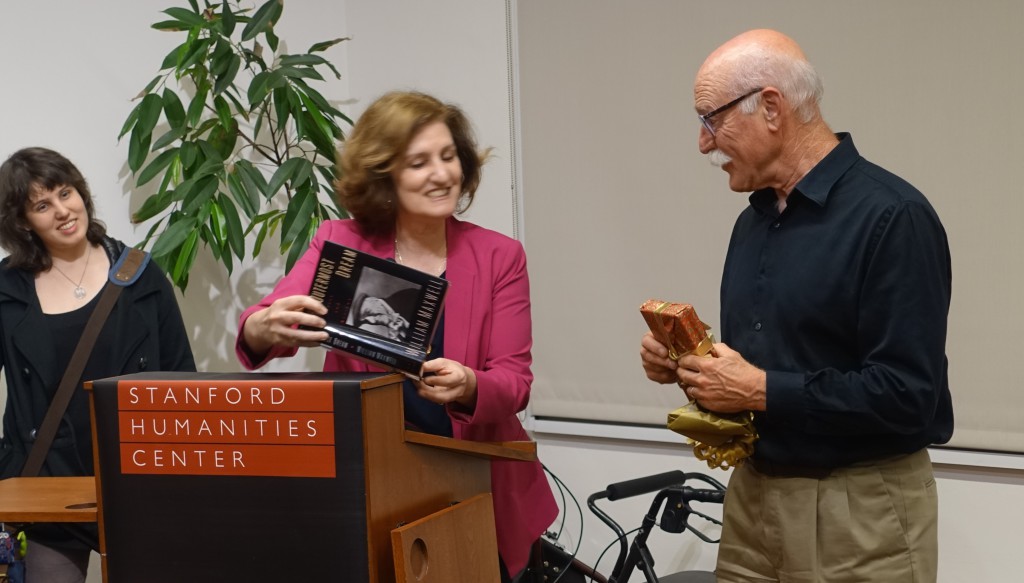
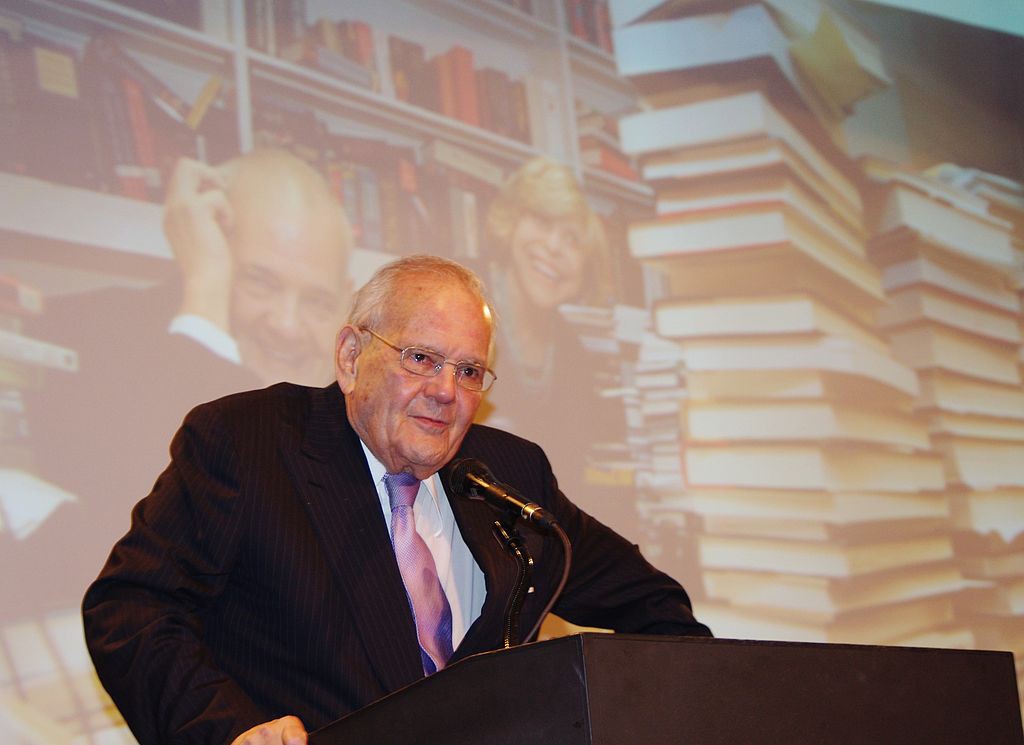
In 2012, accepting the Ivan Sandroff Lifetime Achievement Award. (Photo: David Shankbone)


It’s been a season for death, we’ve written about the Nobel poet and playwright Derek Walcott and the emerging writer Okla Elliott – so the passing of the legendary editor and founder of the New York Review of Books editor Robert Silvers caught us somewhat off-guard. My contact with him was about two emails in total, but we have mutual friends, including Robert Pogue Harrison, Ann Kjellberg, and Mark Danner. And some of them had something to say.
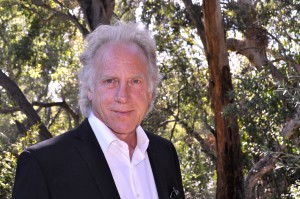
harrison3

Harrison

“Robert Silvers is one of the truly great heroes of our time.  For five decades running he gave us 24 issues of The New York Review a year, each one of them a treasure in itself.  Nothing compares with the sum total of that cultural capital.  It is unadulterated gold, and we owe it all to him.” That was from Robert Harrison, a regular contributor to the NYRB (we’ve written about him here and here and here).

“We miss him already. We missed him instantly,” wrote Lorrie Moore in the New Yorker. “Bob was an editor so hiply catholic in his tastes and interests, and so limber and youthful in his receptivity, that he was game for practically any cultural commentary one could imagine: meditations on regional politics, reports on television programs, every manner of book, film, or event. Gameness is a beautiful quality in a person. Before I moved to Nashville, in 2014, he gave me a plastic packet of press passes and said, “See what you find down there. I’m sure it will be interesting. There might be a gun show you will want to write about.”

From the Washington Post’Christian Caryl:

Lorrie_Moore

Moore

He loved ideas but looked askance at ideologies. His guides were Czeslaw Milosz’s book The Captive Mind, which explored coming of age under Stalinism, and George Orwell’s essay “Politics and the English Language.” These works shared a realization that language, for all of its power to forge connections and create communities, could also be turned to nefarious ends when harnessed by dehumanizing philosophies. For Bob, getting at the truth wasn’t just a laudable exercise — it was also a vital ethical and political act, one that he pursued with unwavering single-mindedness, every day.

This respect for the truth, which he managed to uphold without a trace of sanctimony or pompousness, was closely linked to his second prominent trait, a deep sense of empathy with other human beings. In the 1960s the Review commissioned a whole stable of writers — most notably, perhaps, the dogged investigative journalist I.F. Stone — to report on the catastrophe of Vietnam, predictably outraging conservatives. But the magazine also went on to embrace Soviet Bloc dissidents, defending Andrei Sakharov and Alexander Solzhenitsyn, to the horror of many of Bob’s friends on the left. (The New York Review was one of the first American publications to examine the Soviet Union’s use of psychiatric clinics against dissidents.) The magazine defended physicist Fang Lizhi, one of the greatest critics of the Chinese Communist Party, and Desmond Tutu, a leader of the fight against apartheid.
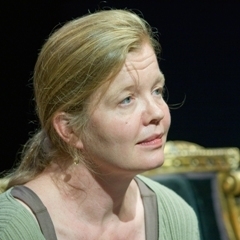
kjellberg

Kjellberg

In the 1990s Bob commissioned journalist Mark Danner to chronicle the war in the former Yugoslavia, exhaustively detailing Serb aggression. But in 1999 he also published a memorable essay by U.S. poet Charles Simic (who also happened to be an especially eloquent critic of Slobodan Milosevic) mourning the NATO bombing of Belgrade during the intervention in Kosovo.

Ann Kjellberg, a deputy editor at the Review who went to work for Bob in 1988, recalls how the Review resoundingly condemned the onset of the war in Iraq in 2003, citing the devastation that was likely to result. The liberal magazine The Nation then published an article praising Bob for returning to his left-wing origins, but he didn’t see it that way at all.

“It was a continuum,” Kjellberg says. “He was always sensitive to state overreach. He was always asking the questions, ‘How many civilians are being killed? Who’s dying? Who’s in prison?’ It wasn’t ideological. He always brought it back to the human.” And he was doing it right up to the end, allowing his writers to examine the darkness of the Syrian civil war, the crackdown in Egypt in the wake of the Arab Spring, the slow-motion collapse of Europe as an idea.
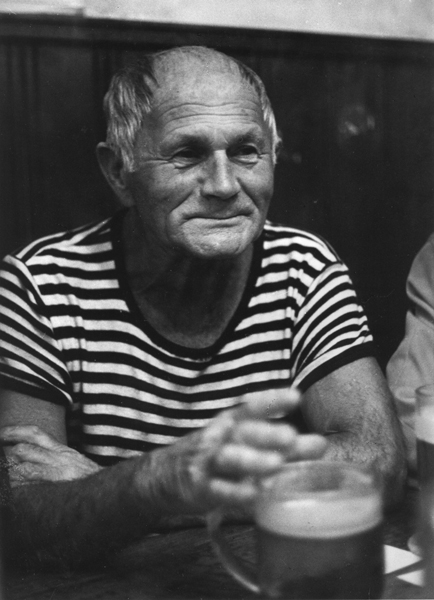
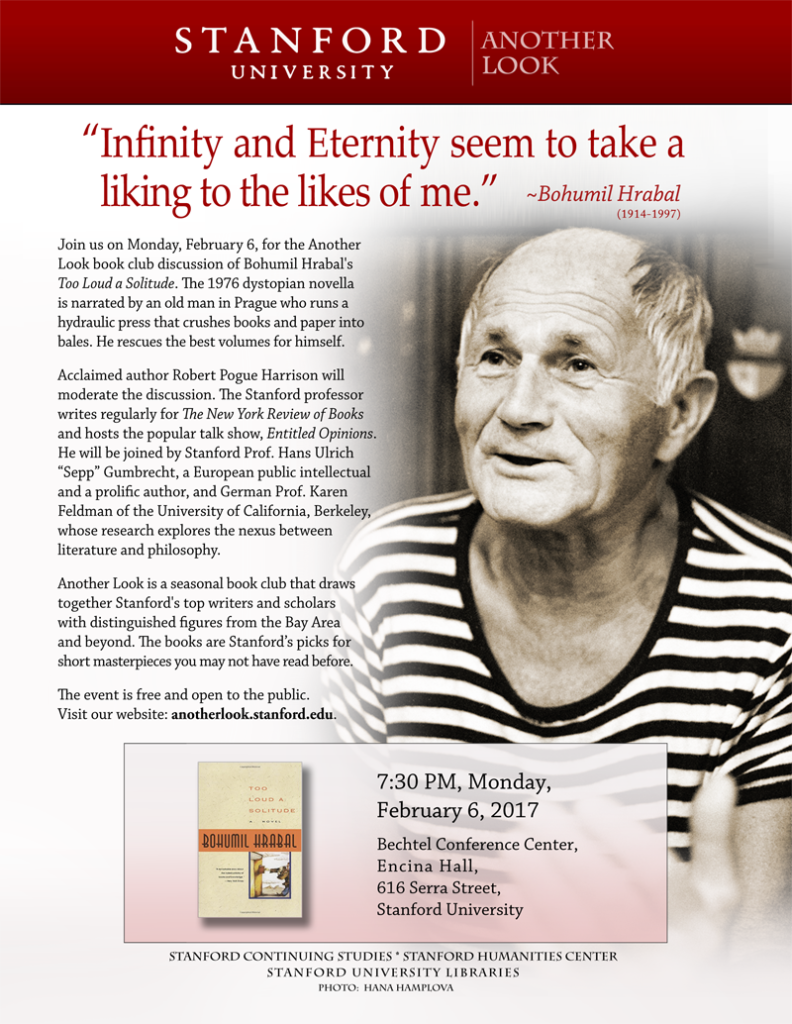
 

Another Look spotlights Bohumil Hrabal’s Too Loud a Solitude on Feb. 6: “a 98-page, lightning strike of a novel”

Share
bohumil-hrabal

“If a book has anything to say, it burns with a quiet laugh, because any book worth its salt points up and out of itself.” (Photo: Hana Hamplová)

Over the years, Bohumil Hrabal‘s Too Loud a Solitude has had its fans. Peter Orner is one of them. Writing in “Night Train to Split” in Guernica (an excerpt from his new book Am I Alone Here?: Notes on Living to Read and Reading to Live (Catapult):
 .
“The first time I finished Too Loud a Solitude, I was up in Letná Park, and I remember leaping off the bench and running around in circles, holding the book above my head and shouting because I believed I’d experienced some religious illumination. A brief, ninety-eight-page, lightning strike of a novel, the book is about a man named Haňťa who has been crushing paper beneath a street in Prague for the last thirty-five years. People throw paper and books, books by the barrelful, down Haňťa’s hole in the pavement. Before he crushes them, Haňťa reads. The book of Ecclesiastes, the Talmud, Goethe, Schiller, Nietzsche, Immanuel Kant’s Theory of the Heavens. Kant, who argues that the heavens are not humane, nor is life above or below.”
.
.At 7:30 p.m. on Monday, February 6, at the Bechtel Conference Center, the Another Look book club will discuss Czech author Hrabal’s Too Loud a Solitude, a dystopian novella on the indestructibility of the written word.
Too Loud a Solitude is an elegy for literacy. It is also about how worship of unfettered technological progress invariably results in a trouncing of the human spirit. And it is about how only individual human memory has the unique power to redeem us,” Orner writes (read the whole thing here).
 .
Hrabal’s novella was published in a samizdat edition in Prague in 1976, and later published more widely after Communist rule ended in 1989. Its aging narrator runs a hydraulic press that crushes books and paper into bales. He rescues the best volumes for himself, and over time his thoughts and feelings merge with the treasures from the past – Hegel and the Talmud, Lao-Tze and Kant. According to the New York Times, “Mr. Hrabal’s is a cry of expiring humanism, and Too Loud a Solitude is a book to salvage from the deadly indifference that is more effective in killing the letter than the most sophisticated compacting machine.” You can read the New York Times review here.
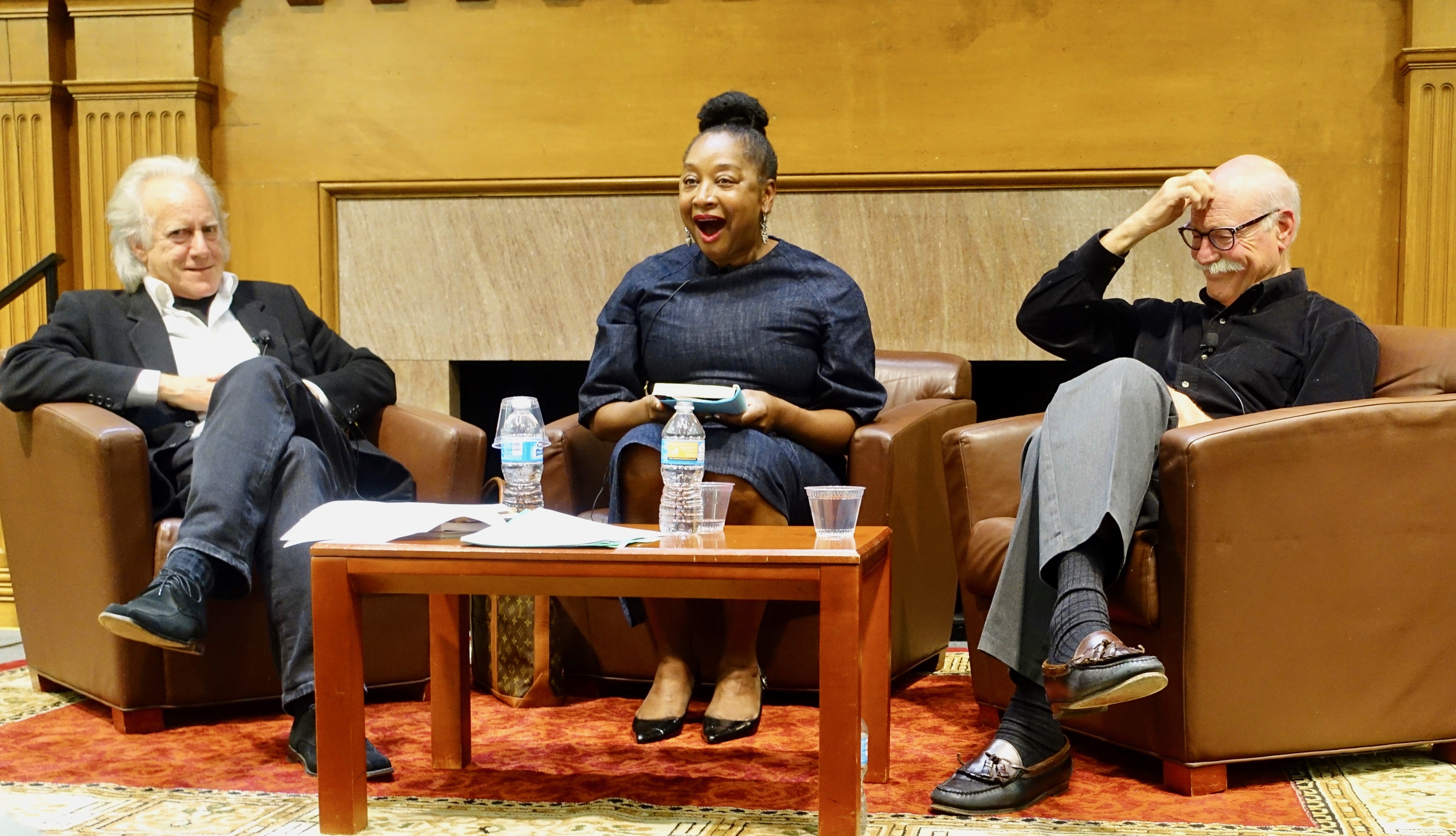
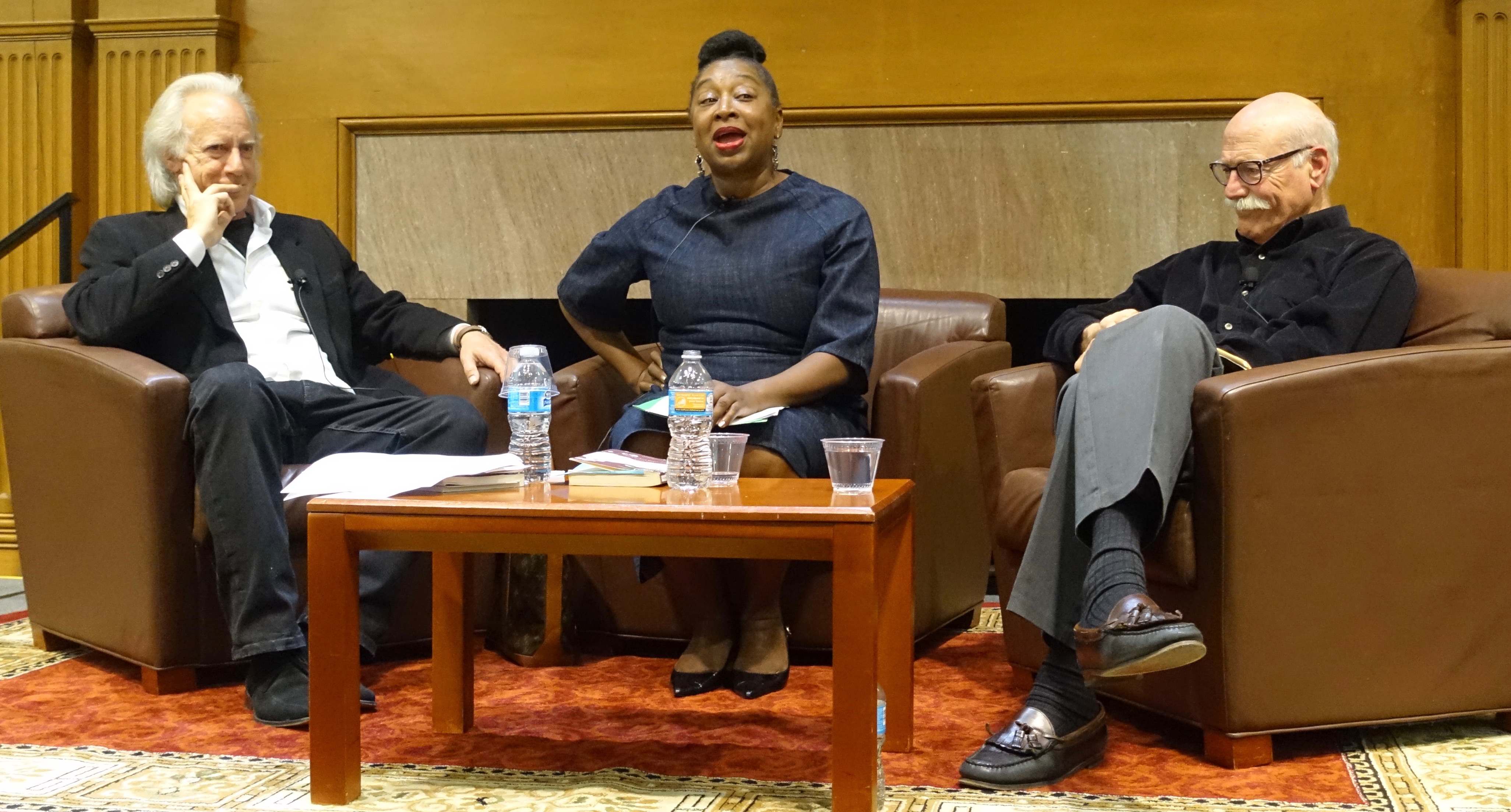
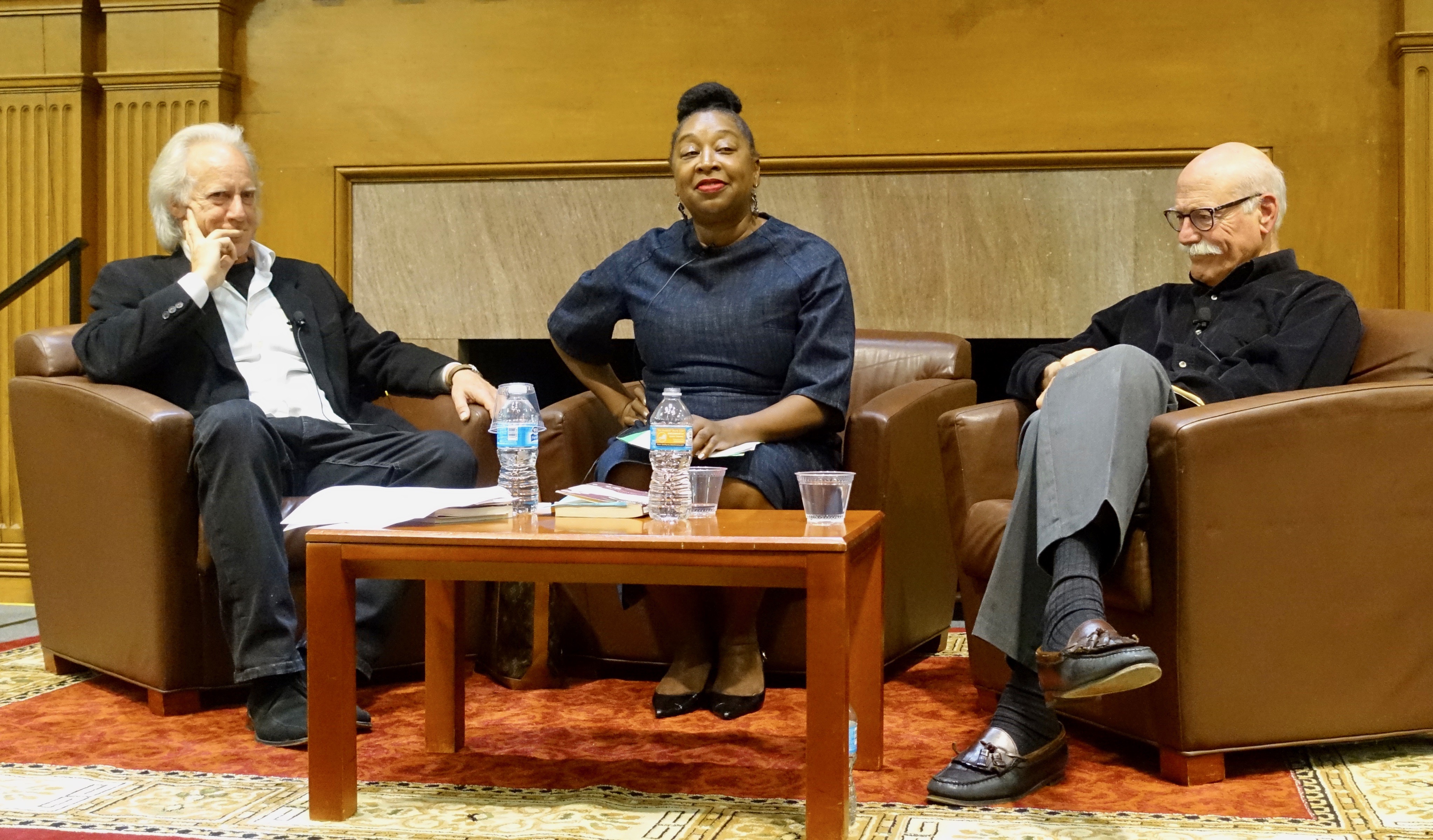
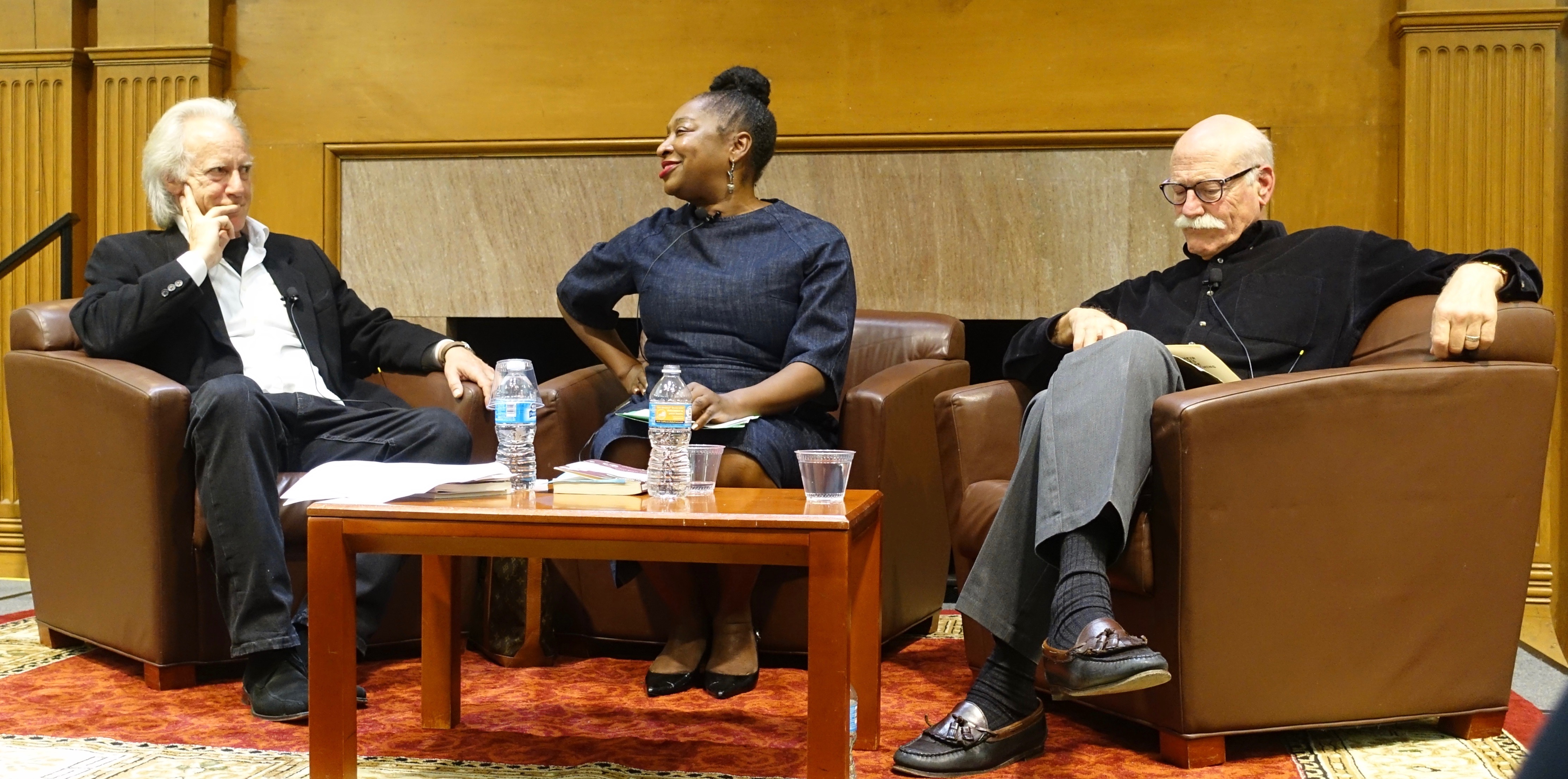
Acclaimed author Robert Pogue Harrison will moderate the discussion. The Stanford professor who is Another Look’s director writes regularly for The New York Review of Books and hosts the popular talk show, Entitled Opinions. He will be joined by Stanford Prof. Hans Ulrich “Sepp” Gumbrecht, a European public intellectual and a prolific author, and German Prof. Karen Feldman of the University of California, Berkeley, whose research explores the nexus between literature and philosophy.
 .
Another Look is a seasonal book club that draws together Stanford’s top writers and scholars with distinguished figures from the Bay Area and beyond. The books are Stanford’s picks for short masterpieces you may not have read before. The events are free and open to the public.

Too Loud a Solitude is available at Stanford Bookstore, and also will stocked at Kepler’s in Menlo Park and Bell’s Books in Palo Alto.
.
hrabal-poster-EMAIL

A glorious evening with Zora Neale Hurston’s Their Eyes Were Watching God!

Share

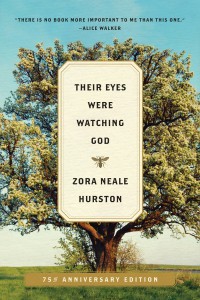
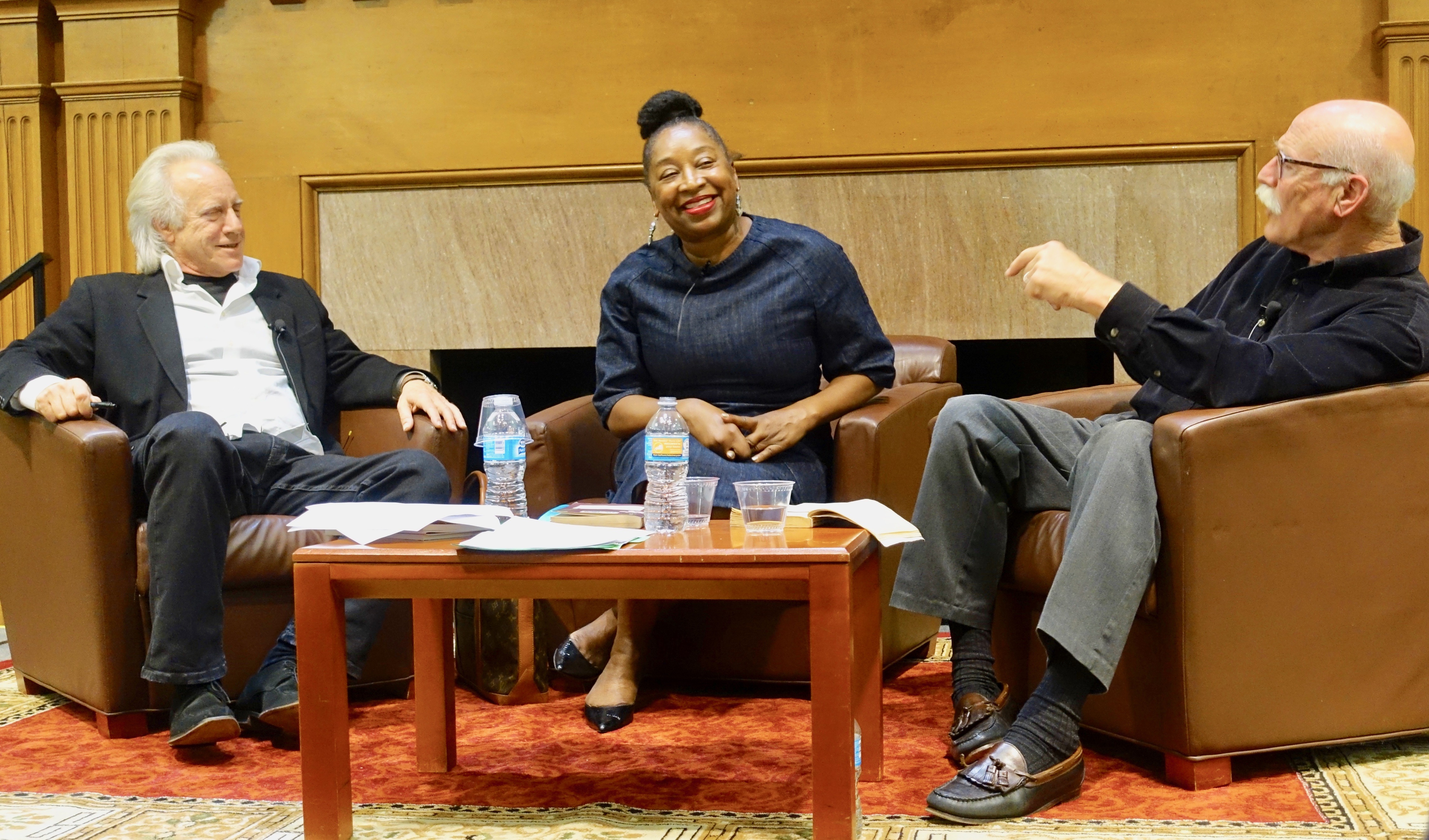
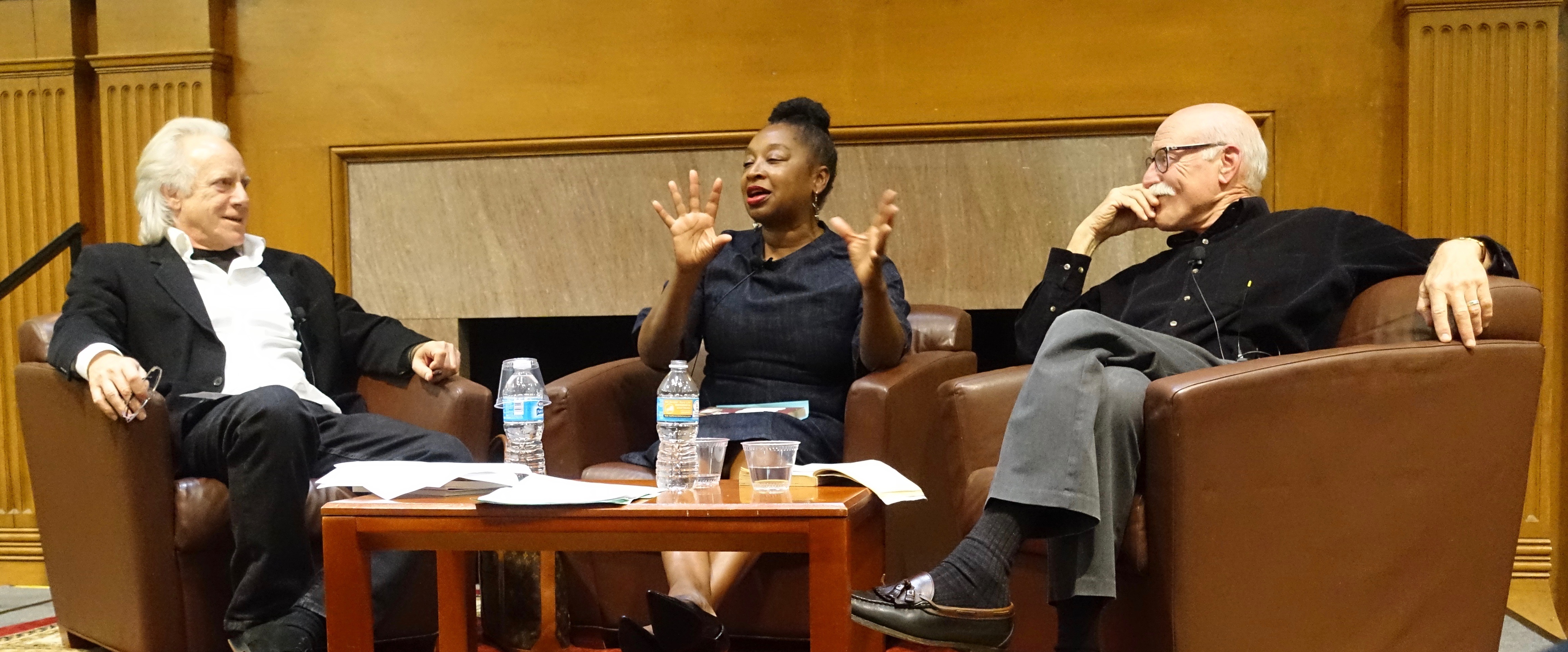
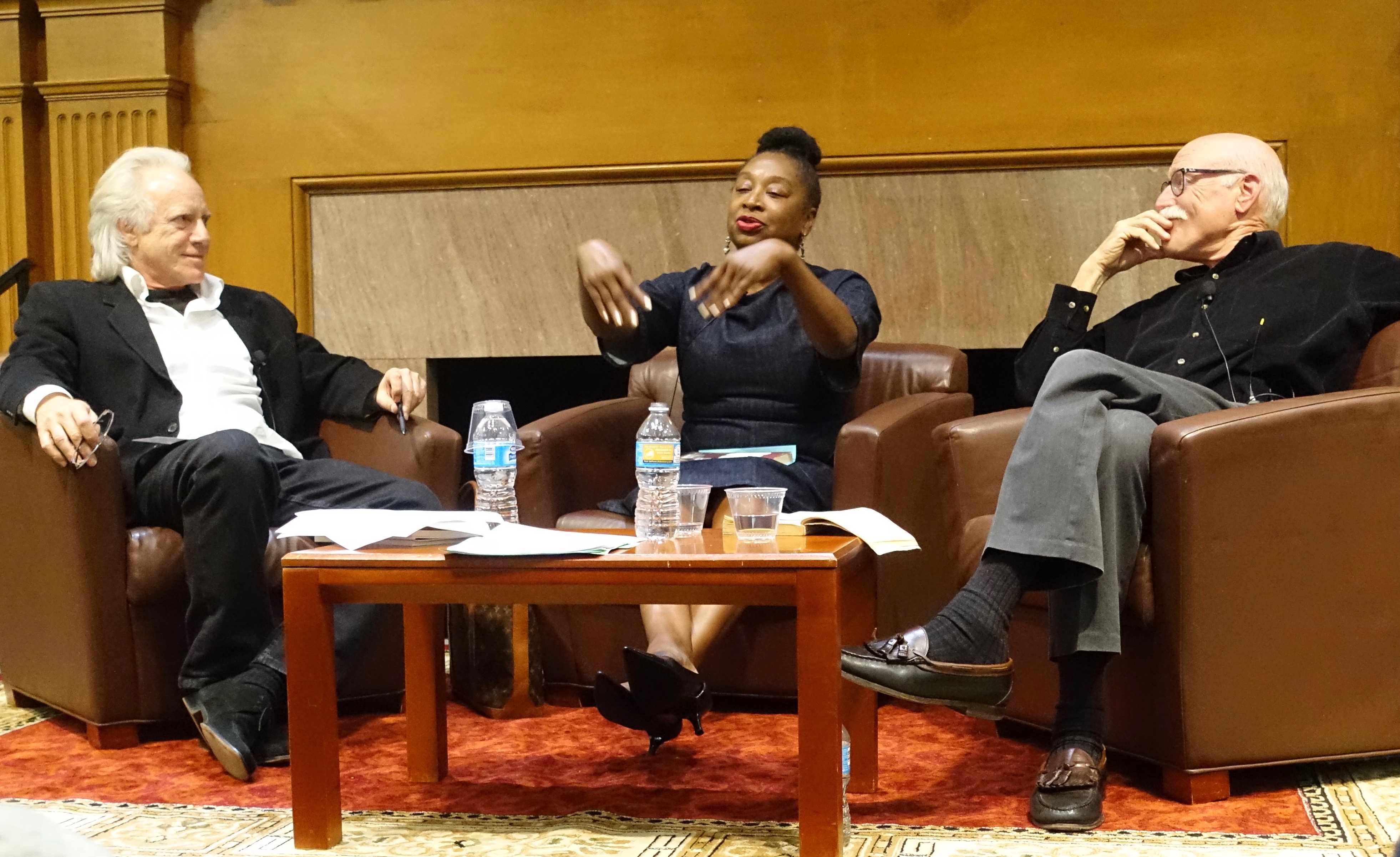
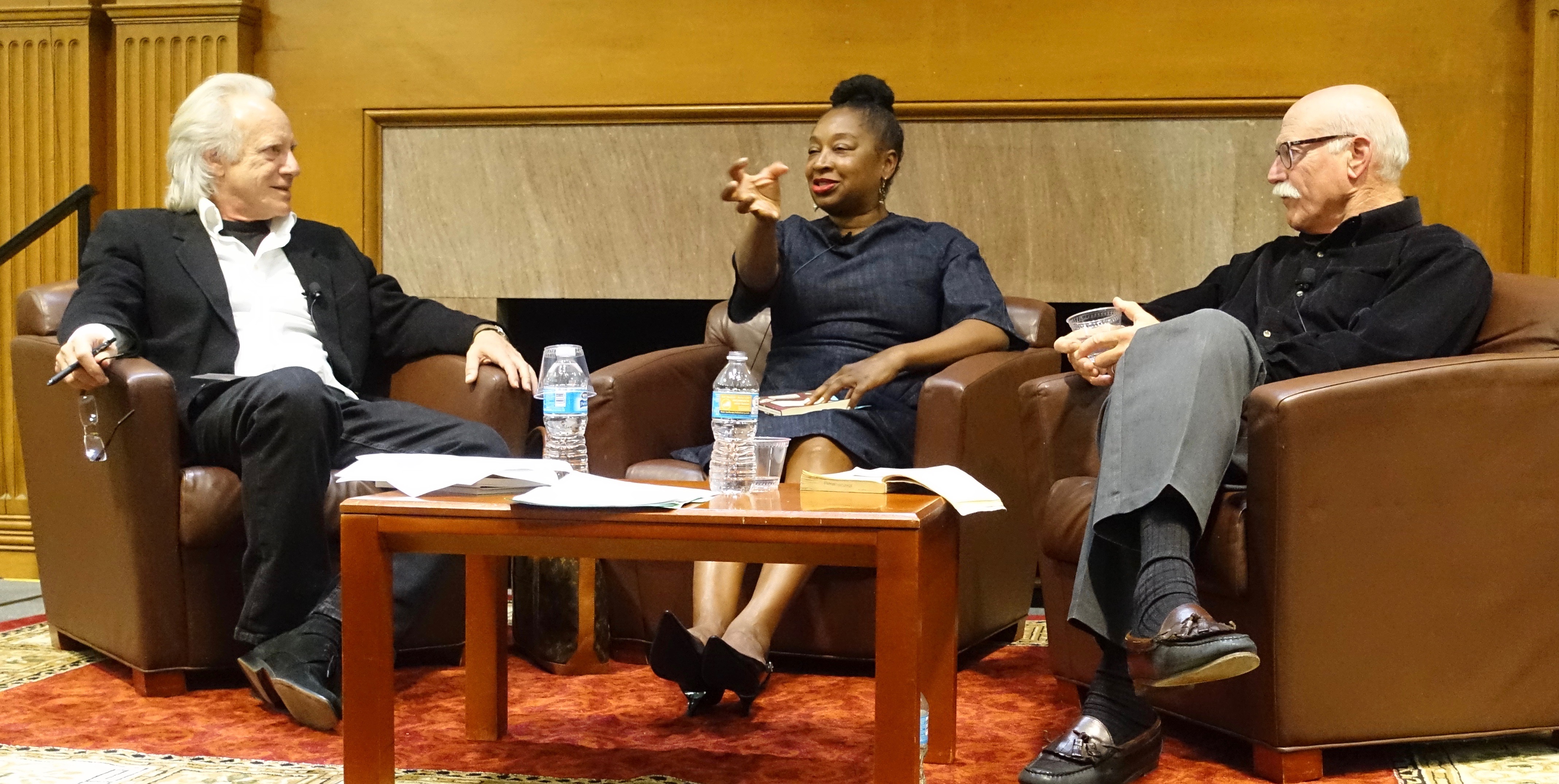
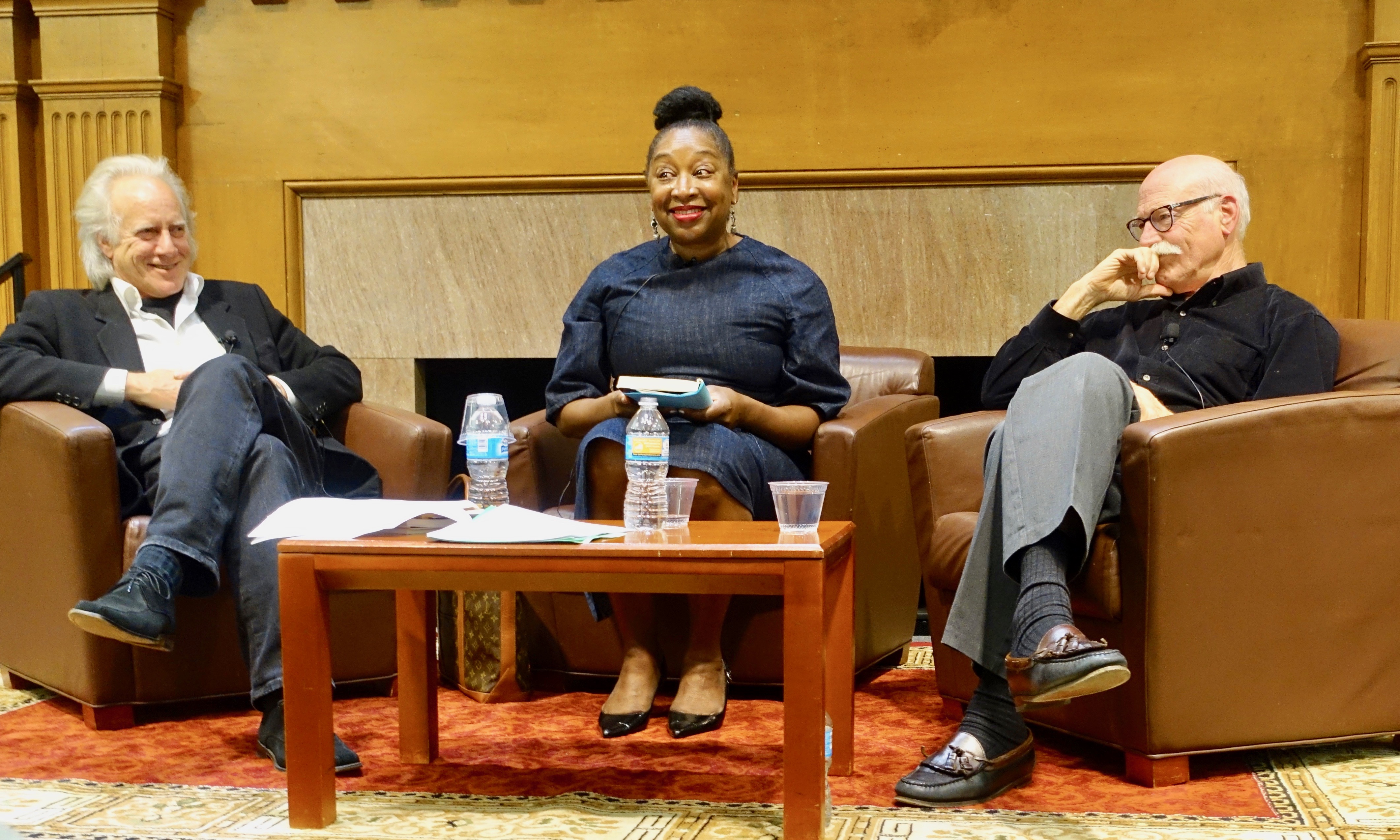
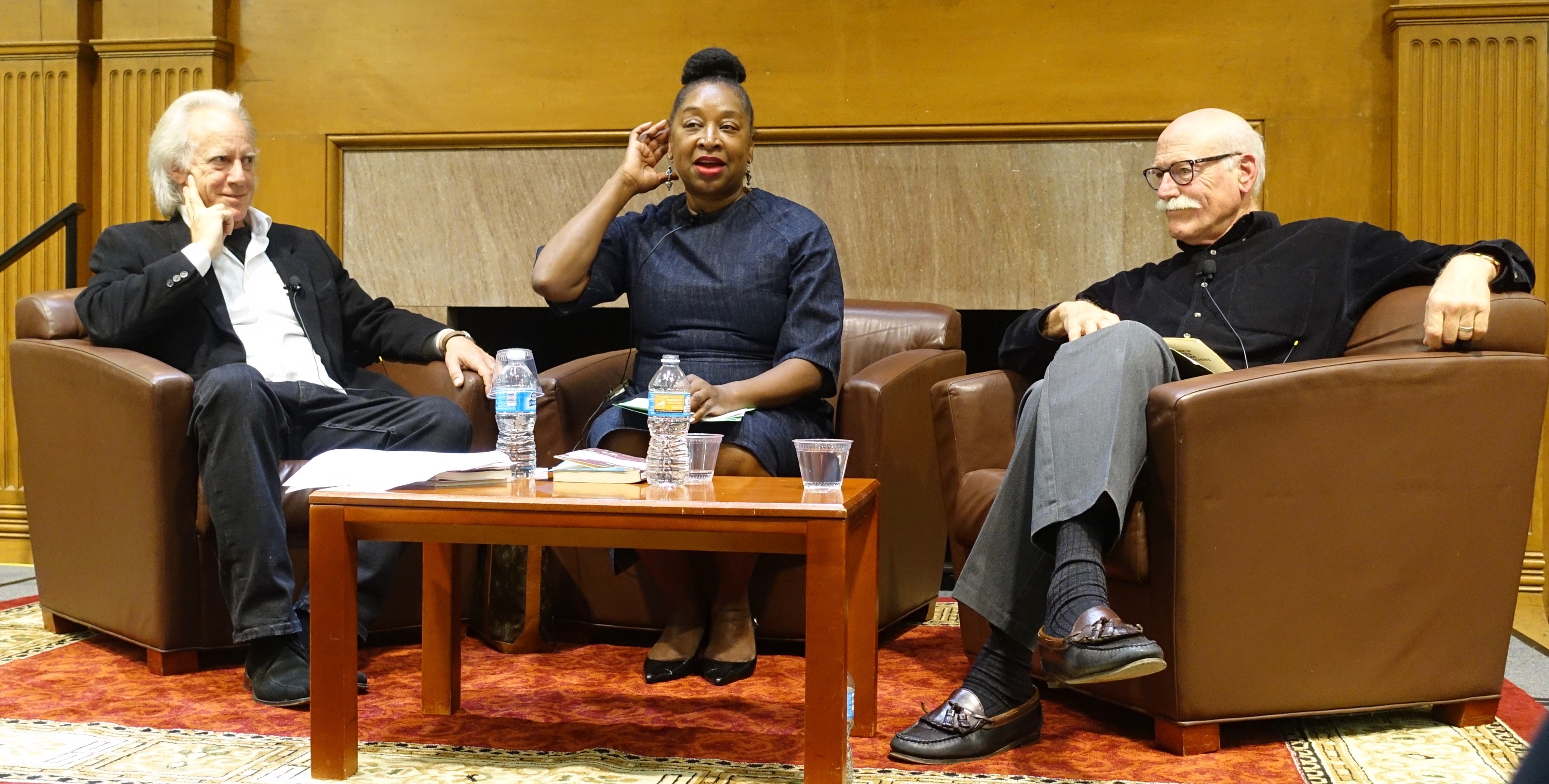
dsc09023Zora Neale Hurston‘s Their Eyes Were Watching God made for an exuberant and provocative discussion on the evening of Monday, October 24 – and a record-breaking amount of audience participation. It was a full house, and it rocked. Couldn’t make it? The podcast is already available here.

Another Look’s director Robert Pogue Harrison moderated the lively discussion as best he could. Harrison is an acclaimed author and professor of Italian literature who writes regularly for the New York Review of Books and hosts the popular talk show, “Entitled Opinions.”

theireyeswatchinggod-pb-cHe was joined by Aleta Hayes, Stanford dance lecturer and founder of the dance troupe Chocolate Heads, and Tobias Wolff, National Medal of Arts winner, who is one of America’s foremost writers, as well as an English professor emeritus at Stanford. And perhaps the spirit of Hurston as well. (Among the podcast highlights: Aleta sings the spiritual that’s in the book.)

Another Look is a seasonal book club that draws together Stanford’s top writers and scholars with distinguished figures from the Bay Area and beyond. The books selected have been Stanford’s picks for short masterpieces you may not have read before.

Loyal Another Look fan and photographer David Schwartz recorded the caught the flavor of the discussion in the photos below.


dsc09100

dsc09087

dsc09086

dsc09077

dsc09075

dsc09051

dsc09050

dsc09038

dsc09035

dsc09034

dsc09033

dsc09032

Join us on Monday, Oct. 24, for Zora Neale Hurston’s Their Eyes Were Watching God, an American masterpiece!

Share

“There are years that ask questions and years that answer.”
.

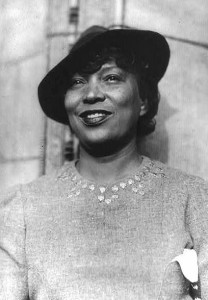
hurston-zora-neale-loc

Almost forgotten, now a classic

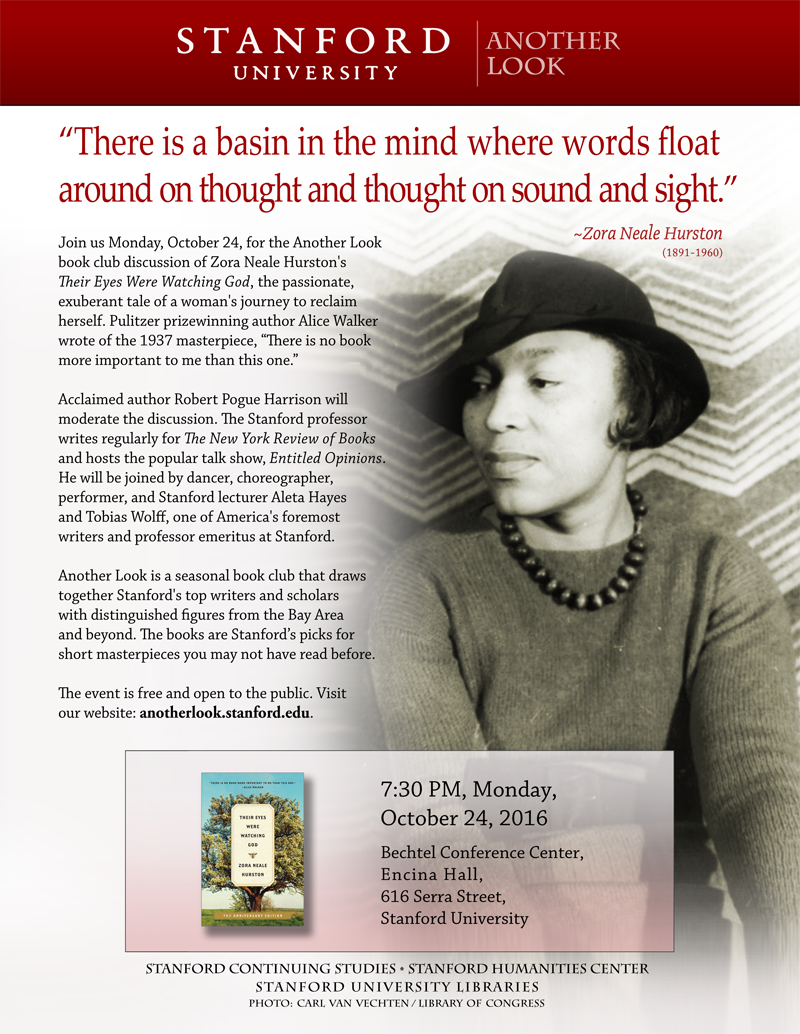
Zora Neale Hurston was a leading figure in the Harlem Renaissance. Then she all but disappeared, finally working in obscurity as a substitute teacher and a maid before her 1960 death in a county welfare home. The folklorist, anthropologist, and writer left behind four novels as well as short stories, plays, and essays. Foremost among them is Their Eyes Were Watching God, the passionate, exuberant tale of a woman’s journey to reclaim herself. The book will be Another Look’s fall offering.

For thirty years after its 1937 publication, Their Eyes was out of print and attacked for its portrayal of black people, when it was remembered at all. By the 1970s, however, it had been rediscovered as a masterpiece. Pulitzer prizewinning author Alice Walker wrote, “There is no book more important to me than this one.”

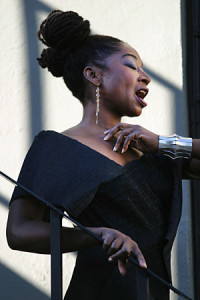
aleta

Aleta, a Stanford star

Join us for a discussion of this short, mesmerizing American classic at 7:30 p.m. on Monday, October 24, at Encina Hall’s Bechtel Conference Center on the Stanford campus.

Another Look’s director Robert Pogue Harrison will moderate the discussion. Harrison is an acclaimed author and professor of Italian literature who writes regularly for the New York Review of Books and hosts the popular talk show, “Entitled Opinions.” He will be joined by Aleta Hayes, Stanford dance lecturer and founder of the dance troupe Chocolate Heads, and Tobias Wolff, National Medal of Arts winner, who is one of America’s foremost writers, as well as an English professor emeritus at Stanford.

Another Look is a seasonal book club that draws together Stanford’s top writers and scholars with distinguished figures from the Bay Area and beyond. The books selected have been Stanford’s picks for short masterpieces you may not have read before.

The event is free and open to the public. Come early for best seats. Books are available at the Stanford Bookstore on the Stanford campus, Kepler’s in Menlo Park, and Bell’s Books in Palo Alto.

hurston-poster-email


The Stanford book club that rocks the news

Share
camus5

Toby Wolff’s Another Look send-off last spring. (Photo: David Schwartz)

Author Peter Stansky‘s “A Company of Authors,” the annual event where Stanford authors present their books, had its best day ever last Saturday. As I told Stanford Report“The author presentations were eloquent and excellent, without exception, and the audience questions ensured the discussion was spirited and intelligent.” And longtime Hoover fellow Paul Caringella even gave an impromptu pitch for my forthcoming René Girard biography. What’s not to like?

“I always find these occasions extremely exhilarating,” Peter said. “The heart of the university is the life of the mind and you could not have a better example of that than in the books that their authors presented here today.”

Well, you can read the whole thing here. Nearly everyone stayed through all the presentations, and the excited and audible buzz in the lobby afterwards told the story.

And I told a story, too, during my ten-minute solo for “The Wonderful World of Books at Stanford.” Peter introduced me as “the leading figure at Stanford in keeping us involved in so many exciting ways in the world of books.” So I took up the cause of the Another Look book club it has been my privilege to manage for four years. Here’s what I said:

I’m here to tell you the Another Look story. It’s a good story, and I’ve been proud to be part of it. I think you’ll like it because it’s a story about books finding their people.

camus-8

Founder Tobias Wolff. (Photo: David Schwartz)

Four years ago, the distinguished author Tobias Wolff – who was recently named a recipient of the National Medal of the Arts – approached me with an idea: he wanted to create a forum where members of the community would interact with Stanford writers, scholars, and literary figures in the world beyond, to talk about the books they love. He wanted the first book to be a beloved favorite, William Maxwells So Long See You Tomorrow. He asked me if I could make all this happen. Frankly, I have to say, I was doubtful. The term “book club” did not have good associations for me. But as we hashed it out, I realized my issues were two-fold: first, I figured most people, like me, didn’t have the hours and hours to read long books of other people’s choosing; and second, the books tended to be mainstream, middlebrow, middle-of-the-road “safe” choices.

Inspired by Maxwell’s novel, we decided that we would focus on short books – short enough for Bay Area professionals who are pressed for time, and who may spend their days going through legal briefs or medical documents. Also, we would focus on books that were forgotten, overlooked, or simply haven’t received the audience they merit. We would call it “Another Look.” It would be for people who wanted to be part of the world of books and literature – a world they may have lost touch with once they left university. They would be connoisseurs’ choices for books you must read – discussed and even championed by the people who love them.

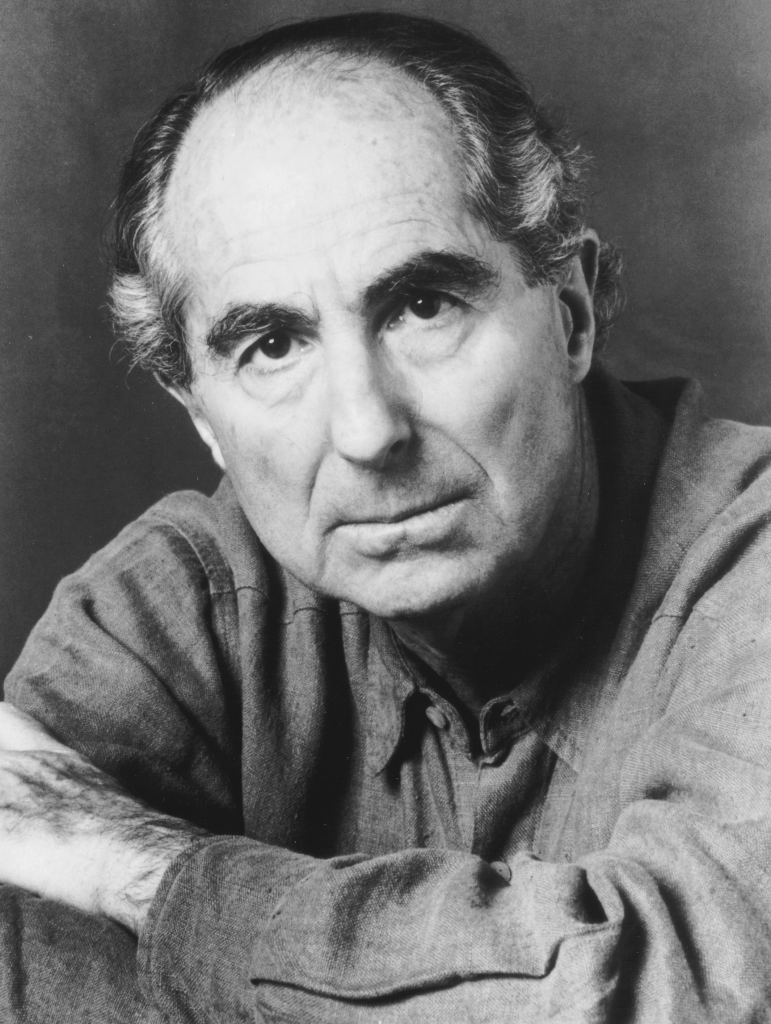
Not delusional. (Photo: Nancy Crampton)

Nobless oblige. (Photo: Nancy Crampton)

We had a full house the first night, and our audiences have been steadily climbing upward ever since. One highpoint: for Philip Roth‘s The Ghost Writer, we were joined by Michael Chabon and Ayelet Waldman. It was the only time to date we have had a living author. And although he had become something of a recluse, I decided to see if I could interview him. The subsequent Q&A was published on The Book Haven and republished in La Repubblica, Le Monde, and Die Welt. It made the international press, and the high-profile Another Look was featured in The Guardian.

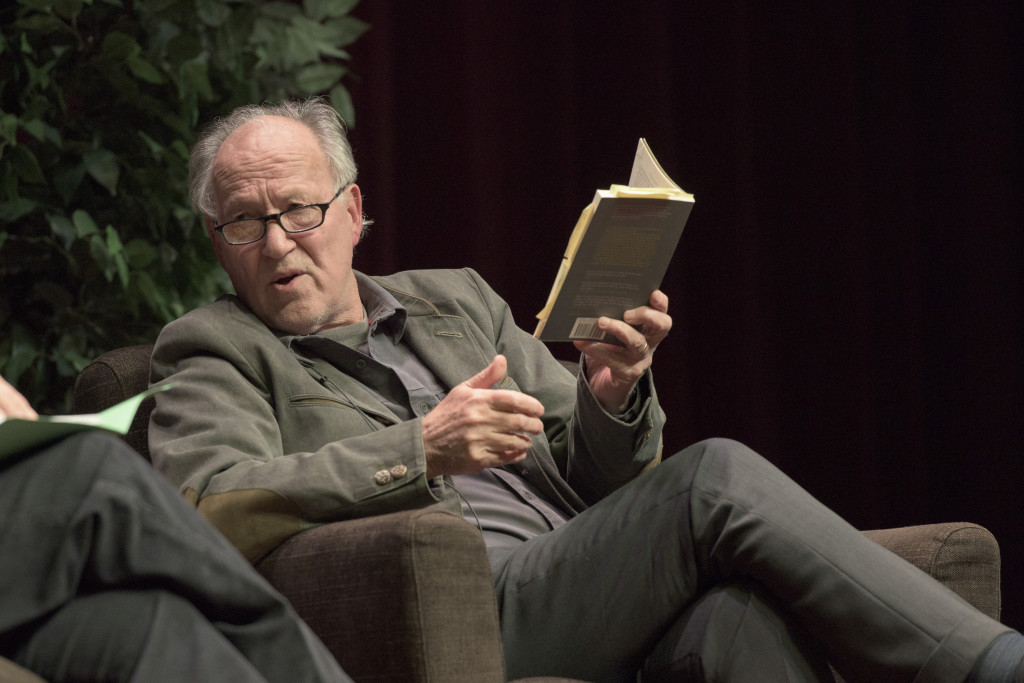
Toby retired … or said he was going to retire … last year (he was recalled for another year, but that’s another story). When we announced that Another Look was going to close shop a year ago, we got record numbers of people attending our event for Albert Camus‘s The Stranger – a book, Toby claimed, that was more honored than read. One member in the audience, the acclaimed author Robert Pogue Harrison, stepped forward that night to offer to assume the directorship of the program. We’ve developed subscribers’ list pushing up to 1,400. Our February’s event with Werner Herzog at Dinkelspiel Auditorium, discussing J.A. Baker‘s The Peregrine, is now on youtube, in both highlights and full-length version. (The event was covered by San Francisco Chronicle columnist Caille Millner here.) The repercussions of that powerful book event will continue to unfold in the months to come.

Legendary film director Werner Herzog discusses J.A. Baker's book The Peregrine at the Feb. 2 Another Look book club event.

Legendary film director Werner Herzog discusses J.A. Baker’s book The Peregrine at the Feb. 2 Another Look book club event. (Photo: L.A. Cicero)

It’s been enormously gratifying for me personally to be the point of contact with all of you in our book-loving Bay Area community – and sometimes around the nation and world, too. We have one aficionado driving in from Carmel – others write from far-flung places to tell me they’re reading along with us. And Toby has talked about this program, during his speaking engagements around the country. He’s proud of his brainchild, too.

Why am I so keen on this program? Because it’s rocked my world. Those who know me as a literary journalist know that I’ve sunk my time into the world of Eastern European poets, particularly Nobel laureate Czesław Miłosz, and more recently, into the French theorist René Girard, a longtime Stanford faculty member, a dear friend, and the subject of my biography. Hence, there are huge holes in my knowledge of modern fiction, and particularly American fiction. Without too much investment of time, I’ve caught up with a lot of writers I’d somehow missed. No membership fees, no meetings with minutes, no commitments – just show up, please!

So please join us next month, on Tuesday, May 10, at the Bechtel Conference Center, when we discuss Joseph Conrads novella The Shadow-Line. The story will run in Stanford Report Monday and be on the Stanford news website – we have books in the lobby. Meanwhile, take some freshly minted bookmarks – and take a few for your friends who might be interested, too.

Another Look book club spotlights Joseph Conrad’s Shadow-Line on May 10

Share
conrad-ship

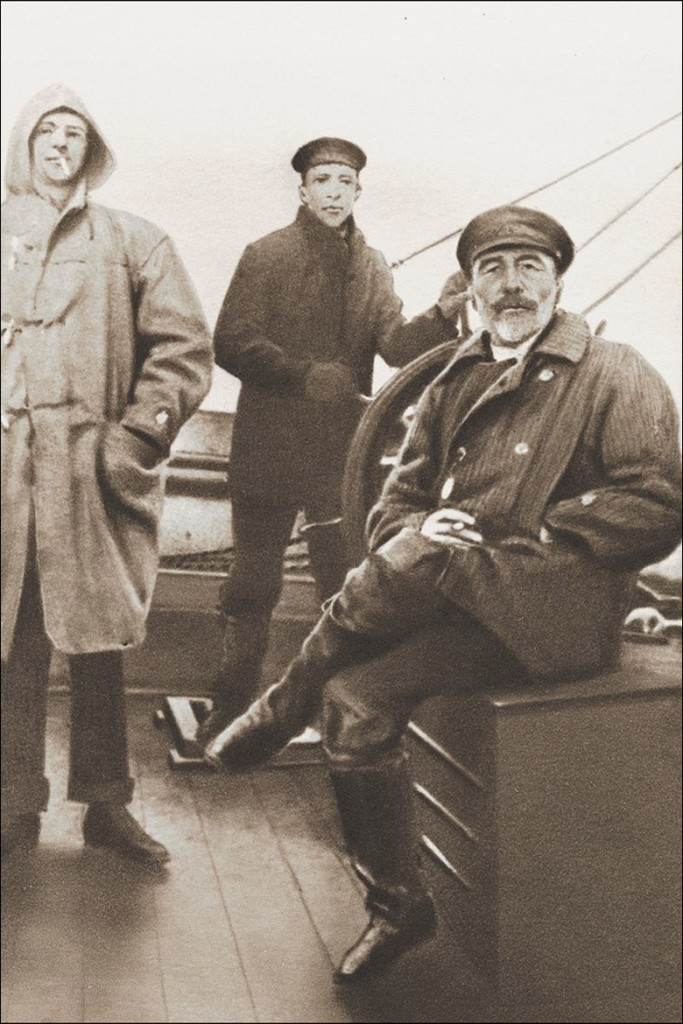
Joseph Conrad (foreground) on board the special service ship Ready in 1916. He wrote The Shadow-Line on his return from the voyage. (Image credit: Beinecke Rare Book and Manuscript Library, Yale University)

The author Joseph Conrad insisted his work The Shadow-Line: A Confession was not a book about the supernatural. But sometimes the real can be spookier than the imagined, and what we observe outpaces our worst nightmares. So it is with Conrad’s late novella.

“The belief in a supernatural source of evil is not necessary; men alone are quite capable of every wickedness,” Conrad said a few years before World War I. Certainly the rest of the century bore out his conclusions.

The Another Look book club will discuss Conrad’s 1917 novella and the Polish author at 7:30 p.m. Tuesday, May 10, in the Bechtel Conference Room of Encina Hall. The Shadow-Line is available at Stanford Bookstore, Kepler’s in Menlo Park and Bell’s Books in Palo Alto.

The panel will be moderated by Another Look director Robert Pogue Harrison, an acclaimed author and professor of Italian literature. Harrison is a regular contributor to the New York Review of Booksand the host for the popular radio talk show Entitled Opinions. He will be joined by drama Professor Rush Rehm, artistic director of the Stanford Repertory Theater, and Monika Greenleaf, associate professor of Slavic languages and literatures and of comparative literature.

The event is free and open to the public.

“I chose this short novel because of its exquisite prose and quintessentially Conradian drama,” Harrison said. “It probes the enigma of fate by putting circumstance, landscape and depth psychology into play all at the same time.”

He added, “Conrad is a master when it comes to putting his characters through trials. The Shadow-Line is one of the most intense of Conradian trials of character. It is not one of his best known novels and is certainly deserving of another look.”

Conrad’s short masterpiece describes the “green sickness” of late youth, when a young man desires to “flee from the menace of emptiness.” The unnamed narrator’s flight ends when he is captain of a merchant ship in Southeast Asia; the terrors of sickness and the sea bring him to grief, maturity and wisdom.

In a two-page author’s note, Conrad denies the supernatural has anything to do with his story. We are meant, then, not to draw a line between the mate’s superstitious and feverish fear of his former captain, buried at sea, and the destruction of the ship to weather, wind and contagious fever. The mate says the ship will not have luck until it passes the spot where the reckless and demented captain was put overboard.

conrad2

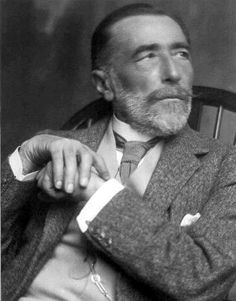
(Courtesy Beinecke Rare Book and Manuscript Library)

The Shadow-Line can also be read as a psychological study of the disintegration of an entire ship’s crew. That would be in keeping with Conrad’s worldview; he once called life a “mysterious arrangement of merciless logic for a futile purpose. The most you can hope from it is some knowledge of yourself – that comes too late – a crop of inextinguishable regrets.”

The year The Shadow-Line was published, The Argus praised the novel: “It holds the reader under a spell so strong that the book must be finished at one sitting, and even when it is laid aside it keeps its grip on the memory, and the impression left remains with a curious persistence.”

The Sunday Times wrote, in 1917, “Mr. Conrad is an expert in the business of suggesting mystery and the action of malevolent agencies and the endurance of a man under the buffets of fate. Not even Coleridge has held passers-by more spellbound under a tale of horrors on the ocean than does Mr. Conrad in this work.”

Józef Teodor Konrad Korzeniowski – Joseph Conrad – was born in 1857 in a largely Jewish village in territory that is now Ukraine; it had been part of the Polish-Lithuanian Respublica before partition, and at the time of his birth was part of the Russian Empire. His father was a Polish patriot and man of letters, and the family had a migratory existence. Conrad began a seafaring career as a teenager, and eventually joined the British merchant marine and became an English citizen.

He was one of the very few writers to establish his literary reputation in a foreign tongue. (Vladimir Nabokov comes to mind as well, but the author of Pale Fire and Lolita was reared in an aristocratic Russian family; however, he later claimed English was the first language he learned in his trilingual household.)

World War I was much on Conrad’s mind as he wrote Shadow-Land, and the book is dedicated to his son Borys, a soldier. By the time it was published, Borys had returned from the front, shell-shocked and gassed in the new technology of warfare. The war’s end would change forever the face of the Europe Conrad remembered.

Shortly after the war, a visitor to the Conrad household observed: “Conrad spoke fluently, but his accent, his manner of expression were such as I observed among the inhabitants of the south-eastern Polish borderlands. One felt clearly that when he thought of Poland, it was of a Poland of half-a-century ago. When I listened to him, I could not evade the impression that I am being carried back in time and talk to one of the people of long ago.”

 Another Look is a seasonal book club that draws together Stanford’s top writers and scholars with distinguished figures from the Bay Area and beyond. The books selected are short masterpieces you may not have read before. This article is republished from my Stanford Report piece here.