
Coming attractions: “René Girard: All Desire Is a Desire for Being” will be out with Penguin Modern Classics next spring!

Featured

Share

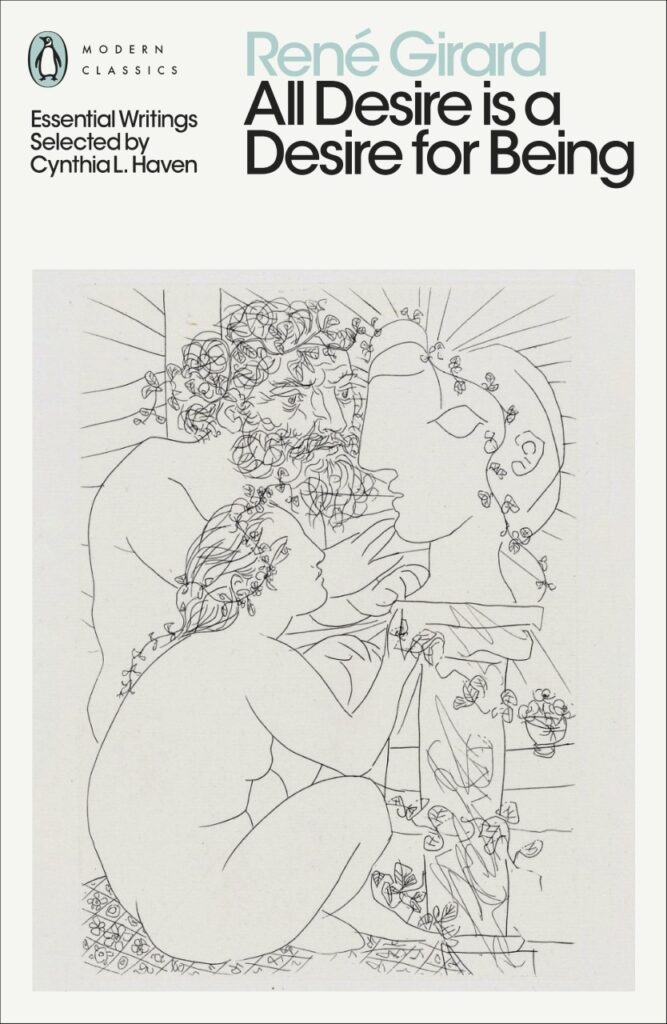
Proud to show off my new anthology: René Girard: All Desire Is a Desire for Being, published by Penguin Modern Classics in London. The cover illustration below features Pablo Picasso‘s 1933 etching, “Sculpteur Avec Son Modele, Sa Sculpture Et Un Bol D’Anemones” (Sculptor with His Model, His Sculpture, and a Bowl of Anemones).

René Girard would have loved the cover, I think. He knew Picasso during that magical summer of 1947, when René and his friends launched the Avignon Festival. (The actor Jean Vilar joined later, and the festival became known for its theater, not the art exhibition that started it.) René shared many fond memories of Picasso with me. A few of them are in remembered in Evolution of Desire: A Life of René Girard:

It was all heady stuff for the two footloose young men. “My friend and I were in a state of continuous mimetic drunkenness at the thought of being involved in such important cultural events. I remember going to [Pablo] Picasso’s painting studio in Paris, on the Quai des Grands Augustins, and picking out twelve paintings with my friend and others, which we then took down to Avignon in a little truck,” said Girard. “I also remember mishandling the Blouses roumaines, which was quickly repaired”—fortunately, because the festival offered no insurance for the masterpieces loaded onto trucks. It took a month for the duo to gather the twelve paintings from Picasso, Henri Matisse, Georges Braque, and also works by Marc Chagall, Paul Klee, Max Ernst, Wassily Kandinsky, and others for the exhibition.

In Palo Alto, Girard looked around his comfortably large living room, and waved his arm to indicate the space—the art impresario Zervos, he said, had “three times that full of famous paintings of the twentieth century.” He and his friend Jacques, he added, “were quite seduced by that.”

Into this war-torn and threadbare country, the superstars arrived: “Picasso came to Avignon during the summer, in his chauffeur-driven car. He complained humorously but loudly that there was no advertising for the exhibition along the road between Paris and Avignon.”

He had a hidden motive, according to Girard: he wanted to make sure that Matisse and Braque had given the same number of paintings, and ones of equal importance and value. For Girard, watching the painters jostle for supremacy, or at least parity, was another early lesson in mimetic rivalry.

Picasso spent two months among them, and pulled out his easel and paints while in Avignon. “My impression was that he was a very clever man—and because of that, he was a lot of fun,” he said. “Picasso was kidding all the time.” In keeping with the spirit of rivalry, Georges Braque came to spend a month among the Avignonnais, too.

Who started the Avignon Festival? Girard whimsically credits neither Zervos nor Vilar, but rather the poor, little-known Spaniard, on his way to Paris before either of the world wars: “It is possible that the original idea for the exhibition came from Picasso himself, who enjoyed talking about his first visit to Avignon. It was on his way from Spain, when he first came to Paris.

He stopped at the Castle of the Popes to see it and, being very poor, he had offered to paint the concierge’s portrait for five francs. The offer was rejected. It was Picasso’s desire at the end of his life to have his last exhibition in the Castle of the Popes, and that is what happened.”

It’s especially an honor for me to publish with Penguin Modern Classics. I became aware of the series in my early days at the University of Michigan, when I picked up the Selected Poems of my professor, the late Nobel poet Joseph Brodsky, with its startling purple-and-green cover (see it here).
“Why don’t you go jump off a cliff!”

Featured

Share
One of the most famous cases.

I have been reviewing proofs for my short forthcoming René Girard anthology in the “Was bedeutet das alles?” series [i.e., “what does it all mean?”] for the renowned Reclam publishing house in Leizig. The affordable paperbacks sell for about 6 euros, and introduce readers to a range of thinkers. (It will be out soon, German speakers!)

My introduction discusses mob violence, a recurrent theme in Girard’s corpus. How does a crowd rid themselves of the scapegoat?

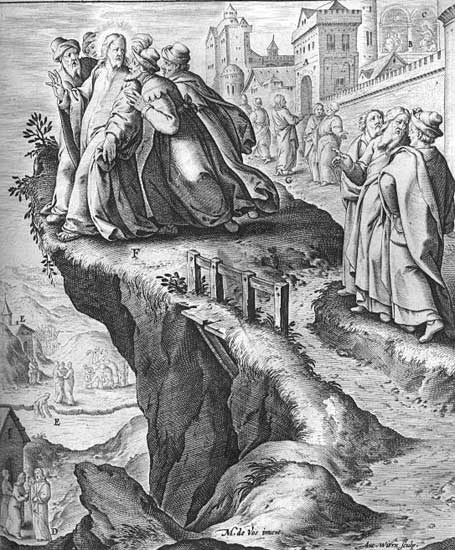
One method, in particular, came to mind: René used to write about mobs surrounding a victim near a cliff’s edge, drawing closer and closer till the victim tumbles over the precipice. Nobody is guilty, yet everyone is. It seemed so archaic … but I wonder if it has a modern equivalent.

“Everyone participates in the destruction of the anathema but no one enters into direct physical contact with him. No one risks contamination. The group alone is responsible,” René Girard writes in The Scapegoat about these collective murders. “Individuals share the same degree of innocence and responsibility. It can be said that this is equally true of all other traditional forms of execution, especially any form of exposure, of which crucifixion is one variant. …

“These methods of execution do not feed the appetite for vengeance since they eliminate any difference in individual roles. The persecutors all behave in the same way. Anyone who dreams of vengeance must take it from the whole collectivity. It is as if the power of the state, nonexistent in this type of society, comes into temporary but nevertheless real rather than symbolic existence in these violent forms of unanimity.”

In today’s world, the hatred directed towards high-profile victims-du-jour is such that inspires some poor schnook to load his (it’s almost always a “his”) garage with firearms and make an attack. Then we can say it wasn’t us, it wasn’t our hatred, it was a “lone wolf.” Last week there was an assassination attempt on a Chief Justice, the following day, a hostile mob gathered around the home of a second Supreme Court justice and threatened to target her children. Nothing “happened,” but the ritual had a chilling familiarity. How much of this public unleashing of hatred is an attempt to incite a “lone wolf” attack, as happened in the case of the miserable assassin wannabe, Nicholas Roske? Is there a unacknowledged hope that if we stoke an atmosphere of public hatred someone will eventually tip over the top and “do something”?

One could say that “doxing” works on the same principle. Someone releases lots of personal information about a target – where they live, workplaces, phone numbers – knowing that some kook is going to zero in on him, or her, or them. Of course, the doxxers are completely innocent, since all they did was publish the information. They didn’t tell anyone what to do with it.

This passage from the Book of Luke, Chapter 4 gives a good example of one well-known incident in the archaic world:

16 And he came to Nazareth, where he had been brought up: and, as his custom was, he went into the synagogue on the sabbath day, and stood up for to read.

17 And there was delivered unto him the book of the prophet Esaias. And when he had opened the book, he found the place where it was written,

18 The Spirit of the Lord is upon me, because he hath anointed me to preach the gospel to the poor; he hath sent me to heal the brokenhearted, to preach deliverance to the captives, and recovering of sight to the blind, to set at liberty them that are bruised,

19 To preach the acceptable year of the Lord.

20 And he closed the book, and he gave it again to the minister, and sat down. And the eyes of all them that were in the synagogue were fastened on him.

21 And he began to say unto them, This day is this scripture fulfilled in your ears.

22 And all bare him witness, and wondered at the gracious words which proceeded out of his mouth. And they said, Is not this Joseph’s son?

23 And he said unto them, Ye will surely say unto me this proverb, Physician, heal thyself: whatsoever we have heard done in Capernaum, do also here in thy country.

24 And he said, Verily I say unto you, No prophet is accepted in his own country.

25 But I tell you of a truth, many widows were in Israel in the days of Elias, when the heaven was shut up three years and six months, when great famine was throughout all the land;

26 But unto none of them was Elias sent, save unto Sarepta, a city of Sidon, unto a woman that was a widow.

27 And many lepers were in Israel in the time of Eliseus the prophet; and none of them was cleansed, saving Naaman the Syrian.

28 And all they in the synagogue, when they heard these things, were filled with wrath,

29 And rose up, and thrust him out of the city, and led him unto the brow of the hill whereon their city was built, that they might cast him down headlong.

30 But he passing through the midst of them went his way,

31 And came down to Capernaum, a city of Galilee, and taught them on the sabbath days.

Postscript: A different version of this post appeared on Facebook’s “Mimetic Theory” page. It’s published on the Book Haven at the request of Mark Riess, who wanted to share it more widely. Names of government figures have been deliberately left off this post. That’s because this isn’t a political thing. It’s a murder thing.

Postscript from George Dunn: Isn’t murder what all hatred aims at? It doesn’t always get there, but it’s always moving in that direction whenever it is rising.

What does it take to be a “keeper”? Mark Anspach’s Girardian take on Pink Floyd’s Roger Waters, and more!

Featured

Share
She’s a “keeper.” Unlike the other four wives. (Photo: Youtube)

Why do we want what we want – especially in love? It was a question that preoccupied René Girard. Mostly, he claimed, others do the choosing for us, without us knowing it. Anthropologist Mark Anspach (we’ve had guest posts from him here and here) considers Roger Waters, co-founder of the Pink Floyd band, and his recent marriage to his fifth wife. A longish excerpt from “Mimetic Desire and Serial Monogamy: the Case of Roger Waters over at Geoff Shullenberger‘s new blog, Outsider Theory:

“Did anyone ever tell you that you have beautiful cheekbones?” That was the opening line rock icon Roger Waters used with Kamilah Chavis, the woman he married in October 2021. But it wasn’t her face that first drew Waters to Chavis. In fact, during their first meetings, she kept her back turned to him.

Waters told the story in a widely-quoted 2018 interview with Argentine media outlet Infobae. The reporter asked, “Is Kamilah an artist?” No, Waters replied. “She worked in transportation.” More precisely, she was a chauffeur.

“I actually met her at one of my concerts a couple of years ago,” Waters explained. “She was driving the car that was taking me. I was in one place for two weeks and there were many transfers between the hotel and the venue. My security sat in the front with her and they talked, while I stayed in the back. I don’t know, something about her attracted me…”

There was something about her, but what could it be? It wasn’t love at first sight. Waters spent most of their time together staring at the back of Kamilah’s head. She didn’t even talk to him. So what sparked Roger’s interest in Kamilah? Was it her lovely black hair? The way she held her head? Her entrancing perfume?

Mark Anspach gives us his own take.

Curiously, when Waters recalls the attraction he felt for his future bride, nothing he says is about the woman herself. It’s all about the circumstances: she was driving the car, up front with the security, while Waters rode in back. That hardly sounds like a romantic setting, yet he was mysteriously drawn to her. Why?

Waters gave little clue when announcing his wedding on social media. He said only, “I’m so happy, finally a keeper.” This is less an ode to his new bride than a back-handed slap at his previous wives. Clearly, Waters had reflected on why his first four marriages ended in divorce and identified a common flaw in all his exes: they weren’t “keepers.”

Read the rest of it here. It’s not only insightful, it’s fun. Wait! Wait! Here’s also Bill Benzon’s “Crisis in Shark City: A Girardian reading of Steven Spielberg’s Jaws.” As a bonus prize, a Girardian take on Alfred Hitchcock’s 1955 To Catch a Thief:

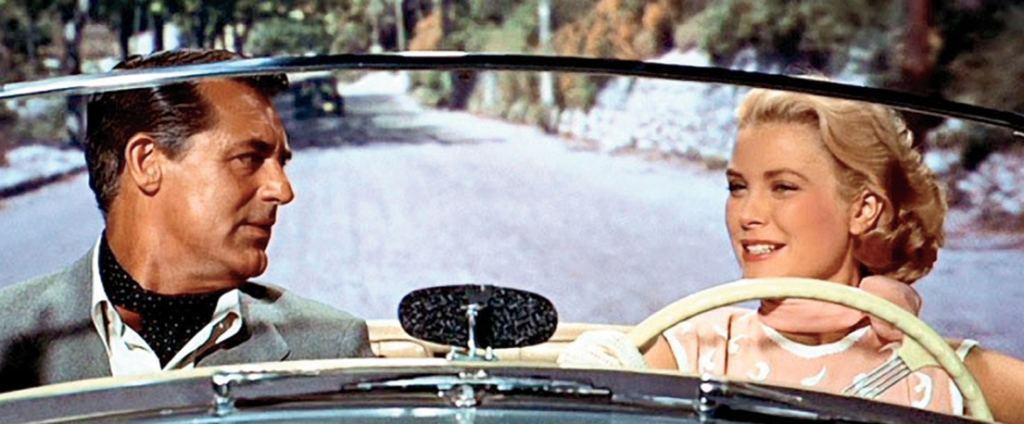
As you may know, René Girard is a theorist of imitation, desires, violence and sacrifice. His core concept is that of mimetic desire, a desire which one person acquires by imitating the actions of another. Take Alfred Hitchcock’s 1955 film, To Catch a Thief [3]. Cary Grant plays John Robie, a cat burglar who is retired to the French Riviera along with the rest of his gang, all of whom have been paroled in recognition of their work for the French Resistance. A recent string of burglaries leads the authorities to suspect Robie because the burglaries follow his old modus operandi.

In the (somewhat involved) process of trying to clear himself Robie arranges to go swimming with a young heiress, Frances Stevens (played by Grace Kelly). Robie arrives at the beach where he is met by Danielle Foussard (played by Brigitte Auber), who is the young daughter of one of his old comrades in the Resistance. They swim out to a raft where Danielle proceeds to flirt with Robie. Frances swims out to them, sees Danielle flirting with Robie, and decides that she will pursue Robie. She is imitating Danielle’s desire. In Girard’s terms, her desire is thus mediated, it is mimetic desire. Danielle and Frances thus become rivals and rivalry can lead to violence. Though we don’t know it at this point in the movie, Danielle is the cat burglar. She too is imitating Robie.

Read the rest about Jaws here.

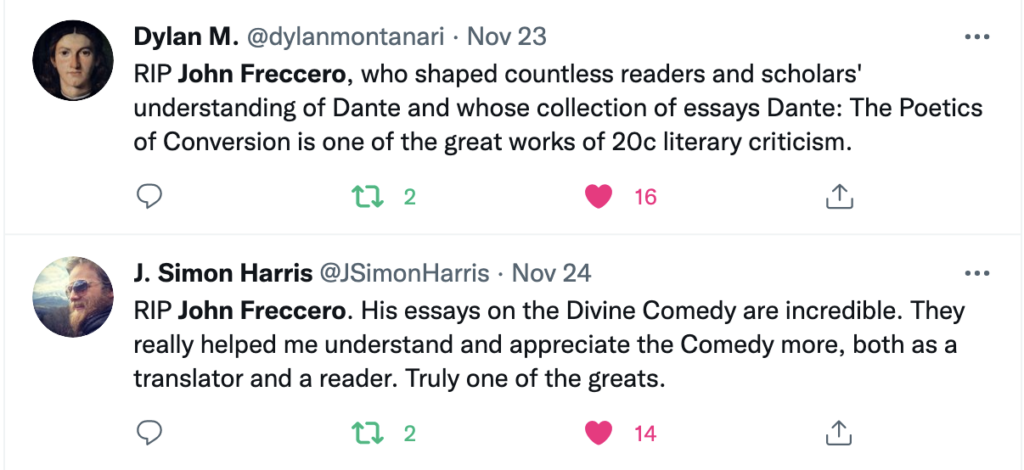
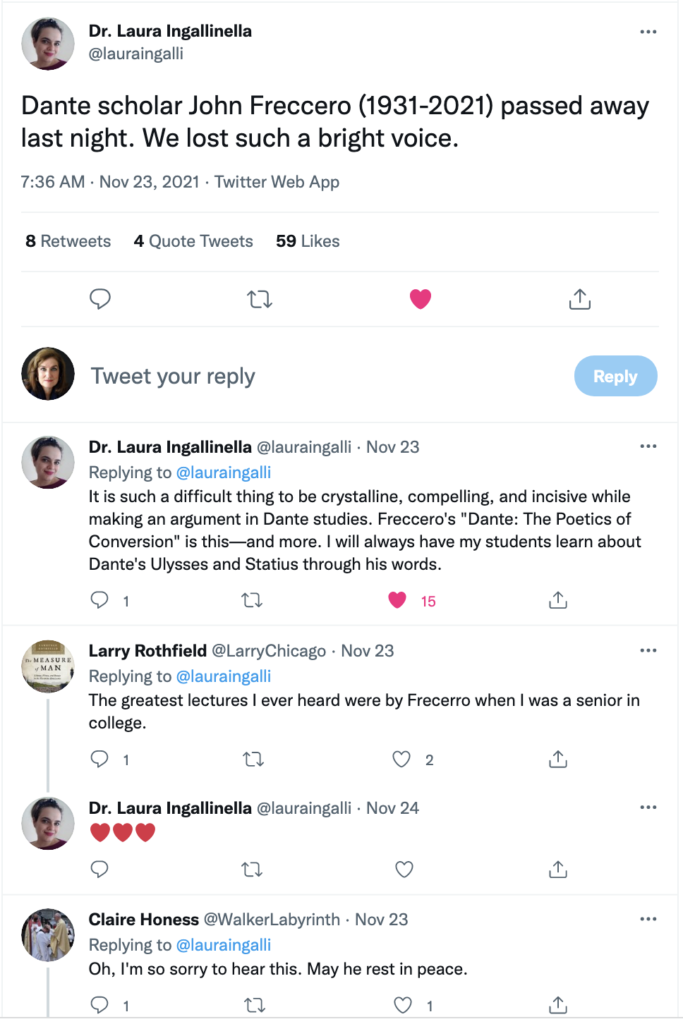
Requiescat in Pace, Dante Scholar John Freccero (1931-2021)

Featured

Share

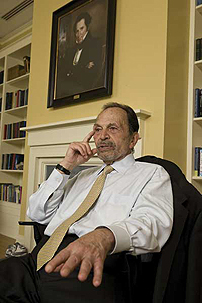
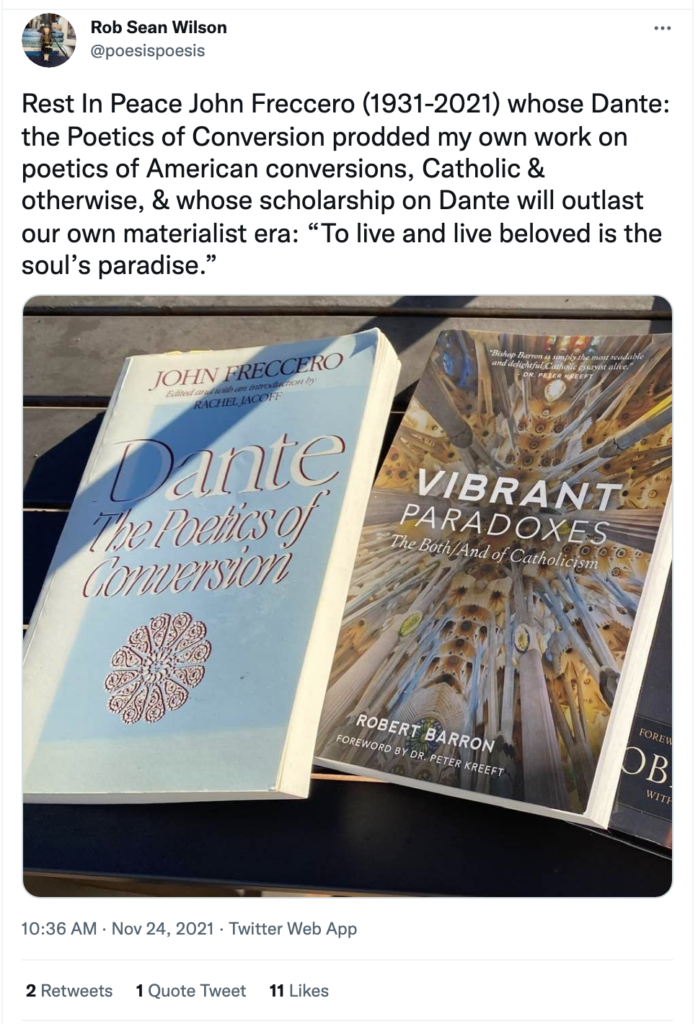
One wonders what Stanford Prof. John Freccero, one of the world’s leading Dante scholars, would have made of his own death, during the year the world is celebrating as the 700th anniversary of his Florentine master’s demise. No doubt he would have been honored and gratified. The author of the seminal Dante: The Poetics of Conversion had long since disappeared from the scene, quietly retreating within his home on Amherst Avenue. He died on Nov. 22.

“It seems natural that Freccero chose to devote his academic studies to Dante,” according to Johns Hopkins Magazine in 2008. “In one of his earliest memories, he’s a boy sitting on the lap of his Italian immigrant grandfather, staring at the frightening images accompanying The Inferno. ‘There is no Italian of my grandfather’s generation who didn’t know Dante,’ Freccero says. ‘That’s one of the things that’s so bizarre about him, that he is at once the most learned and the most popular of poets. Can you imagine a barber in Baltimore reciting Shakespeare? Of course you can’t. But you can’t imagine a barber in Italy not knowing Dante.'”

I interviewed him in the summer of 2012, and those encounters are cited in my book about his close friend and colleague, Evolution of Desire: A Life of René Girard. (“I feel sometimes I am not worthy” of the friendship, he told me.)

Going back through those interviews this morning, I was surprised at their offhand depth and range, the casual erudition. (I’ve written about him before: Early sci-fi: how Dante warps time and space, and “By Love Possessed”? René Girard and John Freccero on Francesca da Rimini, among other places.)

I had studied with the Dantista some years before, in the late 1980s or early 1990s. As I wrote in Evolution of Desire:

“I met John Freccero at Stanford decades ago, when I attended his lectures on Dante—I remembered a potent concoction of urbanity, insight, and endless erudition. He assigned the multi-volume Charles Singleton prose translation of The Divine Comedy, urging us to buy the epic poem and commentary by Singleton as the definitive translation in English. Because of him, I still regularly refer to the thick gray volumes I found secondhand at Black Oak Books in Berkeley. “Why not a poetic translation?” a plaintive voice had queried from somewhere at the back of the large lecture hall. Freccero volleyed back with an appealing smile, “Because you should never give up on learning the Italian.”

“He disappeared from my life after the course was over, and returned when I realized that he had been a friend of Girard’s for nearly sixty years. He was a pivotal figure during Girard’s time at Johns Hopkins. Years later, Freccero helped bring Girard to Stanford. His observations were persuasive, and helped shape my understanding of the theorist I knew only in his last decade. Girard acknowledged the role of two Dantisti in his life during these years …”

The outpouring since John Freccero’s death has been subdued – it occurred during Thanksgiving week, and the 90-year-old Dante scholar had long been in frail health. So far, the only comments I’ve seen have been on Twitter. (See below.)

In a life as intellectually radiant as his own, such a quiet death seems out of place – but perhaps one could say the same of Dante’s own malarial death, on returning from Venice, in 1321.

Let us quote another maestro, “Rest perturbèd spirit,” may angels guide thee… Dante described so many of them, after all.

Postscript on 12/3 from Stanford Prof. Grisha Freidin: Farewell, John. Your Dante course I sat through at Stanford in 1980 changed my life. For one, it was clear to me that one ought to be ashamed of teaching lit in a university without a serious study of Dante. I was fortunate to be able to audit his course at the outset of my career. It shaped my research, too, in many ineffable ways. John was also a good friend during his stint at Stanford that ended tragically when he lost his wife, a ballet dancer, to cancer. We lost touch after that, though I ran into him on occasion. Robert Harrison was his student, too, and held him in great esteem. Passing of a giant, who was part of the great tradition of Dante scholarship going back to Curtius and Auerbach.


Ted Gioia on Burning Man: the connections between pop culture and ritual sacrifice. It’s a Labor Day story.

Featured

Share
Ritual sacrifice a thing of the past? Not so fast, says Ted Gioia. (Photo: Brenda Ladd)

Somehow the whole Burning Man phenomenon blew by me these last few decades. I hate crowds, anyway. You never know what a crowd will do … but maybe that’s the point. Jazz scholar and music historian Ted Gioia links the history of music with ancient ritual violence over at “The Honest Broker,” his Substack column. And in his excellent piece, “Why Do They Burn a Man at Burning Man?” he makes striking connections with the work of the French theorist René Girard, the member of the Académie Française who was a longtime Stanford professor.

“How do you celebrate Labor Day weekend?” Ted Gioia asks. “At the annual gathering known as Burning Man, enthusiastic participants set fire to a large wooden effigy—which they call The Man. This is truly sticking it to the man, in the parlance of the counterculture. And the stick here is a log, soaked in fuel and bacon grease, then set ablaze with a large magnifying glass.”

The event regularly draws as many as 80,000 participants. This year, possibly more – because like everything else in the COVID era, it’s gone online. You’ll be able to watch the “virtual burn” here, should it cross your mind to do such a thing.

René Girard’s “Violence and the Sacred” was influential.

Ted continues that “the arbitrary nature of the sacrificial victim is essential to the success of the ritual. That is one of the key learnings we draw from René Girard (1923-2015), a pathbreaking thinker who life’s work focused on the importance of ritualized sacrifice in human culture. I believe that Girard’s 1972 book Violence and the Sacred is one of the most significant scholarly works published during my lifetime—full of rich implications for anyone who cares about the origins of our commercial and cultural institutions, or even about contemporary phenomenon, such as social media and generational conflict.”

So why isn’t René Girard mentioned more frequently in the connection to, say, rock concerts? Music history is rife with ritual sacrifice, he notes. And then he describes the gruesome history of that music – drums and flutes that were used to drown out the screams of sacrificial victims. The examples he cites are memorably grisly.

“In fact, drums are linked to sacrificial ritual in every region of the world. In some places (Africa, South India, etc.), the sacrifice is made to the drum—which is believed to embody a deity or powerful spirit. In other instances, for example among the Incas, the skin of the sacrificial victim is turned into the drum. But whatever the particulars, the drum is viewed with awe, perhaps even fear, in the context of these ritualistic connections.”

Think that’s a thing of the ancient past? Not so fast, says Ted. He remembers a hideous example: “the notorious Altamont concert on December 6, 1969—remembered today for the stabbing death of Meredith Hunter in front of the stage during a performance by the Rolling Stones. But just a few weeks earlier, the murderous Charles Manson gang relied on the Beatles’s song “Helter Skelter” as an anthem in their own quasi-ritualistic killing spree. How strange that the decade would come to a close with the music of the two defining bands of the era—so focused on peace and love, according to the leaders of the counterculture—having their songs co-opted in senseless murder.”

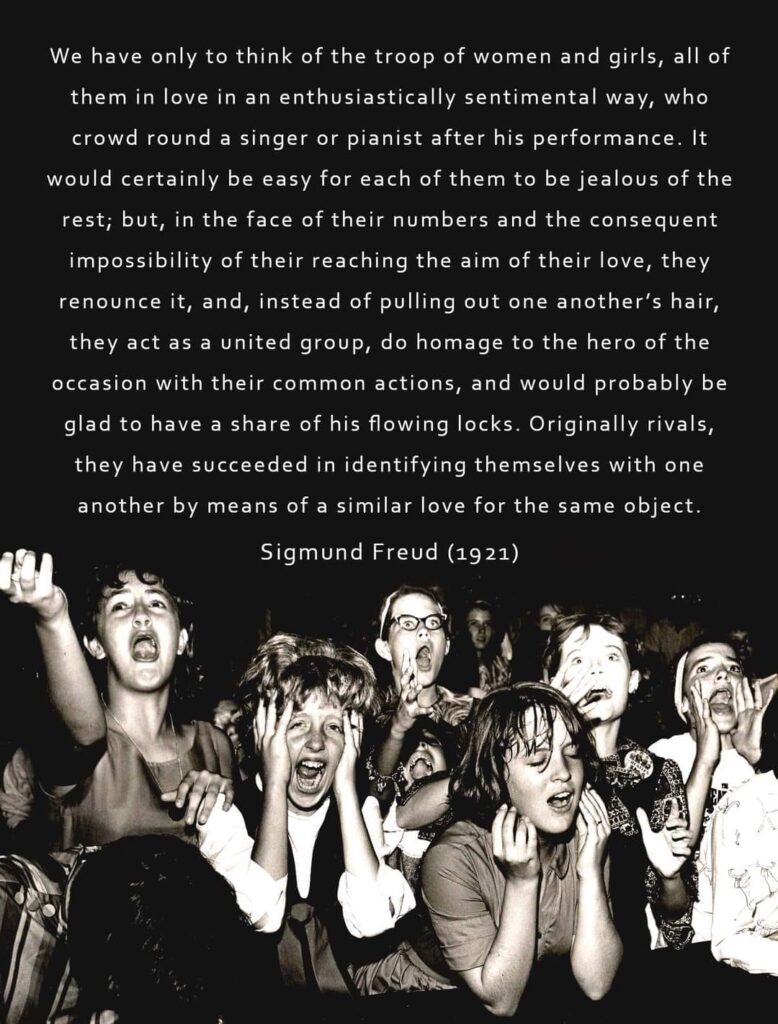
Read the whole thing here. And below, a reminder of how much Sigmund Freud was on the same trail as Stanford’s eminent French thinker.

Uncommon ground: Robinhood’s Vlad Tenev talks to Robert Pogue Harrison

Featured

Share

We aim to take market share and usurp, but we’re very much operating within the system.” ~ Vlad Tenev

In 2013, Vlad Tenev launched the “Robinhood” platform to democratize financial markets. So what common ground does the Bulgarian-American entrepreneur share with Entitled Opinions host and humanist Robert Pogue Harrison, who claims that teaching, thinking, and writing about cultural history has been his lifelong vocation?  

The Stanford professor made a guest appearance on Tenev’s half-hour podcast series “Under the Hood” to explore the connections. Here’s an obvious one: the CEO also started at Stanford, where he envisioned a trading platform to encourage young investors by not requiring minimum accounts or charging commissions. You can listen to the conversation at the Los Angeles Review of Books here.

The fugitive “Robin Hood” was another link. Tenev suggested that Robin Hood’s intent was to democratize resources, adding that “he wanted to open up the forest and have it not just the purview of the king, but open for everyone to hunt.”

Harrison, the author of Forests: The Shadow of Civilization, drew an analogy between the outlaws’ Sherwood Forest and the markets of Wall Street, adding, “Your platform is trying to get the underdogs or the least privileged into a system which traditionally enriches the already rich.”

Both men also share an interest in the work of the late French theorist René Girard, who taught at Stanford for decades. Girard said society’s last taboo is envy, which drives today’s social media. Recalling Girard’s most famous protégé, the early Facebook investor Peter Thiel, Harrison observed, “Facebook is a machine of engendering envy, and people keep upping the ante of how happy they are, how beautiful their kids are, and how wonderful their vacations and meals are. You enter into this mad mimetic escalation of self-representation on one hand, and the envy of your friends and rivals on the other. “ Yet Tenev noted that Robinhood also started with social media, allowing people to interact in ways unimaginable a decade before.

“In our capitalistic society, there’s not just one king. There are several kings. They are the banks, the corporations, the hedge funds, the investment bankers.” ~ Robert Pogue Harrison

The recording of the conversation is over at the Los Angeles Review of Books here.

More potent quotes:

“In our capitalistic society, there’s not just one king. There are several kings. They are the banks, the corporations, the hedge funds, the investment bankers.” ~ Harrison

“You can’t just throw prudence out of the equation altogether.” ~ Harrison

“Do these trading platforms have a declared sense of responsibility in caring for the investors who use it? How does one go about trying to protect the users?” ~ Harrison

“Your Robinhood platform is not revolutionary because it’s not trying to overthrow.” ~ Harrison

“You can’t just throw prudence out of the equation altogether.” ~ Harrison

“We aim to take market share and usurp, but we’re very much operating within the system.” ~ Tenev