
“Our privileges exacerbate the horrors of others”: Junot Díaz on race, privilege, and J.R.R. Tolkien

Share

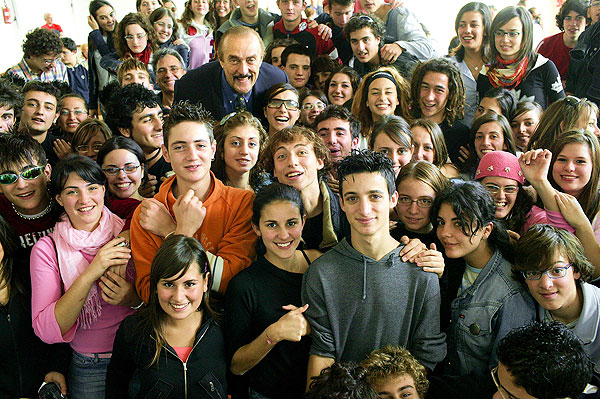
Junot Díaz, Pulitzer-winning author of 2008’s The Brief Wondrous Life of Oscar Wao, always gives a scorching good show, and he did so again during a visit to Stanford earlier this month.

He did it all off the cuff:  “Guess what?  No fucking lecture,” he announced at the outset.

Díaz has a special license to mention the unmentionable – or what he says is the unmentionable.  His sensibility is divided between Dominican Republic, where he was born, and New Jersey, where he was replanted as a child.

Little of the Caribbean side was in evidence in Palo Alto: he wore preppy pullover and white collar, jeans and running shoes – and altogether more slender than he had appeared when I wrote about him in 2008.  The spellbinding author spoke about J.K. Rowlings, he spoke about H.P. Lovecraft, and he spoke most of all about J.R.R. Tolkien.  (Whether he especially favors writers who use only their initials is not known.)

“I write about race – by extension, I write about white supremacy,” he said, cutting to the chase.

He deplored the “rhetorical legerdemain” of “deforming our silences to fit in with the larger silences of society.” It’s a betrayal, especially, of the people “at the racially sharp end of the stick.”

“Our privileges exacerbate the horrors of others,” he said.

The idea of a post-racial society is a “happy delusion,” he said. “We are as hyper-racial today as we were two hundred years ago.”

He said that describing oneself as beyond race was as delusional as a man saying he isn’t sexist.  “These languages do not go away.  Heterosexual masculine privilege never goes away.”

How deep is the denial?  He recalled observing to a group of male peers that they were all dating white women or women lighter-skinned by themselves.  The predictable response:  “Oh, but it was love… we just met… it was random.”

No one ‘fessed up: “I date who I date because I was told people who are light-skinned are better.”

“Who wants to embrace that?” he asked.  Under such circumstances, “How the fuck do we bear witness to ourselves?”

“The default setting of universality” is white, he said.  Though writers of color often resist that categorization, he said he’d never encountered a writer who said, “You know what?  I don’t want to be a white writer.”
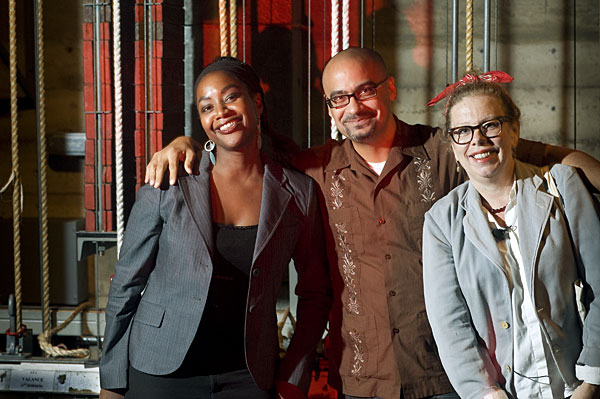
Díaz, flanked by Packer and Barry (Photo: Toni Gauthier)

People outside that default setting live in a “delusional space” of “specifying without signifying.” He referred to President Obama’s double message: “I’m not that black, but I will code some shit so you know I’m black.”

He, too, was asked to “signify without specifying” – “I ran from that as hard as I could.”  He wondered, as a writer, whether it was possible to capture in writing all the layers of denial and truth, avoiding the pitfall that would have been deadly for the writer, one in which “I’m going to blind myself so no one notices I’m not noticing.”

The Brief Wondrous Life of Oscar Wao was his attempt to use “all the nerd stuff” to portray “the hemispheric madness through the Dominican Republic.”

Science fiction and fantasy was an obvious source of inspiration. “Coloniality is the dark subconscious of the speculative genre,” he said.

For example, he commented on the different treatment of the ring in Wagner’s Rheingold and Tolkien’s Lord of the Ring.  In Wagner, “the ring just makes stuff go bad for you,” but in Tolkien, “the ring produces slavery” and functions racially, he said.  Tolkien was a survivor of World War I, and his Middle Earth is a post-apocalyptic world, said Díaz.  The Dark Lord Sauron is “a being that comes from outside Middle Earth,” from a race that dominates Middle Earth.

While the Harry Potter series pits “bad guys versus good guys, my power versus your power,” Tolkien’s p.o.v. offers a different take:  “Fighting power with power you lose.  Power breeds corruption,” he said.  “The more power, the more opposition.”  René Girard, of course, would add that you become the thing you oppose – which ought to be a major deterrent, but isn’t.

In the end, said Díaz, “power never destroys power.”
Orwell Watch #20: Joe Loya has had enough of “playing politics”

Share

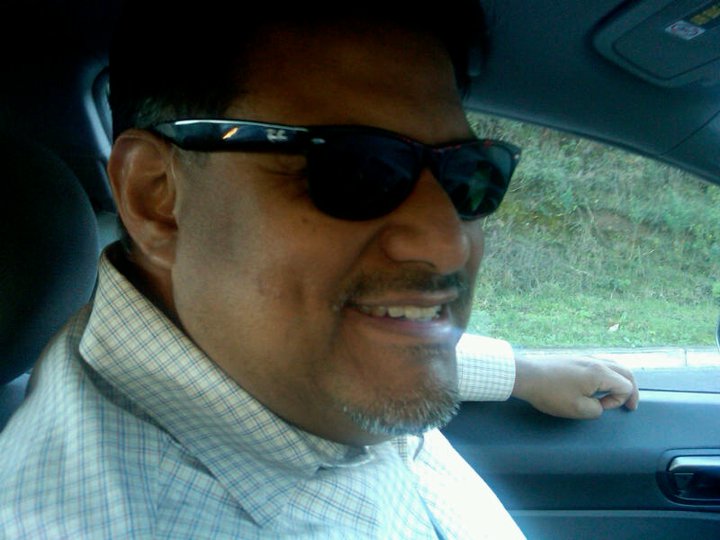
Joe Loya in a car.

It’s election year, and no doubt we will find much fodder for our Orwell Watch, from all points on the political spectrum.

Here’s a good catch from Joe Loya on Facebook: “Politicians decrying other politicians ‘playing politics’ with an issue has to be one of the goofiest moral spectacles on the planet. What are they supposed to play? Badminton? Third base? (Sen. McCain, Prez. Obama plays politics because he is a politician, like you!) These knuckleheads sound as stupid as if they bemoaned cellists playing cellos, or basketball players tossing basketballs in baskets, or race car drivers driving race cars. I mean, c’mon, ‘politic’ is right there in the word ‘politician.’ Dummies!”

He was, of course, challenged:  Is a smoker wrong for telling someone not to smoke?  Shouldn’t a murderer warn a kid not to murder?

Da Man

His rebuttal:  “All I’m saying is if I applied for the job of dishwasher and then the other dishwasher tried to make me appear morally inferior to them for washing dishes while they are also washing dishes, all I’m saying is they are idiots for hassling me for doing what I was hired to do, what is in fact the job description in the title ‘dishwasher.'”

What can we add?

The Orwell Watch.  Collect the whole set!

Orwell Watch #19: End the war.

Orwell Watch #18: “Back to the Middle Ages” – an era that “exceeds expectations”

Orwell Watch #17: The 10th anniversary of 9/11 – prepare for an avalanche of buzzwords

Orwell Watch #15, #14: Jens Stoltenberg’s graceful words, a few of our graceless ones

Orwell Watch #13, continued: “The American people”

Orwell Watch #13: More daily offenses.

Orwell Watch #12: There is no faculty lounge. Get over it.

Orwell Watch #11: One man’s lonely war against cliché

Orwell Watch #10: Literary criticism, or cut-and-paste?

Orwell Watch #9: “I take full responsibility for…”

Orwell Watch #8: “I know you’re disinterested in this, but…”

Orwell Watch #6: “Like” and the culture of vagueness

Orwell Watch #5: Before we shoot off our mouths again…

Orwell Watch #4: Jared Loughner: Madman, terrorist, or both?

Orwell Watch #3: Please. No “gifting” this Christmas.

Orwell Watch #2: Murder in Yeovil

Orwell Watch #1: Paul Krugman vs. George Orwell. (Hint: Orwell wins.)

As 9/11 anniversary approaches, litcrit’s Marjorie Perloff speaks out on American insularity

Share

No comfort in Whole Foods Market

I’ve had a chance to finally go through Marjorie Perloff‘s “Language,” which has been open on my MacBook Pro forever…well, at least since August 7, when it was published in the Chronicle of Higher Education.  Perloff, one of the preeminent lit critics and a champion of the Language Poets and other avant-garde movements, takes on the changes in the nation since the events of 9/11.

In her essay, she argues that an event that should have made us more attuned to the outside world haa, paradoxically, made us more inward instead:

A new worldview

“The very language of the decade expresses our anxiety about the outside world. Talk of the ‘third world’ and ’emergent nations,’ expressing as it does a first-world confidence and sense of control, has given way to the ubiquitous ‘our planet,’ as in, ‘saving our planet.’ …”

“When most Americans talk of saving our planet, they have a myopic view: They mean the environment they witness every day, with its SUV-clogged freeways, plastic-bottle glut, and absurd excesses of electricity and water consumption. In this context, a session at Whole Foods Market may feel comforting, but what about those places on the planet where there is not enough electricity to speak of excess or where there are no paper diapers to clog landfills? Better not to think about them, and to focus on such issues as childhood obesity (Michelle Obama‘s cause) or the relative effectiveness of the various sunscreens on the market.”

Time to look outward again

She concludes:

“Perhaps, now that a decade has gone by since 9/11, it is time for us once again to look outward. The increasingly tedious discourse of self-reflection—based on the assumption that we are the leaders of the ‘free world’—must give way to a more accurate sense of who and where we are in relation to the developing nations and cultures in our ‘global’ backyard. Language study—not just of ‘foreign’ languages but also of our own—will help us to deal with the reality that, as Wallace Stevens put it, ‘we are not / At the center of the diamond.'”

I don’t find her final argument terrifically convincing. “We are not the center of the world” has been the mantra of President Obama, but so far I don’t see Brazil or South Korea or even China stepping up to the plate of “world leader,” though their economies may be (comparatively) booming and their populations swelling.  Perhaps the role of “world leader”itself is one of the 21st century’s early retirees, and there are no cops on the beat anymore.

She quotes Stevens, but W.H. Auden makes a more foolproof bet:

"I told you so"

Time will say nothing but I told you so,
Time only knows the price we have to pay;
If I could tell you I would let you know.

On heroes: Irena Sendler, Phil Zimbardo, Kendall Fielder

Share

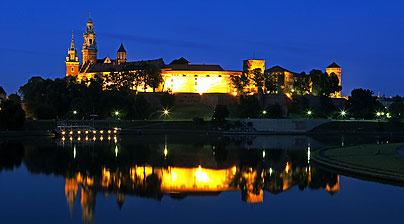
I arrived in Kraków yesterday – or perhaps today, I’m not smart enough to untangle the time differences.  I spent a good part of the afternoon reacquainting myself with old haunts and half-familiar streets. The city is awash with images of its native son, John Paul II, who was beatified on May 1. Photographs are in windows, banners on the streets, and large biographical displays mark two sites I’ve passed so far.

May 1 was also the national screening of PBS’s In the Name of Their Mothers, about Irena Sendler and the women of Żegota, who saved 2,500 Jewish children from certain death during the Holocaust. I’ve written about it here and here and here and here.  Alas, I doubt the film got much attention; it unexpectedly vied with President Obama’s announcement of the killing of Osama bin Laden. I strongly suspect the latter event got the upper hand. But May 1 is significant for other reasons.

My lighter airplane reading was Irena Sendler: Mother of the Children of the Holocaust. I didn’t hold out much hope for this modest, yet reasonably expensive ($40) book with the clumsy title – but the newly translated biography-of-sorts by Anna Mieszkowska is so far the only work that exists in English. Fortunately, the book so far has proven much better than my subdued expectations. For one thing, a good deal of it is written by Sendler herself, from letters, memoirs, and recollections she left behind.

A spider or a Rorschach test?

So what else is May 1? It is also marks the celebration of Divine Mercy this year – a custom instituted by the late pope, who, in another mysterious link, died on the eve of the Polish visionary whose writings caused the celebration.

The event is linked with Sendler, too.  From Mieszkowska’s book:  

A period of mass executions began at Pawiak Prison. Every morning the cell doors opened, and those called out never returned. “I once found a small, damaged picture with the words ‘Jesus, I trust in You!’ I hid it, and had it with me all the time.”

The footnote to this text says: “This picture, which she described as the most valuable object in her life, Irena posted in a letter (describing its history but not leaving a return address) to Pope John Paul II during his first visit to Poland.”

Skinner: Kind of a hero herself

Somewhere I heard the story that the pope returned it to her later, and she gave it back to him, and it’s in a museum somewhere. I can’t remember.

Mary Skinner, the filmmaker behind In the Name of Their Mothers (and kind of a hero herself) told me the image was a signal the women of Żegota sent to each other and left for each other – sometimes just to buck themselves up.

Turning away from the dark side

In any case, I keep the image in my wallet, reminding myself of their example, and not to be such a sissy. When a member of the Polish literati saw it, he acted as if I had shown him a spider. Well he asked.

All this links with a current Science article about Phil Zimbardo’s work on heroes – that’s right, Zimbardo of the infamous Stanford Prison Experiment. His latest work explores the basic idea that “anyone can be a hero,” he said.

At age 78, he has reinvented himself as a social entrepreneur, leading a new project that will attempt to turn the Stanford Prison Experiment and other studies of the dark side of the human psyche into a force for good. Last year, Zimbardo founded the Heroic Imagination Project … “Our ambition is to seed the world with heroes,” Zimbardo says.

A different kind of military hero

He’s putting his money where his mouth is:

“This is my new mission in life,” he says. He chipped in $30,000 of his own money to start the project and has since raised nearly $250,000 more from other donors. He’s considering auctioning off some of his art and wine collections. “I grew up in abject poverty in the South Bronx,” Zimbardo says. Now that he has nice things, he says he’s willing to give them up if that’s what it takes. Zimbardo seems to have thrown himself wholeheartedly into the challenges of his grand new experiment – and the shot at redemption. “It’s rescued my career from being Dr. Evil to being Dr. Good,” he says.

Some other good stuff he’s done is here.

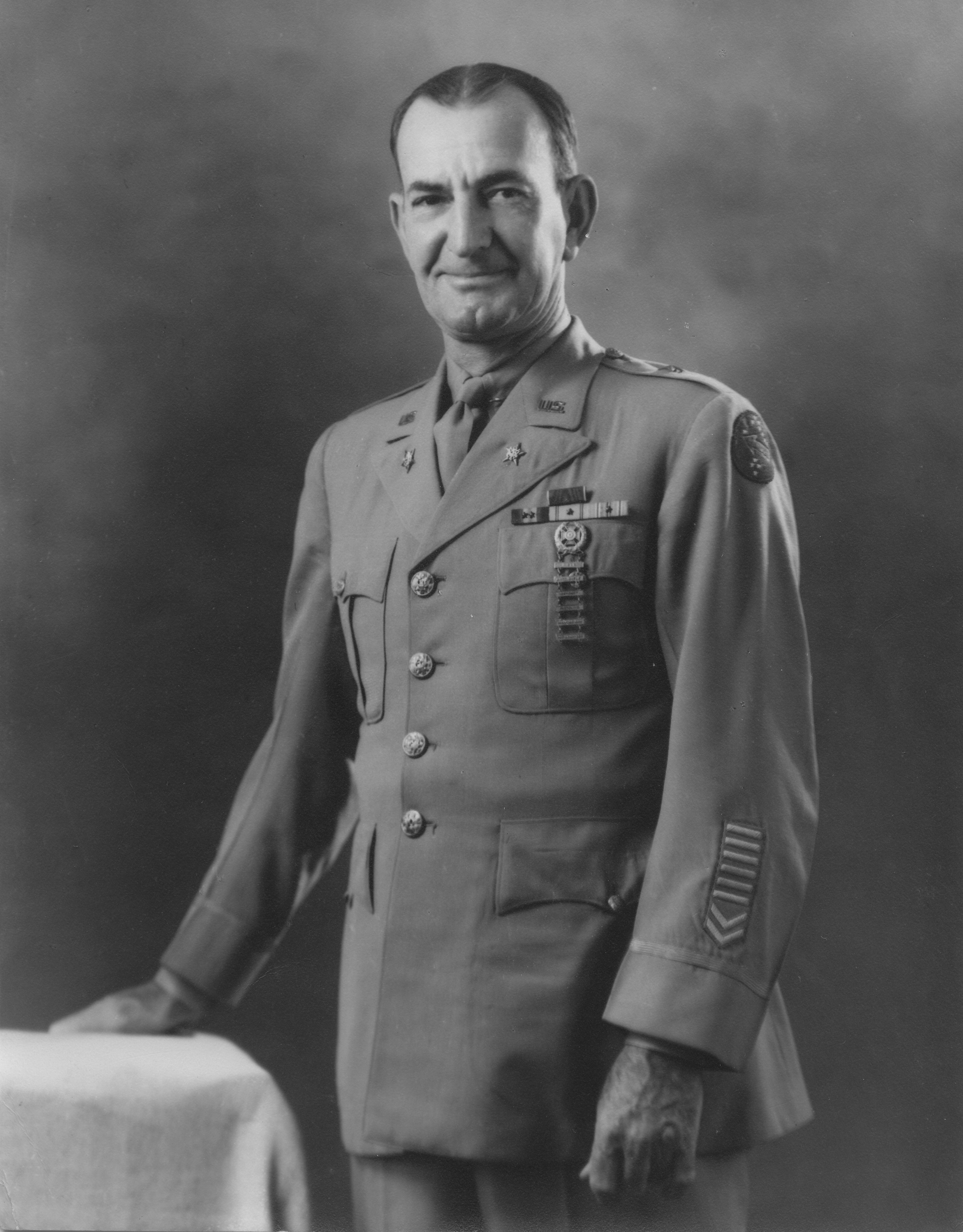
At one point, Phil was asking for examples of heroes. I suggested Irena Sendler, of course. I also suggested someone I’m proud to consider a relation: my grandfather-in-law Brigadier General Kendall Fielder, who resisted the orders for the confinement of Japanese Americans in Hawaii.  (He was also the highest ranking officer exonerated after Pearl Harbor.)

G'night from Kraków and Wawel

Greg Robinson, who has written about him in two of his books about the Japanese internment, explained heroism this way:  “You never know who will have a moment of grace, and under what circumstances.”

Ah, I hear Wawel Cathedral tolling midnight …  in the which reminds me I’m in Kraków…

Obama and I have something in common. Finally.

Share

Prezzies for the prez?

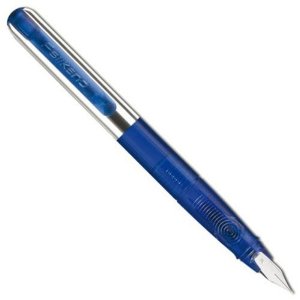
OK, this one is out of left field, but my life changed dramatically this week.  After decades of ink-stained hands and smeared or scratchy writing, I finally did an online search and ordered a fountain pen for southpaws.

You might not have noticed there’s a difference.  The customer service rep explained to me that left-handers push the pen – right-handers pull it. This requires a different nib. It also requires fast-drying ink. Also, the grip on most pens is positioned for the left hand. (She also explained that Europeans prefer fine nibs; Americans need more substantial ones – apparently we push too hard. Go figure.)

I’ve always had pen envy, so the “student” Pelikano for lefties has been a godsend since it arrived from Massachusetts to the Left Coast. It keeps me from the effect of having ink splashed all over the side of my hand as I drag my hand across my writing. So gauche.

I noticed on CNN that President Obama seems to have the same problem I do – like me, he is an “overwriter,” with his arm hunched up over the paper.

Our leftist president has company:  not only Bill Clinton, but  Gerald Ford and George H.W. Bush can be counted among the lefties. Who knew?  Ronald Reagan, too, can be included on the roster. He is rumored to have started life left-handed, but was forced to adopt right-handed ways. The King’s Speech has brought before the public the sinister effects of determined right-handers imposing their way of life on others —  even George VI was forced to make the switch.  Maybe it’s time we purge all the negative words associated with being left-handed — isn’t it bad enough we have shorter lifespans?

Which is a backhanded way of suggesting that it’s not too late to get a left-handed pen for Obama in time for his birthday. It’s in August. He’s a Leo. Like me.

“I was as surprised as I was pleased”: Rampersad receives National Humanities Medal

Share

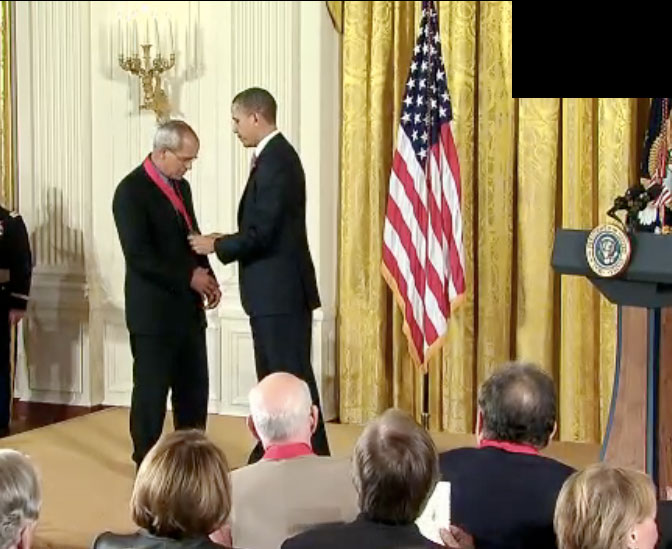
“I was as surprised as I was pleased,” said Arnold Rampersad, who received the National Humanities Medal yesterday.  He didn’t stay in Washington long — he headed back to his native Trinidad, where he’ll be till mid-month.  I had emailed him on another matter, and my message crossed with the happy announcement he had received one of the highest awards a scholar in America can get.

Rampersad was cited for his work as a biographer and literary critic. His award-winning books have profiled W.E.B. Du Bois, Langston Hughes, Jackie Robinson, and Ralph Ellison. He has also edited critical editions of the works of Richard Wright and Langston Hughes.

“Growing up as a schoolboy in Trinidad, I received an education in literature that some people might dismiss as ‘colonial,’” he recalls. “It nevertheless served me well in dealing with the complexities of American biography.”

According to the NEH’s online profile:

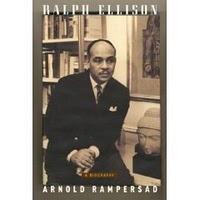
Ralph Ellison [2007] was published in an era when, according to Rampersad, “the life of the African-American writer has changed dramatically. In part through holding positions at programs in creative writing and departments of English at universities, the black writer has gained a solid presence on the literary scene that has replaced the fugitive nature of expression and publication forced on blacks over the centuries, especially in the slave narratives but continuing into the twentieth century. That presence does not guarantee fine writing but it has led, in my opinion, to an assurance that bodes well for the future. Black literature was described a long time ago as a ‘literature of necessity’ rather than one of leisure. That element of necessity still exists but it does not dominate as it once did. Black American literature as a cultural phenomenon has reached a level of stability and maturity that the circumstances of American life once routinely denied it.”

He joins authors Wendell E. Berry, Joyce Carol Oates, and Philip Roth; historians Bernard Bailyn and Gordon S. Wood; literary scholars Daniel Aaron, Roberto González Echevarría, and Arnold Rampersad; cultural historian Jacques Barzun; and legal historian and higher education policy expert Stanley Nider Katz.

The National Medal of Arts was awarded the same day, to former U.S. Poet Laureate Donald Hall [yayyyyyy! — ED.] actress Meryl Streep, musicians Sonny Rollins, Quincy Jones, James Taylor and Van Cliburn, painter Mark di Suvero, theater champion Robert Brustein and an organization, Jacob’s Pillow Dance Festival.

“One of the people that we honor today, Joyce Carol Oates, has said, ‘Ours is the nation, so rare in human history, of self-determination; a theoretical experiment in newness, exploration, discovery.’ That’s what we do,” President Obama said before presenting the medals.

He also said that works of art, literature and history speak to the human condition and “affirm our desire for something more and something better.”

“Time and again, the tools of change, and of progress, of revolution, of ferment — they’re not just pickaxes and hammers and screens and software, but they’ve also been brushes and pens and cameras and guitars.”

The whole shebang below: