
Czesław Miłosz and the “soft pollution” of the mind

Share
IMG_20160303_121232

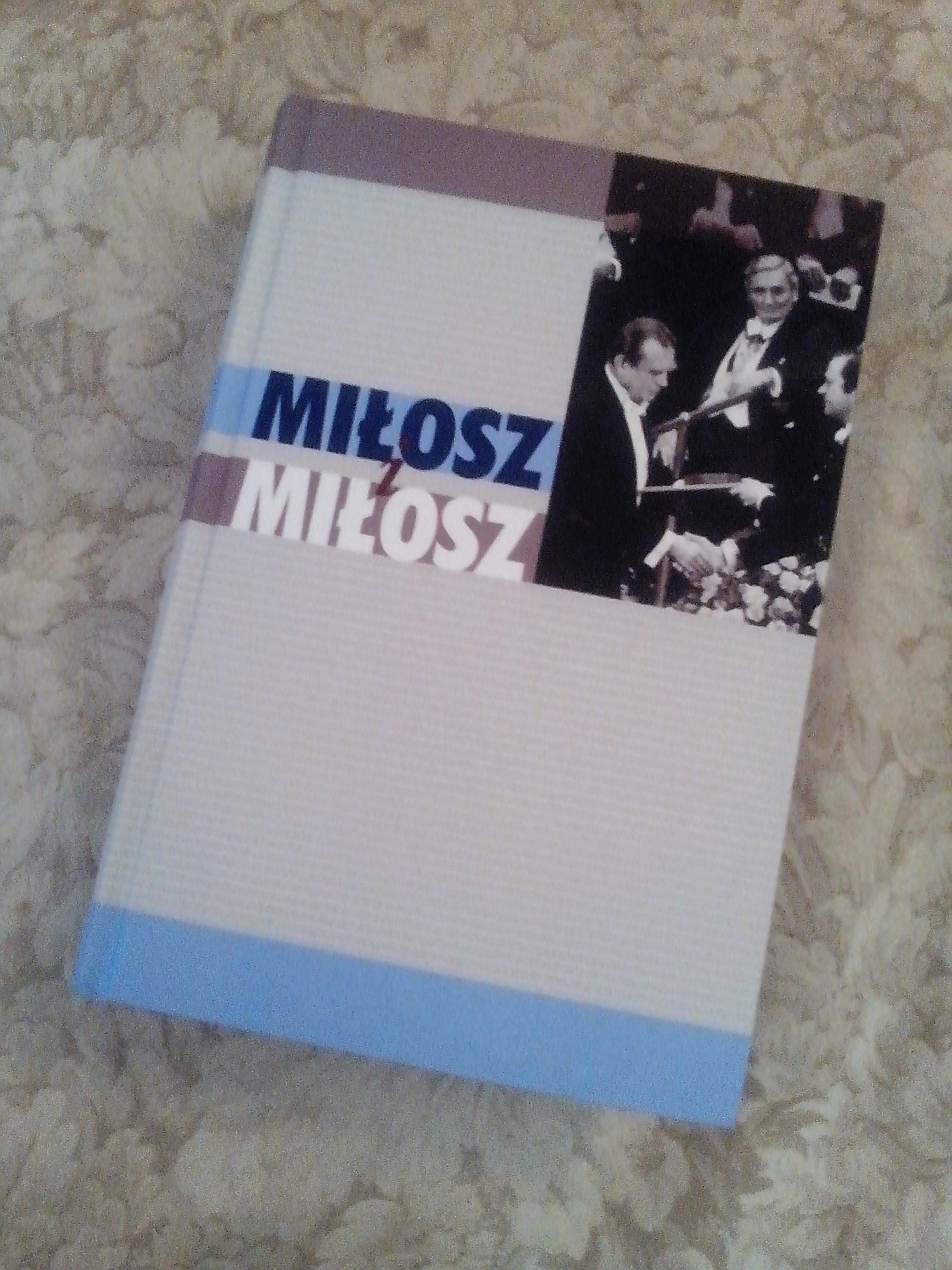
A thousand pages of Milosz.

When I drove to the Stanford post office and collected the heavy parcel with thick brown-paper packaging, I knew by its heft what it was, even before I saw the Polish stamps.

Miłosz i Miłosz was published two years ago by Kraków’s Księgarnia Akademicka, but I didn’t quite believe it until I finally had it in my hands. The volume, nearly a thousand pages edited by Aleksandr Fiut, Artur Grabowski, and Łukasz Tischner, includes the talks given on the centenary for the Nobel poet Czesław Miłosz in 2011. (I wrote about the occasion here and here and here.)

And there, on page 109, is my own “Miłosz in Purgatory” – or “Miłosz w czyśćcu.” An excerpt (in English):

At Queens College in New York City, someone in the audience asked [poet Robert] Hass what it was like spending decades translating Miłosz. He responded in a heartbeat: “Like being alive twice.”

Clearly, Hass is more attuned to the Pacific mystic who was struggling to come to terms with the fierce surf, the sea-worn cliffs, and a fate that would have been unimaginable to the younger self who wrote “Dedication” in Warsaw. As Miłosz wrote in “Magic Mountain,” a poem that has inevitable resonances for Californians:

So I won’t have power, won’t save the world?
Fame will pass me by, no tiara, no crown?
Did I then train myself, myself the Unique,
To compose stanzas for gulls and sea haze,
To listen to the foghorns blaring down below?
Until it passed. What passed? Life.
IMAG0010

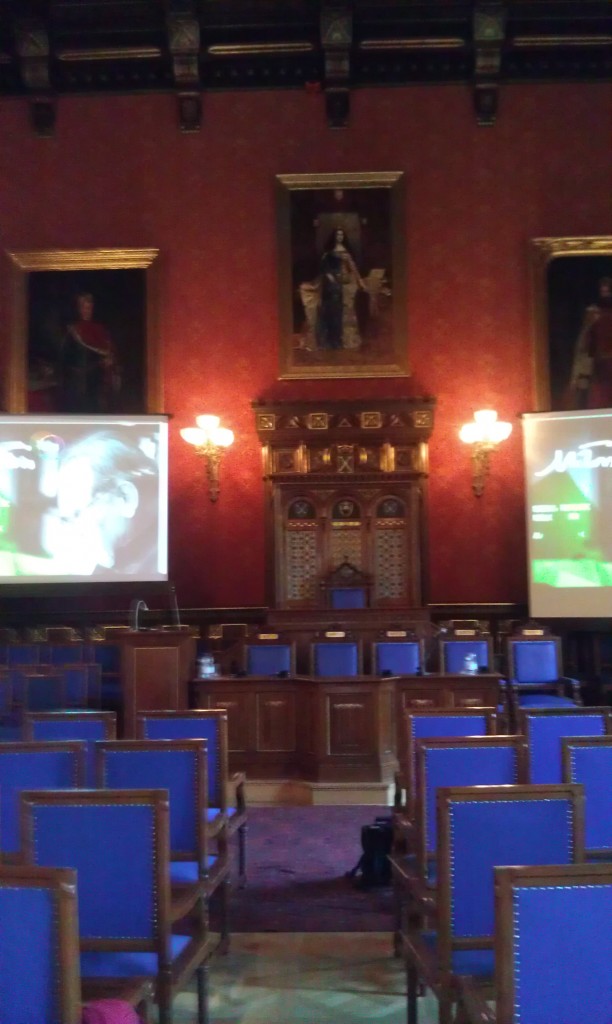
Jagiellonian University: an intimidating venue.

Miłosz survived into the age of globalization—an era that has seen the collapse of time and space. Or, as Russian scholar Valentina Polukhina describes it, “a period in which our long history has been put into single storage.” As a cause and effect of that storage, “Today’s world is not monolithic: discrete events, fragmented thinking and perceptions, ideas of good and evil are so confused that the only proper response is apocalypse.”

The more commonplace response is instead an enormous loss of inwardness. Miłosz also was alarmed by it. During the Berkeley centenary event last March, a woman mentioned a talk Miłosz gave to a graduating class in New Mexico in 1989. I located a copy. While his comments might not be surprising today, it’s important to remember they were made more than two decades ago, and prefigure Michel Serres’s very recent writings about “soft pollution”:

“Pollution of the environment is today at the center of universal attention. There is, though, another kind of pollution which does not seem to be anybody’s concern … I speak of the pollution of the mind by the image of the world imposed upon citizens by advertisements, television, cinema, newspapers, radio and imposed in such a manner that their victims do not realize to what extent they are conditioned. As today there are no clear criteria for forbidding anything, the freedom of the market is the supreme law.”

A happenstance Californian.

A champion for “second space.”

We forbid nothing. We have an endless array of choices at all points of life but very few criteria on which to base those choices. Hence, we are unable to make our choices “meaningful,” and this breeds the nihilism that afflicts us. Believing in “progress,” we are unable to get our utopias up and running. We sense a diminution of our cosmos. Miłosz replied by crying out for “Second Space.” Yet today many seem tone deaf to the rhythms of his life, and can only transpose his nuances into the key of doubt – even more frequently, we project our current moral chaos onto Miłosz, and so misunderstand him.

Have we become allergic to the medicine he offers? It’s an antidote more needed in America, where he spent four decades of his life, than perhaps anywhere else – and it is from that perspective that I speak, a perspective that is both foreign and familiar to those in Poland.

Order your own here, if you’re a Polish speaker. Worth your złoty.
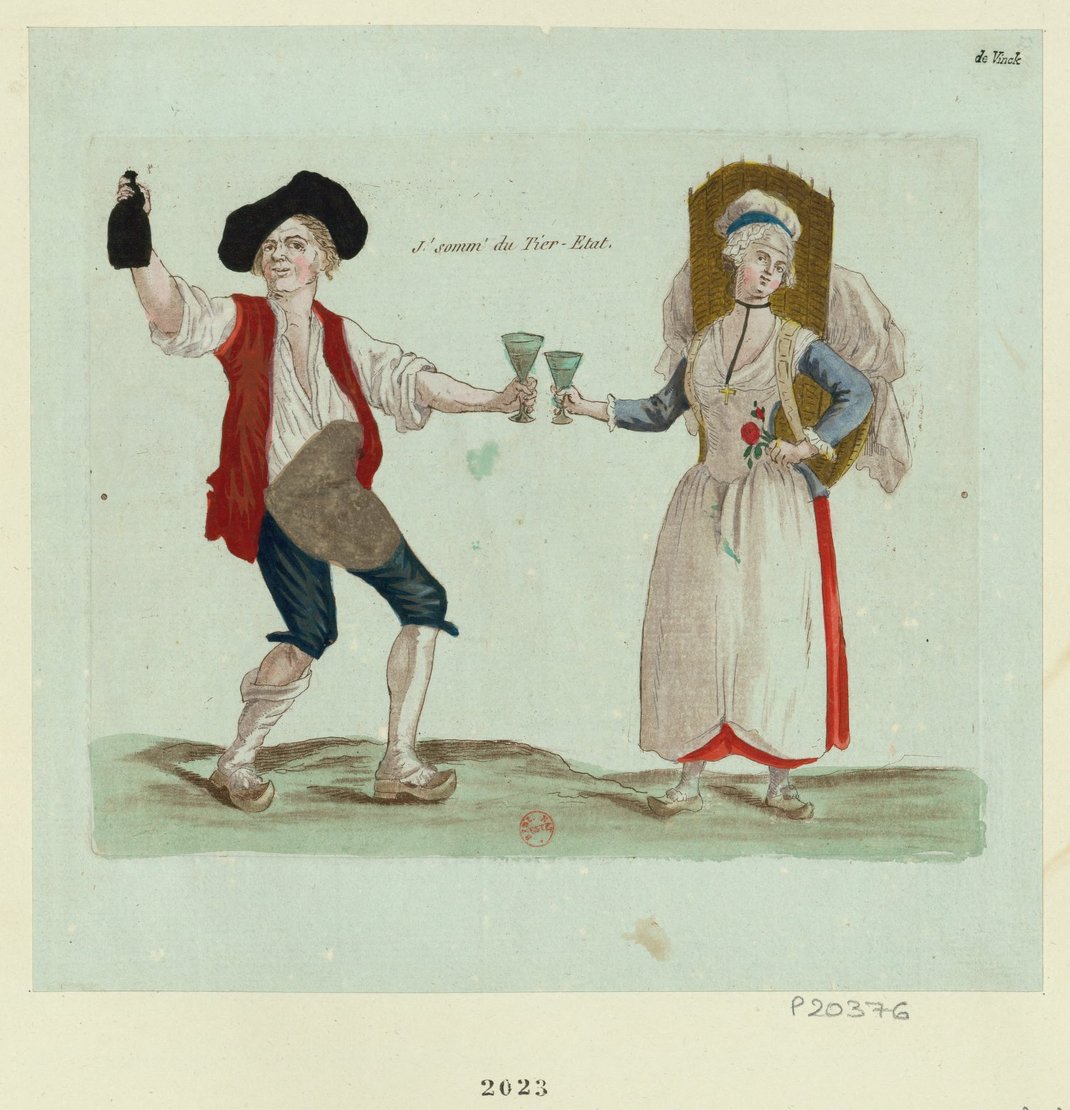
Voilà! The French Revolution online – in an avalanche of archives and images

Share
ap5


Way back in 2006, Prof. Dan Edelstein was having dinner with Michel Serres and Sarah Sussman, curator of the French and Italian collections at Stanford Libraries. The prominent French intellectual and member of the Académie française had just given a talk that mentioned digitalization, and so the topic came up later over wine.  Said Dan, “I was working on my book on The Terror, and mentioned how incredibly useful it would be to have the minutes of French revolutionary parliamentary debates – in French known as the Archives parlementaires – available in full-text, searchable form.”  Together, the three fantasized about bringing online the stunning collection of images that the Bibliothèque Nationale de France (BnF) had compiled in 1989 – at that point, the images were gathering dust on useless laser disks.

APVoilà!  By dessert, they had decided to pitch a proposal to the BnF. Michel Serres, who served on the BnF board, would deliver it when he returned to Paris. A month or so later, they got an enthusiastic reply from the then-director of the library, Agnès Saal, and the collaboration with Stanford took off. (She went on to become the director of the Pompidou Museum, and the project was subsequently adopted by the current president, Bruno Racine).  It’s featured on the pages of the Smithsonian, here.

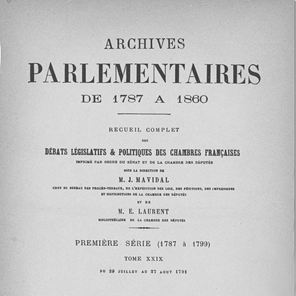
To understand what this resource represents, it helps to realize that the Archives parlementaires is a multi-volume collection (102 and counting) of primary source documents, mostly newspapers and official publications, that provide blow-by-blow accounts of the debates that took place in the National Assembly, and then, from September 1792 onward, the National Convention. “They make for gripping reading: not only do you have access to the speeches themselves, but also the shouted interruptions from other deputies, and even a general sense of how the assembly was reacting – applaudissements, murmures, bruits,” said Dan. (The Russian Revolution had its own equivalent – we wrote about it here.)

AP2One problem: the Archives parlementaires is a rather difficult source to use. Who can read it from start to finish to find a passage of interest? “If you’re interested in a particular theme, problem, or law, there’s no obvious way to find all the relevant debates within the hundred and two volumes. So this is why I was so eager to have a digitized version,” said Dan. “Instead of fishing around, somewhat blindly, for interesting passages, keyword searches allow you to jump right in wherever the topic you’re interested in might be addressed. It also enables more sophisticated text mining: for instance, counting the number of times certain names or words are used in different periods; or even, identifying all of the times when deputies cite a passage from Rousseau’s Social Contract.”

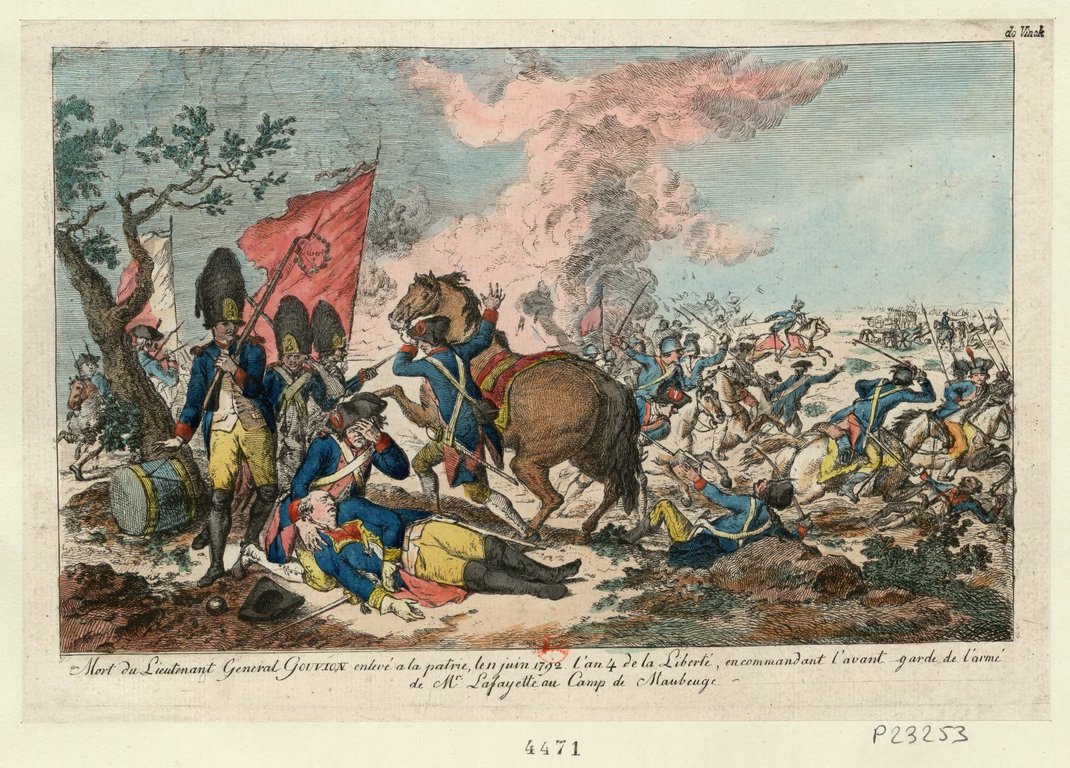
And what of us who are unlikely to think of the Archives parlementaires at all?  Dan says all of us “will probably be even more blown away by the amazing work that the BnF did re-digitizing over 14,000 images dating from the time of the French Revolution. These images bring back the baroque and often pornographic flavor of political culture at the end of the 18th century. They reveal the hatreds, hopes, fears, anxieties, and fantasies of French men and women during this ‘heady’ time – no pun intended. Because the BnF marked up the images with a remarkable degree of metadata, it’s fairly easy to find images relating to any individual, revolutionary moment, theme, or place might be interested and, simply by entering a search term.”

So go for it.  The French Revolutionary Digital Archive is here.

(All images from the French Revolutionary Digital Archives.)

ap4

The questionable utility of the dancing bear, or, the future of the humanities

Share
dancing-bear

The role of the humanities in our society

The New York Times’ article,  “As Interest Fades in the Humanities, Colleges Worry,” once again decries declining enrollment.  I don’t understand why this should come as a surprise to anyone. The humanities are devalued everywhere you look in our society – so why should kids study them?  The humanities are prized only when we can hook them up to consumer interests, make them turn a coin, demand that they entertain us.  There’s always the implicit threat that if we can’t get the bear to dance, the poor old fellow will be put down.

In the world of education, we value humanities only if we can team people onto digital projects that make cool onscreen images or turn them into rap lyrics to make them palatable for the kids. I applaud a lot of these efforts, and appreciate their intent, but they’re rather beside the point.  Coolness and likability aren’t the reason Ovid was exiled, why Osip Mandelstam died scavenging a rubbish heap in a transit camp, why Reinhold Schneider was slated for trial and probable execution had the Third Reich not fallen first, or why André Brink was banned in South Africa.  And it certainly wasn’t why Joseph Brodsky, when I studied with him, made us memorize hundreds of lines of Robert Frost, W.H. Auden, Thomas Hardy, and others – in fact, it made him distinctly unfashionable; some kids fled the class rather than make the effort.  William Shakespeare can be mutilated, but he can’t be tamed.  As one teacher said, after a student had made a snarky, sophomoric comment about Hamlet:  “Mister, when you read Shakespeare, Shakespeare’s not on trial. You are.”  And that is the point.

André_Brink_Portrait

Censored in South Africa (Photo: Creative Commons)

The tacit, self-calming assumption behind our continual cuts in the arts and humanities has always been always that the eternal things are durable, and will survive our neglect.  However, these values must be inculcated and passed on – a baby isn’t born appreciating the subtleties of Piero della Francesco or Raoul Dufy, after all.  Anything that isn’t fed eventually withers.  (I know; I have a garden to prove it.)  I’m told by those who teach that we now have a generation of young people who, in large measure, no longer ponder the terms of their existence or question their reason for being.  Tomorrow is for another pizza, ace-ing the PSAT, or another video game.  The “Holocaust” is a description of a description of Black Friday sales; the Civil Rights movement has something to do with … what?  Will I be graded on it?  I know, I know – it’s the “same old,” isn’t it?  But a serious study of history, another one of the humanities, would show that civilization is a delicate, perishable thing, appearing and disappearing throughout the centuries, and we can never take its continuance for granted (read Constantine Cavafy, Zbigniew Herbert, or the memoirs of Nadezhda Mandelstam). When we don’t pass it on, we break a fundamental chain of civilization. We’ll pay the price down the road … wait, we already are – but it’s not taking the form we had anticipated.

Reinhold-SchneiderI’m also tired of cheesy efforts to defend the humanities, which pander to the standards of our society, which are themselves a broken fence in need of repair. In any case, the fence is broken, in part, by the abandonment of literature, art, and music as the commitment of a civilized society, rather than a “frill.” I’m not saying a Haydn string quartet will save your life, but what often passes for music when I’m put on “hold” when calling my credit card company might be seen as the shocking invasion of psychological space that it is.  Sloppy thinking is everywhere, and not the province of one political party or the other – and the fact that it is inevitably attributed to the “other” in itself shows what a bad pass we’ve come to (it’s something that might have been corrected with an introductory study of Carl Jung, or René Girard, for that matter). Our political life is riddled with clichés that should be jeered offstage, because it’s a nasty way to use your Mother Tongue.  Technology, which has the power for good, has accelerated our race to the bottom, just as nuclear power, which could rescue nations, propels us toward annihilation.

Rant over.  Whew!  Not to worry!  I’m back on my medication now.  More on this subject in the coming days…from better minds than Humble Moi!  I’ll start with one of them, Michel Serres, of Stanford and the Académie Française.  I’ve featured it before, and recently, but if you haven’t seen it, please listen to his description of the fate of the humanities.  It’s not pretty.

Watch Michel Serres at Stanford, interviewed by Robert Harrison. A terrific interview clip here.


Michel Serres calls for a strike – against the English language

Share

Resident Socrates (Photo: L.A. Cicero)

In quieter times (Photo: L.A. Cicero)

The French have always been protective of their language against the foreign invasion of words.  “Weekend,” “internet,” “football” make their regular incursions against the proud tongue of the Gauls, and are repelled, with mixed results.

Now France’s preeminent public intellectual Michel Serres (we’ve written about him here and here) has joined the fray.  In today’s Telegraph:

“There are more English words (in adverts) on the walls of Toulouse than there were German words during the Occupation,” said philosopher Michel Serres, a member of the Acadamie française [sic], the state body which aims to protect the French language.”

“I want to invite the French to go on strike. Each time that advertising is English, you don’t buy the product, each time a film’s title is not translated, you don’t go into the cinema,” he said in an interview with la Depeche du Midi newspaper.

The spelling error in a leading British newspaper makes a good case for the English taking a few more French classes – and when, oh when, will foreign diacriticals be an established style rule for newspapers?  It looks so insular when we refuse to honor the spelling of foreign names.

In any case, one Englishman fired back:

Stephen Clarke, the Paris-based English author whose novel The Merde Factor sees its hero battling with the anti-Anglais brigade, wrote a stinging reply to Mr Serres’ boycott call in a blog for the Telegraph:

“It is pretty thoughtless to compare advertising posters that we are free to ignore completely with Nazi proclamations informing people that they will be shot if they are found out of doors after curfew or sent to death camps if they belong to certain ethnic groups.

He’s threatening retaliation – a ban on all French words and expressions on the other side of the Channel.  No more gâteau for the English. Let them eat cake!

Meanwhile, here on the Pacific, Humble Moi had the honor of catching Michel Serres for one of his very rare English interviews – in fact, it’s the only one I’ve been able to find online:

Congratulations, Robert Harrison, Chevalier de l’Ordre des Arts et des Lettres de la République Française!

Share

He deserves it. (Photo: L.A. Cicero)

He deserves it. (Photo: L.A. Cicero)

Robert Pogue Harrison had a surprise when he arrived back at Stanford after his Italian summer.  In his mailbox, an official-looking letter had arrived from the French Minister of Culture, Aurélie Filippetti,  awarding him the diploma and bestowing the honorific title of “Chevalier de l’Ordre des Arts et des Lettres,” one of the highest cultural honors France offers.

The award was established in 1957 to “recognize eminent artists and writers and those who have contributed  significantly to further the arts in France and throughout the world.” In the past, it has awarded  T.S. EliotVáclav Havel, and Seamus Heaney, along with George Clooney, Frederica von Stade, Bono, and Sean Connery.  Think of Robert maybe as a cross between Havel and Clooney.  We’ve written about him before here and here and here and here.  He is one of Stanford’s most prolific and eminent authors, contributing to the New York Review of Books, oh, here and here and here.

Robert is the author of The Body of Beatrice (1988), Forests: The Shadow of Civilization (1992), The Dominion of the Dead (2003), and Gardens: An Essay on the Human Condition (2008). All acclaimed and widely respected. His next book, Juvenescence: A Cultural History of Our Age, will be published by the University of Chicago in Autumn 2014. “It’s hard to characterize succinctly what it’s about,” he said to me. “What kind of age are we, culturally speaking, at this time? How old are we in this particular age?”

His esteemed books notwithstanding, he may be best known as the host (and founder) of Entitled Opinions, a weekly radio talk show that explores literature, ideas, ancient and modern history – all aspects of human experience, really. His guests are Stanford faculty and the scholars, writers and thinkers who visit the campus. (All the programs are available on the Entitled Opinions website.)

medailles

All three, please. Ta very much.

It’s not entirely a surprise that Robert, who is Rosina Pierotti Professor of Italian Literature, has come to the attention of France in recent years. Three of his books have been translated into French.  Moreover, in Paris two years ago, he gave a well-received series of lectures at the prestigious Collège de France, founded by Francis I in 1530, on “Le phénomène de l’âge – Littératures modernes de l’Europe néolatine.”

However it came about, the honor, which is competitive and selective, is quite a coup. He will get a fancy little medallion and ribbon (see photo at right), which will be pinned to his left breast during a ceremony at the French consulate in San Francisco later this year.

Robert has been an invaluable inspiration to many over the years, persuasive in his thinking, passionate in his convictions, wise in his insights.  One of my own cherished memories of him was when he opened up a rather staid workshop on Hannah Arendt with a talk on “passionate thinking”:

The “overwhelming question” in the humanities, he said, is “How do we negotiate the necessity of solitude as a precondition for thought?”

“What do we do to foster the regeneration of thinking? Nothing. At least not institutionally,” he said. “Not only in the university, but in society at large, everything conspires to invade the solitude of thought. It has as much to do with technology as it does with ideology. There is a not a place we go where we are not connected to the collective.

“Every place of silence is invaded by noise. Everywhere we see the ravages of this on our thinking. The ability for sustained, coherent, consistent thought is becoming rare” in the “thoughtlessness of the age.”

He  is known as a brilliant scholar  – but among insiders, he is also celebrated as a loyal friend and a generous colleague.  In an academic environment renowned for egotism, Robert has been tireless in promoting others – not only the work of the great (for example, René Girard and Michel Serres, immortels of the Académie Française, are his friends as well as colleagues at Stanford), but also students, younger colleagues, the humble and the obscure.  I sat in on his Dante class last year; I know he is a gifted teacher as well.

The Ordre des Arts et des Lettres was confirmed as part of the Ordre National du Mérite by President Charles de Gaulle in 1963, adding to the luster of the award, which is competitive and selective. The order has three grades:  commandeur, officier, and chevalier.  From chevalier, one can rise within a few years to officier, and then commandeur.

But so far, Robert likes the title he’s got. Is it Chevalier Robert or Chevalier Harrison? Either way, it has a certain ring to it.  “I’ve always had a chevalier gallant complex,” he joked.  Does he award bestow anything beyond a medal?  “I’m looking for a horse.”  So we thought we’d find him one, here at right.  It’s a white one.

Postscript on 9/30:  Look what we found online!  Robert’s talk on “passionate thinking.”  Enjoy.  I know I will.


He’s a winner! Michel Serres gets the Dan David Prize

Share

Relaxing at Stanford (Photo: L.A. Cicero)

Michel Serres is a winner.  But then, we knew that already.  We’ve written about him here and here and here.

Here’s the latest evidence:  He’s one of the five winners of this year’s Dan David Prize, which was announced last week by the Dan David Foundation and Tel Aviv University. The other winners include Leon Wieseltier, literary editor of The New Republic, and Esther Duflo, a French economist who studies poverty in the Third World and has been active in the fight against malaria, and epidemiologist Alfred Sommer, and Sir Geoffrey Lloyd, a Cambridge historian of the philosophy of ancient Greece.

Haaretz described Michel Serres as “a French scholar whose work on the atrocities  of war has helped seal his reputation as one of the greatest French philosophers living today.”

Each year, three $3 million awards are made in three dimensions: past, present and future. Serres was recognized in the present dimension under “Ideas, Public Intellectuals and Contemporary Philosophers” Wieseltier represented “the present,” too – so they’ll split the million.

Here’s what the David Prize people had to say:

Michel Serres is a French master thinker of the old school, with an intimate knowledge of the western tradition in philosophy and science, from its origins to the present, a passionate curiosity about the present and the willingness—and the ability—to enter productively into discussion of a vast range of current questions. His career began with an enormous and penetrating investigation of Leibniz’s use of mathematical models, which continues to be a standard work, and rapidly developed into a series of inquiries: into the history and nature of mathematics, epistemology, moral philosophy and humanity’s relations with the natural world.

In the great tradition of French intellectuals, Serres has analyzed scientific, philosophical and fictional texts, deftly and reaching original conclusions.  He has led more recent efforts to preserve a French tradition in philosophy, concerned for moral and social questions. …

Serres is an eloquent, even seductive writer. Both in France and in the United States, where he has taught for many years at Stanford, he has been a compelling and charismatic teacher, and his lectures and publications have reached large audiences around the world. His combination of deep learning and profound thought with the desire and ability to address the public has become rare.

The award ceremony will be held at Tel Aviv University on June 9.  I’m proud that I appear to have the only video interview with him in English: