
A thousand pages of Milosz.
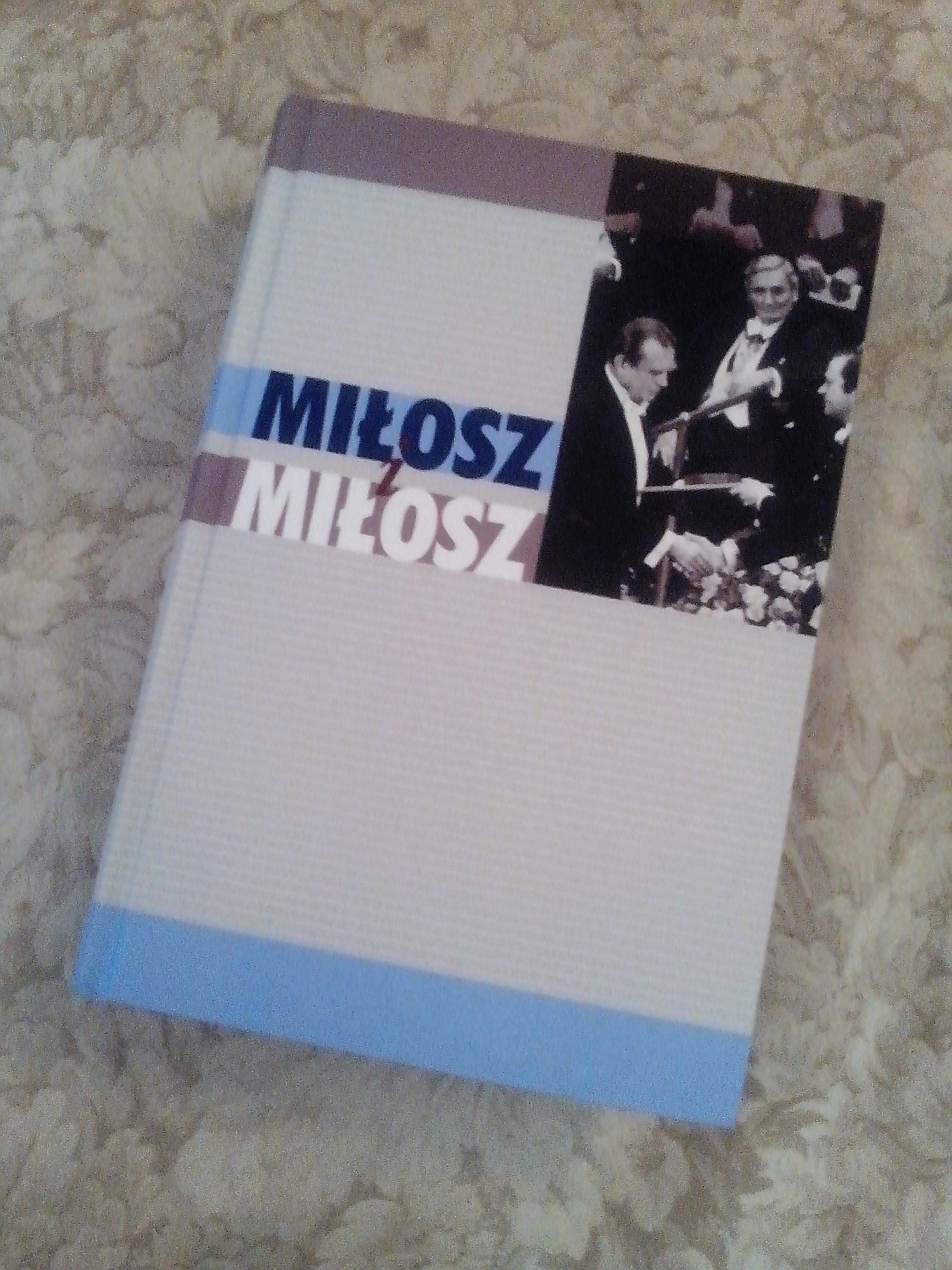
When I drove to the Stanford post office and collected the heavy parcel with thick brown-paper packaging, I knew by its heft what it was, even before I saw the Polish stamps.
Miłosz i Miłosz was published two years ago by Kraków’s Księgarnia Akademicka, but I didn’t quite believe it until I finally had it in my hands. The volume, nearly a thousand pages edited by Aleksandr Fiut, Artur Grabowski, and Łukasz Tischner, includes the talks given on the centenary for the Nobel poet Czesław Miłosz in 2011. (I wrote about the occasion here and here and here.)
And there, on page 109, is my own “Miłosz in Purgatory” – or “Miłosz w czyśćcu.” An excerpt (in English):
At Queens College in New York City, someone in the audience asked [poet Robert] Hass what it was like spending decades translating Miłosz. He responded in a heartbeat: “Like being alive twice.”
Clearly, Hass is more attuned to the Pacific mystic who was struggling to come to terms with the fierce surf, the sea-worn cliffs, and a fate that would have been unimaginable to the younger self who wrote “Dedication” in Warsaw. As Miłosz wrote in “Magic Mountain,” a poem that has inevitable resonances for Californians:
So I won’t have power, won’t save the world?
Fame will pass me by, no tiara, no crown?
Did I then train myself, myself the Unique,
To compose stanzas for gulls and sea haze,
To listen to the foghorns blaring down below?
Until it passed. What passed? Life.
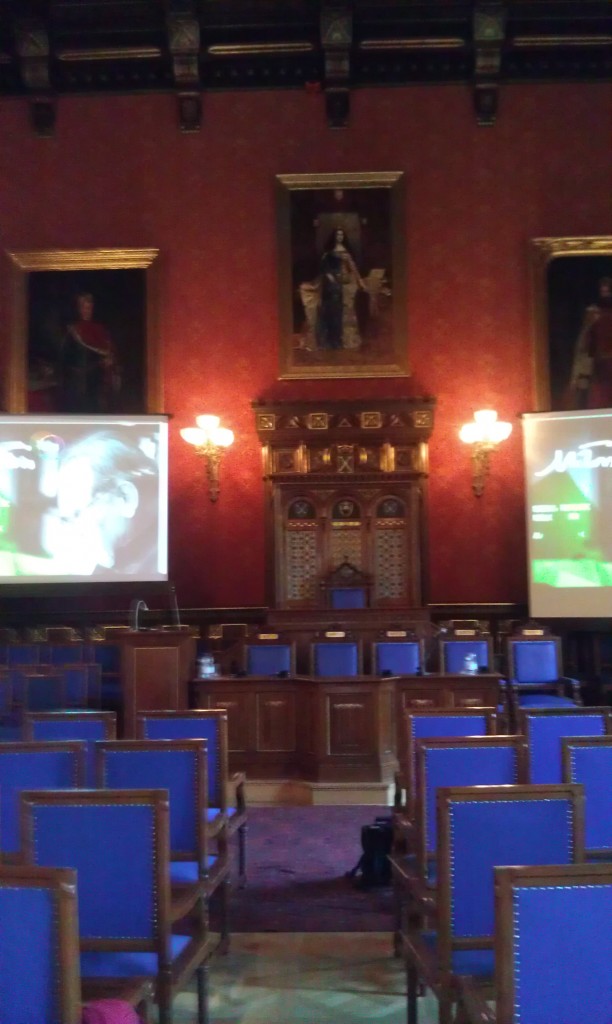
Jagiellonian University: an intimidating venue.
Miłosz survived into the age of globalization—an era that has seen the collapse of time and space. Or, as Russian scholar Valentina Polukhina describes it, “a period in which our long history has been put into single storage.” As a cause and effect of that storage, “Today’s world is not monolithic: discrete events, fragmented thinking and perceptions, ideas of good and evil are so confused that the only proper response is apocalypse.”
The more commonplace response is instead an enormous loss of inwardness. Miłosz also was alarmed by it. During the Berkeley centenary event last March, a woman mentioned a talk Miłosz gave to a graduating class in New Mexico in 1989. I located a copy. While his comments might not be surprising today, it’s important to remember they were made more than two decades ago, and prefigure Michel Serres’s very recent writings about “soft pollution”:
“Pollution of the environment is today at the center of universal attention. There is, though, another kind of pollution which does not seem to be anybody’s concern … I speak of the pollution of the mind by the image of the world imposed upon citizens by advertisements, television, cinema, newspapers, radio and imposed in such a manner that their victims do not realize to what extent they are conditioned. As today there are no clear criteria for forbidding anything, the freedom of the market is the supreme law.”
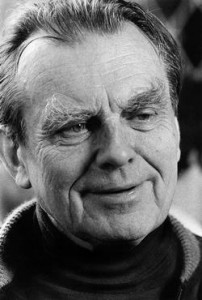
A champion for “second space.”
We forbid nothing. We have an endless array of choices at all points of life but very few criteria on which to base those choices. Hence, we are unable to make our choices “meaningful,” and this breeds the nihilism that afflicts us. Believing in “progress,” we are unable to get our utopias up and running. We sense a diminution of our cosmos. Miłosz replied by crying out for “Second Space.” Yet today many seem tone deaf to the rhythms of his life, and can only transpose his nuances into the key of doubt – even more frequently, we project our current moral chaos onto Miłosz, and so misunderstand him.
Have we become allergic to the medicine he offers? It’s an antidote more needed in America, where he spent four decades of his life, than perhaps anywhere else – and it is from that perspective that I speak, a perspective that is both foreign and familiar to those in Poland.
Order your own here, if you’re a Polish speaker. Worth your złoty.