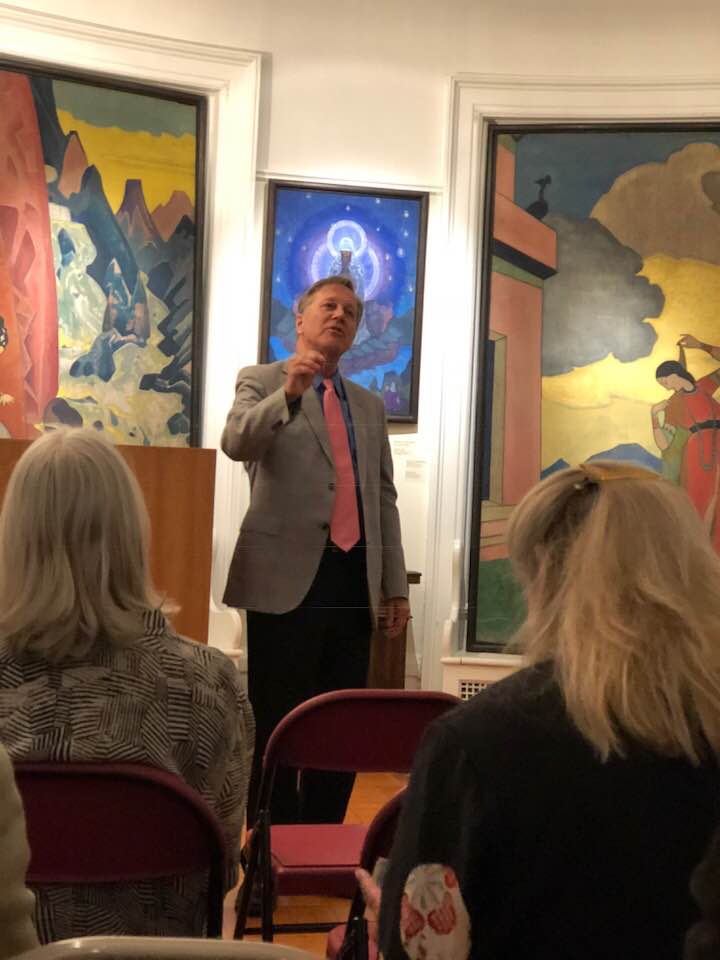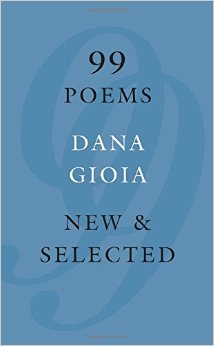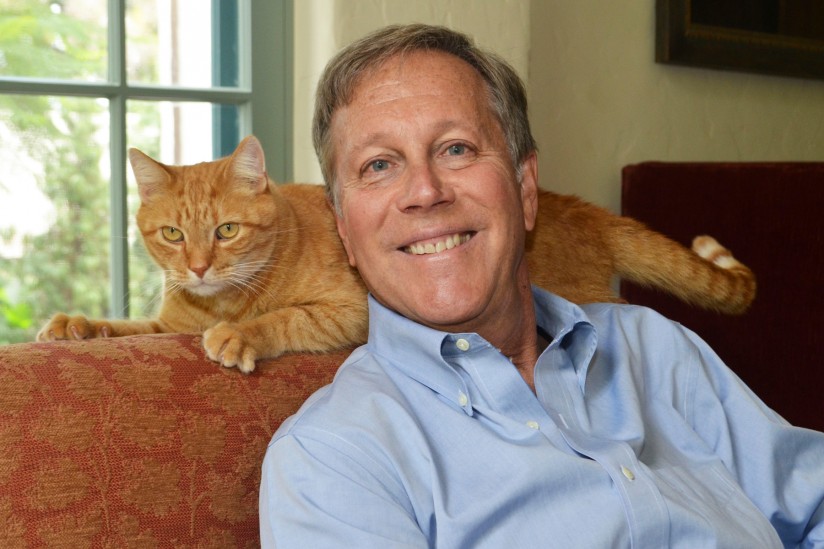
Dana Gioia and Doctor Gatsby. (Photo: Star Black)
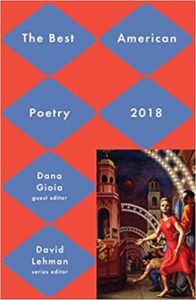
American poetry is full of contradictory trends. “That’s one reason why the articles announcing poetry’s demise are usually right and wrong at the same time,” says California Poet Laureate Dana Gioia, who is also a former chairman of the National Endowment for the Arts. He has edited The Best American Poetry 2018. The Los Angeles Review of Books has published an excerpt from his introduction, on the state of American poetry today. As always, Dana has spotted a number of trends that hadn’t quite crystallized in my own thinking – or perhaps, in this case, it’s simply that I live in an academic environment, and the fish doesn’t notice the water.
An excerpt of the excerpt:
The university’s role in poetry may be the most complicated paradox of all. For decades, the expansion of academic writing programs provided a home for poets, first as students and later as instructors. Academia gave thousands of poets secure, paid employment — something unprecedented in the history of Western literature. It was the United States’s version of the imperial Mandarin system, which once employed poets as bureaucrats across China’s vast empire. Our system was even better. Poets got summers off.
Then, like most booms, the surge ended. The university system stopped expanding, especially in the humanities. Job applicants greatly outnumbered job openings. Rather than address the problem by cutting back graduate programs, universities chose to exploit their junior personnel as cost-savings. Tenure-track careers became adjunct gigs with low pay, no benefits, and minimal job security. The academic situation is old news, but it is still awful to young and often not-so-young people trapped in crappy jobs or unemployment. The tale of this city depends on what side of the tenure track a poet lives.
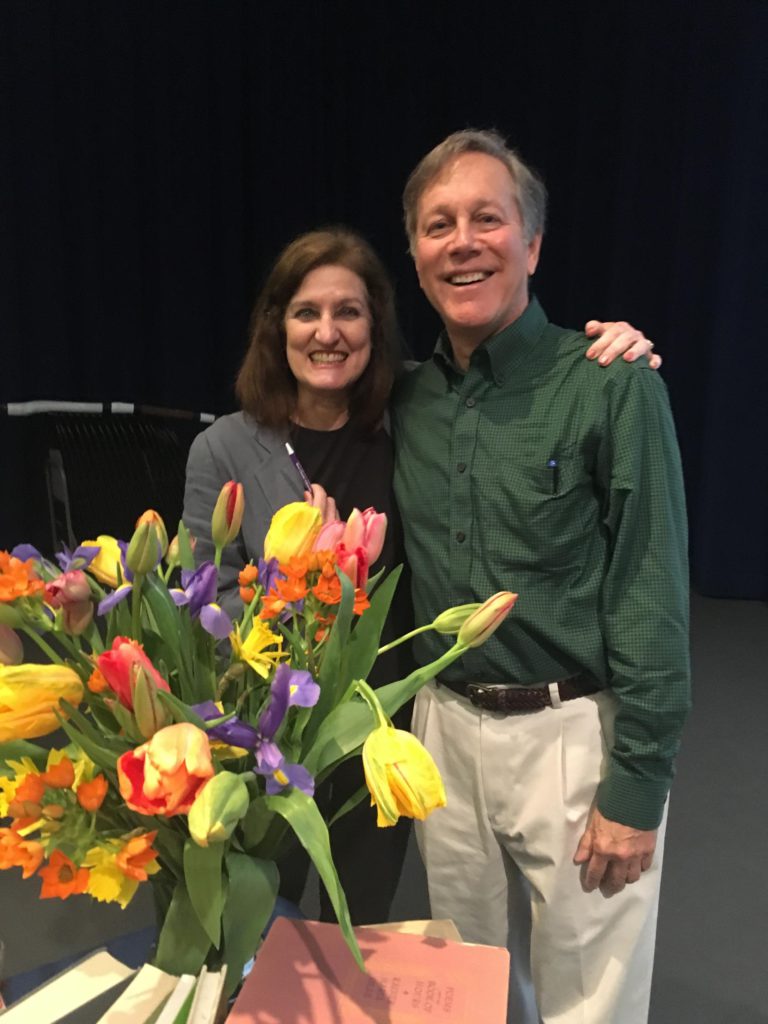
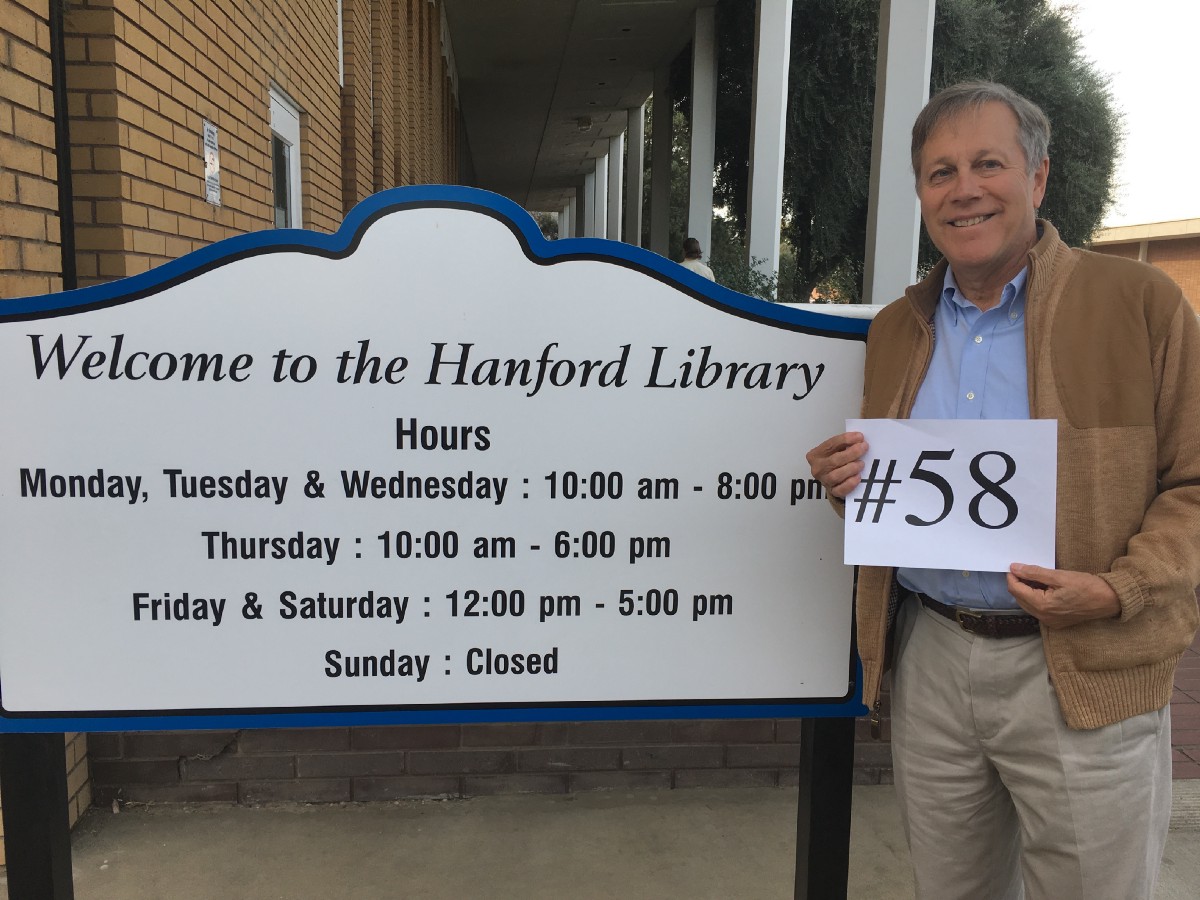
With Dana at the inaugural Sierra Poetry Festival, 2017.
Academia’s problems, however, had an unexpected cultural benefit. The legions of young writers, artists, musicians, and scholars who met with disappointment in the academic job market haven’t all vanished. Most of them just moved. Not finding a place in one world, the academic refugees sought new lives in another. As old bohemian neighborhoods in Lower Manhattan, San Francisco, and other cities were being destroyed by gentrification, tourism, and rising real estate prices, a steady stream of unemployed and underemployed artists helped enlarge or create new communities in places such as Oakland, Austin, Portland, Jersey City, Astoria, and Downtown Los Angeles. Here they joined and revitalized preexisting local communities. Bohemian communities have also emerged in smaller towns, but in such cases their size makes them vulnerable to tourism and development. Witness the stultifying impact of money on Aspen and Carmel or, on a larger scale, the French Quarter of New Orleans.
Thirty years ago, the typical young poet taught in a university. Today’s new generation is more likely to be living in a big city and employed outside academia. They work as baristas, brewers, and bookstore clerks; they also work in business, medicine, and the law. Technology has made it possible to publish books without institutional or commercial support. Social media connects people more effectively than any faculty lounge. An online journal requires nothing but time. An iPhone and a laptop can produce a professional poetry video. Any bookstore, library, cafe, or gallery can host a poetry reading.
New circumstances create interesting possibilities for poets. In the new bohemia, a poet doesn’t need to worry about tenure, peer review, or academic fashions. A poet doesn’t even need a degree. Audience is not an abstract entity; the poet sees a diverse crowd face to face at readings. Those faces are not the same ones found at a research university. The new communities include large parts of the population unlikely to participate in academic literary life because they are blocked by poverty, language, and race. Those groups have brought new perspectives and new energy to literary life. Minority authors and audiences often share a conviction that literature and literacy are fundamental to the identity, advancement, and even survival of their communities. When creating your own literature becomes a life-or-death issue, different sorts of poetry emerge from what one commonly finds in an English department.
The new bohemia is no demi-Eden. Writers struggle to balance their art with practical exigencies. Their situation is complicated but exciting. Existing outside both the academic and market economy makes these poets marginal in society, but their circumstances also give them freedom from commercial and academic conventions. Most boho writers, with or without degrees, probably still dream of snagging a professorship, but they also recognize that as outsider artists they represent an important cultural enterprise. Together they have created a vigorous alternative culture that has broken the university’s monopoly on poetry. They have diversified, democratized, and localized American poetry.
Read the whole thing here (and Dana answers a question in the combox, too).
 Postscript on Sept. 6 from David J. Bauman “I want to be careful to respond to the article and not the headline. It’s actually a very positive and open assessment of where American poets are today and (mostly) why. The only tiny tidbit I question is when Gioia says: “Most boho writers, with or without degrees, probably still dream of snagging a professorship.” I don’t think that’s true. As a public library director, I can honestly say, my interest in joining the university ranks died off long ago. And while he happily argues that today’s young poets don’t need to go the university route, he does not seem to be aware of the fact that many don’t, or even never, wanted to. While I have nothing against MFAs, I still think their biggest blind spot was the fact that there are plenty of artists, poets included, who have zero interest in teaching at a university. It makes sense for many, but it is not a good fit for all. And our poetry as a nation is better for it. I’m happy that folks, including Gioia are waking up to that realization.” (See David’s own blog here.)
 Another postscript, on Sept. 10 from essayist, filmmaker I don’t blame anybody from fleeing academia these days, hostage as it is to polarized politics, but when have artists in any medium in any age been entitled to live, and live well at that, off their art? This brings to my mind Isaak Dinesen’s gourmet French chef, Babette, who sacrifices her life savings to win over the hearts, minds, and appetites of a puritanical Danish community. At the end, she explains “a true artist is never poor.”
 And we missed this Sept. 6 note from the inimitable Jeff Sypeck, in the combox: Good piece by Gioia. Even though he was trying only to describe the situation rather than judge it, I’m inclined to find it a positive development, in the long run, that poetry is no longer confined to the academy. As someone who tries to find spare moments to write and read poetry while holding down an unrelated full-time job and part-time job, I can’t help but think that the profs who have the luxury of being full-time poets should be turning out much better work than they ultimately do. I don’t mean for that to sound as snide as it likely does, especially since I can name several professor-poets whose work is fresh and exuberant, but there tends to be an awfully safe, prim aura about “campus poetry,” hewing as it does to conventions that have had a century to congeal. Anyway, I appreciate Dana Gioia’s generous spirit; I think he’s wise to see that even terrible Instagram poetry holds the promise of new audiences, readers who are hungry for something they can’t quite name.

 We’re on the road (in New York City, in fact), but wanted to let you know about the “Best American Poetry Reading 2018” on