
Revisiting Yalta with Milan Kundera, Czesław Miłosz: “We are living in the era of propaganda.”

Share

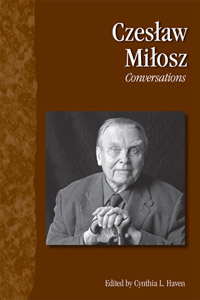
miloszEvery time I pick up Czesław Miłosz: Conversations I run into something terrific I’d swear I hadn’t read before.  I have performed a great service in the world – let me pat myself on the back.  (There, I’m done now).

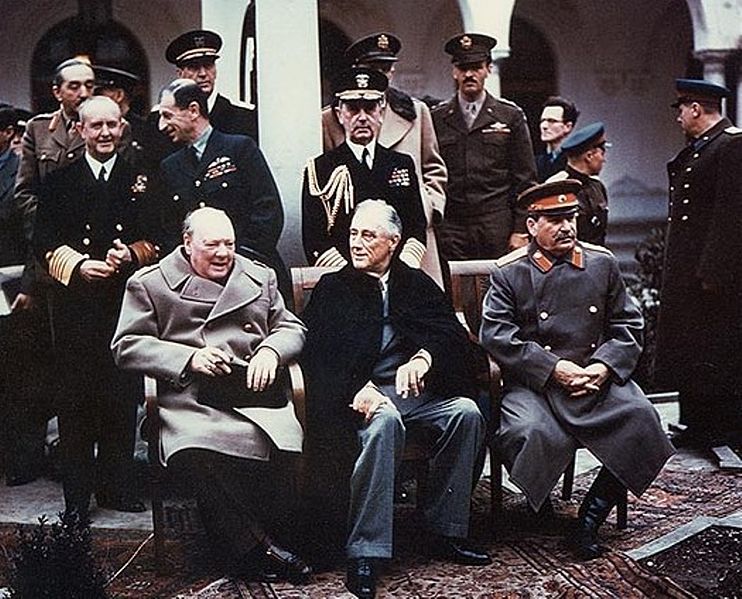
A week or so ago, I wrote about Yalta, where the major postwar powers divvied up Europe, forking over the east to the tender care of Joseph Stalin. Then I ran across this passage while looking for another for something I was writing.  As so often happens, Miłosz throws a new light on an old matter.  So does Kundera.

From 1986 New Perspectives Quarterly, later excerpted and republished in the New York Review of Books:

Nathan Gardels:  Many Latin American writers argue that there is a great similarity between the U.S. war on Nicaragua and the Soviet war on the people of Afghanistan.  Eastern European writers, Milan Kundera, for example, seem to have a different view.  “When it comes to the misfortunes of nations,” Kundera has written, “we must not forget the dimension of time. In a fascist dictatorial state, everyone knows that it will end one day. Everyone looks to the end of the tunnel.  In the empire to the East, the tunnel is without end, at least from the point of view of human life. This is why I don’t like it when people compare Poland with, say, Chile.  Yes, the torture and the suffering are the same, but the tunnels are of very different lengths. And this changes everything.”

Do you agree with Kundera? Is this also your perspective?
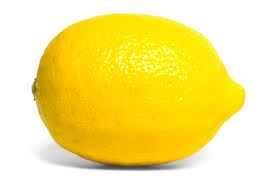
lemonCzesław Miłosz: Yes, yet I feel there is more to be said. Correct reasoning and realistic appraisal are very important. Moral issues are, of course, largely the result of sentimental propaganda. We are living in the era of propaganda.  A basic difference between the various social structures shouldn’t be underestimated. You shouldn’t put on the same scale of balance organisms which are completely different.  You cannot compare a lemon and a triangle.  They don’t belong to the same realm.

In Western thinking, parallelism has a very long tradition. I believe that the plan of division of the world between American and the Soviet Union, of which Europe is a victim today because Europe as a unit is destroyed by division, was due to a large extent to this parallel thinking.

triangleThe problem should be put in terms of certain acquisitions of civilization which risk being lost. For instance, I feel that a division of powers into legislative, executive, and judiciary is a basic acquisition of civilization. There is no reason to be ashamed of such an acquisition which some call “bourgeois democracy”; the worst can be withstood if this division is maintained.

So, the onslaught of the totalitarian state is just a kind of illness.  Of course, whether one cooperates and coexists with illness is a practical consideration. But to compare the two systems on a purely moral basis, that is completely wrong!
Yalta_summit_1945_with_Churchill,_Roosevelt,_Stalin

“When it comes to the misfortunes of nations, we must not forget the dimension of time.”
Czesław Miłosz on pursuing goals

Share

"An omnium-gatherum of chaos..."

Much work to finish today, heading into the night hours.  What better encouragement than this passage from Czesław Miłosz, which I happened across in my research? From Roadside Dog (1998):

“In order to accomplish something, one must dedicate oneself to it totally, so much that our fellow men cannot even imagine such an exclusivity. And that does not mean at all the amount of time consumed. There are also the innumerable emotional subterfuges practiced toward oneself, slow transformations of personality, as if one supreme goal, beyond one’s will and knowledge, pulled in a single direction and organized destiny.”

Applebaum and Shore: life under communism and its long, bitter aftertaste

Share
Yalta_summit_1945_with_Churchill,_Roosevelt,_Stalin

Decisions, decisions…

I listened to my mother.

I listened to Mummy.

My political education began very young.  When people would praise FDR in my family home, my mother would hiss “Yalta” between her teeth.  The 1945 photograph of Joseph Stalin, Winston Churchill, and Franklin D. Roosevelt sitting side by side at the Crimean resort elicited the muttered remark, “a bunch of criminals” (although she read Churchill’s multi-volume series on the war).  “Poor Neville Chamberlain believed he could trust Hitler. He was wrong. But I don’t think I’m wrong about Stalin,” Churchill naively opined.

Having a mother who was 100% Magyar was a good antidote to political correctness.  And she never forgot nor forgave the conference that forked over most of Eastern Europe to Stalinist rule.  (Perhaps it’s no coincidence that her daughter writes so much about Cold War-era writers from Poland and Russia.)

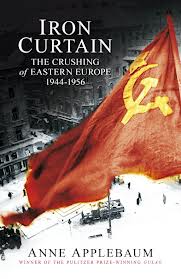
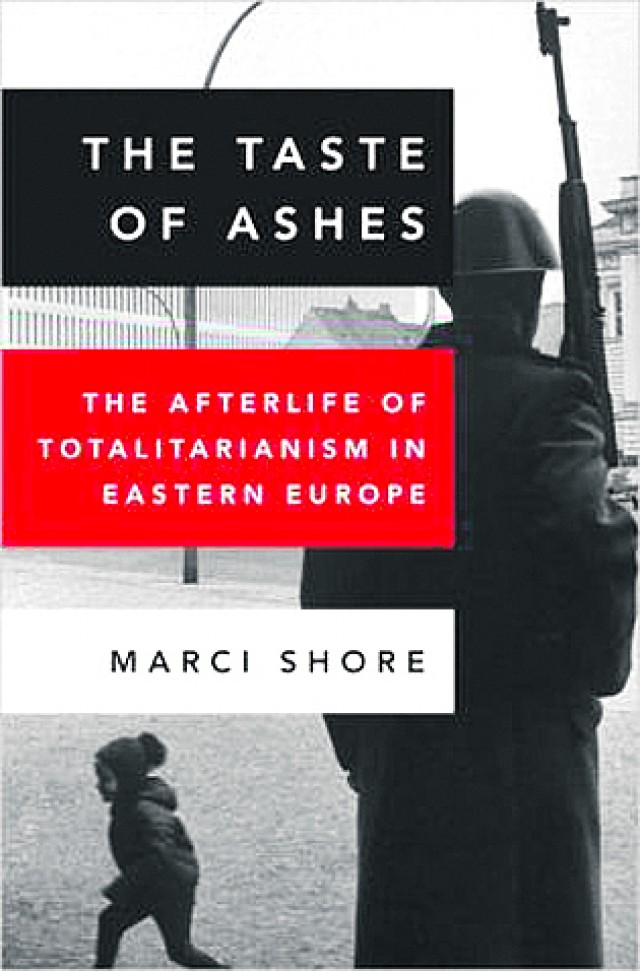
So I read with interest the Christopher Caldwells discussion of two impressive and recent books in the New Republic, Anne Applebaum‘s Iron Curtain: The Crushing of Eastern Europe 1944-56 and Marci Shore‘s The Taste of Ashes: The Afterlife of Totalitarianism in Eastern Europe.  I have endless admiration for both women.  You can read the article, “When Evil Was a Social System: The Moral Burdens of Living under Communist Rule in Eastern Europe,” here.

applebaumbookI pulled out piles of excerpts to cite, but this humble blog post quickly became top-heavy, and I felt the ominous presence of the copyright cops outside my door.  Let me settle instead for citing Caldwell’s concluding paragraphs:

“These two books are a sign that something is changing in our understanding of the twentieth century. Applebaum and Shore, while close in age, are on opposite sides of a generational razor’s edge. Applebaum, born in the 1960s, has adult memories of the Cold War; Shore, born in the 1970s, does not. Applebaum speaks to, and in the idiom of, those who survived totalitarianism. She dedicates her book to ‘those Eastern Europeans who refused to live within a lie.’ Her big, resolute book gives us the most authoritative knowledge we have about communism, and only the most authoritative knowledge.

marci“Shore is engaged in a different project. Her book shows what erudition looks like in the Internet Age. Like a blog string, it records every false step she makes on her way to understanding. Shore almost never writes about important matters in her own voice. This means a loss of authority compared with Applebaum’s more classical style, but it allows her to share more with the reader. It frees her of the historian’s superego. The question of whether the reader can handle certain of the explosive things she has to say about Jews and communism appears not to have occurred to her.  …

“Reasonable historians may differ about whether this sort of history-through-memoir is more honest (transparent) or more cowardly (non-
committal) than the standard kind. But it will be clear to any reader of good faith that Shore has chosen historical guilt as her subject in order to deepen our understanding, not to sow discord or rile anyone up. She has found a way to illuminate certain Polish and Jewish ideas about the worst episodes of the twentieth century that is frank, fresh, and gripping. Guilt, after all, is not just self-inflicted injury but productive moral work. At any time, “guilty” will describe almost any conscience functioning as it should.”

Read the whole article here.

milosz

Right on.

Meanwhile, a final anecdote lingers:  “Applebaum mentions a girl sent home from school for saying, ‘my grandfather says Stalin is already burning in Hell’—sent home not because the teacher disapproved, but to protect the girl, her friends, her grandfather, her school, and the people who ran it. In such circumstances, propaganda can be a balm. It provides a way for men to lie to themselves, to rationalize submission to the strong, to save face. ‘I don’t like everything Stalin says,’ you could mutter (quietly!) to your wife, ‘but someone has to do something about the illiterate.’” Do I detect a whiff of Czesław Miłosz‘s  ketman here?


A short note on a sad anniversary: Zbigniew Herbert’s death on a stormy night in Warsaw

Share
milosz-polish

The book that brought him to the West.

Zbigniew Herbert died on a stormy night in Warsaw, this day, in 1998. We can do no better than link to Artur Sebastian Rosman‘s post, “Zbigniew Herbert Tempers the Rational Fury” in his brand-new blog, Cosmos the in Lost. In particular, Artur explores Herbert’s interesting connection with the philosopher Baruch Spinoza.

From Herbert’s poem, “Mr. Cogito Tells of the Temptation of Spinoza”:

Baruch Spinoza of Amsterdam
was seized by a desire to reach God

in the attic
cutting lenses
he suddenly pierced a curtain
and stood face to face

he spoke for a long time
(and as he so spoke
his mind enlarged
and his soul)
he posed questions
about the nature of man …

szu-szuWell, read the rest here.

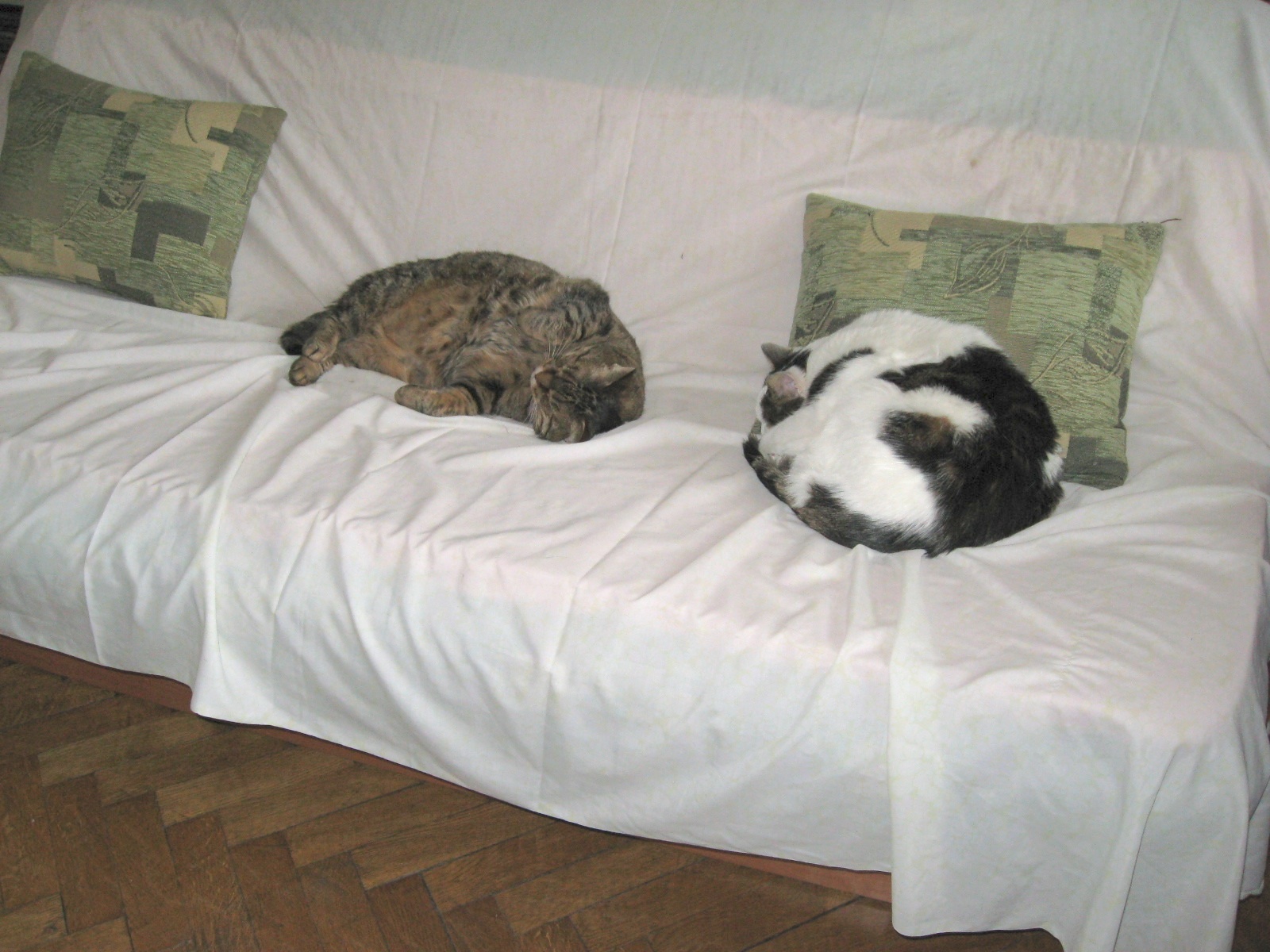
I never met Zbigniew Herbert, but I did stroke his cat.  I snapped this photo of the occasion in 2008.  Szu-szu is on the right.  On the left is Mouszka, an important acquisition by Madame Herbert sometime after the death of her husband.  I wonder if Szu-szu is still alive…

Meanwhile, among my own posts on Herbert are: “The Worst Dinner Party Ever, Czeslaw Milosz, Zbigniew Herbert, and the Lady Who Watched the Fight” here; and “When Zbyszek Met Kasia” here; and “Notting Hill Editions: Irish Saints, Dutch Executioners, and “a Crumb of Helpless Goodness”  here.

Light a candle in his memory.  And meanwhile, I must find a larger photo of these cats somewhere.  (Postscript: Found a bigger copy of the photo. The Herbert pussycats deserve no less.)

Czesław Miłosz: “Literature is a great vanity fair.”

Share

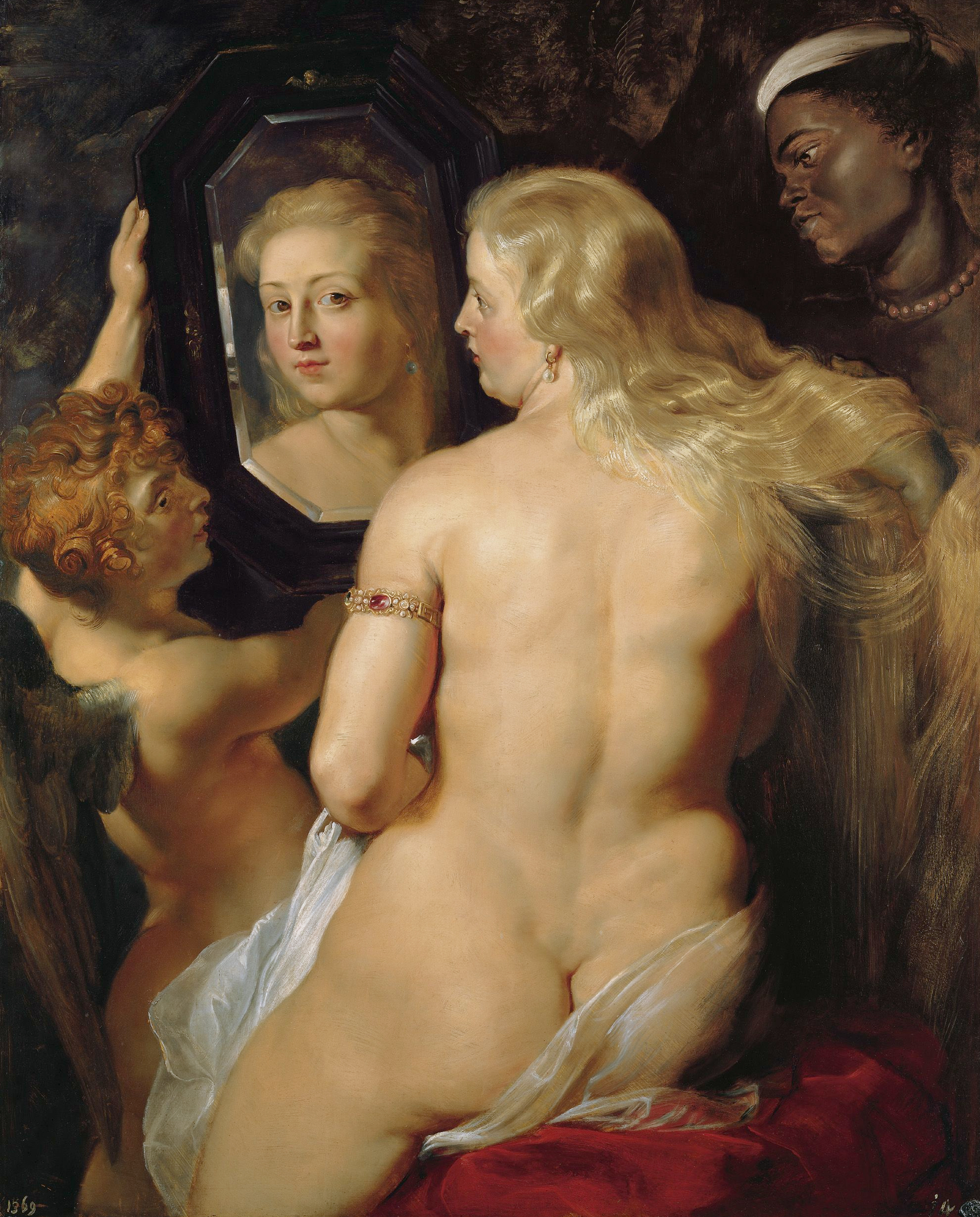
rubensIt’s Czesław Miłosz‘s birthday today.  He would have been 103.  Somehow it didn’t seem right to write of anything else on this anniversary.  A friend, Artur Sebastian Rosman, asked me about a passage in the Nobel poet’s Native Realm.  Naturally, I couldn’t find it – somewhere in the house there is a monster who has eaten all the books I cannot find.  But I did find A Year of the Hunter, his 1987-88 diary that is addictive and easily digestible in small chunks – I have penciled passages and post-its all through the volume.

Here’s a page on vanity – no particular reason, except it was a theme he returned to more than once, and was marked in my book by a thick Verizon bill:


I have always thought that consciousness is therapeutic. That is, that it avoids repetition of what has once been assimilated, even to the extent that it is possible to ward off death, since we are conscious of the repetitive nature of death. This proves that my mind was mythologizing and childlike. How many printed pages have been devoted, for example, to human vanity! It has been analyzed this way and that, and to no avail; those who are most conscious of its subterfuges yield to it and lay themselves open to the mockery of their fellows who are clever at tracking down the faults of others, but not their own.

miloszVanity is one of the chief comic seasonings of the human spectacle; if one were to take away vanity and take away sex, not much would be left of natural, so to speak, humor. Maybe Eros is vain, and all vanity is erotic? Now my imagination suggests a treatise on mirrors. On a vast number, thousands, of mirrors, and on the faces that have looked at themselves in those mirrors. Teenage girls and mature women, the combing of hair, hour-long sessions thinking about noses, chins, curls, necklaces, and earrings, how I look today, how will he see me today, whether this dress is sufficiently flattering. Mirrors ought to retain at least a storehouse of glances left behind by all those beings, but there is not a trace. And then men! Predatory – conquering nostrils, overpowering sideburns, a look of irresistable male power, the preening of roosters.  It is easy to laugh; only we ourselves were once him and her.

hunterOther types of vanity; for example, authorial vanity … In old age, vanity seeks confirmation of our existence. That is, an intelligent essay or a book about our poetry reminds us that we did exist; after all, we did write – the consciousness of which, despite what one might think, is definitely not present at all times.

birthday cakeLiterature is a great vanity fair; just the sight of it evokes empty laughter and dread. The ranks of people who write poems, novels, plays grow with every year, but hte hopes of those who aspire to the profession are mostly deceptive, and among those who are published, the majority strut about in vain. What do they want? To be liked. Eros, just as in front of the mirror.


Congratulations! Tomas Venclova responds to his newest honor

Share
"Above all, love language" (Photo: Dylan Vaughan)

“Above all, love language” (Photo: Dylan Vaughan)

Preeminent Lithuanian poet Tomas Venclova has been named an honorary citizen of Vilnius … but wait!  Why does he need honorary citizenship?  His family moved to Vilnius from Klaipėda when he was quite young, and he attended Stefan Batory University (now Vilnius University) in the city, as did his friend Czesław Miłosz.

Oh, that’s right.  He was more or less kicked out.  He was active the dissident movement, hence,  he was “deprived of Soviet citizenship,” which means he had to leg it out of his native land in 1977.  I believe he spends part of the year in Vilnius,  as well as in Kraków and New Haven, Conn., where he is now an emeritus professor at Yale.  Well, he gets around a lot.

From a Lithuanian news site:

Vilnius City Council unanimously decided to name Tomas Venclova, a Lithuanian poet, publicist and translator, an honorary citizen of Vilnius.

“Vilnius deserves to have the right and reason to be proud of the fact that such an outstanding figure came of age in the city; by naming Tomas Venclova an honorary citizen of Vilnius, the ties between the poet and his beloved city will be strengthened forever,” the Directorate of Vilnius Memorial Museums said in its nomination letter.

35 years ago, Venclova published his correspondence with Czeslaw Milosz, another celebrated writer born in Vilnius [not true, he was born in Szetejnie – ED], in an essay titled “On Vilnius as a Form of Spiritual Life.” Thanks to this publication, the world learned more about problems of Soviet-occupied Lithuania and Vilnius.

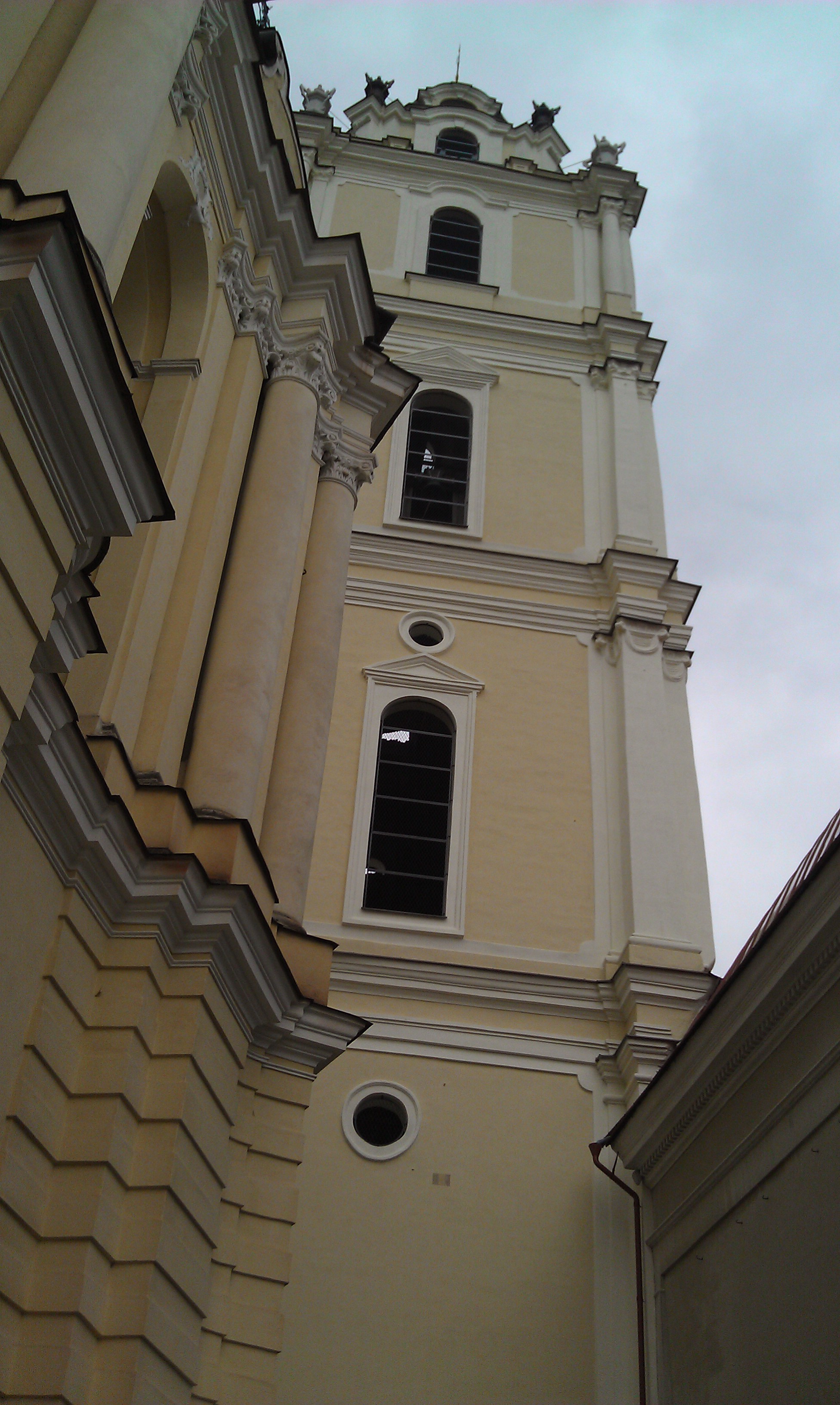
His alma mater, Vilnius University (Photo: C.L. Haven)

His alma mater, Vilnius University (Photo: C.L. Haven)

Venclova will become the 11th honorary citizen of Vilnius.

Wait.  Publicist???  I suppose they’re referring to his top-notch guide to Vilnius, which exists in English.  From his introduction:

…Vilnius has always remained many-faceted and multi-lingual.  It has been and will always be a dialogue city. … The Lithuanian capital reminds one of a palimpsest – an ancient manuscript in which the text reveals traces of an earlier text or even several of them underneath it.  The city is surrounded by a hilly northern landscape: because of abundant forests and lakes it has always appeared somewhat untamed. Throughout the city, up to its very centre, islands of untamed nature can be found.

So what does it mean to be a citizen of the city you have lived in so many years?  I sought quick clarification from the poet himself.  He wrote back yesterday from Berlin:

Dear Cynthia,

There are eleven honorary citizens of Vilnius, including Milosz (for whom the  city was also home for decades). The list includes Reagan and Brzezinski; that may look a bit awkward (they helped Lithuanians in the fight for independence).

Winner takes nothing, except the right to participate in the meetings of the city council (nobody ever insisted on that privilege). City also provides for the upkeep of his/her grave. In case of Reagan, the last provision is obviously void.

Love,
Tomas.

Well, there you have it.  From the horse’s mouth.