Orwell Watch #27: What is fascism? Does anybody know?

Share
Da Man

Da Man

I was talking online with friend and fellow blogger Artur Sebastian Rosman about the current obsessions in the news. One thing we both have noticed: suddenly everything and everyone is being called a “fascist.” But what, exactly, does the word mean nowadays, other than an all-purpose pejorative, something pleasant to scream at your opponents?

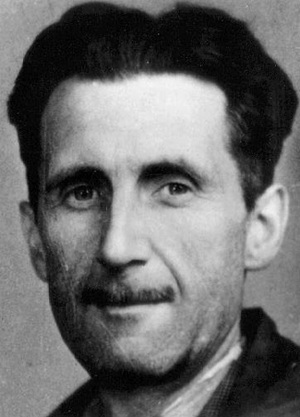
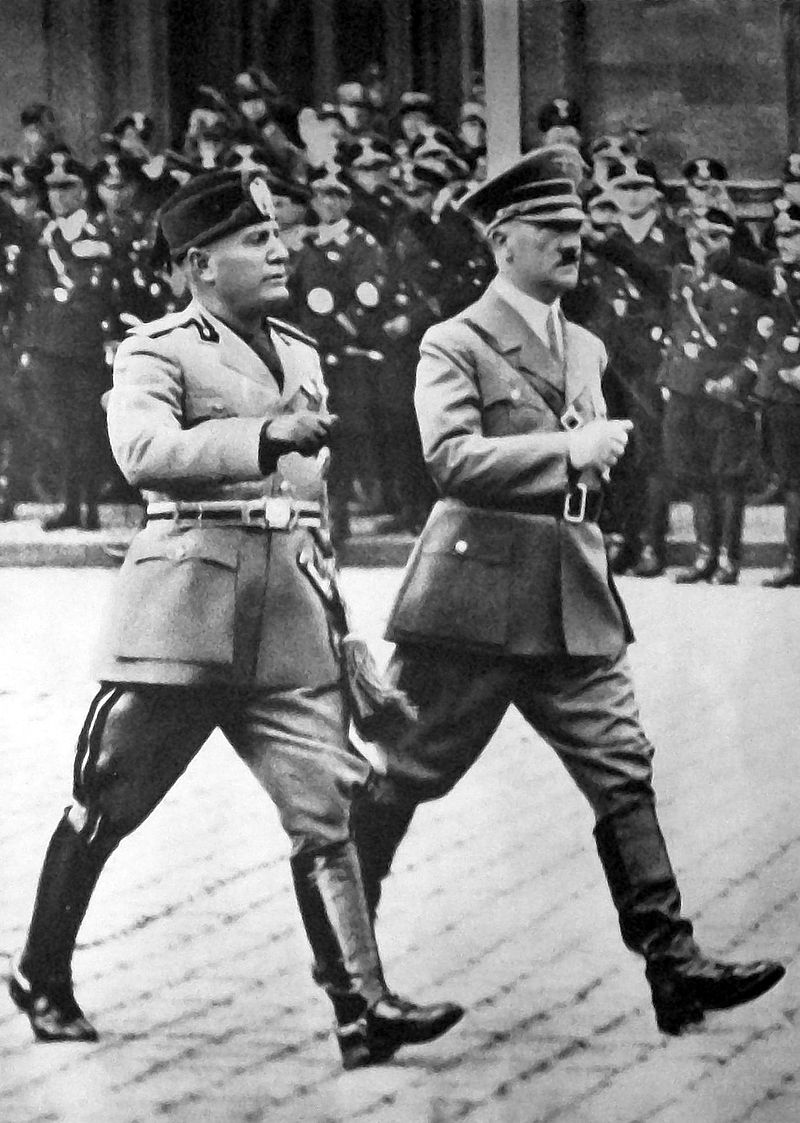
We went back the expert, George Orwell. Here’s what he said: “Of all the unanswered questions of our time, perhaps the most important is: ‘What is Fascism?’ One of the social survey organizations in America recently asked this question of a hundred different people, and got answers ranging from ‘pure democracy’ to ‘pure diabolism’. In this country if you ask the average thinking person to define Fascism, he usually answers by pointing to the German and Italian régimes. But this is very unsatisfactory, because even the major Fascist states differ from one another a good deal in structure and ideology.”

Seems it stumped him, too:

It will be seen that, as used, the word ‘Fascism’ is almost entirely meaningless. In conversation, of course, it is used even more wildly than in print. I have heard it applied to farmers, shopkeepers, Social Credit, corporal punishment, fox-hunting, bull-fighting, the 1922 Committee, the 1941 Committee, Kipling, Gandhi, Chiang Kai-Shek, homosexuality, Priestley’s broadcasts, Youth Hostels, astrology, women, dogs and I do not know what else.

fascism

Real fascism

Yet underneath all this mess there does lie a kind of buried meaning. To begin with, it is clear that there are very great differences, some of them easy to point out and not easy to explain away, between the régimes called Fascist and those called democratic. Secondly, if ‘Fascist’ means ‘in sympathy with Hitler’, some of the accusations I have listed above are obviously very much more justified than others. Thirdly, even the people who recklessly fling the word ‘Fascist’ in every direction attach at any rate an emotional significance to it. By ‘Fascism’ they mean, roughly speaking, something cruel, unscrupulous, arrogant, obscurantist, anti-liberal and anti-working-class. Except for the relatively small number of Fascist sympathizers, almost any English person would accept ‘bully’ as a synonym for ‘Fascist’. That is about as near to a definition as this much-abused word has come.

But Fascism is also a political and economic system. Why, then, cannot we have a clear and generally accepted definition of it? Alas! we shall not get one — not yet, anyway. To say why would take too long, but basically it is because it is impossible to define Fascism satisfactorily without making admissions which neither the Fascists themselves, nor the Conservatives, nor Socialists of any colour, are willing to make. All one can do for the moment is to use the word with a certain amount of circumspection and not, as is usually done, degrade it to the level of a swearword.

You can read the whole thing here. It’s not very long. (Get this: it’s on a Russian website.) Alternatively, you can look at this equally befuddled website post, written at the time the Bush Administration was calling Islamic fundamentalism “fascist.”

Zygmunt Bauman goes “to liquid eternity.”

Share
Bauman

“There is beauty, and there are the humiliated.” In Wrocław, 2011 (Photo: Wikimedia Commons)

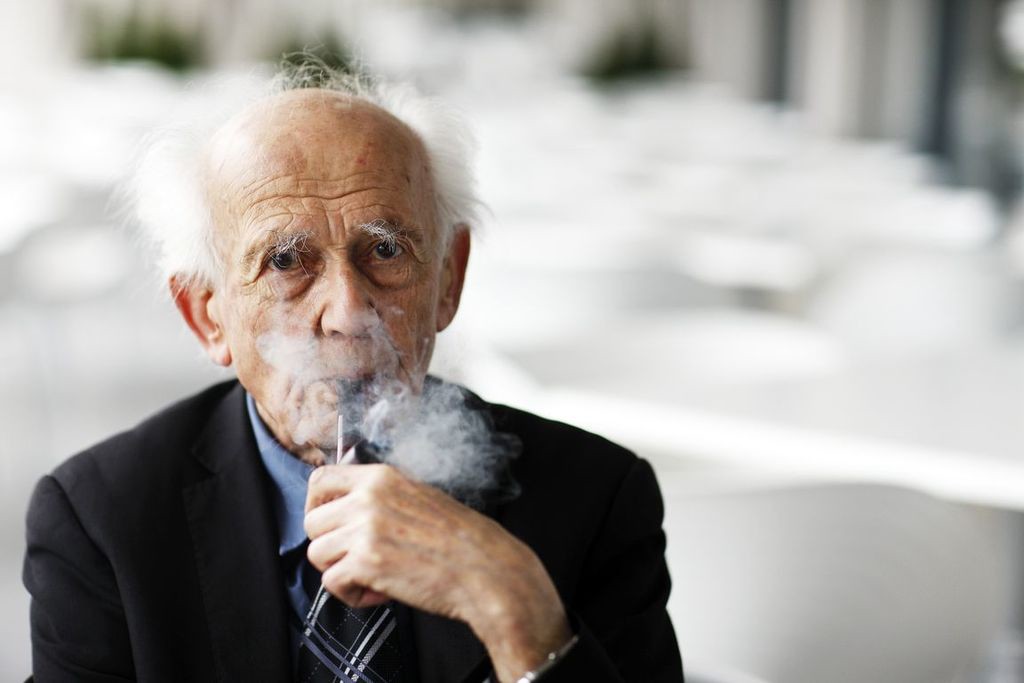
Zygmunt Bauman, the Polish sociologist and a major public intellectual, is dead at 91 – or, as his widow put it, he has changed his place of residence “to liquid eternity.”

According to The New York Times“The Polish-born left-wing thinker’s works explored the fluidity of identity in the modern world, the Holocaust, consumerism and globalization.” The article continued:

Renowned for an approach that incorporated philosophy and other disciplines, Bauman was a strong moral voice for the poor and dispossessed in a world upended by globalization. Whether he was writing about the Holocaust or globalization, his focus remained on how humans can create a dignified life through ethical decisions.

He wrote more than 50 books, notably “Modernity and the Holocaust,” a 1989 release in which he differed with many other thinkers who saw the barbarism of the Holocaust as a breakdown in modernity. Bauman viewed the mass exterminations of Jews as the very outcome of such pillars of modernity as industrialization and rationalized bureaucracy.

“It was the rational world of modern civilization that made the Holocaust thinkable,” Bauman wrote.

In the 1990s, Bauman coined the term “liquid modernity” to describe a contemporary world in such flux that individuals are left rootless and bereft of any predictable frames of reference.

In books including “Liquid Times” and “Liquid Modernity” he explored the frailty of human connection in such times and the insecurity that a constantly changing world creates.

Read the NYT obituary here. Or, from a more insightful Polish perspective, you might try this piece by Polish scholar Artur Sebastian Rosman over at his blog, Cosmos the in Lost:

His Liquid Modernity might be the single best description of the world we inhabit where all that is solid melts into thin air. The center does not hold, but Bauman is a sure guide to understanding what all that means. What Liquid Modernity describes, and it is something I’ve briefly discussed before, is not an academic exercise, but something that affects not only the present, but also the collective future. I cannot recommend this work highly enough if you feel confused about the world we inhabit and where it is heading. If you can’t relate to this feeling of vertigo then you probably have some bigger problems.

But I don’t want to dwell on psychoanalyzing you, nor on the details of liquid modernity (which you can explore here); nor on Bauman’s period of zealous Stalinism (I believe in Kołakowski’s dictum from Metaphysical Horror, “A modern philosopher who has never once suspected himself of being a charlatan must be such a shallow mind that his work is probably not worth reading.”); instead, a couple days after Bauman’s death (I’m not a fan of the euphemism “passing,” because it lacks substance), I’d like to share the following passage from Of God and Man, since it hopes for a more humane future: “You are right (and deserve credit) when observing that, one way or the other, we somehow possess this world, and, from time to time, here and there, are even able to change at least a small part of it for the better. Given that this world of ours is still in the making, the act of its creation yet incomplete, and the work of continuing the creation and its completion has (to recall our earlier conversations) fallen to us, then it is right for us – as for any responsible host – to care for its well-being and attend to its goodness and beauty. I will repeat again Camus’ credo: there is beauty, and there are the humiliated. God grant that I never be unfaithful to the one or the other.”

Read the whole thing here. Or watch the video, “No one is in control. That is the major source of contemporary fear,” below:

A short photo essay of Kraków

Share

A few days ago we posted one of Artur Sebastian Rosman‘s photos of Kraków, taken last week. Artur, who runs the Cosmos the in Lost blog, was in Poland’s cultural capital for the same reason I was: an international conference on Zbigniew Herbert, hosted by the Józef Tischner Institute.

We kindly asked him for permission to publish a few more of his black-and-white studies of the city, and he kindly gave it. Here goes:

.

krakow1

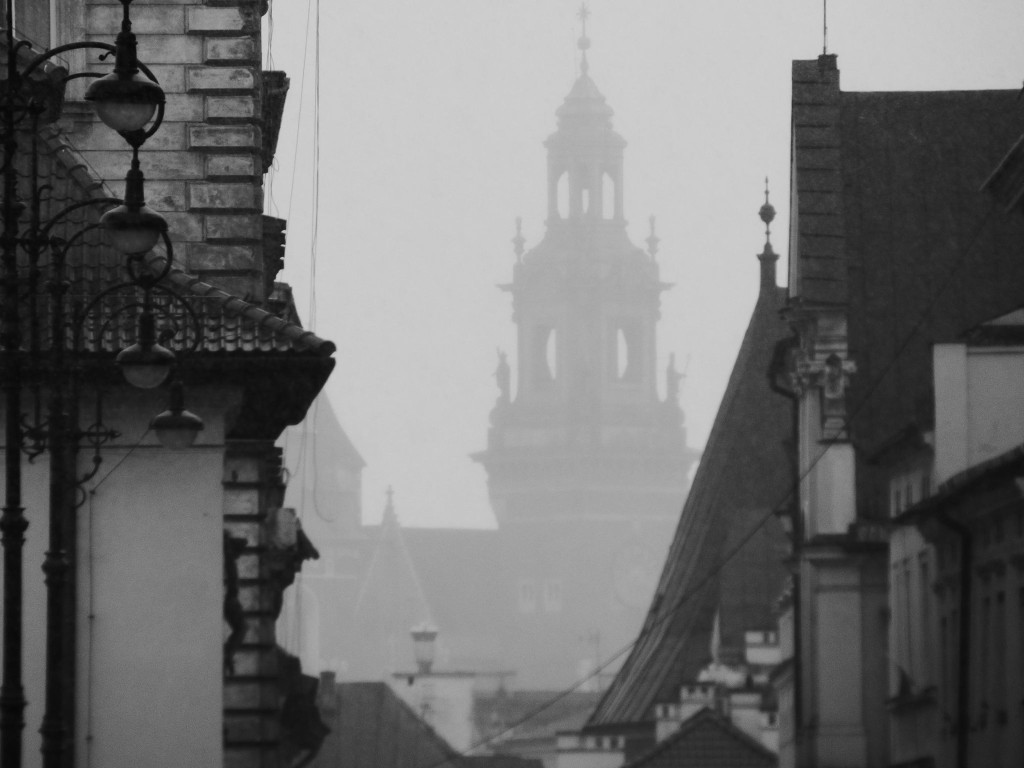
Rynek Główny, viewed from a sidestreet.

krakow2

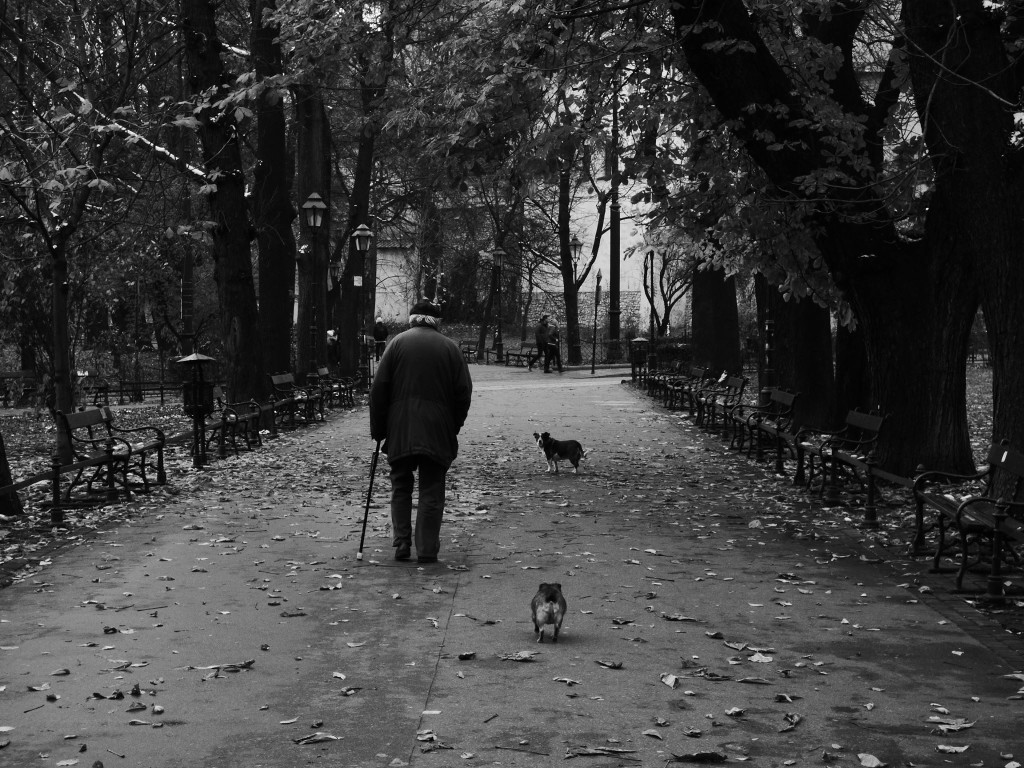
An old man walks along the Planty, Kraków’s city park.

krakow3

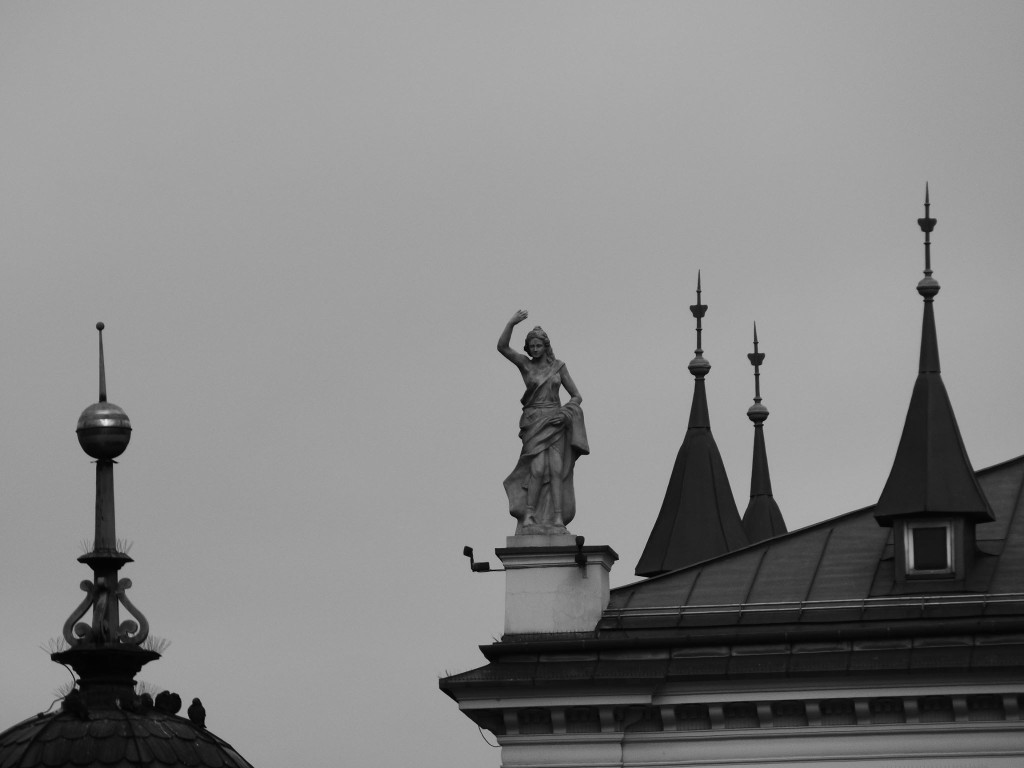
And the rooftops are decorative, too!

krakow4

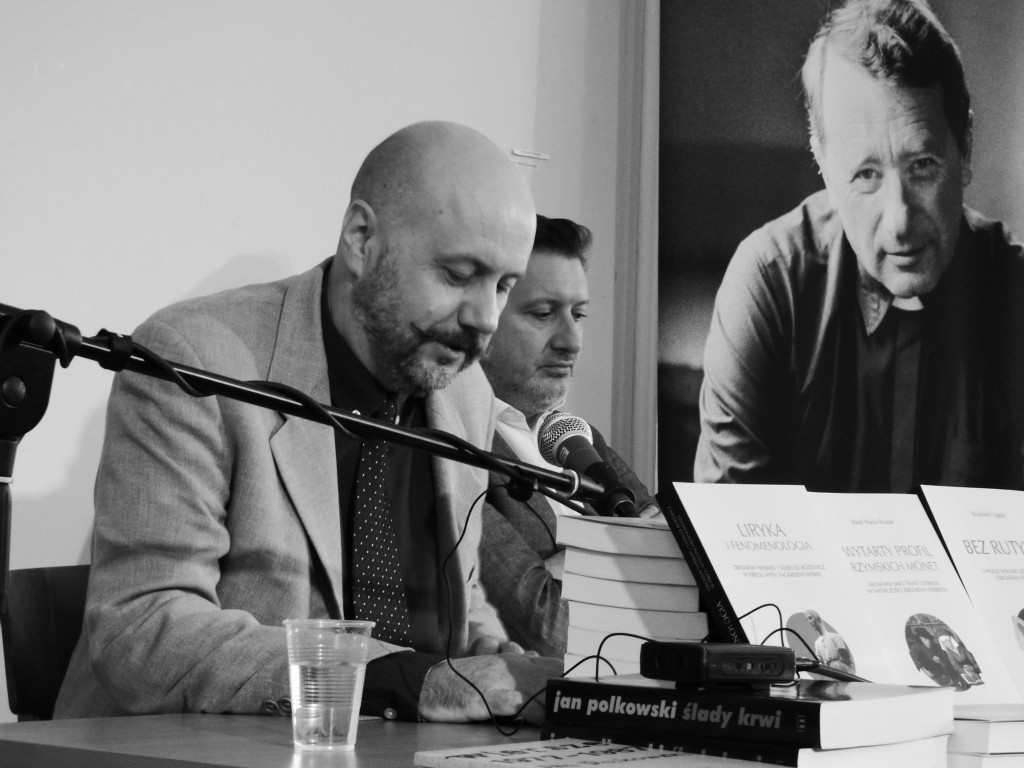
Prof. Grzegorz Bak Trzebunia Niebies of Madrid speaks, with Tischner’s photo behind him.

What was the most important moment in René Girard’s life? “Coming to America,” he said.

Share
Rene Girard (1)

Outside the Stanford Faculty Club. (Photo: Ewa Domanska)

René Girard‘s biographer – that’s me – chats with blogger Artur Sebastian Rosman over at Cosmos the in Lost. We did the interview about the important French theorist and immortel of the Académie Française shortly after his death on November 4. I was pleased Artur decided to run it yesterday, on the day of René’s memorial service. Read the whole thing here. Excerpts below:

Artur Rosman: Were you familiar with Professor Girard’s theories before you met him? What did you think of them?

Cynthia Haven: His name was familiar to me as an important French theorist, but that was about all.

The more I learned and read, the more I was surprised that more hadn’t been written about him in the American mainstream media. After all, he’d made his home in the U.S. since 1947.

Many felt his ideas were abstruse and difficult. On the contrary, I found the ideas to be pretty straightforward, and not hard to explain – although some of the applications of his ideas, and the research he uses to support them from the fields of, say, anthropology, can be challenging. I began writing a series of articles about him. He told me afterwards that this was the first time ordinary people understood what he was doing, although I think he was being overly generous. He signed my copy of Mimesis and Theory, “To Cynthia, with all my thanks for her splendid contribution to my scholarly reputation.”

I find his ideas have enormous explanatory power not only for the world we see around us – but the world we find within us. People may question his reading of archaic societies or historical events, but the place to verify his theories is within oneself. We imitate each other. We are driven by competition and rivalry with the real or imagined “other.” We struggle to acquire status symbols, which we fantasize will make us more like the one we idolize . We join in Twitter mobs, or Facebook mobs, that castigate and vilify the person or group we think is responsible for all our ills, and whose elimination will bring peace at last. The Democrats. The Republicans. Donald Trump. …

I recently ran across this quote from René’s The Scapegoat: “Each person must ask what his relationship is to the scapegoat. I am not aware of my own, and I am persuaded that the same holds true for my readers. We only have legitimate enmities. And yet the entire universe swarms with scapegoats.” True for us all, still.

***

AR: What were the most formative experiences in Girard’s life? How did they shape his thought?

CH: I once asked René what the most pivotal experience of his life was, and he replied that the major events were in his head. That’s what everyone else said about him, too. However, events in our heads are put there by the things we see around us. Events in our head tend not to stay with us unless they explain what we see around us. Otherwise they’d be no use.

girard_two

Another important decision in his life: with his wife Martha outside his Stanford home.

I pressed harder, and he responded emphatically, “Coming to America.” That event in 1947, he said, made everything else possible. René is an American phenomenon, as much as a French one. Without America and the bigger vision it offered after the war, there would have been no books, no theories, and no academic career.

He had been trained as an archiviste-paléographe at one of France’s grandes écoles, the École des Chartes in Paris. It was the same school his father had attended. It was a training ground for archivists, librarians, paleographers. The suit didn’t exactly fit him. In the rigid French professional hierarchies at the time, the opportunities it provided were narrow.

And of course America led to other things. An exceptionally happy marriage, for example. Martha McCullough was in one of his first classes at Indiana University. The name stumped him midway through roll call. “I’ll never be able to pronounce this name,” he said. They met again a year or so later, when she was no longer his student. And he fixed the name problem for her in 1951, when they married. The stability and contentment of that 64-year marriage cannot be underestimated in supporting his very long, very fruitful career.

Let me add two more. Another formative experience was the “strange defeat” of France in 1940. Franco-German relations fascinated him throughout his life. It’s a straight line from the toy soldiers he played with as a child, reenacting the Battles of Austerlitz and Waterloo, to his final book, Battling to the End. Certainly the topic frequently recurred in my own talks with him. Clearly he was pondering the real nature of the struggle for much of his life. It would be the centerpiece in Battling to the End.

And finally, of course, his conversion experience. “Conversion experience” is a mysterious, much-misunderstood term. He didn’t say much about it – he said the subject was difficult to explain, and counterproductive to his work in advancing his mimetic theory. But one time he discussed it was in the book I mentioned earlier,When These Things Begin. Here’s what he said about that period in autumn 1958, when he was working on his first book, Deceit, Desire, and the Novel, which discusses Cervantes, Proust, Stendhal, Flaubert, and Dostoevsky: “on the twelfth and last chapter that’s entitled ‘Conclusion.’ I was thinking about the analogies between religious experience and the experience of a novelist who discovers that he’s been consistently lying, lying for the benefit of his Ego, which in fact is made up of nothing but a thousand lies that have accumulated over a long period, sometimes built up over an entire lifetime.”

rene-girard

Au revoir.

“I ended up understanding that I was going through an experience of the kind that I was describing. The religious symbolism was present in the novelists in embryonic form, but in my case it started to work all by itself and caught fire spontaneously. I could no longer have any illusions about what was happening to me, and I was thrown for a loop, because I was proud of being a skeptic. It was very hard for me to imagine myself going to church, praying, and so on. I was all puffed up, full of what the old catechisms used to call ‘human respect.’”

Read the whole thing here.

bookUpdate on 1/23: Some nice pick-up over at the World Literature Today blog hereWe’ve been longstanding friends with the eminent WLT – even before our profile of leading Polish poet Julia Hartwig. “Invisible, you reign over the visible: Julia Hartwig’s reality mysticism” was republished by the Milena Jesenská Blog here.
René Girard’s last laugh

Share

rene-girardThe renowned French theorist René Girard, died last Wednesday. He was a personal friend and subject of my forthcoming biography with Michigan State University Press. It’s not easy to convey the pleasure of his company, and why it was so easy to spend hours talking to him, but this short video just about does it.

Many thanks to Artur Sebastian Rosman, for bringing it to my attention. And to Daniel Lance, for making the 2009 video in the first place.

René Girard – the Last laugh on Establishment / le dernier rire de René Girard from daniel lance on Vimeo.

Seamus Heaney, Zbigniew Herbert, and Apollo in one evening…

Share
herbert

In English, s’il vous plaît…

A Polish friend and blogger, Artur Sebastian Rosman, sent me this youtube clip of the Irish Nobel poet Seamus Heaney reading the poems of Zbigniew Herbert. We’ve written about Seamus here and here and here, and Herbert here and here and here – and my visit with Herbert’s cat Szu-Szu in Warsaw is discussed here.

Artur considers Herbert’s satirical poem about labor conditions in Poland during the 1960s, “Report from Paradise” here, along with a few theological peregrinations. Poet and translator Stanisław Barańczak noted that in Herbert’s poem, even heaven has been “degraded into a social utopia, a sort of fairy-tale socialism,” in which the only solution, in Herbert’s words, is “to mix a grain of the absolute with a grain of clay.”

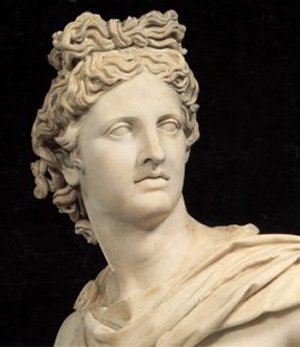
Apollo

Bully.

This reading, however, begins with Herbert’s famous and devastating (to me) poem, “Apollo and Marsyas,” and ends his Seamus’s own sonnet on the Polish poet’s death, in which Apollo also figures. Frankly, I’ve never been able to think of Apollo in quite the same way after reading Herbert’s poem. A bit of a brute…well, more than a bit.

Anyway, here’s Seamus’s 2008 reading at the Irish Writers’ Centre in Dublin. Like it? There’s more: Part One of the reading is here and Part Two is here.

.