Nobel-winning author Olga Tokarczuk’s big week in Stockholm!

Share

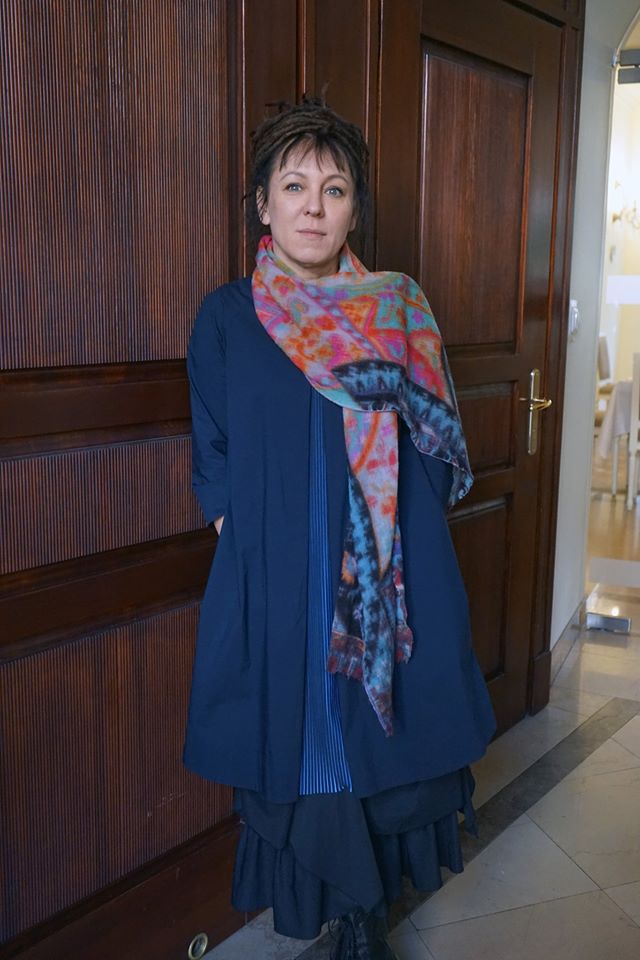
It was a magic week in Stockholm, especially for the woman of the year, Nobel prizewinning author Olga Tokarczuk! The Polish literati, and many of the literary star-watchers in the West, have been raving about her for years. Now everyone else is, too. Let’s follow her to the Nobel awards, with thanks to Bo Persson for providing Joanna Helander‘s lively photos of the occasion.

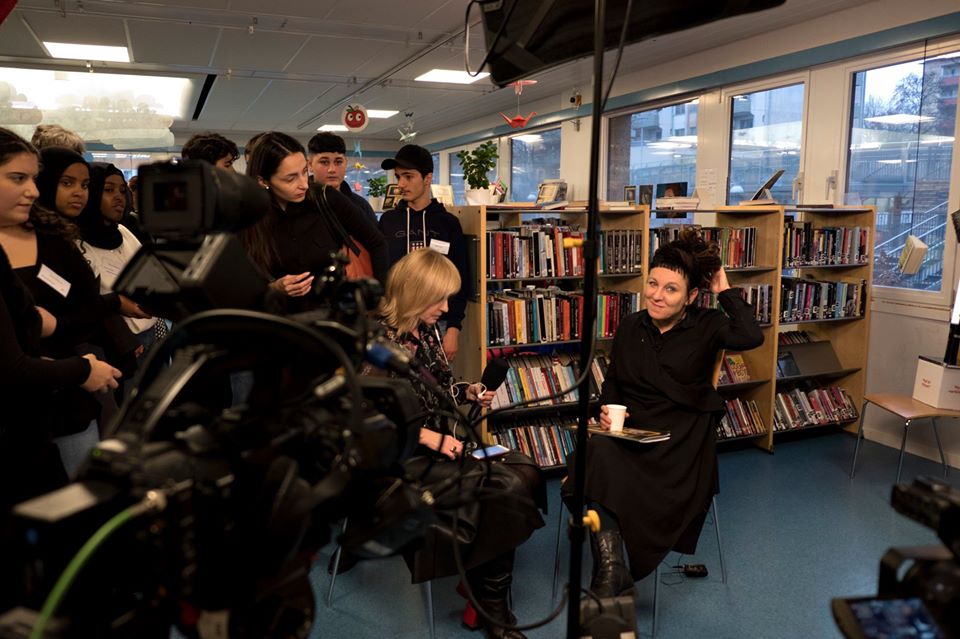
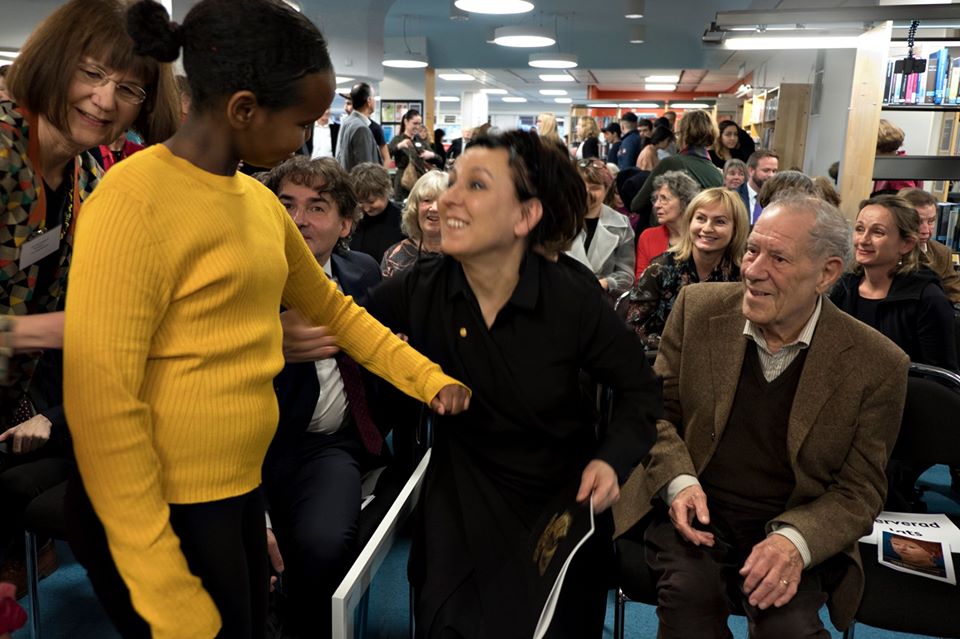
But first, let’s be with her as she met Swedish children at Stockholm’s Rinkeby Library in Stockholm. The kids had studied her writing for weeks beforehand, and were happy to chat with the writer who was generous with her time. The event was organized by the Library’s Gunilla Lundgren and her colleagues. (Photos: Joanna Helander)

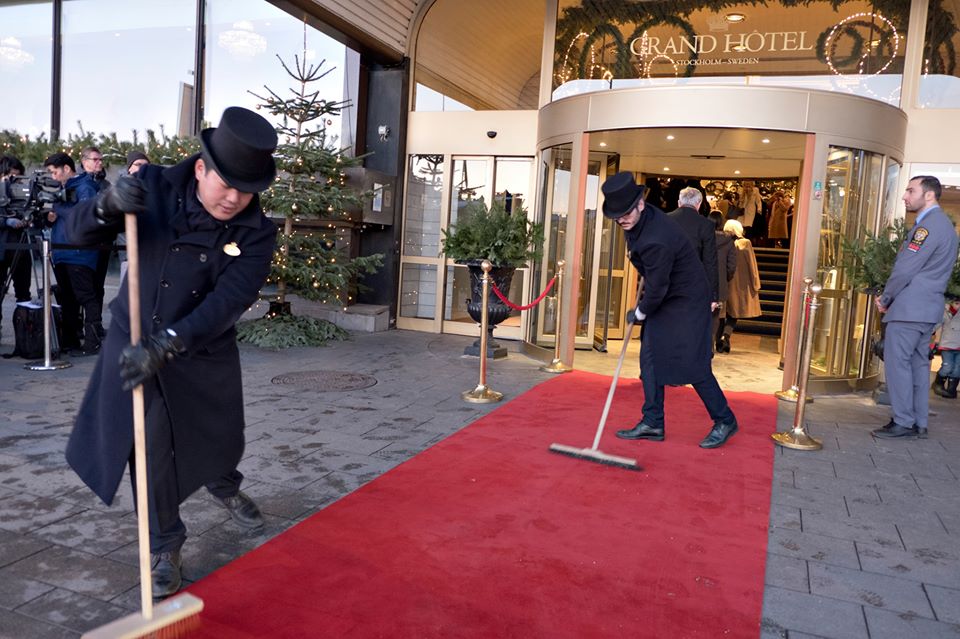
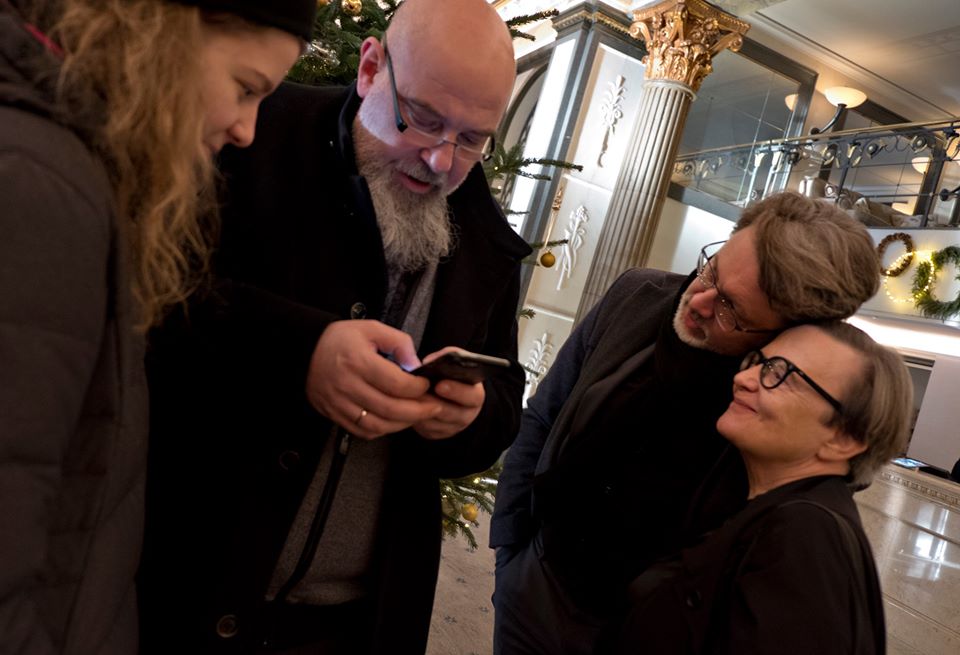
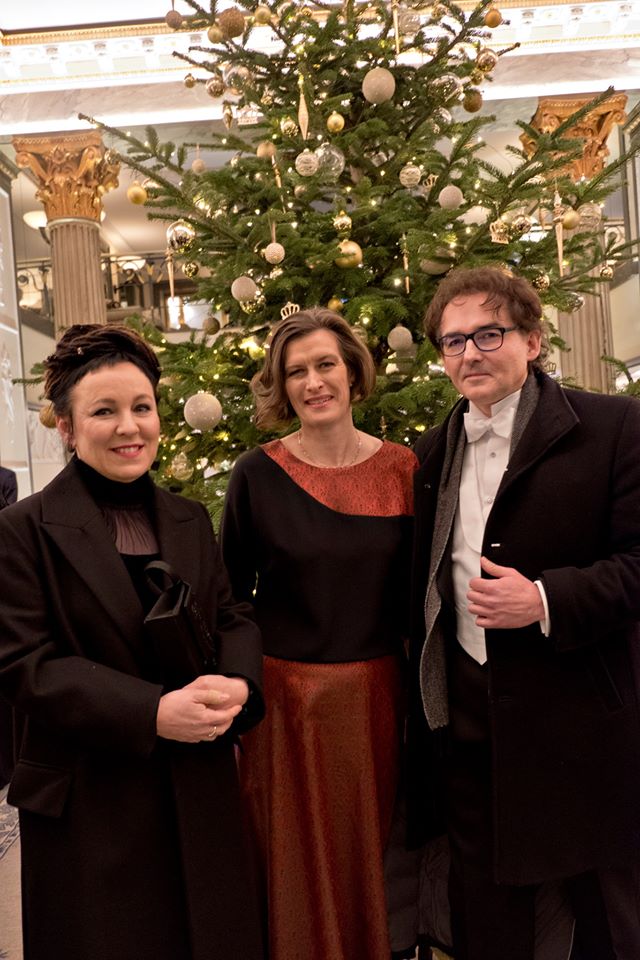
Then, the Grand Hotel Stockholm for the award ceremony. First, chaps with top hats came to sweep off the carpet. Then, actor and writer Irek Grin masterminds the selfies, with filmmaker Agnieszka Holland and Michał Rusinek, the former secretary for another Nobelist, Wisława Szymborska (he now runs her foundation). Below that, Polish journalist Justyna Sobolewska beams at the camera.  Next, Tokarczuk with her husband, Grzegorz Zygadło, joined by a friend. And finally, the Queen of the Nobel ceremonies herself. (Photos, merci, Joanna Helander)

Happy Birthday, Milton! Here’s how you can support him – no, no, not with another civil war, but by preserving his cottage.

Share

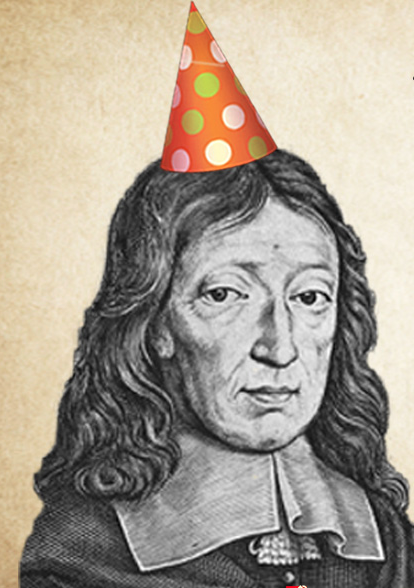
Milton makes whoopee.

Happy 411th birthday to John Milton! You can see him at the party today at left. He celebrated – where else? – at his cottage in Chalfont St. Giles, his refuge while he was out of royal favor after the defeat of Oliver Cromwell. We’ve written about it here and here.

Milton’s Cottage is the only surviving home of the poet and parliamentarian who wrote Paradise Lost, Paradise Regained, Lycidas, Comus, Areopagitica, and so much more. Today, his birthday, is a good way to think of how we can all help preserve this chunk of 17th century literary history.

Why? Let one of the trustees, Stanford alum John Bradley, tell you: “Here in 1666, he completed his epic work Paradise Lost.”

“During his lifetime in the 17th century he laid the groundwork for the democratic way of life we enjoy today. He championed the four basic freedoms of thought, of speech, of religious following, and of freedom of publication, which we are still hotly debating today. This legacy provides an anchor for the civilized world as we know it. His influence on founding father Thomas Jefferson and John Adams is fully apparent in the wording of both the U.S. Constitution and the First Amendment, which enshrines theses freedoms.”

Americans can make tax-deductible donations via the British Schools & Universities Foundation and Network for Good here, noting Milton’s Cottage Trust as a preference. And if you’re in Britain, you have a chance to make donations that will be quadrupled here for “Darkness Visible,” to support a program at the Cottage for the visually impaired (as Milton was). But you must move quick! quick! quick! Donations must be received by midday tomorrow – London time.

Update:  John Bradley wrote this morning to tell me that all U.S. donations will be doubled until the end January 2020 (at least). Go to the Milton Cottage website here and scroll down to the section on “U.S. Donors.” Do it for Father Christmas.

Want to see the Milton Cottage yourself? Try the video below.

Olga Tokarczuk’s Nobel lecture: “Literature is one of the few spheres that try to keep us close to the hard facts of the world.”

Share

Today at the Swedish PEN-club (Photo: Joanna Helander)

This weekend Olga Tokarczuk gave her Nobel lecture, a much-anticipated event in literary world. Her topic: “The Tender Narrator.” It was a knock-out.

Her explanation of the title:

Tenderness is spontaneous and disinterested; it goes far beyond empathetic fellow feeling. Instead it is the conscious, though perhaps slightly melancholy, common sharing of fate. Tenderness is deep emotional concern about another being, its fragility, its unique nature, and its lack of immunity to suffering and the effects of time. Tenderness perceives the bonds that connect us, the similarities and sameness between us. It is a way of looking that shows the world as being alive, living, interconnected, cooperating with, and codependent on itself.

Literature is built on tenderness toward any being other than ourselves. It is the basic psychological mechanism of the novel. Thanks to this miraculous tool, the most sophisticated means of human communication, our experience can travel through time, reaching those who have not yet been born, but who will one day turn to what we have written, the stories we told about ourselves and our world.

A few excerpts:

The category of fake news raises new questions about what fiction is. Readers who have been repeatedly deceived, misinformed or misled have begun to slowly acquire a specific neurotic idiosyncrasy. The reaction to such exhaustion with fiction could be the enormous success of non-fiction, which in this great informational chaos screams over our heads: “I will tell you the truth, nothing but the truth,” and “My story is based on facts!”

Fiction has lost the readers’ trust since lying has become a dangerous weapon of mass destruction, even if it is still a primitive tool. I am often asked this incredulous question: “Is this thing you wrote really true?” And every time I feel this question bodes the end of literature.

***
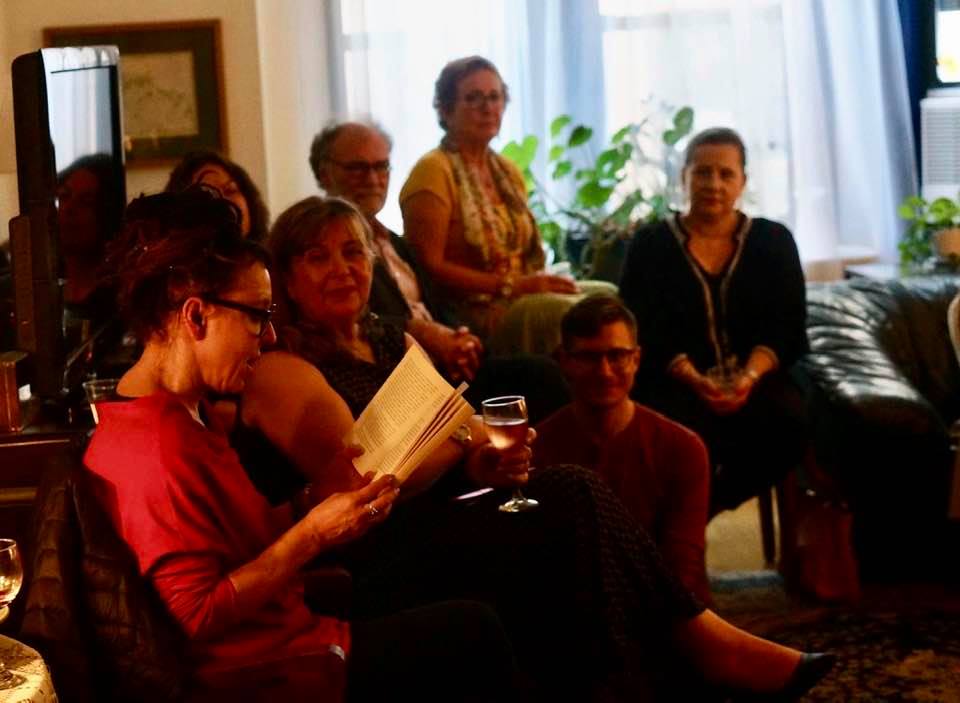
Reading in Yonkers last year, in the home of Izabela Barry.

I have never been particularly excited about any straight distinction between fiction and non-fiction, unless we understand such a distinction to be declarative and discretionary. In a sea of many definitions of fiction, the one I like the best is also the oldest, and it comes from Aristotle. Fiction is always a kind of truth.

I am also convinced by the distinction between true story and plot made by the writer and essayist E.M. Forster. He said that when we say, “The king died and then the queen died,” it’s a story. But when we say, “The king died, and then the queen died of grief,” that is a plot. Every fictionalization involves a transition from the question “What happened next?” to an attempt at understanding it based on our human experience: “Why did it happen that way?”

Literature begins with that “why,” even if we were to answer that question over and over with an ordinary “I don’t know.”

***

Humanity has come a long way in its ways of communicating and sharing personal experience, from orality, relying on the living word and human memory, through the Gutenberg Revolution, when stories began to be widely mediated by writing and in this way fixed and codified as well as possible to reproduce without alteration. The major attainment of this change was that we came to identify thinking with language, with writing. Today we are facing a revolution on a similar scale, when experience can be transmitted directly, without recourse to the printed word.

There is no longer any need to keep a travel diary when you can simply take pictures and send those pictures via social networking sites straight into the world, at once and to all. There is no need to write letters, since it is easier to call. Why write fat novels, when you can just get into a television series instead? Instead of going out on the town with friends, it would be better to play a game. Reach for an autobiography? There’s no point, since I am following the lives of celebrities on Instagram and know everything about them.

It is not even the image that is the greatest opponent of text today, as we thought back in the twentieth century, worrying about the influence of television and film. It is instead a completely different dimension of the world—acting directly on our senses.

***
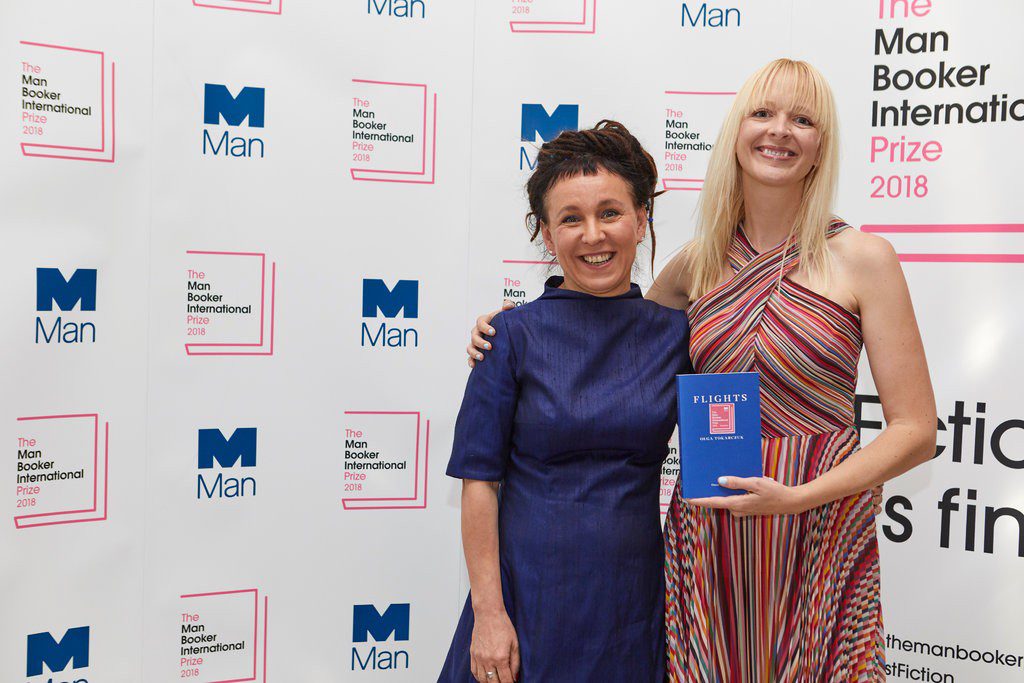
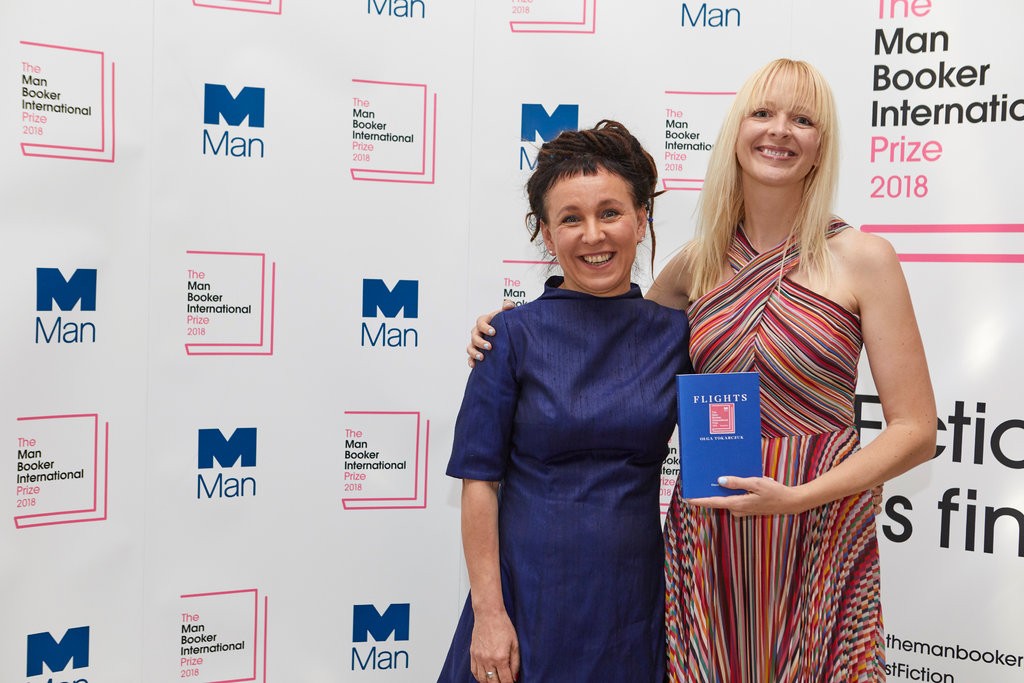
With translator Jennifer Croft, after winning the Man Booker Prize in 2018 (Photo: Janie Airey/Man Booker Prize)

The flood of stupidity, cruelty, hate speech and images of violence are desperately counterbalanced by all sorts of “good news,” but it hasn’t the capacity to rein in the painful impression, which I find hard to verbalize, that there is something wrong with the world. Nowadays this feeling, once the sole preserve of neurotic poets, is like an epidemic of lack of definition, a form of anxiety oozing from all directions.

Literature is one of the few spheres that try to keep us close to the hard facts of the world, because by its very nature it is always psychological, because it focuses on the internal reasoning and motives of the characters, reveals their otherwise inaccessible experience to another person, or simply provokes the reader into a psychological interpretation of their conduct. Only literature is capable of letting us go deep into the life of another being, understand their reasons, share their emotions and experience their fate.

A story always turns circles around meaning.

***

In Doctor Faustus Thomas Mann wrote about a composer who devised a new form of absolute music capable of changing human thinking. But Mann did not describe what this music would depend on, he merely created the imaginary idea of how it might sound. Perhaps that is what the role of an artist relies on―giving a foretaste of something that could exist, and thus causing it to become imaginable. And being imagined is the first stage of existence.

Read the whole thing here.
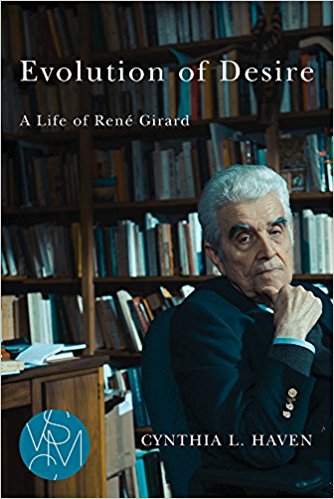
The first case of real forgiveness ever? Maybe so. My talk on René Girard at Notre Dame.

Share

Giovanni Maria Bottala’s “Joseph Sold by His Brothers,” circa 1636-42

On September 23, I was honored to be invited to Notre Dame to deliver the inaugural Church Life Journal lecture on “René Girard and the Present Moment.” The talk is now up here

An excerpt:

Roughly 200 billion tweets appear every year. And 100 million hours of videos are watched on Facebook daily, and more than 250 billion photos have been uploaded to Facebook. Reaction time gets faster and faster, and we are free to vent our worst side, our unconsidered selves, on more and more platforms. We excuse our daily defamation as harmless, but it is not. It changes us.

In this environment, how difficult to hold to Girard’s injunction of total non-retaliation! …

We have some good precedents: Girard often described the story of the Old Testament Joseph, son of Jacob, bound and sold into slavery by his mob of ten envious and resentful half-brothers. He called it a counter-mythical story, because in myth, the lynchers are always satisfied with their lynching. But here, the story takes a different twist. Initially, the brothers plan to kill Joseph, but one of them, Judah, has the idea to sell him into slavery instead. However, Joseph reestablishes himself as one of the leaders of Egypt and then tearfully forgives his brothers in a dramatic reconciliation. Its full description of forgiveness is, Girard claimed, the first in all of history, in its sophistication and nuance. I haven’t been able to disprove him yet.

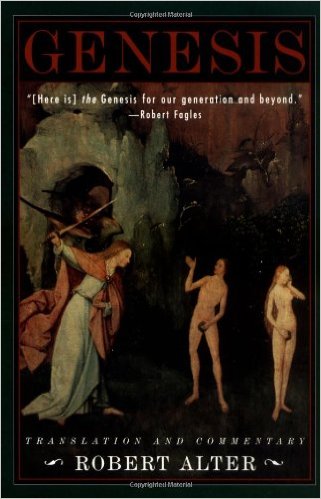
I recommend Robert Alter‘s magnificent retelling, with annotation, of the story in his Genesis. The read is absolutely gripping, a page-turner, with very careful breakdown of the dialogue. Before his self-revelation, Joseph tries his half-brothers with several ordeals, and demands that they bring him their youngest brother, Benjamin. He is cautiously testing his half-brothers with Benjamin, the only other child of Jacob’s beloved Rachel, born of the rivalry that poisoned the family. After all, he does not know whether they have killed Benjamin, too. Why would they not?

But the figure who is at least as riveting, to me, is Judah—the very brother who had the idea to monetize the elimination of his brother. During the dialogue, he is transformed. He says his father’s heart would break with the loss of Benjamin—he who had maliciously, recklessly shredded his father’s heart before, accepts the bitter pill of his father’s outrageous favoritism, and begs to offer himself as a slave instead.

The wailing of Joseph in the recognition scene is so loud and unrestrained that, as it is written, “the Egyptians heard and the house of Pharoah heard.” We all admire Joseph, we imagine we would like to be like him – but who wants to be Judah in his culpability, in his callousness, in his repentance, and his anguish? Yet the Jewish people are named for him.


Read the rest here.

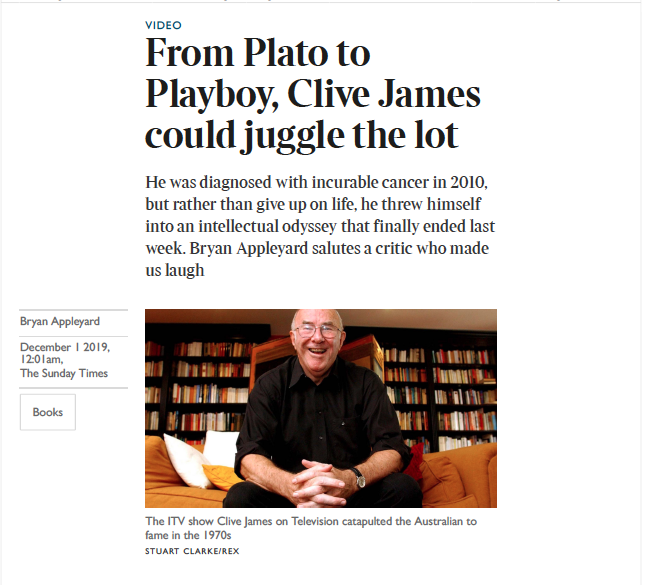
Remembering Clive James: “Dying turned out to be just what he needed.”

Share

Bryan Appleyard has written a vibrant retrospective in The Times of London with the title (don’t blame him for it; he didn’t write it): “From Plato to Playboy,  Clive James could juggle the lot.” 

The article on the death of the celebrated literary critic and author, published today, begins:

In 2010, already knowing that he had emphysema, Clive James was admitted to hospital with kidney failure. There he was also diagnosed with terminal leukaemia. But somehow he just kept going. Until now. Since that day nine years ago, there have been four books of essays and, just published, a collection of his writing on Philip Larkin. There have also been several books of poems and a translation of Dante’s Divine Comedy.

“I feared the world of men.”

Approaching death, the nuisance of incapacity and constant medical care drove Clive to ever greater heights of creativity.

In fact, before 2010 he had been in decline. Dying turned out to be just what he needed.

“I was getting tired of life,” he told me in a 2012 interview. “I’ve lived long enough. I’ve done what I can. I had suicidal thoughts when I was young. I fancied myself as a melancholic; quite a lot of people do — it’s a fashionable thing. Anyway, all these ideas were coming to me when I was going to sleep, ideas of self-destruction. They all promptly vanished the moment I was under real threat. There was a sudden urge to live. I wanted to do more, to write more.”

What happened next? Lots. “He went on to do, well, everything: novels, satirical poetic epics, essays, anything that came his way or into his head. Whatever it was, it had to be out there, protecting him from the abyss. It would be wrong to think this was simply existential dread, the fear of personal extinction — we all have that, and Clive had more than most in his final nine years. His own analysis suggests the heart of the matter was the death of his father in 1945, when Clive was six.

“We are all lucky to have got here.”

“His father had survived a Japanese prisoner-of-war camp and was on his way home when his plane crashed, killing him. Clive was with his mother when she got the telegram. He wrote: ‘I understood what it did to her in one second. I understood everything. I knew she had spent all that time waiting and she could not bear it. When she collapsed I saw suffering she could not bear and it marked my life, no question. I had a feeling of helplessness. I was man of the house . . . I couldn’t help her, and I had been helpless ever since. I sometimes thought . . . that everything I had ever written, built or achieved had been in order to offset that corrosive guilt, and that I loved the world of women because I feared the world of men.'”

He concludes: 

It is a sadness that I cannot claim Clive was a friend. We met, we talked, we said nice things about each other, but we were not friends. …

Friend or not, I owe him. He extended the playground in which I play. And what a death he died! He showed us all how to do that. He attained serenity amid the frenzy of his late work, and he lived and worked with that supreme insight of the poet Wallace Stevens: “Death is the mother of beauty.”

“By complaining at all,” he once told me, “I am complaining too much. We are all lucky to
have got here.” And in one of his final poems he wrote: “Life cries for joy though it must end in tears.”

Read the whole thing here. Online comment from around the net: “An intellect lightly worn. Rest in pages, Clive.”

An Advent villanelle from Philadelphia’s Frank Wilson: “one of those memories that are like photographs”

Share

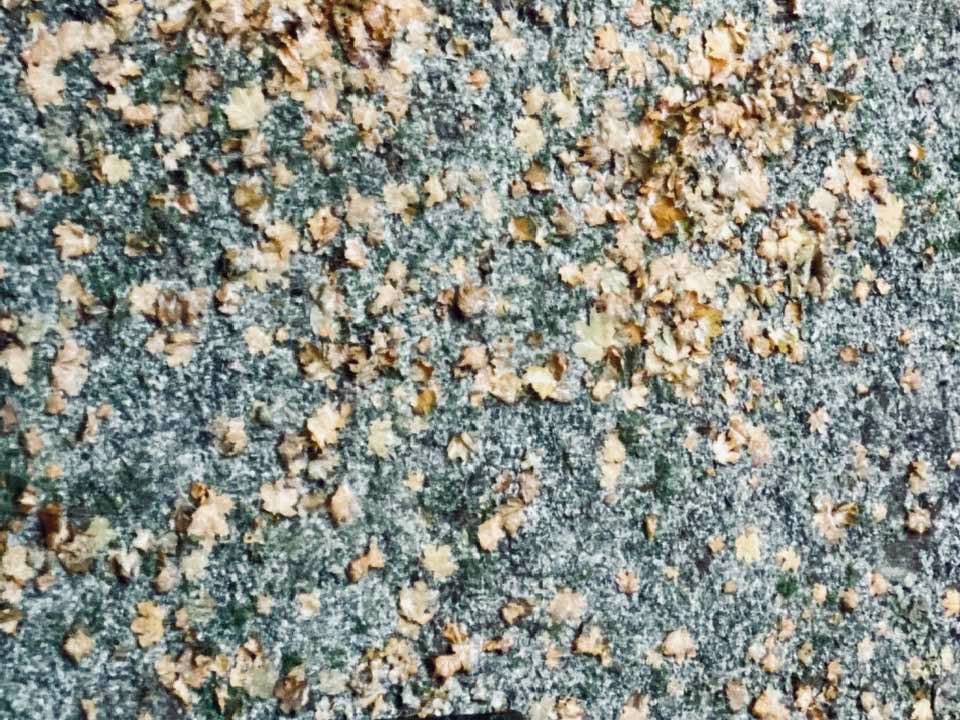
The first day of Advent this year, on a footpath in Yonkers, NY. Photo courtesy Izabela Barry.

Today is the first day of Advent. Is there any poem to commemorate the day? I had to look no farther than “Books Inq.,” the blog of Frank Wilson, retired book editor at the Philadelphia Inquirer

Walking home

The poem began when he was visiting his friend, the composer Harold Boatrite, who had set another villanelle of his to music. Frank had been studying piano with the composer, who lived on a short, tree-lined street in the heart of Philadelphia, and the lessons often finished with discussions of religion. “As I left his house one day, I looked up at the sky and around at the trees, and the first line just came to me,” Frank recalled.

“Advent had just begun and I must have been thinking of it, because the third line, which of course rhymes with the first, then came to me. I had nice long walk home ahead of me and, like Wallace Stevens, that’s when I liked to work on poems. The second line reference to winter, despite the clear and sunny, not-so-very cold day, gave the line the context I needed, and I had the first stanza of a villanelle. If memory serves, it was mostly – if rather roughly – done by the time I got home.”

“That opening line coming to me just after I left Harold’s has been with me ever since, one of those memories that are like photographs. I never look at the poem without being back at that moment of that day.”  

Advent

The leaves are fallen, but the sky is clear
(Though winter’s scheduling an arctic flight).
The rumor is a rendezvous draws near.

Some say a telling sign will soon appear,
Though evidence this may be so is slight:
The leaves are fallen, but the sky is clear.

Pale skeptics may be perfectly sincere
To postulate no ground for hope, despite
The rumor that a rendezvous draws near.

More enterprising souls may shed a tear
And, looking up, behold a striking light:
The leaves are fallen, but the sky is clear.

The king, his courtiers, and priests, all fear
Arrival of a challenge to their might:
The rumor is a rendezvous draws near.

The wise in search of something all can cheer
May not rely on ordinary sight:
The leaves are fallen, but the sky is clear.

Within a common place may rest one dear
To all who yearn to see the world made right.
The leaves are fallen, but the sky is clear.
The rumor is a rendezvous draws near.