
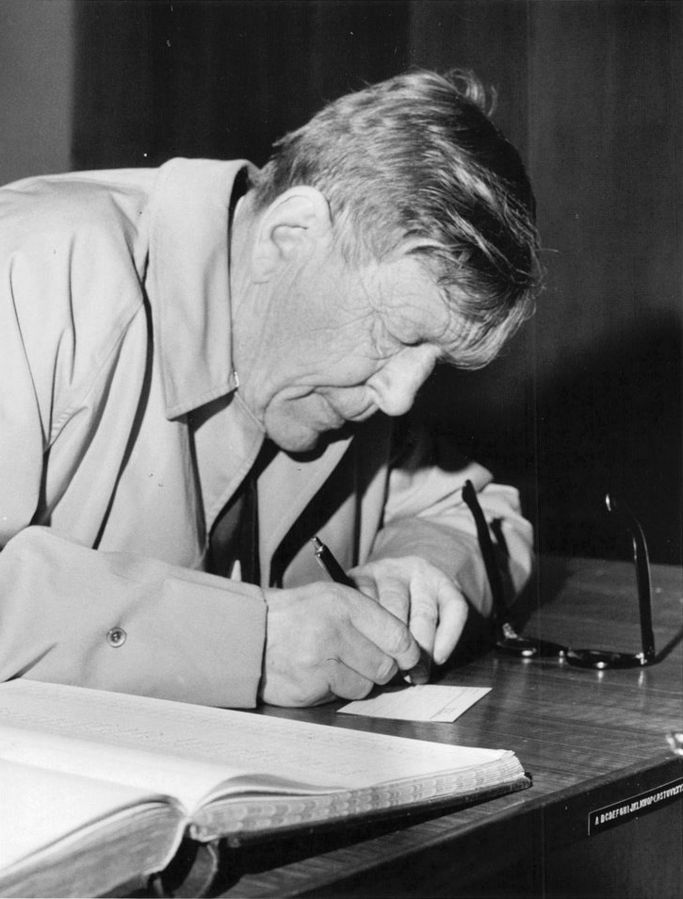
Hannah Arendt remembers W.H. Auden: “an expert in the infinite varieties of unrequited love”

Share

The one thing he knew well…

I was unaware the philosopher Hannah Arendt knew the poet W.H. Auden, and I certainly didn’t know that she had left a memoir of the poet. She did, and The New Yorker, which first published the piece in 1975, has republished it here. It’s a gem. A must-read. 

A few excerpts:

I met Auden late in his life and mine—at an age when the easy, knowledgeable intimacy of friendships formed in one’s youth can no longer be attained, because not enough life is left, or expected to be left, to share with another. Thus, we were very good friends but not intimate friends. Moreover, there was a reserve in him that discouraged familiarity—not that I tested it, ever. I rather gladly respected it as the necessary secretiveness of the great poet, one who must have taught himself early not to talk in prose, loosely and at random, of things that he knew how to say much more satisfactorily in the condensed concentration of poetry. Reticence may be the déformation professionnelle of the poet. In Auden’s case, this seemed all the more likely because much of his work, in utter simplicity, arose out of the spoken word, out of idioms of everyday language—like “Lay your sleeping head, my love, Human on my faithless arm.” This kind of perfection is very rare; we find it in some of the greatest of Goethe’s poems, and it must exist in most of Pushkin’s works, because their hallmark is that they are untranslatable.

***

If you listened to him, nothing could seem more deceptive than this appearance. Time and again, when, to all appearances, he could not cope anymore, when his slum apartment was so cold that the plumbing no longer functioned and he had to use the toilet in the liquor store at the corner, when his suit (no one could convince him that a man needed at least two suits, so that one could go to the cleaner, or two pairs of shoes, so that one pair could be repaired: a subject of an endless ongoing debate between us throughout the years) was covered with spots or worn so thin that his trousers would suddenly split from top to bottom—in brief, whenever disaster hit before your very eyes, he would begin to more or less intone an utterly idiosyncratic version of “Count your blessings.” Since he never talked nonsense or said something obviously silly—and since I always remained aware that this was the voice of a very great poet—it took me years to realize that in his case it was not appearance that was deceptive, and that it was fatally wrong to ascribe what I saw of his way of life to the harmless eccentricity of a typical English gentleman.

***
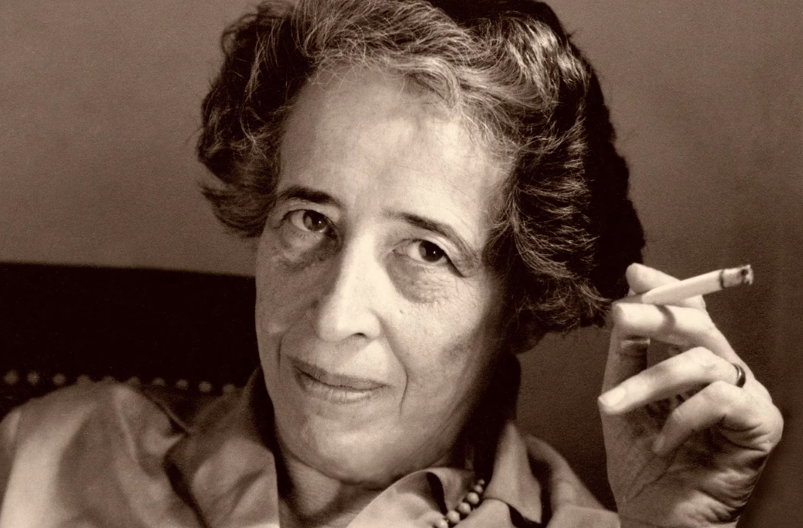
The sad wisdom of remembrance…

Now, with the sad wisdom of remembrance, I see him as having been an expert in the infinite varieties of unrequited love, among which the infuriating substitution of admiration for love must surely have loomed large. And beneath these emotions there must have been from the beginning a certain animal tristesse that no reason and no faith could overcome:

The desires of the heart are as crooked as corkscrews,
Not to be born is the best for man;
The second-best is a formal order,
The dance’s pattern; dance while you can.

***

It seems, of course, very unlikely that young Auden, when he decided that he was going to be a great poet, knew the price he would have to pay, and I think it entirely possible that in the end—when not the intensity of his feelings and not the gift of transforming them into praise but the sheer physical strength of the heart to bear them and live with them gradually faded away—he considered the price too high. We, in any event—his audience, readers and listeners—can only be grateful that he paid his price up to the last penny for the everlasting glory of the English language. And his friends may find some consolation in his beautiful joke beyond the grave—that for more than one reason, as Spender said, “his wise unconscious self chose a good day for dying.” The wisdom to know “when to live and when to die” is not given to mortals, but Wystan, one would like to think, may have received it as the supreme reward that the cruel gods of poetry bestowed on the most obedient of their servants.

Read the whole thing here.
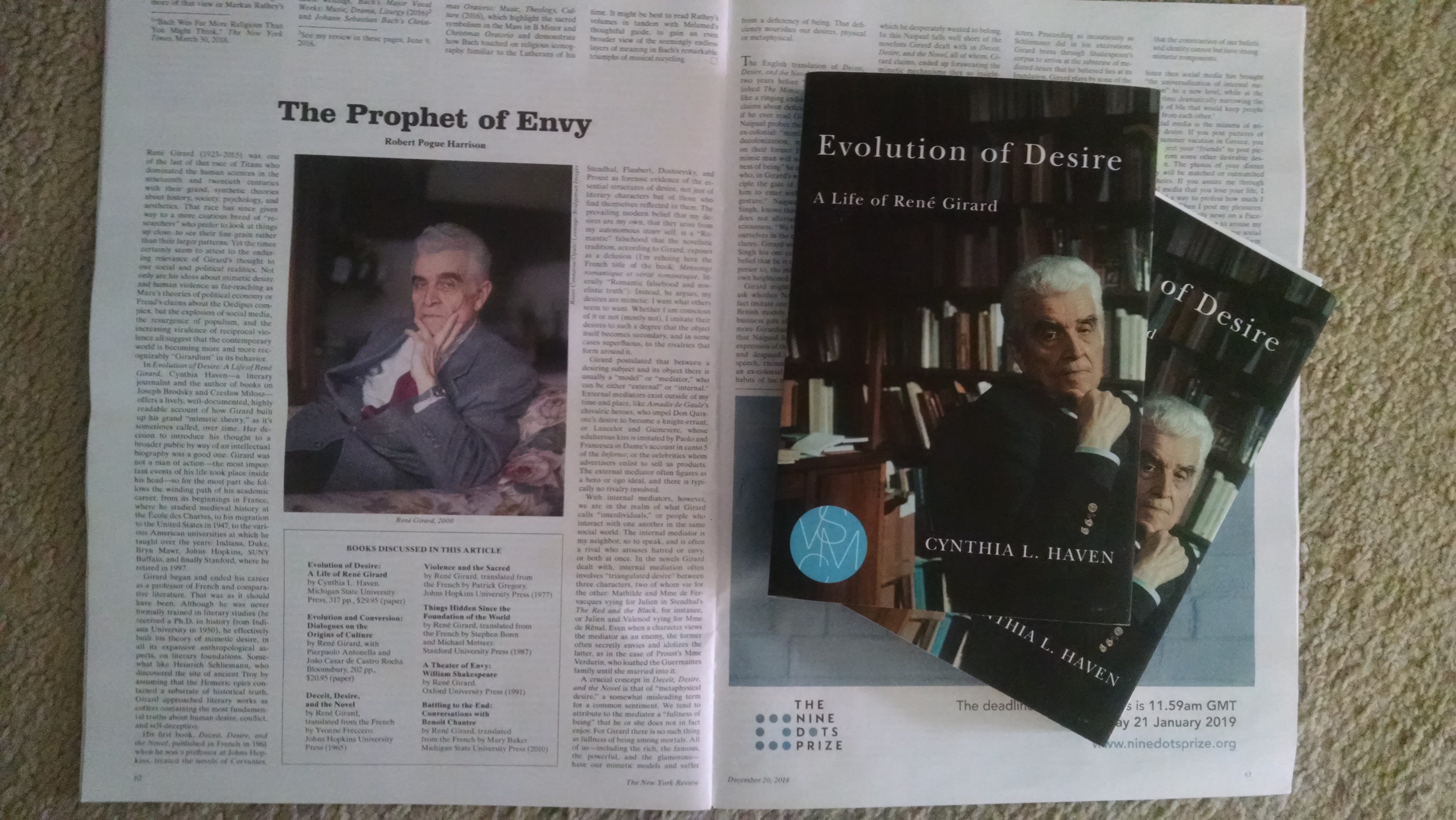
Praise for Evolution of Desire: A Life of René Girard in the New York Review of Books!

Share

The New York Review of Books has a three-page spread on our favorite French theorist, René Girard, in its Dec. 20 holiday issue – and Evolution of the Desire: A Life of René Girard is at the top of it. The article, “Prophet of Envy” by Robert Pogue Harrison, a friend and colleague of the Académie Française immortel, is a bold and brilliant, incisive and insightful consideration of René Girard’s theories and works. I hope it is cited, picked up, and republished everywhere. It begins:

A friend of Harrison’s and a friend of mine…

René Girard (1923–2015) was one of the last of that race of Titans who dominated the human sciences in the nineteenth and twentieth centuries with their grand, synthetic theories about history, society, psychology, and aesthetics. That race has since given way to a more cautious breed of “researchers” who prefer to look at things up close, to see their fine grain rather than their larger patterns. Yet the times certainly seem to attest to the enduring relevance of Girard’s thought to our social and political realities. Not only are his ideas about mimetic desire and human violence as far-reaching as Marx’s theories of political economy or Freud’s claims about the Oedipus complex, but the explosion of social media, the resurgence of populism, and the increasing virulence of reciprocal violence all suggest that the contemporary world is becoming more and more recognizably “Girardian” in its behavior.

In Evolution of Desire: A Life of René Girard, Cynthia Haven—a literary journalist and the author of books on Joseph Brodsky and Czesław Miłosz—offers a lively, well-documented, highly readable account of how Girard built up his grand “mimetic theory,” as it’s sometimes called, over time. Her decision to introduce his thought to a broader public by way of an intellectual biography was a good one. Girard was not a man of action—the most important events of his life took place inside his head—so for the most part she follows the winding path of his academic career, from its beginnings in France, where he studied medieval history at the École des Chartes, to his migration to the United States in 1947, to the various American universities at which he taught over the years: Indiana, Duke, Bryn Mawr, Johns Hopkins, SUNY Buffalo, and finally Stanford, where he retired in 1997.

Of the seven books on the list, Evolution of Desire is the only one not authored by René himself. The  final book is one of my favorites, and I discuss it a good deal in Evolution of Desire: it’s his  Battling to the End: Conversations with Benoît Chantre:

A frequent essayist in NYRB

It is in many ways one of his most interesting, for here he leaves behind speculations about archaic origins and turns his attention to modern history. The book’s conversations with Benoît Chantre, an eminent French Girardian, feature a major discussion of the war theorist Carl von Clausewitz (1780–1831), whose ideas about the “escalation to extremes” in modern warfare converge uncannily with Girard’s ideas about the acceleration of mimetic violence.

Toward the end of his life, Girard did not harbor much hope for history in the short term. In the past, politics was able to restrain mass violence and prevent its tendency to escalate to extremes, but in our time, he believed, politics had lost its power of containment. “Violence is a terrible adversary,” he wrote in Battling to the End, “especially since it always wins.” Yet it is necessary to battle violence with a new “heroic attitude,” for “it alone can link violence and reconciliation…[and] make tangible both the possibility of the end of the world and reconciliation among all members of humanity.” To that statement he felt compelled to add: “More than ever, I am convinced that history has meaning, and that its meaning is terrifying.” That meaning has to do with the primacy of violence in human relations. And to that statement, in turn, he added some verses of Friedrich Hölderlin: “But where danger threatens/that which saves from it also grows.”

Here’s the good news! “Prophet of Envy” is online here! And the holidays are coming up – time to buy some books for family and friends.

‘Tis the season to be generous: Milton’s only surviving residence needs your help!

Share

Nestled within one of the toniest little villages in England…

John Milton was a visionary poet and political writer – one of the most radical and influential thinkers Britain has ever seen.

Milton’s Cottage in Buckinghamshire’s bucolic Chalfont St. Giles is his only surviving residence. It’s the place where he completed his epic masterpiece, Paradise Lost, and was inspired to write its sequel, Paradise Regain’d. These late, great works changed the course of literary history and ensured Milton’s enduring reputation as one of the world’s greatest writers. (We’ve written about it here and here and here!) 

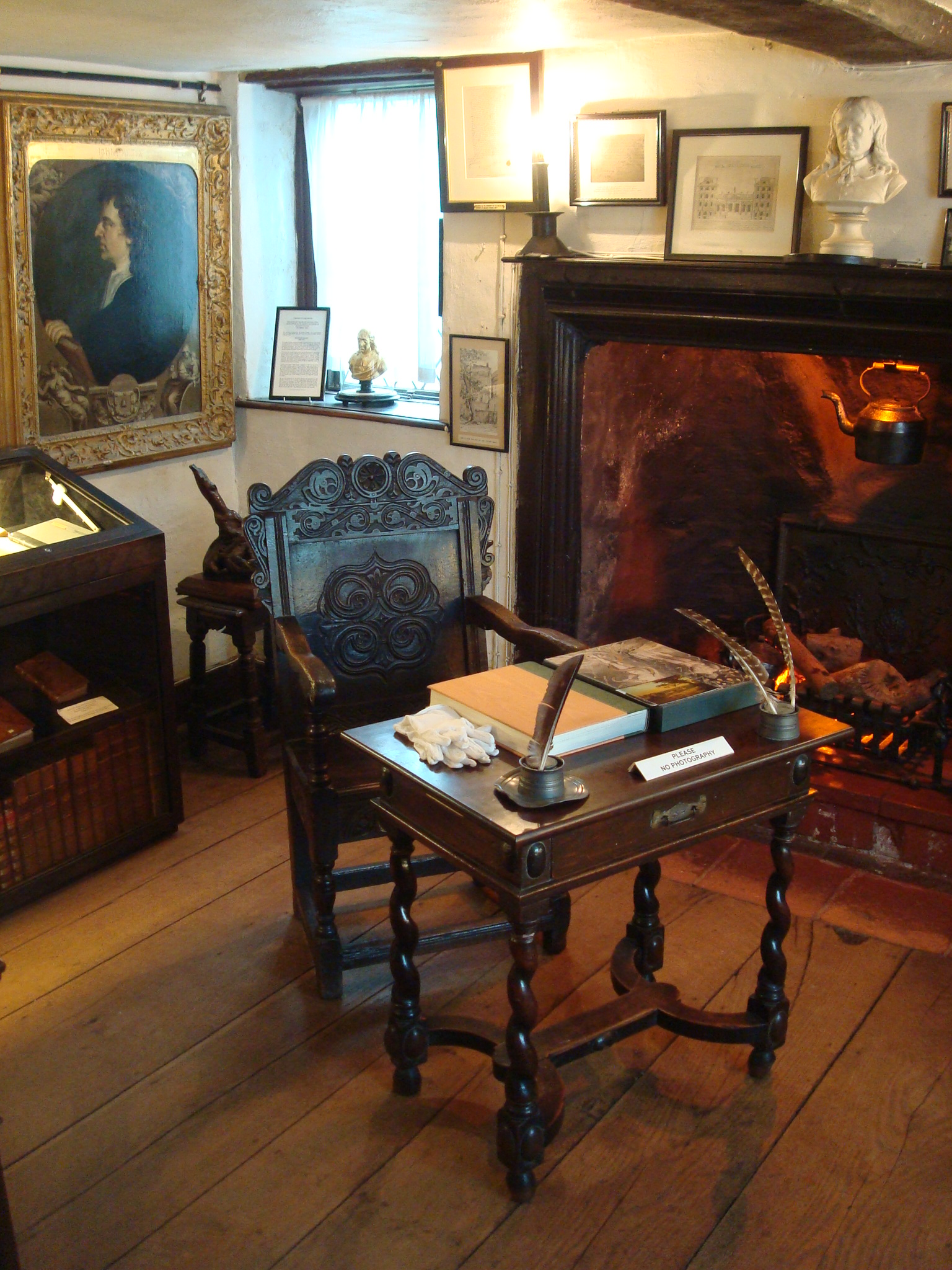
The room where he wrote.

Paradise Maintain’d is an endowment fund to protect and preserve Milton’s Cottage in perpetuity. It’s roots go way back: in 1887 a public appeal was launched to save Milton’s Cottage for the world. The first donor was Queen Victoria, who gave the grand total of £20.

It has been open to the public ever since, making it one of the oldest writers’ house museums in the world. It receives no government funding, however, and continues to depend on the generosity of Milton aficionados, literature lovers, and freedom-lovers everywhere to ensure the survival of this unique literary landmark.

Join Queen Victoria and become part of the story and see Paradise Maintain’d for future generations. She’d approve.

***

Here’s the kicker: Thanks to a generous benefactor, any time up midnight on 14th December 2018 your donation will be quadrupled! For a tax-deductible contribution (via credit card or Paypal), Americans should go HERE to donate. Scroll down to note that your intended target for funding is “Paradise Maintain’d: Milton’s Cottage”!

Why We Want What We Want: René Girard and Robert Harrison in conversation

Share

“I THINK THE REASON WE TALK SO MUCH ABOUT SEX IS THAT WE DON’T DARE TALK ABOUT ENVY. THE REAL REPRESSION IS THE REPRESSION OF ENVY.” –RENÉ GIRARD

“Know thyself.” It’s not an easy proposition. As Entitled Opinions host Robert Harrison says, “To know yourself means, above all, to know your desire. Desires are what lurk at the heart of our behavior. It’s what determines our motivations. It’s what organizes our social relations. It’s what informs our politics, religions, ideologies, and above all, our conflicts.”

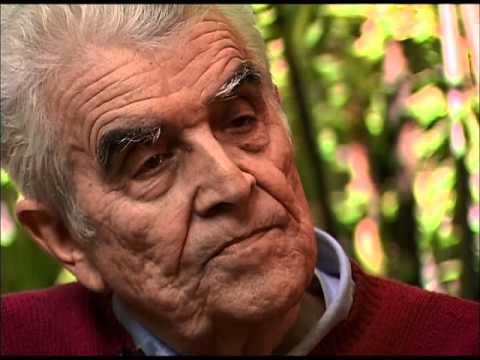
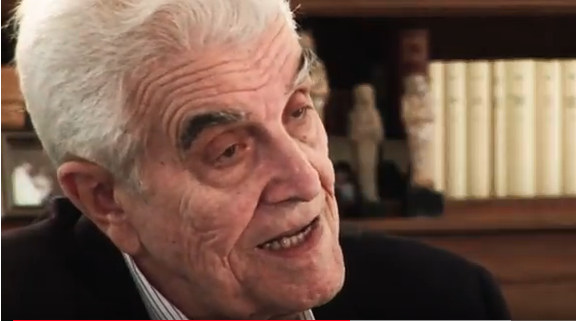
René in a video interview…

In this conversation and podcast, over at the Los Angeles Review of Books here, Harrison talks with Stanford’s expert on human desire, René Girard, whose work on the subject was rooted in literary criticism, but eventually reached across disciplines to embrace anthropology, sociology, history, religions, and even the hard sciences.

Girard began his work in the 1960s with a new concept of human desire: our desires are not our own, he said, we are social creatures, and we learn what to want from each other. He has been called “the new Darwin of the human sciences” and was one of the immortels of the prestigious Académie Française.

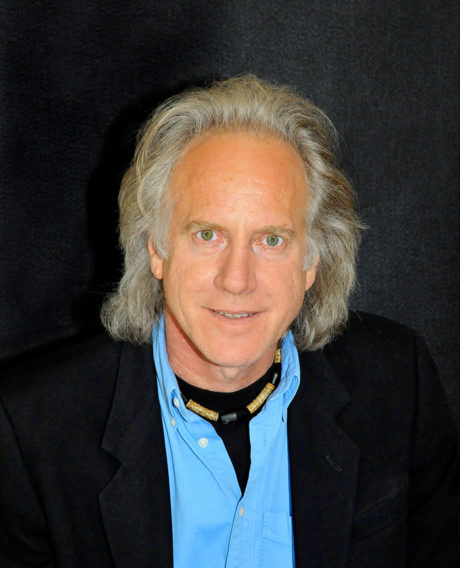
… Robert Harrison as radio host

Their 2005 interview discusses envy and desire in literature — in Canto V of the Inferno, in Cervantes, Balzac, and Flaubert, but most of all in the plays of Shakespeare. They also discuss the role of vengeance as an act of mimetic rivalry, “snobbery” as a form of imitation, and the “sacramental” nature of advertising today. “If you consume Coca-Cola, maybe if you consume a lot of it, you will become a little bit like these people you would like to be. It’s a kind of Eucharist that will turn you into the person you really admire.”

Ultimately, they talk about the mimetic escalation of warfare, Girard’s late-life fascination with the war theoretician Clausewitz, and the need to renounce violence.

This is Part 1 of a two-part discussion – you can listen to it over at the Los Angeles Review of Books “Entitled Opinions” channel here. Meanwhile, Robert Harrison writes about René Girard in the Dec. 20, 2018, issue of the New York Review of Books here.

Potent quotes:

From RENÉ GIRARD

Envy is the emotion which plays the greatest role in our society.”

Mimetic desire is an absolute monarch.”

If you have a rivalry, your vanity is involved and you want to win at all cost.”

The institution that is most mimetic of all is the greatest capitalist institution – the stock market.”

Clausewitz constantly shows you the mimetic nature of war.”

From ROBERT HARRISON

Nothing is more mysterious, evasive, or perverse than human desire.”

We are far from overcoming the behavior that has characterized human history.”

Why is it that human behavior is so resistant to adapting itself to what the mind knows?”

To know yourself means, above all, to know your desire.”

It’s amazing that our governments invests billions of dollars in scientific research every year in order to better understand the world of nature, yet commits only a tiny fraction of that to advance the cause of self-knowledge in order to better understand ourselves.”

Join me for a talk with Eric Karpeles on his new Czapski biography: Thursday night at San Francisco’s City Lights!

Share

Czapski by Czapski

I’d love to see all of you at 7 p.m. on Thursday, Nov. 29 at the legendary City Lights Booksellers, on 261 Columbus Avenue in San Francisco. And here’s why.

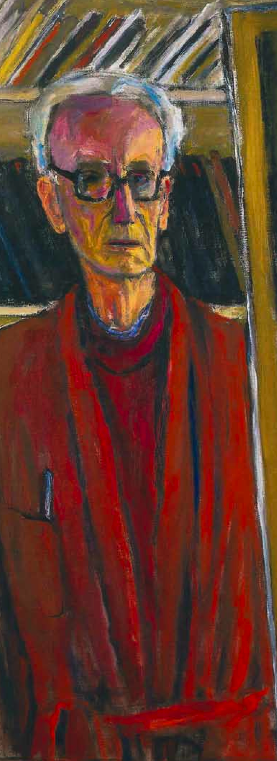
The subject of evening will be a man too little known in the West: Józef Czapski, painter, writer, critic, war hero and prisoner of war, and above all a great humanitarian (the word somehow seems too small for him). We’ve written about him before, here and here. (His self-portrait is at right – he was 6’6″ and the long, narrow canvas demonstrates that.)

And now I will have a “public conversation” about Czapski with his biographer Eric Karpeles.

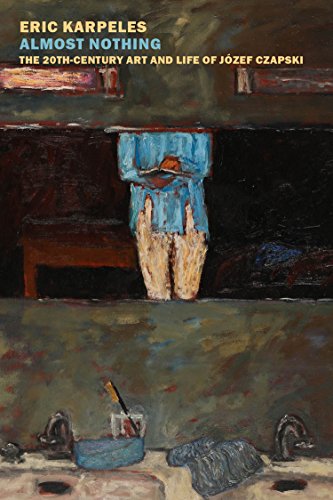
The occasion is the publication of several books by New York Review Books. First and foremost, Karpeles’s new biography of Czapski: Almost Nothing: The 20th Century Art and Life of Jósef CzapskiSecond, his translation from the French of Czapski’s Lost Time: Lectures on Proust in a Soviet Prison Camp (with Karpeles’s introduction), and finally Czapski’s Inhuman LandSearching for the Truth in Soviet Russia, 1941-1942, translated from Polish by Antonia Lloyd-Jones, with an introduction by Timothy Snyder.

From the City Lights website:

Biographer and painter, too.

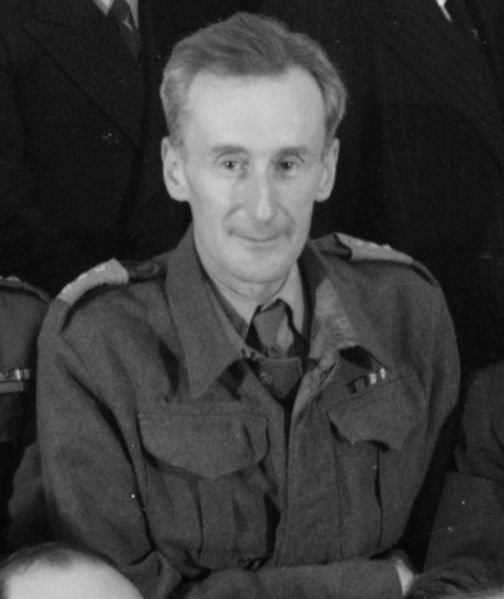
Józef Czapski (1896–1993) was a writer and artist, as well as an officer in the Polish army. In 1918, he enrolled in the Warsaw School of Fine Arts, but shortly thereafter he suspended his studies in order to travel to Russia at the request of military authorities to search for officers in his division who had disappeared in action. At the end of the Russian Civil War, he went back to his studies, this time at Kraków’s Academy of Fine Arts, and soon relocated to Paris with some fellow students, thus founding the Komitet Paryski (Paris Committee), later known as the Kapist movement.

That height thing, again.

Czapski was drafted into the army at the beginning of World War II, soon after landing in a Soviet prisoner-of-war camp. Once free, he was assigned to investigate another disappearance of officers, who he would discover were victims of the Katyń Massacre, the subject of Inhuman Land. Czapski spent the rest of his years painting and writing.

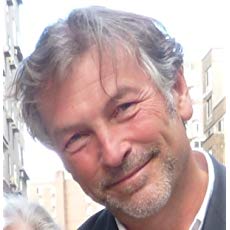
Eric Karpeles is a painter, writer, and translator. His comprehensive guide, Paintings in Proust, considers the intersection of literary and visual aesthetics in the work of the great French novelist. He has written about the paintings of the poet Elizabeth Bishop and about the end of life as seen through the works of Emily Dickinson, Gustav Mahler, and Mark Rothko. The painter of The Sanctuary and of the Mary and Laurance Rockefeller Chapel, he is the also the translator of Józef Czapski’s Lost Time: Lectures on Proust in a Soviet Prison Camp and Lorenza Foschini‘s Proust’s Overcoat. He lives in Northern California.

Hero, writer, painter: it will be his night.

Cynthia Haven is a 2018/19 National Endowment for the Humanities Public Scholar. She writes regularly for The Times Literary Supplement, and has also contributed to The New York Times Book Review, The Nation, The Virginia Quarterly Review, The Washington Post, The Los Angeles Times, The San Francisco Chronicle, and World Literature Today. Her newest book is Evolution of Desire: A Life of René Girard, which was published by Michigan State University Press in spring 2018 and reviewed in the Times Literary SupplementThe Wall Street JournalSan Francisco Chronicle, and the Philadelphia Inquirer. Her work has also appeared in Le Monde, La Repubblica, Die Welt, Zvezda, Colta, Zeszyty Literackie, The Kenyon Review, Quarterly Conversation, The Georgia Review, and Civilization. She has been a Milena Jesenská Journalism Fellow with the Institut für die Wissenschaften vom Menschen in Vienna, as well as a visiting writer and scholar at Stanford’s Division of Literatures, Languages, and Cultures and a Voegelin Fellow at Stanford’s Hoover Institution. Peter Dale in Conversation with Cynthia Haven was published in London, 2005. Her Czesław Miłosz: Conversations was published in 2006; Joseph Brodsky: Conversations in 2003; An Invisible Rope: Portraits of Czesław Miłosz was published in 2011 with Ohio University Press / Swallow Press.

Whew! That’s all a lot of words, and there will be a lot more Thursday night, but please do join us! There will be lots of books for signing – and a few of mine, too!

A chance to meet the man who “invented San Francisco”: Armistead Maupin at Stanford on Wednesday, Nov. 28

Share

Adrian Daub

On Wednesday, Nov. 28, author Armistead Maupin will be visiting Stanford – first signing books in the Bishop Auditorium lobby at 5:30 and then joining us for a screening of The Untold Tales of Armistead Maupin. At 7:15 p.m., Stanford’s Prof. Adrian Daub will engage him in an onstage conversation with filmmaker Jennifer Kroot.

A few words from Adrian below (some of you might remember his lively presence during the Another Look discussion of J.R. Ackerley’s My Father and Myself):

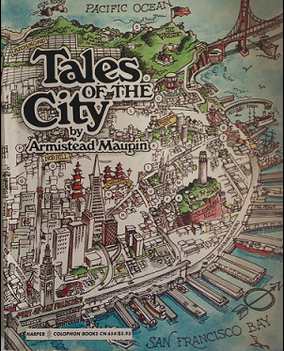
For an entire generation of Bay Area residents, the Tales of the City, which appeared in the San Francisco Chronicle in serialized form from 1976 to 1989, was appointment reading, but since then readers have largely encountered the Tales and their sequels in novel-form and in an HBO miniseries starring Laura Linney (and due to be revived next year). Which means, maybe he hasn’t been part of the fabric of their lives as much as he was for their elders. Nevertheless, they have lived in the world he created. Quentin Crisp once joked that in Tales, Maupin “invented San Francisco” — and the stories of various residents unknown, famous, and infamous indeed explained and dramatized tumultuous decades of San Francisco history as they were unfolding.

The Tales were also crucial in making LGBT culture mainstream — he was among the first novelists to feature a serious, fleshed out and sympathetic trans character, he was among the very first writers to tackle AIDS. But he never tackled them as issues, as challenges — they wove themselves into the Tales almost by necessity. The Tales are a spell he has woven around San Francisco for more than forty years, a spell that allowed the city to see itself for what it was, is, and could be. It therefore feels so appropriate that we get to host Armistead Maupin at Stanford on Nov. 28 — 40 years and a day after the murder of Harvey Milk and George Moscone. The forty years are about reflecting what that turbulent time meant, and how our own present would measure up before its fears and promises. And the day is about writing and thinking about the next step.