
René Girard: “Today envy is the emotion which plays the greatest role in our society.”

Share

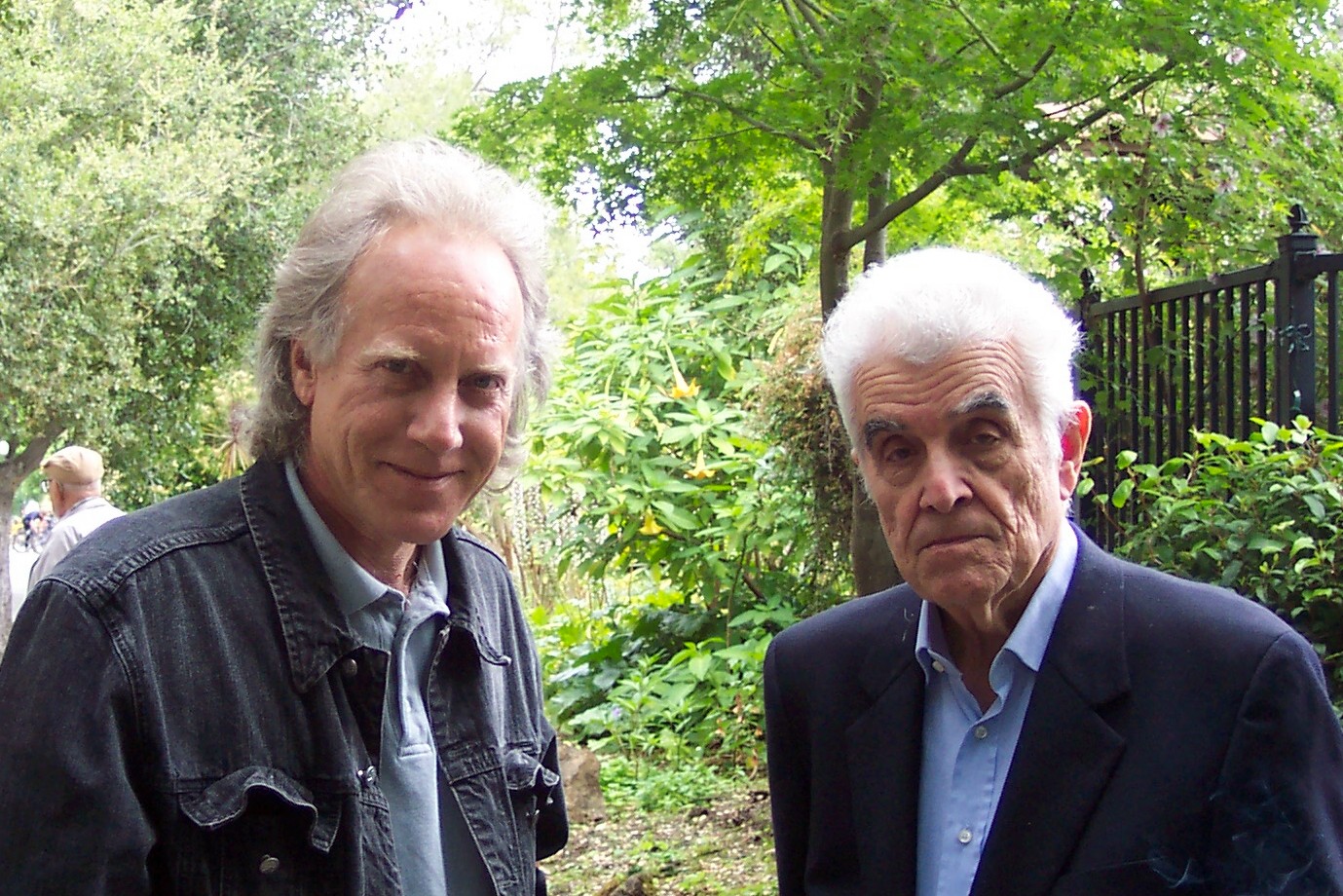
Robert Harrison with René Girard outside the Stanford Faculty Club (Photo: Ewa Domańska)

Here’s some good news for the holidays! My Evolution of Desire: A Life of René Girard has been named one of the San Francisco Chronicle‘s top books of 2018! You can read about it here. We can’t think of a better Christmas present. But there’s more good news.

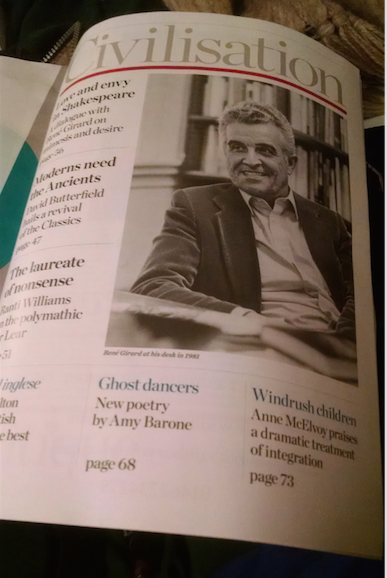
We wrote about Robert Pogue Harrison’s New York Review of Books essay, “Prophet of Envy,” on French theorist René Girard. We’ve also written about his Entitled Opinions radio show and podcasts. The year-end double issue of the U.K.’s  Standpoint has published a transcript of one of his 2005 Entitled Opinions interviews with his Stanford colleague – and with a line on the cover, too! (See right.) Excerpt below:

Robert Pogue Harrison: The founding adage of western philosophy is “know thyself.” That’s not an easy proposition. To know yourself means, above all, to know your desire. Desires lurk at the heart of our behavior, determine our motivations, organise our social relations, and inform our politics, religions, ideologies, and conflicts. Yet nothing is more mysterious, elusive, or perverse than human desire.

Our government invests billions of dollars in scientific research every year so we might better understand the world of nature, so that we might continue our pursuit of knowledge, yet commits only a tiny fraction of that to advancing the cause of self-knowledge. Most of our major problems today are as old as the world itself. The problem of reciprocal violence, for example. You would think we would want to understand its mechanisms, its psychology, and its tendencies to spiral out of control. Instead, we keep on perpetuating its cycles much the way our ancestors have done for centuries, and even millennia. Nor are we any closer to knowing the deeper layers of our conflicting and conflict-generating desires than they were.

René, your work has an enormous reach. It branches out into various areas and disciplines — literary criticism, anthropology, religious studies, and so forth. Today, I’d like to focus on what I take to be the foundational concept of all your thinking, namely mimetic desire. Can you tell our listeners exactly what you mean by that term?

René Girard: Mimetic desire is when our choice is not determined by the object itself, as we normally believe, but by another person. We imitate the other person, and this is what “mimetic” means. For example: why have all the girls been baring their navels for the last five years? Obviously, they didn’t all decide by themselves that it would be nice to show one’s navel — or that maybe that one’s navel is too warm, and one must do something about it.
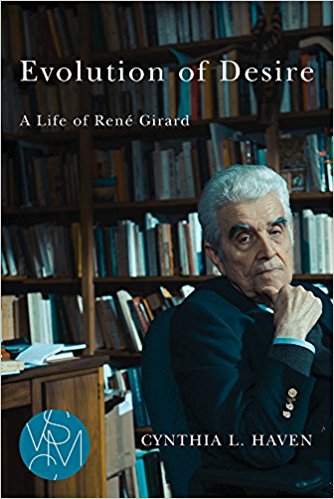
One of San Francisco Chronicle’s top books for 2018

We’ll see the mimetic nature of that desire the day that fashion collapses. Suddenly, it will be a very old-fashioned to show one’s navel and no one will show it any more. And it will all happen because of other people — just as now, it is because of other people that they show it.

RPH: But how far do you want to go in saying that desire — by its very nature, and in human beings — is fundamentally mimetic?

RG: Maybe one can start from this question: what is the difference between need, appetite, and desire? Need is an appetite all animals have. We know very well that if we are alone in the Sahara Desert and we are thirsty, we don’t need a model to want to drink. It’s a need that we have to satisfy. But most of our desires in a civilised society are not like that.

Think of vanity, or snobbery. What is snobbery? In snobbery, you desire something not because you really had an appetite for it, but because you think you look smarter, you look more fashionable, if you imitate the man who desires that object, or who also pretends to desire it.

 And later in the interview…

RPH:  I asked in my opening remarks about why can’t we have an institution devoted strictly to the study of vengeance, for example, and work out its logic — reciprocal violence, these kinds of things. We are far from overcoming the behaviour that has characterised human history throughout the centuries.

But let’s move on to another emotion, which is closely linked, obviously, to hatred, vengeance, and jealousy, namely envy. I think envy is a highly underestimated emotion in the human relations. How do you see the role of envy?

RG:
 I see it the same way. Today envy is the emotion which plays the greatest role in our society, where everything is directed towards money. Therefore you envy the people who have more than you have. You cannot talk about your envy. I think the reason we talk so much about sex is that we don’t dare talk about envy. The real repression is the repression of envy.
And of course, envy is mimetic. You cannot help imitating your model. If you want money very badly, you’re going to enter the same business as the man who is your model. More likely than not, you will be destroyed by strength. So when people talk about masochism and so forth, they are still talking about mimetic desire. They are talking about how we move always to the greatest strength in the direction of the desire we envy most. We do so because that power is greater than ours — and it’s probably going to defeat us again. So there will be what Freud calls repetition in psychological life, which is linked to the fact that we’re obsessed with what has defeated us the first time. Our victorious rival in lovemaking becomes a permanent model. So novelists like Dostoevsky and Cervantes will show you characters who literally asked their rival to choose for them the girl they should love.

Read the whole thing here

Postscript on 12/18: The actual, physical copies of Standpoint arrived in my Stanford p.o. box today. It’s beauuu-ti-ful! (See photo at left.) Moreover, “Love and Envy in Shakespeare: A Dialogue with René Girard on Mimesis and Desire” leads the “Civilisation” section of the magazine. Thanks to Daniel Johnson and the London staff of Standpoint magazine. What fine work you do! And what a splendid Christmas present – not just for me, but for all of us!
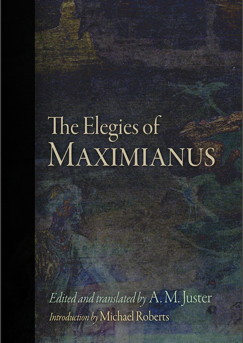
Maximianus dropped down the memory hole – but now he’s back in time for the holidays.

Share

Bravo, Mike Juster!

A few days ago, we wrote about a new translation of Theophrastus. Today we write about another ancient you may not have heard of: Maximianus, the last breath from Roman poetry. The complete Elegies of Maximianus is newly translated into English by A.M. Juster (we’ve written about him here). John Talbot’s review appears in The Weekly Standard – one of the few print venues left for those writing about books (and who wish to be paid decently for it), and it’s now about to go belly-up.

An excerpt:

The very last great moment in all of ancient literature comes as a surprise twist—a single line of Latin poetry that transforms a bawdy comic scene into a strange, tragic vision of the end of the cosmos. There then follow just 54 more lines of verse, after which Roman poetry itself comes to an end. You’d think that this last remarkable flicker from the ashes of antiquity would be famous. But both the author, the 6th-century Roman poet known to us as Maximianus, and his Elegies—just 686 lines of verse traditionally divided into six interrelated poems—have dropped almost completely from memory. Who has even heard of him?

This needs to change, starting with the remarkable passage I mentioned. The scene: Our poet, Maximianus, on a diplomatic mission from Italy to Byzantium, finds himself alone with a bright young Greek thing. He falls for her, and she’s willing, but he is not the young stallion he once was. When she bewails his repeated failure to rise to the occasion, he naturally takes it personally. Whereupon she delivers a startling retort: Nescis / Non fleo privatum set generale chaos. That is (in my own translation): “You’ve missed the point. It’s not your particular condition I’m bewailing—it’s the progressive dissolution of the universe as a whole.” What for Maximianus is simply one humiliating instance of later-life detumescence is, for the rather more alert and intelligent girl, something else altogether: a moral and intellectual apprehension of universal entropy. From the failure of Maximianus’ virility she generalizes on a cosmic scale and goes on to envision, in a speech that reads like a bleak parody of Lucretius, the eventual extinction of “the human race, the herds, the birds, the beasts / and everything that breathes throughout the world,” all of which depend on the procreative impulse.

Her sudden realization surprises her as much as it does us. It’s the moment when youth comes “for the first time,” as one critic puts it, “face to face with…the blankness of annihilation.” Yet this stark vision arises from a low comic situation, and that’s a key to its power. I doubt that Maximianus is a greater writer than Swift or even Samuel Beckett, but the satire is Swiftian and the Greek girl’s laconic observation, compacting mundane human irritation with cosmic existential despair, could have been uttered by an Estragon or Vladimir.

Read the whole thing here.

Happy 100th Birthday to the Soviet Homer! “Chilling out is not exactly his thing.”

Share

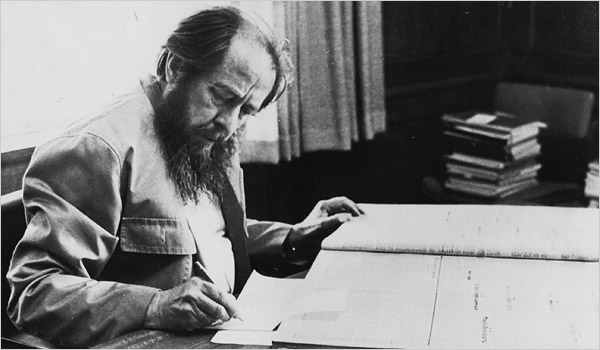
Here he is, not chilling at the Hoover Library & Archives.

This week’s quietest centennial belongs to Aleksander Solzhenitsyn, the writer who destroyed an empire. That’s from the New York Times, commemorating the 100th birthday of the writer who wrote The Gulag Archipelago, and died in 2008. The article is by the Russian’s biographer, Michael Scammell (we worked together briefly at Index on Censorship, which he founded, in London):

When the Soviet Union collapsed in 1991, pundits offered a variety of reasons for its failure: economic, political, military. Few thought to add a fourth, more elusive cause: the regime’s total loss of credibility.

This hard-to-measure process had started in 1956, when Premier Nikita Khrushchev gave his so-called secret speech to party leaders, in which he denounced Josef Stalin’s purges and officially revealed the existence of the gulag prison system. Not long afterward, Boris Pasternak allowed his suppressed novel “Doctor Zhivago” to be published in the West, tearing another hole in the Iron Curtain. Then, in 1962, the literary magazine Novy Mir caused a sensation with a novella set in the gulag by an unknown author named Aleksandr Isayevich Solzhenitsyn.

That novella, “A Day in the Life of Ivan Denisovich,” took the country, and then the world, by storm. In crisp, clear prose, it told the story of a simple man’s day in a labor camp, where he stoically endured endless injustices. It was so incendiary that, when it appeared, many Soviet readers thought that government censorship had been abolished.

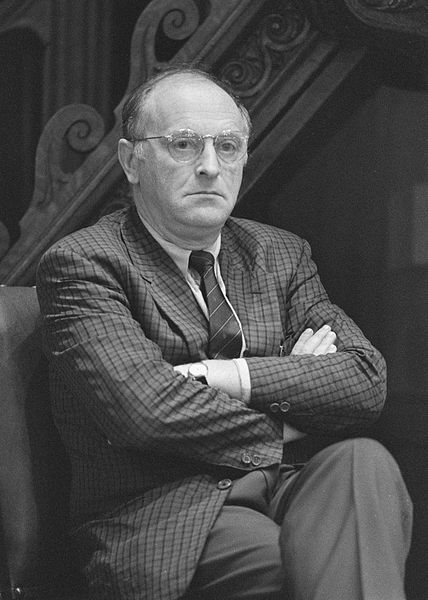
I looked for Anna Akhmatova‘s comment on Solzhenitsyn, but instead found Nobel poet Joseph Brodsky‘s remarks in the Iowa Review in 1978 (from my Joseph Brodsky: Conversations):

Q: What’s your opinion of Solzhenitsyn and the legend which has been built around him?

A: (Long pause) Well, let’s put it this way. I’m awfully proud that I’m writing in the same language that he does. I think he’s one of the greatest men ever … one of the greatest and most courageous men who has ever lived in this century. I think he is an absolutely remarkable writer. As for legend … you shouldn’t worry or care about legend, you should read the work. And what kind of legend? He has his biography … and he has his words. …

Brodsky: not chilling, either.

Q: Please go on.

A: He has been reproached quite a bit by various critics, by various men of letters, for being a second-rate writer, or a bad writer. I don’t think it’s just … because the people who are judging the work of literature are sort of building their judgment on the basis of systems of aesthetics which we inherited from the nineteenth century. What Solzhenitsyn is doing in literature cannot be judged by this aesthetic standard just as his subject matter cannot be judged by our ethical standards. Because when the man is talking about the annihilation or liquidation of sixty million men, there is no room, in my opinion, left to talk about literature and whether it’s a good type of literature or not. In his case, literature is absorbed in the story.

What I’m trying to say is this. Curiously enough, he is the writer, but he uses literature, and not in order to create a new aesthetics but for its ancient, original purpose: to tell the story. And in doing that, he’s unwittingly, in my opinion, expanding the framework of literature. From the beginning of his career, as far as we can trace it on the basis of his successive publications, you see quite an obvious erosion of the genres.

What we start with, historically, is a normal novella, One Day, yes? Then he goes to something bigger, Cancer Ward, yes? And then he went to something which is really neither a novel nor a chronicle but somewhere in between, The First Circle. And then we’ve got this Gulag which is, I think, a new kind of epic. It’s a very dark epic, if you wish, but it’s an epic.

I think that the Soviet rule has its Homer in the case of Solzhenitsyn. I don’t know what else to say. And forget about legends, that is real crap … about every writer.

But something I always wondered was: what was it like to actually live with a man like Solzhenitsyn. For that you have to go to David Remnick’s 1994 New Yorker profile, “The Exile Returns”:

There is something at once frenetic and peaceful about the Solzhenitsyn household. Everyone has a job to do, and everyone does it with efficiency and evident pleasure. Upstairs, Natalia has her own office, where she runs what is, in essence, a literary factory. For Solzhenitsyn’s latest works, she sets the type on an I.B.M. composing machine, and then she sends the typeset pages to Paris, where their friend Nikita Struve runs the Russian-language YMCA-Press. Struve has only to photograph the set pages, print them, and bind them. Natalia has set all twenty volumes of Solzhenitsyn’s sobranie sochineny—his collected works. Only now that Solzhenitsyn has completed his series of immense historical novels, “The Red Wheel,” is either author or amanuensis able to concentrate on the move back to Moscow.

David Remnick (Photo: Martin Schneider/Creative Commons)

The children—Yermolai, Ignat, and Stephan, and their older half brother, Dmitri Turin—have also been very much a part of the Solzhenitsyn enterprise. During the family’s first years in Cavendish, they began the day with a prayer for Russia to be saved from its oppressors. They went to local schools, and when they came home in the afternoon their father gave them further lessons in mathematics and the sciences (Solzhenitsyn had been a schoolteacher in Russia) and their mother tutored them in Russian language and literature. Until the boys began leaving home for boarding schools and college, they, too, helped with literary chores, setting type, compiling volumes of Russian memoirs, translating speeches. Now they are spread across the world. Dmitri lives in New York, where he restores and sells vintage motorcycles. Yermolai, after two years at Eton, went to Harvard, and while he was there he studied Chinese and had a part-time job as a bouncer at the Bow &Arrow, a Cambridge bar; he is now living in Taiwan and wants to begin working soon in China. Ignat is studying piano and conducting at the Curtis Institute of Music, in Philadelphia, and has performed around the world, to spectacular reviews, including a series of triumphant concerts with his father’s old friend Mstislav Rostropovich last September in Russia and the Baltic states. Stephan is a junior at Harvard and is majoring in urban planning.

Ignat and Stephan were home for winter vacation, and I asked them if their father ever stopped working.

Ignat smiled slyly and replied, “No, he’s never said, ‘Today I’m just gonna chill out, take a jog, and blow off this “Red Wheel” thing.’ Not one day.”

“Chilling out is not exactly his thing,” Stephan added.

“So, fine. Why can’t the West get over this?” Ignat said, growing more serious. “Why is his working all the time such an annoyance? Why is it so bad that he lives in Vermont and not the middle of Manhattan?”

“They assume he must be weird,” Stephan said.  

Biographer Scammell

Scammell concludes: “After his death Solzhenitsyn was given a sumptuous funeral and buried at the Donskoy Monastery in Moscow. In 2010 “The Gulag Archipelago” was made required reading in Russian high schools. Moscow’s Great Communist Street has been renamed Aleksandr Solzhenitsyn Street, his centennial is being celebrated with great pomp this week in Russia, and a statue of him in Moscow is planned for the near future.

“All this would give the writer great satisfaction. But though feted and exploited by questionable allies, Solzhenitsyn should be remembered for his role as a truth-teller. He risked his all to drive a stake through the heart of Soviet communism and did more than any other single human being to undermine its credibility and bring the Soviet state to its knees.”

The New York Times piece is here. The long ago New Yorker piece here.

Theophrastus. Never heard of him? He could be a solution to your holiday gift-giving.

Share

Poet and classicist

Stuck for a gift-giving idea for the holidays? Worry no more! Theophrastus is your answer. Never heard of him? You’re not alone. But according to MacArthur “genius” awarded poet A.E. Stallings (we’ve written on her work with the Greek refugee effort here), Pamela Mensch’s translation of the philosopher’s Characters: An Ancient Take on Bad Behavior is “a perfect gift for the person in your life who mentions Plato’s cave or Zeno’s paradox, or wears a bow tie, or uses a fountain pen, or enjoys a bit of harmless armchair misanthropy.”

In the Wall Street Journal, she writes:

Among the lesser-known writers from classical Athens is a pupil of Aristotle (later his successor as head of the Peripatetic school of philosophy), whom he dubbed Theophrastus (“he who speaks like a god”). Theophrastus had been born Tyrtamus on the island of Lesbos around 370 B.C. and had moved to Athens to study philosophy. An immensely popular speaker, he attracted audiences of 2,000 strong at his public lectures. His life coincided with many of the historical vicissitudes of fourth-century Athens, including the rise of the kingdom of Macedon to the north under Philip II and the eventual domination of all of Greece by Alexander the Great —another pupil of Aristotle’s—including Athens, already diminished by its defeat in the Peloponnesian War.

Although Theophrastus wrote on a wide variety of subjects, he is known for his surviving work on plants (he is considered the father of botany) and an elegant, witty little study of human nature known as “Characters,” in which he depicts 30 different men, or types, representative of particular vices or foibles. It was humorous and sharply observed, with details of quotidian life that might belong in a novelist’s notebook, and there had been nothing quite like it before.

An example? Try this:

Man of the hour

Some types and characters are specific to Athenian free-born men and don’t necessarily translate easily to modern generalities. The Coward is afraid to sail (the ancient equivalent of having a fear of flying), seeing pirates and shipwreck at every turn. But most of his entry is given over to his avoiding the front-line of battle and hiding in sick bay—all free-born Athenian men had mandatory military service and were likely to have seen action. The entry for the Superstitious Man is entertaining less because we see in him a modern type (though his excessive hand washing might be OCD) than because we see superstitions that we share or learn about ancient Athenian ones we don’t. Thus a weasel (the Greek equivalent of a cat) crossing the road unnerves him. But we also find that he must shout “Mighty Athena!” if he hears the hoot of an owl. The Social Climber enjoys conspicuous consumption, even concerning his pets: He buys his jackdaw a tiny shield and ladder so that it will look like a hoplite scaling a wall, and when his imported Maltese lapdog dies, he erects a tombstone to this scion of Malta.

But there is also a Newshound who spreads some “fake news,” and a man so obnoxious that he flashes his genitals at free-born women (obnoxious indeed!). The Vulgar Man gives Too Much Information about his herbal colonic at the dinner table. There are cheapskates galore, dissemblers, busybodies, dullards and charlatans. The worst of the lot seems to be the Friend of Scoundrels, who does sound strangely contemporary, mocking good men, calling rogues “independent thinkers” and declaring: “We won’t have anyone willing to take trouble on behalf of the public good if we reject such men.”

Happy 410th birthday, John Milton! Here’s how you can thank him for Paradise Lost.

Share

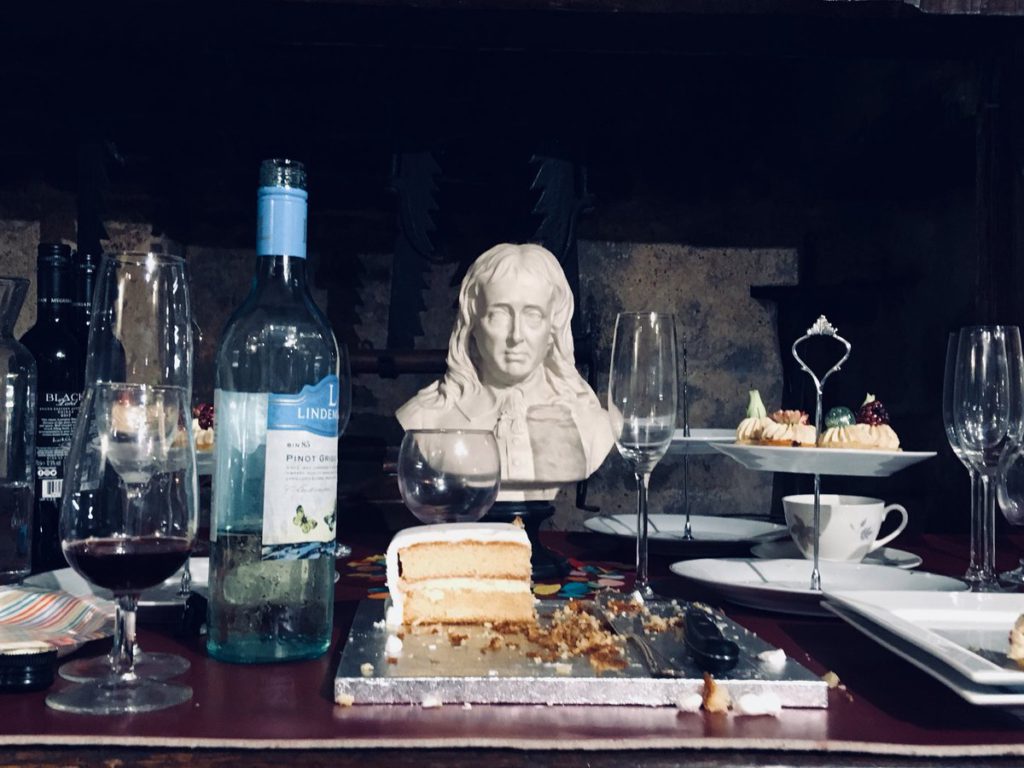
And there was a little party tonight chez lui – cake and champers in Buckinghamshire!

Happy 410th birthday to the man who lost paradise, and then regained it – for all of us! There was a lovely little party to celebrate the event at the poet’s digs in Chalfont St. Giles, his only surviving home. Wish I’d been there! (I wrote about my own stay earlier this year here.)

Like to get him a little prezzie for the occasion? Here’s what he really needs, and you have a few more days to get it: make a contribution to keeping his place tidied up. The Milton Cottage in Chalfont St. Giles is his only surviving residence, and it’s a charmer. But after half a millennium, it needs a few repairs. “I visited the cottage last summer. It is an absolute gem and the staff are delightful,” according to Milton scholar Joe Nutt.

But move quickly: Thanks to a generous benefactor, any time up midnight on 14th December 2018 your donation will be quadrupled! For a tax-deductible contribution (via credit card or Paypal), Americans should go HERE to donate. Scroll down to note that your intended target for funding is “Paradise Maintain’d: Milton’s Cottage”!

“Yes, I’ve donated to Milton’s Cottage for several years. It is the only structure associated with Milton that remains intact, and it’s where he completed ???????? ????,” wrote Milton enthusiast Mark Hackler. He continued:

Milton was a Londoner for most of his life, but every house (at least four) that he lived in has been obliterated over time. One or two were burned during the Great Fire of London in 1666, and others were destroyed during the Blitz in WWII.

You can view the exterior of the “dorms” at Christ College at the University of Cambridge, where Milton shared a room with a half-dozen pensioners (scholarship students), and there is a memorial window dedicated to Milton at St. Margaret’s Church, Westminster Abbey; sometimes his portrait is on display at the National Portrait Gallery. But nothing physical remains of Milton in London, except his corpse, which is buried in the floor of the St. Giles without Cripplegate church.

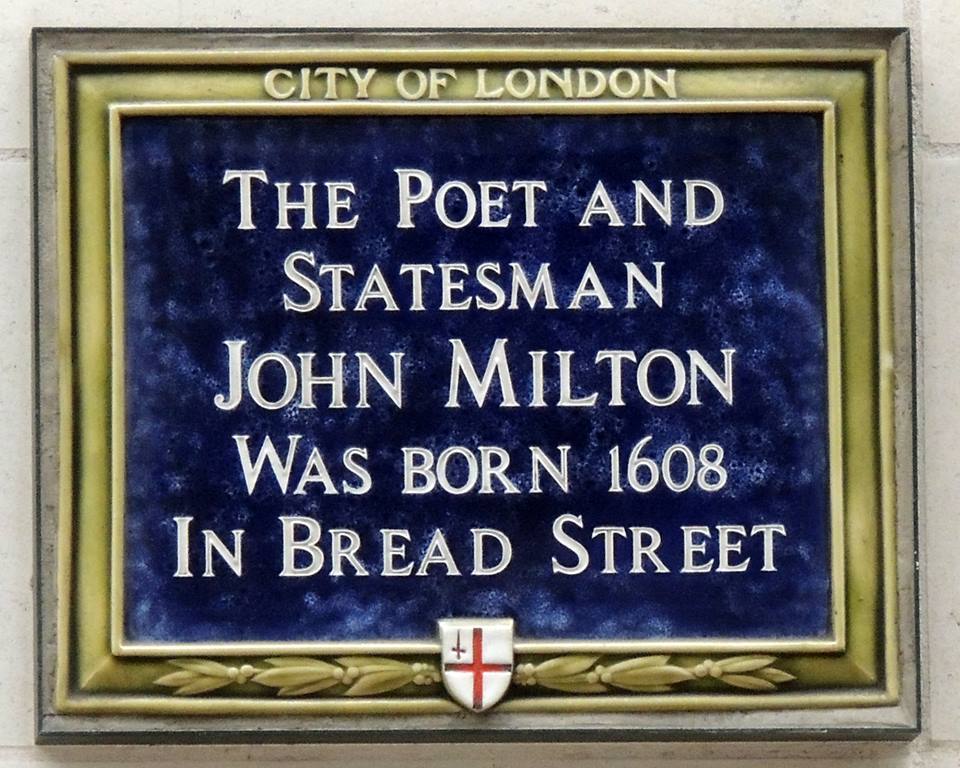
If you visit Bread Street in London, the street on which Milton was born and grew up, you’ll find nothing but soulless office buildings and a tiny gap between two banks called Milton’s Way. The school he attended (St. Paul’s) is gone; the Mermaid, the pub at the end of the street, where Shakespeare and other greats ate and drank, is gone (perhaps a young Milton, who was 12 when Shakespeare died, met the playwright as he stumbled from the pub on a foggy London afternoon); St. Paul’s Cathedral, just around the corner, looks very different now than it did in Milton’s day. Nearly everything in this part of East London (Cheapside) was bombed and burned during WWII.

The London of Milton – and of Chaucer, Spenser, Shakespeare, Wordsworth, Keats, Shelley, Byron and many others – has vanished.

“Paris under siege”: broken glass and plenty of baguettes

Share


It is the fourth weekend of protests in Paris. Today, police fired tear gas and water cannon in street battles with activists wearing the “gilets jaunes,” the fluorescent yellow vests that are a hallmark of the new movement to protest rising taxes and the cost of living in France.

Our correspondent

One hundred forty people, including 17 police officers, were injured in the violence and more than 1,400 were taken into custody nationwide after they were found carrying hammers, baseball bats, and metal petanque. Eight thousand police were deployed in Paris to try to quell the unrest. 

Today we have a guest post from an eyewitness: the president of the Paris-based “Ivy Plus European Leaders” think tank, author Maria Adle Besson, who has written a moving account of what it was like today to live in the upscale 16th arrondissement, where some of the worst action took place. (All photos by Maria Adle Besson)

I went out to do some shopping in my quiet residential neighborhood at 5 p.m. Who would wish to invade Avenue Mozart? As I turned into the street, everything started to close and people gathered on both sidewalks near Metro Ranelagh. “Ils arrivent”– “They are here”… “Les Gilets Jaunes sont ici?” “Oui Madame, ne remontez pas l’avenue!” warned a restaurant owner, who recognized me.

The “casseurs” arrive at Carré Blanc

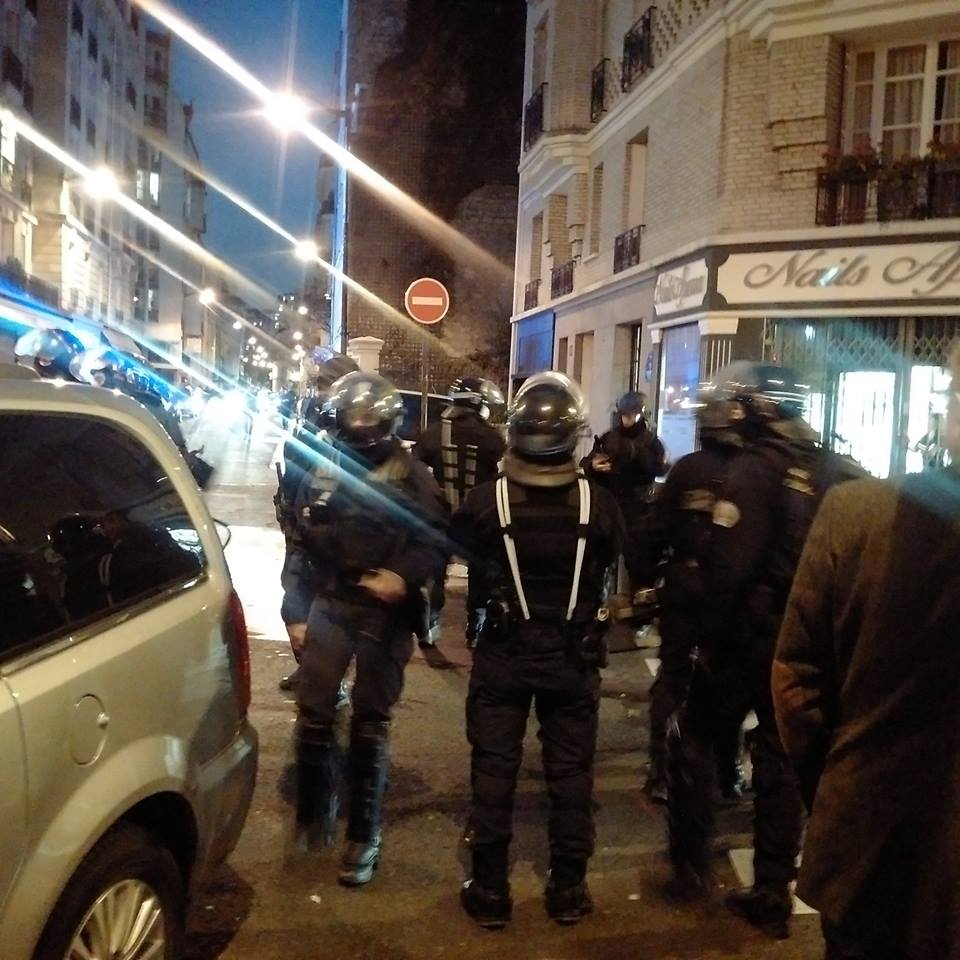
I turned back towards Rue de l’Assomption. A group of sinister-looking youth passed close to me, a cold expression in their eyes; I stared at them. They did not look like the middle-aged provincial gilets jaunes protesters I ran into last week. “Where are they coming from and where are they going?” I wondered. Are they extreme right activists? Is La Maison de la Radio protected? Then I thought, “Are we going to be suspicious of each other in the streets of Paris?” Police cars started arriving, from diverse directions, cheered by shop and restaurant owners. Sirens sounded and policemen came running. They slowed and stopped at the corner of my street, as if blocking it. From afar I heard someone scream, “Fils de Pute, Fils de Pute…” Car doors slammed shut. A mother was rushing with her stroller. Others lingered to thank the police. The smell of burning filled the air. I went inside my home, got rid of my bag, changed into a warmer coat and, as soon as sirens stopped and things seemed to quiet down, I headed out again.

I passed in front a group of banlieusards. A woman was arguing with the rioters: “Why are you breaking everything? Would you like it if people were breaking your home?” A young man screamed back: “Je m’en fous, je vis dans le 78, et je casse chez moi aussi car c’est de la merde chez moi. Vous, vous vivez ici dans le seizième dans un 90m2 [1K square foot apartment]* et vous allez me donner des leçons?” (What is sad is that’s not a large apartment. I would have expected him to say 150 square meters. He may have thinking of the Benalla scandal last summer when on top of all the reproaches, the president was blamed for giving his private security guard the use of a 90-square-meter apartment in Paris… which seemed luxurious for a single security guard.)

Here come the baguettes…

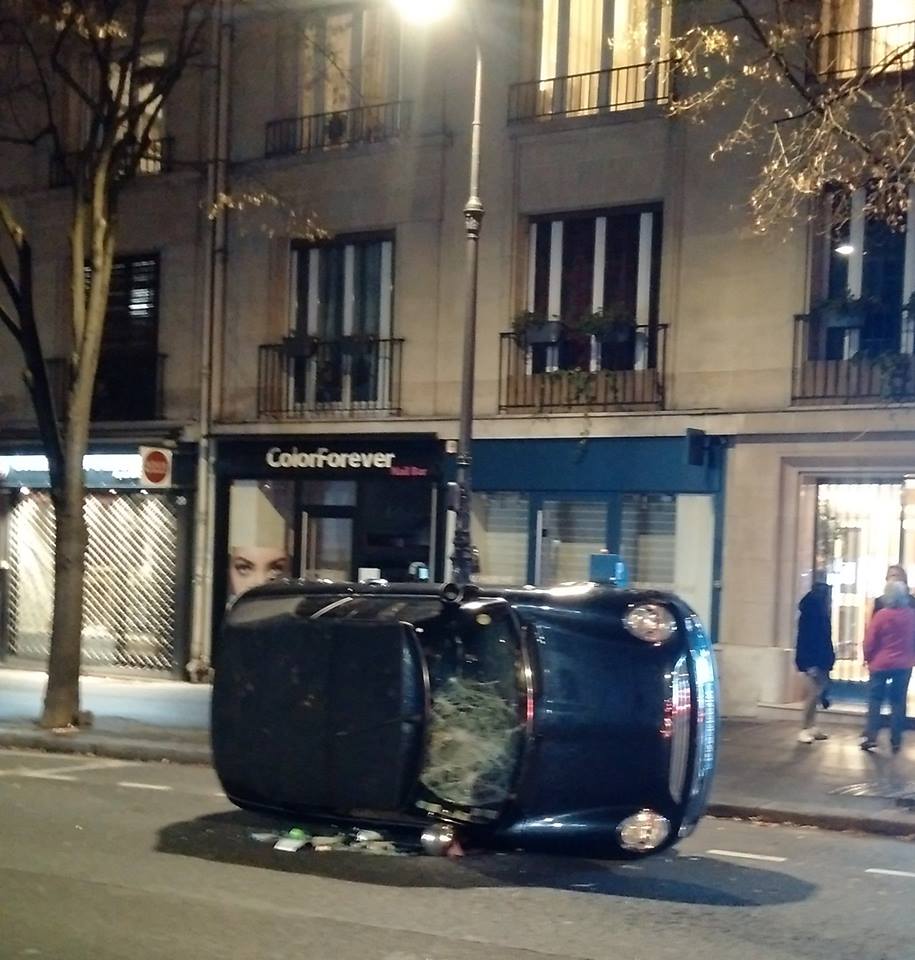
Another woman was standing watch over the boutique “Carré Blanc,” where a window was shattered. “Are you the manager?” I asked. She said, “No, I’m a neighbor; I am just a citizen watching over the property of someone else. I don’t want looters to walk in.” I grimaced. “Wouldn’t they be more interested in alcohol and luxury goods than sheets and towels?” She did not like my comment nor the fact that I was taking a picture. Indeed, I wasn’t the only passerby taking pictures of broken store windows, wrecked cars, out of stupefaction and dismay. Among the picture-takers were also men with gilets jaunes sticking out of their back pockets, as well as uncategorizable youth, wearing black and smirking. Thus, one wondered if the gilets jaunes and the “casseurs” – and several other distinct groups – were taking trophy pictures.

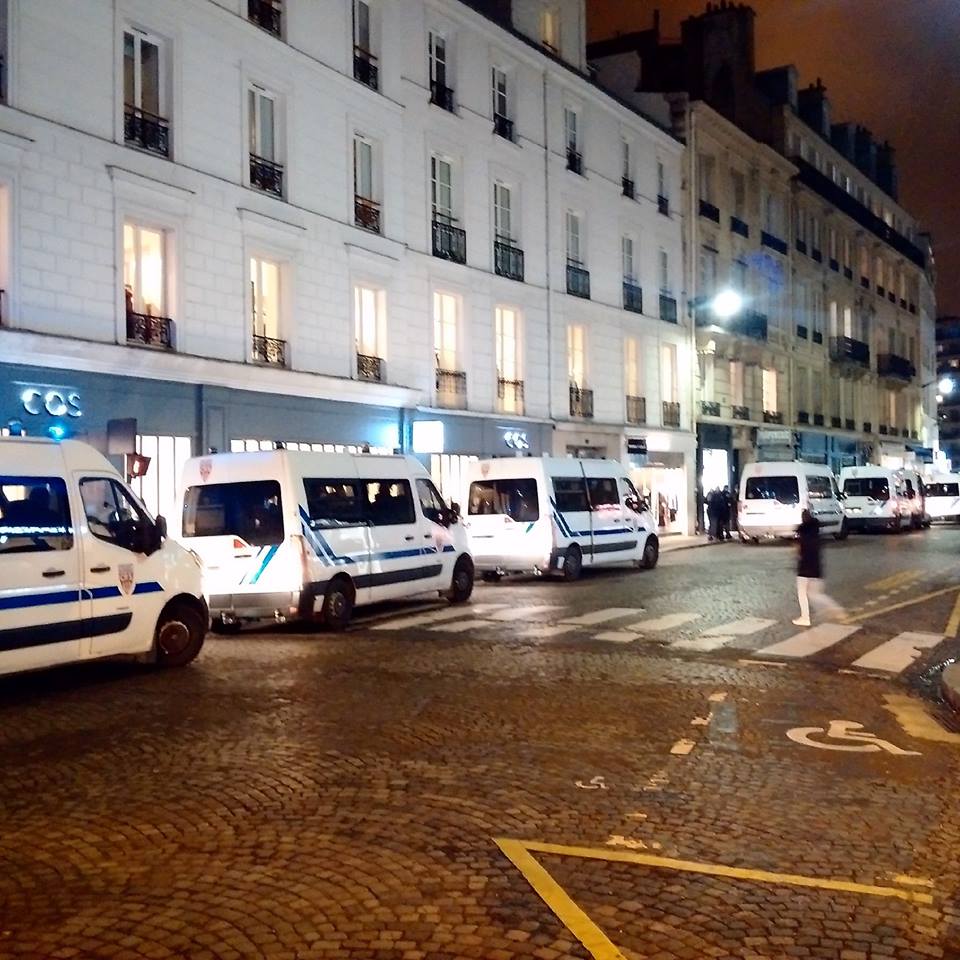
Rue de Passy was lined on one side by a long row of C.R.S. [riot police] vans. On the other side of the street, the big café on the small square, was open. Strangely enough, while the whole neighborhood had shut down, it had all its holiday decorations up and was packed with customers – people were even sitting outside on the heated terrace. Paris will always be Paris, I smiled, relieved. I went in and stood at the bar to have coffee amongst the crowd. Various groups of men were drinking beer and talking. I wondered who they were. Plainclothes  policemen? They had rather smart coats and outfits, but were wearing running shoes… I left the café and continued to walk. A truck stopped in front of me and started unloading big yellow plastic boxes. I startled, was it ammunition? Then from the smell that arose from the boxes and seeing baguettes – it is France – stick out of large bags, I realized that it was “dinner” being brought to the C.R.S. Hungry policemen, nostalgically bleu-black-beur, began to step out of the vans – one wonder-woman officer was overloaded with perhaps 40 kilos of police gear. They headed towards the “food truck.” Another Saturday evening of Paris under siege… Today, one warfront was home.