
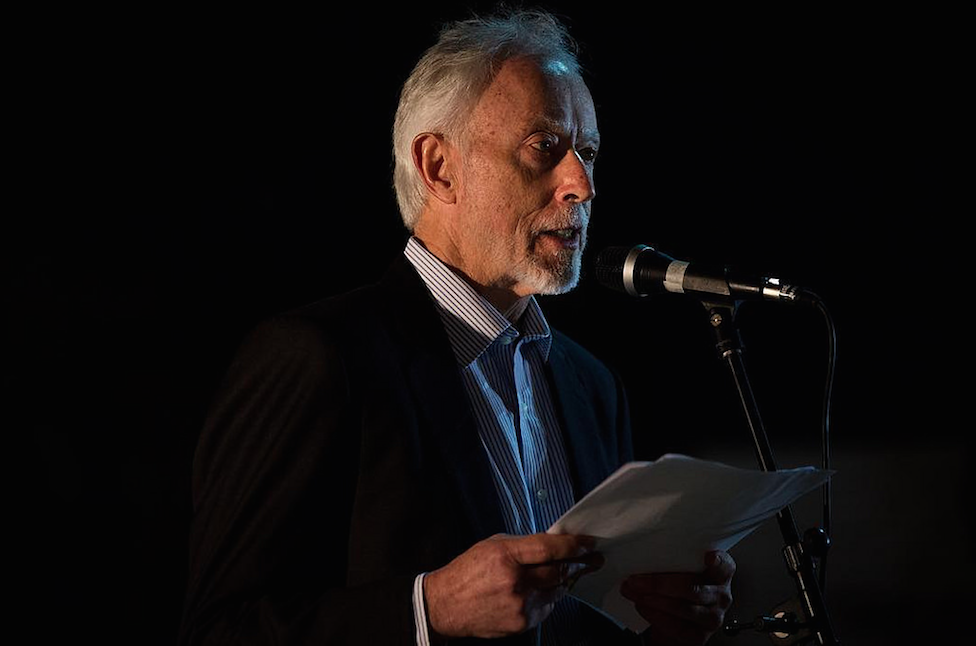
“Coetzee has always been an intensely metaphysical novelist.”

Share

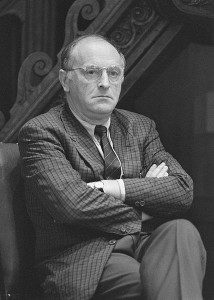
“Chaste, exact, ashen prose” drawn to “passionate extremity.” (Photo: Creative Commons)

A dispiriting Saturday sifting through bins of unsorted papers from the garage, deciding whether I really need the proofs of books published long ago, wondering how long I should keep old Christmas cards from friends, trying to decipher the signatures on yellowed letters, and asking myself whatever will I ever do with all the photos of nieces and nephews at one year old, then two years old, then three…

So why was I holding on to a Christmas issue of The New Yorker from almost a full decade ago? Ah yes. “Squall Lines: J.M. Coetzee‘s ‘Diary of a Bad Year'” – a review written by a literary critic who maintains that “the novel exists to be affecting…to shake us profoundly. When we’re rigorous about feeling, we’re honoring that.” His essays make me weep with envy.

I can do no better on a slow Saturday night than to quote from James Wood‘s 2007 review on the Nobel Prizewinning South African writer Coetzee, a novelist who, also, makes me weep with envy.

Diary of a Bad Year’s protagonist is a novelist who is, in some ways, an alter ego, who laments that his art is “not great-souled,” that it lacks “generosity, fails to celebrate life, lacks love.” But what a soul he has – as Wood comments, if not great-souled, than deep-souled:

Yet this is the cold air just beyond the reach of a fire. Coetzee’s chaste, exact, ashen prose may look like the very embers of restraint, but it is drawn, again and again, to passionate extremity: an uneducated gardener forced to live like an animal off the South African earth (“Life & Times of Michael K”); a white woman dying of cancer while a black township burns, and writing, in her last days, a letter of brutal truths to her daughter (“Age of Iron”); a white woman raped on her farm by a gang of black men, and impregnated (“Disgrace”); a recent amputee, the victim of a road accident that mangled a leg, helpless in his Adelaide apartment, and awkwardly in love with his Croatian nurse (“Slow Man”). Coetzee seems compelled to test his celebrated restraint against subjects and ideas whose extremity challenges novelistic representation.

***

James Wood

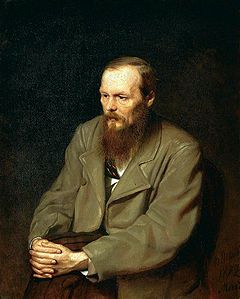
Coetzee is devoted to Dostoyevsky, and “Elizabeth Costello” made clear that part of that devotion has to do with what the Russian literary theorist Mikhail Bakhtin called the “dialogic” nature of Dostoyevsky’s arguments. Bakhtin noted that it is impossible to infer from the novels what Dostoyevsky believed, because no single idea ever gains authorial dominance. Instead, ideas, like the characters themselves, are in constant circulation and mutual qualification. It is how Dostoyevsky the ardent Christian was able to argue against himself, awarding Ivan Karamazov the most devastating petition against conventional Christian belief ever mounted in a novel. Coetzee is interested in how we profess ideas, both in life and in novels. We tend to think of ourselves as intellectually stable, the oaken pile of principle driven reassuringly deep into the ground. All the Presidential-campaign cant about “values” testifies to this; to flip-flop is to flop. But what if our ideas are, rather, as Virginia Woolf imagined consciousness: a constant flicker of different and self-cancelling perceptions, entertained for a moment and then exchanged for other ones? Imagine a fervent Christian, who has always believed in the afterlife. One night, waking in terror, he realizes, for only a second, but absolutely, that there is no afterlife. The terror passes, and the next morning he reaffirms his public vows. He does not succumb to doubt. Still, the question remains: what has happened to his orthodoxy? If it has not been cancelled or refuted by the nightmarish doubt, does it now contain, like a trapped smell, the ghost of its opposite?

***
Devotion

Unlike the philosopher, the novelist may take an idea beyond its rational terminus, to the point where the tracks start breaking up. One name for this tendency is the religious, the realm where faith replaces reason. Coetzee has always been an intensely metaphysical novelist, and in recent years the religious coloration of his metaphysics has become more pronounced.

***

It is not the force of Ivan’s reasoning, he says, that carries him along but “the accents of anguish, the personal anguish of a soul unable to bear the horrors of this world.” We can hear the same note of personal anguish in Coetzee’s fiction, even as that fiction insists that it is offering not a confession but only the staging of a confession. His books makes all the right postmodern noises, but their energy lies in their besotted relationship to an older, Dostoyevskian tradition, in which we feel the desperate impress of the confessing author, however recessed and veiled.

Here’s the good news: I can throw the 2007 New Yorker away! The article is all online! Read the whole thing here.

שנה טובה ומתוקה! And finding live fish in Palo Alto.

Share

Some time ago I posted about Stanford’s Ruth Starkman, and how a t-shirt totally changed my mind about being a public intellectual. Now she’s changing my mind about time. We’re not in 2017. As of today, we’re in 5778. Shanah tova!

She knows how to be a public intellectual, too.

Her post on Facebook: “Preparing for the New Year’s ritual of taschlich – where one throws bread to the fish, whose unblinking eyes represent the all-knowing universe, I thought of all the things for which I needed to ask forgiveness – a long list! I also looked at the 613 mitzvot to mediate on the good and sweet things I could do this coming year. I always loved the command to feed one’s animals, elders, and children before one eats. This year I’m working on finding modern ways not to muzzle an ox while it’s working. I especially like the command to praise the ox and anyone who works with you for a job well done. Working on this for 2017-8 and 5778. A good and sweet new and academic year to all שנה טובה ומתוקה.”

Many of the ancient customs for the Jewish holidays seem to be drawn from the harsher passages of Leviticus. “So I looked for things that could be humane and meaningful as Autumn quarter starts and I know that these are the ones that have to do with animals.”

Praise them. Praise them.

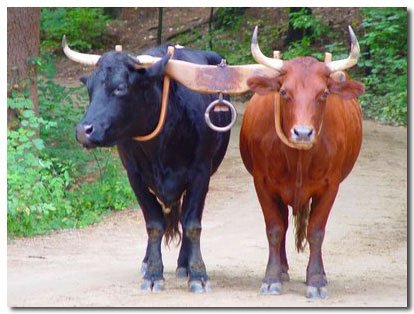
For example, “not to muzzle an ox while plowing.” Not an issue for most of us. However, Ruth says, “I’ve been combing through these every darn year since my bat mitzvah looking for ways to capture the spirit of the good deed.”

Well I have no problem feeding the cat I live with before I feed myself. He demands no less. And he demands very loudly. And I’m a vegetarian. Surely the first step in kindness is not eating them. But what to do about the fish?

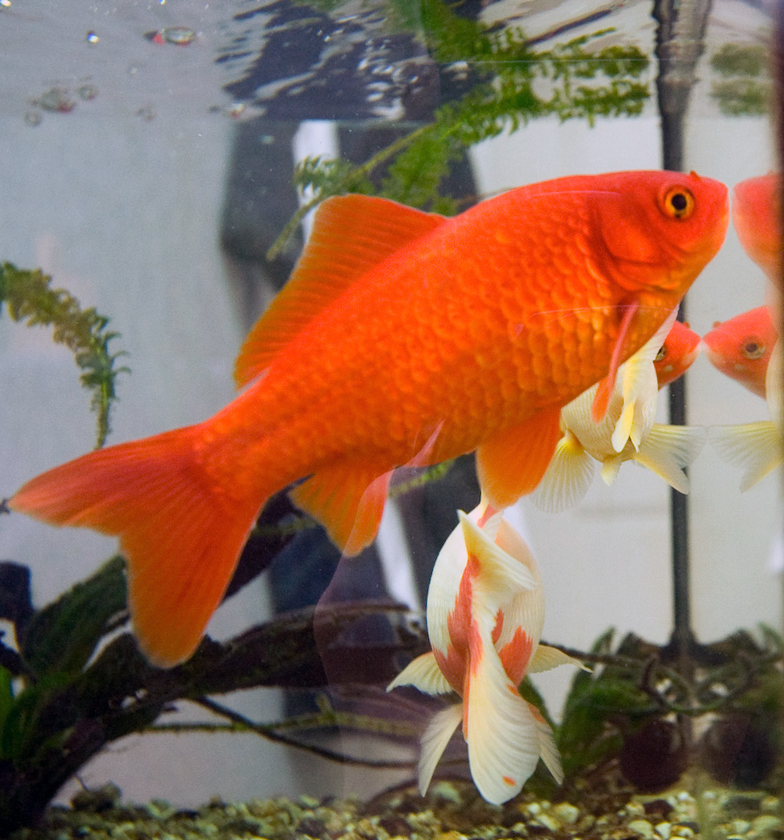
The fish … no bread in the house except a stale piece of pita. Could I find a fish? Where would I go? Ruth offered a helpful comment on Facebook: “Gosh, I wish there were fish somewhere near Palo Alto I can only think of the Bay or the canal where we were, and someone had dumped goldfish. Nope they were not interested in our bread crumbs.” Even the fish turn up their wet little noses.

Food fussers.

I biked to Stanford, but although the fountains seemed to have chlorine, there were no fish to be found anywhere, not even fashionable oversize koi in ponds next to the expensive new buildings. The only fish I found were over ice at Whole Foods on Emerson, where I stopped to pick up a ripe avocado on the way home, as the sun was dropping towards the horizon.

Is there no hope for me? Ruth extended some hope: “Taschlich usually is this afternoon, but I’ve known many who try to get this in between Rosh Hashana and Yom Kippur – it’s a time to acknowledge your weakness and ask for forgiveness, as well as a time to throw away grudges, which mangle the soul and shrink the heart.” For example, she said, “working on not grudging nor envying other’s great work,” she said, mulling over the photo at the top of this post, “but that’s hard when you have to post someone else’s round challah of sweet and plenty – the pic above is not mine – because my own challah turned out like a Rubik’s cube!”

It’s the small things that count. And Wikipedia agrees with her about the timing:

The ritual is performed at a large, natural body of flowing water (e.g., river, lake, sea, or ocean) on the afternoon of Rosh Hashanah, the Jewish New Year, although it may be performed until Hoshana Rabbah. The penitent recites a Biblical passage and, optionally, additional prayers. Optionally, if the ritual is performed not on the Sabbath, small pieces of bread are thrown into the water.

How much time does that give me? About six or seven more days. But “large, natural body of flowing water”? With fish in it, too? Where does one find that in Palo Alto?

Brodsky Among Us: “I cannot say that I enjoyed writing this book, it was torn out of me.”

Share

Carl Proffer snapped a photo of Joseph Brodsky with Ellendea outside Leningrad’s Transfiguration Cathedral in 1970. (Photo: Casa Dana)

The Kenyon Review wandered into the Cleveland Public Library and learned that Ellendea Proffer Teasley, will be speaking there at 6 p.m. on October 2. She is the author of Brodsky Among Us, a memoir of the time she and her husband, the late Carl Proffer, spent with the great Russian poet and Nobel prizewinner, Joseph Brodsky.

Eminent translator Viktor Golyshev, Ellendea Proffer Teasley, and critic Anton Dolin at standing-room only event. (Photo: Casa Dana)

The Proffers, back in the 1971, launched Ardis, to publish the best of Russian literature when the Soviet government would not. Ardis is a legend in Russia, and Ellendea spoke at standing-room-only events throughout Russia when her book was published in Russian translation by Corpus in 2015. Now it’s in English.

So Laura Maylene Walter of The Kenyon Review decided to run a short interview with the fascinating author and publisher (we’ve written about her here and here and here, among other places). Two excerpts below:

The Russian publication of Brodsky Among Us has been described as a “sensation.” Can you describe the book’s reception in Russia and how that reception aligned with your expectations? More generally, how would you compare the Russian and American publishing experiences?

In Russia, I am a somewhat famous figure due to the books published by Ardis Publishers from 1971-2002, when the company ceased to exist. … As I was writing the Brodsky memoir, a glossy Moscow magazine sent someone to interview me in California. They asked what I was working on now, and I told them it was a memoir about Brodsky.

Signing books at the Dostoevsky Library (Photo: Casa Dana)

Immediately upon publication of that interview I got calls and emails from Russian publishers. Luckily Corpus Publishers wanted the book and offered to have a famous translator do it, Viktor Golyshev, who happened to be an old friend of Brodsky’s. They translated and published this book incredibly quickly, and it became a bestseller even before I went for a PR tour in 2015.

I expected nothing because Russian audiences are not usually interested in what an American might say about their most famous poet, but it was standing room only at the events. I had a brilliant PR team and a wonderful publisher, so all of that was a wonderful surprise. The surprise for the Russian audiences was that despite the fact that I have no Russian background, I spoke in Russian. . .

The American story was very different. Since the memoir is short, deeply personal, and not meant as a biography, this presented marketing problems. Many well-known literary people read it in manuscript and told me they stayed up all night reading it, but I did not find a publisher until 2016, and the book came out this year with Academic Studies Press. Some of the problem is that I am as not as well-known here now, and certainly Brodsky is not the incredible star here he is in Russia.

***

On Russian TV with Ksenia Sobchak (Photo: Casa Dana)

What was the most challenging part of writing Brodsky Among Us? What part of the process did you find most enjoyable or affirming?

I cannot say that I enjoyed writing this book, it was torn out of me. What I enjoyed were the Russian audiences in 2015 and in April of this year. They waited in long lines to get their books signed and thanked me for existing. This was all deeply moving, especially since the audiences tended to be young. Besides being their favorite poet, Brodsky is a model of how to withstand oppression, among many other things, I think.

You and your late husband founded Ardis Publishers in 1971 to publish Russian literature. How did that experience inform your later writing and publishing ventures?

In order to write this book I had to live a life split between Russian and America, so without Ardis many things would be unthinkable. That I became friends with Nadezhda Mandelstam, Nabokov, Aksyonov, Brodsky, and many others was the gift of this work. I am the last person alive who had dinner with Borges, Nabokov, and Brodsky. This seems amazing to me.

Read the rest here.

Remembering Sir Peter Hall and a journey to Denver for Tantalus

Share


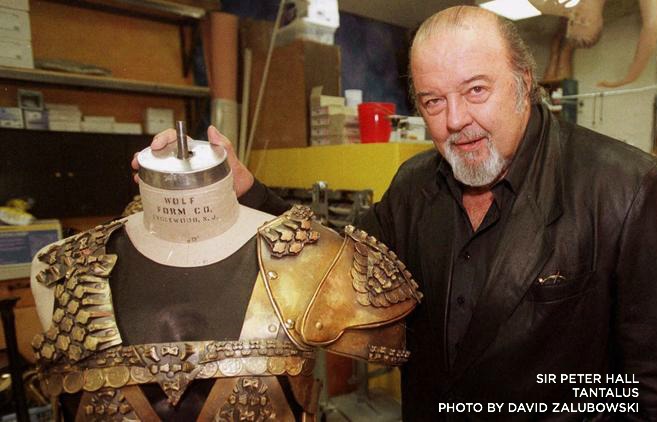
Sir Peter Hall, founder of the Royal Shakepeare Company, died last week, after long illness. I met the eminent theater director briefly on the South Bank’s National Theater, after a performance of … what? It must have been his three-night ten-play cycle of The Greeks in 1980. I attended so much theater during my years in London, it may have been another production, but certainly the RSC’s The Greeks is the one that left a mark on me. The Greek playwrights, and Greek theater in general, have never been the same. It also made me a huge fan of the late great Billie Whitelaw, who played Andromache, among other roles in the production (including in the chorus).

Alas, a search online suggests the much-praised production has dissolved into oblivion. I can’t even find a smidgen of a youtube video.

That must have been the occasion when I chatted with Hall in the National Theater lobby, and exchanged contact information to have a conversation that never happened and I can’t recall why. In fact, I had forgotten the exchange until yesterday. Perhaps someday I’ll find the scrap of paper, with his address and phone number (the pre-internet age before email), scribbled in his handwriting.
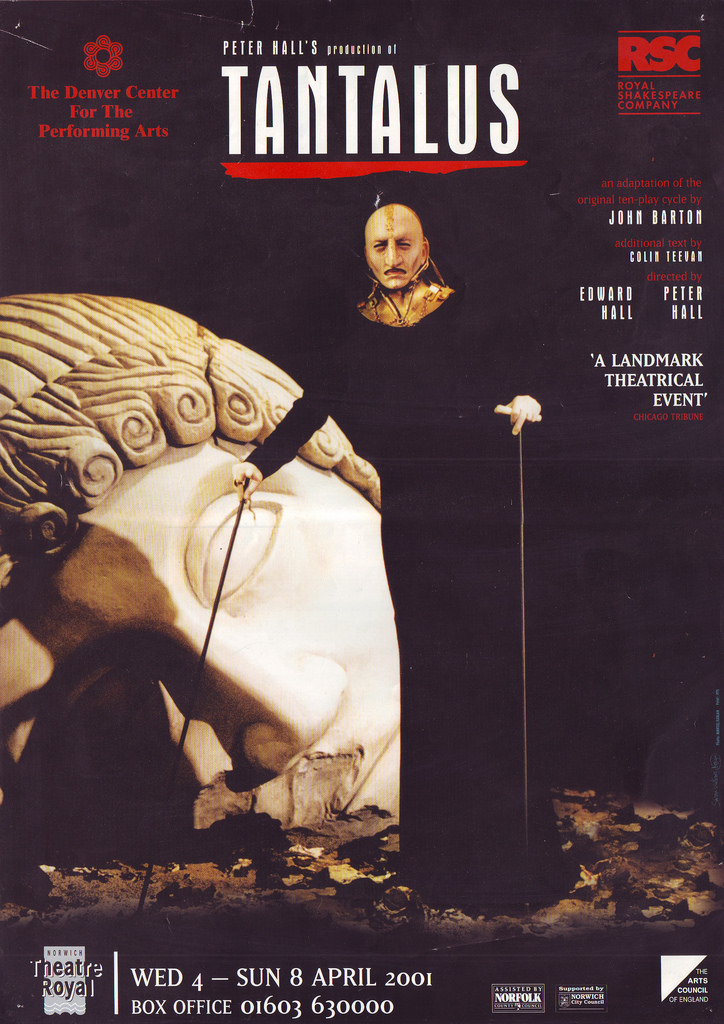
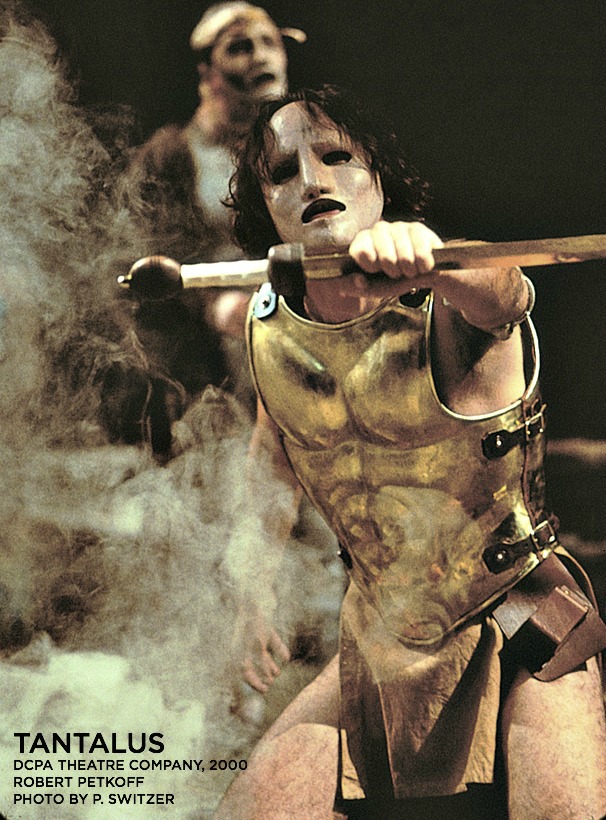
Cut away to a new century. By then I was on the West Coast, and struggled mightily to head out for the Denver opening-night production of Hall’s new effort, Tantalus. Hall had moved with his family to Denver to rehearse and hone the script for a sacrificial six months.

“The subsequent play – which had been written by John Barton over 17 years, is still to this day billed as the largest undertaking in the 2,500-year history of theatre,” according to the Denver Center’s website tribute. ‘Nothing has come along like it, and it probably won’t ever happen again,” [Denver Center founder] Seawell said before his death in 2015. … It brought critics from all over the world. It brought people to Colorado from 38 states and more than 40 countries.’” It also cost about $8 million of the founder’s money.

“Tantalus, directed by Peter Hall and his son, Edward, and created by an international ensemble of artists, was an epic spectacle on-stage and off. The six-month rehearsal process and subsequent British tour is a tale of artistic squabbles, clashing egos, mounting tension, hurdles of time and money – and spectacular artistic achievement culminating in a standing-room only run at London’s Barbican Theatre.“

While going through some old boxes of papers this weekend, I found the “special edition” of Applause commemorating the epic event. Said Hall, “My intention is not perversely to rewrite the old masterpieces but to use the material as a metaphor for today”:

I see the whole thing as a metaphor about myth and history, but also about how a great myth helps us to understand history. The boundary lines between myth, history and truth are hazy. This blurring is something we understand well today. And if we don’t, we should.

It is important to stress that throughout the cycle the Roman words “Greece” and “Greek” are never mentioned. My image is of something both pre-Homeric and long past it. The situation is that Agamemnon leads a group of war-kings from “The West” whom he would like to unite into a nation. His army is simply called “The War Kings” or “The Men from the West.”

The title Tantalus relates us to this approach. Death is certain but doom is postponed. The fruits of the earth are ours for the taking, but most people never quite get a real taste of them. Tantalus, the friend of Zeus and the ancestor of Agamemnon and Menelaus, learned the gods’ secrets. When he betrayed them to men, he was given the eternal punishment of living forever under a great rock which was always about to fall, but never fell, close to a tree of delicious fruit which the wind swept away whenever he clutched at it. The Rock, roped up to Heaven, overhangs the whole cycle. …

I think more and more of the cycle as a metaphor for aRea single age in human history, squeezed in between Floods, Ice Ages, man’s general self-destructiveness or some other human catastrophe. Or perhaps yet another cosmic disaster of an unknown nature.

Read Michael Billington’s post about the 2000 production in the Guardian here. Or the Denver Center’s tribute here.

Want to communicate with the dead? A dead man tells us how. (Plus some kind words for the Book Haven!)

Share

Words of praise for the Book Haven from Rhys Tranter over at his lively and excellent website:

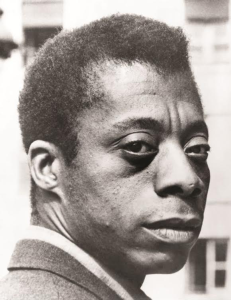
One of the finest literary blogs around is Cynthia Haven‘s The Book Haven, hosted by Stanford University. The site covers a rich variety of topics in a lively and accessible way, and includes reviews and interviews alongside thought-provoking essays. In addition, Haven is alert to the political and cultural turmoil that continues to shape contemporary American consciousness. In a recent post, she draws on the words of American writer James Baldwin to examine how literature can lead to greater empathy and understanding between people and communities:

Preach it. (Photo: The Granger Collection)

There’s a direct line between our moral and social crises and the collapse of the humanities. […] Here’s one reason: literature is our chance to explore the world of  the “other,” to enter into some head other than our own. You can’t read The Brothers Karamazov without being able to understand multiple ways of living and thinking in the world, and some quite alien to one’s own p.o.v. That’s precisely what’s lacking in today’s public life, and that’s the understanding that should have been grounded in our educational system.

Then he included the words of James Baldwin I had cited: “You think your pain and your heartbreak are unprecedented in the history of the world, but then you read. It was Dostoevsky and Dickens who taught me that the things that tormented me most were the very things that connected me with all the people who were alive, or who ever had been alive. Only if we face these open wounds in ourselves can we understand them in other people.”

There’s so much to be said beyond Baldwin’s insightful words, however. We’ve said it before here and here, for example. Here’s a passage from James Marcus‘s interview with the late Susan Sontag on the subject:

“Education of the heart”

“Reading should be an education of the heart,” she says, correcting and amplifying her initial statement. “Of course a novel can still have plenty of ideas. We need to discard that romantic cliché about the head versus the heart, which is an absurdity. In real life, intellect and passion are never separated that way, so why shouldn’t you be moved by a book? Why shouldn’t you cry, and be haunted by the characters? Literature is what keeps us from shriveling into something completely superficial. And it takes us out of ourselves, too.”

“Perhaps some people don’t want to be taken out of themselves,” I suggest.

“Well, reading must seem to some people like an escape,” she allows. “But I really do think it’s necessary if you want to have a full life. It keeps you–well, I don’t want to say honest, but something that’s almost the equivalent. It reminds you of standards: standards of elegance, of feeling, of seriousness, of sarcasm, or whatever. It reminds you that there is more than you, better than you.”

“a form of moral insurance”

Joseph Brodsky went even further in his Nobel lecture (here), famously saying, “There is no doubt in my mind that, had we been choosing our leaders on the basis of their reading experience and not their political programs, there would be much less grief on earth. It seems to me that a potential master of our fates should be asked, first of all, not about how he imagines the course of his foreign policy, but about his attitude toward Stendhal, Dickens, Dostoevsky. … As a form of moral insurance, at least, literature is much more dependable than a system of beliefs or a philosophical doctrine.”

It also prevents us Gary Saul Morson what I call the “Downton Abbey Syndrome”: “the more that authors and characters shared our beliefs, the more enlightened they were. This is simply a form of ahistorical flattery; it makes us the wisest people who ever lived, much more advanced than that Shakespeare guy. Of course, numerous critical schools that judge literary works are more sophisticated than that class on Huckleberry Finn, but they all still presume the correctness of their own views and then measure others against them. That stance makes it impossible to do anything but verify what one already believes. Why not instead imagine what valid criticisms these authors would advance if they could see us?”

“converse with the dead, the absent, the unborn”

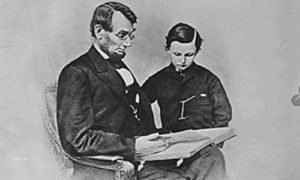
According to Abraham Lincoln:  “Writing – the art of communicating thoughts to the mind, through the eye – is the great invention of the world. Great in the astonishing range of analysis and combination which necessarily underlies the most crude and general conception of it – great, very great in enabling us to converse with the dead, the absent, and the unborn, at all distances of time and of space; and great, not only in its direct benefits, but greatest help, to all other inventions.”

Protection against propaganda returns us to Rhys Tranter again, in his post this week:, which has takes on the more ominous side of a society that no longer cultivates emotional standards and discrimination, this time in the words of Thomas Merton: “[In] an evolved society there are no innocent victims of propaganda. Propaganda succeeds because men want it to succeed. It works on minds because those minds want to be worked on. Its conclusions bring apparent light and satisfaction because that is the kind of satisfaction that people are longing for. It leads them to actions for which they are already half prepared: all they ask is that these actions be justified. If war propaganda succeeds it is because people want war, and only need a few good reasons to justify their own desire.”

“Nothing is as it was…To understand nothing”: Julia Hartwig, “the Grand Dame of Polish Poetry,” 1921-2017

Share

At her house in Warsaw, 2011 (Photo: Humble Moi)

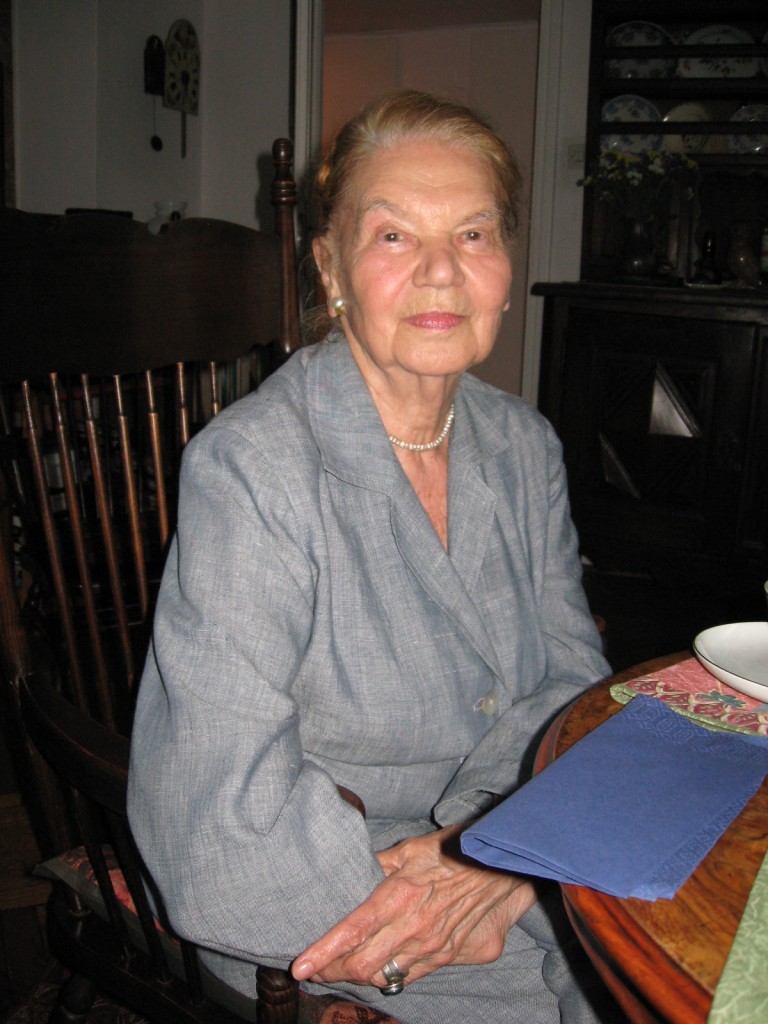
The poet Julia Hartwig was buried in Warsaw today. That was the first news I heard. Then I learned that she had died in her sleep on July 13, in the Pocono Mountains of Pennsylvania, where her daughter lives. A shock, but not a surprise.

She was the “Grand Dame of Polish poetry”  – so said the president of Poland, but it’s hardly the first time the tag was applied to her. Czesław Miłosz said it decades before. I’ve written about her here and here and here. Or you can read about her in my own 2011 article in World Literature Today. To my best knowledge, it is the only interview with the poet in an English-language publication. It was republished by the Milena Jesenská Blog here.

She was buried today next to her husband, the poet and translator Artur Międzyrzecki. She was 95.

She was my friend in Warsaw – more than that, my psychological north star in that reconstructed city. We met at the suggestion of Adam Zagajewski, and the introduction was made by Marek Zagańczyk of Zeszyty Literackie.  I would visit her on my return to Poland, either at her home in Warsaw or in Kraków, at the Czesław Miłosz centenary.

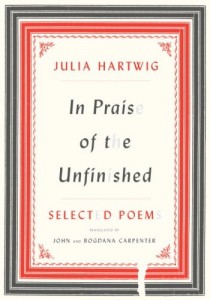
The photo at above was taken at our first meeting in 2008, after Marek guided me on foot through the backstreets of Warsaw at dusk of a hot August day. She was a gracious hostess. She always had a glass of wine and at least a light meal or snack prepared for me – and on that day, she also gave me a hardcover copy of In Praise of the Unfinished, newly published in English. Her accented English was formal but fluent,  for she and her husband had spent years in America on the academic circuit. She told me of the war years – she had been a courier for the Home Army during the German Occupation, and as a teenager, was tipped off that the Gestapo were looking for her. She had to walk out of the city with the clothes on her back. (I write about her description of that experience and others in World Literature Today article, again here.)
I wondered if that sense of a vanished life, disappearing in an instant that was fixed in fear, left a poetic mark on her – as shown in lines like this one, from “Return to My Childhood Home”:

Amid a dark silence of pines – the shouts of
young birches calling each other.
Everything is as it was. Nothing is as it was. . . .
To understand nothing. Each time in a
different way, from the first cry to the last breath.
Yet happy moments come to me from the
past, like bridesmaids carrying oil lamps.

Julia before, and still…

As Rita Signorelli-Pappas wrote while reviewing In Praise of the Unfinished in World Literature Today, “Although Julia Hartwig, like her fellow Polish poets, suffered and survived the constraints that postwar communism imposed on personal freedom, the experience has not irrevocably darkened her poems, which continue to affirm natural beauty and childlike wonder. In ‘Return to My Childhood Home,’ what is too painful to be understood is firmly held in counterpoise with remembered contentment.”

From the Signorelli-Pappas review again:

What gives Hartwig’s poems their unusual freshness is her lightness of touch—she seems able to effortlessly balance the real and the mythic. In “Philemon and Baucis,” she presents a modern epilogue to the Ovidian myth. A husband who distractedly listens to his wife’s shuffling footsteps in the middle of the night suddenly becomes disoriented and asks, “Is this shuffling real, or is it only a memory, in the past, in nonexistence?” In Ovid, the couple’s generosity to the gods was rewarded with a gift that froze them in eternal union, but Hartwig’s poem suggests an elastic, reversible sense of time in which the present looks back at the past and the past points forward to the present.

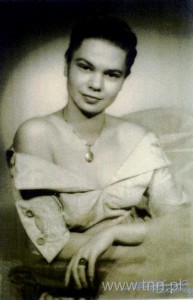
I have one quibble with my own photograph, and the images included in the Polish news coverage: why do we always honor the dead with photos of decrepitude and old age? The smaller photo above is also Julia, and equally her, and equally the way we should remember her.

I made a habit of celebrating her birthday with a phone call to Warsaw or a blogpost. Her birthday wasn’t hard to remember – it was the same birthday as my own mother, and of Miłosz’s death: August 14. Her birthday greeting this year went unanswered.