
“Empire of Disorientation”: Berkeley philosopher Hans Sluga discusses Donald Trump

Share

“The values that have guided the republic since its beginning are no longer being taken seriously. Behind them is the cynicism of power and the sale of political power for money.”
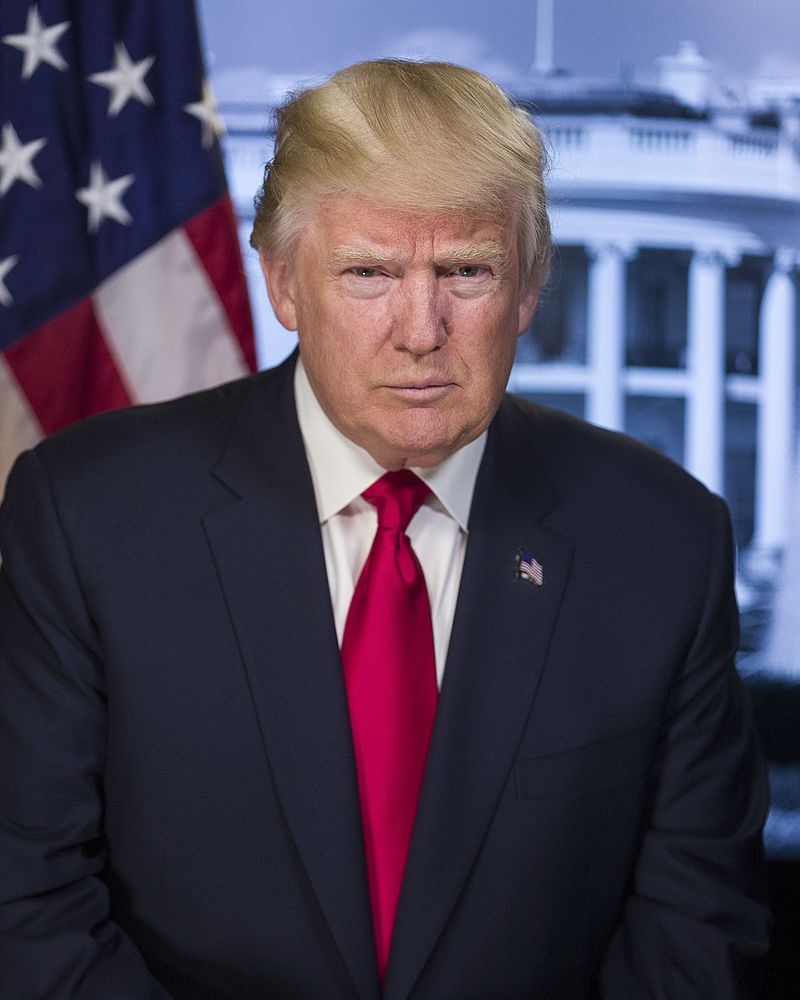
 

The tip of an iceberg.

Who is Donald Trump, and what does he stand for? Do we know? Does he himself know? Or is he caught in that precarious state of disorientation that characterizes our current political predicament.

The public discourse is heated, the language inflammatory. Philosopher Hans Sluga of the University of California, Berkeley, brings a cool head and rational thinking to his interview about our 45th president, Donald Trump, with Entitled Opinions host Robert Harrison. Go here for the hour-long conversation on the brand new Entitled Opinions channel on the Los Angeles Review of Books. 

Trump has been a real estate developer, a reality TV star, a prolific tweeter, a politician, and has changed his party affiliation seven or eight times. Is he a fascist? Sluga, author of Wittgenstein and Heidegger’s Crisis, warns against easy tags: “We’ve drained this word of much of its specific meaning.” Fascism, he says, “is a form of statism quite different from what we have in America today.”

Is he a populist? That’s not clear, either. “Plutocrat,” the term Aristotle used to describe the rule of the rich, might be a more precise characterization. Sluga says we might turn to the world of real estate to understand Trump’s worldview.

Sluga is the author of Heidegger’s Crisis. Philosophy and Politics in Nazi Germany (Harvard, 1993); Wittgenstein (Wiley-Blackwell, 2011); and Politics and the Search for the Common Good (Cambridge, 2014).

He studied at the University of Bonn and the University of Munich. He subsequently got a B. Phil. in philosophy at Oxford, where he studied under R. M. Hare, Isaiah Berlin, Gilbert Ryle and Michael Dummett. “My overall philosophical outlook is radically historicist,” he has said. “I believe that we can understand ourselves only as beings with a particular evolution and history.” He received a fellowship from the National Endowment for the Humanities in 1991-92.

Potent quotes:

“What you see is what you get. But the problem is, what do you see? You don’t understand it. You don’t know what to make of it.”
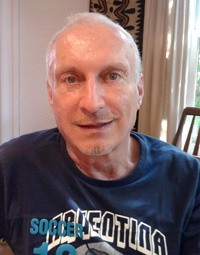
Philosopher Sluga

“The values that have guided the republic since its beginning are no longer taken seriously. Behind them is the cynicism of power and the sale of political power for money.”

“Trump seems to represent the reunification of the political and the economic. He’s a businessman, and remains a businessman while he’s president.”

“We have underestimated the political significance of real estate in our world.”

“Trump is not anti-government, he just has a different notion of what government’s role is in the alliance between economy and politics.”

“He wants regulation to assert his own will-to-power more effectively. He’s an authoritarian, certainly, we shouldn’t doubt that at all – but not necessarily someone out to destroy the state or its institutions.”

“Plutocrats have interests that any ruler has: to be legitimized, to be accepted by the population.”

“Money has begun to undermine everything in politics now.”

“He is the tip of an iceberg. What I’m really interested in is the iceberg itself.”

René Girard wrote words – his Avignon kin perform music.

Share

A few years ago, I drove from Paris to Provence in a little silver Citroën to explore Avignon, the birthplace of a French theorist who is the subject of my forthcoming book, Evolution of Desire: A Life of René Girard (spring 2018 with Michigan State University Press). One facet of Avignon I didn’t experience, however, was the Quatuor Girard, an eminent string quartet formed by members of the Girard family, René’s great-nieces and great-nephews. My interest was not entirely research, however, but largely aesthetics. Listen to the short recording below.
That’s Hugues Girard and Agathe Girard on violins, Odon Girard on viola, and Lucie Girard on the cello performing Ludwig Van Beethoven‘s
String Quartet no. 16 in F major, opus 135 – one of the astonishing late string quartets.

Perhaps a postponed pleasure for my next visit to unforgettable Provence…


What if women wrote about men the way men write about women?

Share

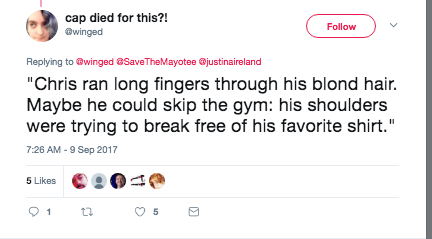
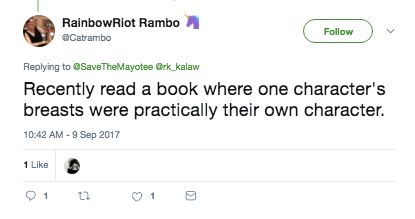
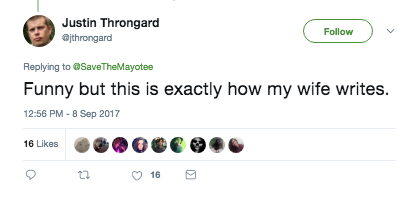
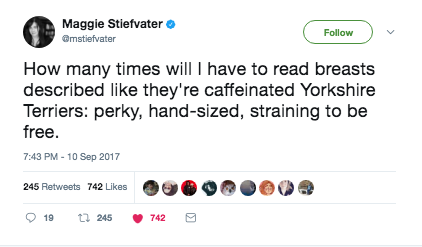
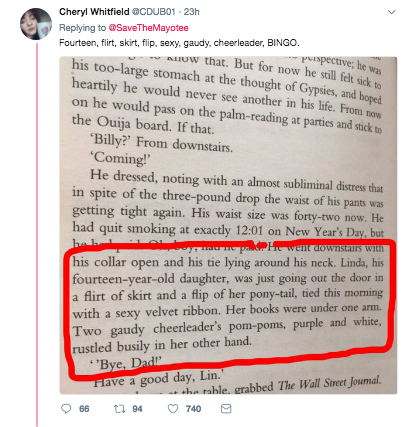
What if women wrote about men then way men write about women? Here’s the sort of thing that gives us pause:

And that’s about a man talking about his 14-year-old daughter? He’s turned on by her ribbons? As someone replied on Twitter, it makes you want to go and take a shower. Or perhaps turn the tables a bit. With luck, we might be able to jeer this whole tired genre out of existence. 

Meg Elison gives us some examples in how to flip the genders over at McSweeney’s:

There is a particular look about a teenage boy that lets you know what kind of man he’ll be. A certain fullness of lips, a frank sensuality in his gaze. We all know what the word for that is, but it’s not polite to use it until he’s proven he’s that kind of boy.

***

Hugin was chosen, among all the boys of the village, to compete in the Races. He had grown up, the child of a simple, lovely baker, and his wife, the wolf-hunter. Hugin wore his hair in simple golden waves and had the longest legs anyone had ever seen, coated in fine, silky down. When the yearly selection began, other boys watched Hugin. They knew he would be the one, and they pouted.

***

Brett pulled his tank top up over his head and stared at himself in the full-length mirror. He pushed down his jeans, then his boxers, and imagined the moment when Jennifer saw him nude for the first time. His feet were average-sized, and there was hair on his toes that he should probably take care of before tonight. He liked his legs just fine, but his thighs were wide and embarrassingly muscular. He tried standing at an angle, a twist at his waist. Some improvement. In that position, it was easier to see his ass and notice that it was not as pert as it had been at 22. He clenched both cheeks, hoping that tightened its look. He sucked in his tummy and pulled his pecs up high, trying to present them like pastries in a bakery window. Would she like him? Were the goods good enough? He pouted his lips and ran his hands over his thighs, masking their expanse. Maybe.

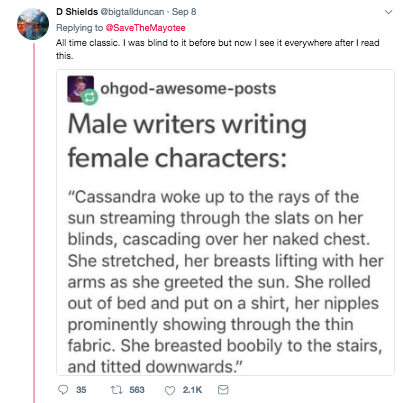
The subject did not idly occur to me. While rambling through my Twitter feed today…I found a tweet by  that got close to 92K retweets and 102K likes. That’s a lot of applause. The original tweet is here, but we won’t post because the Book Haven is a family blog. (We paused at the adverb “hairily”.)

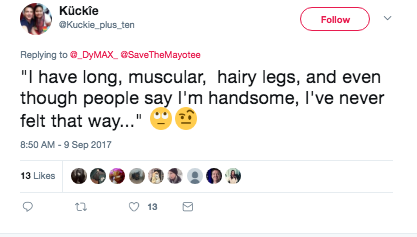
We’ll just post a few of our favorites:


Sound far-fetched? Not at all. I’ve heard many passages just as absurd and arbitrary in the works of famous writers.

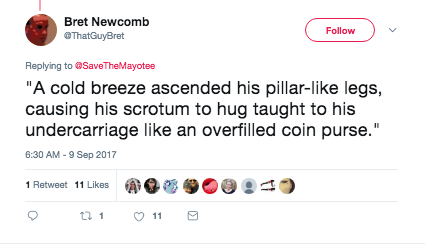
Many of the tweets today were too salty for the delicate ears of the Book Haven’s gentle readers – we feel like we’re pushing our luck with the last one, but the image of the coin purse made it an indispensable addition. (Note bene: That’s taut not taught, but … Twitter.) We’ll leave you with this gentler gender-switching prose, from Elison:

“But I don’t get it!” Shea was panting, trying to catch up to Michael as he fled. “The monster ate everyone else. How did you escape?”

Michael reached the boat first, flinging himself in. He waited for Shea to follow him and take the oars, guiding them smoothly away from the shore.

“It’s because I was different from the other boys,” he said, pushing his hair behind his ear and looking away.

“What do you mean, different?” Shea’s muscles rippled and flexed as she rowed them to safety, and Michael could not tear his eyes away.

“Different. Pure, the monster said. Because I’m… I’ve never…” He looked away again, and the moonlight caught on his throat, outlined his clavicle.

“You’re a virgin,” Shea said, realization dawning. “What a waste.”

Michael blushed.

“If we get out of this alive,” she said. “I’m going to fix that.”

Read more here.

Postscript on 9/10:

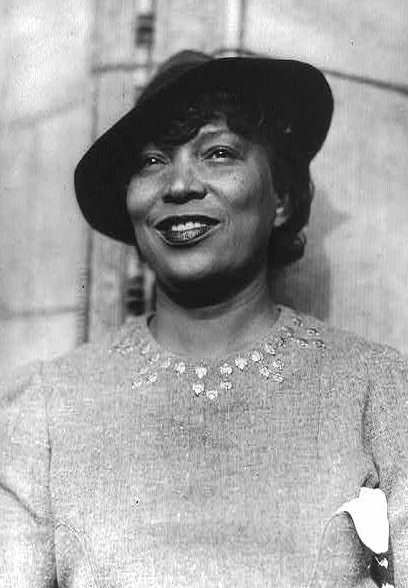
Zora Neale Hurston: “I haven’t the wings, and must ride the tortoise.”

Share

.

.

“I shall try to lay my dreaming aside. Try hard, But Oh, if you knew my dreams! My vaulting ambition! How I constantly live in fancy in seven league boots, taking mighty strides against the world, but conscious all the time of being a mouse on a treadmill. Madness ensues. I am beside myself with chagrin half of the time; the way to the blue hills is not on tortoise back, it seems to me, but on wings. I haven’t the wings, and must ride the tortoise.”

– Zora Neale Hurston

in a letter to playwright Annie Nathan Meyer

.

George Smiley is back. And he’s all about Trump and Brexit.

Share

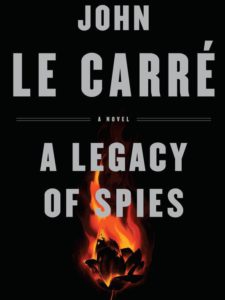
You thought British spy George Smiley was gone for good?  He’s  back in John le Carré’s brand new novel, A Legacy of Spies. And though you may be calculating Smiley’s age, on the basis of Tinker Tailor Soldier Spy and the other novels, to be somewhere around a century, he’s just about the same age as David Cornwall – a.k.a. John le Carré – which is to say, 86 next month. Bryan Appleyard has a new article and interview about Le Carré in The Times of London.
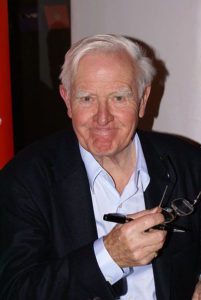
A Legacy of Spies is a Brexit novel, according to Le Carré, a former spook himself: “I wrote it in a bit of a frenzy through Trump and Brexit. I despise the whole Brexit operation, as Smiley does. One government after another blamed Europe for its own failures because they never invested in the concept of a united Europe.”

He’s fed up.

“I understand why people who are socially deprived, with the safety net taken away from them and treated as second-class citizens, have every right to vote for some other dream. I understand that, and I understand it needs a desperate remedy, and fast, but Brexit isn’t the answer.”

About the book, which brings together characters from previous novels, including Alec Leamas and his lover, Liz Gold:

In A Legacy, the past returns thanks to a legal action brought against MI6 over the events surrounding the deaths of Leamas and Gold. Public exposure threatens the now glitzy, tight-suited inhabitants of “Spyland Beside the Thames”, the agency’s “shockingly ostentatious new headquarters” in Vauxhall. Peter Guillam, once Smiley’s deputy, is called back from retirement (though there is no such thing in MI6).

Revealing anything more would be a spoiler, but I think I can say this: Smiley moves in and out of the action in the past before, finally, appearing in the present. Guillam asks him what all their work had been for. England? No. Europe.

“I think his whole genesis in life — his private dream, as he now expresses it — is the salvation of Europe. That was, for him, the battlefront of the Cold War — for him, that was where the soul of Europe was being fought for. So, when he looks back on it all — or I do, if you like — he sees futility.”

My hearthrob

In the words of Anatole Broyard, writing in the New York Times way back in 1982 about Le Carré’s novel, “Western civilization is depicted as the residue of countless betrayals, as a kind of junk sculpture of discarded ideals. Its governments are so jaded that they can be animated or stirred only by what we might call the pornography of conspiracy.” Well, it’s still true, isn’t it?

Cornwall says that Smiley has always been his “secret sharer”, “an unannounced companion with whom I am sharing the experience, an imaginary figure … I suppose what Smiley and I have in common is that we find it difficult to remember happiness. It’s not something that comes naturally to me, I have to work on it. I do experience fulfilment with my children and my grandchildren.”

After all, none of this is just about spying. “I perceived,” he said at one point, “in the real world a reflection of the secret world.” We are all Alec Leamas or Bill Haydon, and, like Cornwell, some of us are Smiley — always secretive, always on call.

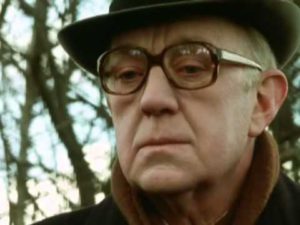
Read the whole thing here. And here’s why we love him (we’re not sure whether we love Smiley or Guinness, or both). “Reason is logic or reason is motive, or reason is a way of life…”